Key Takeaways
- Skin rashes have many possible causes in Dubai, ranging from harmless heat rash (miliaria) to contact dermatitis, allergic reactions, fungal infections, and rare but serious emergencies such as anaphylaxis or meningococcal septicaemia.
- Dubai's climate is a major driver of rashes: extreme summer heat and humidity trigger miliaria and fungal (tinea) infections, while constant air conditioning dries and irritates the skin barrier, worsening eczema-like rashes.
- A rash accompanied by fever, rapid spreading, blistering, facial or throat swelling, difficulty breathing, or a rash that does not fade when pressed with a glass is a medical emergency and needs immediate care.
- Most rashes settle with simple home care (cool compresses, fragrance-free moisturiser, avoiding the trigger), but a rash lasting longer than a week, recurring, or affecting daily life warrants a GP assessment.
- At DCDC in Dubai Healthcare City, a GP consultation for a skin rash starts from AED 249 and includes a clinical exam, with same-day on-site laboratory testing (allergy panels, blood work) available when needed.
- Accurate diagnosis matters because heat rash, fungal infections, allergic reactions, and inflammatory skin conditions like eczema or psoriasis are treated very differently — self-treating the wrong cause can delay recovery.
- DCDC holds a 4.8/5 Google rating from over 1,000 verified reviews, is MOHAP licensed, and offers direct billing with 20+ insurance providers, making rash assessment accessible and affordable in Dubai.
A new rash can be alarming — is it just heat and sweat, an allergic reaction, a fungal infection thriving in Dubai's humidity, or something that needs urgent attention? Skin rashes are one of the most common reasons people in Dubai book a general consultation, and for good reason: the causes range from completely harmless to genuinely dangerous, and telling them apart is not always obvious from a mirror. This guide walks through the most common skin rash causes seen in Dubai, the Dubai-specific environmental triggers behind many of them, the red-flag symptoms that mean you should stop waiting and see a doctor, and what to expect if you book an assessment at DCDC in Dubai Healthcare City.
From heat rash in the peak of a Dubai summer to fungal infections that flourish in humid, sweaty conditions, most rashes in this climate fall into a handful of recognisable categories — and knowing which one you are dealing with changes everything about how it should be treated.
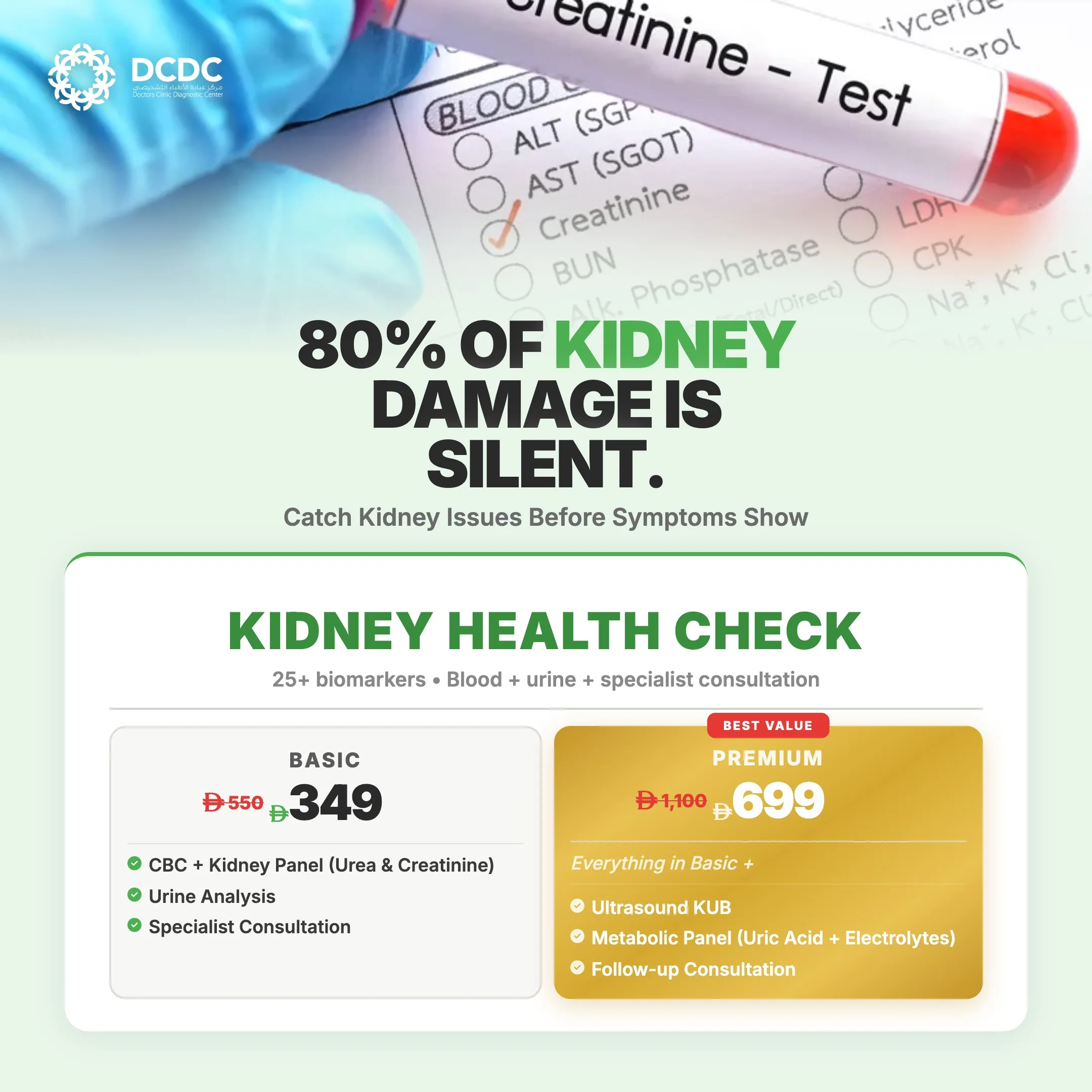
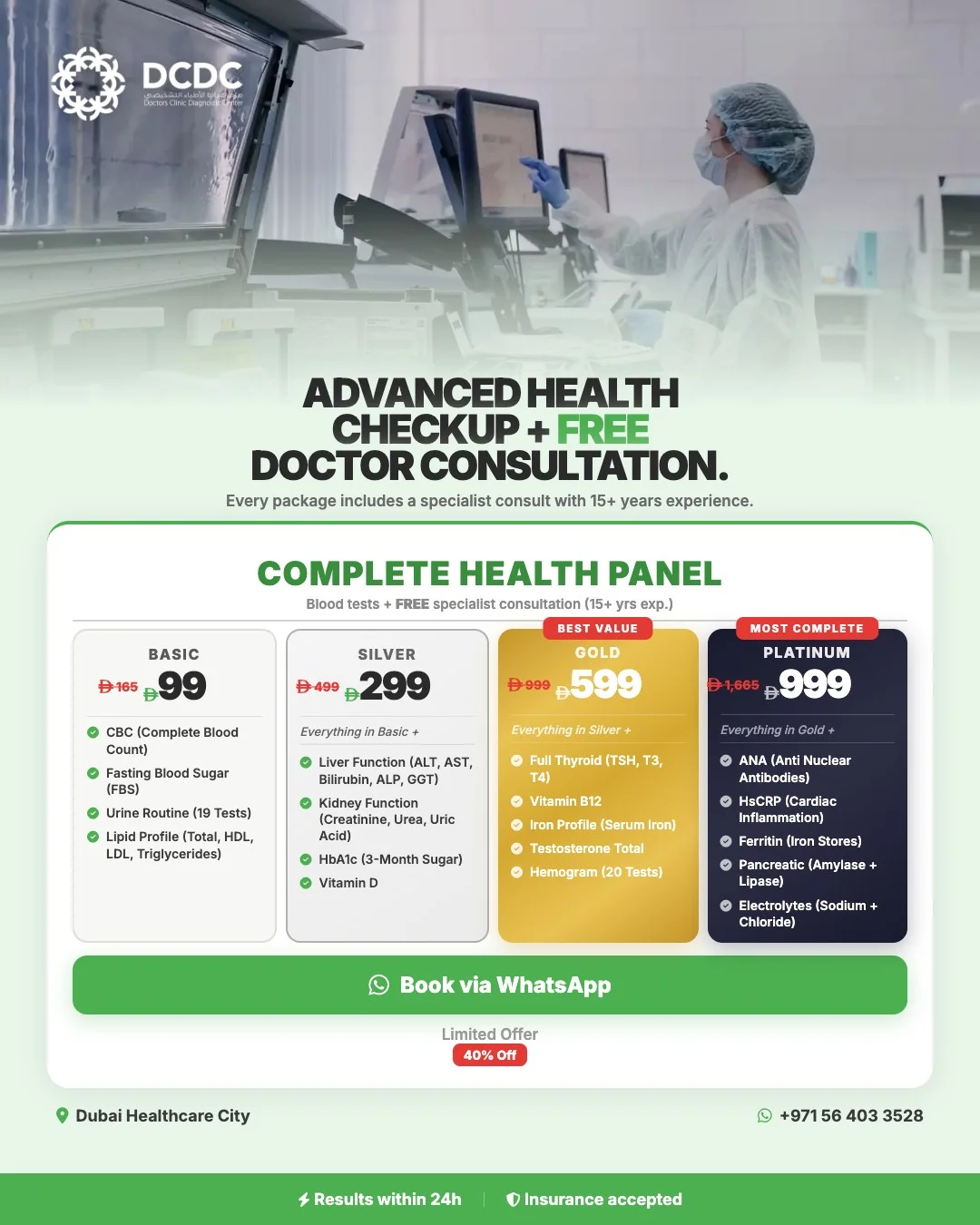
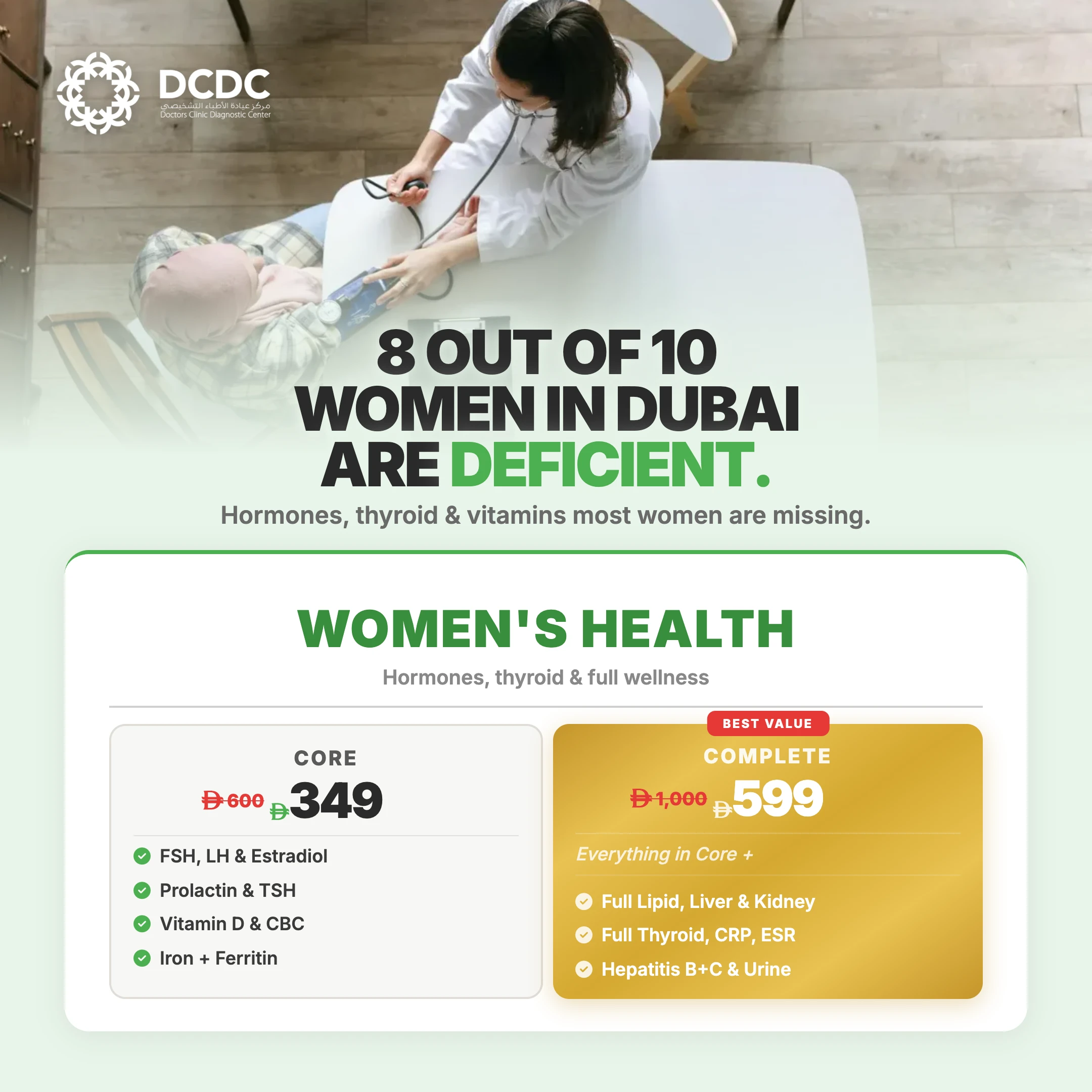
Health Screening Packages
Save with our bundled screening packages — specialist consultation included



What Is a Skin Rash, and Why Does Dubai See So Many of Them?
A rash is any noticeable change in the colour, texture, or feel of the skin — redness, bumps, blisters, scaling, itching, or swelling. It is a symptom, not a diagnosis, and it can be triggered by heat, sweat, chemicals, allergens, infections, medications, autoimmune conditions, or stress. According to Mayo Clinic, rashes are one of the most common reasons people seek medical care, and while many clear up on their own, some signal an underlying condition that needs treatment.
Dubai's environment makes it a particularly rash-prone city. Summer temperatures regularly exceed 45°C with high humidity, driving excessive sweating that can block sweat ducts and trigger heat rash. Most residents then spend the majority of their day in heavily air-conditioned homes, offices, cars, and malls, which strips moisture from the skin and disrupts its protective barrier. Add year-round intense UV exposure, desalinated hard water, and a highly multicultural population with varying skin types and product habits, and it becomes clear why rash-related consultations are so common at clinics across the city.
Heat Rash (Miliaria): Dubai's Most Common Summer Rash
Heat rash, medically known as miliaria and commonly called prickly heat, is by far the most frequently seen rash during Dubai's summer months. It develops when sweat ducts become blocked, trapping sweat beneath the skin. According to a review published on PubMed, miliaria results from obstruction of the eccrine (sweat) glands, and the depth of that blockage determines what it looks like: tiny clear blisters at the skin surface (miliaria crystallina), small red, itchy bumps (miliaria rubra, the most common form), or deeper, firmer lesions (miliaria profunda).
- Where it appears: Neck, chest, back, underarms, and skin folds — anywhere sweat collects and clothing traps heat.
- What it looks like: Clusters of tiny red or clear bumps, often described as a prickling or stinging sensation, hence the name 'prickly heat.'
- Who is most at risk in Dubai: Outdoor workers, children, gym-goers, and anyone wearing tight or synthetic clothing during peak summer heat.
- How it is managed: Moving to a cooler, air-conditioned environment, wearing loose breathable cotton clothing, and keeping the skin dry usually resolves miliaria within days. Persistent or infected heat rash may need medical treatment.
While heat rash is usually harmless, it can occasionally become secondarily infected with bacteria, especially if scratched, or persist for weeks in people who cannot avoid heat exposure (such as outdoor labourers). If your heat rash is not improving after a few days indoors, or looks infected (yellow crusting, worsening pain, spreading redness), a GP assessment is worthwhile.
Contact Dermatitis: When Products or Chemicals Trigger a Rash
Contact dermatitis is a localised, red, itchy, sometimes blistering rash that appears where the skin has touched an irritating or allergenic substance. It comes in two forms: irritant contact dermatitis, caused by direct chemical damage from something like a harsh soap, cleaning product, or hard water minerals; and allergic contact dermatitis, a delayed immune reaction to a specific allergen such as nickel, fragrance, or a hair dye ingredient.
- Common Dubai triggers: New skincare or sunscreen products, chlorinated pool water, hard desalinated tap water, henna and hair dyes, nickel in jewellery and belt buckles, and cleaning products used by domestic staff.
- Timing clue: The rash usually appears within hours to a couple of days after exposure, and its shape often matches the object or product that touched the skin (a rectangular patch under a watch strap, for example).
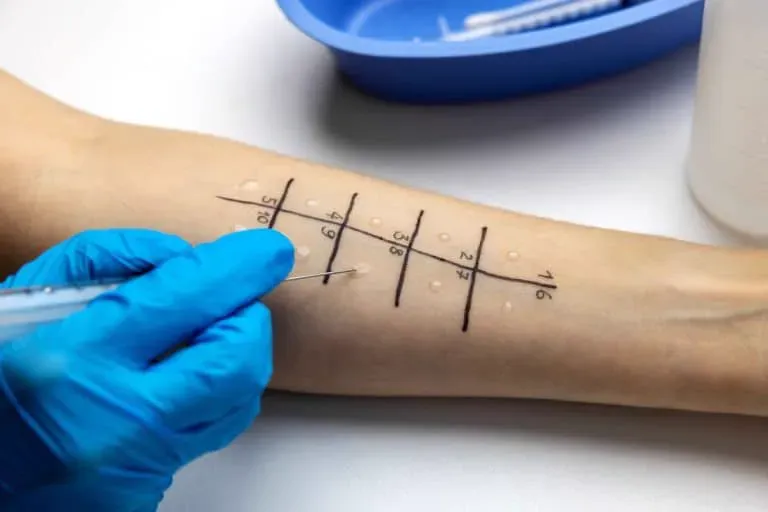
- Diagnosis: A doctor takes a detailed history of recent products and exposures. For recurring or unexplained cases, patch testing — applying small amounts of common allergens to the back for 48 hours — can pinpoint the exact trigger, according to a review on PubMed covering allergic contact dermatitis diagnosis.
Once the trigger is identified and avoided, contact dermatitis typically clears within one to three weeks with a topical steroid cream and a fragrance-free moisturiser. If you are dealing with a rash you suspect involves an underlying skin barrier condition rather than a one-off exposure, our guide to eczema treatment in Dubai covers triggers and long-term care in more depth.
Allergic Rashes: Hives, Urticaria, and Drug Reactions
Allergic rashes appear when the immune system releases histamine in response to a trigger, causing hives (urticaria) — raised, itchy, red or skin-coloured welts that can appear anywhere on the body and often move or change shape within hours. According to a comprehensive review on PubMed, urticaria affects up to 20% of people at some point in their lives and can be triggered by foods, medications, insect stings, infections, or, in chronic cases, no identifiable cause at all.
- Acute urticaria (under 6 weeks): Often linked to a specific food, new medication (especially antibiotics or NSAIDs), or insect bite. Usually resolves once the trigger clears the system.
- Chronic urticaria (over 6 weeks): Recurring hives with no obvious trigger in nearly half of cases; may be linked to autoimmune activity and requires ongoing management rather than a single fix.
- Drug reactions: A new rash that starts within days of starting a new medication or antibiotic course should always be reported to your prescribing doctor, as some drug rashes can escalate.
- Angioedema: Swelling of the deeper layers of skin, often around the eyes, lips, or throat, that can accompany hives. Throat or tongue swelling with breathing difficulty is a medical emergency.
If hives keep coming back, allergy testing can help identify or rule out specific triggers such as foods, dust mites, or pet dander. Read our dedicated guide on skin allergy and hives treatment in Dubai for a deeper look at triggers and treatment options, and our allergy testing guide to understand which tests are available.
Not Sure What's Causing Your Rash?
Book a GP consultation at DCDC in Dubai Healthcare City from AED 249. Same-day allergy panels and blood tests available on-site.
WhatsApp +971 50 970 3884 to book
Fungal Rashes (Tinea): Why Dubai's Humidity Fuels Them
Fungal skin infections, caused by dermatophyte fungi and grouped under the term 'tinea,' thrive in warm, moist environments — exactly the conditions created by Dubai's heat, humidity, and heavy sweating combined with tight gym wear, swimwear, and closed footwear. A review of superficial fungal infections on PubMed notes that dermatophyte activity is highest between 30-40°C, and that tinea diagnoses rise sharply during hot, humid periods.
- Tinea corporis (ringworm of the body): A ring-shaped, red, scaly patch with a raised, clearer centre. Not caused by a worm — the name comes from its shape.
- Tinea cruris (jock itch): An itchy, red rash in the groin folds, common among people who exercise regularly in Dubai's gyms or spend long hours in damp activewear.
- Tinea pedis (athlete's foot): Itching, peeling, or cracking between the toes, frequently picked up in communal showers, pools, and gym changing rooms.
- Tinea versicolor: Small, discoloured patches (lighter or darker than surrounding skin) on the chest and back caused by yeast overgrowth, particularly common in hot, sweaty climates like Dubai's.
Fungal rashes look similar to eczema or other inflammatory rashes but require antifungal, not steroid, treatment — using a steroid cream on a fungal infection can make it spread further. If a rash is scaly, ring-shaped, or itchy and not improving with a moisturiser, it is worth getting it examined rather than guessing. Our guide to fungal skin infection treatment in Dubai explains diagnosis and treatment in more detail.
Stress-Related Rashes
Psychological stress does not just affect mood and sleep — it has a measurable effect on the skin. Stress triggers the release of cortisol and histamine, which can worsen existing skin conditions such as eczema and psoriasis, trigger hives in susceptible individuals, and cause a general flushed, blotchy, or hot sensation on the face, neck, and chest. In Dubai's fast-paced, high-pressure lifestyle, stress-related skin flare-ups are a recurring reason patients book a GP visit, often alongside other stress symptoms like poor sleep, fatigue, or digestive upset.
Stress rashes typically appear and fade with the stress cycle itself, but they can be difficult to distinguish from allergic or inflammatory rashes without an examination. Managing the underlying stress — through sleep, exercise, and where appropriate, medical support — is usually part of the treatment alongside topical care for the skin itself.
Air Conditioning and Dry Skin Rashes
Dubai residents typically move between air-conditioned indoor spaces and intense outdoor heat multiple times a day. Constant AC exposure lowers indoor humidity dramatically, drying out the skin's outer barrier. This dryness can present as fine flaking, redness, tightness, and itching, and it frequently aggravates pre-existing eczema or sensitive skin. Over time, a chronically dry, compromised skin barrier is also more vulnerable to irritant contact dermatitis and infection, because it no longer forms an effective protective seal.
- Common presentation: Dry, flaky, sometimes cracked skin on the hands, arms, legs, and face, worse after a day spent mostly indoors under air conditioning.
- Practical fix: Applying a fragrance-free, ceramide-based moisturiser after every shower, using a humidifier in bedrooms, and avoiding very hot showers, which further strip natural oils.
- When it's more than dryness: If the dry patches become intensely itchy, thickened, or start to weep or crust, this can indicate eczema that needs a prescribed treatment rather than moisturiser alone.
Sun-Related Rashes and Photosensitivity
Dubai's UV index is high year-round, and sun-related rashes are common, particularly outside the summer months when people spend more time outdoors. Polymorphic light eruption presents as itchy red bumps on sun-exposed skin, typically appearing within hours of sun exposure and settling over several days. Photosensitive drug reactions occur when certain medications (some antibiotics, acne treatments, and diuretics) make the skin unusually reactive to UV light, producing an exaggerated sunburn-like rash on exposed areas. Sunburn itself, while not technically a 'rash,' can blister and requires the same red-flag awareness as any other skin injury if it covers a large surface area or is accompanied by fever and chills.
When a Rash Is a Medical Emergency
The overwhelming majority of rashes are not dangerous, but a small number of presentations require immediate medical attention. Recognising these is genuinely important.
- Anaphylaxis: Hives or a rash appearing rapidly alongside facial or throat swelling, difficulty breathing or swallowing, dizziness, or a sense of impending doom is a life-threatening allergic reaction. Call emergency services immediately.
- Meningococcal rash: A rash of small red, purple, or brown pinprick spots (petechiae) that does not fade when pressed with the side of a clear glass — the 'glass test' — combined with fever, severe headache, neck stiffness, or drowsiness can indicate meningococcal septicaemia. According to NHS guidance, this requires emergency care without delay, and the glass test alone should never be relied upon to rule out the condition.
- Stevens-Johnson syndrome / toxic epidermal necrolysis: A rare but severe drug reaction causing painful blistering and skin peeling, often starting with flu-like symptoms. Requires immediate hospital care.
- Widespread blistering with fever: Any rash that blisters extensively, is very painful, and is accompanied by fever needs urgent assessment, as it may indicate a serious infection or severe drug reaction.
Red Flags: When to See a Doctor for a Rash
Outside of true emergencies, there are still clear signs that a rash needs professional assessment rather than continued home management. Booking a GP consultation is worthwhile if any of the following apply.
- The rash is accompanied by fever, chills, or feeling generally unwell
- It is spreading rapidly across the body over hours to a couple of days
- It is blistering, extremely painful, or looks infected (warm, swollen, oozing pus)
- It has lasted longer than one to two weeks without improving
- It keeps recurring in the same area or pattern
- It appeared shortly after starting a new medication
- It is affecting a child, an elderly person, or someone with a weakened immune system
- You simply are not sure what is causing it — self-treating the wrong cause (for example, a steroid cream on a fungal rash) can make things worse
If a rash appears alongside joint pain, persistent scaling, or thick silvery plaques, it is also worth reading up on the difference between the two most commonly confused chronic skin conditions in our eczema vs psoriasis comparison guide, and for children, our article on childhood rashes in Dubai covers the specific patterns seen in younger patients.
Home Remedies vs Medical Treatment
For mild, clearly identifiable rashes such as fresh heat rash or a minor irritant reaction, sensible home care is often enough: move to a cool, air-conditioned space, avoid the suspected trigger, apply a cool compress or fragrance-free moisturiser, wear loose breathable clothing, and avoid scratching to reduce the risk of secondary infection. Over-the-counter antihistamines can help with itching from mild allergic reactions, and a low-strength hydrocortisone cream can calm localised contact dermatitis for a short period.
Where home care falls short is in diagnosis. Heat rash, fungal infections, eczema, contact dermatitis, and early-stage hives can look remarkably similar to the untrained eye, yet each needs a different treatment approach — and using the wrong one (most commonly, a steroid cream on an undiagnosed fungal rash) can actively worsen the problem. Medical treatment becomes necessary when a rash is severe, persistent, recurrent, or accompanied by any of the red-flag symptoms listed above, and it is always the safer route when there is genuine uncertainty about the cause.
How DCDC Diagnoses the Cause of Your Rash
Accurate rash diagnosis starts with a thorough clinical history and examination, and is supported by targeted testing when the cause is not immediately clear.
- Clinical history: Your GP will ask about when the rash started, where it appeared first, whether it has spread, recent product or medication changes, travel, exposure to new environments, and any accompanying symptoms like fever or joint pain.
- Physical examination: Close inspection of the rash's pattern, distribution, colour, and texture — the shape and location of a rash are often the biggest diagnostic clues.
- Allergy testing: IgE blood testing can identify specific food and environmental allergens behind recurrent hives or suspected allergic reactions.
- Patch testing (via dermatology referral): For suspected allergic contact dermatitis with an unclear trigger, a dermatologist applies small amounts of common allergens to the skin and reviews them over 48-72 hours to identify the exact culprit.
- Blood work: When an underlying condition is suspected — autoimmune disease, thyroid dysfunction, or a systemic infection — blood tests can confirm or rule out these causes.
- Fungal scraping (if needed): A quick, painless skin scraping can confirm a fungal infection before starting antifungal treatment, avoiding weeks of trial and error.
According to Dr. Hadeel Elnur, "Most patients who come to us with a rash have already tried a cream from the pharmacy that either did not work or made things worse. The most important step is working out exactly which type of rash we are dealing with before treating it — heat rash, an allergic reaction, and a fungal infection can look deceptively similar in the first day or two, but they need completely different treatments. As a general practitioner, I am often the first point of contact, and part of my role is coordinating the right blood work or allergy testing and bringing in a dermatologist quickly if the case needs specialist input."
Skin Rash Diagnosis and Testing Costs in Dubai
Costs for rash assessment in Dubai vary depending on whether a straightforward clinical diagnosis is enough or whether allergy testing and blood work are needed. The table below reflects DCDC's current pricing for the most common services used to diagnose a skin rash.
| Service | Cost (AED) | What It Involves |
|---|---|---|
| GP consultation for skin rash | From AED 249 | Clinical history, physical examination, and initial treatment plan |
| Allergy panel (IgE blood test) | From AED 400 | Identifies specific food, environmental, or contact allergens |
| Blood tests (CBC, inflammatory markers) | From AED 150 | Checks for infection, inflammation, or underlying systemic causes |
| Fungal skin scraping and microscopy | From AED 150 | Confirms or rules out a fungal (tinea) infection |
| Dermatologist referral consultation | From AED 400 | For complex, chronic, or treatment-resistant rashes |
Indicative Dubai pricing for rash-related consultations and testing (2026). Exact costs depend on the tests ordered and are confirmed at your consultation. Insurance direct billing available with 20+ providers.
Many UAE insurance plans cover GP consultations and diagnostic testing for skin conditions when medically indicated. DCDC provides direct billing with over 20 insurance providers, including Daman, AXA, Bupa, and others, which typically reduces or removes out-of-pocket costs for eligible patients.
Get Your Rash Properly Diagnosed
DCDC offers GP consultations from AED 249, with same-day allergy panels and blood tests available on-site. MOHAP-licensed clinic in Dubai Healthcare City.
Call +971 54 219 5008 or WhatsApp to book
What to Expect at DCDC: Your Rash Assessment Journey
If you decide to have your rash assessed at DCDC in Dubai Healthcare City, here is what the process typically looks like from arrival to follow-up.
- Step 1 — Arrival: DCDC is located at Building 64, Block A, Al Razi Medical Complex, Dubai Healthcare City, with free on-site parking. Walk-ins are welcome or you can book ahead. Average wait time is around 15 minutes.
- Step 2 — GP consultation: A General Practitioner, such as Dr. Hadeel Elnur, examines the rash, takes a detailed history of onset, exposures, and symptoms, and forms an initial assessment. Multilingual staff (Arabic, English, Farsi, Urdu, and Hindi) are available to support clear communication.
- Step 3 — Same-day testing (if needed): When allergy testing, blood work, or a fungal scraping is indicated, samples are collected at DCDC's on-site laboratory the same day, with routine results typically available within 24 hours.
- Step 4 — Treatment plan: Depending on the diagnosis, your GP prescribes the appropriate treatment — antihistamines, topical steroids, antifungals, or emollients — along with practical advice tailored to Dubai's climate.
- Step 5 — Specialist referral (if needed): For chronic, unusual, or treatment-resistant rashes, DCDC arranges a prompt referral to a dermatologist for specialist input.
- Step 6 — Follow-up: Your GP reviews test results and treatment progress, adjusting the plan if needed, so you are not left guessing whether the treatment is working.
DCDC holds a 4.8/5 Google rating from more than 1,000 verified reviews and reports a 98% patient satisfaction rate. The clinic is open Saturday to Thursday from 8 AM to 10 PM and Friday from 9 AM to 9 PM, making same-day rash assessment realistically achievable around a typical Dubai work schedule.
Preventing Common Rashes in Dubai's Climate
- Wear loose, breathable, natural-fibre clothing during peak heat to reduce sweat trapping and friction, particularly in humidity-prone skin folds.
- Shower promptly after sweating from exercise or outdoor exposure, and dry skin folds thoroughly to prevent fungal growth.
- Moisturise daily with a fragrance-free, ceramide-based product to counter the drying effects of constant air conditioning.
- Patch test new skincare products on a small area of skin before full application, especially sunscreens and actives used year-round in Dubai.
- Use SPF 30-50 broad-spectrum sunscreen daily and reapply outdoors to reduce sun-related rashes and photosensitivity reactions.
- Keep footwear and towels dry and avoid walking barefoot in communal gym or pool areas to reduce fungal infection risk.
Why Choose DCDC for Skin Rash Diagnosis in Dubai
- Affordable GP consultations: Rash assessments start from AED 249, with same-day testing available when needed.
- On-site laboratory: Allergy panels, blood work, and fungal scraping processed at DCDC's MOHAP-licensed on-site lab, with routine results typically within 24 hours.
- First point of contact: As a general practitioner, Dr. Hadeel Elnur coordinates multi-specialty workups, arranging dermatology or allergy specialist referrals quickly when a case needs it.
- Insurance direct billing: Over 20 insurance partners, including Daman, AXA, and Bupa, accepted directly.
- Convenient DHCC location: Building 64, Block A, Al Razi Medical Complex, with free parking and extended hours (Sat-Thu 8 AM-10 PM, Fri 9 AM-9 PM).
- Multilingual care: Staff fluent in Arabic, English, Farsi, Urdu, and Hindi to support Dubai's diverse patient population.
- Proven track record: 4.8/5 Google rating from over 1,000 verified reviews and a 98% patient satisfaction rate.
If your rash turns out to involve a chronic inflammatory skin condition rather than a one-off reaction, our guides on psoriasis symptoms and treatment in Dubai and choosing a dermatologist in Dubai can help you understand the next steps in long-term management.
Related Services at DCDC
Expert care and advanced diagnostics at Dubai Healthcare City
Frequently Asked Questions
Final Thoughts
Most skin rashes in Dubai have a straightforward explanation rooted in the city's climate — heat and sweat, air conditioning, humidity, sun exposure, or a reaction to a product or environment. The challenge is that several very different causes can look remarkably alike in the first day or two, and the right treatment depends entirely on getting that diagnosis correct. Watching for red flags — fever, rapid spreading, blistering, or a rash that does not respond to sensible home care — is the simplest way to know when it is time to stop guessing and get it checked.
At DCDC in Dubai Healthcare City, GP consultations for skin rashes start from AED 249, with same-day on-site allergy testing and blood work available when a clearer answer is needed. With a 4.8/5 Google rating from over 1,000 verified reviews, MOHAP licensing, direct billing with 20+ insurance providers, and an average wait time of just 15 minutes, getting a rash properly assessed in Dubai is more accessible than many people realise. Call +971 54 219 5008 or send a WhatsApp message to book your consultation.
Sources & References
This article was reviewed by our medical team and references the following sources:
- Mayo Clinic — Skin Rash: Symptoms and Causes
- NHS — Meningitis: Symptoms and the Glass Test
- Cleveland Clinic — Hives (Urticaria): Causes, Symptoms and Treatment
- World Health Organization — Heat and Health
- PubMed — Miliaria: Pathophysiology and Clinical Features
- PubMed — Urticaria: A Comprehensive Review: Epidemiology, Diagnosis, and Work-Up
- PubMed — Patch Testing in Allergic Contact Dermatitis
- PMC (PubMed Central) — Atypical and Unpredictable Superficial Mycosis Presentations: A Narrative Review
Medical content on this site is reviewed by DHA-licensed physicians. See our editorial policy for more information.

Written by
Dr. Hadeel Elnur
General Practitioner
MD, General Practice
Dr. Hadeel Elnur is a General Practitioner at Doctors Clinic Diagnostic Center (DCDC) in Dubai Healthcare City.
Related Articles

Eczema Treatment Dubai: Triggers & Care (2026)

Fungal Skin Infections Dubai: Treatment (2026)
Skin Allergy & Hives Treatment Dubai (2026)
Allergy Testing Dubai Guide (2026)
Dermatologist Dubai: Skin Specialist Guide (2026)
More in Dermatology
Skin Tag Removal Cost Dubai: From AED 300 (2026)
Read MoreAlopecia Areata Treatment Dubai: Guide (2026)
Read MoreEczema vs Psoriasis Dubai: Key Differences (2026)
Read MoreRosacea Treatment Dubai: Causes & Care (2026)
Read MoreSkin Allergy Treatment Dubai: Hives Guide (2026)
Read MoreFungal Skin Infections Dubai: Treatment (2026)
Read More© 2026 Doctors Clinic Diagnostic Center (DCDC), Dubai Healthcare City. Originally published at https://doctorsclinicdubai.ae/blog/skin-rash-causes-when-to-see-doctor-dubai. All rights reserved. Unauthorized reproduction is prohibited.