Key Takeaways
- Dandruff is most commonly caused by Malassezia yeast overgrowth on the scalp, combined with excess sebum production and individual immune sensitivity. It is not caused by poor hygiene and is not contagious.
- Dubai's climate creates a perfect environment for dandruff flare-ups: high outdoor humidity and heat increase scalp oil and sweat, while indoor air conditioning dries the scalp. Frequent cycling between these extremes disrupts the scalp barrier.
- Over-the-counter medicated shampoos containing zinc pyrithione, ketoconazole, selenium sulfide, salicylic acid, or coal tar are the first-line treatment. Most people see improvement within 2-4 weeks of regular use.
- Dandruff versus seborrheic dermatitis: dandruff is generally a mild form of seborrheic dermatitis limited to the scalp. When redness, scaling, and inflammation spread to the face, ears, or chest, it is classified as seborrheic dermatitis and may require prescription treatment.
- See a doctor if dandruff persists after 4 weeks of OTC medicated shampoo, if your scalp becomes red, swollen, or painful, if you notice hair thinning, or if flaky patches appear on your face or body.
- At DCDC Dubai Healthcare City, GP consultations start from AED 249 with on-site laboratory testing for thyroid, hormonal, and nutritional factors that can contribute to chronic dandruff. Over 20 insurance partners offer direct billing.
If white flakes on your shoulders have become a daily frustration, you are not alone. Dandruff is one of the most common scalp conditions worldwide, affecting up to 50% of adults at some point in their lives. In Dubai, the combination of extreme heat, high humidity outdoors, and aggressively air-conditioned indoor environments creates a unique set of scalp stressors that can make dandruff particularly stubborn. This guide covers everything Dubai residents need to know about dandruff: what causes it, why the local climate makes it worse, which treatments actually work, and when it is time to book a general consultation with a doctor.
Whether your dandruff is a mild cosmetic annoyance or a persistent condition that is affecting your confidence and comfort, understanding the science behind those flakes is the first step toward clearing your scalp for good.
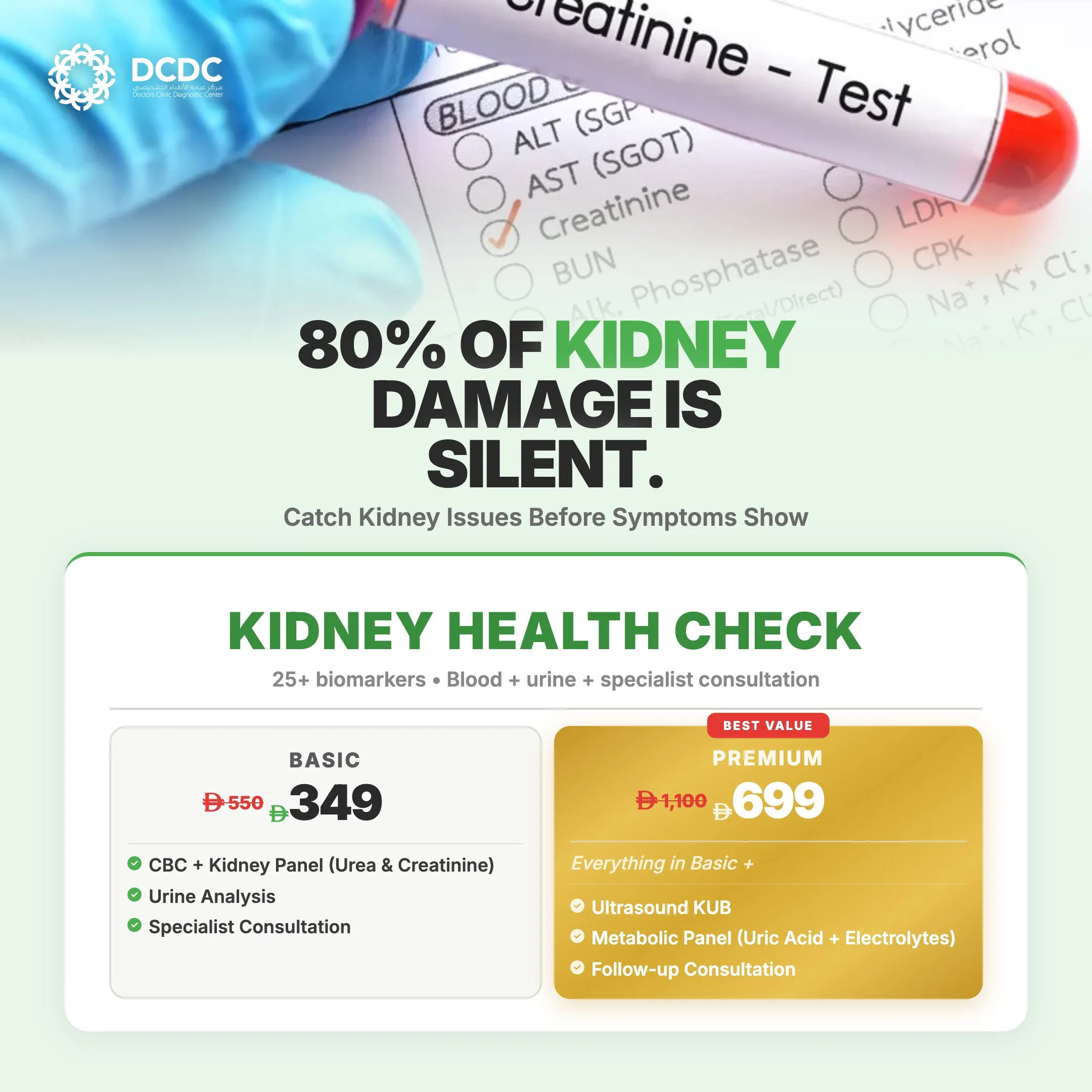
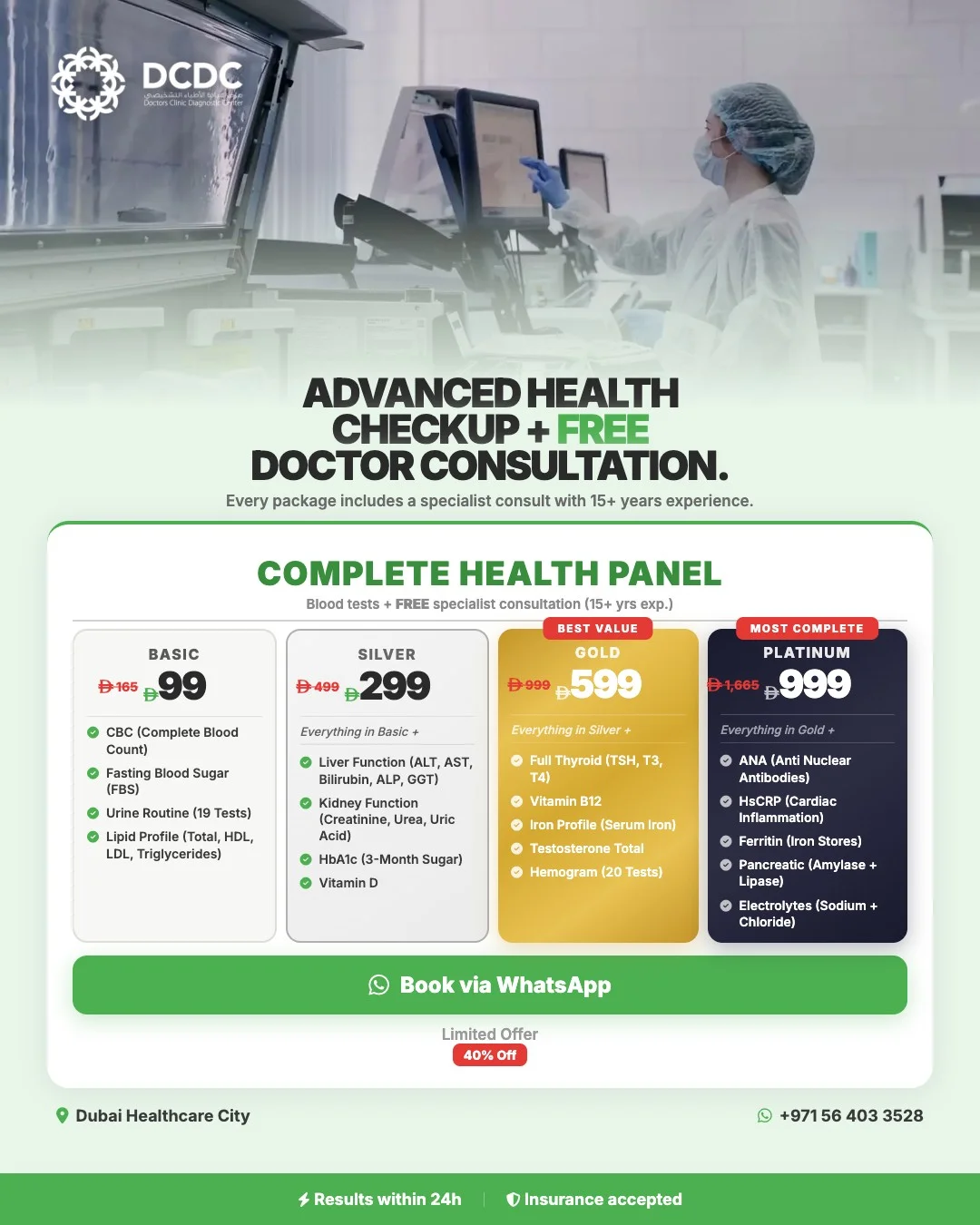
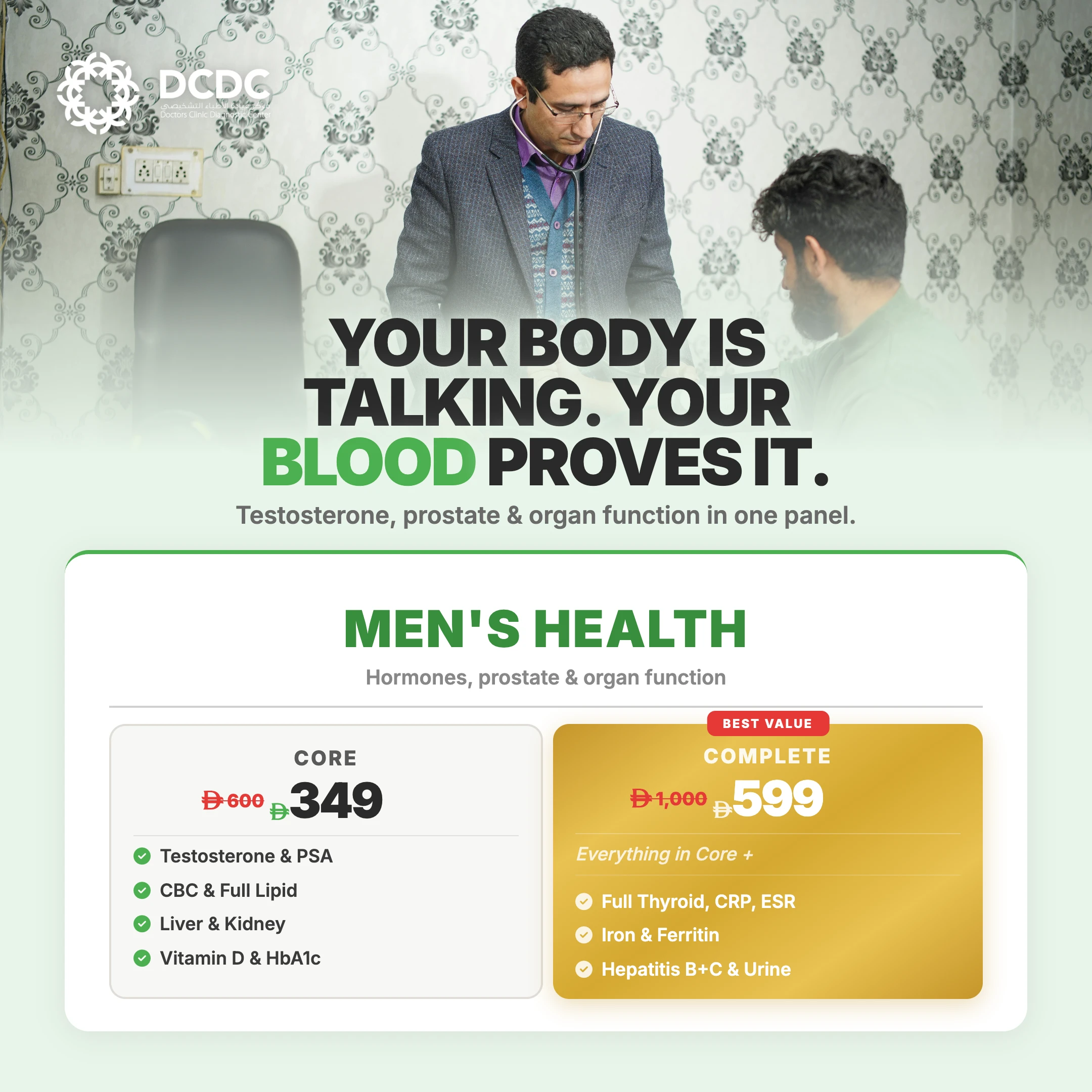
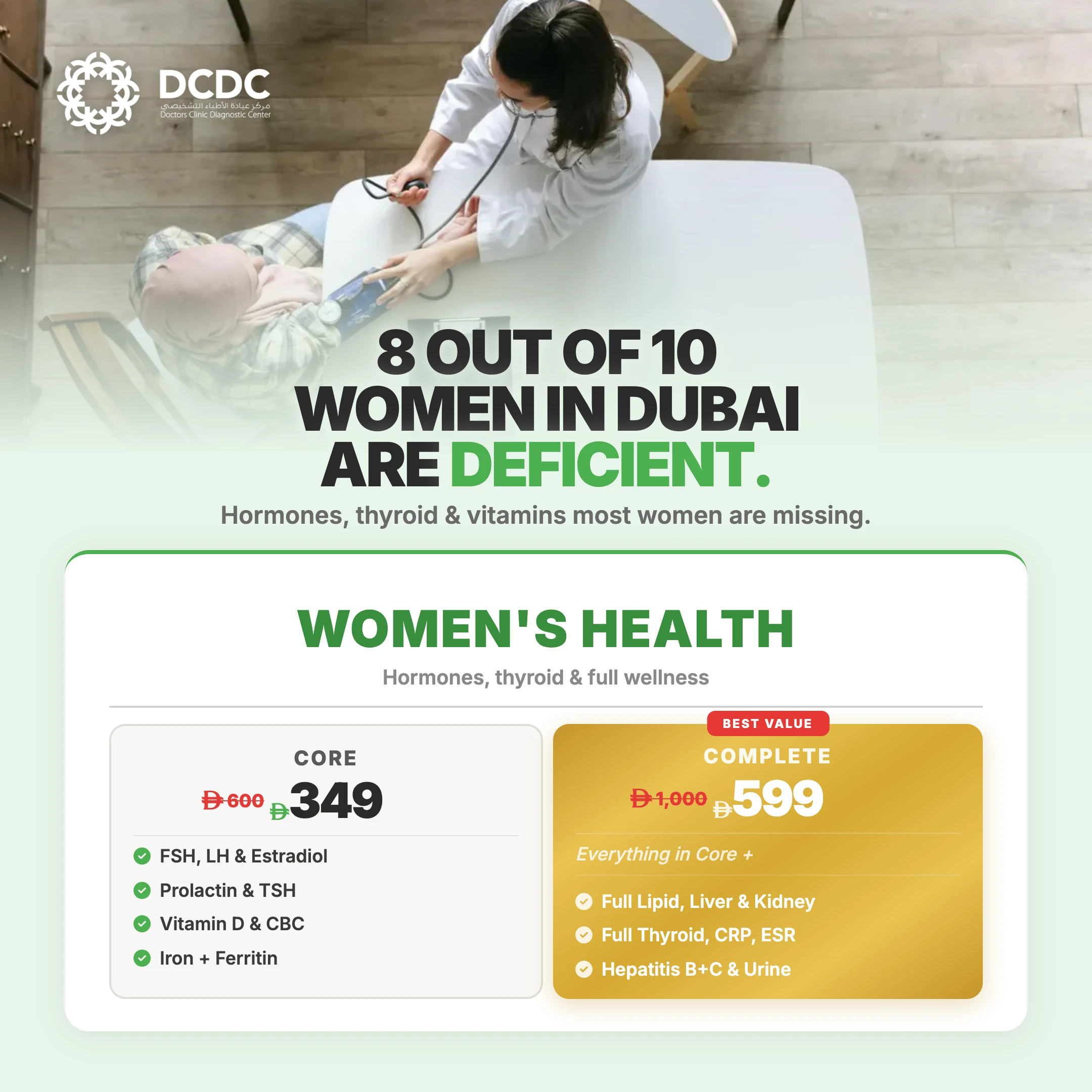
Health Screening Packages
Save with our bundled screening packages — specialist consultation included


What Is Dandruff?
Dandruff is a chronic scalp condition characterised by flaking of the skin on the scalp. The flakes are small pieces of dead skin that shed at an accelerated rate, often accompanied by itching. While everyone sheds scalp skin cells as part of normal skin renewal (a process that takes about 28 days), dandruff occurs when this turnover speeds up dramatically to as little as 7-14 days, producing visible white or yellowish flakes.
According to the Mayo Clinic, dandruff is generally considered a mild form of seborrheic dermatitis. When the condition is limited to the scalp and produces mainly flaking and mild itching, it is called dandruff. When the inflammation is more pronounced and involves redness, scaling, and greasy patches that extend beyond the scalp to the face (around the nose, eyebrows, and ears), chest, or other oily areas of the body, it is classified as seborrheic dermatitis.
Dandruff is not contagious, not caused by poor hygiene, and not dangerous. However, it can be persistent, socially embarrassing, and genuinely uncomfortable when itching is severe. It tends to worsen during winter months in temperate climates, but in Dubai the pattern is different, as indoor air conditioning and outdoor humidity create year-round conditions for flare-ups.
What Causes Dandruff?
Dandruff has several contributing factors that interact with each other. Understanding these causes helps explain why some people are affected while others are not, and why the condition tends to fluctuate in severity.
Malassezia Yeast
The single most important factor in dandruff is a genus of lipophilic (fat-loving) yeast called Malassezia. This yeast lives on the scalps of virtually all adults and feeds on the natural oils (sebum) produced by sebaceous glands. In most people, Malassezia exists in balance with the scalp ecosystem and causes no problems. However, in dandruff-prone individuals, the immune system reacts to the byproducts of Malassezia metabolism, specifically oleic acid, with an inflammatory response that accelerates skin cell turnover, producing visible flakes.
Research published in the Indian Journal of Dermatology confirms that Malassezia is a necessary component of dandruff, but not sufficient on its own. The yeast is present on healthy scalps too, which means that dandruff is primarily driven by an individual's immune sensitivity to Malassezia byproducts rather than by the amount of yeast present.
Seborrheic Dermatitis
As mentioned, dandruff is the mildest form of seborrheic dermatitis. This chronic inflammatory condition affects areas of the body with high sebum production: the scalp, face (particularly the nasolabial folds, eyebrows, and behind the ears), and upper chest. Seborrheic dermatitis involves a more pronounced inflammatory response to Malassezia, resulting in redness, greasy yellowish scales, and more persistent symptoms. If your dandruff is accompanied by facial redness or flaking in the creases around your nose, you may have seborrheic dermatitis rather than simple dandruff. This is relevant because it can also present similarly to eczema, and accurate diagnosis matters for choosing the right treatment.
Excess Sebum Production
Overproduction of sebum provides more food for Malassezia yeast, creating conditions that favour dandruff. This is why dandruff is most common in areas with the highest density of sebaceous glands and tends to worsen during hormonal changes that increase oil production, such as puberty. In Dubai's heat, sebum production increases further as the body attempts to manage temperature regulation.
Contact Dermatitis
Sensitivity or allergic reactions to hair care products, including shampoos, conditioners, hair dyes, styling gels, and leave-in treatments, can cause scalp irritation that mimics or worsens dandruff. This is known as allergic contact dermatitis of the scalp. Common culprits include fragrances, preservatives (such as methylisothiazolinone), and paraphenylenediamine (PPD) in hair dyes. If you notice scalp flaking that worsened after switching hair products, contact dermatitis should be considered.
Scalp Psoriasis
Psoriasis can affect the scalp and produce thick, silvery-white scales that look similar to severe dandruff. However, psoriasis patches tend to be thicker, more well-defined, and may extend beyond the hairline onto the forehead or behind the ears. Psoriasis is an autoimmune condition with a different treatment pathway, making it important to get an accurate diagnosis. If you are unsure whether your scalp flaking is dandruff or something more, read our guide on skin signs that should prompt a dermatologist visit.
Other Contributing Factors
- Dry skin: Dry scalp can produce smaller, less oily flakes. While technically different from dandruff (which involves excess oil), the two are easily confused and can coexist
- Hormonal fluctuations: Androgens stimulate sebum production, which is why dandruff often appears or worsens during puberty and is more common in males
- Stress: Psychological stress weakens immune function and can trigger or worsen dandruff flare-ups
- Medical conditions: Neurological conditions (such as Parkinson's disease), HIV/AIDS, and weakened immune systems are associated with more severe seborrheic dermatitis
- Diet: Zinc, B-vitamin, and essential fatty acid deficiencies have been linked to worsening dandruff, though diet alone rarely causes it
- Thyroid disorders: Both hypothyroidism and hyperthyroidism can affect skin cell turnover and sebum production, contributing to chronic scalp flaking
Why Dandruff Is Worse in Dubai
Dubai's environment presents a unique combination of factors that can make dandruff more frequent and harder to control than in temperate climates. Understanding these local triggers is essential for effective management.
Heat, Humidity, and Sweat
Dubai's outdoor temperatures regularly exceed 40 degrees Celsius during summer, with humidity levels reaching 70-90% near the coast. This combination drives significant scalp perspiration, which increases moisture and warmth on the scalp surface, the ideal growth environment for Malassezia yeast. The fungus thrives in warm, oily conditions, and the combination of heat-driven sweat and increased sebum production creates a feedback loop that promotes dandruff flare-ups. Research confirms that high heat and humidity increase sweat and oil production on the scalp, creating build-up that triggers irritation and visible flaking.
Air Conditioning and Indoor Dryness
The flip side of Dubai's outdoor heat is the aggressive indoor air conditioning that runs in virtually every building, vehicle, and home for most of the year. AC systems strip moisture from indoor air, often reducing humidity to below 30%. This dries out the scalp's outer layer, disrupting the skin barrier and causing it to compensate by producing more oil, which paradoxically feeds Malassezia. The constant cycling between humid outdoor heat and dry, cold indoor air subjects the scalp to repeated environmental stress, a pattern that is particularly harsh on people prone to dandruff or eczema.
Hard Water and Mineral Deposits
Dubai's tap water is produced through desalination and can contain elevated mineral content depending on the area. While no randomised controlled trials directly link hard water to dandruff, dermatologists note that hard water can worsen the condition by disrupting scalp barrier integrity, reducing shampoo effectiveness (making it harder to lather and rinse clean), and leaving mineral residue on the scalp. If your medicated shampoo does not seem to work as well as expected, water quality may be a contributing factor.
Swimming Pool Chlorine
Swimming is a year-round activity in Dubai, and most residential and community pools use chlorine for disinfection. Chlorine strips natural oils from the scalp, disrupts the acid mantle, and can leave the scalp dry and irritated. For dandruff-prone individuals, frequent pool exposure without proper post-swim scalp care can worsen flaking significantly. Always rinse your hair thoroughly with fresh water immediately after swimming and consider using a gentle, pH-balanced shampoo.
Frequent Washing and Product Build-Up
The heat and sweat in Dubai often lead people to wash their hair daily or even twice daily. While keeping the scalp clean is generally helpful for dandruff, overwashing with harsh shampoos can strip the scalp of protective oils, triggering a rebound increase in sebum production. Additionally, heavy use of styling products, hair oils, and leave-in conditioners (common in many cultural hair care routines represented in Dubai's diverse population) can create product build-up on the scalp that traps moisture and feeds yeast.
Dandruff vs Seborrheic Dermatitis vs Scalp Psoriasis
These three conditions are commonly confused because they all cause scalp flaking. However, they differ in severity, mechanism, and treatment. The table below summarises the key differences.
| Feature | Dandruff | Seborrheic Dermatitis | Scalp Psoriasis |
|---|---|---|---|
| Severity | Mild | Moderate to severe | Variable, often severe |
| Flake appearance | Small, white or grey | Yellowish, greasy scales | Thick, silvery-white plaques |
| Redness | Minimal or none | Moderate, in oily areas | Well-defined red patches |
| Location | Scalp only | Scalp, face, chest, ears | Scalp, may extend past hairline |
| Cause | Malassezia yeast sensitivity | Malassezia + immune/oil factors | Autoimmune (T-cell mediated) |
| First-line treatment | OTC antifungal shampoo | Rx antifungal + steroid | Rx steroid + vitamin D analogue |
| Curable? | Manageable, not curable | Manageable, not curable | Manageable, not curable |
If you are unsure which condition you have, a GP can usually distinguish between them through a clinical examination. In ambiguous cases, a scalp biopsy or referral to a dermatologist may be warranted.
Persistent Scalp Flaking? Get a Professional Diagnosis
Book a GP consultation at DCDC Dubai Healthcare City from AED 249. Get a proper scalp assessment, identify the cause of your dandruff, and receive a personalised treatment plan with on-site lab testing if needed.
Walk-in and same-day appointments available — 20+ insurance partners with direct billing
How to Treat Dandruff: A Step-by-Step Guide
Dandruff treatment follows a stepwise approach. Most people can control their dandruff with over-the-counter medicated shampoos. If those fail after 4 weeks of consistent use, prescription treatments are the next step.
Step 1: Regular Gentle Shampooing
For very mild dandruff, the Mayo Clinic recommends starting with more frequent gentle shampooing to reduce oil and dead skin cell build-up. Use a mild, fragrance-free shampoo and wash your hair daily or every other day. In Dubai's heat, daily washing with a gentle shampoo is often appropriate, as sweat and oil accumulate faster. If this alone does not resolve the flaking within 1-2 weeks, move to a medicated shampoo.
Step 2: Over-the-Counter Medicated Shampoos
Medicated dandruff shampoos are the cornerstone of treatment. They contain active ingredients that target the underlying causes of dandruff: Malassezia overgrowth, excess oil, inflammation, and accelerated skin cell turnover. The following table outlines the main active ingredients, how they work, and practical usage tips.
| Active Ingredient | How It Works | Usage Notes |
|---|---|---|
| Zinc pyrithione (1-2%) | Antifungal and antibacterial; reduces Malassezia population on the scalp | Most widely used globally. Gentle enough for daily use. Good first choice |
| Ketoconazole (1-2%) | Broad-spectrum antifungal that kills Malassezia directly | Available OTC at 1%; prescription at 2%. Use 2-3 times per week. Often the most effective OTC option |
| Selenium sulfide (1-2.5%) | Slows skin cell turnover and has antifungal properties | Can discolour blonde, grey, or chemically treated hair. Rinse thoroughly |
| Salicylic acid (2-3%) | Keratolytic — softens and removes scale build-up from the scalp | Addresses flaking but not the underlying cause. Best used with an antifungal shampoo |
| Coal tar (0.5-5%) | Slows skin cell production and reduces inflammation | Can discolour light hair and make the scalp more sensitive to sunlight. Use with caution in Dubai's intense UV environment |
| Piroctone olamine | Antifungal alternative to zinc pyrithione; gentler on hair and scalp | Found in many cosmetic anti-dandruff shampoos. Suitable for mild cases and colour-treated hair |
How to use medicated shampoos effectively: Apply the shampoo to wet hair, lather, and leave it on the scalp for 5 minutes before rinsing. This contact time is essential for the active ingredient to work. Most medicated shampoos should be used 2-3 times per week, with a gentle regular shampoo on other days. If one ingredient does not work after 2-4 weeks of consistent use, switch to a different active ingredient rather than increasing frequency.
Step 3: Prescription Treatments
If OTC shampoos fail to control your dandruff after 4 weeks, a doctor may prescribe stronger options.
- Prescription-strength ketoconazole shampoo (2%): A higher concentration than the OTC version, used 2-3 times per week for more stubborn cases
- Ciclopirox shampoo: A broad-spectrum antifungal that is effective against Malassezia and can be used as a long-term maintenance treatment
- Topical corticosteroid lotions or foams: Used short-term (1-2 weeks) to reduce scalp inflammation, redness, and itching during flare-ups. Not suitable for long-term use due to the risk of skin thinning
- Topical calcineurin inhibitors (tacrolimus, pimecrolimus): Anti-inflammatory agents used as steroid alternatives for sensitive areas or when steroids cannot be used long-term
- Oral antifungal medication (itraconazole, fluconazole): Reserved for severe, widespread seborrheic dermatitis that has not responded to topical treatments. Used for short courses under medical supervision
When to See a Doctor for Dandruff
Most dandruff responds well to over-the-counter treatment, and you do not need a doctor for mild cases. However, the NHS, Mayo Clinic, and Cleveland Clinic all recommend seeking medical advice in the following situations.
- OTC shampoo has not worked after 4 weeks: If you have been using a medicated dandruff shampoo correctly (with 5-minute contact time, 2-3 times per week) for at least 4 weeks without improvement, a doctor can assess whether the diagnosis is correct and prescribe stronger treatments
- Your scalp is red, swollen, or painful: These signs suggest significant inflammation that may require prescription anti-inflammatory treatment
- You notice hair thinning or loss: While dandruff itself does not cause permanent hair loss, severe scalp inflammation and constant scratching can damage hair follicles. If you notice thinning alongside dandruff, it is worth investigating whether an underlying condition such as alopecia areata or a nutritional deficiency is contributing. Blood tests for hair loss can help identify hormonal or nutritional factors
- Flaky patches appear on your face or body: Scaling beyond the scalp suggests seborrheic dermatitis or psoriasis rather than simple dandruff, and these conditions benefit from targeted medical treatment
- Your scalp is draining fluid or crusting over: This may indicate a secondary bacterial infection that requires antibiotic treatment
- Itching is severe and affecting your quality of life: Constant itching that disrupts sleep or daily activities warrants medical assessment and possibly prescription-strength relief
A GP can usually diagnose dandruff through a clinical examination of the scalp. In some cases, additional tests may be ordered to rule out underlying causes, such as thyroid blood tests (hypothyroidism can cause dry, flaky scalp), zinc and B-vitamin levels, or an allergy panel if contact dermatitis is suspected.
What to Expect at DCDC
If your dandruff has not responded to over-the-counter treatment, or if you want a professional assessment to rule out other scalp conditions, here is what to expect when you visit Doctors Clinic Diagnostic Center in Dubai Healthcare City.
Step 1: GP Consultation (From AED 249)
Your visit begins with a general consultation with Dr. Hadeel Elnur or another GP. The doctor will take a detailed history, including when your symptoms started, what treatments you have tried, your hair care routine, and any other symptoms (such as facial redness, itching elsewhere, or hair thinning). A thorough scalp examination follows to assess the pattern of flaking, the presence of redness or inflammation, and whether the condition extends beyond the scalp.
Step 2: On-Site Laboratory Testing (If Needed)
If the doctor suspects an underlying contributing factor, blood tests can be ordered and completed on-site at DCDC's in-house laboratory with same-day results for routine panels. Common tests for persistent dandruff include:
- Thyroid function test (TSH from AED 149; full thyroid profile AED 399): Thyroid disorders can cause dry, flaky scalp and hair changes. Thyroid testing is particularly relevant if dandruff is accompanied by fatigue, weight changes, or hair thinning
- Complete blood count (CBC from AED 149): To assess general health and check for nutritional deficiencies or signs of infection
- Allergy panel (IgE testing): If contact dermatitis is suspected, an allergy panel can identify specific allergens triggering your scalp reaction
- Zinc, iron, and vitamin B levels: Nutritional deficiencies that can contribute to chronic scalp flaking
Step 3: Diagnosis and Treatment Plan
Based on the clinical examination and any test results, your doctor will confirm whether you have dandruff, seborrheic dermatitis, scalp psoriasis, contact dermatitis, or another condition. You will receive a personalised treatment plan that may include a prescription medicated shampoo, topical medication, lifestyle recommendations specific to Dubai's environment, and a follow-up schedule. If a specialist referral is needed, DCDC's multi-specialty team means you can see a dermatologist in the same building.
Step 4: Follow-Up
Dandruff is a chronic condition that benefits from ongoing management. Your doctor will typically schedule a follow-up in 4-6 weeks to assess treatment response and adjust the plan if needed. DCDC is open Saturday to Thursday 8 AM to 10 PM and Friday 9 AM to 9 PM, with free dedicated parking and WhatsApp booking at +971 50 970 3884.
Dandruff Treatment Cost in Dubai
Understanding costs helps you plan. At DCDC, most consultations and testing are covered by insurance with direct billing through over 20 insurance partners. Below is a guide to typical costs.
| Service | Cost at DCDC | Notes |
|---|---|---|
| GP consultation | From AED 249 | Initial scalp assessment, diagnosis, and treatment plan |
| TSH (thyroid screening) | From AED 149 | Same-day results from on-site laboratory |
| Full thyroid profile | AED 399 | Comprehensive thyroid panel including T3, T4, and TSH |
| CBC (complete blood count) | From AED 149 | Same-day results; checks for deficiencies and infection |
| Allergy panel (IgE) | From AED 200 | Identifies allergens that may be triggering scalp reactions |
| OTC medicated shampoo | AED 30-80 | Available at pharmacies without prescription |
Lifestyle Tips for Managing Dandruff in Dubai
Beyond medicated treatment, these practical lifestyle adjustments can help Dubai residents keep dandruff under control year-round.
Scalp Hygiene and Washing Routine
- Wash regularly but not excessively: For most people in Dubai, washing hair every day or every other day with a gentle shampoo is appropriate. Use your medicated shampoo 2-3 times per week and a mild, fragrance-free shampoo on other days
- Leave medicated shampoo on for 5 minutes: The most common mistake is rinsing too quickly. Active ingredients need contact time with the scalp to work
- Rinse thoroughly: Residue from shampoo, conditioner, and styling products can irritate the scalp and worsen flaking
- Use lukewarm water: Hot water strips natural oils and can trigger rebound oil production. In Dubai, water from outdoor tanks in summer can be scalding, so let it cool before use
Indoor Environment
- Use a humidifier: Combat the drying effect of air conditioning by running a humidifier in your bedroom and workspace. Aim for 40-60% indoor humidity
- Set AC to a moderate temperature: Avoid extremely cold AC settings (below 22 degrees Celsius). The greater the temperature differential between indoors and outdoors, the more stress on your scalp
- Clean AC filters regularly: Dust and mould in AC systems circulate allergens and irritants that can aggravate scalp conditions
Sun Protection and Swimming
- Protect your scalp from UV: If you are using coal tar or selenium sulfide shampoos, your scalp will be more sensitive to sunlight. Wear a hat during outdoor activities in Dubai, especially between 10 AM and 4 PM
- Pre- and post-swim care: Wet your hair with fresh water before entering a chlorinated pool to reduce chlorine absorption. Rinse thoroughly immediately after swimming and apply a gentle shampoo
Diet and Nutrition
- Eat zinc-rich foods: Zinc plays a role in skin cell turnover and immune function. Good sources include pumpkin seeds, chickpeas, lentils, red meat, and shellfish
- Include omega-3 fatty acids: Found in salmon, sardines, walnuts, and flaxseed, omega-3s have anti-inflammatory properties that may help reduce scalp inflammation
- Stay hydrated: In Dubai's heat, dehydration is common and can affect skin health. Aim for at least 2-3 litres of water daily
- Limit sugar and processed foods: High-glycaemic diets may worsen inflammatory skin conditions. This also applies to managing acne, which shares some inflammatory pathways with seborrheic dermatitis
Stress Management
Stress is a well-documented trigger for dandruff and seborrheic dermatitis flare-ups. The fast-paced lifestyle common in Dubai can contribute to chronic stress. Regular exercise, adequate sleep (7-9 hours), mindfulness practices, and maintaining social connections can all help keep stress-related flare-ups at bay.
Dandruff and Hair Loss: Is There a Connection?
A common concern among dandruff sufferers is whether the condition can cause hair loss. The short answer: dandruff itself does not directly cause permanent hair loss. However, severe and chronic scalp inflammation associated with untreated seborrheic dermatitis can damage hair follicles over time, and persistent scratching can cause mechanical hair breakage and temporary thinning.
If you are experiencing dandruff alongside noticeable hair thinning, it is important to investigate whether other conditions are contributing. Conditions such as alopecia areata, telogen effluvium (stress-related hair shedding), thyroid disorders, or iron deficiency can all cause hair loss independently of dandruff and sometimes coexist with it. A blood test panel for hair loss that includes thyroid function, iron studies, zinc, vitamin D, and hormonal markers can help identify or rule out these contributing factors.
Dandruff With Hair Thinning? Get Tested at DCDC
At DCDC Dubai Healthcare City, our on-site laboratory can run a complete scalp health blood panel including thyroid function, iron, zinc, vitamin D, and CBC — with same-day results for most tests. GP consultations from AED 249.
Call +971 54 219 5008 or WhatsApp +971 50 970 3884 — Sat-Thu 8 AM-10 PM, Fri 9 AM-9 PM
Dandruff in Children
Dandruff can affect children and teenagers, particularly during puberty when hormonal changes increase sebum production. In infants, a related condition called cradle cap (infantile seborrheic dermatitis) causes thick, yellowish, crusty patches on the scalp. Cradle cap is harmless and usually resolves on its own within the first year of life.
For older children with dandruff, the same OTC medicated shampoos used for adults can be effective, but parents should check the product labelling for age-appropriate formulations and avoid adult-strength selenium sulfide or coal tar products in young children without medical guidance. A GP can advise on the safest options for your child's age. If your child has persistent scalp issues alongside other skin conditions, the problem may be eczema rather than simple dandruff.
Common Myths About Dandruff
- Myth: Dandruff means you have a dirty scalp. Fact: Dandruff is caused by yeast sensitivity and immune response, not poor hygiene. Overwashing can actually make it worse by stripping protective oils
- Myth: Dandruff is contagious. Fact: You cannot catch dandruff from someone else. Malassezia yeast already lives on everyone's scalp
- Myth: Dandruff can be permanently cured. Fact: There is no cure for dandruff. It is a chronic condition that can be effectively managed with the right treatment, but symptoms may return when treatment is stopped
- Myth: Only people with dry scalps get dandruff. Fact: Dandruff is more commonly associated with oily scalps, as Malassezia feeds on sebum. Dry scalp flaking is a separate condition, though the two can coexist
- Myth: You should avoid oil if you have dandruff. Fact: While excess oil feeds Malassezia, some natural oils (such as tea tree oil with antifungal properties) may help. The key is not to eliminate all oil but to manage the balance
- Myth: Dandruff always causes hair loss. Fact: Dandruff does not directly cause permanent hair loss, though severe untreated inflammation and chronic scratching can contribute to temporary thinning
Related Services at DCDC
Expert care and advanced diagnostics at Dubai Healthcare City
Frequently Asked Questions
Final Thoughts
Dandruff is one of the most common scalp conditions in the world, and living in Dubai can make it particularly persistent. The constant cycle between outdoor heat and humidity that feeds Malassezia yeast and indoor air conditioning that dries and disrupts the scalp barrier means that Dubai residents often need a more proactive approach to scalp care than people in temperate climates.
The good news is that dandruff is highly treatable. For most people, over-the-counter medicated shampoos containing zinc pyrithione, ketoconazole, or selenium sulfide will bring the condition under control within a few weeks. The key is consistent use with proper technique: apply, wait 5 minutes, rinse, and repeat 2-3 times per week. If that approach does not work, a GP can investigate underlying factors such as thyroid function or nutritional deficiencies and prescribe stronger treatments.
At DCDC in Dubai Healthcare City (Building 64, Block A, Al Razi Medical Complex), our GPs provide thorough scalp assessments with on-site laboratory testing and same-day results. With GP consultations from AED 249, over 20 insurance partners with direct billing, free parking, and extended hours (Saturday to Thursday 8 AM to 10 PM, Friday 9 AM to 9 PM), getting professional help for persistent dandruff is straightforward. Book via WhatsApp at +971 50 970 3884 or call +971 54 219 5008.
Sources & References
This article was reviewed by our medical team and references the following sources:
- Mayo Clinic — Dandruff: Symptoms and Causes
- Mayo Clinic — Dandruff: Diagnosis and Treatment
- Mayo Clinic — Seborrheic Dermatitis: Symptoms and Causes
- NHS — Dandruff: How to Get Rid of It
- Cleveland Clinic — Seborrheic Dermatitis: Symptoms, Causes & Treatment
- American Academy of Dermatology — How to Treat Dandruff
- PubMed Central — The Role of Malassezia in Dandruff and Seborrheic Dermatitis
- PubMed Central — Zinc Pyrithione: Targeted Delivery to Skin Epithelia
Medical content on this site is reviewed by DHA-licensed physicians. See our editorial policy for more information.

Written by
Dr. Hadeel Elnur
General Practitioner
MD, General Practice
Dr. Hadeel Elnur is a General Practitioner at Doctors Clinic Diagnostic Center (DCDC) in Dubai Healthcare City. She provides expert care for scalp conditions and skin concerns, helping patients identify the underlying causes of persistent dandruff through thorough assessment and on-site laboratory testing.
Related Articles

Eczema Treatment Dubai: Triggers & Care (2026)

Skin Signs to See a Dermatologist Dubai (2026)
Alopecia Areata Treatment Dubai: Guide (2026)
Acne Treatment Dubai: Causes & Care (2026)
More in Dermatology
Dry Skin in Dubai: Causes & Treatment (2026)
Read More
Blood Tests for Hair Loss Dubai: Guide (2026)
Read MoreWart Removal Cost Dubai: Methods & Prices (2026)
Read MoreHyperpigmentation Treatment Dubai: Guide (2026)
Read More
Stretch Marks Treatment Dubai: Options (2026)
Read MoreSkin Signs to See a Dermatologist Dubai (2026)
Read More© 2026 Doctors Clinic Diagnostic Center (DCDC), Dubai Healthcare City. Originally published at https://doctorsclinicdubai.ae/blog/dandruff-causes-treatment-dubai. All rights reserved. Unauthorized reproduction is prohibited.