Key Takeaways
- Dry skin (xerosis) affects 30-60% of adults and is one of the most common skin complaints in Dubai. The combination of year-round air conditioning, low indoor humidity, intense UV exposure, and desalinated water creates a uniquely harsh environment for the skin barrier.
- Dubai-specific dry skin triggers include over-cooled AC that drops indoor humidity to 20-30%, chlorinated swimming pools, desalinated tap water, rapid temperature shifts between 45 degree Celsius outdoors and 20 degree Celsius indoors, and high UV index all year round.
- Treatment follows a stepwise approach: regular emollient use as the foundation, lifestyle and environmental modifications (humidifiers, shorter showers, gentle cleansers), and prescription creams for persistent or severe cases.
- You should see a doctor if dry skin persists despite regular moisturising, if it is accompanied by intense itching that disrupts sleep, if you notice cracking or bleeding, or if it could signal an underlying condition such as eczema, psoriasis, thyroid dysfunction, or diabetes.
- At DCDC Dubai Healthcare City, GP consultations for dry skin start from AED 249, with on-site blood testing to check for underlying causes such as thyroid disorders, diabetes, or nutritional deficiencies, and same-day results for routine tests.
- Prevention is key in Dubai: use a humidifier in air-conditioned rooms, apply ceramide-based moisturiser within three minutes of bathing, limit showers to 5-10 minutes with lukewarm water, and wear broad-spectrum SPF 30+ sunscreen daily.
If your skin feels tight, rough, or flaky — especially after spending hours in Dubai's aggressively air-conditioned buildings — you are not alone. Dry skin (medically known as xerosis) is one of the most common dermatological complaints among Dubai residents, driven by a climate that attacks the skin barrier from every angle. From the low humidity pumped by relentless AC systems to intense UV radiation and chlorinated pool water, living in the UAE creates a unique set of challenges for keeping skin healthy and hydrated. This guide covers the causes, treatments, and prevention strategies for dry skin in Dubai — and explains when it is time to book a GP consultation to rule out underlying conditions.
Whether you have recently moved to Dubai and noticed your skin changing, or you have lived here for years and struggle with seasonal dryness, understanding why your skin is dry is the first step toward effective treatment.
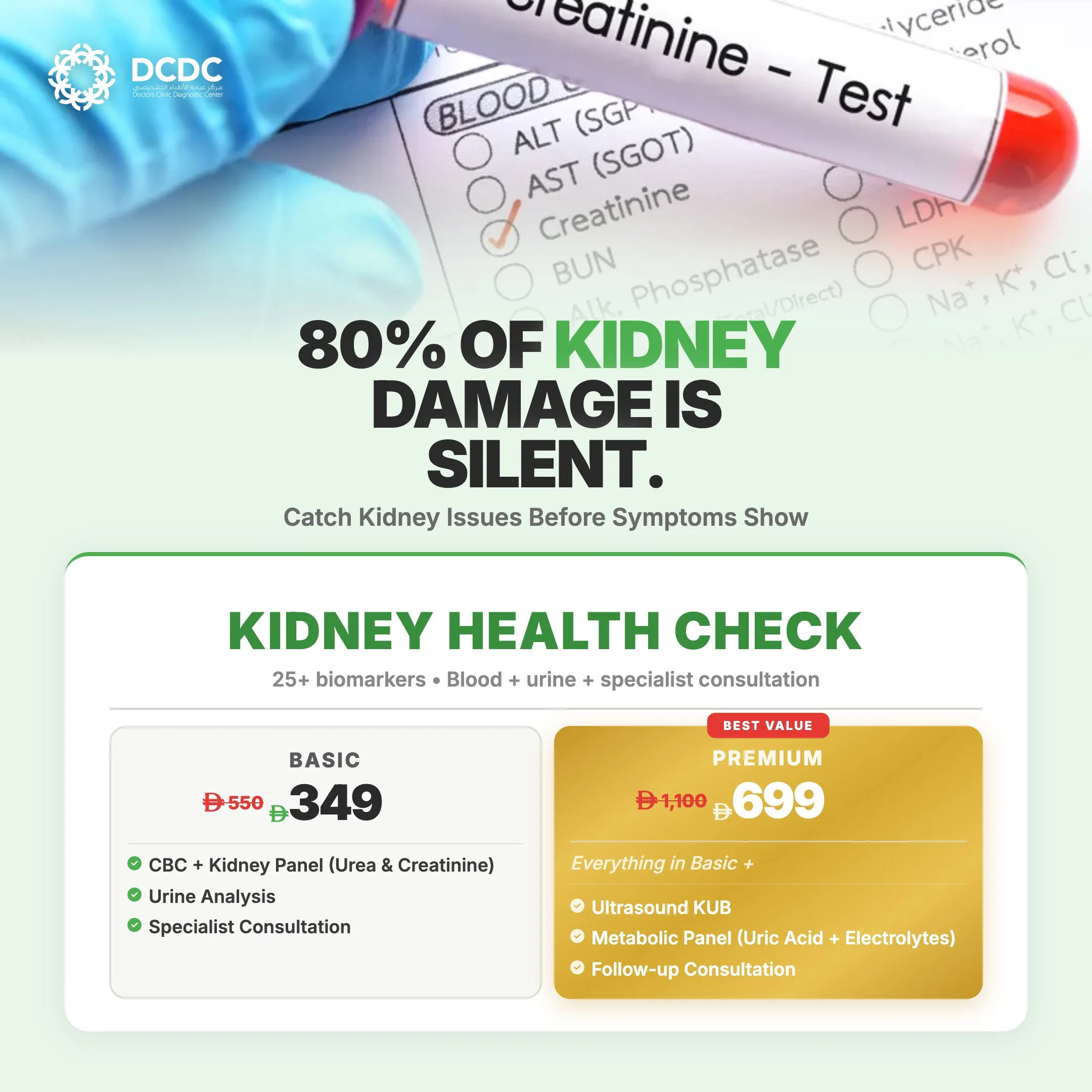
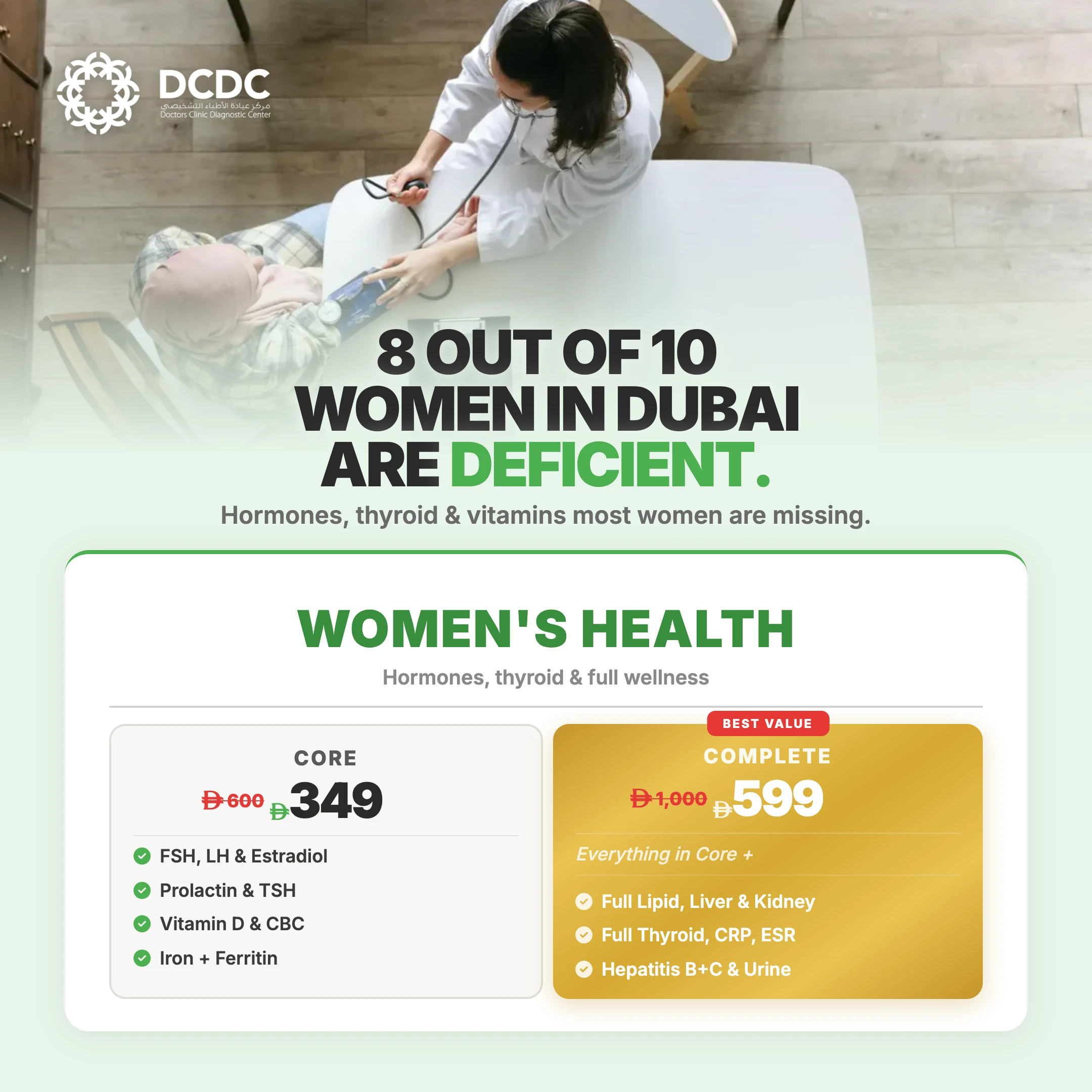
Health Screening Packages
Save with our bundled screening packages — specialist consultation included




What Is Dry Skin (Xerosis)?
Dry skin — or xerosis cutis in medical terminology — occurs when the outermost layer of the skin (the stratum corneum) loses too much water. Healthy skin contains approximately 20-35% water in its outer layer, which keeps it soft, supple, and functioning as an effective barrier. When water content drops below 10%, the skin becomes visibly dry, rough, and prone to cracking.
The skin barrier works like a brick wall: corneocytes (dead skin cells) are the bricks, and a matrix of lipids — ceramides, cholesterol, and fatty acids — is the mortar. This lipid matrix traps water and prevents excessive evaporation, a process known as transepidermal water loss (TEWL). When the lipid barrier is damaged or depleted, water escapes rapidly, and irritants can penetrate the skin more easily. This is exactly what Dubai's environment does: air conditioning, harsh water, and UV radiation all degrade the lipid barrier.
According to research published in the Journal of Dermatological Science, xerosis affects an estimated 30-60% of the adult population, with prevalence increasing significantly with age. A primary care study found that 55.6% of adults aged 65 and over had clinically significant dry skin. While dry skin itself is not dangerous, persistent or severe xerosis can lead to complications including eczema (dermatitis), skin infections, and significant discomfort.
Why Is Dry Skin So Common in Dubai?
Dubai's climate and lifestyle create a perfect storm for skin dehydration. While many people associate dry skin with cold, wintry weather, Dubai's environment causes year-round skin barrier stress through a different set of mechanisms.
Air Conditioning and Indoor Dryness
This is the single biggest cause of dry skin in Dubai. Air conditioning systems cool the air by removing moisture, often reducing indoor humidity to just 20-30% — well below the 40-60% range recommended by dermatologists for healthy skin. Most homes, offices, malls, cars, and public spaces in Dubai run AC for 8-10 months of the year, meaning residents spend the majority of their time in artificially dried air. The longer you stay in an air-conditioned environment, the more water evaporates from your skin surface. Poorly maintained AC units compound the problem by circulating dust and allergens that further irritate dry skin.
Temperature Cycling Between Indoors and Outdoors
Moving repeatedly between extreme outdoor heat (40-50 degrees Celsius in summer) and aggressively cooled indoor environments (typically set to 18-22 degrees Celsius) subjects the skin to rapid thermal stress. This constant expansion and contraction of blood vessels disrupts the skin barrier and accelerates moisture loss. Dubai residents may experience this temperature swing ten or more times daily — walking from a parking garage to an office, stepping out for lunch, entering a shopping mall, and returning to a chilled car.
Low Natural Humidity and Desert Climate
While Dubai's coastal location brings humidity in summer, the ambient air is still considered dry for much of the year. Winter months (November to March) see natural humidity drop significantly, especially inland. The desert climate also means high evaporation rates — sweat and surface moisture leave the skin faster than in temperate or tropical climates, even when outdoor humidity is moderate.
Intense UV Radiation
Dubai's UV index reaches 8-11+ during summer and remains elevated throughout the year. Chronic UV exposure damages the lipid barrier, breaks down collagen, and increases transepidermal water loss. Even brief unprotected sun exposure — the walk from a car to a building — accumulates over time and contributes to chronic skin dryness and premature ageing.
Chlorinated Swimming Pools
Swimming is a core part of Dubai life, with most residential buildings featuring pools that residents use year-round. Chlorine is a potent chemical that strips natural oils from the skin and disrupts the acid mantle — the thin acidic film that protects the outer skin layer. Repeated pool exposure without proper pre- and post-swim skincare leads to progressively drier, more irritated skin.
Water Quality
Dubai's tap water is produced through desalination and can contain minerals and residual chlorine that contribute to skin dryness. Many residents report that showering with tap water leaves their skin feeling tight and stripped. Long, hot showers — a common habit in Dubai — compound this effect by dissolving the skin's protective oils.
Other Contributing Factors
- Harsh soaps and cleansers: Products containing sodium lauryl sulphate (SLS), alcohol, or artificial fragrances strip the skin barrier. Many widely available body washes in the UAE are soap-based and highly alkaline
- Over-washing and over-exfoliating: Frequent hand washing and aggressive exfoliation remove the lipid barrier faster than the skin can rebuild it
- Ageing: After age 40, sebaceous gland activity decreases and the skin produces fewer natural oils. The stratum corneum thins, making it less able to retain moisture
- Medications: Diuretics, statins, retinoids, and certain acne treatments can cause or worsen dry skin as a side effect
- Underlying medical conditions: Hypothyroidism, diabetes, kidney disease, and nutritional deficiencies (iron, zinc, essential fatty acids) can all present with dry skin as an early symptom
Common Causes of Dry Skin: A Quick Reference
| Category | Causes | Dubai Relevance |
|---|---|---|
| Environmental | Low humidity, cold dry air, wind | AC drops indoor humidity to 20-30% year-round |
| Lifestyle | Hot showers, harsh soaps, over-washing | Common habits worsened by desalinated water |
| UV exposure | Sun damage to lipid barrier | UV index 8-11+ most of the year |
| Chemical | Chlorine, alcohol-based products | Year-round pool use; hand sanitiser use |
| Age-related | Decreased oil production after 40 | Exacerbated by Dubai's drying environment |
| Medical | Thyroid disease, diabetes, eczema, psoriasis | GP blood tests identify underlying causes |
| Medications | Retinoids, diuretics, statins | Requires treatment plan adjustment by your doctor |
Symptoms of Dry Skin: When Is It More Than Just Dryness?
Mild dry skin is a cosmetic nuisance. Severe or persistent dry skin can indicate a deeper problem. Recognising the symptoms helps you decide whether home care is sufficient or whether you need medical assessment.
Mild to Moderate Dry Skin
- Tightness: Skin feels stretched, especially after washing or bathing
- Roughness: Skin feels sandpapery to the touch, particularly on the arms, legs, and hands
- Flaking or scaling: Fine white flakes on clothing or visible peeling skin
- Dullness: Skin appears ashen or lacks a healthy glow — particularly noticeable on darker skin tones
- Fine lines: Dehydration lines appear more prominent, especially around the eyes and mouth
Severe Dry Skin — See a Doctor
- Deep cracks or fissures: Cracks that bleed, particularly on the heels, hands, or fingertips
- Intense itching (pruritus): Itching that disrupts sleep, concentration, or daily activities
- Red, inflamed patches: May indicate eczema, contact dermatitis, or psoriasis developing from chronic dryness
- Infection signs: Warmth, swelling, oozing, or yellow crusting on cracked skin — bacteria can enter through skin fissures
- Widespread dryness despite moisturising: Persistent dryness that does not respond to over-the-counter moisturisers may indicate an underlying medical condition
When to See a Doctor for Dry Skin
Most mild dry skin responds well to consistent moisturising and lifestyle changes. However, there are specific situations where you should seek professional medical evaluation rather than continuing to self-treat.
- Dry skin persists despite 2-3 weeks of regular moisturising: If a good-quality emollient applied twice daily has not improved symptoms, you may need a prescription-strength treatment or investigation for underlying causes
- Itching disrupts sleep or daily life: Persistent pruritus warrants evaluation — it can indicate eczema, contact dermatitis, liver or kidney conditions, or thyroid dysfunction
- Skin is cracking, bleeding, or showing signs of infection: Cracked skin is vulnerable to bacterial entry. If you notice warmth, swelling, pus, or red streaking, seek medical attention promptly
- You suspect an underlying condition: Dry skin can be a presenting symptom of hypothyroidism, diabetes mellitus, iron deficiency anaemia, coeliac disease, or chronic kidney disease. A simple blood test can screen for these
- Dry patches resemble eczema or psoriasis: Scaly, well-defined patches, or patches in characteristic locations (elbow creases, behind knees, scalp) need professional assessment. Read more about skin signs that warrant a dermatologist visit
- New onset in adulthood without clear cause: Sudden widespread dry skin in an adult who has not changed products or environment should be evaluated medically
- You are taking medications that could be causing it: If dry skin developed after starting a new medication (retinoids, diuretics, statins, chemotherapy), your doctor may adjust your regimen
Concerned About Persistent Dry Skin?
Book a GP consultation at DCDC Dubai Healthcare City from AED 249. Same-day appointments, on-site blood tests to check for underlying causes, and direct insurance billing with 20+ partners.
Walk-in and same-day appointments — Sat-Thu 8 AM-10 PM, Fri 9 AM-9 PM
How Dry Skin Is Diagnosed
Dry skin is usually diagnosed clinically — your doctor examines your skin, asks about your symptoms, lifestyle, product use, and medical history. In most cases, no special tests are needed. However, when dry skin is persistent, widespread, or accompanied by other symptoms, your GP may order investigations to rule out underlying causes.
Blood Tests Your GP May Order
- Thyroid function tests (TSH, T3, T4): Hypothyroidism is one of the most common medical causes of dry skin. Low thyroid hormone slows skin cell turnover and reduces oil production
- Blood glucose / HbA1c: Diabetes causes dry skin through multiple mechanisms including reduced sweating, impaired circulation, and nerve damage
- Complete blood count (CBC): Screens for anaemia and other blood abnormalities that can affect skin health
- Iron studies and ferritin: Iron deficiency is a common cause of dry, brittle skin and hair loss
- Vitamin D level: Despite Dubai's abundant sunshine, vitamin D deficiency is surprisingly common due to indoor lifestyles and sun avoidance, and it affects skin barrier function
- Liver and kidney function tests: Chronic liver or kidney disease can present with generalised dry, itchy skin
- IgE allergy panel: If an allergic component is suspected — particularly if dryness is accompanied by itching, redness, or rash — an allergy test can identify specific triggers
Dry Skin Treatment: A Stepwise Approach
Dry skin treatment follows a structured approach, starting with the simplest and most widely effective measures and escalating only when needed. The three pillars are: restore moisture, repair the skin barrier, and treat the underlying cause.
Step 1: Emollients and Moisturisers (The Foundation)
Daily emollient use is the cornerstone of dry skin treatment and the step most people underestimate. According to the NHS and the American Academy of Dermatology (AAD), moisturisers should be applied at least twice daily and immediately after bathing — within three minutes, while the skin is still slightly damp. This "soak and seal" technique locks water into the outer skin layer. In Dubai's dry AC environments, many patients need to reapply three or four times daily.
- Ointments (e.g., petroleum jelly, Aquaphor): Most occlusive and effective for very dry skin. Best for nighttime use. Can feel heavy in Dubai's heat but provide maximum barrier protection
- Creams (e.g., CeraVe Moisturising Cream, Eucerin, Cetaphil): Good balance of hydration and comfort. Ceramide-containing creams are particularly effective because they directly replace the lipids missing from dry skin. The most popular choice in Dubai's climate
- Lotions: Lighter and less occlusive. Suitable for mildly dry skin or daytime use in heat but may not be sufficient for moderate-to-severe dryness
- Key ingredients to look for: Ceramides, hyaluronic acid, glycerine, urea (5-10% for body, lower for face), shea butter, and niacinamide. Always choose fragrance-free formulations
Step 2: Lifestyle and Environmental Modifications
- Use a humidifier: Place a humidifier in your bedroom and office to counteract AC-induced dryness. Aim for 40-60% indoor humidity
- Shorten shower time: Limit showers to 5-10 minutes with lukewarm water. Hot water strips natural oils faster
- Switch to gentle, soap-free cleansers: Replace bar soap with pH-balanced, fragrance-free wash (such as CeraVe Hydrating Cleanser or Cetaphil Gentle Skin Cleanser)
- Pat dry, do not rub: After bathing, gently pat skin with a soft towel and apply moisturiser immediately
- Drink adequate water: While hydration alone does not cure dry skin, chronic dehydration worsens it. Aim for 2-3 litres daily in Dubai's climate
- Wear breathable fabrics: Cotton and linen allow the skin to breathe. Synthetic fabrics trap heat and sweat, worsening irritation
- Apply SPF 30+ sunscreen daily: UV protection prevents further barrier damage. Use a moisturising sunscreen for double benefit
- Pre- and post-swim care: Apply a thick emollient before swimming and shower immediately after to rinse off chlorine. Reapply moisturiser within three minutes
Step 3: Prescription Treatments (When Needed)
When emollients and lifestyle changes are not enough, your GP or dermatologist can prescribe targeted treatments.
- Topical corticosteroids: Short courses (7-14 days) of low-to-moderate potency steroid cream reduce inflammation and itching in dry skin that has progressed to dermatitis. Not for long-term daily use on the face or thin skin
- Topical calcineurin inhibitors (tacrolimus, pimecrolimus): Steroid-free anti-inflammatory creams for sensitive areas — face, eyelids, neck, and skin folds. Suitable for longer-term use
- Prescription emollients with urea or lactic acid: Urea-based creams (10-20%) are powerful humectants that attract and hold water in the skin. Lactic acid gently exfoliates while hydrating
- Antihistamines: Oral antihistamines (cetirizine, hydroxyzine) can help manage itching, especially at night
- Treating underlying conditions: If blood tests reveal hypothyroidism, diabetes, anaemia, or nutritional deficiencies, treating the root cause often resolves the dry skin. Thyroid hormone replacement, for example, typically improves skin within weeks
Dry Skin vs Eczema vs Psoriasis: How to Tell the Difference
Many patients in Dubai are unsure whether they have simple dry skin or a more specific skin condition. Understanding the differences helps you decide when self-care is enough and when to see a doctor.
| Feature | Dry Skin (Xerosis) | Eczema (Atopic Dermatitis) | Psoriasis |
|---|---|---|---|
| Appearance | Rough, flaky, dull skin | Red, inflamed, weeping patches | Thick, silvery-white scales on red plaques |
| Itch level | Mild to moderate | Intense, often disrupts sleep | Moderate, can burn or sting |
| Location | Anywhere, often arms and legs | Elbow creases, behind knees, face | Elbows, knees, scalp, lower back |
| Cause | Environmental, lifestyle, ageing | Immune dysfunction + barrier defect | Autoimmune — rapid skin cell turnover |
| Treatment | Moisturisers, lifestyle changes | Emollients + prescription anti-inflammatories | Topical treatments, phototherapy, biologics |
| Needs a doctor? | Usually self-managed initially | Yes — requires medical management | Yes — requires medical management |
If your dry skin has progressed to red, itchy, persistent patches, you may be dealing with eczema. Similarly, if you notice thick, scaly plaques that do not respond to moisturisers, a medical evaluation is essential. Our guide to skin signs that need a dermatologist covers the full range of warning signs.
Dry Skin and Underlying Health Conditions
Sometimes dry skin is not just a surface-level issue — it can be the first visible sign of a systemic health condition. If your dry skin is new, unexplained, or does not respond to topical treatment, your GP may investigate the following.
Hypothyroidism
An underactive thyroid slows metabolism, reduces sweat and oil production, and impairs skin cell turnover. The result is characteristically dry, cool, pale skin — often described as "rough" or "coarse." Hypothyroidism is particularly common in women over 40 and is easily diagnosed with a simple TSH blood test.
Diabetes Mellitus
High blood sugar damages small blood vessels and nerves, reducing blood flow and sweating. Up to 80% of people with diabetes experience skin problems, with dry skin being one of the earliest and most common. Dry, cracked skin on the feet is a particularly important warning sign that requires prompt attention to prevent diabetic foot complications.
Nutritional Deficiencies
Deficiencies in iron, zinc, vitamin D, essential fatty acids, and B vitamins can all impair skin barrier function and cause dryness. These are surprisingly common in Dubai despite the city's affluence, often related to restrictive diets, poor absorption, or indoor lifestyles limiting vitamin D synthesis.
Other Conditions to Consider
- Chronic kidney disease: Impaired kidney function leads to uraemic pruritus and generalised dry, itchy skin
- Liver disease: Bile salt deposition in the skin causes itching and dryness
- Allergic conditions: Environmental allergies can cause dry, irritated skin. An allergy panel may help identify triggers
- Coeliac disease: Gluten intolerance can present with dermatitis herpetiformis — an intensely itchy, blistering rash — or generalised dry skin
Dry Skin Prevention Tips for Dubai Residents
Prevention is more effective and more comfortable than treatment. These evidence-based strategies are tailored specifically to Dubai's environment and lifestyle.
- 1. Invest in a quality humidifier: Run it in your bedroom overnight and in your office during the day. This single step counteracts the drying effect of AC more effectively than any cream alone
- 2. Moisturise within 3 minutes of bathing: The "soak and seal" technique traps water in the skin before it evaporates. Keep a moisturiser in the bathroom so you do not forget
- 3. Switch to lukewarm showers under 10 minutes: Hot water feels good but dissolves the skin's natural oils. Reducing water temperature and shower time is one of the most impactful changes you can make
- 4. Use soap-free, pH-balanced cleansers: Replace alkaline bar soaps with syndet (synthetic detergent) bars or gentle liquid cleansers that preserve the skin's acid mantle
- 5. Apply broad-spectrum SPF 30+ daily: Sun protection prevents UV-induced barrier damage. Choose a moisturising sunscreen to combine two steps in one
- 6. Protect skin before and after swimming: Apply a thick layer of emollient before entering the pool. Shower immediately after and reapply moisturiser
- 7. Wear cotton or linen clothing: Breathable natural fabrics reduce skin irritation compared to synthetics. Choose loose-fitting clothes in Dubai's heat
- 8. Stay hydrated: Drink 2-3 litres of water daily. Dubai's heat and AC cause insensible fluid loss that many residents underestimate
- 9. Avoid fragranced skincare products: Fragrance is one of the most common causes of contact irritation. Choose products labelled "fragrance-free" (not "unscented" — which may still contain masking fragrances)
- 10. Adjust your AC settings: If you can control your AC, set it to 23-25 degrees Celsius rather than the typical 18-20 degrees. Every degree warmer means slightly more humidity and less skin drying
Need Help with Persistent Dry Skin?
Book a GP consultation at DCDC Dubai Healthcare City. On-site blood tests to check thyroid, diabetes, and nutritional levels — with same-day results and direct insurance billing.
WhatsApp +971 50 970 3884 or call +971 54 219 5008
What to Expect at DCDC
At Doctors Clinic Diagnostic Center (DCDC) in Dubai Healthcare City, patients with dry skin concerns receive thorough assessment and personalised care under one roof. Here is what your visit looks like.
Your Dry Skin Consultation Journey
- Arrival and check-in: DCDC is located in Building 64, Block A, Al Razi Medical Complex, DHCC — with free dedicated on-site parking. Walk-in and same-day appointments are available Saturday through Thursday, 8 AM to 10 PM, and Friday 9 AM to 9 PM
- GP consultation (from AED 249): Dr. Hadeel Elnur or one of our experienced GPs will examine your skin, review your medical history, discuss your lifestyle (AC exposure, shower habits, skincare routine), and assess whether your dry skin is straightforward or potentially linked to an underlying condition
- On-site blood tests (if indicated): If your doctor suspects an underlying cause, blood tests are available immediately at our in-house laboratory — thyroid function, blood glucose, CBC, iron studies, vitamin D, and more. Routine results are available same day, so you do not need a separate lab visit
- Diagnosis and treatment plan: You will receive a clear diagnosis, a written treatment plan with specific product recommendations (emollients, cleansers, sunscreens), prescriptions if needed, and lifestyle guidance tailored to Dubai's environment
- Allergy assessment (if needed): If an allergic component is suspected, on-site IgE allergy panels can identify environmental and food triggers contributing to your skin issues
- Follow-up and referral: A review appointment is typically scheduled for 2-4 weeks. For complex cases requiring specialist input, referral to a dermatologist can be arranged through our multi-specialty network
Why Patients Choose DCDC for Skin Concerns
- 4.8/5 Google rating from 1,000+ verified patient reviews
- On-site laboratory: Same-day blood test results — no need for a separate lab visit
- Direct insurance billing: 20+ insurance partners — no upfront payment required in most cases
- Convenient hours: Open late evenings and weekends — Sat-Thu 8 AM-10 PM, Fri 9 AM-9 PM
- Free dedicated parking: Hassle-free access at Al Razi Medical Complex
- Multi-specialty coordination: GP assessment with seamless referral to dermatology, endocrinology, or internal medicine when needed
Dry Skin in Children: What Dubai Parents Should Know
Children are particularly vulnerable to dry skin in Dubai. Their skin barrier is thinner and more permeable than adult skin, making them more susceptible to environmental drying. AC exposure, chlorinated pools, and frequent handwashing at school all contribute.
- Moisturise daily: Apply a fragrance-free, ceramide-containing cream after bath time and before school. Reapply after swimming
- Use lukewarm bath water: Keep baths short (5-10 minutes) and avoid bubble bath, which strips natural oils
- Choose gentle products: Use soap-free wash specifically formulated for children's sensitive skin
- Watch for eczema: Persistent dry, itchy patches — especially in elbow creases, behind knees, or on the cheeks — may indicate eczema that needs medical treatment
- Protect from the sun: Children need SPF 30+ sunscreen and protective clothing. Sun-damaged skin becomes drier over time
Home Remedies and Natural Approaches for Dry Skin
Several home remedies can complement medical treatment, though they should not replace evidence-based skincare or medical evaluation when needed.
- Colloidal oatmeal baths: Finely ground oatmeal has anti-inflammatory and barrier-repairing properties. Add it to a lukewarm bath and soak for 10-15 minutes. Clinically studied and recommended by the AAD
- Coconut oil: Virgin coconut oil has antimicrobial and emollient properties. It can be applied as a natural moisturiser, though it may not be sufficient for moderate-to-severe dryness. Avoid if you have a known coconut allergy
- Honey masks (for face): Medical-grade honey has humectant and healing properties. Apply for 15-20 minutes, then rinse gently
- Aloe vera gel: Soothes and hydrates mildly dry or sun-irritated skin. Best used fresh or in a pure, fragrance-free form
- Omega-3 fatty acids: Oral supplementation with fish oil or flaxseed oil supports skin barrier function from within. Studies suggest 2-3 grams daily may improve skin hydration over 8-12 weeks
Note: If your dry skin is persistent, widespread, or accompanied by other symptoms, natural remedies alone are unlikely to be sufficient. A medical evaluation ensures you are not missing a treatable underlying condition.
Dry Skin and Acne: Can You Have Both?
Yes — and it is surprisingly common in Dubai. Many residents experience oily skin in the T-zone (forehead, nose, chin) alongside dry, flaky patches on the cheeks and jaw. This combination skin pattern is driven by the contrast between indoor dryness (AC) and outdoor heat. Treatments that target one problem can worsen the other: harsh acne cleansers dry the skin further, while heavy moisturisers can clog pores.
The solution is a tailored skincare routine that addresses both concerns — lightweight, non-comedogenic moisturisers for hydration and targeted acne treatments applied only to breakout-prone areas. A GP can help you design a regimen that balances both needs without irritating your skin.
Dry Skin and Allergies: Is There a Connection?
Dry, compromised skin is more permeable — meaning allergens that would normally be blocked by a healthy skin barrier can penetrate and trigger immune reactions. This is part of the reason why people with chronic dry skin are at higher risk of developing contact dermatitis and allergic sensitisation.
In Dubai, where residents are exposed to a range of environmental allergens (dust mites in AC systems, desert dust, mould spores), the link between dry skin and allergy is particularly relevant. If your dry skin is accompanied by itching, redness, or hives, allergy testing can identify specific triggers and inform a targeted prevention strategy. Some patients also develop vitiligo or other autoimmune skin conditions alongside chronic dryness, which warrants specialist evaluation.
Related Services at DCDC
Expert care and advanced diagnostics at Dubai Healthcare City
Frequently Asked Questions
Final Thoughts
Dry skin in Dubai is not a minor inconvenience — it is a direct consequence of an environment that constantly challenges the skin barrier. The relentless cycle of air-conditioned dryness, extreme outdoor heat, UV exposure, chlorinated pools, and desalinated water means that Dubai residents must be more proactive about skin hydration than people living in milder climates.
The good news is that dry skin is highly treatable. In most cases, consistent use of a good-quality emollient, combined with simple lifestyle changes such as shorter showers, a humidifier, and sun protection, brings significant improvement within days to weeks. When dry skin is persistent or severe, medical evaluation can identify underlying causes — thyroid dysfunction, diabetes, nutritional deficiencies — that require specific treatment.
Do not accept chronically dry, cracked, or itchy skin as your normal. Effective, affordable treatment exists. At Doctors Clinic Diagnostic Center in Dubai Healthcare City, our team provides thorough skin assessments, on-site allergy and blood testing, same-day results, and personalised treatment plans — all with direct insurance billing to make the process seamless.
Sources & References
This article references the following sources:
- Mayo Clinic — Dry Skin: Symptoms and Causes
- Mayo Clinic — Dry Skin: Diagnosis and Treatment
- Cleveland Clinic — Dry Skin (Xeroderma): Symptoms, Causes, Treatment & Prevention
- NHS — Dry Skin: Overview and Treatment
- American Academy of Dermatology (AAD) — Dermatologists' Tips for Relieving Dry Skin
- PubMed — Prevalence and Risk Factors for Xerosis in the Elderly: A Cross-Sectional Epidemiological Study in Primary Care
- PubMed Central — Molecular Characterization of Xerosis Cutis: A Systematic Review
- NCBI StatPearls — Xeroderma (Dry Skin)
This information is educational and does not replace individual medical advice. See our editorial policy for more information.

Written by
Dr. Hadeel Elnur
General Practitioner
MD, General Practice
Dr. Hadeel Elnur is a General Practitioner at Doctors Clinic Diagnostic Center (DCDC) in Dubai Healthcare City. She provides expert care for skin conditions including dry skin and dermatitis, helping patients identify underlying causes through targeted blood testing and develop treatment plans suited to Dubai's unique climate challenges.
Related Articles

Eczema Treatment Dubai: Triggers & Care (2026)

Skin Signs to See a Dermatologist Dubai (2026)
Allergy Testing Dubai: IgE, Skin Prick & Cost (2026)
Acne Treatment Dubai: Causes & Care (2026)
More in Dermatology
Dandruff Causes & Treatment Dubai (2026)
Read More
Blood Tests for Hair Loss Dubai: Guide (2026)
Read MoreWart Removal Cost Dubai: Methods & Prices (2026)
Read MoreHyperpigmentation Treatment Dubai: Guide (2026)
Read More
Stretch Marks Treatment Dubai: Options (2026)
Read MoreSkin Signs to See a Dermatologist Dubai (2026)
Read More© 2026 Doctors Clinic Diagnostic Center (DCDC), Dubai Healthcare City. Originally published at https://doctorsclinicdubai.ae/blog/dry-skin-causes-treatment-dubai. All rights reserved. Unauthorized reproduction is prohibited.