Key Takeaways
- A skin problem that lasts longer than two to four weeks, keeps changing, or does not respond to over-the-counter care is more than cosmetic and should be examined.
- A mole that changes in size, shape or colour is the most important warning sign. Use the ABCDE rule and book promptly.
- Hair loss, persistent itching, nail changes and non-healing wounds can reflect internal conditions, so blood tests are often part of the workup.
- Dubai's UV exposure, air conditioning, dust, hard water and humidity make skin problems more common and sometimes harder to interpret.
- At DCDC, a GP assessment from AED 249 can start the process with on-site allergy testing, same-day routine lab results and dermatologist referral when needed.
- Rapidly spreading rashes, facial swelling, difficulty breathing or signs of serious infection are emergencies: seek urgent care.
A spot that will not clear, a mole that looks different, or a rash that keeps coming back can feel minor, but persistent skin changes are often the first visible sign of something that needs proper assessment. Knowing which signs matter helps you act early instead of waiting. This guide covers 10 skin signs that justify specialist input, the Dubai-specific factors that make skin problems more common here, and how a general consultation at DCDC in Dubai Healthcare City can start the process the same day.
This article is for general information and does not replace a medical examination. It focuses on recognising warning signs, understanding what a consultation involves, and knowing when a problem is urgent.
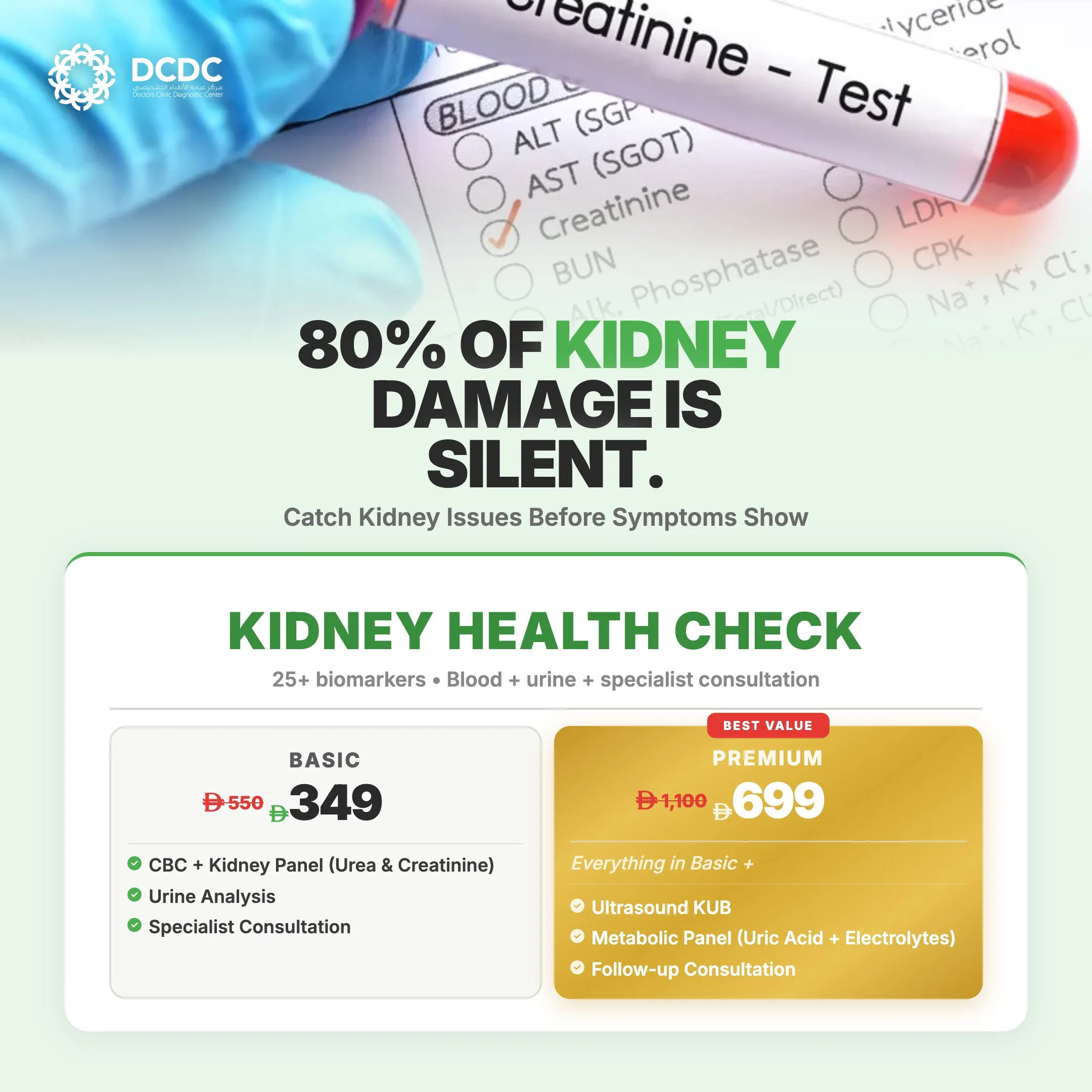
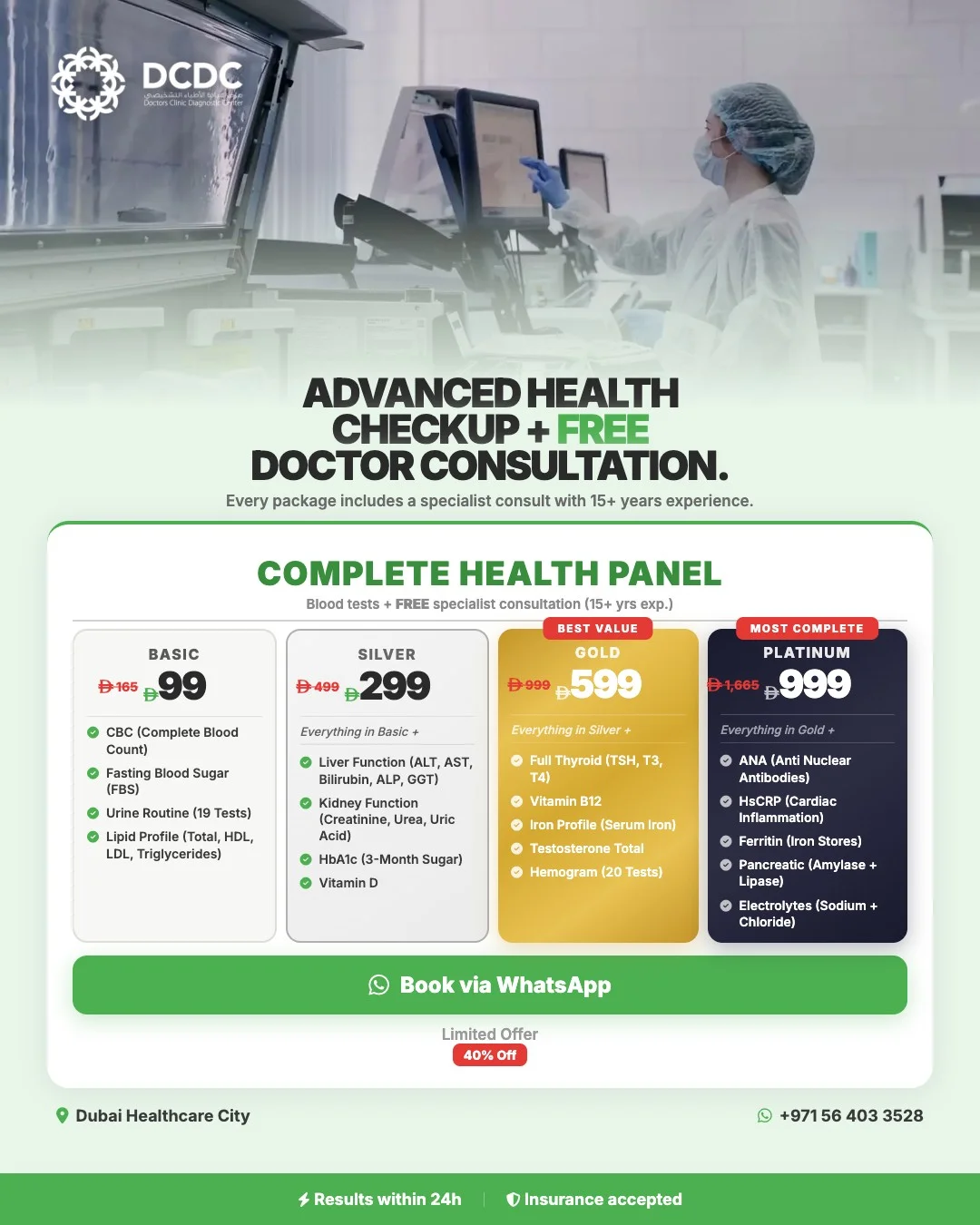
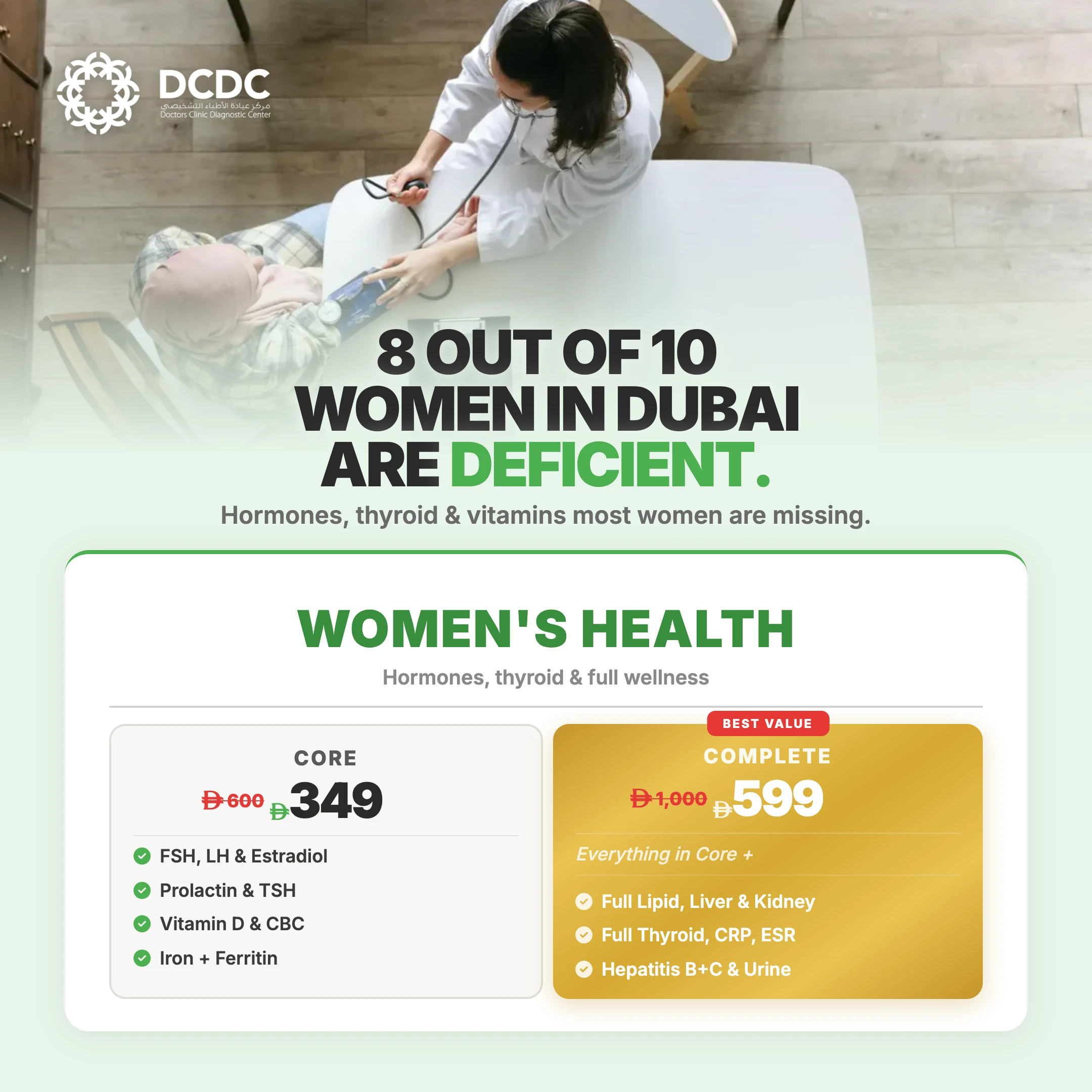
Health Screening Packages
Save with our bundled screening packages — specialist consultation included



When Is a Skin Concern More Than Cosmetic?
Skin is the body's largest organ, and it often reflects what is happening inside. Many skin concerns are cosmetic or minor: an occasional pimple, a patch of dryness after a long flight, or a freckle that has always looked the same. But some changes are clinical signs of infection, inflammation, autoimmune disease, hormonal imbalance, nutritional deficiency or, in the case of a changing mole, early skin cancer. The British Association of Dermatologists and the American Academy of Dermatology both stress that the difference usually lies in duration, change over time, symptoms and response to treatment.
A useful rule of thumb is to ask four questions. Has it lasted longer than two to four weeks? Is it changing in size, shape, colour or texture? Is it causing pain, itching, bleeding or sleep disturbance? Has it failed to improve with sensible over-the-counter care? A yes to any of these is a reason to have the area examined. Skin conditions that are caught early are generally easier and cheaper to manage, and several, including psoriasis, melanoma and some infections, carry real consequences if left alone.
In Dubai, the picture is complicated by climate and lifestyle. Strong UV exposure, constant switching between hot outdoor air and cold air conditioning, hard water and dust all stress the skin barrier. That makes it harder to tell what is a passing irritation and what is a medical condition, which is why a structured check of the warning signs below is helpful.
10 Skin Signs That Need a Dermatologist
1. Persistent acne that does not respond to over-the-counter treatment
Occasional breakouts are normal, but acne that persists beyond two to three months of consistent over-the-counter care (benzoyl peroxide, salicylic acid or adapalene) deserves review. See a doctor sooner if you have deep, painful nodules or cysts, acne that leaves dark marks or scars, acne that begins suddenly in adulthood, or breakouts together with irregular periods, excess facial hair or weight changes, which can point to hormonal causes such as polycystic ovary syndrome. Early treatment reduces scarring, which is much harder to correct than active acne. Our guide to acne treatment in Dubai explains the causes, medical options and what to expect.
2. A mole that changes shape, size or colour
This is the sign that matters most. A new or changing mole is the most important early warning of melanoma, and the AAD and NHS both recommend the ABCDE rule: Asymmetry (the two halves do not match), Border (ragged, notched or blurred edges), Colour (several shades of brown, black, red, white or blue), Diameter (larger than about 6 mm, roughly a pencil eraser) and Evolving (any change in size, shape, colour, height or symptoms such as itching or bleeding). Also watch for the 'ugly duckling', a mole that looks different from all your others. Any mole that bleeds, crusts or does not heal needs prompt assessment. Early melanoma is highly treatable, so do not wait. Read our full mole check and skin cancer guide for Dubai for step-by-step self-examination.
3. Unexplained hair loss or thinning
Shedding 50 to 100 hairs a day is normal. Noticeably thinner hair, a widening parting, round bald patches, or clumps coming out in the shower are not. Causes range from iron, vitamin D and thyroid problems to stress-related shedding (telogen effluvium), hormonal conditions, scalp infections and autoimmune alopecia areata. Scarring forms of hair loss, which may cause redness, pain or scaling on the scalp, need early diagnosis because the follicles can be permanently destroyed. A GP can order the relevant blood tests first, so you are not guessing. See our guide to hair loss treatment in Dubai for costs and options.
4. A skin rash lasting more than two weeks
Most short-lived rashes caused by a new soap, heat or a viral illness fade within days. A rash that persists beyond two weeks, keeps returning, blisters, spreads, or comes with fever, joint pain or fatigue should be examined. Possible causes include contact dermatitis, fungal infection, drug reactions, eczema, psoriasis, pityriasis rosea and rashes linked to autoimmune disease. If your rash looks like raised welts that come and go, or follows a new food, medicine or cosmetic, it may be an allergic reaction; our article on skin allergy and hives treatment in Dubai explains how these are investigated.
5. Chronic dry or flaking patches
Dry skin that responds to a good moisturiser is common in Dubai. But thick, scaly, red or silvery patches that return in the same places, particularly on elbows, knees, scalp, hands or skin folds, can indicate eczema (atopic dermatitis) or psoriasis. Eczema typically itches intensely and affects flexures such as the inner elbows, while psoriasis plaques are usually sharply defined with silvery scale, and may be accompanied by nail changes or stiff, swollen joints (psoriatic arthritis). The two are easy to confuse, and treatment differs, so see our comparison of eczema vs psoriasis in Dubai and our guide to eczema treatment.
6. New or growing skin tags or lumps
Skin tags are small, soft, flesh-coloured growths, usually in the neck, armpits and groin. They are benign, but a sudden crop of them can be associated with insulin resistance, type 2 diabetes or weight gain, so a blood sugar check is sensible. Any lump that is hard, fixed, rapidly growing, painful, ulcerated or bleeding should be assessed rather than assumed to be a tag. Cysts, lipomas, warts and some skin cancers can all look similar to the untrained eye. If you only want a harmless tag removed, our guide to skin tag removal cost in Dubai explains the options.
7. Persistent itching without a visible cause
Itching (pruritus) with no rash can be more than dry skin. Generalised itching that lasts more than two weeks, disturbs sleep or is worse at night may be linked to iron deficiency, thyroid disease, kidney or liver problems, diabetes, medication side effects or, less often, blood disorders. Scratching can then create its own rash and infection. Because the cause may be internal, the first step is usually a clinical review and basic blood tests rather than another cream. Tell your doctor about new medicines, supplements and any yellowing of the skin or eyes.
8. Nail changes: ridges, discolouration or separation
Nails offer useful clues. Pitting and lifting of the nail from its bed (onycholysis) are associated with psoriasis. Thickened, yellow, crumbly nails often indicate fungal infection, which is common in warm, humid climates and shared pool or gym areas. Spoon-shaped nails can suggest iron deficiency. Horizontal grooves may follow severe illness or stress. A new dark streak running down a single nail, particularly if it widens or the pigment spreads to the surrounding skin, should be checked promptly because it can occasionally be melanoma under the nail. Do not wait for a painful nail to settle on its own if it is changing.
9. Skin discolouration or pigmentation changes
Patches of darker skin (melasma or post-inflammatory hyperpigmentation), lighter skin (vitiligo or pityriasis alba) or a velvety darkening in the neck and armpits (acanthosis nigricans, a possible marker of insulin resistance) each have different causes and management. Melasma is very common in Dubai because UV and visible light stimulate pigment production, and it often flares in pregnancy or with hormonal medication. Sudden loss of pigment, rapidly spreading dark patches, or a single irregular dark patch should be assessed. Yellow skin (jaundice) or a bluish tinge are medical issues, not cosmetic ones.
10. Wounds that do not heal
A cut, sore or ulcer that has not clearly improved within about two to four weeks needs examination. Slow healing can reflect poor circulation, diabetes, infection, pressure, or, importantly, a skin cancer such as basal cell or squamous cell carcinoma, which often appears as a persistent pearly bump or scaly, crusted sore that bleeds and re-forms. People with diabetes should be especially alert to foot sores, which can deteriorate quickly. Never ignore a sore that repeatedly scabs over and reopens in the same spot.
Not Sure If Your Skin Change Needs a Specialist?
Book a GP consultation at DCDC from AED 249. We assess your skin, order tests on site where needed, and refer you to a dermatologist when a specialist is the right next step.
Call +971 54 219 5008 or WhatsApp +971 50 970 3884 to book
Dubai-Specific Skin Concerns
Living in the UAE places particular demands on skin. Understanding the local triggers can help you tell an environmental irritation from a condition that needs treatment.
- Air conditioning and dry skin: Spending most of the day in air-conditioned offices, malls and cars strips humidity from the air. This weakens the skin barrier, causing tightness, flaking and flare-ups of eczema. A fragrance-free moisturiser applied after showering helps, and so does a desk humidifier.
- UV damage from outdoor activity: Dubai's UV index is high for much of the year, even in winter and on cloudy days. Cumulative exposure causes sunburn, pigmentation, premature ageing and raises skin cancer risk. Broad-spectrum SPF 30 to 50, shade between 10 AM and 4 PM and protective clothing are essential, particularly for outdoor workers, cyclists, golfers and beach-goers.
- Sandstorm and dust irritation: Fine dust and sand can aggravate sensitive skin, trigger contact dermatitis around the eyes, and worsen facial redness and allergic rhinitis-related eczema. Rinsing the face gently after dust exposure is sensible.
- Hard water effects: Dubai's tap water is often hard or desalinated and high in minerals. Some people notice dryness, itch or scalp irritation after showers, and hard water can interfere with soap lather and leave residues. Lukewarm showers, mild cleansers and a shower filter may help, though evidence is mixed.
- Humidity-related problems: Summer humidity encourages sweating and fungal and bacterial skin infections, such as tinea versicolor, heat rash (miliaria), folliculitis and athlete's foot. Breathable fabrics, prompt drying and changing out of damp clothes reduce the risk.
If a problem that you would expect to improve with environmental changes persists beyond two to four weeks, it is more likely to be a true skin condition and should be examined.
What Happens at a Dermatology Consultation
Knowing what to expect can make it easier to book that first appointment. A typical skin consultation includes:
- History: when the problem began, whether it itches or hurts, what makes it better or worse, your medicines, family history, allergies and occupation.
- Examination: a close look at the affected area, and often a wider skin check, in good light. Photographs may be taken to track change.
- Dermoscopy: a handheld magnifying device with polarised light that lets a dermatologist see pigment patterns in moles and lesions that are invisible to the naked eye.
- Skin biopsy: a small sample of skin is removed under local anaesthetic and sent to a laboratory for microscopic analysis. This is the definitive test for suspected skin cancer and many inflammatory conditions.
- Patch testing: small amounts of suspected allergens are taped to the back for 48 hours to identify contact allergies, such as to fragrances, metals or preservatives.
- Skin scrapings or swabs: to check for fungal, bacterial or viral infection.
- Blood tests: to look for underlying causes, such as thyroid disease, iron deficiency, diabetes or autoimmune markers.
Treatment may involve prescription creams, oral medicines, light therapy, procedures or simply advice and monitoring. Many patients find that a GP can make the first assessment and tests, then involve a dermatologist only if needed.
What to Expect at DCDC
Doctors Clinic Diagnostic Center (DCDC) is a one-stop diagnostic center in Dubai Healthcare City, bringing GP care, laboratory services and imaging under one roof. For skin concerns, we act as a convenient first step: assess the problem, test for underlying causes, and refer you to a dermatologist when specialist procedures or treatment are required. DCDC does not perform dermoscopy, skin biopsy or surgical excision on site; those are handled through referral.
- GP first-line assessment: Your doctor examines the skin, reviews your history and decides whether the problem can be managed in primary care or needs a specialist. A GP consultation is from AED 249, and same-day referral is possible when urgent.
- On-site allergy testing: If an allergic cause is suspected, skin prick testing is available from AED 350.
- Blood panels for autoimmune and inflammatory markers: ANA test (AED 149), CRP (AED 149) and ESR (AED 99), alongside tests such as thyroid, iron studies, vitamin D and blood sugar if indicated.
- Same-day lab results for routine tests: Routine bloods are usually available the same day, so your doctor can interpret them without a second long wait.
- Convenience: Free parking, a Dubai Healthcare City location and extended hours: Saturday to Thursday 8 AM to 10 PM and Friday 9 AM to 9 PM.
- Insurance and language: 20+ insurance partners with direct billing (check your plan for cover), and multilingual staff who speak Arabic, English, Farsi, Urdu and Hindi.
- Patient satisfaction: DCDC holds a 4.8/5 Google rating from 1000+ reviews.
Prices are indicative and may change; confirm at booking. A typical visit starts with booking by phone or WhatsApp, a short wait on arrival, a GP examination, same-day tests where relevant, and a clear plan with a referral letter if you need a dermatologist.
When Is It an Emergency?
Most skin problems are not emergencies, but some need urgent care the same day. Go to the nearest emergency department or call 998 for an ambulance if you notice any of the following:
- Signs of anaphylaxis: hives with swelling of the lips, tongue or face, difficulty breathing, wheeze, throat tightness, dizziness or fainting after a food, sting or medicine.
- A rapidly spreading rash with fever, blistering, peeling skin, painful skin or sores in the mouth and eyes. This can signal a severe drug reaction such as Stevens-Johnson syndrome.
- A non-blanching purple or red rash (does not fade when pressed with a glass) with fever or feeling very unwell, which can indicate meningococcal infection or blood problems.
- Signs of serious skin infection: redness that spreads quickly, increasing pain, heat, swelling, pus, red streaks, or fever and chills (possible cellulitis or abscess).
- Severe burns or blistering sunburn covering large areas, particularly with dehydration, fever or confusion.
If you are unsure, it is safer to seek help early. For non-urgent concerns, a same-day GP visit is often enough to establish what is going on.
Book a Skin Assessment at DCDC
See a GP from AED 249 in Dubai Healthcare City, with on-site allergy tests, same-day routine lab results, free parking and referral to a dermatologist when needed.
Call +971 54 219 5008 or WhatsApp +971 50 970 3884 to book
Related Services at DCDC
Expert care and advanced diagnostics at Dubai Healthcare City
Frequently Asked Questions
Final Thoughts
Your skin often signals problems early. A mole that changes, a rash that lingers, hair that thins without reason or a wound that will not heal are not things to wait out. Acting early usually means simpler treatment, less scarring and, in the case of skin cancer, better outcomes.
In Dubai, sun, air conditioning, dust and humidity make it harder to judge what is normal. If you are unsure, a short GP assessment can sort out what is minor, what needs tests and what needs a specialist. Book a visit at DCDC in Dubai Healthcare City from AED 249 by calling +971 54 219 5008 or messaging +971 50 970 3884 on WhatsApp. We are open Saturday to Thursday 8 AM to 10 PM and Friday 9 AM to 9 PM, with free parking.
Sources & References
This article references the following sources:
- American Academy of Dermatology Association: Signs and Symptoms of Melanoma (ABCDEs)
- NHS: Skin Cancer (Melanoma) Symptoms
- Mayo Clinic: Acne, Diagnosis and Treatment
- Cleveland Clinic: Psoriasis
- British Association of Dermatologists: Patient Information Leaflets
- Cleveland Clinic: Chronic Itching (Pruritus)
- Mayo Clinic: Hair Loss, Symptoms and Causes
- PubMed: Skin manifestations of systemic disease and their evaluation
- PubMed: Ultraviolet radiation and skin cancer risk
This information is educational and does not replace individual medical advice. See our editorial policy for more information.

Written by
Dr. Hadeel Elnur
General Practitioner
MD, General Practice
Dr. Hadeel Elnur is a General Practitioner at Doctors Clinic Diagnostic Center (DCDC) in Dubai Healthcare City.
Related Articles

Dermatologist Dubai: Skin Specialist Guide
Signs of Skin Cancer: Mole Check Guide Dubai
Acne Treatment Dubai: Causes & Care

Eczema Treatment Dubai: Triggers & Care

Hair Loss Treatment Dubai: Costs & Options
More in Dermatology
Vitiligo Treatment Dubai: Causes & Care (2026)
Read MoreSkin Tag Removal Cost Dubai: From AED 300 (2026)
Read MoreSkin Rash Causes in Dubai: When to See a Doctor (2026)
Read MoreAlopecia Areata Treatment Dubai: Guide (2026)
Read MoreEczema vs Psoriasis Dubai: Key Differences (2026)
Read MoreRosacea Treatment Dubai: Causes & Care (2026)
Read More© 2026 Doctors Clinic Diagnostic Center (DCDC), Dubai Healthcare City. Originally published at https://doctorsclinicdubai.ae/blog/skin-signs-see-dermatologist-dubai. All rights reserved. Unauthorized reproduction is prohibited.