Key Takeaways
- The signs of skin cancer are often visible on the skin months or years before the disease becomes dangerous, making regular self-checks one of the most effective forms of early detection.
- The ABCDE rule (Asymmetry, Border, Colour, Diameter, Evolving) gives you a structured, evidence-based framework to assess any mole at home and decide whether it needs medical attention.
- The ugly duckling sign — a mole that looks obviously different from all the others — has a sensitivity of 0.86, meaning even non-clinicians can reliably spot an outlier mole that warrants a closer look.
- Early-stage melanoma that is detected and treated while still localised has a five-year survival rate above 99%, compared to roughly 34% once it has spread to distant organs (SEER data).
- Dubai's UV index peaks at 12 ("Extreme") in summer and still reaches 5 ("High") in December — there is no off-season for UV-related skin damage in this city.
- Skin cancer is the 4th most common cancer in the UAE, with approximately 400 new cases per year, a figure that has doubled over the past decade.
- DCDC does not perform dermoscopy, mole mapping, excision, or biopsy. Our role is clinical assessment, risk stratification, documentation, and coordinated referral to a dermatologist — the GP as your first point of contact, from AED 150.
- Acral lentiginous melanoma accounts for over 50% of melanomas in people of African, Hispanic, and Asian descent and appears on palms, soles, and under nails — sites the ABCDE rule alone can miss.
You have spotted a mole that looks different, or one that seems to have changed, and now you are wondering whether it is something to worry about. In a city where the UV index regularly hits "Extreme" and sunshine exceeds 3,500 hours a year, that concern is far from irrational. Skin cancer is the fourth most common cancer in the UAE, with roughly 400 new cases diagnosed each year — a number that has doubled over the past decade. The good news is that the signs of skin cancer are often visible on the skin long before the disease becomes life-threatening, and learning to recognise them takes minutes, not a medical degree. This guide explains exactly what to look for, how to check your own moles at home, when a mole needs a doctor's assessment, and what happens when you bring a concern to a general consultation at DCDC in Dubai Healthcare City.
From the ABCDE rule and the ugly duckling sign to the differences between basal cell carcinoma, squamous cell carcinoma, and melanoma, this evidence-based guide covers everything a Dubai resident needs to know about mole checking and skin cancer awareness — including what DCDC can and cannot do for you, what it costs, and when a dermatology referral is the right next step.
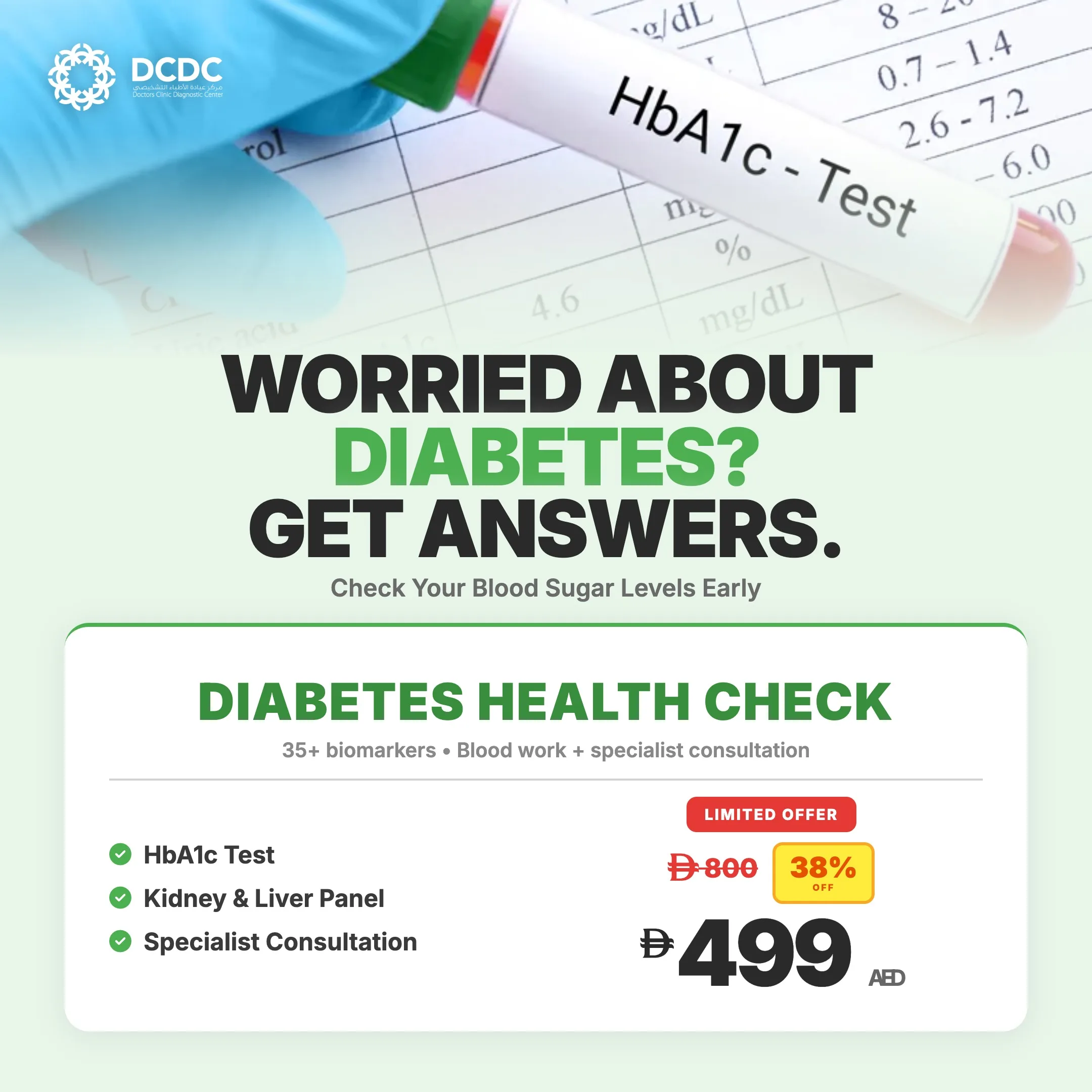
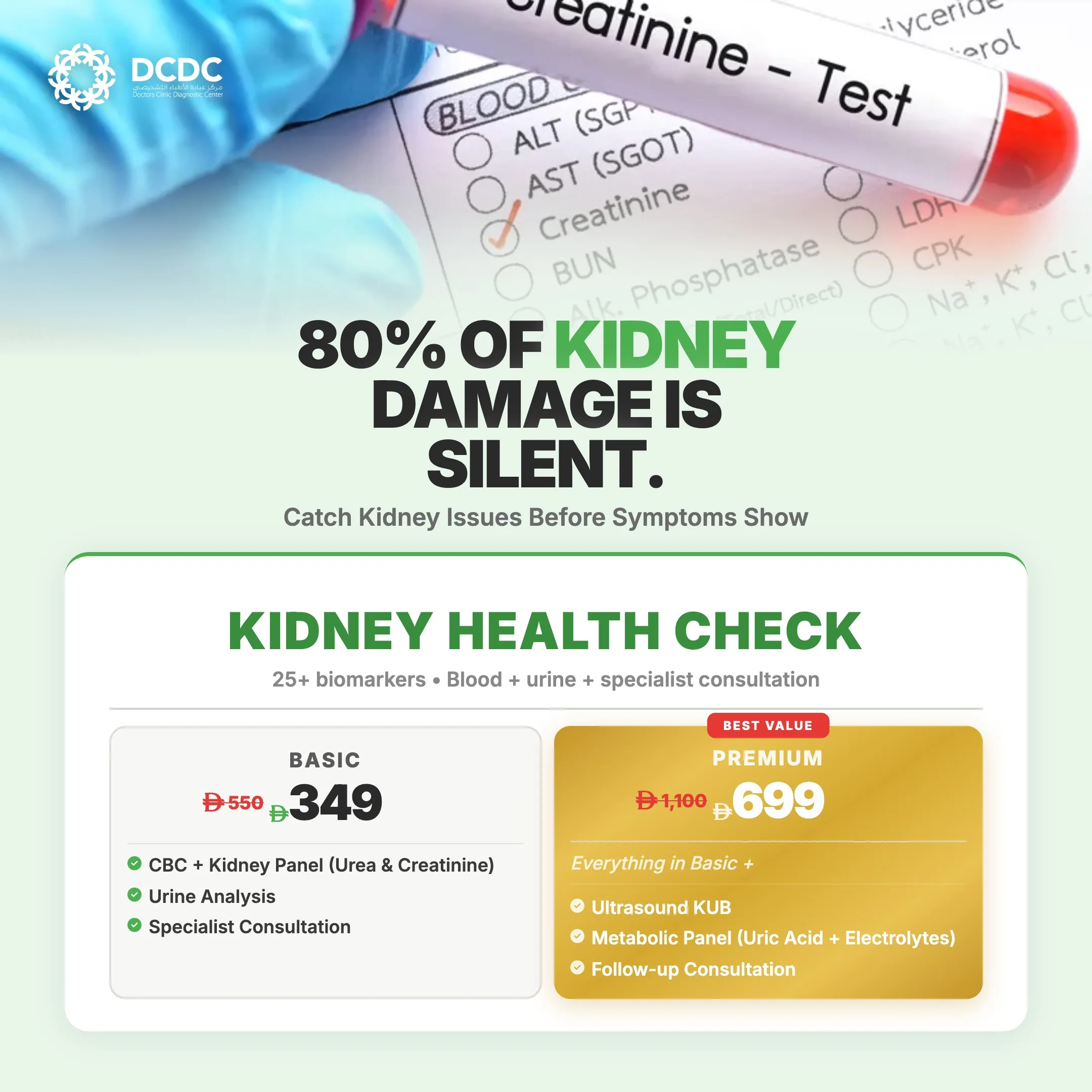
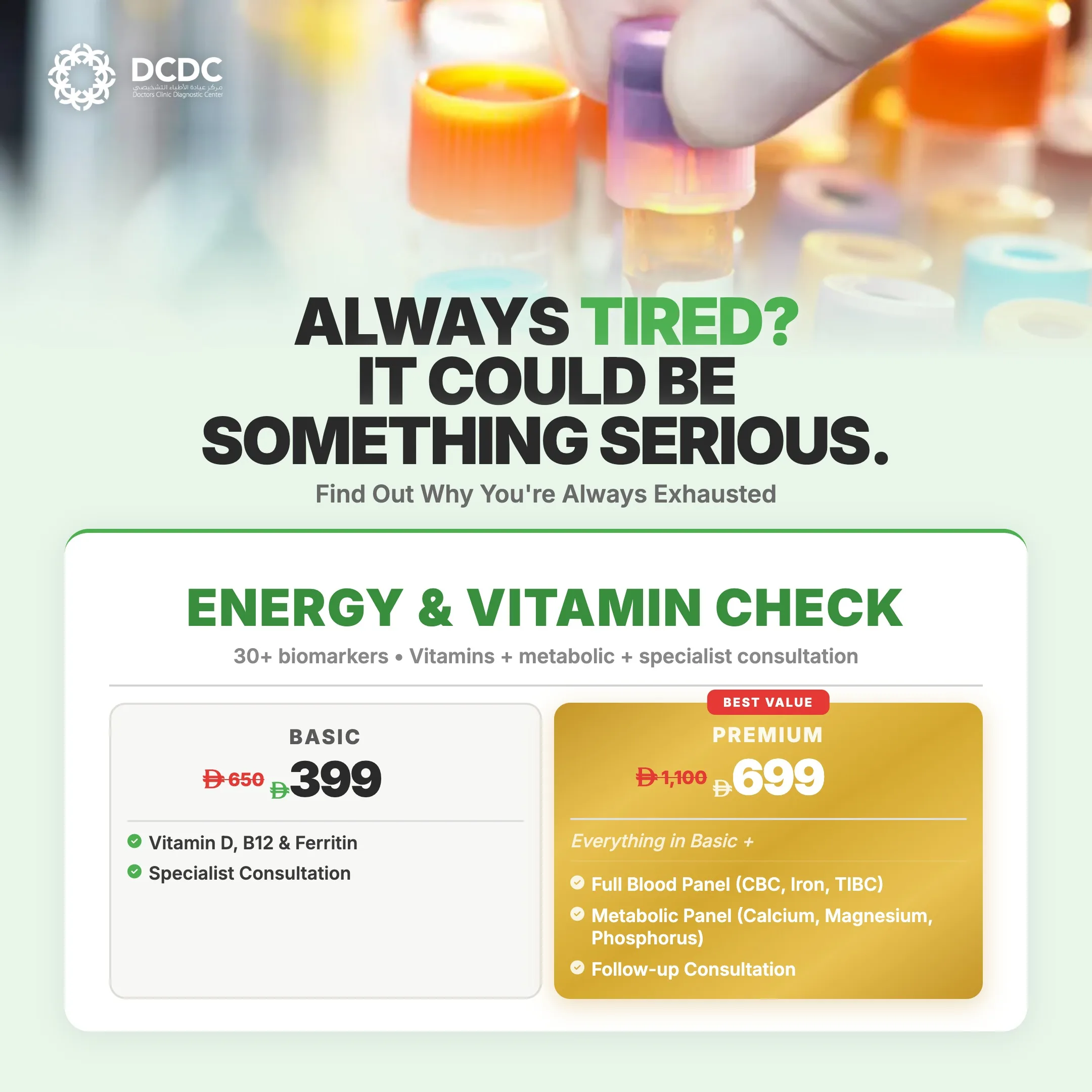
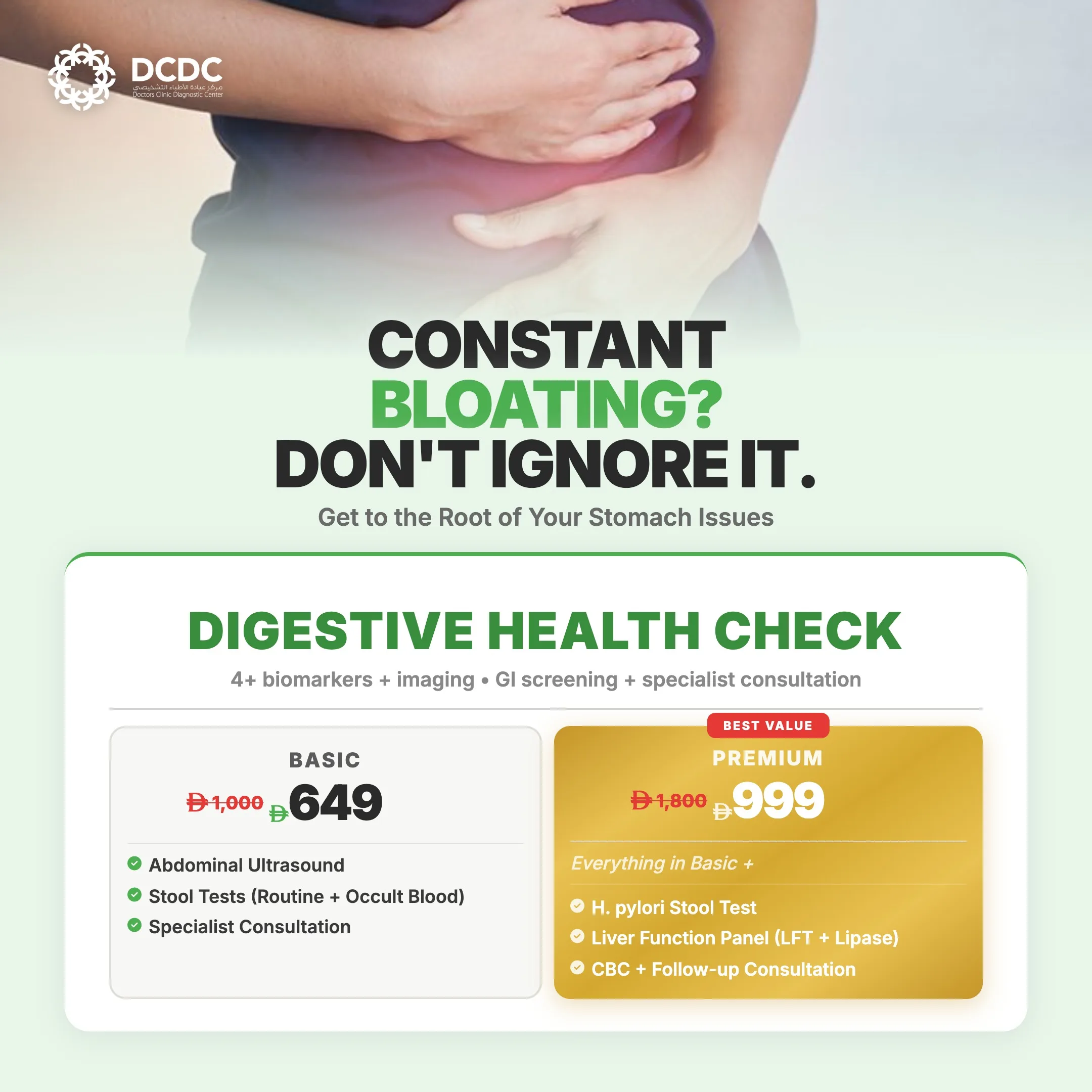
Health Screening Packages
Save with our bundled screening packages — specialist consultation included


Signs of Skin Cancer: Why Early Detection Changes Everything
The single most important thing to understand about skin cancer is that stage at diagnosis determines survival. According to the American Cancer Society, melanoma — the most dangerous form of skin cancer — has a five-year survival rate above 99% when caught at the localised stage, meaning the cancer has not spread beyond the original site. Once melanoma reaches regional lymph nodes, that figure drops to approximately 76%. And once it has metastasised to distant organs, the five-year survival rate falls to roughly 34%. These are not marginal differences. They represent the gap between a minor outpatient procedure and advanced systemic treatment.
The factor that determines where a melanoma falls on that spectrum is largely Breslow thickness — the depth of the tumour measured in millimetres at the time of excision. Breslow thickness is the single most powerful prognostic factor in melanoma. A melanoma caught at less than 0.8 mm thick has an excellent prognosis. Every month of delay allows the tumour to grow deeper. This is why regular self-checking and timely GP assessment matter so much: the goal is to catch a melanoma while it is still thin, superficial, and curable.
Globally, GLOBOCAN 2022 data recorded 331,722 new melanoma cases and 58,667 melanoma deaths in a single year. While melanoma accounts for only about 2% of all skin cancers, it is responsible for the majority of skin cancer deaths. In the UAE, skin cancer as a whole is the fourth most common cancer, with roughly 400 new cases per year — a figure that has doubled over the past decade, driven by lifestyle changes, outdoor exposure, and a growing population.
The ABCDE Rule: How to Check Moles at Home
The ABCDE rule, endorsed by the Cleveland Clinic, the American Cancer Society, and dermatology bodies worldwide, is the standard framework for assessing whether a mole warrants medical evaluation. It is not a diagnostic tool — only a biopsy can confirm or rule out melanoma — but it is a reliable screening guide that any person can apply at home with nothing more than a mirror and good lighting.
| Letter | Stands For | Normal Mole | Concerning Sign |
|---|---|---|---|
| A | Asymmetry | Both halves match when you draw an imaginary line through the centre | One half does not match the other in shape or colour |
| B | Border | Smooth, even, well-defined edge | Irregular, ragged, blurred, or notched border |
| C | Colour | One uniform shade of brown or tan | Multiple shades of brown, black, red, white, grey, or blue within the same mole |
| D | Diameter | Under 6 mm (roughly the size of a pencil eraser) | Larger than approximately 6 mm, or any size if actively growing. Note: melanomas can be smaller than 6 mm |
| E | Evolving | Stable in size, shape, and colour for years | Any change in size, shape, colour, height, or new symptoms such as itching, bleeding, or crusting |
The ABCDE rule for evaluating moles (adapted from Cleveland Clinic and ACS guidelines). Two or more concerning features in the same mole warrants prompt medical assessment.
Of the five criteria, E for Evolving is the most important. A mole that is changing — in any way — is more concerning than a mole that has always been large or slightly irregular but has remained completely stable for years. If you notice a mole that has grown, darkened, developed a new colour, started itching, or begun bleeding over a period of weeks to months, that change alone is reason to have it assessed, even if the mole does not tick every other ABCDE box.
The Ugly Duckling Sign: The Mole That Doesn't Fit
The ABCDE rule assesses a mole in isolation. The ugly duckling sign takes a different, complementary approach: it compares each mole to all the others on your body. Most people's moles share a common pattern — similar size, shape, and colour. An ugly duckling is a mole that looks obviously different from all the rest. It might be darker, larger, more irregular, or simply stand out as the one that does not belong.
Research published in peer-reviewed literature found that the ugly duckling sign has an overall sensitivity of 0.86 for detecting melanoma, and — remarkably — untrained non-clinicians achieved a sensitivity of 0.85, nearly matching experts. This means that a layperson who simply asks "does this mole look different from all my others?" is performing a surprisingly effective screening test. In practice, combining the ABCDE criteria with the ugly duckling sign gives you the strongest possible self-check.
Normal Mole vs Melanoma: What to Look For
Understanding the difference between a normal mole and a potential melanoma is one of the most common reasons people search for skin cancer information. Here is a practical comparison.
Features of a normal (benign) mole
- Round or oval shape, with both halves roughly matching
- Smooth, well-defined border
- One uniform colour — typically light to medium brown
- Usually under 6 mm in diameter
- Stable over time — has looked the same for years
- Flat or uniformly raised
Features that may suggest melanoma
- Asymmetric shape — one half does not match the other
- Irregular, scalloped, or blurred border
- Multiple colours within the same lesion — especially black, blue, red, or white patches alongside brown
- Larger than 6 mm, or any size if it is actively growing
- Evolving — any recent change in size, shape, colour, height, or new symptoms
- The ugly duckling — it looks different from all other moles on your body
- New symptoms: itching, tenderness, bleeding, or crusting in a previously quiet mole
It is important to note that not all melanomas are dark. Amelanotic melanomas can appear pink, red, or skin-coloured, making them easy to overlook. And some perfectly benign moles have mildly irregular features. This is why clinical assessment — and, when indicated, dermoscopy and biopsy — are essential for any mole that raises concern. If you are unsure whether a mole is normal or not, the safest step is to have it assessed rather than to wait.
Types of Skin Cancer: BCC, SCC, and Melanoma Compared
Skin cancer is not a single disease. The three main types differ significantly in appearance, growth rate, danger level, and where they tend to appear on the body. Understanding these differences helps you know what to look for beyond just moles.
| Type | Appearance | Growth Rate | Danger Level | Common Sites |
|---|---|---|---|---|
| Basal Cell Carcinoma (BCC) | Pearly or waxy bump, flat flesh-coloured or scaly patch, non-healing sore, or a pink growth with visible blood vessels | Slow — grows over months to years | Low mortality but locally destructive; can erode skin, cartilage, and bone if neglected. Metastasis rate only 0.0028-0.55% | Approximately 85% occur on the head and neck |
| Squamous Cell Carcinoma (SCC) | Firm red nodule, scaly patch, rough or wart-like growth, or a sore that heals and reopens | Moderate — grows over weeks to months | Moderate risk. Less than 10% metastasise within 2 years, but aggressive subtypes exist | Sun-exposed areas: face, ears, scalp, backs of hands, lower legs |
| Melanoma | Dark, irregular spot or a changing mole. Can also be pink, red, or skin-coloured (amelanotic). May arise in a pre-existing mole or on previously normal skin | Fast — can change visibly over weeks | Highest danger. Accounts for about 2% of skin cancers but causes the majority of skin cancer deaths. >99% five-year survival if localised; approximately 34% if distant | Men: back and trunk. Women: legs. In darker skin types: palms, soles, and under nails (acral sites) |
Comparison of the three main types of skin cancer. BCC is the most common; melanoma is the most dangerous.
A key point for Dubai residents: BCC and SCC are overwhelmingly caused by cumulative UV exposure over years, which means they become more common with age and tend to appear on chronically sun-exposed areas like the face, ears, and hands. Melanoma, while also UV-linked, can appear on areas that are not regularly sun-exposed and can occur at younger ages. This is why a full-body self-check — not just checking sun-exposed areas — is important.
Skin Cancer Risk Factors: Where Dubai Residents Stand
Several factors increase the risk of developing skin cancer, and many of them are amplified by living in Dubai. Understanding your personal risk profile helps you decide how vigilant to be with self-checks and how often to seek professional assessment.
UV exposure in Dubai
Dubai receives over 3,500 hours of sunshine annually. The UV index peaks at 12 (classified as "Extreme" by the WHO) during May through August, with a burn time of approximately 10 minutes for fair-skinned individuals without protection. Even in December, the UV index in Dubai reaches 5 ("High"). There is no off-season for UV damage in this city. Residents who spend time outdoors — whether for sport, commuting, or simply walking between buildings — accumulate significant UV exposure year-round. Read more about Dubai's summer health risks and how to protect yourself.
Fitzpatrick skin type and risk
The Fitzpatrick scale classifies skin into six types based on how it responds to UV exposure. Your skin type is one of the strongest predictors of skin cancer risk, though it is important to understand that no skin type is immune.
| Type | Skin Colour | Sun Response | Skin Cancer Risk |
|---|---|---|---|
| I | Very fair, often with freckles | Always burns, never tans | Highest — most vulnerable to UV damage and melanoma |
| II | Fair | Burns easily, tans minimally | Very high |
| III | Medium (light olive) | Sometimes burns, tans gradually | Moderate — still significant with cumulative UV exposure |
| IV | Olive to moderate brown | Rarely burns, tans easily | Lower for UV-related cancers, but acral melanoma remains a risk |
| V | Dark brown | Very rarely burns, tans darkly | Lower overall, but melanomas can occur on palms, soles, and under nails |
| VI | Very dark brown to black | Never burns | Lowest for UV-related types, but acral lentiginous melanoma accounts for >50% of melanomas in darker skin |
Fitzpatrick skin types and associated skin cancer risk. Dubai's diverse population includes all six types, each requiring a tailored approach to skin surveillance.
Other key risk factors
- High mole count: Having more than 50 normal moles raises melanoma risk. An odds ratio of 7.7 has been reported for individuals with 100 or more naevi.
- Atypical moles: Four or more atypical (dysplastic) naevi carry an odds ratio of 28.7 for melanoma compared to having none.
- Sunburn history: Five or more sunburns at any age doubles melanoma risk.
- Family history: A first-degree relative with melanoma significantly increases your personal risk and may warrant earlier or more frequent screening.
- Fair skin and light eyes: Fitzpatrick types I and II are at highest risk, but melanoma can occur in any skin type.
- Immunosuppression: Organ transplant recipients and people on long-term immunosuppressive medications have a markedly elevated risk of both melanoma and non-melanoma skin cancers.
- Previous skin cancer: A personal history of any type of skin cancer increases the risk of developing another.
Skin Cancer in Darker Skin: What Dubai's Diverse Population Needs to Know
Dubai is one of the most multicultural cities in the world, with large South Asian, Filipino, Arab, and African communities. A common and dangerous misconception is that darker skin provides complete protection against skin cancer. While it is true that higher melanin content reduces the risk of UV-related skin cancers like BCC and SCC, melanoma still occurs in people of all skin types — and when it does occur in darker skin, it is more likely to be diagnosed at a later stage, leading to worse outcomes.
Acral lentiginous melanoma accounts for more than 50% of melanomas in people of African, Hispanic, and Asian descent. Unlike the more common superficial spreading melanoma, acral lentiginous melanoma appears on the palms of the hands, soles of the feet, and under the fingernails or toenails — areas that are not typically exposed to sun and are easily overlooked during standard self-checks. The classic ABCDE rule, designed primarily for pigmented moles on sun-exposed skin, can miss these lesions entirely.
- Check your palms and soles: Look for dark spots, patches, or streaks that are new or changing.
- Examine your nails: A new dark streak (longitudinal melanonychia) running the length of a fingernail or toenail, especially if it is wider than 3 mm, irregular in colour, or expanding, warrants prompt assessment.
- Do not assume dark skin equals no risk: While overall melanoma incidence is lower in darker skin types, the survival gap is real — late-stage diagnosis is more common precisely because both patients and doctors may not look for melanoma in darker skin.
How to Do a Full-Body Mole Self-Check at Home
The American Cancer Society recommends monthly skin self-examinations. A thorough check takes about 10 to 15 minutes and requires a well-lit room, a full-length mirror, a hand mirror, and (optionally) a partner to check areas you cannot see. The Skin Cancer Foundation recommends photographing moles you want to monitor so you can compare them over time.
- Step 1 — Face and scalp: Use a mirror and comb to examine your face, ears, nose, lips, and scalp (or have a partner check). Scalp melanomas are rare but aggressive.
- Step 2 — Arms and hands: Examine both sides of your arms from shoulder to fingertips, including between the fingers and under the nails.
- Step 3 — Trunk: Stand in front of a full-length mirror and check your chest, abdomen, and — using a hand mirror — your entire back. Men are most commonly diagnosed with melanoma on the back.
- Step 4 — Legs and feet: Check the front, back, and sides of both legs, plus the tops and soles of both feet, between the toes, and under the toenails. Women are most commonly diagnosed with melanoma on the legs.
- Step 5 — Apply the ABCDE rule and the ugly duckling sign: For each mole, run through Asymmetry, Border, Colour, Diameter, Evolving. Then ask: does this mole look different from all my others?
- Step 6 — Document and date: Photograph any mole you are monitoring. Note the date and compare at your next monthly check. If a mole has clearly changed, book a GP appointment.
Worried About a Mole?
Book a GP mole assessment at DCDC in Dubai Healthcare City from AED 150. Same-day appointments available, with coordinated dermatology referral if needed.
WhatsApp +971 50 970 3884 to book
When to Get a Mole Checked: Urgency Triage Guide
Not every mole change is an emergency, and not every stable mole needs a doctor's visit. The following table helps you decide how quickly to act based on what you have noticed. This is the kind of triage your GP will also apply when you come in.
| What You Have Noticed | How Urgently to Act |
|---|---|
| A mole that is bleeding, ulcerating, or a non-healing sore | See a doctor now — within days |
| A mole with 2 or more ABCDE criteria, or an obvious "ugly duckling" | Book within days |
| A new dark streak under a fingernail or toenail | Book within days |
| A mole that has changed over the past 3 months | Book within 1-2 weeks |
| A new mole appearing after age 40 | Next available appointment |
| More than 50 moles, family history of melanoma, or Fitzpatrick type I-II | Baseline professional assessment, then monthly self-check |
| A stable mole that has not changed in years | Monthly self-check at home; mention at your annual health checkup |
Urgency guide for when to get a mole checked. When in doubt, booking a GP consultation is always appropriate — the cost of reassurance is low, and the cost of missing a melanoma is high.
If you are unsure which category your mole falls into, err on the side of getting it assessed sooner rather than later. A GP consultation from AED 150 is a small investment compared to the consequences of delaying a melanoma diagnosis. Include mole concerns as part of your annual health checkup so that a baseline record exists for comparison over time.
What Does Dermoscopy Add? The Case for Professional Assessment
While the ABCDE rule and the ugly duckling sign are powerful for home self-checks, they have limitations. Professional dermatological assessment adds a critical layer of accuracy through dermoscopy — a specialised technique where a dermatologist uses a handheld device with magnification and polarised light to examine the internal structures of a mole that are invisible to the naked eye.
The evidence for dermoscopy is compelling. Research shows that dermoscopy compared with naked-eye examination alone yields a relative diagnostic odds ratio of 15.6, meaning a trained clinician with a dermatoscope is dramatically more accurate at distinguishing benign from malignant lesions. This is why, when a mole raises concern on clinical examination, referral to a dermatologist with dermoscopy capability is the recommended next step — not watchful waiting.
Full-body mole mapping — a systematic photographic and dermoscopic record of every mole on the body — is recommended for high-risk individuals (those with more than 50 moles, a history of atypical moles, or a family history of melanoma). In Dubai, mole mapping is available through dermatology clinics at prices ranging from AED 500 to AED 1,500 or more, depending on the extent of the examination. DCDC does not perform dermoscopy or mole mapping directly, but we can assess your risk profile and refer you to an appropriate dermatologist efficiently.
What the Evidence Says About Skin Cancer Screening
Transparency about the evidence builds trust, and this is an area where many health websites oversimplify. In 2023, the U.S. Preventive Services Task Force (USPSTF) issued an "I" statement on skin cancer screening for the general population — meaning it found insufficient evidence to recommend for or against routine whole-body skin examination by a clinician in asymptomatic adults without known risk factors. This is not a recommendation against screening. It means the evidence for population-wide screening has not yet met the rigorous standard of a randomised controlled trial showing reduced mortality.
What this means in practice is that screening decisions should be individualised based on risk. If you have multiple risk factors — high mole count, atypical moles, Fitzpatrick type I-II, a history of sunburns, family history, or immunosuppression — the case for professional skin examination is strong regardless of the USPSTF population-level statement. Monthly self-checks using the ABCDE rule and the ugly duckling sign remain universally recommended. For a broader overview of which cancer screenings you need by age, including skin cancer in the context of other screening tests, see our dedicated guide.
What to Expect at DCDC: Your Mole Assessment Journey
If you have found a mole that concerns you, here is exactly what happens when you bring it to DCDC in Dubai Healthcare City. We want to be transparent about what we do and what falls outside our scope.
- Step 1 — Booking: Call +971 54 219 5008 or WhatsApp +971 50 970 3884 to book a GP consultation. Same-day appointments are often available. GP visits for mole assessment start from AED 150.
- Step 2 — Arrival at DHCC: DCDC is located in Building 64, Block A, Al Razi Medical Complex, Dubai Healthcare City. Free on-site parking is available. Average wait time is approximately 15 minutes.
- Step 3 — History: Your GP (such as Dr. Hadeel Elnur) takes a detailed history covering when you first noticed the mole or change, your sun exposure and sunburn history, family history of melanoma or other cancers, your Fitzpatrick skin type, and any other relevant medical history.
- Step 4 — Clinical examination: The GP examines the mole or lesion against the ABCDE criteria and the ugly duckling sign, assesses the surrounding skin, and documents the findings. This is a clinical (naked-eye) assessment — DCDC does not perform dermoscopy.
- Step 5 — Risk stratification and triage: Based on the history and examination, the GP places the concern into one of three categories: reassure (benign features, stable, low risk — continue self-monitoring), review (borderline features — book a follow-up in 4-8 weeks to check for change), or refer (suspicious features — prompt referral to a dermatologist for dermoscopy and possible biopsy).
- Step 6 — Documentation: The mole is documented in your clinical record, creating a baseline for future comparison.
- Step 7 — Coordinated referral (if needed): If referral is indicated, DCDC arranges a prompt appointment with a dermatologist. If a broader cancer workup is warranted, on-site blood tests including tumor markers are available from AED 250.
DCDC holds a 4.8/5 Google rating from over 1,000 verified reviews and reports a 98% patient satisfaction rate. Multilingual staff fluent in Arabic, English, Farsi, Urdu, and Hindi ensure clear communication regardless of your first language. Extended clinic hours (Saturday to Thursday 8 AM-10 PM, Friday 9 AM-9 PM) and free parking make it straightforward to fit a mole check into a busy Dubai schedule.
Doctor's Perspective: Dr. Hadeel Elnur on Mole Concerns

General Practitioner
Arabic, English
Dr. Hadeel Elnur is a General Practitioner at Doctors Clinic Diagnostic Center (DCDC) in Dubai Healthcare City, with experience in primary care assessment, preventive health screening, and coordinated specialist referral.
"Most patients who come in worried about a mole do not have cancer. That is genuinely good news, and one of the most important things I do is provide that reassurance with confidence, based on a proper assessment rather than a guess. But the GP's real job is to separate the reassuring from the urgent — to identify the mole that does need a dermatologist's dermatoscope, and to make that referral happen quickly. The worst outcome is a patient who sits on a changing mole for months because they did not want to 'bother' a doctor. A GP consultation from AED 150 is a small price for either peace of mind or a timely referral."
Mole Check and Skin Cancer Assessment: Dubai Pricing
Understanding the cost of skin cancer assessment in Dubai helps you plan and removes a common barrier to seeking care. The table below compares DCDC pricing with typical market rates across the city.
| Service | DCDC Price (AED) | Typical Dubai Market Range (AED) |
|---|---|---|
| GP consultation (mole assessment) | From AED 150 | AED 200-600 (dermatologist) |
| Annual health checkup package | From AED 800 | AED 800-3,000+ |
| Tumor marker blood test | From AED 199 | AED 250-500 |
| Dermoscopy (specialist) | Referral arranged | From AED 199 |
| Full-body mole mapping (specialist) | Referral arranged | AED 500-1,500+ |
| Mole removal (specialist) | Referral arranged | AED 250-2,000 |
Indicative pricing for skin cancer-related services in Dubai (2026). DCDC prices are for GP-level clinical assessment and triage; dermoscopy, mole mapping, and removal are specialist services arranged via referral. Insurance direct billing available with 20+ providers at DCDC.
The GP-first model means you pay from AED 150 for an initial assessment rather than AED 200-600 for a dermatologist visit that may not have been necessary. If referral is needed, the GP documents findings and communicates them directly to the specialist, avoiding duplicated history-taking and ensuring continuity. To understand what blood tests can and can't tell you about cancer, including tumor markers, see our dedicated guide.
Reducing Your Skin Cancer Risk in Dubai
While some risk factors like skin type and family history cannot be changed, the most significant modifiable risk factor — UV exposure — is within your control. Given Dubai's year-round UV intensity, the following protective habits are particularly relevant.
- Apply broad-spectrum SPF 30-50 sunscreen daily — not just at the beach. Dubai's UV index is "High" or above for most of the year, including during winter months.
- Reapply sunscreen every 2 hours when outdoors, and immediately after swimming or sweating.
- Seek shade between 10 AM and 4 PM when UV intensity is at its peak.
- Wear protective clothing: a wide-brimmed hat, UV-blocking sunglasses, and long sleeves when practical.
- Avoid tanning beds entirely. Indoor tanning increases melanoma risk by 20% with any use, and by 59% when first used before age 35.
- Perform monthly self-checks using the ABCDE rule and the ugly duckling sign.
- Mention moles at your annual checkup. Even if nothing seems concerning, having a baseline documented by your GP allows meaningful comparison over time.
- Teach children sun safety early. Childhood sunburns carry disproportionate lifelong melanoma risk. Five or more sunburns at any age doubles melanoma risk.
For more information on protecting yourself during the hotter months, read our guide on other skin changes that warrant a doctor's visit, which covers heat rash, sun-related rashes, and when a skin change needs assessment.
Why Choose DCDC for Mole Assessment in Dubai
- Affordable first point of contact: GP mole assessment from AED 150, significantly lower than a dermatologist consultation, with no compromise on clinical rigour.
- Honest scope of practice: DCDC does not perform dermoscopy, mole mapping, excision, or biopsy. We assess, document, risk-stratify, and refer. You get the right care at the right level without unnecessary tests.
- Coordinated referral: When referral is indicated, your GP documents findings and communicates directly with the specialist, so nothing is lost in transition.
- On-site laboratory: Tumor markers and other blood tests from AED 250, processed at DCDC's MOHAP-licensed lab, when a broader workup is needed.
- Insurance direct billing: Over 20 insurance partners, including Daman, AXA, and Bupa, accepted directly.
- DHCC location with free parking: Building 64, Block A, Al Razi Medical Complex, Dubai Healthcare City. Extended hours: Saturday-Thursday 8 AM-10 PM, Friday 9 AM-9 PM.
- Multilingual care: Staff fluent in Arabic, English, Farsi, Urdu, and Hindi.
- Proven track record: 4.8/5 Google rating from over 1,000 verified reviews. 98% patient satisfaction rate. MOHAP licensed.
Get Your Mole Assessed Today
DCDC offers GP mole assessments from AED 150 with same-day availability, on-site blood tests, and coordinated dermatology referral when needed. MOHAP-licensed clinic in Dubai Healthcare City with free parking.
Call +971 54 219 5008 or WhatsApp +971 50 970 3884 to book
Related Services at DCDC
Expert care and advanced diagnostics at Dubai Healthcare City
General Consultation
Same-day GP appointment from AED 150 to have a mole or skin change assessed, documented, and referred if needed.
Book AppointmentHealth Checkup
Annual screening packages from AED 800 with blood work, vitals, and doctor consultation.
Book AppointmentTumor Markers
Blood-based cancer marker testing from AED 250 where a broader oncology workup is indicated.
Book AppointmentFrequently Asked Questions
Final Thoughts
Skin cancer is one of the few cancers where the warning signs are literally visible on the surface of the body, often months or years before the disease becomes dangerous. The ABCDE rule and the ugly duckling sign take minutes to learn and cost nothing to apply. Monthly self-checks, combined with timely professional assessment when something looks wrong, remain the most effective strategy for catching skin cancer early — and early detection is overwhelmingly the factor that determines whether the outcome is a minor procedure or a life-threatening diagnosis.
Living in Dubai, with its year-round UV intensity and no real off-season for sun exposure, makes skin awareness more important here than in many other cities. Whether your concern is a changing mole, a mole that simply looks different from the rest, a family history of melanoma, or just a desire to establish a documented baseline, a GP consultation at DCDC from AED 150 is a practical and affordable starting point. We assess, document, risk-stratify, and — when needed — refer promptly to the right specialist. Call +971 54 219 5008 or WhatsApp +971 50 970 3884 to book your appointment.
Sources & References
This article was reviewed by our medical team and references the following sources:
- Cleveland Clinic — ABCDEs of Melanoma and Skin Self-Exam
- American Cancer Society — Survival Rates for Melanoma Skin Cancer by Stage
- American Cancer Society — How to Do a Skin Self-Exam
- Skin Cancer Foundation — Skin Type and Skin Cancer Risk
- USPSTF — Screening for Skin Cancer (2023)
- PubMed — Thin Melanoma: Breslow Thickness 0.8 mm and Prognosis
- PubMed — Global Cancer Statistics 2022 (GLOBOCAN)
Medical content on this site is reviewed by DHA-licensed physicians. See our editorial policy for more information.

Written by
Dr. Hadeel Elnur
General Practitioner
MD, General Practice
Dr. Hadeel Elnur is a General Practitioner at Doctors Clinic Diagnostic Center (DCDC) in Dubai Healthcare City.
Related Articles
Cancer Screening Dubai: Tests & Cost by Age (2026)

Skin Rash Causes: When to See a Doctor Dubai (2026)
Summer Health Risks in Dubai (2026)
Annual Health Checkup Dubai Guide (2026)
Blood Tests & Cancer Markers Explained (2026)
More in Preventive Health
Premarital Screening Dubai: Tests & Cost (2026)
Read More
Shingles Dubai: Symptoms & Prevention (2026)
Read More
Flu Vaccine Cost Dubai: Guide & Prices (2026)
Read More
HPV Vaccine Dubai: Gardasil 9 Cost & Guide (2026)
Read More
Hepatitis B Test Dubai: Screening Guide (2026)
Read MoreFull Body Checkup Cost Dubai: From AED 249 (2026)
Read More© 2026 Doctors Clinic Diagnostic Center (DCDC), Dubai Healthcare City. Originally published at https://doctorsclinicdubai.ae/blog/mole-check-skin-cancer-dubai. All rights reserved. Unauthorized reproduction is prohibited.