Key Takeaways
- Allergy tests in Dubai include IgE blood panels (from AED 550), skin prick tests (from AED 300-500), patch tests (from AED 400-800), and IgG food intolerance panels (from AED 950). The right test depends on your symptoms — a doctor should guide the choice.
- IgE-mediated allergies (true allergies) cause immediate reactions — hives, swelling, breathing difficulty, anaphylaxis — and are diagnosed by specific IgE blood tests or skin prick testing. IgG food intolerance causes delayed, non-life-threatening symptoms like bloating and fatigue.
- Dubai's environment is a hotspot for allergies: dust mites thrive in AC-cooled homes; mould grows in poorly maintained AC units; sandstorms carry irritant particles; and the expatriate population encounters new allergens not present in their home countries.
- Skin prick tests give results in 15-20 minutes and test 20-40 allergens at once but require stopping antihistamines 5-7 days before the test. IgE blood tests require no preparation, are unaffected by medications, and can test hundreds of specific allergens.
- Food intolerance (IgG) testing is different from food allergy (IgE) testing. Food allergies are potentially life-threatening and involve the IgE pathway. Food intolerances cause uncomfortable but not dangerous symptoms and involve the IgG pathway.
- At DCDC Dubai Healthcare City, blood-based IgE allergy testing is available as walk-in or by appointment, with results typically available within 24-48 hours. DCDC offers direct billing with 20+ insurance providers.
- Treatment options include allergen avoidance, antihistamines, nasal corticosteroids, epinephrine auto-injectors for severe food allergies, and allergen immunotherapy (allergy shots or sublingual drops) for long-term desensitisation over 3-5 years.
If you have been sneezing every time the AC kicks in, breaking out in hives after certain foods, dealing with unexplained eczema flare-ups, or suffering from chronic nasal congestion that antihistamines barely touch — you likely need proper allergy testing rather than guesswork. Dubai's unique mix of dust mites, AC mould, pet dander, sandstorms, and imported foods means allergies are extremely common here — and many residents develop new allergies after moving to the UAE. This guide explains every type of allergy test available in Dubai, what each one costs, how to prepare, how to interpret your results, and all treatment options from avoidance to immunotherapy.
Health Screening Packages
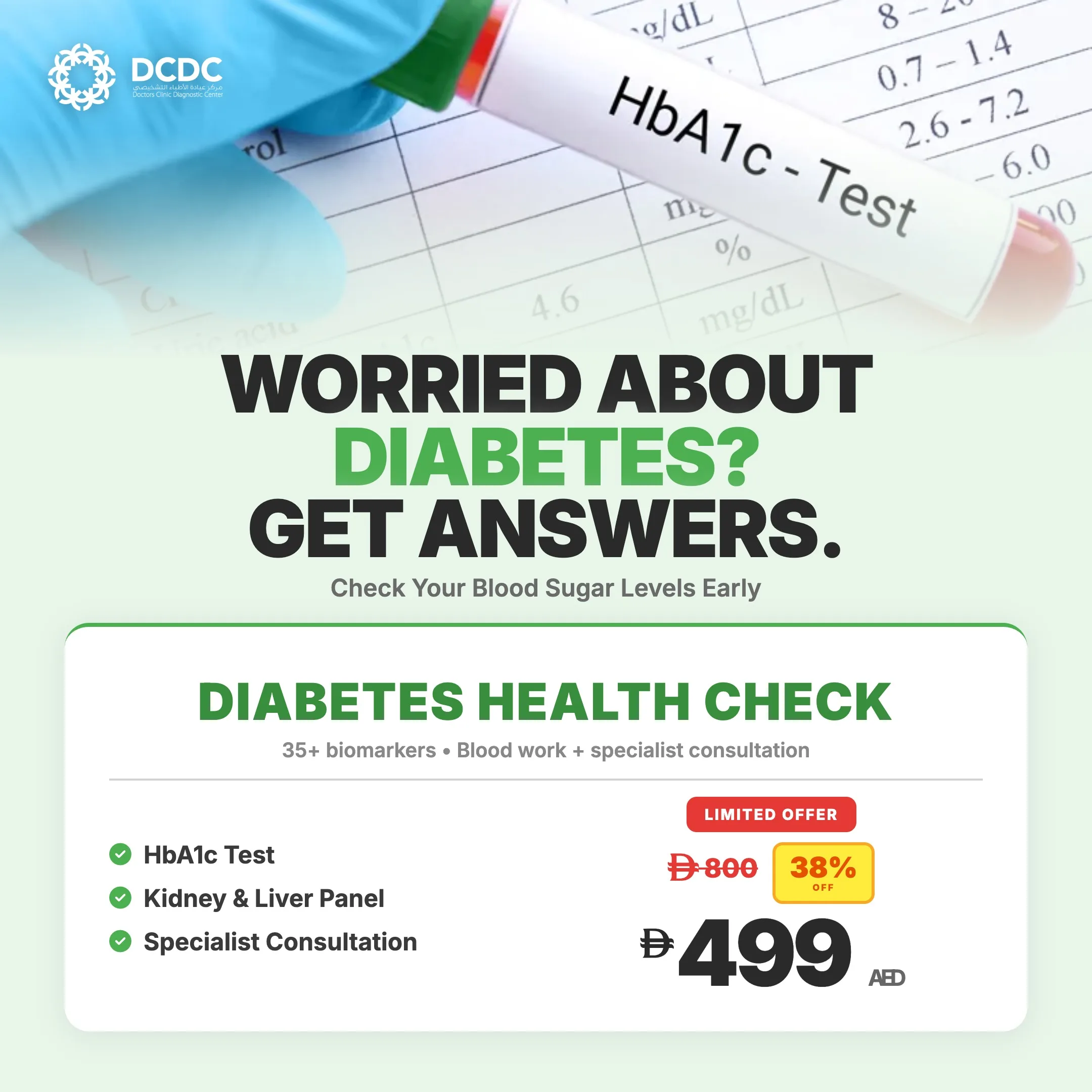
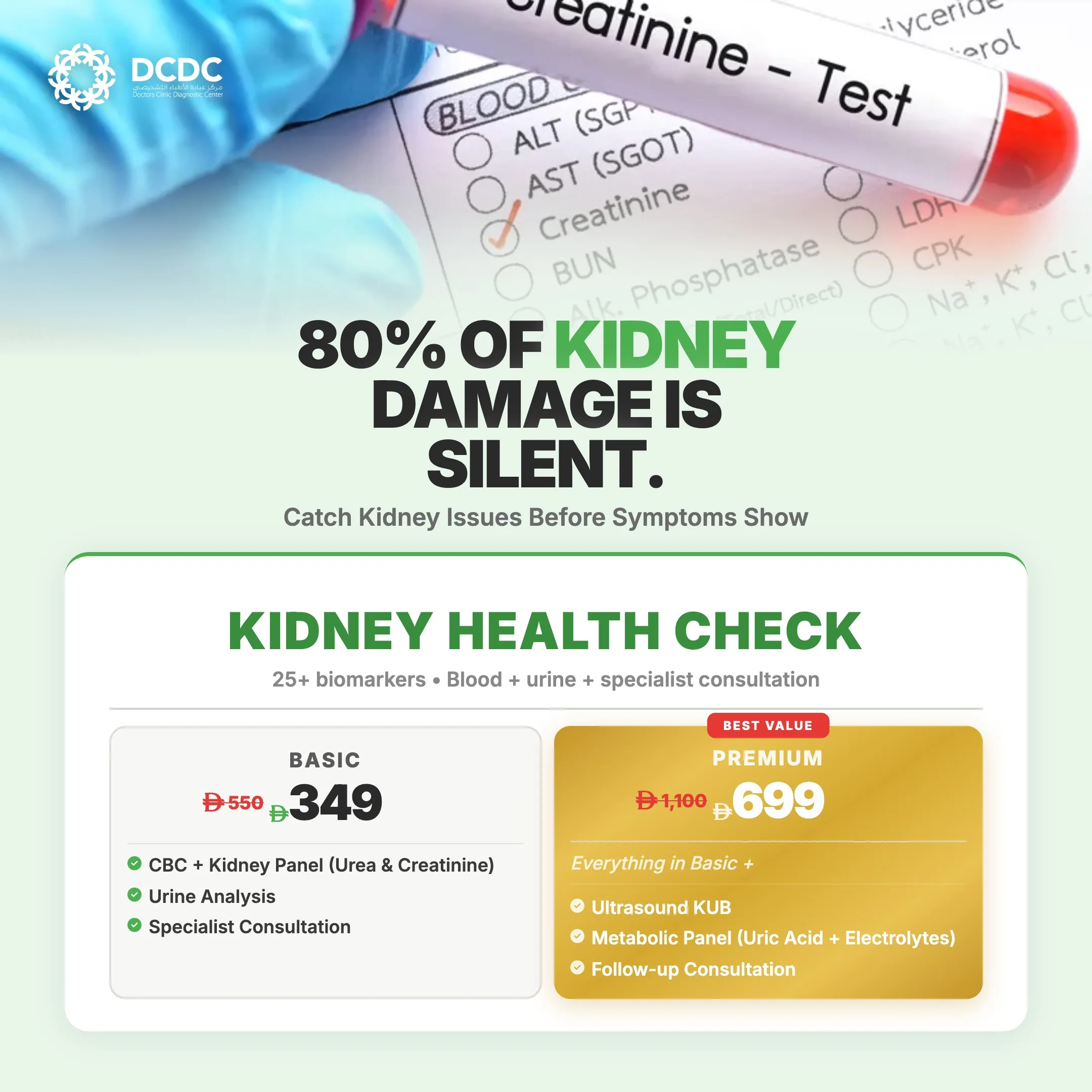
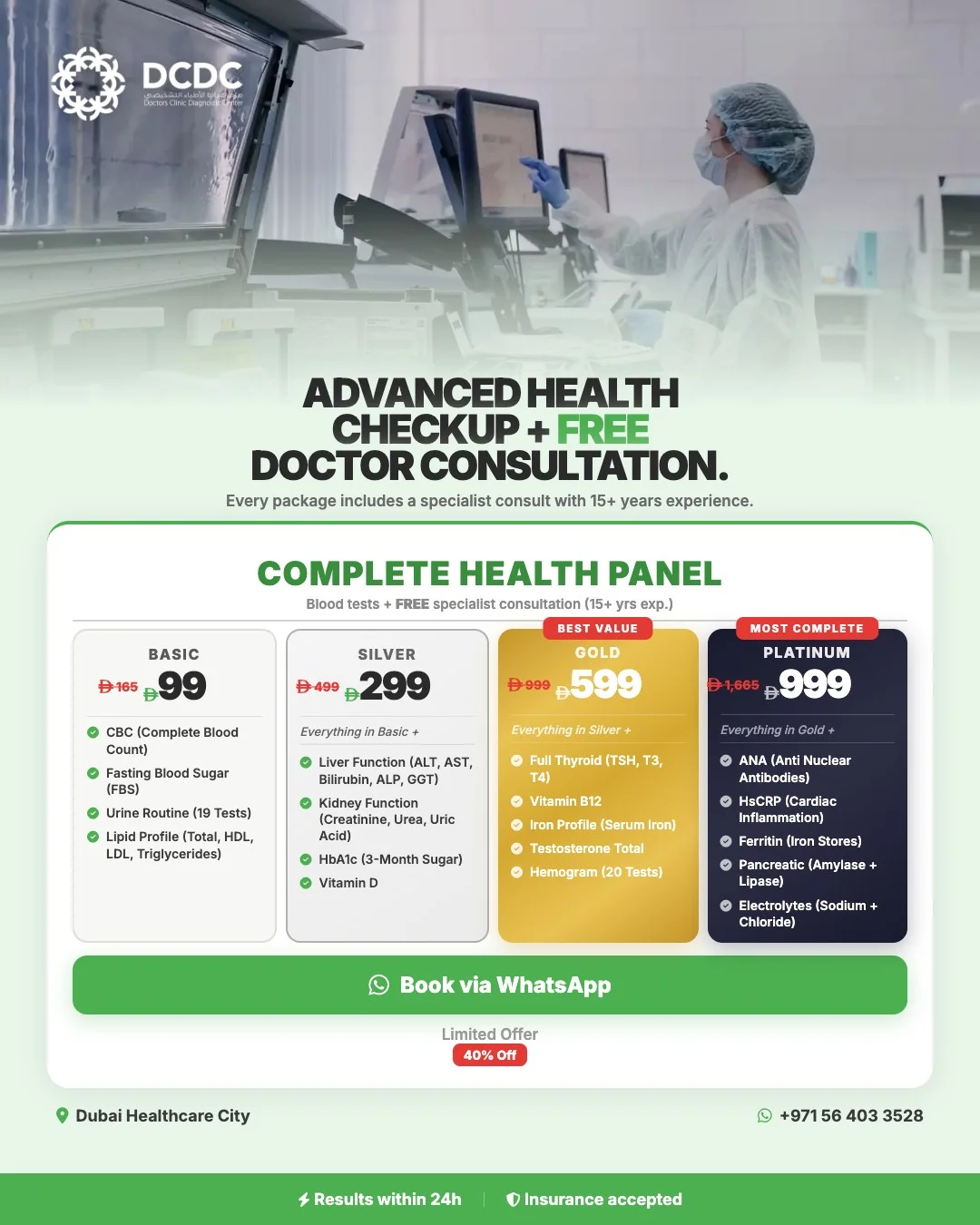
Save with our bundled screening packages — specialist consultation included


Understanding Allergies: IgE vs IgG
Before discussing tests, it is essential to understand the two fundamentally different types of adverse reactions to substances — because the type determines which test you need. A proper diagnosis often starts with blood tests to measure immune markers.
IgE-Mediated Allergy (True Allergy)
Immunoglobulin E (IgE) is the antibody responsible for immediate allergic reactions. When your immune system mistakenly identifies a harmless substance (allergen) as dangerous, it produces specific IgE antibodies. On subsequent exposure, these IgE antibodies trigger mast cells to release histamine and other chemicals, causing symptoms within minutes to 2 hours.
- Symptoms: Hives, itching, swelling (angioedema), sneezing, runny nose, watery eyes, wheezing, throat tightening, vomiting, anaphylaxis
- Severity: Can be life-threatening (anaphylaxis requires emergency epinephrine)
- Common triggers: Peanuts, tree nuts, shellfish, eggs, milk, pollen, dust mites, pet dander, insect stings, medications
- Tests: Specific IgE blood test (formerly RAST test) or skin prick test
IgG-Mediated Food Intolerance
Immunoglobulin G (IgG) food reactions are delayed — symptoms appear 4-72 hours after eating the trigger food — and are not life-threatening. They are technically classified as food intolerances or sensitivities rather than true allergies. The mechanisms are still debated in the medical community, but IgG testing has clinical utility when used alongside an elimination diet.
- Symptoms: Bloating, gas, diarrhoea, constipation, fatigue, headaches, joint pain, skin irritation, brain fog
- Severity: Uncomfortable but not life-threatening — never causes anaphylaxis
- Common triggers: Dairy, wheat/gluten, eggs, soy, corn, certain fruits, yeast
- Tests: IgG food intolerance panel (blood test)
Important: IgE and IgG tests are completely different investigations testing different immune pathways. An IgE food allergy panel will not detect food intolerances, and an IgG panel will not detect true allergies. If you are unsure which test you need, consult an ENT specialist or allergist first.
Skin Prick Test vs IgE Blood Test vs Patch Test: Detailed Comparison
Choosing the right allergy test depends on your symptoms, suspected triggers, and medical history. The following comprehensive comparison table covers the three main allergy testing methods used in Dubai clinics:
| Feature | Skin Prick Test (SPT) | IgE Blood Test (ImmunoCAP) | Patch Test |
|---|---|---|---|
| What it detects | IgE-mediated allergies (environmental + food) | IgE-mediated allergies (environmental + food) | Contact allergens (delayed-type hypersensitivity) |
| How it works | Allergen extracts applied to skin, skin pricked through drops | Blood sample tested against specific allergens in lab | Allergen patches applied to back for 48 hours |
| Number of allergens tested | 20-40 per session | 20-300+ from one blood sample | 25-80 contact allergens |
| Results time | 15-20 minutes | 24-48 hours | 48-96 hours (two readings) |
| Preparation required | Stop antihistamines 5-7 days before | No preparation needed | No creams on back; no shower during test |
| Affected by medications | Yes — antihistamines suppress results | No — unaffected by any medications | Minimally — avoid topical steroids on back |
| Suitable for severe eczema | No — needs clear skin area | Yes — no skin involvement | Depends — needs clear skin on back |
| Risk of allergic reaction | Extremely rare (< 0.01%) | Zero — blood drawn in lab | Potential for irritant reactions |
| Best for | Fast screening of common allergens | Comprehensive testing, children, medication users | Contact dermatitis (jewellery, cosmetics, chemicals) |
| Cost in Dubai (AED) | From 300-500 | From 550-1,500 | From 400-800 |
| Number of clinic visits | 1 visit | 1 visit | 2-3 visits (application, 48h reading, 96h reading) |
Allergy test comparison for Dubai clinics (2026). Your doctor will recommend the most appropriate test based on your specific symptoms and suspected triggers.
Types of Allergy Tests Available in Dubai
1. Specific IgE Blood Test (ImmunoCAP)
The specific IgE blood test — performed using the ImmunoCAP or ALEX2 platform — measures the level of IgE antibodies in your blood against specific allergens. A blood sample is drawn from your arm and sent to the laboratory, where it is tested against a panel of allergens.
- How it works: Blood sample tested against individual allergens using fluorescent enzyme immunoassay technology
- What it tests: Environmental allergens (dust mites, mould, pollen, pet dander, cockroach), food allergens (peanut, tree nuts, milk, egg, wheat, soy, fish, shellfish), insect venoms, latex, medications
- Results: Measured in kU/L — Class 0 (negative, <0.35), Class 1 (low), Class 2 (moderate), Class 3-6 (high to very high). Higher levels generally indicate greater sensitisation but do not always correlate with symptom severity
- Turnaround: 24-48 hours for standard panels
- Advantages: No preparation needed, unaffected by antihistamine use, safe for patients with severe eczema or dermographism, can test hundreds of allergens from one blood sample, quantitative results
- Cost: From AED 550 for a standard panel (20-40 allergens), from AED 900 for comprehensive panels (100+ allergens), from AED 1,500 for extended panels (300+ allergens)
2. Skin Prick Test (SPT)
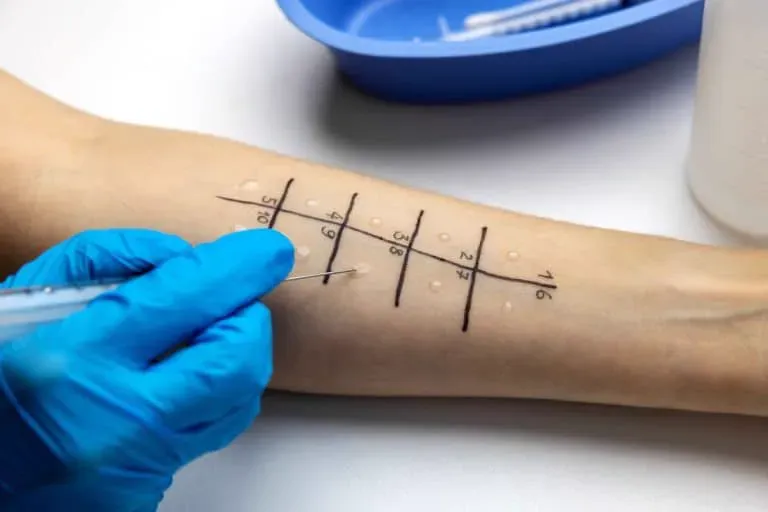
The skin prick test is the gold standard for diagnosing IgE-mediated allergies and has been used for over 100 years. A tiny amount of allergen extract is placed on the forearm or back, and the skin is pricked through the drop with a small lancet. If you are allergic, a wheal (raised bump) appears within 15-20 minutes.
- How it works: Allergen extracts applied to skin, skin lightly pricked — positive reaction produces a wheal ≥3mm larger than the negative control
- What it tests: Typically 20-40 common environmental and food allergens in one session
- Results: Available in 15-20 minutes — immediate visual result (wheal size measured in millimetres)
- Preparation: Must stop antihistamines (cetirizine, loratadine, fexofenadine) 5-7 days before the test. Stop tricyclic antidepressants 2 weeks before
- Advantages: Fast results, highly sensitive, tests multiple allergens simultaneously, lower cost than blood panels
- Limitations: Requires stopping antihistamines, not suitable for patients with severe eczema (no clear skin area) or dermographism, small risk of allergic reaction (extremely rare)
- Cost: From AED 300-500
3. Patch Test (Contact Allergy)
A patch test is specifically designed to diagnose contact dermatitis — skin reactions caused by direct contact with substances like nickel, fragrances, preservatives, hair dye chemicals, or rubber additives. It is completely different from a skin prick test and tests a different immune pathway (Type IV delayed hypersensitivity rather than Type I IgE-mediated).
- How it works: Small amounts of potential allergens are applied to adhesive patches, which are placed on your back and left in place for 48 hours. The patches are removed and the skin is read at 48 hours and again at 72-96 hours
- What it tests: Contact allergens — metals (nickel, cobalt, chromium), fragrances, preservatives (formaldehyde, methylisothiazolinone), rubber chemicals, hair dyes (PPD), cosmetic ingredients, medications (neomycin), adhesives
- Results: Read at 48 and 72-96 hours — graded from negative to strong positive (+++ ) based on the degree of redness, swelling, and vesicle formation
- Preparation: Avoid applying creams to the back, do not shower/swim during the test period, avoid sun exposure to the test area for 2 weeks before
- Number of visits: Requires 2-3 visits: patch application (Day 0), first reading (Day 2), and final reading (Day 3-4)
- Cost: From AED 400-800 depending on the number of allergens tested
4. IgG Food Intolerance Panel
The IgG food intolerance test measures IgG antibody levels against 96-200+ food items. It identifies foods that may be causing delayed adverse reactions — bloating, fatigue, headaches, skin problems, or digestive issues that occur hours to days after eating.
- How it works: Blood sample tested against a panel of food-specific IgG antibodies using ELISA or microarray technology
- What it tests: 96-200+ foods including dairy, grains, meats, fish, fruits, vegetables, nuts, spices, and additives
- Results: Reported as normal, borderline, elevated, or high reactivity for each food. A personalised elimination-rotation diet is recommended based on results
- Important note: IgG food testing remains debated in mainstream allergy/immunology. Professional societies (AAAI, EAACI) state that elevated IgG to foods may reflect normal exposure rather than intolerance. However, many patients report significant symptom improvement when guided by IgG results combined with a structured elimination diet
- Cost: From AED 950 (96 foods) to AED 1,500+ (200+ foods)
Allergy Test Cost Comparison in Dubai (2026)
| Test Type | What It Detects | Results Time | Cost (AED) |
|---|---|---|---|
| Skin Prick Test (SPT) | IgE-mediated allergies (environmental & food) | 15-20 minutes | From AED 300-500 |
| Specific IgE Blood Panel (20-40 allergens) | IgE-mediated allergies | 24-48 hours | From AED 550 |
| Comprehensive IgE Panel (100+ allergens) | IgE-mediated allergies (extended) | 24-48 hours | From AED 900 |
| Extended IgE Panel (300+ allergens — ALEX2) | Complete IgE molecular profiling | 3-5 working days | From AED 1,500 |
| Patch Test (Contact Allergy) | Contact dermatitis triggers | 48-96 hours | From AED 400-800 |
| IgG Food Intolerance (96 foods) | Delayed food sensitivities | 3-5 working days | From AED 950 |
| IgG Food Intolerance (200+ foods) | Extended food sensitivities | 3-5 working days | From AED 1,500 |
| Total IgE (screening) | Overall IgE level (not specific allergens) | 24 hours | From AED 100 |
Allergy test costs in Dubai (2026 pricing). DCDC offers DHA-regulated pricing with direct insurance billing for 20+ providers.
Common Allergens in Dubai and the UAE
Dubai's climate and lifestyle create a unique allergen profile that differs significantly from Europe, North America, and other regions. Many residents — especially expatriates — develop new allergies after moving to the UAE because they are exposed to allergens not present in their home countries. A comprehensive health checkup can help identify allergic conditions alongside other health concerns.
Dust Mites: Dubai's Number One Allergen
Dust mites (Dermatophagoides pteronyssinus and farinae) are the single most common allergen in Dubai and the Gulf region. Studies show that up to 80% of allergic patients in the Gulf region are sensitised to dust mites. Dubai's indoor environments are perfect for dust mites: air conditioning maintains a constant temperature of 20-25 degrees C, indoor humidity levels of 40-60% (from AC systems) provide ideal breeding conditions, carpeted homes and offices trap dust mite faeces (the actual allergen), and heavy curtains and upholstered furniture provide additional habitats.
Mould and AC-Related Allergens
AC units, especially in older buildings, are significant mould reservoirs. Condensation in AC ducts and filters creates ideal conditions for mould growth (Aspergillus, Alternaria, Cladosporium, Penicillium), which is then blown directly into living and working spaces. This is why many Dubai residents experience worsening allergy symptoms when the AC kicks in. Regular AC maintenance, filter cleaning, and professional duct cleaning can significantly reduce mould exposure.
Sandstorms and Construction Dust
While sand particles themselves are not true allergens, fine sand and construction dust act as powerful irritants that worsen existing allergic conditions. During sandstorms (which occur multiple times per year in Dubai), fine particulate matter (PM2.5 and PM10) can carry adsorbed allergens including mould spores, pollen grains, and bacterial endotoxins deep into the respiratory tract. Residents with allergic rhinitis or asthma should stay indoors during sandstorms and use air purifiers with HEPA filters.
Other Environmental Allergens
- Pet dander (cat and dog): Dubai has high pet ownership. Cat allergen (Fel d 1) is particularly persistent — it remains airborne for hours and can be found in homes that have never had a cat, carried on clothing
- Cockroach allergens: Cockroach proteins are a significant allergen in tropical climates. Found in dust even in clean homes and can trigger asthma and allergic rhinitis
- Pollen (Prosopis/Mesquite, date palm, grass): Dubai's landscaping and ornamental planting introduce grass pollens, and native Prosopis (mesquite/ghaf) trees produce allergenic pollen seasonally
Food Allergens
The most common food allergens worldwide — and in Dubai — are the "Big 8": milk, eggs, peanuts, tree nuts, fish, shellfish, wheat, and soy. In Dubai's multicultural population, additional food allergies are common including sesame (prevalent in Middle Eastern cuisine), chickpea, and various spices.
Seasonal vs Perennial Allergies in Dubai
Understanding whether your allergies are seasonal or perennial (year-round) helps your doctor determine the likely triggers and appropriate testing strategy:
| Feature | Seasonal Allergies | Perennial Allergies |
|---|---|---|
| Pattern | Symptoms occur at specific times of year | Symptoms present year-round |
| Common triggers in Dubai | Grass pollen (Feb-May), Prosopis pollen (Mar-Jun), sandstorm particles | Dust mites, mould, pet dander, cockroach |
| Worse when | Outdoors, during windy days, after sandstorms | Indoors, at night (bed — dust mites), with AC running |
| Improved when | Indoors with AC, after rain | Outdoors (if dust mite allergy), in clean environments |
| Common symptoms | Sneezing, itchy/watery eyes, runny nose | Nasal congestion, post-nasal drip, frequent throat clearing, chronic cough |
| Best test | Skin prick or IgE panel with pollen focus | Skin prick or IgE panel with indoor allergen focus |
| Unique to Dubai | Shorter pollen season than temperate climates; sandstorm overlap | Year-round AC means year-round dust mite and mould exposure |
Many Dubai residents have mixed seasonal and perennial allergies. Comprehensive testing identifies all relevant triggers.
When Should You Get Allergy Testing?
Allergy testing is recommended in the following situations — particularly when symptoms are affecting your quality of life, are recurrent, or are not responding to empirical treatment. According to Dr. Hadeel Elnur, "Many patients in Dubai tolerate allergy symptoms for years, assuming it is just the climate. Proper testing usually reveals specific, addressable triggers that, once identified, allow targeted treatment that dramatically improves quality of life."
- Chronic nasal symptoms: Persistent sneezing, runny nose, nasal congestion, and itchy nose — especially if year-round (suggesting dust mite or mould allergy) or seasonal (suggesting pollen)
- Recurrent asthma or wheezing: Identifying and avoiding specific triggers can dramatically reduce asthma attacks
- Suspected food allergy: Immediate reactions (hives, swelling, breathing difficulty, vomiting) after eating specific foods — accurate identification is essential for avoidance and emergency planning
- Eczema (atopic dermatitis): Up to 30% of children and 10% of adults with eczema have associated food allergies. Identifying triggers can improve skin management
- Chronic digestive symptoms: Bloating, gas, diarrhoea, or abdominal discomfort that may be related to food intolerance — IgG testing combined with elimination diet may help
- Unexplained chronic fatigue or headaches: These can sometimes be linked to undiagnosed food intolerances
- Contact dermatitis: Rashes appearing where jewellery, cosmetics, or chemicals contact the skin — patch testing identifies the specific contact allergen
- Before immunotherapy: If you are considering allergy immunotherapy (allergy shots or sublingual drops), specific IgE testing is mandatory to guide treatment
- New symptoms after moving to Dubai: Developing allergies for the first time after relocating is extremely common and warrants testing to identify your specific triggers
How to Prepare for Allergy Testing
IgE Blood Test Preparation
- No preparation needed — you do not need to fast
- You can continue taking all medications including antihistamines
- No dietary restrictions before the test
- Stay well hydrated for easier blood draw
Skin Prick Test Preparation
- Stop antihistamines 5-7 days before: Cetirizine (Zyrtec), loratadine (Claritin), fexofenadine (Telfast), desloratadine (Aerius)
- Stop tricyclic antidepressants 2 weeks before: Amitriptyline, nortriptyline (these have antihistamine effects)
- Nasal steroid sprays, asthma inhalers, and other non-antihistamine medications can continue
- Wear a short-sleeved or loose-sleeved top for forearm access
Patch Test Preparation
- Avoid sun exposure to the back for 2 weeks before testing — tanned skin may suppress reactions
- Stop topical steroids on the back 1 week before — they suppress the immune response being tested
- Do not shower or swim during the 48-hour patch period — water can loosen the patches
- Plan for 2-3 clinic visits — patch application, 48-hour reading, and 72-96 hour final reading
IgG Food Intolerance Test Preparation
- No fasting required
- No medication changes needed
- Important: Eat your normal diet in the 4 weeks before the test — if you have already been avoiding certain foods, IgG levels to those foods may be artificially low, producing false negatives
Understanding Your Allergy Test Results
IgE Blood Test Results: What the Numbers Mean
| IgE Level (kU/L) | Class | Interpretation | Clinical Significance |
|---|---|---|---|
| <0.35 | 0 | Negative | No sensitisation detected — allergy to this substance is unlikely |
| 0.35-0.69 | 1 | Low positive | Equivocal — may or may not cause symptoms; clinical correlation needed |
| 0.70-3.49 | 2 | Moderate positive | Likely clinically relevant — probable allergy if symptoms match |
| 3.50-17.49 | 3 | High positive | Clinically significant sensitisation — strong likelihood of allergy |
| 17.50-52.49 | 4 | Very high | Strong sensitisation — very high probability of clinical allergy |
| 52.50-99.99 | 5 | Very high | Strong sensitisation — avoidance strongly recommended |
| >100 | 6 | Extremely high | Very strong sensitisation — high risk of severe reactions |
IgE allergy test result classification (ImmunoCAP scale). A positive result (sensitisation) does not always equal clinical allergy — results must be interpreted alongside your symptoms.
Skin Prick Test Results: Wheal Size Interpretation
A wheal (raised bump) ≥3mm larger than the negative control is considered a positive result. Larger wheals generally indicate stronger sensitisation, though the relationship between wheal size and symptom severity is not perfectly linear. A positive and negative control are always included — histamine (positive control, should produce a wheal to confirm your skin is reactive) and saline (negative control, should produce no wheal to rule out dermographism).
Important: A positive result on either test (sensitisation) does not always mean clinical allergy. Some people have elevated IgE or positive skin prick results to a substance but experience no symptoms on exposure. Conversely, clinical allergy with negative testing can occur (though less commonly). Results must always be interpreted alongside your clinical history by a doctor.
Treatment Options After Allergy Testing
Once your allergy test results are available, your doctor will create a management plan tailored to your specific triggers. Treatment falls into four main categories:
1. Allergen Avoidance
The most effective treatment is avoiding identified triggers. For dust mite allergy — the most common allergy in Dubai — specific avoidance measures include:
- Allergen-proof mattress and pillow encasements (zip-lock covers that trap mites inside)
- Wash bedding weekly in hot water (60 degrees C or higher kills mites)
- Remove carpets and heavy curtains where possible — hard floors are far easier to keep mite-free
- Use HEPA-filter vacuum cleaners and air purifiers
- Regular professional AC duct cleaning (every 6-12 months) to reduce mould and trapped allergens
- Maintain indoor humidity below 50% — dehumidifiers can help in humid months
2. Medication
- Oral antihistamines: Cetirizine, loratadine, fexofenadine for mild-moderate allergic rhinitis, hives, and itching. Second-generation antihistamines are non-drowsy and can be taken daily
- Intranasal corticosteroid sprays: Fluticasone, mometasone, budesonide — the most effective treatment for persistent allergic rhinitis. Takes 1-2 weeks to reach full effect
- Epinephrine auto-injector (EpiPen): Essential for patients with severe food allergies or insect venom allergies at risk of anaphylaxis. Must carry at all times
- Montelukast: Leukotriene receptor antagonist, useful for allergic rhinitis combined with asthma
- Corticosteroid creams: For eczema and contact dermatitis flare-ups — used short-term for acute inflammation
3. Allergen Immunotherapy (Desensitisation)
For patients with persistent allergic rhinitis or asthma triggered by specific allergens (dust mites, pollen, insect venom), allergen immunotherapy offers the possibility of long-term improvement or cure. Immunotherapy works by gradually exposing the immune system to increasing amounts of the allergen, training it to become tolerant.
- Subcutaneous immunotherapy (SCIT — allergy shots): Injections given at the clinic, starting weekly during the build-up phase (3-6 months), then monthly for 3-5 years. Effective for environmental allergens and insect venom
- Sublingual immunotherapy (SLIT — tablets or drops): Daily tablets or drops placed under the tongue at home. Available for dust mites and certain grass pollens. More convenient than injections but requires daily adherence
- Success rates: 60-80% of patients experience significant improvement in symptoms and reduced medication need after completing 3-5 years of immunotherapy. Benefits often persist for years after treatment ends
- Requirement: Specific IgE testing is mandatory before starting immunotherapy to confirm the allergen and guide treatment selection
4. Dietary Modification for Food Intolerances
For IgG food intolerances — a structured elimination diet removing high-reactivity foods for 8-12 weeks, followed by systematic reintroduction one food at a time (every 3-4 days) to identify true trigger foods. This approach, guided by IgG test results, is more targeted and faster than blind elimination.
Allergy Testing in Children
Children can be tested for allergies at any age, including infants. The approach depends on the child's age and the suspected allergies:
- IgE blood tests: Preferred for infants and young children because only a small blood sample is needed, the child does not need to stop medications, and there is no risk of allergic reaction during testing
- Skin prick tests: Can be performed from 6 months of age but are generally better tolerated from age 2-3 when the child can be more cooperative. Results may be smaller in young children but are still interpretable
- Common childhood allergies in Dubai: Cow's milk, egg, peanut, and dust mite allergies are the most common. Many children outgrow milk and egg allergies by school age, while peanut and tree nut allergies tend to persist
- Eczema and food allergy: Children with moderate-to-severe eczema should be tested for food allergies (especially milk, egg, peanut, and wheat) as these are common co-existing conditions
What to Expect at DCDC for Allergy Testing
At DCDC (Doctors Clinic Diagnostic Center) in Dubai Healthcare City, allergy testing follows a structured approach designed for accuracy and convenience:
- Initial consultation: Your doctor reviews your symptoms, medical history, and suspected triggers to determine the most appropriate test. This ensures you get the right test first time — avoiding unnecessary spending on panels that do not match your clinical picture
- On-site testing: Blood samples for IgE and IgG panels are collected at our in-house DHA-certified laboratory. On-site sample collection with same-day processing for routine tests ensures optimal sample quality
- Results interpretation: Your doctor reviews results with you, explaining which allergens are clinically significant and creating a personalised management plan
- Follow-up care: Treatment options including medications, avoidance strategies, and immunotherapy referrals are all available through DCDC — no need to visit multiple facilities. Our 98% patient satisfaction rate reflects the quality of our comprehensive approach
- Insurance: Direct billing with 20+ insurance providers including Daman, AXA, and Bupa. IgE testing is covered when medically indicated
Book Your Allergy Test at DCDC
Comprehensive blood-based allergy testing available at DCDC Dubai Healthcare City — IgE blood panels and food intolerance panels. Walk-in or appointment.
Allergy testing from AED 300 — most insurance accepted
Insurance Coverage for Allergy Testing in Dubai
Most Dubai health insurance plans cover IgE allergy testing when ordered by a doctor for clinical indications (allergic rhinitis, suspected food allergy, eczema, asthma). Skin prick tests are also generally covered when medically indicated.
IgG food intolerance testing is less commonly covered by insurance, as it is considered an investigational or wellness test by many insurers. Patch testing is covered when ordered for clinical evaluation of contact dermatitis. Check with your provider before booking. At DCDC, we verify your insurance coverage and advise on out-of-pocket costs before proceeding with any testing.
Allergy Testing Myths Debunked
- Myth: "I can diagnose my allergies with an at-home kit." Reality: While some at-home IgG kits exist, they lack the precision and validation of laboratory-based testing. More importantly, results require medical interpretation — a positive result without clinical context can lead to unnecessary dietary restriction
- Myth: "If I am not allergic to something, it will never cause a reaction." Reality: Allergies can develop at any age. Adult-onset food allergies are increasingly common, and moving to a new environment (like Dubai) can trigger new sensitivities to dust mites, mould, and regional pollen
- Myth: "A negative test means I am definitely not allergic." Reality: No test is 100% sensitive. If clinical suspicion remains high despite negative testing, further investigation (supervised oral food challenge) may be needed
- Myth: "Allergy testing is painful." Reality: IgE blood tests involve a standard blood draw. Skin prick tests use a tiny lancet that barely breaks the skin surface — most patients describe it as a mild scratch, not painful. Even children tolerate it well
- Myth: "Allergies are not serious — just take an antihistamine." Reality: While many allergies are manageable, food allergies can cause life-threatening anaphylaxis. Uncontrolled allergic rhinitis increases asthma risk. Proper testing and a comprehensive management plan — including immunotherapy for eligible patients — can dramatically improve outcomes
Struggling with Unexplained Allergic Symptoms?
Get properly tested at DCDC Dubai Healthcare City. Our laboratory offers comprehensive IgE blood panels and food intolerance panels with results interpreted by our medical team. 4.8/5 Google rating from over 1,000 reviews.
Walk-in allergy testing available — most insurance accepted
Related Services at DCDC
Expert care and advanced diagnostics at Dubai Healthcare City
Frequently Asked Questions
Final Thoughts
Allergy testing has advanced dramatically — modern IgE panels can identify sensitivities to hundreds of specific allergens from a single blood sample, skin prick tests give answers in 15 minutes, and patch tests can pinpoint the exact contact allergen causing your dermatitis. There is no reason to suffer with chronic sneezing, unexplained hives, digestive discomfort, or eczema flare-ups without knowing your specific triggers.
In Dubai, where dust mites, AC mould, sandstorms, and new environmental exposures make allergies extremely common, proper testing is the first step toward effective management — whether that means targeted avoidance strategies, the right medication, immunotherapy for long-term desensitisation over 3-5 years, or dietary modification based on intolerance testing.
At Doctors Clinic Diagnostic Center in Dubai Healthcare City, we offer blood-based allergy testing — IgE blood panels and IgG food intolerance panels — with results interpreted by our ENT and medical team. Walk-in testing is available, and direct billing with 20+ insurance providers makes the process straightforward.
Sources & References
This article was reviewed by our medical team and references the following sources:
- European Academy of Allergy and Clinical Immunology (EAACI) — Allergen Immunotherapy Guidelines (2022)
- American Academy of Allergy, Asthma & Immunology (AAAAI) — Allergy Testing Guidelines
- World Allergy Organization (WAO) — White Book on Allergy (2024 Update)
- British Society for Allergy and Clinical Immunology (BSACI) — Allergy Diagnosis Guidelines
- Annals of Allergy, Asthma & Immunology — Prevalence of Dust Mite Sensitisation in the Gulf Region
- Dubai Health Authority — Laboratory Standards and Regulations
- Mayo Clinic — Allergy Skin Tests: Purpose, Procedure, and Results
Medical content on this site is reviewed by DHA-licensed physicians. See our editorial policy for more information.

Written by
Dr. Hadeel Elnur
General Practitioner
MD General Practice
Dr. Hadeel Elnur is a General Practitioner at DCDC Dubai Healthcare City with expertise in primary care, preventive medicine, and allergy management. She helps patients identify allergy triggers and develop effective management plans.
Related Articles

ENT Doctor Dubai: When to See a Specialist (2026)

Sleep Apnea & Snoring Dubai: Treatment & Cost Guide
Hearing Test Dubai: Audiometry Types & Cost Guide
Blood Test Dubai: Complete Guide to Lab Tests
More in General Health
Epilepsy Treatment Dubai: Symptoms & Care (2026)
Read More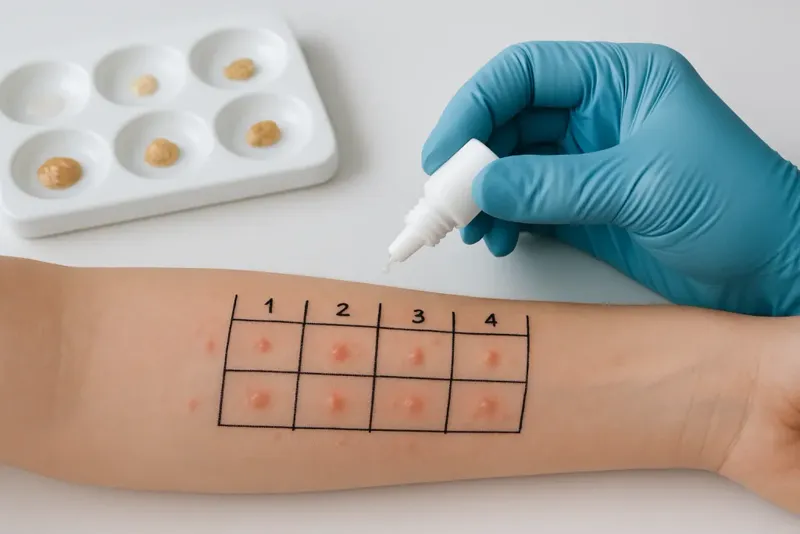
Food Allergy vs Food Intolerance Dubai (2026)
Read More
Pneumonia vs Flu Dubai: Key Differences (2026)
Read More
Swollen Lymph Nodes Dubai: When to Worry (2026)
Read MoreFlu vs Cold Dubai: How to Tell the Difference (2026)
Read More
Sleep Study Cost Dubai: Tests & Pricing (2026)
Read More© 2026 Doctors Clinic Diagnostic Center (DCDC), Dubai Healthcare City. Originally published at https://doctorsclinicdubai.ae/blog/allergy-testing-dubai-guide. All rights reserved. Unauthorized reproduction is prohibited.