Key Takeaways
- Fungal skin infections are extremely common worldwide — global estimates suggest superficial fungal infections affect roughly a quarter of the population at any given time — and Dubai's heat and humidity make residents especially prone to them.
- The most common types are ringworm (tinea corporis), athlete's foot (tinea pedis), jock itch (tinea cruris), nail fungus (onychomycosis), yeast infections (candidiasis), and tinea versicolor, each with distinct patterns and treatment approaches.
- Dubai's climate — extreme summer heat, high humidity, heavy sweating, closed sports shoes, gyms, and communal pools — creates ideal conditions for fungal growth, making cases rise sharply between May and September.
- Mild, isolated patches often respond to over-the-counter topical antifungal creams within two to four weeks, but infections that spread, involve the nails or scalp, or persist despite treatment need a medical diagnosis before continuing self-treatment.
- Using a steroid cream on an unconfirmed fungal rash can mask symptoms and cause the infection to spread widely (a condition called tinea incognito) — accurate diagnosis before treatment is essential.
- Fungal infection diagnosis typically involves a clinical skin exam, a Wood's lamp check, and a KOH microscopy or fungal culture test, all of which can be performed in a single visit with same-day results at an on-site laboratory.
- GP consultation for a fungal skin infection in Dubai starts from AED 250, with most insurance plans accepted for direct billing, same-day appointments, and an average wait time of around 15 minutes at DCDC.
If you have noticed an itchy, ring-shaped patch spreading on your skin, peeling and burning between your toes, or a thickened, discoloured nail that will not clear up, you are likely dealing with a fungal skin infection — one of the most common reasons people in Dubai visit a doctor, especially during the hot summer months. Dubai's combination of intense heat, high humidity, heavy sweating, closed footwear, gyms, and communal pools creates near-perfect conditions for fungal growth on the skin, feet, groin, and nails. The good news is that fungal skin infections are almost always treatable, but the right outcome depends on getting an accurate diagnosis and the correct antifungal treatment rather than guessing with random creams. This guide covers every major type of fungal skin infection, how to recognise the symptoms, when home care is enough and when you need a GP consultation, and what treatment and costs look like in Dubai.
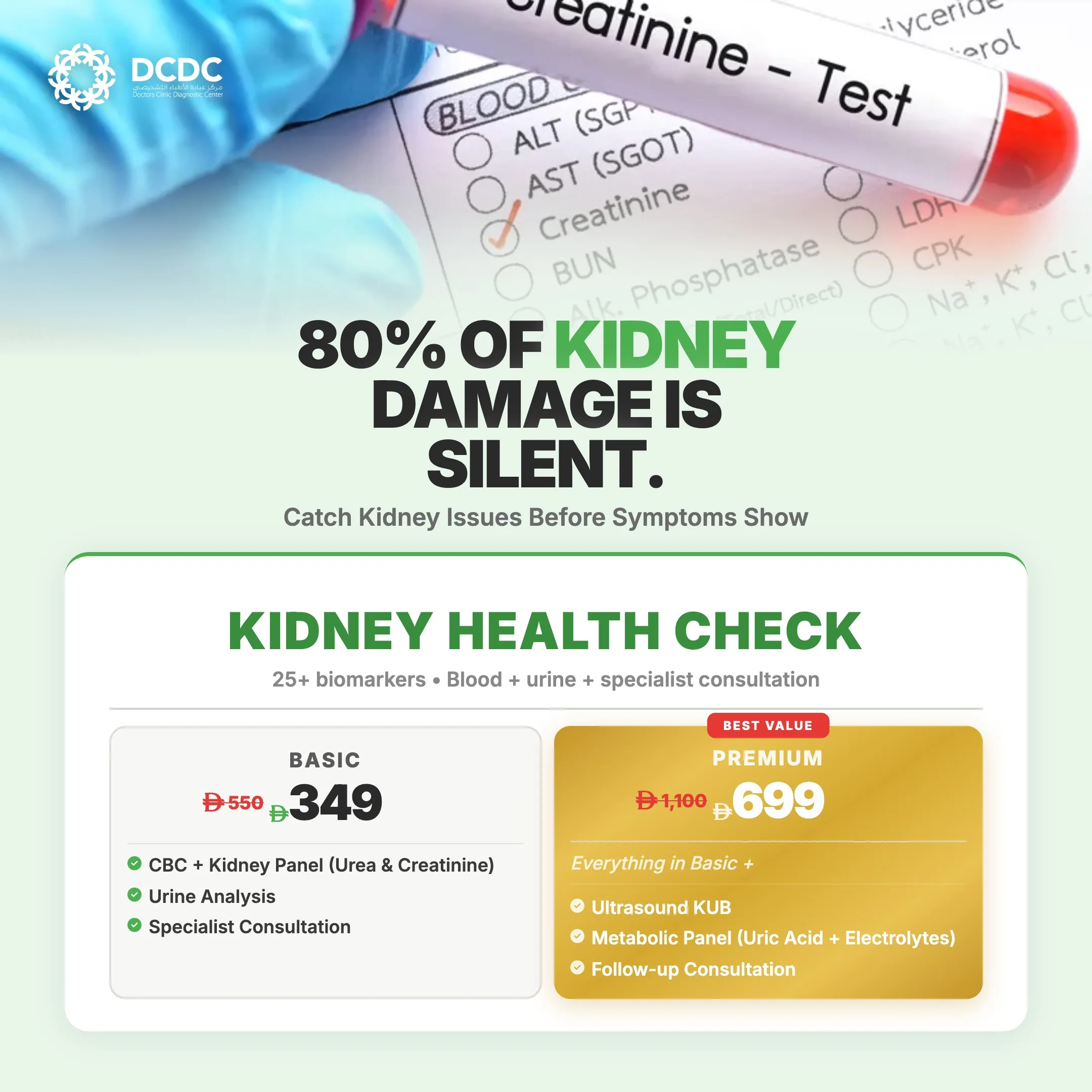
Health Screening Packages
Save with our bundled screening packages — specialist consultation included





What Is a Fungal Skin Infection?
A fungal skin infection (medically called a superficial mycosis) happens when fungi — organisms that live naturally in the environment and, in small amounts, on human skin — multiply out of control and invade the outer layers of skin, hair, or nails. Fungi thrive on keratin, the tough protein that makes up the outer skin layer, hair shafts, and nails, which is why these infections so often affect exactly those tissues.
There are three broad groups of fungi responsible for most skin infections. Dermatophytes cause the "tinea" infections — ringworm, athlete's foot, jock itch, and most nail fungus — and are the most common culprits. Yeasts, particularly Candida species, cause infections in warm, moist skin folds and mucous membranes. Malassezia, a yeast that lives naturally on everyone's skin, is responsible for tinea versicolor when it overgrows. None of these are related to bacteria or viruses, which is why antibiotics do nothing for a fungal rash and an accurate diagnosis matters before starting any treatment.
Most fungal skin infections are mildly to moderately contagious, spreading through direct skin-to-skin contact, contact with contaminated surfaces (gym mats, pool decks, shared towels), or contact with infected pets. They are rarely dangerous, but left untreated they tend to spread, become chronic, and — in the case of nail and scalp infections — become significantly harder to cure the longer they are left.
Why Fungal Skin Infections Are So Common in Dubai's Climate
Dermatophyte fungi thrive in warm, moist, dark environments — and Dubai's climate delivers exactly that for much of the year. Summer temperatures regularly exceed 40 to 45 degrees Celsius with high humidity, and the practical reality of daily life here — closed athletic shoes, long hours in air-conditioned offices followed by outdoor heat, gym memberships, frequent swimming, and communal changing rooms — means skin stays damp and warm far more often than in temperate climates.
High-Risk Groups in Dubai
- Gym-goers and athletes: Shared mats, locker rooms, and communal showers are classic sources of ringworm and athlete's foot
- Outdoor and manual workers: Prolonged sweating inside closed boots or safety shoes, often for 10-12 hour shifts, is one of the strongest risk factors for athlete's foot and nail fungus
- Children in swimming and sports programmes: Ringworm spreads rapidly among children through shared equipment, mats, and pool decks
- People with diabetes: Higher blood sugar and reduced circulation make fungal infections, especially of the feet and nails, more common and slower to heal
- Anyone wearing tight, non-breathable clothing or closed shoes daily: Common with certain work uniforms, sports kits, and the region's warm-weather footwear habits
- People with a weakened immune system: Including those on long-term steroids, chemotherapy, or with uncontrolled diabetes, are prone to more extensive or recurrent yeast infections
Case numbers for tinea infections and tinea versicolor rise noticeably in Dubai clinics between May and September, tracking directly with the rise in temperature and humidity — a pattern seen across hot, humid regions worldwide.
Types of Fungal Skin Infections and Their Symptoms
Fungal skin infections are named according to where on the body they occur. Recognising the pattern helps you understand what you are likely dealing with, although a doctor's confirmation is always recommended before starting prescription-strength treatment.
Ringworm (Tinea Corporis)
Despite the name, ringworm has nothing to do with worms — it is a dermatophyte infection of the body skin. It typically appears as a red, scaly, ring-shaped patch with a raised, active border and a clearer centre, which is where the "ring" appearance comes from. It is intensely itchy and can appear anywhere on the trunk, arms, or legs, often spreading outward slowly over days to weeks. It spreads easily through skin contact, shared clothing or towels, and infected pets (especially cats).
Athlete's Foot (Tinea Pedis)
The most common fungal infection worldwide, athlete's foot usually starts between the toes with itching, redness, cracking, peeling, and sometimes a burning or stinging sensation. A moccasin-type variant causes dry, scaly thickening across the sole and heel, while a vesicular type causes small, itchy fluid-filled blisters. Closed athletic shoes, sweaty socks, and communal showers or pool decks are the classic sources in Dubai.
Jock Itch (Tinea Cruris)
Jock itch affects the groin, inner thighs, and buttocks — areas that stay warm, moist, and subject to friction. It presents as a red or brownish, itchy, often ring-shaped rash with a well-defined, sometimes scaly edge, typically sparing the scrotum itself. It is more common in men, in hot climates, and in people who sweat heavily or wear tight clothing, and it frequently occurs alongside athlete's foot because the same fungus can spread from the feet to the groin via towels or clothing.
Nail Fungus (Onychomycosis)
Nail fungus causes the toenails (and less commonly fingernails) to become thickened, discoloured (yellow, white, or brown), brittle, and sometimes crumbly or distorted in shape, with debris building up under the nail. It develops slowly, often starting at the edge or tip of one nail and spreading over months to years if untreated. It is notoriously stubborn because the fungus is protected under the hard nail plate, and it is one of the leading reasons patients need a longer course of oral antifungal treatment rather than a topical cream alone.
Yeast Infections of the Skin (Candidiasis)
Cutaneous candidiasis is caused by an overgrowth of Candida yeast in warm, moist skin folds — under the breasts, in the groin, armpits, between fingers and toes, and around nail beds. It produces a bright red, sometimes weepy rash with small satellite spots or pustules at the edges, and is common in people who sweat heavily, are overweight, have diabetes, or use antibiotics or steroid medications. Oral thrush (candidiasis of the mouth) and genital yeast infections are related but distinct presentations.
Tinea Versicolor (Pityriasis Versicolor)
Caused by an overgrowth of Malassezia yeast that normally lives harmlessly on everyone's skin, tinea versicolor produces small, distinct patches on the chest, back, and shoulders that appear lighter or darker than the surrounding skin, with fine scaling. It is far more noticeable after sun exposure because the affected patches do not tan evenly, and it is one of the most common summer skin complaints in Dubai due to heat, humidity, and heavy sweating combined with sun exposure.
Fungal skin infections are also very common in children, who pick them up through school, sports, and pets — ringworm on the scalp (tinea capitis) needs particularly prompt treatment in kids to prevent hair loss and scarring. If you are trying to work out whether your child's rash is fungal or something else entirely, our childhood rashes guide covers the full range of paediatric skin conditions and how to tell them apart.
Fungal Infection vs Eczema, Psoriasis and Other Skin Conditions
One of the most common mistakes with skin rashes is assuming they are fungal (or assuming they are not) based on appearance alone, since several very different conditions can look similar at first glance. Ringworm's central clearing and raised, active border helps distinguish it from eczema, which tends to be more diffusely dry, cracked, and does not usually clear in the middle. Psoriasis plaques are typically thicker, with a distinctive silvery-white scale and well-demarcated, symmetrical patches on the elbows, knees, or scalp, whereas fungal scale is finer and the patches are usually asymmetrical.
This distinction matters clinically because the wrong treatment can make things worse. Applying a topical steroid to an unrecognised fungal infection — a very common error, since steroids initially reduce redness and itching — allows the fungus to spread widely and lose its classic ring shape, a condition dermatologists call tinea incognito. This is one of the main reasons a clinical exam, and sometimes a simple in-clinic scraping test, is worth doing before settling on a treatment, rather than trying steroid creams first.
When to See a Doctor vs Treating at Home
Many mild, well-localised fungal infections — a single small patch of ringworm, mild athlete's foot between the toes — respond to over-the-counter antifungal creams applied consistently for two to four weeks. However, several situations call for a proper medical assessment rather than continued self-treatment.
- No improvement after two weeks of consistent OTC antifungal use — this suggests either the wrong diagnosis or a fungus that needs prescription-strength or oral treatment
- The rash is spreading rapidly, covers a large area, or keeps recurring after apparently clearing
- Nail or scalp involvement — these almost always require oral antifungal medication, as topical treatment cannot penetrate deeply enough
- Signs of bacterial superinfection: increasing pain, spreading redness, warmth, pus, or fever, which suggest a secondary bacterial infection needing different treatment
- You have diabetes, a weakened immune system, or peripheral vascular disease — fungal infections in these groups can progress faster and need closer monitoring
- You are pregnant or breastfeeding and unsure which antifungal products are safe to use
- You have already tried a steroid cream and the rash has changed shape, spread, or worsened
How Fungal Skin Infections Are Diagnosed at DCDC
Diagnosis usually starts with a straightforward clinical examination — an experienced GP can recognise the pattern of most fungal infections by sight and location alone. When the diagnosis is uncertain, or when a stronger prescription treatment is being considered, a few simple in-clinic tests confirm it quickly.
- Wood's lamp examination: A special ultraviolet light can make certain fungal infections, including some cases of tinea versicolor and tinea capitis, fluoresce, giving a fast visual clue
- KOH microscopy (potassium hydroxide skin scraping): A tiny, painless scraping of skin, hair, or nail is examined under a microscope after being treated with a solution that dissolves skin cells but leaves fungal elements visible — this is the quickest way to confirm a fungal infection in-clinic
- Fungal culture: A sample is grown in the laboratory over one to three weeks to identify the exact species — useful for stubborn nail infections or when choosing the most effective oral medication
- Blood tests: Before starting a course of oral antifungal medication, particularly for nail fungus, baseline liver function tests are often recommended, since oral antifungals are processed by the liver
For infections that are unusually extensive, recurrent despite proper treatment, or affecting the scalp and nails in a complex pattern, your GP may refer you onward to a dermatologist in Dubai for specialist assessment and, if needed, laser-assisted nail treatment.
Fungal Skin Infection Treatment Options
Topical Antifungal Treatment
Most localised skin fungal infections — ringworm, mild athlete's foot, jock itch, and mild candidiasis — are treated first with topical antifungal creams, gels, or sprays. Common active ingredients include the azole group (clotrimazole, miconazole, ketoconazole) and the allylamine group (terbinafine), which is often faster-acting for dermatophyte infections. The key to success is consistency: treatment should continue for one to two weeks after the visible rash has cleared, typically totalling two to four weeks, because stopping too early is the single most common reason for recurrence.
Oral Antifungal Medication
Oral antifungal tablets are needed for infections that topical treatment cannot reach effectively — nail fungus, scalp ringworm (tinea capitis, especially in children), widespread or recurrent skin infections, and cases that have not responded to topical treatment. Common oral antifungals include terbinafine, fluconazole, itraconazole, and griseofulvin (often preferred for children with scalp ringworm). Courses typically run from two to six weeks for skin and scalp infections, and considerably longer — often three to six months — for toenail fungus, given how slowly nails grow. Periodic blood tests may be used to monitor liver function during longer courses.
Nail Fungus Treatment
Mild nail fungus affecting less than half the nail may respond to a medicated antifungal nail lacquer applied daily over several months. More established infections usually need oral antifungal therapy, since the medication needs to reach the nail bed through the bloodstream as the nail grows out. For nails that do not respond to standard treatment, laser therapy for the nail plate is available as an adjunct to speed up clearance and support healthy regrowth, though it is generally used alongside — not instead of — medical antifungal treatment.
According to Dr. Hadeel Elnur, "One of the most common patterns I see in Dubai is patients who have been self-treating a fungal rash with a leftover steroid cream from a previous prescription. It feels better for a few days because the steroid calms the inflammation, but the fungus keeps spreading underneath — by the time patients come in, the rash is often larger and less clearly ring-shaped than a typical case. A quick skin scraping at the first visit avoids weeks of the wrong treatment."
Not Sure If Your Rash Is Fungal?
Book a GP consultation at DCDC Dubai Healthcare City for an accurate diagnosis and the right antifungal treatment plan, with on-site testing and direct insurance billing.
Same-day appointments available — 20+ insurance partners
Fungal Skin Infection Treatment Cost in Dubai
Costs vary depending on the type of infection, whether it needs topical or oral treatment, and how many tests are required to confirm the diagnosis. The table below gives approximate ranges for fungal skin infection care in Dubai. At DCDC, most consultations and tests are covered by insurance with direct billing, so you may only pay a copay or deductible.
| Service | Typical Cost in Dubai | Notes |
|---|---|---|
| GP consultation (fungal skin assessment) | From AED 250-500 | Initial diagnosis, exam, and treatment plan |
| Dermatologist consultation (referral) | AED 400-800 | For recurrent, extensive, or resistant infections |
| KOH microscopy / skin scraping | AED 150-350 | Confirms fungal infection at the initial visit |
| Fungal culture test | AED 200-450 | Identifies exact species, useful for stubborn nail infections |
| Liver function blood test | From AED 249 | Baseline check before longer oral antifungal courses |
| Topical antifungal cream or spray | AED 30-120 | Clotrimazole, miconazole, or terbinafine, 2-4 week course |
| Oral antifungal medication course | AED 150-450 | Terbinafine, fluconazole, or itraconazole, 2-6 weeks for skin/scalp |
| Antifungal nail lacquer | AED 100-250 | For mild nail fungus, applied daily over several months |
| Oral antifungal course for nail fungus | AED 300-900 | Longer course, typically 3-6 months, with monitoring |
| Laser nail fungus treatment (course) | AED 1,500-4,000 | Adjunct therapy for resistant nail infections |
Fungal skin infection treatment costs in Dubai — prices are approximate ranges. Insurance coverage varies by plan. DCDC offers direct billing with 20+ insurance partners.
At DCDC, GP consultation for a fungal skin infection starts from AED 250, and on-site KOH microscopy means most patients leave the same visit with a confirmed diagnosis and a prescription in hand.
What to Expect at DCDC
At Doctors Clinic Diagnostic Center (DCDC) in Dubai Healthcare City, fungal skin infection assessment and treatment are handled in a single, streamlined visit.
Your Consultation Journey
- Arrival and check-in: DCDC is located in Building 64, Block A, Al Razi Medical Complex, Dubai Healthcare City, with free dedicated on-site parking. Average wait time is approximately 15 minutes
- GP consultation: Your doctor examines the affected area, asks about how and when it started, your lifestyle (gym, pool, footwear, occupation), and any previous treatments tried
- On-site testing: If the diagnosis needs confirming, a KOH skin scraping or fungal culture can be done in-clinic, with results from the on-site laboratory typically available the same day for routine tests
- Diagnosis and treatment plan: You receive a clear diagnosis, a prescription for the appropriate topical or oral antifungal medication, and practical guidance on preventing recurrence in Dubai's climate
- Follow-up: A review is typically arranged after 2-4 weeks for skin infections, or longer for nail fungus, to check progress and adjust treatment if needed
Why Patients Choose DCDC
- 4.8/5 Google rating from 1,000+ verified patient reviews
- 98% patient satisfaction rate
- MOHAP-licensed facility (License No. NIMY7VY5-240925) in Dubai Healthcare City
- On-site laboratory: Same-day results for routine tests, including fungal microscopy
- Direct insurance billing: 20+ insurance partners including Daman, AXA, Bupa, MetLife, and Cigna
- Multilingual staff: Arabic, English, Farsi, Urdu, and Hindi spoken
- Convenient hours: Saturday to Thursday 8 AM-10 PM, Friday 9 AM-9 PM
Our GPs also manage a wide range of related skin concerns beyond fungal infections, including acne treatment in Dubai and other inflammatory skin conditions, so patients with more than one skin concern can often be assessed in a single visit.
Complications of Untreated Fungal Infections
Fungal skin infections are rarely dangerous, but leaving them untreated — or repeatedly self-treating with the wrong products — carries real downsides. Infections tend to expand in size and spread to new sites on the body, or to other household members and pets. A secondary bacterial infection can develop when scratching breaks the skin, causing increased pain, spreading redness, and sometimes fever, which needs separate antibiotic treatment. Nail fungus left untreated can eventually damage the nail bed permanently, making full cosmetic recovery unlikely even after the infection clears. In children, an inflamed, boggy, pus-filled patch of scalp ringworm (a kerion) can cause permanent, scarring hair loss if not treated promptly with oral antifungal medication. Chronic or recurrent fungal infections also carry a real psychological and social cost — visible rashes, especially on the face, hands, or feet, affect confidence and can lead people to avoid gyms, pools, and social activities unnecessarily once properly treated.
Prevention Tips for Dubai's Climate
Because Dubai's environment will always favour fungal growth, prevention is as much about routine habits as it is about treatment. These evidence-based strategies significantly reduce the risk of both getting and passing on a fungal skin infection.
- 1. Keep skin dry, especially in skin folds: Towel-dry thoroughly after showering and swimming, paying particular attention to between the toes, the groin, and under the breasts
- 2. Change out of wet or sweaty clothing promptly: Do not stay in damp gym clothes or swimwear longer than necessary — this is one of the single biggest risk factors in Dubai's heat
- 3. Choose breathable fabrics: Cotton and moisture-wicking synthetic sportswear reduce trapped moisture compared with tight, non-breathable fabrics
- 4. Rotate footwear and use antifungal powder: Allow shoes to dry out fully between wears, and consider an antifungal foot powder if you wear closed shoes for long shifts
- 5. Wear sandals or flip-flops in communal areas: Gym showers, pool decks, and locker rooms are classic sources of athlete's foot and nail fungus
- 6. Do not share towels, razors, nail clippers, or footwear: Fungal infections spread easily through shared personal items
- 7. Treat pets promptly: Cats and dogs can carry and transmit ringworm to humans — patchy hair loss on a pet warrants a veterinary check
- 8. Wash and dry sports and gym gear regularly: Mats, gloves, and clothing should be washed frequently, particularly in shared facilities
- 9. Manage sweating proactively: If you sweat heavily, carry a spare pair of socks or a change of clothes during Dubai's hot months
- 10. Do not stop treatment early: Finish the full recommended course of antifungal treatment, even after symptoms disappear, to prevent recurrence
Get Your Fungal Skin Infection Treated Properly
At DCDC Dubai Healthcare City, our GPs provide accurate diagnosis, on-site testing, and effective antifungal treatment plans tailored to Dubai's climate. With 20+ insurance partners, direct billing, and same-day appointments, getting the right treatment has never been easier.
Call, WhatsApp, or book online — Sat-Thu 8 AM-10 PM, Fri 9 AM-9 PM
Related Services at DCDC
Expert care and advanced diagnostics at Dubai Healthcare City
Frequently Asked Questions
Final Thoughts
Fungal skin infections are one of the most common — and most treatable — skin problems people in Dubai deal with, driven largely by the city's heat, humidity, and lifestyle patterns rather than anything about hygiene or susceptibility. Ringworm, athlete's foot, jock itch, nail fungus, yeast infections, and tinea versicolor each have distinct patterns, but all respond well to the correct antifungal treatment once properly diagnosed.
The most important step is getting an accurate diagnosis before treatment begins, especially since a mistaken steroid cream can allow a fungal infection to spread and become much harder to identify and treat later. Consistency also matters: finishing the full course of antifungal medication, even after the rash looks clear, is what actually prevents recurrence.
If you are dealing with a stubborn, spreading, or recurring fungal rash, do not keep guessing with random creams. At Doctors Clinic Diagnostic Center in Dubai Healthcare City, our GPs provide same-day assessment, on-site KOH microscopy testing, and a personalised antifungal treatment plan — with on-site laboratory support and direct insurance billing to make the process straightforward.
Sources & References
This article was reviewed by our medical team and references the following sources:
- NHS inform — Fungal Infections: Symptoms, Causes and Treatment
- Bupa UK — Fungal Skin Infections: Types, Symptoms and Treatment
- Johns Hopkins Medicine — Tinea Infections (Ringworm)
- Cleveland Clinic Abu Dhabi — Ringworm: Causes, Symptoms & Treatment
- Mayo Clinic — Athlete's Foot: Symptoms and Causes
- CDC — Ringworm: About Ringworm
- World Health Organization — WHO Releases First-Ever List of Health-Threatening Fungi
Medical content on this site is reviewed by DHA-licensed physicians. See our editorial policy for more information.

Written by
Dr. Hadeel Elnur
General Practitioner
MD, General Practice
Dr. Hadeel Elnur is a General Practitioner at Doctors Clinic Diagnostic Center (DCDC) in Dubai Healthcare City. She provides expert diagnosis and treatment for fungal, inflammatory, and allergic skin conditions, helping patients get accurate answers and effective treatment plans suited to Dubai's climate.
Related Articles

Eczema Treatment Dubai: Triggers & Care (2026)

Acne Treatment Dubai: Causes & Care (2026)

Childhood Rashes Dubai: Types & Guide (2026)
Dermatologist Dubai: Skin Specialist Guide (2026)
Psoriasis Treatment Dubai: Symptoms Guide (2026)
More in Dermatology
Skin Tag Removal Cost Dubai: From AED 300 (2026)
Read MoreSkin Rash Causes in Dubai: When to See a Doctor (2026)
Read MoreAlopecia Areata Treatment Dubai: Guide (2026)
Read MoreEczema vs Psoriasis Dubai: Key Differences (2026)
Read MoreRosacea Treatment Dubai: Causes & Care (2026)
Read MoreSkin Allergy Treatment Dubai: Hives Guide (2026)
Read More© 2026 Doctors Clinic Diagnostic Center (DCDC), Dubai Healthcare City. Originally published at https://doctorsclinicdubai.ae/blog/fungal-skin-infection-treatment-dubai. All rights reserved. Unauthorized reproduction is prohibited.