Key Takeaways
- Psoriasis is a chronic autoimmune condition affecting an estimated 2-3% of people worldwide. It causes skin cells to regenerate up to 10 times faster than normal, resulting in thick, scaly, inflamed patches rather than a simple skin infection.
- There are five main types of psoriasis: plaque (the most common, accounting for 80-90% of cases), guttate, inverse, pustular, and erythrodermic. Each has a distinct appearance, distribution, and severity profile.
- Dubai's climate creates specific triggers for psoriasis flares, including constant air conditioning that dries the skin barrier, intense summer heat and sweating, chlorinated swimming pool water, and high day-to-day stress levels.
- Around 30% of people with psoriasis go on to develop psoriatic arthritis, an inflammatory joint condition. Persistent joint pain, stiffness, or swelling alongside skin symptoms should never be ignored.
- Treatment follows a stepwise approach recommended by the NHS and Mayo Clinic: topical therapy first, then phototherapy, then systemic or biologic medication for moderate-to-severe cases that do not respond to first-line treatment.
- According to Dr. Hadeel Elnur, early diagnosis of psoriasis allows for more effective management and helps prevent complications such as psoriatic arthritis, while also reducing the emotional and social impact of visible flares.
- At DCDC in Dubai Healthcare City, GP dermatology consultations for psoriasis start from AED 250, with same-day on-site blood tests for inflammatory markers and autoimmune panels available at the clinic's own laboratory.
- DCDC is MOHAP-licensed (License No. NIMY7VY5-240925), holds a 4.8/5 Google rating from over 1,000 verified reviews, and accepts direct billing with more than 20 insurance partners including Daman, AXA, Bupa, MetLife, and Cigna.
Finding reliable psoriasis treatment in Dubai starts with an accurate diagnosis, because psoriasis is frequently mistaken for eczema, fungal infection, or simple dry skin. Psoriasis affects an estimated 2 to 3 percent of people worldwide, and dermatology and general medicine clinics across the UAE regularly see it among the most common chronic skin conditions prompting patients to seek specialist referral, particularly during Dubai's hot, air-conditioned summer months. If you are dealing with persistent red, scaly patches, itching, or joint discomfort, the first step is a thorough general consultation to confirm the diagnosis and rule out other conditions before starting treatment. This guide covers everything you need to know about psoriasis in Dubai: what it is, its symptoms and types, what causes and triggers it locally, how it is diagnosed, treatment options and their costs, and when to see a doctor.
Whether you have just noticed your first patches or have been managing psoriasis for years, understanding the condition and Dubai's specific environmental triggers is the first step toward better long-term control.
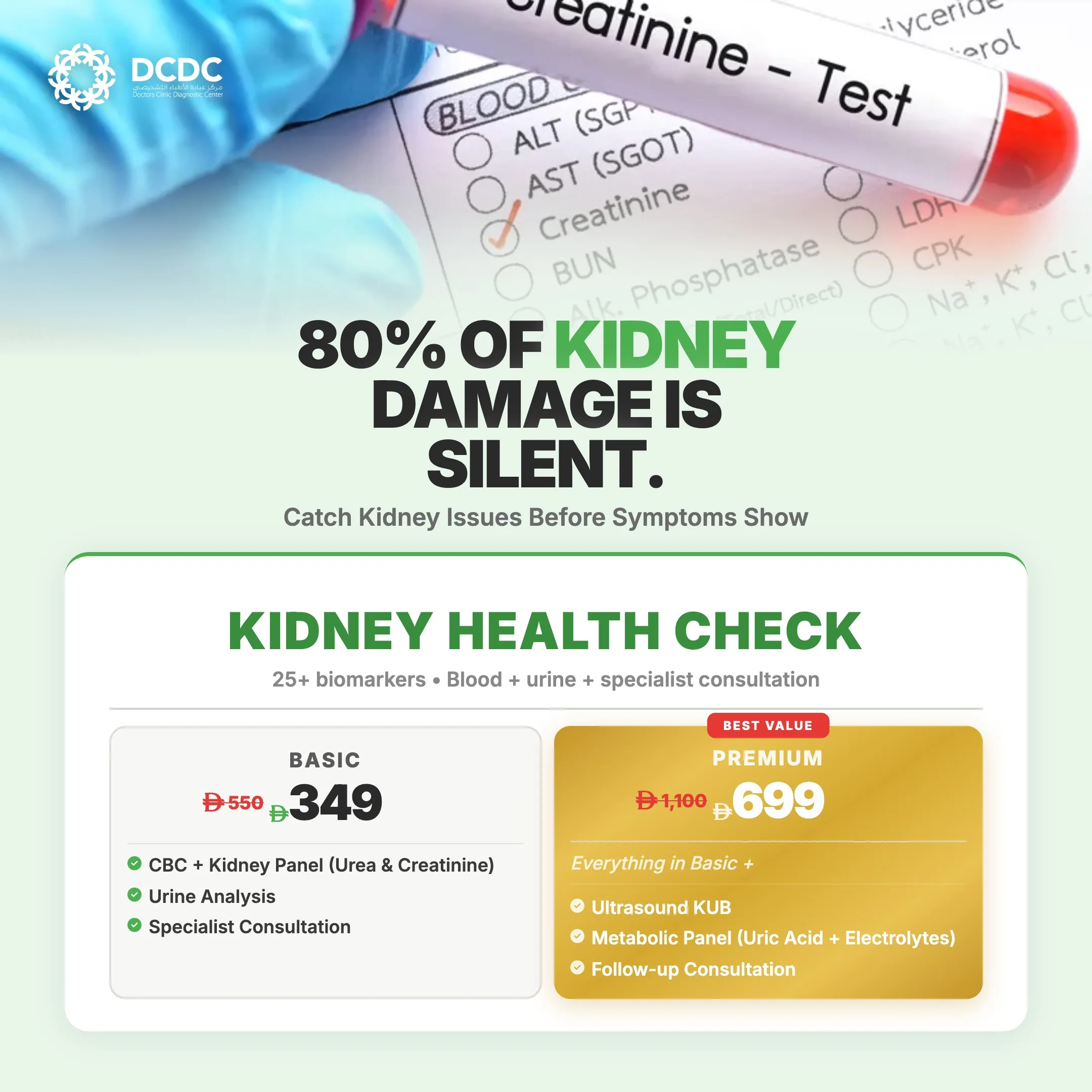
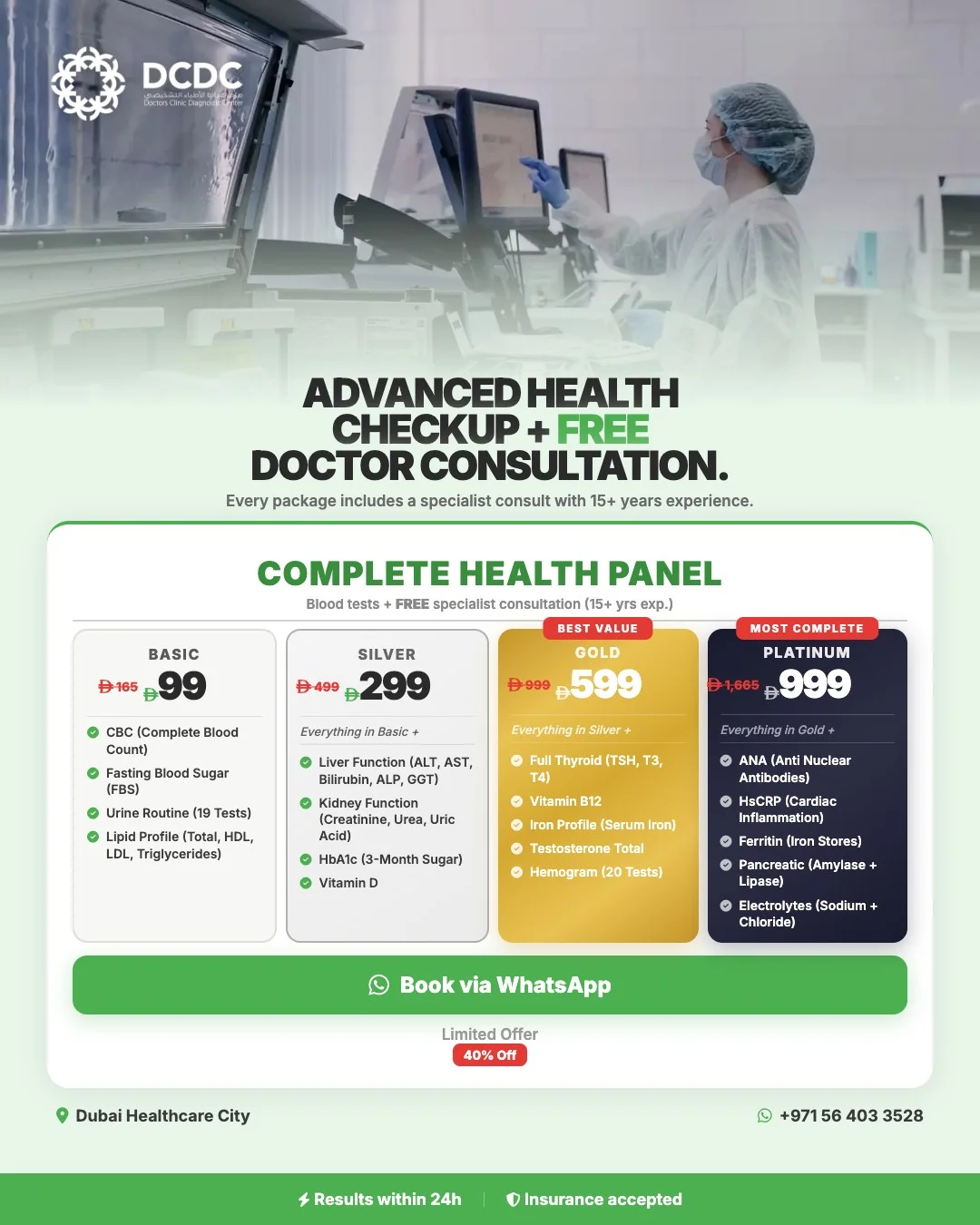
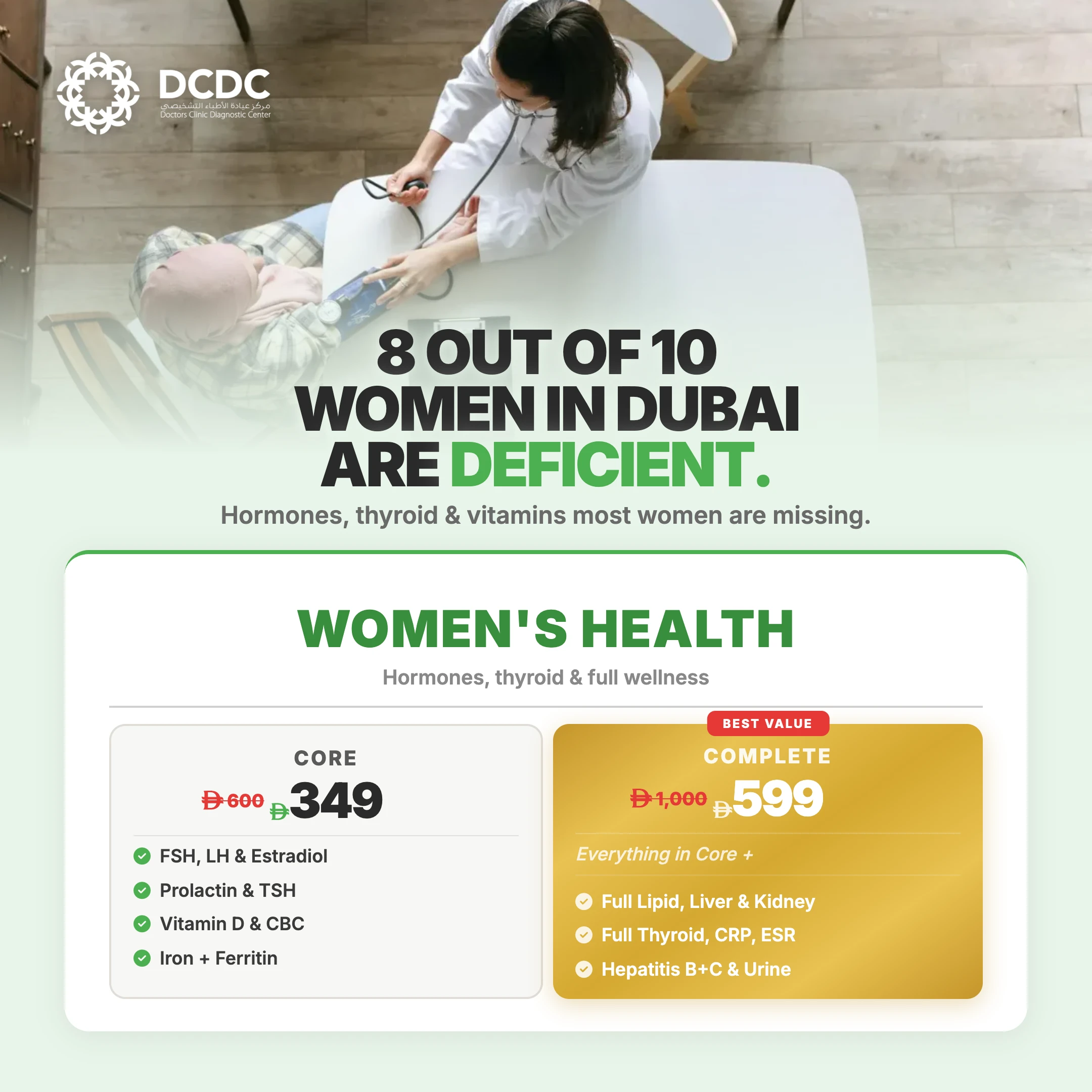
Health Screening Packages
Save with our bundled screening packages — specialist consultation included



What Is Psoriasis? Types Explained
Psoriasis is a chronic, non-contagious autoimmune condition in which the immune system mistakenly attacks healthy skin cells, causing them to regenerate far faster than normal. In healthy skin, cells rise to the surface and shed over about 28 to 30 days. In psoriasis, this cycle can compress to just 3 to 5 days. The skin cannot shed the excess cells quickly enough, so they pile up on the surface, forming the thick, raised, scaly patches (called plaques) that characterise the condition. Psoriasis is a lifelong condition that typically follows a relapsing-remitting course, with symptoms flaring for weeks or months before settling into periods of remission.
The Five Main Types of Psoriasis
- Plaque psoriasis: The most common form, affecting 80-90% of people with psoriasis. Appears as raised, red or pink patches covered with silvery-white scales, typically on the elbows, knees, scalp, and lower back.
- Guttate psoriasis: Presents as small, drop-shaped, scaly spots on the trunk, arms, and legs. Often triggered by a bacterial infection such as strep throat, and more common in children and young adults.
- Inverse psoriasis: Appears as smooth, shiny, thin red patches in skin folds such as the armpits, groin, under the breasts, and around the buttocks. Scaling is usually minimal due to moisture and friction in these areas, which can make it harder to distinguish from a fungal infection.
- Pustular psoriasis: A less common but more severe type featuring white, pus-filled blisters surrounded by red skin. Can be localised to the hands and feet or, rarely, spread across large areas of the body, which is considered a medical emergency.
- Erythrodermic psoriasis: The rarest and most severe form, causing a widespread, peeling, burning rash that can cover most of the body. It disrupts the skin's ability to regulate temperature and retain fluid, and requires urgent medical attention.
Common Psoriasis Symptoms
Psoriasis symptoms vary depending on the type and severity, but most people experience a combination of the following. Because symptoms overlap with other skin conditions, a clinical assessment is important for an accurate diagnosis.
- Red or pink patches with silvery-white scales: The hallmark sign of plaque psoriasis, most common on the elbows, knees, scalp, and lower back, though it can appear anywhere on the body.
- Itching, burning, or soreness: Many people describe the affected skin as itchy or tender, and burning sensations are common during flares, particularly with erythrodermic or pustular types.
- Dry, cracked skin that may bleed: Thickened plaques can crack, especially over joints or in areas of friction, increasing the risk of secondary infection.
- Thickened, pitted, or ridged nails: Nail psoriasis affects up to half of people with the condition, causing small pits, discolouration, thickening, or separation of the nail from the nail bed.
- Stiff, swollen, or painful joints: A warning sign of psoriatic arthritis, which affects roughly 30% of people with psoriasis and can develop before, alongside, or after skin symptoms appear.
- Scalp scaling and flaking: Scalp psoriasis can range from mild, fine scaling resembling dandruff to thick, crusted plaques that extend beyond the hairline onto the forehead and neck.
- Cyclical flares and remission: Symptoms typically wax and wane, with periods of active flare-up lasting weeks to months followed by partial or complete remission.
What Causes Psoriasis in Dubai? Triggers and Risk Factors
Psoriasis develops from a combination of genetic predisposition and immune system dysfunction. If you have a family history of psoriasis, your risk is significantly higher, though not everyone with the genetic markers develops the condition. It is not caused by poor hygiene, and it is not contagious — you cannot catch psoriasis or pass it to someone else through skin contact. Instead, certain triggers activate the underlying immune dysfunction and provoke flare-ups in people who are already predisposed.
Common Psoriasis Triggers
- Stress: One of the most frequently reported triggers, both for the initial onset of psoriasis and for subsequent flare-ups.
- Infections: Streptococcal throat infections are a well-documented trigger for guttate psoriasis, particularly in children and young adults.
- Skin injury (Koebner phenomenon): Cuts, scrapes, sunburn, tattoos, and even insect bites can trigger new psoriasis plaques to form at the site of injury in susceptible individuals.
- Certain medications: Lithium, beta-blockers, antimalarial drugs, and abrupt withdrawal of oral corticosteroids can trigger or worsen psoriasis.
- Smoking and alcohol: Both are associated with more severe psoriasis and reduced response to treatment.
- Cold, dry weather: Low humidity strips moisture from the skin, which can worsen plaques and increase cracking.
Dubai-Specific Environmental Triggers
- Constant air conditioning: Dubai residents spend the majority of the year in heavily air-conditioned spaces. AC significantly lowers indoor humidity, drying the skin barrier and worsening scaling and cracking in psoriasis plaques.
- Extreme summer heat and sweating: High temperatures and humidity outdoors during Dubai's summer months increase sweating, which can irritate psoriasis plaques, particularly in skin folds affected by inverse psoriasis.
- Indoor-outdoor temperature swings: Moving repeatedly between hot, humid outdoor air and cold, dry indoor air stresses the skin barrier and can provoke flares in sensitive individuals.
- Chlorinated pool and hard water: Frequent pool use, common in Dubai's residential compounds, exposes skin to chlorine, while the region's desalinated tap water has a high mineral content that can disrupt the skin's natural pH.
- High-stress, fast-paced lifestyle: Long working hours, travel, and the pace of city life common among Dubai residents and expatriates can elevate stress levels, a recognised psoriasis trigger.
- Sun exposure — a double-edged sword: Moderate, controlled UV exposure can improve psoriasis for some people, but Dubai's intense year-round sun also carries a real risk of sunburn, which can trigger new plaques through the Koebner phenomenon. Sun exposure should always be gradual and supervised.
Not every rash that looks scaly or inflamed is psoriasis. If your skin is intensely itchy, appears mainly in the creases of your elbows and knees rather than over the joints themselves, or started in early childhood, it may be eczema treatment in Dubai that you should be researching instead. A GP consultation can help distinguish between the two conditions before you start any treatment.
How Is Psoriasis Diagnosed?
Psoriasis is usually diagnosed clinically, meaning a doctor can often recognise it from the characteristic appearance and distribution of the plaques alone, without the need for invasive testing. However, a thorough diagnostic workup is important to confirm the diagnosis, assess severity, and rule out overlapping conditions such as eczema, fungal infection, or lichen planus.
- Physical and visual examination: The doctor examines the skin, scalp, and nails, noting the pattern, distribution, and appearance of any plaques or scaling.
- Medical and family history: Questions about when symptoms started, potential triggers, medication use, and any family history of psoriasis or autoimmune disease.
- Skin biopsy: A small sample of skin may be taken and examined under a microscope if the diagnosis is unclear or to rule out other skin conditions with a similar appearance.
- Blood tests: While there is no single blood test that confirms psoriasis, tests for inflammatory markers such as CRP and ESR help assess disease activity, and blood counts and autoimmune markers help rule out other conditions and screen for psoriatic arthritis if joint symptoms are present.
- Nail examination: Nail changes such as pitting or separation from the nail bed can support the diagnosis and may correlate with a higher risk of psoriatic arthritis.
According to Dr. Hadeel Elnur, "early diagnosis of psoriasis allows for more effective management and helps prevent complications such as psoriatic arthritis. At DCDC, we combine a detailed clinical examination with on-site blood tests for inflammatory markers, so patients often leave their first visit with both a diagnosis and a starting treatment plan." DCDC's on-site laboratory offers same-day testing for CBC, autoimmune panels, inflammatory markers (CRP, ESR), and vitamin D, which are frequently relevant to psoriasis assessment and monitoring.
Psoriasis Treatment Options
There is currently no cure for psoriasis, but a wide range of effective treatments can control symptoms, extend periods of remission, and significantly improve quality of life. The NHS and Mayo Clinic both recommend a stepwise approach: starting with the mildest, most conservative treatments and escalating to stronger options only if the condition does not respond adequately.
Topical Treatments (First-Line for Mild to Moderate Psoriasis)
- Topical corticosteroids: The most commonly prescribed first-line treatment. Reduce inflammation and slow skin cell turnover. Available in varying strengths depending on the location and severity of plaques.
- Vitamin D analogues (calcipotriol): Slow down skin cell production and are often combined with corticosteroids for enhanced effect, with fewer side effects than steroids alone with long-term use.
- Coal tar preparations: An older but effective treatment that reduces scaling, itching, and inflammation, available in shampoos, creams, and bath solutions, particularly useful for scalp psoriasis.
- Salicylic acid: Helps soften and remove scale, improving the penetration of other topical treatments.
- Emollients and moisturisers: Essential as a daily complement to any treatment plan, particularly important in Dubai's air-conditioned, dehydrating indoor environments.
Phototherapy (Light Therapy)
For moderate psoriasis that does not respond adequately to topical treatment alone, phototherapy uses controlled doses of ultraviolet light to slow skin cell turnover and reduce inflammation. Narrowband UVB is the most commonly used form, typically administered 2-3 times per week for several weeks under medical supervision. PUVA (psoralen combined with UVA light) is used for more resistant cases. Phototherapy should always be medically supervised — unsupervised sun exposure in Dubai's intense climate carries a real risk of burns that can worsen psoriasis.
Systemic (Oral) Medications
For moderate-to-severe psoriasis, or when topical treatment and phototherapy are insufficient, oral systemic medications work throughout the body to suppress the overactive immune response. Common options include methotrexate, cyclosporine, and acitretin. These require regular blood test monitoring for liver function, kidney function, and blood counts due to their systemic effects.
Biologic Therapies
Biologics are a newer class of injectable medications that target specific parts of the immune system involved in psoriasis, such as TNF-alpha, IL-17, and IL-23 pathways. They are highly effective for moderate-to-severe plaque psoriasis and psoriatic arthritis, often achieving significant or complete clearance of plaques. Biologics are typically reserved for cases that have not responded to conventional systemic therapy and are prescribed and monitored by a dermatologist or rheumatologist.
Concerned About Persistent Skin Patches or Joint Pain?
Book a GP consultation at DCDC from AED 250. Same-day on-site blood tests for inflammatory markers and autoimmune panels are available.
WhatsApp +971 50 970 3884 to book
Psoriasis Treatment Cost in Dubai
Psoriasis treatment costs in Dubai vary considerably depending on severity, the type of treatment required, and whether specialist or biologic therapy is needed. The table below provides realistic market price ranges based on current Dubai clinic rates.
| Treatment | Cost Range (AED) | Notes |
|---|---|---|
| GP dermatology consultation (DCDC) | From AED 250-500 | Includes assessment, diagnosis, and initial treatment plan |
| Dermatologist consultation | AED 400-800 | Specialist referral for moderate-to-severe or resistant cases |
| Inflammatory and autoimmune blood panel | AED 200-600 | CRP, ESR, CBC, and autoimmune markers |
| Skin biopsy | AED 300-700 | When diagnosis is unclear or other conditions need to be ruled out |
| Topical prescription treatment | AED 80-250 per product, monthly | Corticosteroids, vitamin D analogues, or combination formulas |
| Narrowband UVB phototherapy | AED 150-400 per session | Course of 20-30 sessions typically recommended |
| Oral systemic medication | AED 100-350 per month | Methotrexate, cyclosporine, or acitretin, plus monitoring blood tests |
| Biologic injection therapy | AED 3,000-8,000 per month | For moderate-to-severe cases; often coordinated with insurance approval |
Psoriasis treatment prices in Dubai (2026 market rates). DCDC GP dermatology consultation from AED 250 with insurance direct billing available.
At DCDC, GP dermatology consultations for psoriasis start from AED 250, considerably more affordable than specialist rates elsewhere in Dubai. Because psoriasis is an autoimmune-driven condition, your doctor may also recommend autoimmune panel testing to check inflammatory activity and rule out overlapping conditions such as psoriatic or rheumatoid arthritis before deciding whether a specialist referral is needed. DCDC accepts direct billing with over 20 insurance providers, including Daman, AXA, Bupa, MetLife, and Cigna, which can significantly reduce out-of-pocket costs for consultations and testing.
Psoriatic Arthritis: A Serious Complication to Watch For
Approximately 30% of people with psoriasis develop psoriatic arthritis, an inflammatory condition that affects the joints and, if left untreated, can cause permanent joint damage. Psoriatic arthritis can develop before skin symptoms appear, alongside them, or years later, which is why ongoing monitoring matters even after your skin symptoms are well controlled.
- Joint pain, swelling, and stiffness: Particularly noticeable in the morning or after periods of inactivity, and often affecting fingers, toes, wrists, knees, or the lower back.
- Sausage-like swelling of fingers or toes (dactylitis): A distinctive sign of psoriatic arthritis involving the whole digit rather than a single joint.
- Reduced range of motion: Difficulty bending or fully extending affected joints.
- Nail changes: Pitting, thickening, or separation of the nail, which is strongly associated with psoriatic arthritis.
- Fatigue: A common but often overlooked systemic symptom of the underlying inflammatory process.
If you have psoriasis and develop any of these joint symptoms, tell your doctor promptly. Early treatment of psoriatic arthritis significantly reduces the risk of permanent joint damage and disability.
Living with Psoriasis in Dubai: Climate and Lifestyle Tips
Managing psoriasis day-to-day involves more than medication. Adapting your skincare routine and lifestyle to Dubai's specific climate can meaningfully reduce the frequency and severity of flares.
- Moisturise immediately after showering: Apply a fragrance-free, thick emollient within a few minutes of bathing to lock in moisture, especially important given how quickly Dubai's air-conditioned environments dry out the skin.
- Counteract AC dryness: Consider a humidifier in bedrooms and offices where you spend long hours under air conditioning, and keep a travel-size moisturiser on hand throughout the day.
- Practice safe, gradual sun exposure: Brief periods of early morning or late afternoon sun can help some people, but always avoid sunburn, which can trigger new plaques through the Koebner phenomenon.
- Rinse off after swimming: Shower promptly after using chlorinated pools, common in Dubai residential compounds, and moisturise immediately afterward.
- Manage stress: Regular exercise, adequate sleep, and stress-reduction techniques such as mindfulness can help reduce flare frequency, given how strongly stress is linked to psoriasis activity.
- Follow an anti-inflammatory diet: A Mediterranean-style diet rich in vegetables, fish, and healthy fats, combined with limiting alcohol, may support overall symptom control alongside medical treatment.
- Avoid smoking: Smoking is strongly associated with more severe and treatment-resistant psoriasis.
- Choose loose, breathable clothing: Reduces friction and irritation over plaques, particularly important during Dubai's hot, humid months when sweating is more frequent.
What to Expect at DCDC: Your Psoriasis Care Journey
If you decide to seek psoriasis assessment at DCDC in Dubai Healthcare City, here is what the process looks like from start to finish.
- Step 1 — Arrival and check-in: DCDC is located in Building 64, Block A, Al Razi Medical Complex in DHCC, with dedicated free parking on-site. Walk-ins are welcome, or you can book ahead for a specific time. Average wait time is just 15 minutes.
- Step 2 — GP consultation: Your consultation with a General Practitioner like Dr. Hadeel Elnur typically lasts 15-20 minutes. The doctor will examine the affected skin and nails, ask about your history, triggers, and any joint symptoms, and classify the type and severity of your psoriasis.
- Step 3 — Same-day blood tests: Based on the clinical assessment, the doctor may order blood tests to check inflammatory markers, autoimmune activity, and general health. Samples are collected at DCDC's on-site laboratory immediately after your consultation.
- Step 4 — Treatment plan: For mild to moderate cases, your GP will prescribe a tailored topical treatment plan and provide guidance on Dubai-specific lifestyle adjustments.
- Step 5 — Results review and follow-up: Routine blood test results are typically available within 24-48 hours. Your doctor will review the results and may adjust your treatment plan accordingly.
- Step 6 — Specialist referral if needed: For moderate-to-severe cases requiring phototherapy, systemic medication, or biologics, your GP will coordinate a prompt referral to a dermatologist in Dubai, and to a rheumatologist if psoriatic arthritis is suspected.
DCDC's 98% patient satisfaction rate and 4.8/5 Google rating from over 1,000 verified reviews reflect the clinic's commitment to thorough, patient-centred care. The clinic is open Saturday through Thursday from 8 AM to 10 PM and Friday from 9 AM to 9 PM, making it easy to schedule an appointment around work or family commitments.
Psoriasis vs Eczema: Key Differences
Psoriasis and eczema (atopic dermatitis) are both chronic inflammatory skin conditions that can look similar at first glance, but they have different underlying causes, typical locations, and treatment approaches. A doctor can usually distinguish between them through clinical examination.
| Feature | Psoriasis | Eczema (Atopic Dermatitis) |
|---|---|---|
| Appearance | Thick, raised plaques with well-defined edges and silvery-white scales | Red, inflamed patches with less defined edges, sometimes oozing or weeping |
| Common locations | Elbows, knees, scalp, lower back — often over joints | Inner elbows, behind knees, hands, neck, eyelids — skin folds |
| Itch level | Mild to moderate itching; burning and soreness are common | Often intense, persistent itching |
| Underlying cause | Autoimmune — T-cells drive excessive skin cell production | Skin barrier dysfunction combined with allergic and environmental triggers |
| Typical onset age | Usually 15-35 years, though it can start at any age | Often begins in early childhood, though adult-onset is possible |
| Common triggers | Stress, infection, skin injury, cold/dry weather, certain medications | Allergens, irritants, soaps and detergents, stress |
| Nail changes | Common — pitting, thickening, separation | Uncommon |
Key clinical differences between psoriasis and eczema
When to See a Doctor for Psoriasis in Dubai
Many people delay seeking medical care for psoriasis, mistaking it for dry skin or a cosmetic issue. The NHS and Mayo Clinic recommend seeing a doctor promptly if any of the following apply.
- Psoriasis covers a large area of your body or is rapidly spreading
- You develop joint pain, swelling, or stiffness alongside skin symptoms — a possible sign of psoriatic arthritis
- Your skin shows signs of infection, such as increased redness, warmth, swelling, or pus
- Psoriasis is significantly affecting your sleep, work, or mental wellbeing
- Over-the-counter moisturisers and creams have not improved your symptoms after several weeks
- You develop widespread, burning, peeling skin (possible erythrodermic psoriasis) — this requires urgent medical attention
- You are an adult developing new-onset skin symptoms for the first time and are unsure of the cause
Why Choose DCDC for Psoriasis Care in Dubai
- Affordable GP-led consultations: Psoriasis assessments start from AED 250, significantly lower than typical specialist dermatology rates in Dubai
- On-site laboratory: CBC, autoimmune panels, inflammatory markers (CRP, ESR), and vitamin D testing all collected and processed in DCDC's MOHAP-licensed laboratory, with same-day sample collection
- Coordinated, multi-specialty workups: Dr. Hadeel Elnur and the DCDC GP team act as the first point of contact, ordering the right initial tests and coordinating prompt referrals to dermatology or rheumatology when needed
- Insurance direct billing: Over 20 insurance partners, including Daman, AXA, Bupa, MetLife, and Cigna
- Convenient DHCC location: Building 64, Block A, Al Razi Medical Complex, Dubai Healthcare City, with free dedicated parking, extended hours (Sat-Thu 8 AM-10 PM, Fri 9 AM-9 PM), and an average wait time of just 15 minutes
- Proven patient satisfaction: A 4.8/5 Google rating from over 1,000 verified reviews and a 98% patient satisfaction rate
Get Your Psoriasis Assessed Today
DCDC offers GP dermatology consultations from AED 250 with same-day inflammatory and autoimmune blood testing. MOHAP-licensed facility in Dubai Healthcare City with a 4.8/5 Google rating.
Call +971 54 219 5008 or WhatsApp to book
Related Services at DCDC
Expert care and advanced diagnostics at Dubai Healthcare City
Frequently Asked Questions
Final Thoughts
Psoriasis is a chronic autoimmune condition, not a cosmetic inconvenience, and Dubai's climate — with its constant air conditioning, intense heat, and high-stress lifestyle — can make symptom management especially challenging. Understanding your specific triggers, getting an accurate diagnosis, and following a consistent, medically guided treatment plan are the keys to long-term control and reducing the risk of complications such as psoriatic arthritis.
At DCDC in Dubai Healthcare City, our approach combines affordable GP-led consultations (from AED 250), same-day on-site blood tests for inflammatory and autoimmune markers, evidence-based treatment guidance, and prompt specialist referrals when a case needs more advanced care. With extended hours, free parking, direct insurance billing with 20+ providers, and an average wait time of just 15 minutes, getting professional help for your psoriasis has never been more accessible. Book your consultation today by calling +971 54 219 5008 or send us a WhatsApp message.
Sources & References
This article was reviewed by our medical team and references the following sources:
- NHS — Psoriasis: Overview, Causes and Treatment
- Mayo Clinic — Psoriasis: Diagnosis and Treatment
- Cleveland Clinic — Psoriasis: Symptoms, Causes and Treatment
- National Psoriasis Foundation — Psoriasis Statistics
- World Health Organization — Global Report on Psoriasis
- Global Burden of Disease Study — Global, Regional and National Burden of Psoriasis
Medical content on this site is reviewed by DHA-licensed physicians. See our editorial policy for more information.

Written by
Dr. Hadeel Elnur
General Practitioner
MD, General Practice
Dr. Hadeel Elnur is a General Practitioner at Doctors Clinic Diagnostic Center (DCDC) in Dubai Healthcare City.
Related Articles

Eczema Treatment Dubai: Triggers & Care
Autoimmune Panel Test Dubai: ANA & Guide

Dermatologist Dubai: Skin Specialist Guide
Acne Treatment Dubai: Causes & Care
Allergy Testing Dubai: IgE, Skin Prick & Cost
More in Dermatology
Skin Tag Removal Cost Dubai: From AED 300 (2026)
Read MoreSkin Rash Causes in Dubai: When to See a Doctor (2026)
Read MoreAlopecia Areata Treatment Dubai: Guide (2026)
Read MoreEczema vs Psoriasis Dubai: Key Differences (2026)
Read MoreRosacea Treatment Dubai: Causes & Care (2026)
Read MoreSkin Allergy Treatment Dubai: Hives Guide (2026)
Read More© 2026 Doctors Clinic Diagnostic Center (DCDC), Dubai Healthcare City. Originally published at https://doctorsclinicdubai.ae/blog/psoriasis-symptoms-treatment-dubai. All rights reserved. Unauthorized reproduction is prohibited.