Key Takeaways
- Autoimmune panel blood tests in Dubai range from AED 150 for a single marker (e.g., ANA) to from AED 1,500 for a comprehensive autoimmune panel — DCDC offers MOHAP-regulated pricing with results within 24 hours
- The core autoimmune panel includes ANA (antinuclear antibody), RF (rheumatoid factor), CRP (C-reactive protein), ESR (erythrocyte sedimentation rate), anti-CCP, and anti-dsDNA — your doctor selects markers based on your symptoms and clinical suspicion
- No fasting is required for autoimmune blood tests — you can eat and drink normally before your appointment, making testing convenient at any time of day
- A positive ANA result does not automatically mean you have an autoimmune disease — up to 15% of healthy individuals test positive, and clinical correlation with symptoms is essential for accurate diagnosis
- At DCDC, all autoimmune markers can be tested in a single visit with on-site sample collection, results within 24 hours, and immediate GP consultation for result interpretation
- Dubai-specific factors including vitamin D deficiency, heat stress, and high-pressure lifestyles may influence autoimmune flare patterns — regular monitoring helps manage these triggers effectively
Autoimmune diseases affect an estimated 5-8% of the global population, and rates are rising across the Middle East. If you are experiencing unexplained fatigue, joint pain, skin rashes, or recurring fevers, an autoimmune panel blood test can identify whether your immune system is attacking your own tissues. These tests measure specific antibodies and inflammation markers — including ANA, rheumatoid factor, CRP, and ESR — that indicate autoimmune activity. Our Autoimmune & Inflammatory Tests service at DCDC in Dubai Healthcare City provides comprehensive panel testing with same-day collection and results within 24 hours.
From understanding what each autoimmune marker means to interpreting your results, knowing which tests to request for specific symptoms, comparing costs across Dubai, and choosing the right specialist — this is the most comprehensive autoimmune panel testing guide for Dubai residents and visitors. Reviewed by Dr. Hadeel Elnur, General Practitioner at DCDC Dubai Healthcare City, Building 64.
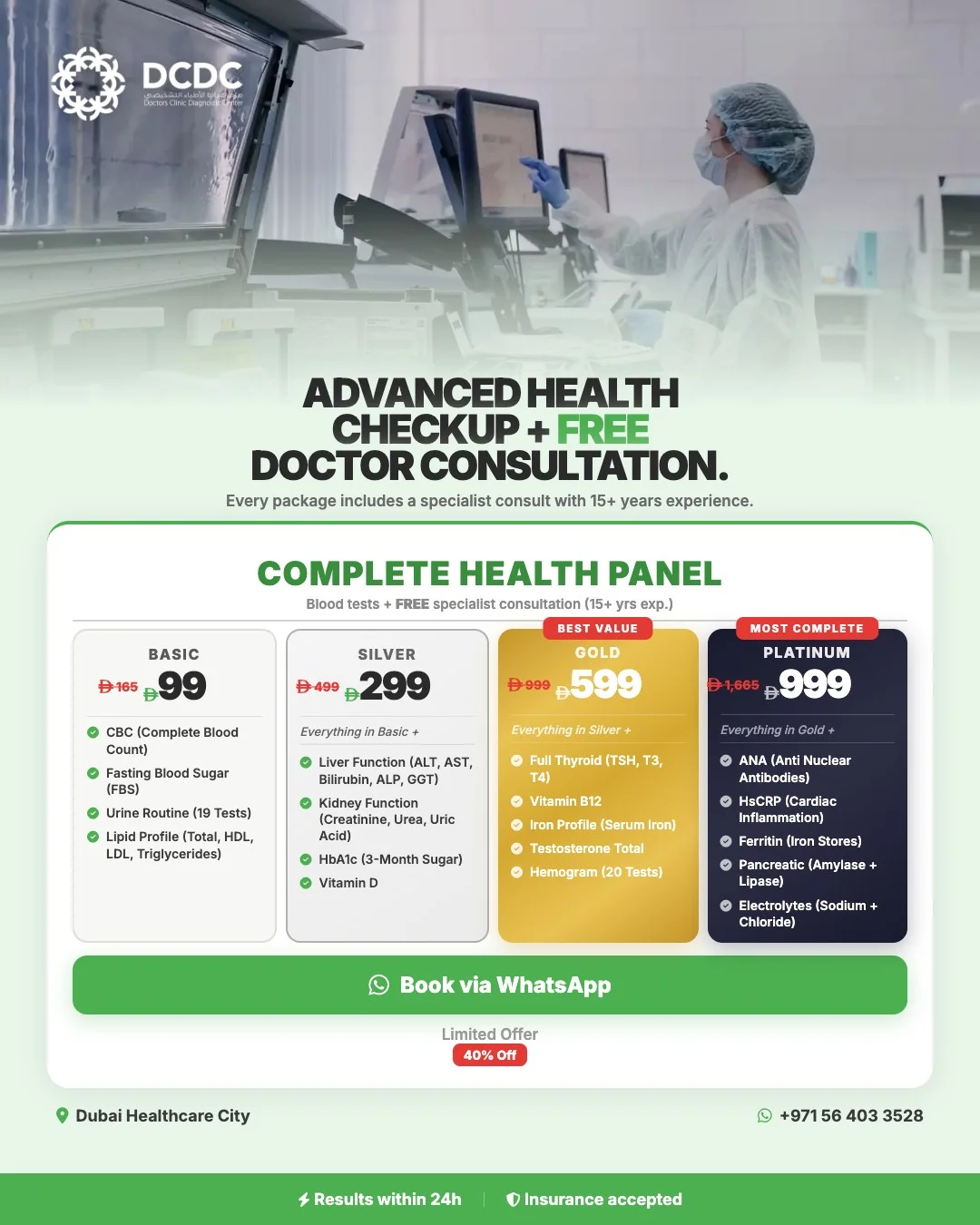
Health Screening Packages
Save with our bundled screening packages — specialist consultation included





What Is an Autoimmune Panel Blood Test?
An autoimmune panel is a group of blood tests designed to detect whether your immune system is producing antibodies against your own body's cells and tissues. In a healthy immune system, antibodies target foreign invaders such as bacteria and viruses. In autoimmune conditions, the immune system becomes misdirected, producing autoantibodies that attack healthy organs, joints, skin, or other tissues. There are more than 80 recognised autoimmune diseases, including rheumatoid arthritis, systemic lupus erythematosus (SLE), Hashimoto's thyroiditis, multiple sclerosis, type 1 diabetes, and inflammatory bowel disease.
An autoimmune panel typically combines several tests to provide a comprehensive picture. Rather than testing for a single condition, the panel evaluates multiple markers simultaneously, allowing your doctor to identify patterns of immune system dysfunction. The specific tests included in the panel depend on your symptoms, family history, and clinical suspicion. At DCDC, our MOHAP-licensed laboratory uses advanced immunoassay analysers to deliver precise, reliable results from a single blood draw — no multiple visits required.
Types of Autoimmune Blood Tests Explained
Understanding what each test measures is essential for interpreting your results. Here is a detailed breakdown of the core autoimmune markers available in Dubai:
ANA (Antinuclear Antibody) Test
The ANA test is the most commonly ordered initial screening test for autoimmune disease. It detects antibodies directed against components of the cell nucleus. A positive ANA result suggests the immune system may be attacking the body's own cells, but it is important to understand that ANA positivity alone does not confirm an autoimmune disease. Studies show that 10-15% of healthy individuals, particularly women and older adults, can have a positive ANA without any disease. The ANA test is reported as a titre (e.g., 1:40, 1:80, 1:160) — higher titres are more clinically significant. Titres of 1:160 or above warrant further investigation. ANA is particularly useful for screening for lupus (SLE), scleroderma, Sjogren's syndrome, and mixed connective tissue disease.
Rheumatoid Factor (RF)
Rheumatoid factor is an antibody found in approximately 70-80% of people with rheumatoid arthritis (RA). However, RF is not exclusive to RA — it can also be elevated in other autoimmune conditions, chronic infections, and even in some healthy individuals (5-10% of the general population). RF is typically ordered alongside anti-CCP for more accurate rheumatoid arthritis diagnosis. A positive RF combined with a positive anti-CCP and clinical symptoms of joint inflammation provides strong diagnostic certainty for RA.
CRP (C-Reactive Protein)
CRP is a protein produced by the liver in response to inflammation anywhere in the body. Unlike ANA and RF, CRP is a non-specific marker — it rises with any inflammatory process, including infections, injuries, autoimmune flares, and even cardiovascular disease. In autoimmune testing, CRP helps quantify the degree of active inflammation. CRP (CRP) can detect even low-grade inflammation. Serial CRP measurements are valuable for monitoring treatment response and detecting flares early. For a detailed comparison of inflammatory markers, see our guide on CRP vs ESR comparison.
ESR (Erythrocyte Sedimentation Rate)
ESR measures how quickly red blood cells settle to the bottom of a test tube over one hour. A faster rate indicates increased inflammation. Like CRP, ESR is non-specific but is widely used as a screening tool for inflammatory and autoimmune conditions. ESR tends to rise more slowly than CRP and stays elevated longer, making it useful for detecting chronic low-grade inflammation. It is particularly helpful in diagnosing and monitoring polymyalgia rheumatica, temporal arteritis, and systemic lupus.
Anti-CCP (Anti-Cyclic Citrullinated Peptide)
Anti-CCP is a highly specific marker for rheumatoid arthritis — more specific than rheumatoid factor. While RF is positive in 70-80% of RA cases, anti-CCP has a specificity of approximately 95%, meaning very few people without RA will test positive. Anti-CCP antibodies can appear years before RA symptoms develop, making the test valuable for early detection and risk assessment. When both RF and anti-CCP are positive, the probability of RA is greater than 95%.
Anti-dsDNA (Anti-Double-Stranded DNA)
Anti-dsDNA antibodies are highly specific for systemic lupus erythematosus (SLE). They are found in 60-70% of lupus patients and are rarely positive in other conditions. Anti-dsDNA levels tend to correlate with disease activity — rising levels may indicate a lupus flare, particularly lupus nephritis (kidney involvement). This test is typically ordered when ANA is positive and lupus is suspected.
Autoimmune Panel Test Costs in Dubai
Autoimmune testing costs in Dubai vary significantly depending on the facility, the number of markers tested, and whether you are using insurance or paying out of pocket. Below is a comprehensive cost comparison for individual tests and panel options:
| Test | What It Detects | Fasting? | Cost (AED) |
|---|---|---|---|
| ANA (Antinuclear Antibody) | Antibodies against cell nuclei — lupus, scleroderma, Sjogren's screening | No | 150 – 300 |
| CRP (C-Reactive Protein) | General inflammation level — autoimmune flares, infections | No | 149 |
| ESR (Sedimentation Rate) | Chronic inflammation — polymyalgia, lupus, arteritis | No | 99 |
| Rheumatoid Factor (RF) | Autoantibodies — rheumatoid arthritis screening | No | 99 |
| Anti-CCP | Highly specific RA marker — early detection | No | 200 – 400 |
| Anti-dsDNA | Specific lupus marker — disease activity monitoring | No | 200 – 400 |
| Complement (C3, C4) | Immune complex activity — lupus nephritis | No | 150 – 350 |
| Comprehensive Autoimmune Panel | ANA, RF, CRP, ESR, anti-CCP, anti-dsDNA, complement | No | 500 – 1,500 |
Autoimmune test costs are indicative ranges for Dubai (2025-2026). The Dubai market range for comprehensive panels is AED 300-2,500 depending on the facility and number of markers. Actual pricing depends on the laboratory and insurance coverage.
At DCDC, all autoimmune markers listed above are available through our in-house MOHAP-licensed laboratory. We offer bundled panel pricing that is significantly more cost-effective than ordering individual tests separately. For more information about general blood testing in Dubai, including costs for other common laboratory panels, see our comprehensive guide.
When Should You Get an Autoimmune Panel Test?
Autoimmune diseases can be difficult to diagnose because symptoms are often vague, overlap with other conditions, and may develop gradually over months or years. You should consider autoimmune panel testing if you are experiencing any combination of the following symptoms:
- Persistent joint pain, stiffness, or swelling — especially in multiple joints, worse in the morning, lasting more than 30 minutes after waking
- Unexplained chronic fatigue — exhaustion that does not improve with rest and is not explained by sleep problems, anaemia, or thyroid dysfunction
- Skin changes — butterfly-shaped rash across the cheeks and nose, unexplained rashes, photosensitivity, hair loss, or skin thickening
- Recurring low-grade fevers — persistent or cyclical fevers without an identifiable infection
- Muscle pain and weakness — generalised muscle aches, difficulty climbing stairs, or lifting objects
- Dry eyes and dry mouth — chronic dryness suggesting Sjogren's syndrome
- Numbness or tingling — in hands, feet, or other extremities
- Recurrent mouth ulcers — painful sores that do not heal normally
- Raynaud's phenomenon — fingers or toes turning white or blue in response to cold or stress
- Family history of autoimmune disease — having a first-degree relative with lupus, RA, thyroid disease, or another autoimmune condition increases your risk significantly
- Unexplained weight changes — rapid weight loss or gain without dietary changes, particularly if accompanied by fatigue
- Recurrent miscarriages — unexplained pregnancy losses may indicate antiphospholipid syndrome, an autoimmune clotting disorder
If you are experiencing persistent joint pain alongside fatigue and inflammation, autoimmune testing can help determine whether an underlying immune disorder is the cause. Early diagnosis is critical — untreated autoimmune conditions can cause progressive organ damage.
How to Interpret Your Autoimmune Test Results
Interpreting autoimmune test results requires clinical expertise because no single test definitively confirms or rules out an autoimmune disease. Here is what to understand about your results:
Understanding ANA Results
ANA results are reported as positive or negative, along with a titre and pattern. The titre represents the highest dilution of blood serum at which antibodies are still detected. A titre of 1:40 is weakly positive and is found in up to 25-30% of healthy individuals. A titre of 1:80 may be mildly significant. Titres of 1:160 or higher are considered clinically significant and warrant further testing. The ANA pattern (homogeneous, speckled, nucleolar, centromere) provides clues about which specific autoimmune condition may be present. For example, a homogeneous pattern is commonly seen in lupus, while a centromere pattern suggests limited scleroderma.
What Positive RF and Anti-CCP Mean
A positive RF alone is not diagnostic — context matters. RF can be elevated in chronic infections (hepatitis C, tuberculosis), other autoimmune diseases, and even in healthy elderly individuals. However, when both RF and anti-CCP are positive, the likelihood of rheumatoid arthritis is very high (>95%). If RF is positive but anti-CCP is negative, your doctor will consider other possible causes and correlate with your clinical symptoms before making a diagnosis.
CRP and ESR Levels: What Is Normal?
Normal CRP is typically below 5 mg/L, though values below 1 mg/L are considered optimal. CRP levels between 10-40 mg/L suggest moderate inflammation (possible autoimmune flare), while levels above 100 mg/L usually indicate severe inflammation or active infection. Normal ESR varies by age and sex: generally below 20 mm/hr for men under 50 and below 30 mm/hr for women under 50. Both markers are non-specific — elevated levels tell you inflammation exists but not why. That is why they are always interpreted alongside specific autoimmune markers like ANA and RF.
Autoimmune Conditions Common in Dubai
The prevalence of autoimmune diseases in the UAE and broader Middle East region has been increasing over the past two decades. Several conditions are particularly common in Dubai's diverse population:
- Hashimoto's Thyroiditis — the most common autoimmune disease globally, causing hypothyroidism. Prevalence is particularly high in women aged 30-50. Early detection through thyroid testing combined with thyroid antibody panels is essential
- Rheumatoid Arthritis (RA) — affects approximately 1% of the UAE population. Joint pain, morning stiffness, and fatigue are hallmark symptoms. Early RF and anti-CCP testing enables treatment before permanent joint damage occurs
- Systemic Lupus Erythematosus (SLE) — lupus affects women 9 times more often than men, typically presenting between ages 15 and 45. The butterfly rash, joint pain, and fatigue are classic symptoms. ANA and anti-dsDNA are key diagnostic markers
- Type 1 Diabetes — autoimmune destruction of insulin-producing cells. UAE has one of the highest diabetes prevalence rates in the world, and autoimmune screening helps distinguish type 1 from type 2 diabetes
- Inflammatory Bowel Disease (IBD) — Crohn's disease and ulcerative colitis are increasing in the Middle East, likely due to dietary changes and environmental factors associated with urbanisation
- Psoriasis and Psoriatic Arthritis — autoimmune skin and joint conditions that are common in the region. CRP and ESR help monitor disease activity
Dubai-Specific Factors That Affect Autoimmune Health
Living in Dubai presents unique environmental and lifestyle factors that can influence autoimmune disease onset, activity, and management. Understanding these factors helps patients and doctors make more informed testing and treatment decisions:
Vitamin D Deficiency and Autoimmunity
Despite year-round sunshine, 50-90% of Dubai residents are vitamin D deficient due to indoor lifestyles, extreme heat discouraging outdoor activity, and protective clothing. Vitamin D plays a crucial role in immune regulation — deficiency has been linked to increased risk of multiple sclerosis, rheumatoid arthritis, lupus, and type 1 diabetes. Research published in Autoimmunity Reviews shows that adequate vitamin D levels may reduce autoimmune disease risk by modulating T-cell activity and reducing inflammatory cytokine production. If you are being tested for autoimmune markers, ask your doctor to include a vitamin D level as part of the panel. For related nutritional testing, see our guide on iron deficiency testing in Dubai.
Heat, Sun Exposure, and Autoimmune Flares
For patients with lupus and other photosensitive autoimmune conditions, Dubai's intense UV exposure presents a significant challenge. UV radiation can trigger lupus flares, skin rashes, and increased disease activity. Conversely, the extreme heat (45-50 degrees Celsius in summer) drives most residents indoors, reducing physical activity and contributing to vitamin D deficiency. Patients with autoimmune conditions in Dubai need careful sun management — protective clothing, high-SPF sunscreen, and strategic timing of outdoor activities during cooler months or early morning hours.
Stress and Immune Dysregulation
Dubai's fast-paced professional environment, long working hours, and the pressures of expatriate life can create chronic stress — a well-documented trigger for autoimmune flares. Chronic psychological stress elevates cortisol, disrupts immune homeostasis, and promotes pro-inflammatory immune responses. Studies in Psychoneuroendocrinology have demonstrated that major life stressors precede autoimmune disease onset in 50-80% of patients. Regular autoimmune panel monitoring can help detect early flares triggered by stressful periods, allowing for timely intervention.
What to Expect at DCDC: Your Autoimmune Testing Journey
At Doctors Clinic Diagnostic Center (DCDC) in Dubai Healthcare City, Building 64, we have streamlined the autoimmune testing process to make it as simple and stress-free as possible. Here is what your visit will look like:
- Step 1: Consultation (15-20 minutes) — You will meet with Dr. Hadeel Elnur or another GP to discuss your symptoms, medical history, and family history. Based on this conversation, the doctor will determine which specific autoimmune markers to test. There is no need for a referral if you are paying out of pocket
- Step 2: On-Site Blood Collection (5-10 minutes) — Our trained phlebotomists will collect your blood sample at our in-house laboratory. No fasting is required for any autoimmune test, so you can eat and drink normally beforehand. All markers — ANA, RF, CRP, ESR, anti-CCP, anti-dsDNA — can be drawn from a single blood sample in one visit
- Step 3: Laboratory Analysis — Your samples are processed on-site using advanced immunoassay analysers. Our laboratory is fully MOHAP-licensed with strict quality controls. You do not need to visit an external lab or wait for sample transport
- Step 4: Results Within 24 Hours — Routine autoimmune markers (CRP, ESR, RF) are typically available within 4-6 hours. ANA, anti-CCP, and anti-dsDNA results are ready within 24 hours. Results are delivered digitally
- Step 5: Results Review and Next Steps — Dr. Hadeel Elnur will review your results with you, explain what each marker means in the context of your symptoms, and recommend next steps. If specialist referral is needed (rheumatologist, dermatologist, endocrinologist), DCDC coordinates multi-specialty workups within our network
DCDC is open Saturday to Thursday 8 AM to 10 PM and Friday 9 AM to 9 PM, with free parking on-site. Walk-in appointments are available for blood testing, though booking ahead minimises waiting time.
Book Your Autoimmune Panel Test
Get tested at DCDC Dubai Healthcare City — MOHAP-licensed lab, on-site collection, results within 24 hours. ANA, RF, CRP, ESR, and comprehensive panels available. View autoimmune test services or WhatsApp us to book.
Dr. Hadeel Elnur's Perspective on Autoimmune Testing
"In my experience as a GP at DCDC, I see many patients who have been living with vague symptoms — fatigue, joint aches, skin changes — for months or even years without a clear diagnosis. Autoimmune diseases are often called the 'great mimickers' because they can look like dozens of other conditions. The autoimmune panel is one of the most valuable tools we have for cutting through that diagnostic uncertainty. I always tell my patients that a positive ANA does not mean you definitely have lupus, and a negative ANA does not completely rule it out. These tests are pieces of a puzzle — we interpret them alongside your symptoms, physical examination, and clinical history. What matters most is getting tested when symptoms persist, rather than waiting. Early detection of autoimmune conditions like rheumatoid arthritis or lupus can prevent irreversible joint and organ damage." — Dr. Hadeel Elnur, General Practitioner, DCDC Dubai Healthcare City
Insurance Coverage for Autoimmune Tests in Dubai
Most major insurance providers in Dubai cover autoimmune panel testing when ordered by a licensed physician for medically justified reasons. DCDC offers direct billing with more than 20 insurance providers, including Daman, AXA, Bupa, and other major insurers operating in the UAE. This means you typically do not need to pay upfront and claim later — the billing is handled directly between DCDC and your insurance company.
- With insurance referral: Most plans cover ANA, RF, CRP, and ESR when ordered by your GP or specialist. Comprehensive panels and specialised markers (anti-dsDNA, anti-CCP, complement levels) are typically covered when clinical justification is provided
- DHA basic plans: Cover medically necessary autoimmune testing when documented by a physician. Pre-authorisation may be required for extensive panels
- Enhanced/platinum plans: Usually cover comprehensive autoimmune panels without pre-authorisation requirements
- Self-pay patients: No referral needed. Walk in and request any autoimmune test at DCDC. Self-pay pricing is competitive and transparent with no hidden fees
DCDC maintains a 4.8/5 Google rating from over 1,000 reviews and a 98% patient satisfaction rate, reflecting our commitment to transparent pricing, efficient service, and quality care across all billing arrangements.
Preparing for Your Autoimmune Blood Test
One of the advantages of autoimmune blood testing is that preparation is minimal compared to many other laboratory tests. Here is everything you need to know before your appointment:
- No fasting required — you can eat and drink normally before all autoimmune tests including ANA, RF, CRP, ESR, anti-CCP, and anti-dsDNA
- Medications — inform your doctor about all medications you are taking, including immunosuppressants, corticosteroids, and biologics. Some medications can affect test results. Do not stop medications without medical advice
- Timing — autoimmune tests can be performed at any time of day. However, if your doctor is also ordering tests that do require fasting (lipid panel, fasting glucose), schedule a morning appointment so all tests can be drawn at once
- Hydration — drink water normally. Good hydration makes the blood draw easier and faster
- Bring your history — bring any previous test results, a list of current medications, and notes about your symptoms and when they started. This context helps your doctor select the right panel and interpret results accurately
- Inform about infections — if you currently have an active infection (cold, flu, UTI), let your doctor know. Active infections can temporarily elevate CRP and ESR, potentially confusing autoimmune testing results
Autoimmune Panel vs. Individual Tests: Which Should You Choose?
Patients often ask whether they should order individual autoimmune markers or a comprehensive panel. The answer depends on your clinical situation:
- Initial screening (new symptoms): A comprehensive panel is usually more cost-effective and clinically informative. Testing ANA, RF, CRP, and ESR together costs significantly less than ordering each test separately over multiple visits, and gives your doctor a complete picture from the start
- Monitoring a known condition: If you have an established diagnosis of RA, lupus, or another autoimmune condition, your doctor may order specific markers (e.g., CRP and ESR only) to monitor disease activity and treatment response
- Targeted investigation: If your doctor has strong clinical suspicion for a specific condition — for example, joint symptoms suggesting RA — they may order RF and anti-CCP specifically rather than a broad panel
- Family history screening: If you have a strong family history of autoimmune disease but no current symptoms, a basic panel (ANA, CRP, ESR) provides baseline values for future comparison
At DCDC, Dr. Hadeel Elnur helps patients select the most appropriate and cost-effective testing strategy based on their individual situation. The goal is to get the right tests — not every test — to arrive at an accurate diagnosis efficiently.
Advanced Autoimmune Testing: Beyond the Basic Panel
When initial panel results suggest a specific autoimmune condition, additional specialised tests may be ordered to confirm the diagnosis, assess severity, or guide treatment decisions:
- ENA Panel (Extractable Nuclear Antigens) — sub-classifies ANA-positive results by testing for specific antibodies: anti-Sm (lupus), anti-Ro/SSA and anti-La/SSB (Sjogren's), anti-RNP (mixed connective tissue disease), anti-Scl-70 (scleroderma), and anti-Jo-1 (inflammatory myopathy)
- Antiphospholipid Antibodies — anti-cardiolipin, anti-beta-2 glycoprotein, lupus anticoagulant. Essential for patients with recurrent miscarriages, blood clots, or lupus with clotting complications
- ANCA (Anti-Neutrophil Cytoplasmic Antibodies) — c-ANCA and p-ANCA testing for vasculitis (granulomatosis with polyangiitis, microscopic polyangiitis)
- Thyroid Antibodies — anti-TPO and anti-thyroglobulin for Hashimoto's thyroiditis and Graves' disease. Often ordered alongside autoimmune panels when thyroid dysfunction is suspected
- Immunoglobulin Levels (IgA, IgG, IgM) — quantifies total antibody levels. Low levels suggest immunodeficiency, while elevated levels may indicate chronic infection or autoimmune activity
- HLA-B27 — genetic marker associated with ankylosing spondylitis, psoriatic arthritis, and reactive arthritis. Particularly useful for patients with inflammatory back pain
All of these advanced markers are available at DCDC. Our laboratory's advanced immunoassay analysers process these tests with high precision, and results are typically available within 24-48 hours depending on the specific test.
Get Your Autoimmune Panel Results in 24 Hours
DCDC Dubai Healthcare City — MOHAP-licensed lab, direct billing with 20+ insurance providers, extended hours (Sat-Thu 8AM-10PM, Fri 9AM-9PM). Free parking on-site. Walk in or WhatsApp to book your autoimmune panel test today.
Frequently Misunderstood Aspects of Autoimmune Testing
Autoimmune test results are among the most frequently misinterpreted laboratory findings. Understanding these common misconceptions can save unnecessary anxiety and prevent both over-diagnosis and missed diagnoses:
- Myth: A positive ANA means you have lupus. Fact: Only about 10-15% of people with a positive ANA have lupus. ANA can be positive in healthy individuals, patients with infections, those taking certain medications, and in many other autoimmune and non-autoimmune conditions
- Myth: A negative ANA rules out all autoimmune diseases. Fact: Some autoimmune conditions (rheumatoid arthritis, type 1 diabetes, inflammatory bowel disease, psoriasis) do not cause a positive ANA. ANA primarily screens for connective tissue diseases
- Myth: Normal CRP and ESR mean you cannot have an autoimmune disease. Fact: Some autoimmune conditions, particularly when in remission or in early stages, may not elevate inflammatory markers. Normal inflammation markers do not rule out autoimmune disease if clinical symptoms are present
- Myth: Autoimmune tests should be repeated frequently. Fact: ANA titres rarely change significantly over time and do not need to be rechecked once confirmed positive. However, disease activity markers like CRP, ESR, and anti-dsDNA may be monitored periodically to track flares and treatment response
- Myth: You need to fast for autoimmune blood tests. Fact: No autoimmune-specific blood test requires fasting. You can eat and drink normally before ANA, RF, CRP, ESR, anti-CCP, and anti-dsDNA testing
Next Steps After Your Autoimmune Panel Results
Once your autoimmune panel results are available, the clinical pathway depends on the findings:
- All markers normal: If all autoimmune markers are negative and inflammation markers are within normal range, autoimmune disease is unlikely but not completely excluded. If symptoms persist, your doctor may recommend follow-up testing in 3-6 months or investigate other causes such as thyroid dysfunction, anaemia, or nutritional deficiencies
- Elevated CRP/ESR with negative ANA and RF: This suggests inflammation from a non-autoimmune cause — infection, injury, cardiovascular risk, or other conditions. Further investigation with additional blood tests and imaging may be needed
- Positive ANA with normal inflammation: A mildly positive ANA (1:40 to 1:80) in a patient without symptoms may simply be monitored over time. Higher titres or specific patterns warrant further testing with an ENA panel and specialist referral
- Multiple positive markers: Positive ANA combined with elevated anti-dsDNA, high CRP/ESR, and clinical symptoms typically warrants rheumatology referral for formal diagnosis and treatment planning
- Positive RF and anti-CCP: Strong suggestion of rheumatoid arthritis, particularly if accompanied by joint symptoms. Rheumatology referral for early treatment with disease-modifying antirheumatic drugs (DMARDs) is recommended
At DCDC, Dr. Hadeel Elnur coordinates multi-specialty workups for patients whose results require specialist input. As a GP, she serves as your central point of contact, ensuring that referrals, follow-up tests, and treatment plans are managed cohesively rather than in fragmented specialist visits.
Related Services at DCDC
Expert care and advanced diagnostics at Dubai Healthcare City
Frequently Asked Questions
Taking Control of Your Autoimmune Health in Dubai
Autoimmune diseases are among the most challenging conditions to diagnose — symptoms are often vague, overlap with other diseases, and can develop gradually over months or years. An autoimmune panel blood test is one of the most powerful tools available for cutting through that diagnostic uncertainty. Whether you are experiencing persistent joint pain, unexplained fatigue, skin changes, or simply have a family history of autoimmune disease, getting tested early can mean the difference between catching a condition before it causes permanent damage and diagnosing it only after significant harm has occurred.
At DCDC Dubai Healthcare City, Building 64, our MOHAP-licensed laboratory offers comprehensive autoimmune panel testing with on-site sample collection, advanced immunoassay analysis, results within 24 hours, and immediate physician consultation. With direct insurance billing, extended hours (Saturday to Thursday 8 AM to 10 PM, Friday 9 AM to 9 PM), free parking, and a 4.8/5 Google rating from over 1,000 reviews, we make the process as convenient and stress-free as possible. WhatsApp us today to book your autoimmune panel test or walk in at your convenience.
Sources & References
This article was reviewed by our medical team and references the following sources:
- American College of Rheumatology — ANA Testing and Interpretation Guidelines
- Mayo Clinic — Antinuclear Antibody (ANA) Test Overview
- National Institute of Arthritis and Musculoskeletal and Skin Diseases (NIAMS) — Autoimmune Diseases
- Autoimmunity Reviews — Vitamin D and Autoimmune Disease: Current Evidence and Future Directions
- British Society for Rheumatology — Guidelines for the Investigation and Management of Systemic Lupus Erythematosus
Medical content on this site is reviewed by DHA-licensed physicians. See our editorial policy for more information.

Written by
Dr. Hadeel Elnur
General Practitioner
MD, General Practice
Dr. Hadeel Elnur is a General Practitioner at Doctors Clinic Diagnostic Center (DCDC) in Dubai Healthcare City.
Related Articles

CRP vs ESR Test: Inflammation Markers Explained
Blood Test Dubai: Types, Cost & Fasting Guide

Ferritin vs Iron Test: Which Do You Need?
Joint Pain Treatment Dubai: Causes & Solutions
Thyroid Test Dubai: TSH, T3, T4 Guide
More in Laboratory

Fitness Blood Tests Dubai: What to Check (2026)
Read More
HbA1c vs Fasting Blood Sugar Dubai: Guide (2026)
Read More
TB Test Cost Dubai: From AED 100–690 (2026)
Read MoreHIV Test Cost Dubai: Pricing & Guide (2026)
Read MorePaternity Test Dubai: How It Works (2026)
Read MoreBlood Test Results Dubai: What's Normal (2026)
Read More© 2026 Doctors Clinic Diagnostic Center (DCDC), Dubai Healthcare City. Originally published at https://doctorsclinicdubai.ae/blog/autoimmune-panel-test-dubai. All rights reserved. Unauthorized reproduction is prohibited.