Key Takeaways
- A stool test can identify infections, parasites, hidden (occult) blood, inflammation, and digestive absorption problems that blood work and imaging alone cannot always detect.
- Understanding stool test results meaning starts with knowing what is being measured: macroscopic appearance, microscopy for cells and parasites, culture for bacteria, and chemical tests such as occult blood.
- Stool tests in Dubai generally cost from AED 100 to AED 400 depending on the specific panel ordered, with routine stool analysis at the lower end and stool culture or specialised panels at the higher end.
- A fecal occult blood test is one of the recommended tools for colon cancer screening in average-risk adults starting around age 45, alongside or instead of colonoscopy.
- Correct sample collection, avoiding urine or toilet water contamination and delivering the sample fresh, directly affects the accuracy of stool microscopy results and culture findings.
- At DCDC in Dubai Healthcare City, sample collection takes 5-10 minutes and most stool test results are available within 24 hours, with routine same-day turnaround for many panels.
- Abnormal findings such as blood, parasites, or excess white blood cells in a stool sample always warrant a follow-up consultation to interpret the result in the context of your symptoms and history.
Few laboratory reports leave patients as puzzled as a stool test. Terms like "occult blood positive," "ova and parasites not seen," or "increased leukocytes" can look alarming without context, and searching for stool test results meaning online often turns up conflicting or overly technical explanations. At Doctors Clinic Diagnostic Center (DCDC) in Dubai Healthcare City, our stool testing service is one of the most frequently requested diagnostic panels, ordered for everything from persistent diarrhoea and suspected food-borne infections to routine colon cancer screening. This guide walks through the different types of stool tests available in Dubai, what each one actually detects, how to prepare and collect a sample correctly, what your results mean, and what to expect at DCDC.
Whether your doctor has just ordered a stool test for you, you are trying to make sense of a result you already received, or you are proactively looking into colon cancer screening, this article covers the full picture: test types, preparation, sample collection technique, a plain-language results reference, realistic Dubai pricing, and clear guidance on when abnormal findings need urgent follow-up.
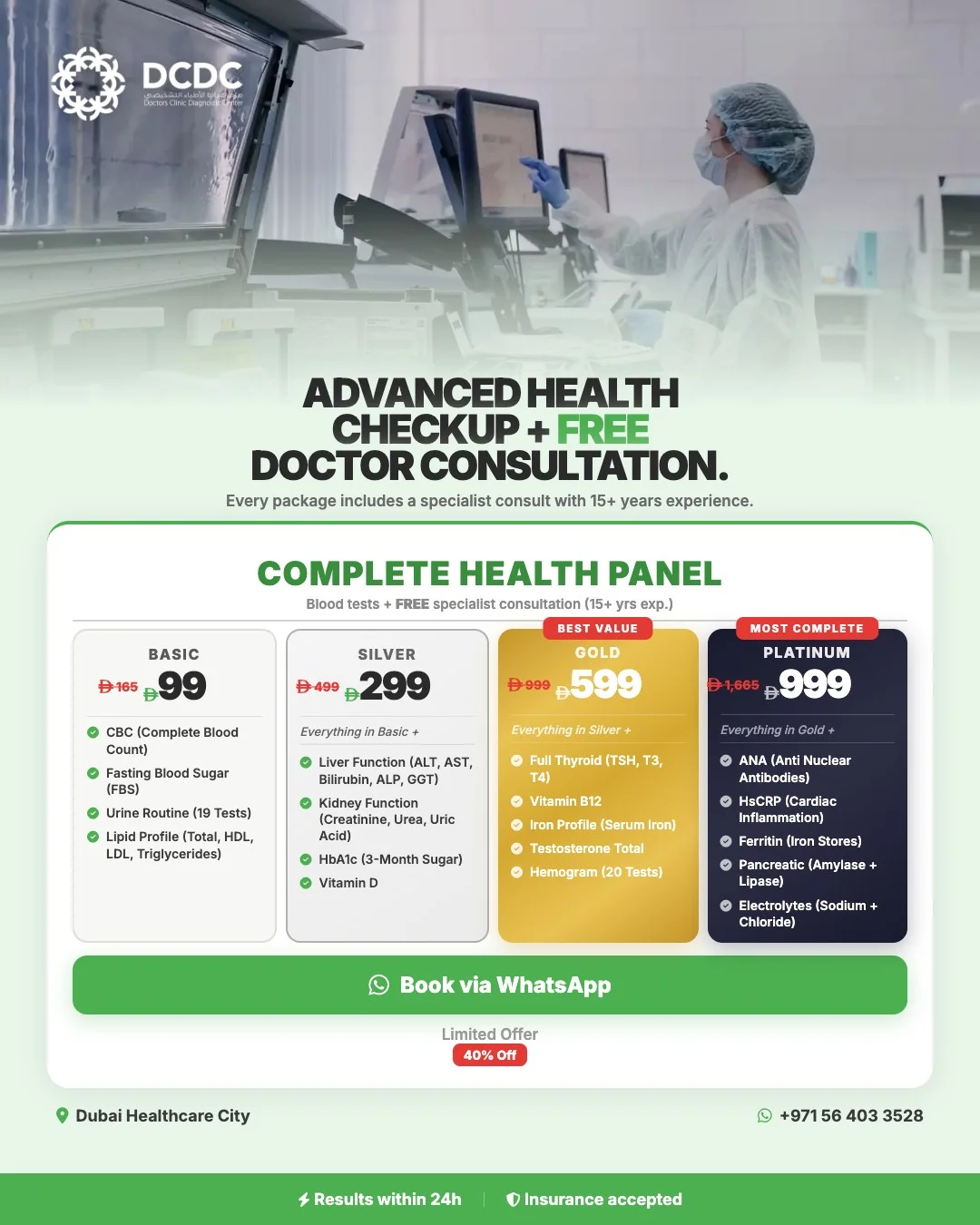
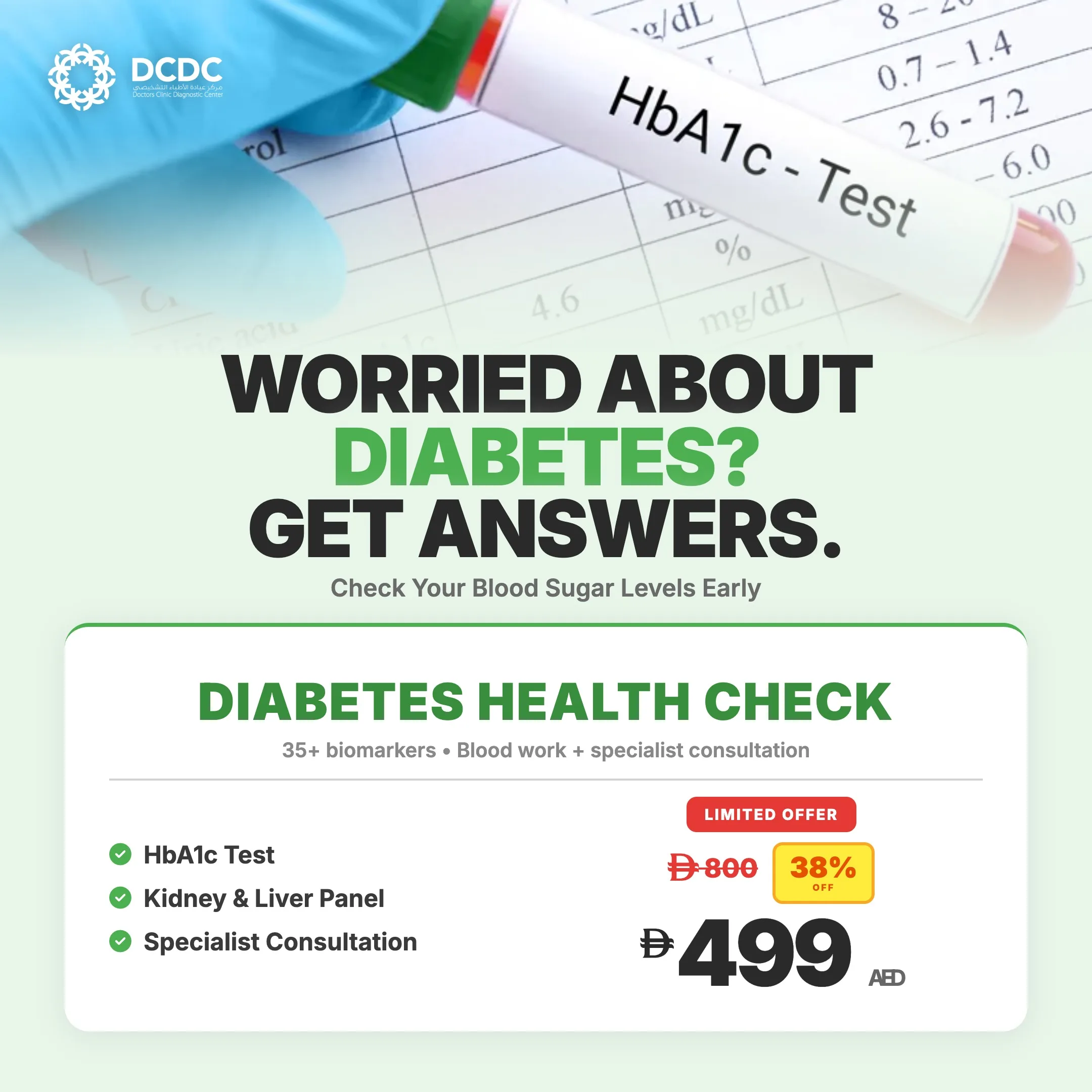
Health Screening Packages
Save with our bundled screening packages — specialist consultation included




What Is a Stool Test and Why Is It Important?
A stool test, also called stool analysis or a fecal test, examines a sample of your bowel motion in the laboratory to check for signs of infection, inflammation, digestive dysfunction, or hidden bleeding within the gastrointestinal tract. Because the stool is essentially a direct sample of what has passed through your entire digestive system, from stomach to colon, it can reveal problems that are difficult to detect through symptoms alone or through blood work.
Stool testing is important because many gastrointestinal conditions, from parasitic infections common among travellers and residents in the region to early colorectal cancer, produce no symptoms in their earliest, most treatable stages. A stool test is inexpensive, non-invasive, and can often point your doctor toward a diagnosis without the need for more invasive procedures such as endoscopy, or it can confirm that further investigation, such as a colonoscopy, is genuinely warranted.
In Dubai specifically, stool testing is commonly requested for three broad reasons: acute gastrointestinal symptoms such as diarrhoea, suspected parasitic or bacterial infection (relevant given the large expatriate population that travels frequently across the region), and preventive colon cancer screening in adults over 45. Understanding what each test actually measures makes it far easier to interpret your results once they arrive.
Types of Stool Tests Available in Dubai
Not all stool tests are the same, and your doctor will select the specific panel based on your symptoms. This stool analysis guide breaks down the main categories you are likely to encounter.
| Test Type | What It Checks | Typical Reason Ordered |
|---|---|---|
| Stool routine with microscopy | Colour, consistency, mucus, fat, undigested food, red and white blood cells, parasite eggs or cysts | General digestive symptoms, chronic diarrhoea, suspected malabsorption |
| Fecal occult blood test (FOBT) | Hidden (non-visible) blood in the stool | Colon cancer screening, unexplained anaemia, suspected internal bleeding |
| Stool culture test | Bacterial pathogens such as Salmonella, Shigella, Campylobacter, and pathogenic E. coli | Suspected bacterial food poisoning, prolonged or bloody diarrhoea |
| Ova and parasite (O&P) examination | Intestinal parasites and their eggs or cysts, such as Giardia or Entamoeba | Travel history, chronic diarrhoea, unexplained weight loss or abdominal pain |
| H. pylori stool antigen test | Presence of Helicobacter pylori bacteria, linked to gastritis and peptic ulcers | Persistent indigestion, suspected peptic ulcer disease |
| Fecal calprotectin | Inflammatory marker distinguishing inflammatory bowel disease from irritable bowel syndrome | Chronic diarrhoea with suspected inflammatory cause |
Common Stool Test Types and Their Purpose
What Can a Stool Test Detect?
So, what does stool test show in practical terms? A comprehensive stool analysis can uncover a wide range of digestive and systemic conditions, which is why it remains one of the most versatile tools in general practice and gastroenterology.
- Bacterial infections: Salmonella, Shigella, Campylobacter, and certain strains of E. coli, often linked to contaminated food or water.
- Parasitic infections: Giardia lamblia, Entamoeba histolytica, and various intestinal worms, more common among frequent travellers and in communities with variable food and water safety standards.
- Hidden gastrointestinal bleeding: Detected through occult blood testing, which can indicate anything from haemorrhoids to, less commonly, colorectal cancer.
- Malabsorption disorders: Excess fat in the stool (steatorrhoea) can point to pancreatic insufficiency, coeliac disease, or bile-related digestive problems.
- Inflammatory bowel disease markers: Elevated white blood cells or fecal calprotectin can suggest ulcerative colitis or Crohn's disease.
- Helicobacter pylori infection: A common cause of chronic gastritis and peptic ulcers, detectable via stool antigen testing.
- Digestive enzyme or bile insufficiency: Reflected in undigested food particles or abnormal stool fat content.
- Yeast overgrowth or dysbiosis: An imbalance in gut flora that can contribute to bloating and irregular bowel habits.
How to Collect a Stool Sample Correctly
Knowing how to collect a stool sample properly is one of the most overlooked factors affecting result accuracy. A contaminated or improperly stored sample can produce a false negative for parasites or bacteria, or make microscopy difficult to interpret.
- Use a clean, dry, wide-mouthed container: Your clinic will typically provide a sterile stool collection kit with a small spoon attached to the lid.
- Avoid mixing with urine or toilet water: Both can alter cell counts and destroy fragile parasites, leading to inaccurate stool microscopy results. Place a clean, dry sheet of plastic wrap or a disposable collection paper across the toilet bowl before passing stool.
- Collect a representative portion: If blood, mucus, or an unusual area is visible, include a small portion of that specific area in the sample container.
- Fill only about one-third of the container: Overfilling is unnecessary and can make transport and lab handling difficult.
- Label the container with your name, date, and time of collection.
- Deliver the sample promptly: Fresh samples give the most accurate results, particularly for parasite detection, since some organisms lose their identifying features once the sample cools or dries out. Most laboratories, including DCDC, recommend delivery within one to two hours of collection.
- Refrigerate briefly if needed: If you cannot deliver the sample immediately, refrigerating it (not freezing) for a few hours is preferable to leaving it at room temperature, though this should not replace prompt delivery.
If passing a sample on demand is difficult, for example because of infrequent bowel movements, this is worth mentioning to your doctor, since underlying constipation can itself be relevant to your digestive symptoms. Our constipation causes and treatment guide explains common triggers and simple remedies that can help.
Stool Test Preparation: Before Your Test
Stool test preparation requirements vary slightly depending on which specific panel has been ordered, but a few general principles apply across most tests.
- Fecal occult blood test: Some laboratories ask patients to avoid red meat, certain vegetables (such as broccoli, cauliflower, and radish), and vitamin C supplements for two to three days beforehand, since these can occasionally cause a false-positive chemical reaction. Confirm with your doctor whether this applies to the specific FOBT method being used, as newer immunochemical tests (FIT) generally do not require dietary restriction.
- Medication timing: Nonsteroidal anti-inflammatory drugs (NSAIDs) such as ibuprofen or aspirin can occasionally cause minor gastrointestinal bleeding and may be paused before an occult blood test if your doctor advises it. Do not stop any prescribed medication without medical guidance.
- Antibiotics and antiparasitic medication: These should generally be avoided for at least one to two weeks before a stool culture or ova and parasite examination, as they can suppress organisms and cause a false-negative result.
- Menstruation: Avoid collecting an occult blood sample during your period, as menstrual blood can contaminate the sample.
- No fasting required: Unlike many other laboratory panels, a stool test does not require you to fast beforehand.
Understanding Your Stool Test Results
Getting to grips with stool test results meaning is easier once you understand the categories a laboratory report typically covers: physical appearance, microscopic findings, chemical tests, and, where ordered, culture or antigen results. Below is a general reference; always discuss your specific result with your doctor, since normal ranges and interpretation can vary between laboratories and clinical context.
| Finding | Normal Result | Abnormal Result / Possible Meaning |
|---|---|---|
| Colour | Brown | Black or tarry (may indicate upper GI bleeding), pale or clay-coloured (may indicate bile duct obstruction), red streaks (lower GI bleeding, haemorrhoids) |
| Consistency | Formed, soft | Watery (diarrhoea, infection), hard pellets (constipation) |
| Occult blood | Negative | Positive — hidden bleeding somewhere in the digestive tract; requires follow-up to identify the source |
| Ova and parasites | None seen | Presence of Giardia, Entamoeba, or worm eggs — indicates active parasitic infection |
| White blood cells (leukocytes) | Absent or few | Elevated — suggests inflammation or bacterial infection rather than a viral or non-inflammatory cause |
| Fat content | Minimal | Elevated (steatorrhoea) — suggests malabsorption, pancreatic insufficiency, or coeliac disease |
| Culture | No pathogenic growth | Growth of Salmonella, Shigella, Campylobacter, or other pathogens — confirms bacterial infection and guides antibiotic choice |
| H. pylori antigen | Negative | Positive — active Helicobacter pylori infection, often linked to gastritis or peptic ulcer |
Stool Test Results Reference: Normal vs Abnormal Findings
It is worth stressing that a single abnormal marker rarely tells the whole story on its own. Your doctor interprets stool microscopy results alongside your symptoms, medical history, recent travel, medication use, and, where relevant, additional blood work or imaging, rather than in isolation.
Fecal Occult Blood Test (FOBT): Colon Cancer Screening
The fecal occult blood test deserves its own dedicated section because it plays a specific, important role in colon cancer screening. Colorectal cancer often bleeds in tiny amounts long before it causes noticeable symptoms, and this blood is typically invisible to the naked eye. A fecal occult blood test, or its more modern variant, the fecal immunochemical test (FIT), is designed specifically to pick up this hidden blood.
Major health organisations recommend that average-risk adults begin colon cancer screening around age 45, either through an annual or biennial fecal occult blood or immunochemical test, or through colonoscopy at less frequent intervals, depending on individual risk factors and personal preference. A positive occult blood result does not automatically mean cancer, common and far less serious causes include haemorrhoids, anal fissures, or recent NSAID use, but it does always warrant further evaluation, typically starting with a colonoscopy, to identify the exact source of bleeding.
If you are approaching 45, have a family history of colorectal cancer, or simply want to understand which screening option suits you best, our colon cancer screening guide covers when to start screening and how the different test options compare in more detail.
Stool Test Cost in Dubai
Stool test cost in Dubai varies depending on the specific panel your doctor orders. Below are typical price ranges you can expect across clinics in the city; your exact cost will depend on which combination of tests is clinically appropriate for your symptoms.
| Test | Typical Price Range (AED) | Turnaround Time |
|---|---|---|
| Stool routine with microscopy | From AED 149 | Same day to 24 hours |
| Fecal occult blood test (FOBT) | From AED 100–250 | Same day to 24 hours |
| Stool culture test | From AED 200–400 | 24–72 hours (bacterial growth requires incubation time) |
| Ova and parasite examination | From AED 100–250 | Same day to 24 hours |
| H. pylori stool antigen test | From AED 149 | Same day to 24 hours |
| GP consultation to review results | From AED 250 | Same visit |
Stool Test Pricing Guide — Dubai (indicative ranges)
At DCDC, stool test results are typically available within 24 hours, with routine panels often processed on the same day. Over 20 insurance providers, including Daman, AXA, Bupa, MetLife, and Cigna, are accepted with direct billing, so many insured patients only pay a copayment rather than the full listed price.
Book Your Stool Test in Dubai Healthcare City
Get accurate, same-day to 24-hour stool test results at DCDC in Dubai Healthcare City. Sample collection takes just 5-10 minutes, with direct billing available for over 20 insurance providers.
Stool routine from AED 149 | Walk-ins welcome | Free on-site parking
What to Expect at DCDC for Stool Testing
At Doctors Clinic Diagnostic Center in Dubai Healthcare City, stool testing is designed to be quick, discreet, and low-friction from the moment you walk in.
- Step 1 — Consultation or walk-in: Most patients see a General Practitioner first to discuss symptoms and confirm which specific stool panel is appropriate, though walk-in testing is also available if a test has already been ordered elsewhere.
- Step 2 — Sample kit and instructions: Our laboratory team provides a sterile collection container along with clear, step-by-step instructions for collecting your sample correctly at home.
- Step 3 — Drop-off: Bring your labelled sample back to the clinic; the on-site collection and registration process takes about 5-10 minutes.
- Step 4 — Laboratory processing: Our on-site lab processes routine stool panels the same day in most cases, with more complex tests such as stool culture requiring up to 24-72 hours due to bacterial incubation time.
- Step 5 — Results and follow-up: Results are reviewed with a physician who can explain the stool test results meaning in plain language and recommend next steps if anything is abnormal.
Dr. Hadeel Elnur's Clinical Perspective
"A huge number of patients come to me anxious after seeing an unfamiliar term on their stool test report, most commonly 'occult blood positive' or a mention of white blood cells," says Dr. Hadeel Elnur, General Practitioner at DCDC. "What I try to communicate is that these findings are simply a starting point for a conversation, not a diagnosis on their own. A positive occult blood result, for example, is far more often explained by haemorrhoids or a minor fissure than anything serious, but it still needs to be properly followed up, which is why I never dismiss an abnormal result without a clear plan."
"In Dubai, I also see a fair number of parasitic infections linked to travel or eating in a wide variety of settings, which is completely normal in an international city like this. My approach is always to match the test to the symptoms: if someone has had watery diarrhoea for two days after a trip, I am thinking about a different panel than I would for a 50-year-old coming in for routine colon cancer screening. Getting that match right the first time saves patients both money and time."
DCDC holds MOHAP licensing (License No. NIMY7VY5-240925) and maintains a 4.8/5 rating from over 1,000 verified Google reviews, with a 98% patient satisfaction rate and an average wait time of just 15 minutes.
When to Get a Stool Test: Warning Signs
While routine colon cancer screening is recommended for all average-risk adults from around age 45, certain symptoms warrant a stool test regardless of age, and some should prompt urgent evaluation.
- Diarrhoea lasting more than a few days, particularly if watery, frequent, or associated with fever.
- Visible blood or mucus in the stool.
- Black, tarry stools, which can indicate bleeding higher in the digestive tract and require prompt medical attention.
- Unexplained weight loss alongside digestive symptoms.
- Persistent abdominal pain or cramping without a clear cause.
- Recent travel followed by new digestive symptoms, which raises suspicion for a parasitic or bacterial infection.
- A family history of colorectal cancer or inflammatory bowel disease.
- Chronic bloating or altered bowel habits that have not improved with dietary changes.
If persistent abdominal discomfort is your main concern, our abdominal pain causes and diagnosis guide explains how doctors narrow down the possible causes, and if bloating is a recurring issue, our bloating causes and treatment guide covers dietary and medical triggers in more depth.
Stool Test vs Other Digestive Tests
A stool test is rarely the only tool used to investigate digestive symptoms. Understanding how it compares to other common tests helps set realistic expectations about what each one can and cannot tell your doctor.
| Test | What It Detects | Invasiveness | Typical Turnaround |
|---|---|---|---|
| Stool test | Infection, parasites, hidden blood, inflammation, malabsorption | Non-invasive | Same day to 24-72 hours |
| Blood work (CBC, inflammatory markers) | Anaemia, general inflammation, nutritional deficiencies | Minimally invasive | 30 minutes to same day |
| Abdominal ultrasound | Structural issues in liver, gallbladder, kidneys, and other organs | Non-invasive | Same day |
| Colonoscopy | Direct visualisation of the colon, polyps, tumours, and inflammation, with biopsy capability | Invasive (requires sedation) | Same-day procedure, results within days |
| Food intolerance testing | Sensitivity reactions to specific foods contributing to bloating or discomfort | Minimally invasive | Several days to weeks |
Comparing Stool Testing With Other Digestive Investigations
If bloating and digestive discomfort seem linked to specific foods rather than an infection, a stool test alone may not provide the full picture. In these cases, our food intolerance test guide explains how sensitivity testing complements, rather than replaces, standard stool analysis.
Next Steps After Abnormal Stool Results
Receiving an abnormal stool test result can feel unsettling, but in the vast majority of cases it leads to a clear, manageable next step rather than a serious diagnosis.
- Positive occult blood: Your doctor will typically ask about haemorrhoids, recent NSAID use, and any visible bleeding, and may refer you for a colonoscopy to identify the exact source, particularly if you are over 45 or have other risk factors.
- Parasites detected: Treatment usually involves a short course of targeted antiparasitic medication, along with hygiene guidance to prevent reinfection or spread to household members.
- Bacterial pathogen on culture: Your doctor will select an antibiotic based on the specific organism identified and its sensitivity profile, and will advise on hydration and dietary measures in the meantime.
- Elevated white blood cells or fecal calprotectin: This often prompts a referral to a gastroenterologist for further evaluation of possible inflammatory bowel disease.
- Elevated stool fat: Your doctor may investigate pancreatic function, coeliac disease, or other malabsorption causes with additional blood work or imaging.
Whatever the finding, a follow-up consultation is the right next step, both to interpret the result accurately and to plan any further testing or treatment. If your GP feels your symptoms need specialist input, our gastroenterologist guide explains when a referral is appropriate and what a specialist visit typically involves.
Discuss Your Stool Test Results With a Doctor
Whether you already have results in hand or need a stool test ordered, our General Practice team at DCDC in Dubai Healthcare City can review findings, explain what they mean, and arrange any follow-up testing needed, all in one visit.
Building 64, Block A, Al Razi Medical Complex | Sat-Thu 8 AM-10 PM, Fri 9 AM-9 PM
Related Services at DCDC
Expert care and advanced diagnostics at Dubai Healthcare City
Frequently Asked Questions
Final Thoughts
A stool test remains one of the most useful, low-cost, non-invasive tools available for investigating digestive symptoms, screening for colon cancer, and identifying infections that might otherwise go undetected. Understanding stool test results meaning does not require a medical degree, once you know what each finding, whether occult blood, parasites, white blood cells, or culture growth, generally points toward, a lab report becomes far less intimidating.
That said, no stool test result should be interpreted in isolation. Context matters: your symptoms, travel history, medications, age, and family history all shape what a specific finding means for you individually, which is why a follow-up conversation with your doctor is an essential part of the process, not an optional extra.
At DCDC in Dubai Healthcare City, we aim to make the entire process, from sample collection through result interpretation, as fast and straightforward as possible, with same-day to 24-hour turnaround, on-site laboratory processing, and a physician available to walk you through exactly what your results mean and what, if anything, needs to happen next.
Sources & References
This article was reviewed by our medical team and references the following sources:
- MedlinePlus — Fecal Occult Blood Test
- MedlinePlus — Stool Culture
- MedlinePlus — Ova and Parasite Test
- Mayo Clinic — Fecal Occult Blood Test
- American Cancer Society — Colorectal Cancer Screening Tests
- CDC — Parasites A-Z
- NHS — Helicobacter Pylori (H. Pylori) Infection
Medical content on this site is reviewed by DHA-licensed physicians. See our editorial policy for more information.

Written by
Dr. Hadeel Elnur
General Practitioner
MD, General Practice
Dr. Hadeel Elnur is a General Practitioner at Doctors Clinic Diagnostic Center (DCDC) in Dubai Healthcare City.
Related Articles
Colon Cancer Screening: When to Start & Tests
Food Intolerance Test Dubai: From AED 500
Constipation Dubai: Causes & Treatment
Urine Test Dubai: Types, Cost & Guide

Abdominal Pain Dubai: Causes & Diagnosis
More in Laboratory

Fitness Blood Tests Dubai: What to Check (2026)
Read More
HbA1c vs Fasting Blood Sugar Dubai: Guide (2026)
Read More
TB Test Cost Dubai: From AED 100–690 (2026)
Read MoreHIV Test Cost Dubai: Pricing & Guide (2026)
Read MorePaternity Test Dubai: How It Works (2026)
Read More
Blood Test Results Dubai: What's Normal (2026)
Read More© 2026 Doctors Clinic Diagnostic Center (DCDC), Dubai Healthcare City. Originally published at https://doctorsclinicdubai.ae/blog/stool-test-results-guide-dubai. All rights reserved. Unauthorized reproduction is prohibited.