Key Takeaways
- The OGTT measures how your body handles a 75 g glucose load, using a fasting blood draw plus samples at 1 and 2 hours - it is the gold standard for diagnosing gestational diabetes and clarifying borderline results
- Pregnant women are most often tested between 24 and 28 weeks, but the OGTT is also used for borderline fasting glucose, borderline HbA1c and high-risk adults
- Preparation matters: eat at least 150 g of carbohydrate daily for 3 days, fast for 8-14 hours, drink only water, and stay seated for the full 2 hours
- Gestational diabetes is diagnosed if any one value meets the thresholds: fasting 5.1 mmol/L or above, 1 hour 10.0 or above, or 2 hours 8.5 or above
- DCDC offers an on-site laboratory, a comfortable waiting area, same-day results for routine glucose tests and GP interpretation in Dubai Healthcare City
- Direct billing is available with 20+ insurance partners; glucose test AED 99, HbA1c AED 149, diabetes panel AED 499, and GP consultations from AED 249
If you have been asked to book an oral glucose tolerance test, this guide explains what to expect and how to prepare. The OGTT is the gold standard for diagnosing gestational diabetes and type 2 diabetes, and it is available through the diabetes testing service at DCDC in Dubai Healthcare City. Unlike a single fasting glucose reading, the OGTT shows how your body responds to a measured sugar load over two hours, which makes it especially valuable when other results are borderline.
Preparation takes only a little planning: a normal carbohydrate diet for three days, a fast of 8-14 hours, and about two to three hours at the clinic. At DCDC, our on-site laboratory, comfortable waiting area, GP on site to explain results, free parking and extended hours make the process easy, and direct billing is available with 20+ insurance partners. Read on for a step-by-step timeline, a results table with both mmol/L and mg/dL values, pricing, and what to do if your result is abnormal.
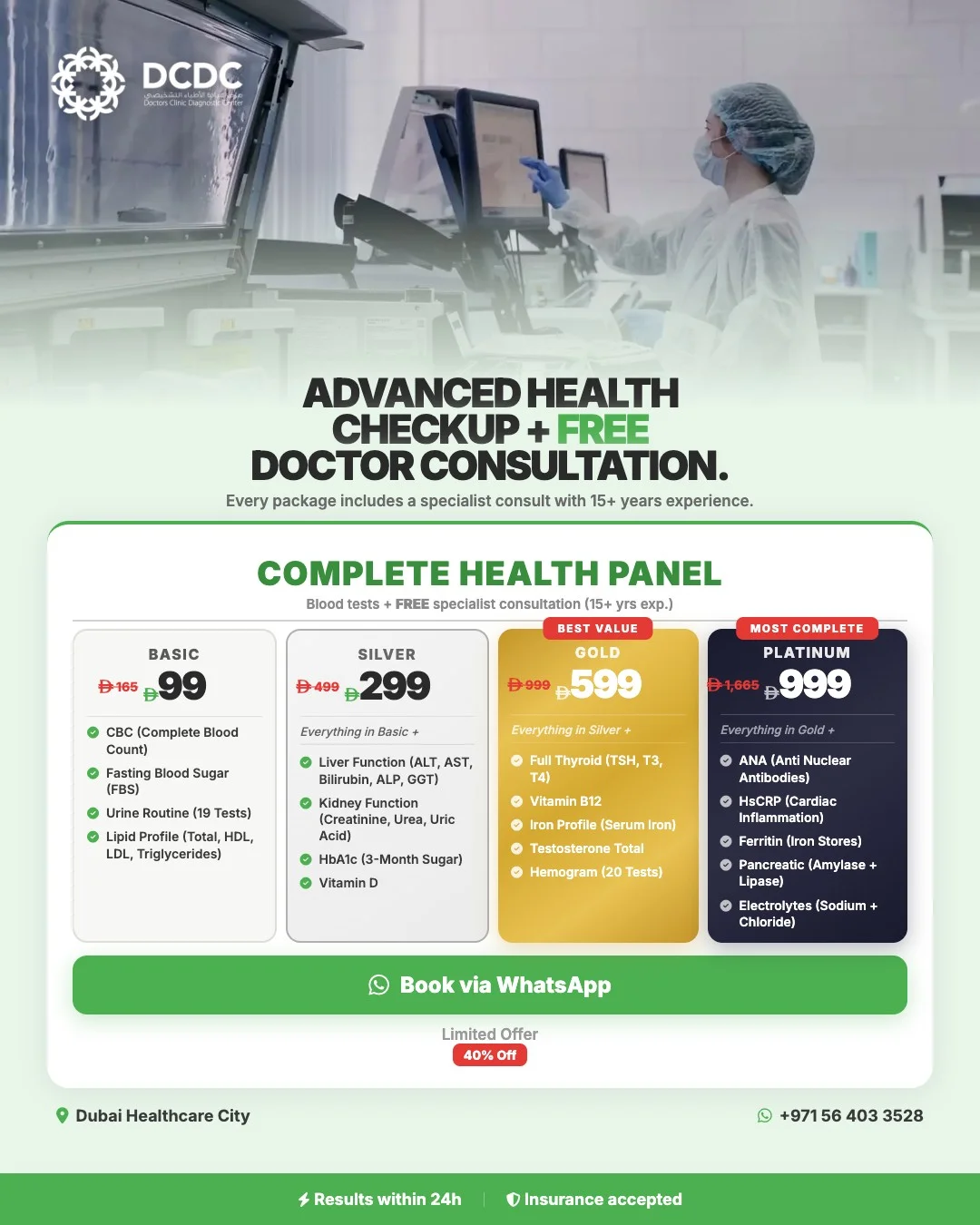
Health Screening Packages
Save with our bundled screening packages — specialist consultation included




What Is the Oral Glucose Tolerance Test (OGTT)?
The oral glucose tolerance test (OGTT, sometimes written GTT) is a timed blood test that measures how efficiently your body clears sugar from the bloodstream after a standard glucose load. You give a fasting blood sample, drink a measured 75 g glucose solution, and have blood drawn again at 1 hour and 2 hours. Each result is compared against internationally agreed diagnostic thresholds.
Think of it as a stress test for your metabolism. A healthy pancreas releases insulin quickly after the glucose drink, and your muscles and liver absorb the sugar, so blood glucose rises modestly and then falls back. If insulin release is delayed or your tissues respond poorly to insulin (insulin resistance), glucose stays high for longer. The OGTT captures exactly that pattern, which a single blood draw cannot.
How the OGTT differs from fasting glucose and HbA1c
A fasting glucose test shows your blood sugar at one moment after an overnight fast. HbA1c reflects your average blood sugar over roughly three months (see our HbA1c test guide). Both are quick and convenient, but both can look normal in people whose blood sugar only rises abnormally after meals. The OGTT is more sensitive for this early problem, which is why it remains the reference test for gestational diabetes and for clarifying borderline results.
The trade-off is time and effort: it needs strict fasting, around two to three hours at the clinic, and several blood draws. That is why it is usually reserved for situations where a simpler test is not enough or where guidelines specifically call for it.
Who Needs an OGTT?
Your doctor may recommend an OGTT in several situations. The most common is pregnancy, but it is also used in adults whose other results are borderline or whose risk is high. If you are unsure whether you qualify, a short GP consultation can settle it.
Pregnant women (24-28 weeks)
Pregnancy is the most common reason for an OGTT. Screening for gestational diabetes is routinely offered between 24 and 28 weeks of pregnancy, when pregnancy hormones make the body most resistant to insulin. Women with strong risk factors may be tested earlier, and sometimes again later. Untreated gestational diabetes raises the risk of a large baby, difficult delivery, pre-eclampsia and neonatal low blood sugar, while early detection allows simple dietary measures to bring the risk down. Our dedicated guide to gestational diabetes screening in Dubai covers the full pregnancy pathway.
People with borderline fasting glucose
If your fasting glucose falls in the impaired fasting glucose range of 5.6-6.9 mmol/L (100-125 mg/dL), you are not yet diagnosed with diabetes but you are not clearly in the clear either. An OGTT can show whether your body copes with a sugar load, and whether you are heading toward diabetes.
High-risk individuals
Doctors often consider an OGTT when several risk factors are present, even if basic tests look normal. These include:
- A parent, brother or sister with type 2 diabetes
- Overweight or obesity, particularly excess abdominal fat
- Polycystic ovary syndrome (PCOS)
- Previous gestational diabetes or a previous baby over 4 kg
- High blood pressure, high triglycerides or low HDL cholesterol
- Signs of insulin resistance such as dark skin patches (acanthosis nigricans) - see our guide to insulin resistance signs and testing
Borderline HbA1c results
An HbA1c of 42-47 mmol/mol (6.0-6.4%) sits in the prediabetes zone in many guidelines. HbA1c can also be unreliable in people with anaemia, haemoglobin variants or recent blood loss. In those cases an OGTT gives a direct measurement of glucose handling and helps your doctor decide between lifestyle advice, repeat testing, or a diagnosis.
Follow-up after gestational diabetes
If you had gestational diabetes, guidelines recommend an OGTT 6-12 weeks after delivery to check whether glucose has returned to normal. Up to half of women who have had gestational diabetes go on to develop type 2 diabetes later in life, so this test, followed by regular screening afterwards, is an important safeguard.
OGTT vs Other Diabetes Tests
No single test suits every situation. Here is how the main blood sugar tests compare. For a deeper look at the first two, read our comparison of HbA1c vs fasting blood sugar.
| Test | What It Measures | Fasting Required | Duration | Best For |
|---|---|---|---|---|
| Fasting glucose | Single blood sugar level after an overnight fast | Yes, 8 hours | About 5 minutes | Routine screening |
| HbA1c | Average blood sugar over about 3 months | No | About 5 minutes | Monitoring and diagnosis |
| OGTT | How well the body processes a glucose load | Yes, 8-14 hours | 2-3 hours | Definitive diagnosis, gestational diabetes |
| Random glucose | Blood sugar at any time of day | No | About 5 minutes | Emergency or symptomatic screening |
In practice, doctors combine them. A normal fasting glucose with a borderline HbA1c is a classic reason to add an OGTT. DCDC's diabetes panel can include several of these markers in one visit, and a GP can explain which combination fits your situation. For a full price breakdown, see our diabetes test cost guide.
How to Prepare for Your OGTT
Good preparation matters, because errors in preparation can push results up or down and may lead to an unnecessary repeat test. Follow this timeline.
3 days before the test
- Eat your normal, carbohydrate-rich diet, with at least 150 g of carbohydrate per day (bread, rice, pasta, fruit, potatoes). Do not go on a low-carb or keto diet before the test, as this can falsely worsen your result.
- Keep up your usual physical activity - neither more nor less than normal.
- Tell your doctor about any illness, since an infection or fever can temporarily raise blood sugar and your test may need rescheduling.
The night before
- Eat your evening meal, then begin a fast of 8 to 14 hours. Many people finish dinner by 8 pm and test at 8-9 am.
- Water is allowed and encouraged - staying hydrated makes the blood draw easier.
- Avoid alcohol the evening before.
The morning of the test
- Arrive early so that registration does not shorten your fast or delay the timing.
- No food, juice, tea, coffee, chewing gum or sweets - only water.
- No smoking or vaping, which can alter glucose readings.
- Avoid strenuous exercise; a normal walk to the clinic is fine.
During the test
- Remain seated and relaxed for the full two hours.
- No eating, drinking (other than small sips of water if permitted), or smoking until the final blood draw.
What to bring
- A book, tablet or phone with headphones for the waiting time
- A snack and drink for after the test - you will be hungry
- Your Emirates ID and insurance card
- A list of your current medications and supplements
What Happens During the OGTT - Step by Step
Knowing what to expect makes the test far less daunting. Here is the typical sequence.
- Step 1 - Arrive fasting: Registration and check-in. A nurse confirms how long you have fasted and asks about medications, illness and pregnancy stage.
- Step 2 - Fasting blood draw: A small sample is taken to measure your baseline glucose. If it is extremely high, the team may stop the test for safety and your doctor will advise you.
- Step 3 - Drink the glucose solution: You drink 75 g of glucose dissolved in 250-300 ml of water, taken steadily within about 5 minutes. The time you finish the drink is recorded as the start of the test.
- Step 4 - Wait: Remain seated in the waiting area. Light reading or quiet phone use is fine. Do not eat, exercise or smoke, as these change glucose levels.
- Step 5 - Blood draw at 1 hour: A second sample is taken exactly 60 minutes after the drink. This value is especially important in pregnancy.
- Step 6 - Blood draw at 2 hours: The final sample is taken 120 minutes after the drink.
- Step 7 - Test complete: Eat and drink as normal. Enjoy your snack.
A note on pregnancy screening: some doctors use a two-step approach, starting with a non-fasting 50 g glucose challenge test (GCT) with a single blood draw at one hour, and moving to the longer OGTT only if the result is high. Others go straight to the 75 g OGTT. Your obstetrician will tell you which pathway applies to you.
Understanding Your OGTT Results
Results are reported in mmol/L, the unit used in the UAE, with mg/dL equivalents shown in brackets for those who are used to that unit. The table below shows the standard thresholds for adults who are not pregnant.
| Timing | Normal | Prediabetes | Diabetes |
|---|---|---|---|
| Fasting | Below 5.6 mmol/L (below 100 mg/dL) | 5.6-6.9 mmol/L (100-125 mg/dL) | 7.0 mmol/L or above (126 mg/dL or above) |
| 1 hour | Below 10.0 mmol/L (below 180 mg/dL) - used mainly in pregnancy | No standard range outside pregnancy | 10.0 mmol/L or above (180 mg/dL) diagnoses gestational diabetes in pregnancy |
| 2 hours | Below 7.8 mmol/L (below 140 mg/dL) | 7.8-11.0 mmol/L (140-199 mg/dL) - impaired glucose tolerance | 11.1 mmol/L or above (200 mg/dL or above) |
Gestational diabetes criteria
In pregnancy, a single abnormal value is enough for diagnosis under the widely used WHO and IADPSG criteria. Gestational diabetes is diagnosed if any one of the following is met:
- Fasting glucose 5.1 mmol/L or above (92 mg/dL)
- 1-hour glucose 10.0 mmol/L or above (180 mg/dL)
- 2-hour glucose 8.5 mmol/L or above (153 mg/dL)
A fasting result of 7.0 mmol/L or higher, or a 2-hour result of 11.1 mmol/L or higher, in early pregnancy may point to diabetes that was present before pregnancy rather than gestational diabetes, and your doctor will interpret it accordingly.
What impaired glucose tolerance means
A 2-hour value between 7.8 and 11.0 mmol/L is called impaired glucose tolerance. It is not diabetes, but it is a clear warning: without changes, a substantial proportion of people progress to type 2 diabetes within several years. The encouraging news is that weight loss of even 5-7%, regular exercise and dietary change can cut that risk by more than half. Read more in our guide to prediabetes prevention in Dubai.
Guidelines generally recommend that a diagnosis of diabetes in someone without symptoms is confirmed with a repeat test on a separate day, unless two different abnormal tests are available from the same sample. Your GP will explain whether confirmation is needed.
What to Expect at DCDC
At Doctors Clinic Diagnostic Center in Dubai Healthcare City, the whole process, from blood draw to doctor consultation, happens under one roof.
- On-site laboratory: your samples are processed in our own laboratory, so there is no external referral and no courier delay.
- Comfortable waiting area for the two hours between blood draws, so you can read or work in comfort.
- Same-day results for routine glucose tests, with a GP on site to explain what they mean.
- Free parking, a Dubai Healthcare City location and extended opening hours that suit early-morning fasting tests.
- 20+ insurance partners with direct billing, so there is no pay-and-claim process for covered services.
Pricing at DCDC
| Service | Price |
|---|---|
| Glucose test | AED 99 |
| HbA1c test | AED 149 |
| Insulin test | AED 199 |
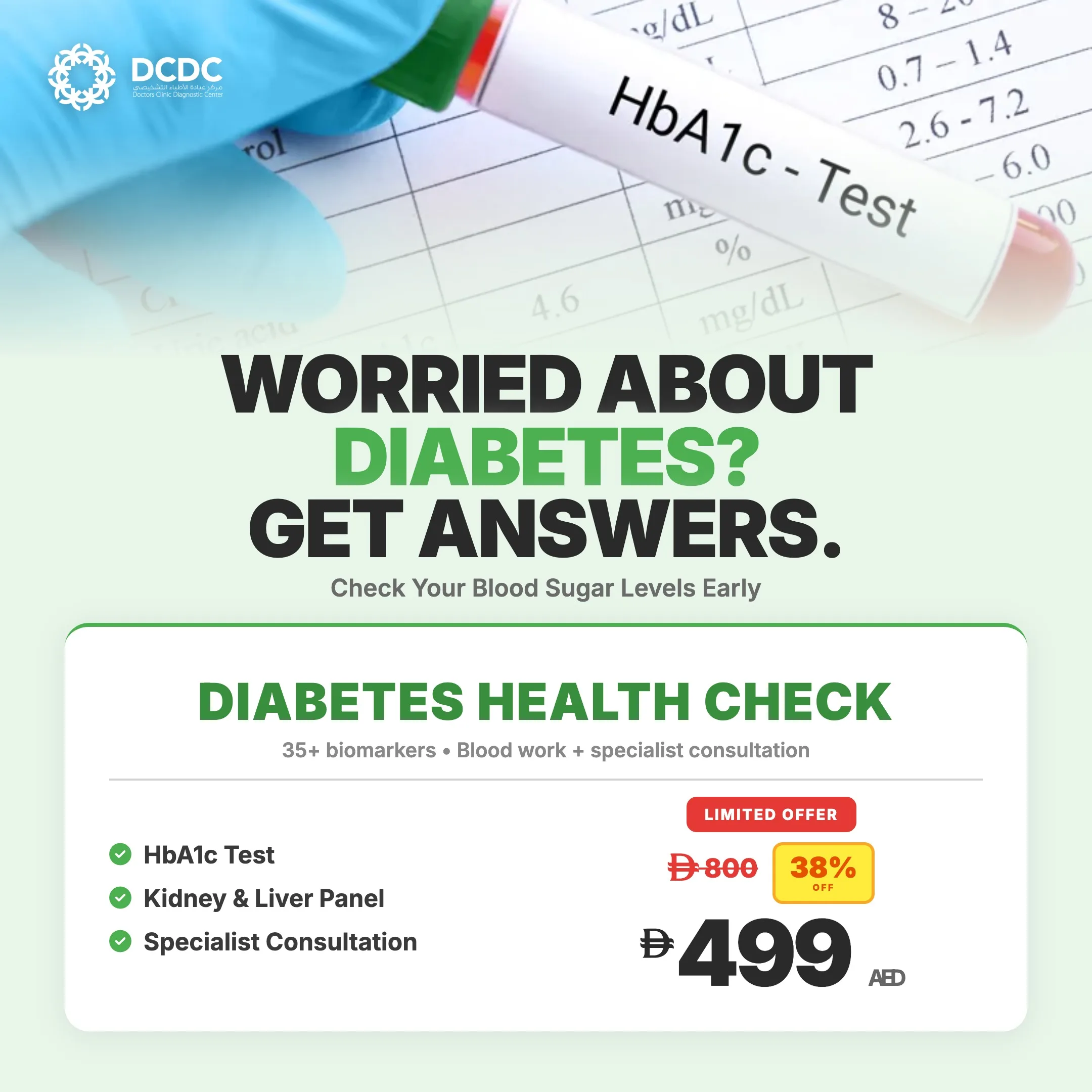
| Diabetes panel (comprehensive screening) | AED 499 |
| GP consultation (results interpretation) | From AED 249 |
| Gynecology consultation (pregnancy-related testing) | From AED 299 |
| Health checkup packages | From AED 249 |
| Home collection fee | AED 199 per visit, plus test prices |
Because the OGTT involves several timed samples, the exact cost depends on the protocol your doctor requests - our team will confirm it when you book. Home collection is available for standard blood tests, but a full OGTT is best done at the clinic, where timing and supervision are controlled. See the diabetes test cost guide for more detail on pricing and insurance.
What Happens After an Abnormal OGTT?
An abnormal result is common and manageable. What happens next depends on your result and whether you are pregnant.
Gestational diabetes
- Diet: a dietitian helps you spread carbohydrates across the day, favour fibre-rich foods and limit sugary drinks.
- Monitoring: you check your blood glucose with a finger-prick meter, usually fasting and after meals.
- Medication if needed: if targets are not met within one to two weeks, your obstetrician may add metformin or insulin. These are safe and effective in pregnancy.
- Extra care: additional growth scans and planning for delivery with your gynecologist.
Impaired glucose tolerance or prediabetes
- Lifestyle changes: a balanced diet, 150 minutes of exercise a week and gradual weight loss
- Repeat testing every 6-12 months
- Checking blood pressure, cholesterol and liver health, which often cluster with glucose problems
- Sometimes medication such as metformin for higher-risk individuals
Diabetes
- Confirmation testing if needed, then a personalised treatment plan
- Baseline checks of kidneys, eyes, feet and cholesterol
- Referral to an endocrinologist or diabetologist for specialised care, especially if results are very high or you are taking insulin
- Education on home glucose monitoring and a plan for regular HbA1c checks
Book Your Glucose Tolerance Test at DCDC
Book by phone or WhatsApp. Our on-site laboratory, comfortable waiting area and GP consultation make the two-hour test straightforward.
20+ insurance partners accepted with direct billing
Related Services at DCDC
Expert care and advanced diagnostics at Dubai Healthcare City
Frequently Asked Questions
Prepare Well, Test Once, Get Clear Answers
The oral glucose tolerance test is more demanding than a simple fasting glucose or HbA1c, but that effort pays off: it detects problems with sugar handling that other tests can miss, and it is the standard way to diagnose gestational diabetes. For many people, an abnormal result is the early warning that makes prevention possible.
Preparation is the key to getting an accurate result. Eat normally for three days, fast for 8-14 hours, drink only water, stay seated and bring something to read. If you are pregnant or have risk factors for type 2 diabetes, do not delay the test.
At DCDC in Dubai Healthcare City, our on-site laboratory, comfortable waiting area and GP consultation mean your results are explained clearly and next steps are agreed on the same visit. Contact us by phone or WhatsApp to book your glucose tolerance test.
Sources & References
This article references the following sources:
- World Health Organization - Diagnostic Criteria and Classification of Hyperglycaemia First Detected in Pregnancy
- American Diabetes Association - Standards of Care in Diabetes (2024): Diagnosis and Classification of Diabetes
- International Association of Diabetes and Pregnancy Study Groups (IADPSG) - Recommendations on the Diagnosis and Classification of Hyperglycemia in Pregnancy
- NICE Guideline NG3 - Diabetes in Pregnancy: Management From Preconception to the Postnatal Period (search on PubMed)
This information is educational and does not replace individual medical advice. See our editorial policy for more information.

Written by
Dr. Hadeel Elnur
General Practitioner
MD, General Practice
Dr. Hadeel Elnur is a General Practitioner at Doctors Clinic Diagnostic Center (DCDC) in Dubai Healthcare City.
Related Articles

Gestational Diabetes Dubai: Screening
HbA1c Test Dubai: Levels, Cost & Guide
HbA1c vs Fasting Blood Sugar Dubai: Guide
Diabetes Test Cost Dubai: From AED 249
Insulin Resistance Dubai: Signs & Testing
More in Laboratory
PSA Test Cost Dubai: From AED 149 Guide (2026)
Read MorePTH Test Dubai: Parathyroid Hormone Guide (2026)
Read More
Vitamin D Levels Chart: What Results Mean (2026)
Read More
ANA Test Dubai: Positive Result, Titre & Pattern Explained
Read More
Autoimmune Panel Test Dubai: ANA & Guide (2026)
Read MoreBlood Test at Home in Dubai: Home Collection Service & Walk-In Alternative (2026)
Read More© 2026 Doctors Clinic Diagnostic Center (DCDC), Dubai Healthcare City. Originally published at https://doctorsclinicdubai.ae/blog/oral-glucose-tolerance-test-ogtt-dubai. All rights reserved. Unauthorized reproduction is prohibited.