Key Takeaways
- A liver function test (LFT) measures ALT, AST, ALP, bilirubin, albumin, GGT and total protein to assess liver health and detect injury or disease.
- Normal ranges vary by laboratory — always compare your results to the reference range printed on your own report.
- High ALT and AST together typically indicate liver cell damage from conditions such as fatty liver, hepatitis or medication effects.
- Elevated ALP with raised bilirubin suggests a cholestatic pattern, pointing to bile duct obstruction or gallbladder problems.
- Low albumin may signal chronic liver disease, malnutrition or kidney loss, while isolated elevated GGT often relates to alcohol use or medications.
- DCDC offers LFT panels from AED 249, with same-day results for routine tests and home collection available for AED 199 per visit.
Your doctor ordered a liver function test and the report arrived with numbers such as ALT 52, AST 38, ALP 110 and bilirubin 1.4. What do those values actually mean? A liver function test (LFT) is one of the most commonly requested blood panels in Dubai — it appears in annual health screenings, medication monitoring and investigations for fatigue, nausea or abdominal discomfort. Yet most patients receive a page of abbreviations and reference ranges with little explanation of what the numbers reveal about their liver. This guide walks through every marker on a standard LFT panel, explains the normal adult ranges, describes the most common patterns of abnormal results and outlines when to follow up with your doctor.
The liver performs more than 500 metabolic functions, from filtering toxins and producing bile to synthesising proteins and storing energy. Because it works silently, early liver problems rarely cause obvious symptoms. Blood markers are often the first signal that something has changed, which is why understanding your LFT results is a practical health skill — especially in a city such as Dubai where annual checkup packages routinely include this panel.
Health Screening Packages
Save with our bundled screening packages — specialist consultation included





What Does a Liver Function Test Measure?
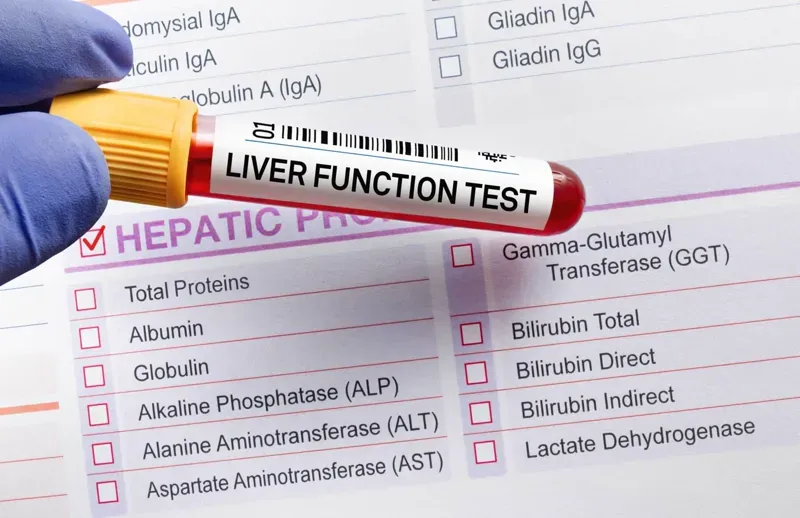
A standard LFT panel includes seven to eight markers. Each one reflects a different aspect of liver function — from cell integrity and bile flow to the liver's ability to produce essential proteins. Together, they give your doctor a detailed snapshot of hepatic health.
At DCDC, the liver function test panel includes ALT, AST, ALP, bilirubin (total and direct), albumin, GGT, total protein and globulin. Results are grouped into three functional categories: enzymes that signal cell damage (ALT, AST, GGT), enzymes related to bile flow (ALP), and proteins that reflect synthetic capacity (albumin, total protein, globulin).
LFT Normal Ranges: Reference Table
The table below lists the typical adult reference ranges used in clinical practice. Your own laboratory may print slightly different numbers — always compare your result to the range on your report, not to values found online. Ranges can also vary with age, sex and pregnancy.
| Marker | Full Name | Normal Range | Unit |
|---|---|---|---|
| ALT | Alanine Aminotransferase | 7–56 | U/L |
| AST | Aspartate Aminotransferase | 10–40 | U/L |
| ALP | Alkaline Phosphatase | 44–147 | U/L |
| GGT | Gamma-Glutamyl Transferase | 9–48 (men) / 9–32 (women) | U/L |
| Total Bilirubin | Total Bilirubin | 0.1–1.2 | mg/dL |
| Direct Bilirubin | Conjugated Bilirubin | 0.0–0.3 | mg/dL |
| Albumin | Serum Albumin | 3.5–5.0 | g/dL |
| Total Protein | Serum Total Protein | 6.0–8.3 | g/dL |
Typical adult LFT reference ranges — compare to the values printed on your own lab report
Values outside these ranges do not automatically mean liver disease. Strenuous exercise, certain medications, dehydration and even a high-protein meal can temporarily shift individual markers. The pattern across multiple markers is far more informative than any single number.
ALT (Alanine Aminotransferase): The Primary Liver Enzyme
ALT is found predominantly in liver cells, which makes it the most liver-specific enzyme on the panel. When hepatocytes are injured or inflamed, ALT leaks into the bloodstream. A mild elevation (up to two to three times the upper limit) is common and often related to fatty liver disease, medication effects or a recent viral illness. Persistently high ALT above three times normal warrants further investigation, typically with imaging and additional blood work.
Common Causes of Elevated ALT
- Non-alcoholic fatty liver disease (NAFLD) — the most frequent cause of mildly elevated ALT in the UAE, linked to obesity, type 2 diabetes and metabolic syndrome
- Medications — statins, paracetamol (acetaminophen), NSAIDs, antibiotics and certain herbal supplements can raise ALT
- Viral hepatitis — hepatitis B and C cause acute and chronic ALT elevation
- Alcohol-related liver injury — chronic heavy drinking damages hepatocytes over time
- Autoimmune hepatitis — the immune system attacks liver cells, often with other autoimmune markers
AST (Aspartate Aminotransferase): Liver and Beyond
AST is present in the liver, heart, muscles and kidneys. Because it is not liver-specific, an elevated AST on its own does not confirm liver disease — muscle injury, intense exercise or a heart condition can also raise it. When AST rises alongside ALT, the combination strongly suggests hepatic involvement.
The AST/ALT Ratio
The ratio of AST to ALT can offer additional diagnostic clues. In most forms of liver inflammation, ALT exceeds AST (ratio below 1). When the AST/ALT ratio exceeds 2, alcohol-related liver disease becomes more likely. A ratio above 1 in a patient with known liver disease may also suggest progressing fibrosis or cirrhosis. Your doctor interprets this ratio alongside clinical history, not in isolation.
ALP (Alkaline Phosphatase): Bile Flow Marker
ALP is concentrated in the cells lining the bile ducts. When bile flow is obstructed — by a gallstone, stricture or tumour — ALP rises. However, ALP is also found in bone, placenta and the intestine, so an elevated reading needs context. In children and adolescents, higher ALP is normal because of active bone growth. During pregnancy, placental ALP causes physiological elevation in the third trimester.
When to Worry About High ALP
An isolated ALP elevation with normal ALT, AST and bilirubin often points to a bone source rather than the liver. If GGT is also elevated, the source is more likely hepatic. Your doctor may order an abdominal ultrasound to check for bile duct dilation or gallstones if ALP rises significantly alongside bilirubin.
Bilirubin: What Yellow Skin and Eyes Signal
Bilirubin is a yellow pigment produced when red blood cells break down. The liver processes (conjugates) bilirubin so it can be excreted in bile. Total bilirubin above 1.2 mg/dL is considered elevated, and when it exceeds roughly 2.5–3.0 mg/dL it may cause visible jaundice — yellowing of the skin and whites of the eyes.
Direct vs Indirect Bilirubin
- High indirect (unconjugated) bilirubin — suggests increased red blood cell destruction (haemolysis) or inherited conditions such as Gilbert's syndrome, a benign condition affecting roughly 5–10% of the population
- High direct (conjugated) bilirubin — suggests bile duct obstruction, liver inflammation or drug-induced cholestasis
- Both elevated — often seen in acute hepatitis or advanced liver disease where both production and excretion are affected
Albumin and Total Protein: Liver Synthetic Function
Albumin is a protein manufactured exclusively by the liver. It maintains blood volume, transports hormones and medications, and reflects the liver's protein-building capacity. A low albumin level (below 3.5 g/dL) may indicate chronic liver disease, cirrhosis, prolonged illness, kidney loss (nephrotic syndrome) or severe malnutrition. Because albumin has a half-life of about 20 days, it changes slowly — a normal albumin does not rule out acute liver injury, and a low albumin in an otherwise healthy person warrants investigation.
Total protein includes albumin plus globulins (immune and transport proteins). A normal total protein with low albumin and high globulins can suggest chronic infection or autoimmune disease. Your doctor uses the albumin-to-globulin ratio alongside other markers to narrow the differential.
GGT (Gamma-Glutamyl Transferase): The Sensitive Detector
GGT is an enzyme found in many tissues but is especially concentrated in the liver and bile ducts. It is one of the most sensitive liver markers — it rises with alcohol use, medication effects, bile duct disease and even obesity. This sensitivity is a double-edged sword: an isolated GGT elevation is common and not always clinically significant. However, when ALP is elevated and your doctor needs to confirm whether the source is the liver or bone, a raised GGT points strongly toward a hepatic origin.
GGT and Alcohol
GGT is the first liver enzyme to rise with regular alcohol intake and the last to normalise after stopping. Clinicians sometimes use serial GGT measurements to monitor patients who are reducing alcohol consumption. A falling GGT trend is a positive sign that the liver is recovering.
LFT Result Patterns: Hepatocellular vs Cholestatic
Doctors do not interpret LFT markers individually — they look for patterns. The two main patterns are:
| Pattern | Key Markers | Typical Causes |
|---|---|---|
| Hepatocellular (liver cell injury) | ALT ↑↑, AST ↑↑, ALP normal or mildly ↑ | Viral hepatitis, fatty liver, alcohol injury, drug toxicity, autoimmune hepatitis |
| Cholestatic (bile flow obstruction) | ALP ↑↑, GGT ↑↑, bilirubin ↑, ALT/AST normal or mildly ↑ | Gallstones, bile duct stricture, pancreatic mass, drug-induced cholestasis, primary biliary cholangitis |
| Mixed | ALT ↑, AST ↑, ALP ↑, bilirubin ↑ | Drug reactions, infiltrative liver disease, some viral hepatitis cases |
Common LFT result patterns and their clinical significance
A pattern alone does not diagnose a condition. Your doctor combines the LFT pattern with your symptoms, medical history, imaging (such as an abdominal ultrasound) and sometimes a liver biopsy to reach a diagnosis.
Common Causes of Abnormal LFT Results in Dubai
Certain liver conditions are especially prevalent in the UAE population. Understanding local risk factors helps put your results in context.
Non-Alcoholic Fatty Liver Disease (NAFLD)
NAFLD is the leading cause of elevated liver enzymes in the Gulf region. Studies estimate that 25–30% of the adult population in the Middle East has some degree of fatty liver, driven by high rates of obesity, type 2 diabetes and sedentary lifestyles. NAFLD typically shows mildly elevated ALT with normal or borderline AST, ALP and bilirubin. Early-stage fatty liver is often reversible through weight loss, dietary changes and increased physical activity.
Viral Hepatitis (B and C)
Dubai's diverse expatriate population includes individuals from regions with higher hepatitis B and C prevalence. Chronic hepatitis B and C can cause persistently elevated transaminases, sometimes for years before symptoms appear. Screening is recommended for anyone who was born in a country with moderate-to-high prevalence, has never been tested, or has risk factors such as blood transfusion before 1992.
Medication Effects
Many commonly prescribed medications can cause transient LFT elevations. Statins (cholesterol-lowering drugs) may raise ALT mildly in the first few months; most guidelines no longer recommend routine LFT monitoring in asymptomatic statin users unless values exceed three times the upper limit. Paracetamol (acetaminophen) in high doses is a well-known cause of acute liver injury. Herbal supplements, weight-loss products and traditional remedies can also affect liver enzymes — always inform your doctor about everything you take.
Alcohol-Related Liver Disease
An AST/ALT ratio exceeding 2, elevated GGT and sometimes raised MCV (mean corpuscular volume on a CBC) form a recognisable pattern in alcohol-related liver injury. Reducing or stopping alcohol intake typically leads to improvement in liver enzymes over weeks to months.
When Should You Get a Liver Function Test?
There is no universal age-based screening schedule for LFTs, but several situations warrant testing:
- Annual health checkup — LFTs are routinely included in comprehensive health screening packages in Dubai
- Symptoms — persistent fatigue, nausea, upper right abdominal pain, dark urine, pale stools or jaundice
- Medication monitoring — when starting or taking drugs known to affect the liver (methotrexate, anti-tuberculosis medications, certain antibiotics)
- Risk factors — obesity, type 2 diabetes, heavy alcohol use, family history of liver disease, hepatitis exposure
- Follow-up — monitoring a previously abnormal result to check whether the cause is resolving or progressing
- Year-end insurance utilisation — many Dubai residents schedule blood work before their insurance policy renews in December or January
What to Expect at DCDC: Your LFT Appointment
At Doctors Clinic Diagnostic Center in Dubai Healthcare City, a liver function test follows a straightforward process designed for convenience and fast results.
Before the Test
Most LFTs do not require fasting, though your doctor may ask you to fast for 8–12 hours if the test is ordered alongside a lipid profile or glucose. Drink water normally. Mention all medications and supplements you are taking when you check in — the lab will note them on your report for accurate interpretation.
During the Test
A trained phlebotomist collects a small blood sample from a vein in your arm. The on-site laboratory at DCDC processes the sample immediately — there is no need to send it to an external lab, which means shorter turnaround times and consistent quality control.
Receiving Your Results
Routine LFT results are available on the same day. Your doctor reviews the results and contacts you if any values require follow-up. DCDC also offers digital access to reports through its patient portal, so you can review your numbers at your convenience.
Home Collection Option
If visiting the clinic is not convenient, DCDC provides home blood collection anywhere in Dubai. A nurse visits your home, draws the sample and returns it to the DCDC laboratory for processing. Lab test prices are identical to clinic prices, with an additional AED 199 collection fee per home visit (regardless of how many tests are drawn).
LFT Cost at DCDC and in Dubai
DCDC offers two liver function test panel options:
| Panel | Includes | DCDC Price |
|---|---|---|
| LFT without enzymes | Bilirubin (total/direct), albumin, total protein, globulin | AED 249 |
| LFT with enzymes | All above + ALT, AST, ALP, GGT | AED 449 |
| Home collection add-on | Nurse visit + blood draw at your location | + AED 199 per visit |
DCDC liver function test pricing (2026)
In the broader Dubai market, standalone liver function tests range from approximately AED 100 to AED 500 depending on the laboratory, the number of markers included and whether the test is part of a larger health package. DCDC's LFT with enzymes provides the full eight-marker panel with same-day results and on-site specialist follow-up if needed.
Many health insurance plans in the UAE cover liver function tests when ordered by a doctor for a medical indication. DCDC works with 20+ insurance partners and handles pre-authorisation directly — no pay-and-claim required. If you are scheduling a year-end checkup before your insurance renews, ask about including the LFT panel in a health screening package from AED 249.
Understand Your Liver Health
Book a liver function test at DCDC — same-day results, on-site specialist follow-up and direct insurance billing. Home collection also available across Dubai.
Call +971 54 219 5008 or WhatsApp +971 50 970 3884
What to Do If Your LFT Results Are Abnormal
An abnormal LFT result is a starting point for investigation, not a diagnosis. Here is a typical follow-up pathway:
- Retest in 4–6 weeks — a single abnormal result in an asymptomatic person may be transient. Repeat testing confirms whether the elevation persists.
- Review medications and lifestyle — your doctor may adjust doses, pause suspect medications, or recommend dietary and alcohol changes before retesting.
- Additional blood work — hepatitis B and C serology, autoimmune markers (ANA, anti-smooth muscle antibody), iron studies and coagulation tests help narrow the cause.
- Imaging — an abdominal ultrasound is usually the first imaging step to look for fatty infiltration, gallstones, bile duct dilation or structural abnormalities.
- Specialist referral — persistent or significantly elevated results may require a gastroenterology consultation for further evaluation, including possible FibroScan or liver biopsy.
Lifestyle Factors That Improve Liver Enzymes
Many causes of mildly elevated liver enzymes respond well to lifestyle modifications. If your doctor identifies fatty liver or mild transaminase elevation without a specific disease cause, these evidence-based steps can help:
- Weight management — losing 5–10% of body weight can significantly reduce liver fat and normalise ALT in patients with NAFLD
- Regular physical activity — at least 150 minutes of moderate aerobic exercise per week improves liver enzyme levels independent of weight loss
- Limit alcohol — even moderate reductions in alcohol intake can lower GGT and AST within weeks
- Balanced diet — reduce refined sugars, processed foods and saturated fats; increase vegetables, whole grains and lean protein
- Avoid unnecessary supplements — high-dose herbal extracts, weight-loss supplements and excessive vitamin A can stress the liver
- Stay hydrated — adequate water intake supports all metabolic liver functions
LFT Results in Special Populations
Pregnancy
During a normal pregnancy, ALP rises in the third trimester due to placental production — this is physiological and expected. However, new elevations in ALT, AST or bilirubin during pregnancy require prompt evaluation. Conditions such as intrahepatic cholestasis of pregnancy (ICP), pre-eclampsia with HELLP syndrome and acute fatty liver of pregnancy are uncommon but serious.
Children and Adolescents
ALP is normally higher in children and teenagers because of bone growth. Paediatric reference ranges differ from adult ranges, so a child's LFT should be compared to age-appropriate values. If your child's report uses adult ranges, ask the doctor whether the values are normal for their age.
Older Adults
Albumin may decline slightly with age and chronic illness. In older adults, a low albumin combined with elevated liver enzymes deserves careful evaluation as it may indicate more advanced liver damage or coexisting conditions such as malnutrition or chronic kidney disease.
Related Services at DCDC
Expert care and advanced diagnostics at Dubai Healthcare City
Frequently Asked Questions
Final Thoughts
A liver function test is a routine but powerful diagnostic tool. Understanding what ALT, AST, ALP, bilirubin, albumin and GGT mean helps you have an informed conversation with your doctor about your liver health — whether your results are normal, mildly elevated or clearly abnormal. The most important step is not memorising reference ranges but knowing when to follow up: persistent elevations, new symptoms or high-risk medications all warrant further evaluation.
If you need a liver function test or want help interpreting your results, Doctors Clinic Diagnostic Center in Dubai Healthcare City offers same-day LFT panels with on-site specialist follow-up and direct insurance billing. Book your LFT at DCDC or arrange a home blood collection for added convenience.
Sources & References
This article references the following sources:
- MedlinePlus — Liver Function Tests
- Mayo Clinic — Liver Function Tests
- NHS — Liver Function Tests Overview
- Cleveland Clinic — Liver Function Tests
- Global Liver Institute — Know Your Liver Labs
This information is educational and does not replace individual medical advice. See our editorial policy for more information.

Written by
Dr. Hadeel Elnur
General Practitioner
MD, General Practice
Dr. Hadeel Elnur is a General Practitioner at Doctors Clinic Diagnostic Center (DCDC) in Dubai Healthcare City.
Related Articles
Liver Function Test Dubai: LFT Guide (2026)
Elevated Liver Enzymes: Causes & Next Steps (2026)
Fatty Liver Dubai: Causes & Treatment (2026)

Hepatitis B Test Dubai: Screening Guide (2026)

Full Body Checkup Test List: 70+ Tests Explained (2026)
More in Laboratory

Beta-hCG Test Dubai: Cost & Results (2026)
Read More
Home vs Clinic Blood Test Dubai: Guide (2026)
Read MoreHormone Balance Test Dubai: Full Guide (2026)
Read MoreOGTT Dubai: Glucose Tolerance Test Guide (2026)
Read MorePSA Test Cost Dubai: From AED 149 Guide (2026)
Read MorePTH Test Dubai: Parathyroid Hormone Guide (2026)
Read More© 2026 Doctors Clinic Diagnostic Center (DCDC), Dubai Healthcare City. Originally published at https://doctorsclinicdubai.ae/blog/liver-function-test-results-explained-dubai. All rights reserved. Unauthorized reproduction is prohibited.