Key Takeaways
- CRP rises and falls rapidly (hours), making it better for detecting acute inflammation and monitoring treatment response
- ESR changes slowly (days to weeks), making it better for monitoring chronic inflammatory conditions over time
- CRP is more specific to inflammation — ESR can be elevated by non-inflammatory conditions like anemia and pregnancy
- Standard CRP measures inflammation and is not specific to cardiovascular risk
- At DCDC, standard CRP is AED 149 and ESR is AED 99; doctors may order them together
CRP (C-Reactive Protein) and ESR (Erythrocyte Sedimentation Rate) are the two most commonly ordered inflammation markers. While both indicate inflammation in the body, they behave differently and are useful in different clinical situations. Understanding when each test is more appropriate helps guide accurate diagnosis and treatment monitoring. Both are available at DCDC Laboratory.
Doctors frequently order both CRP and ESR, but they are not interchangeable. This guide provides a detailed side-by-side comparison to help you understand what each test measures, when one is preferred over the other, and what your results mean.
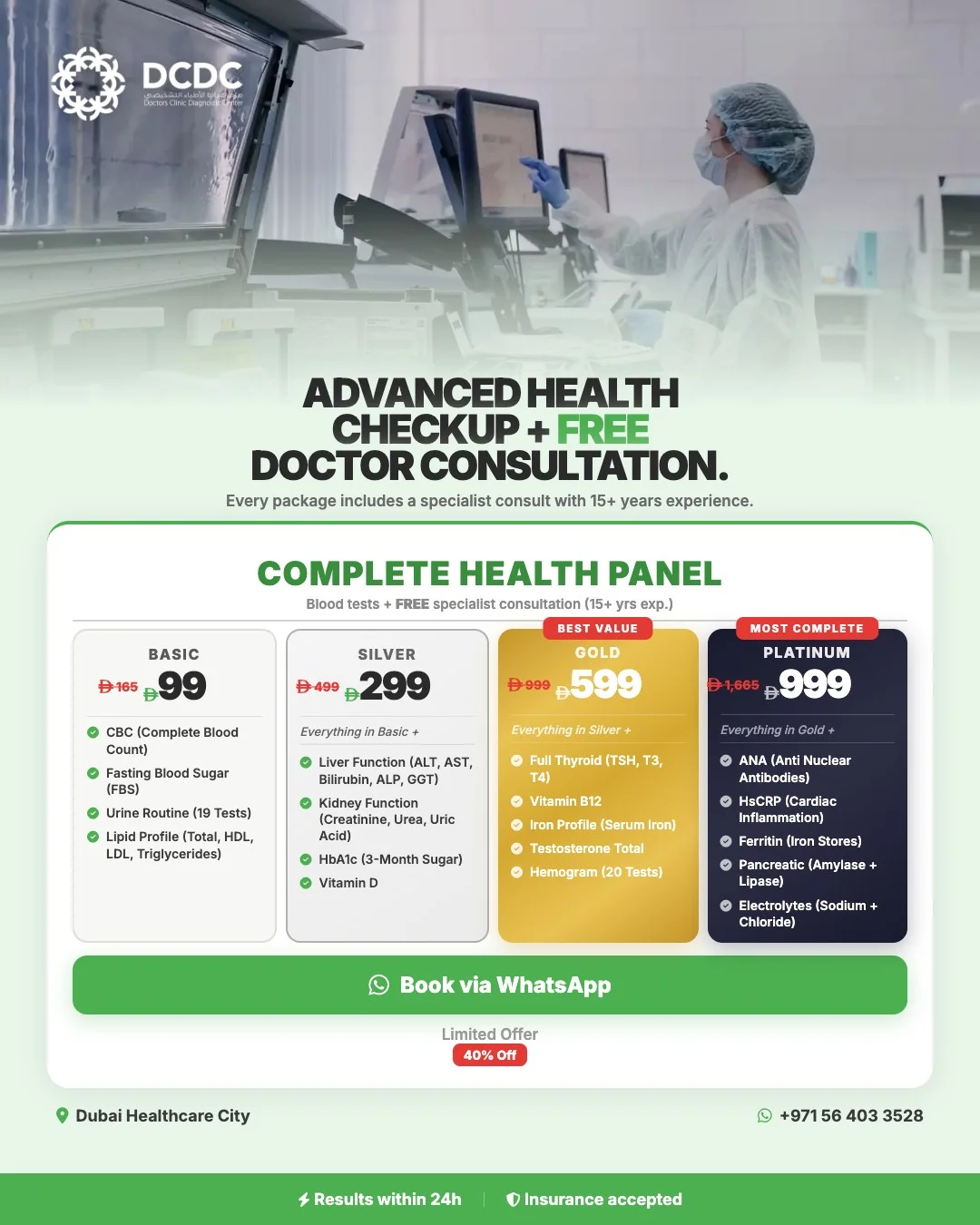
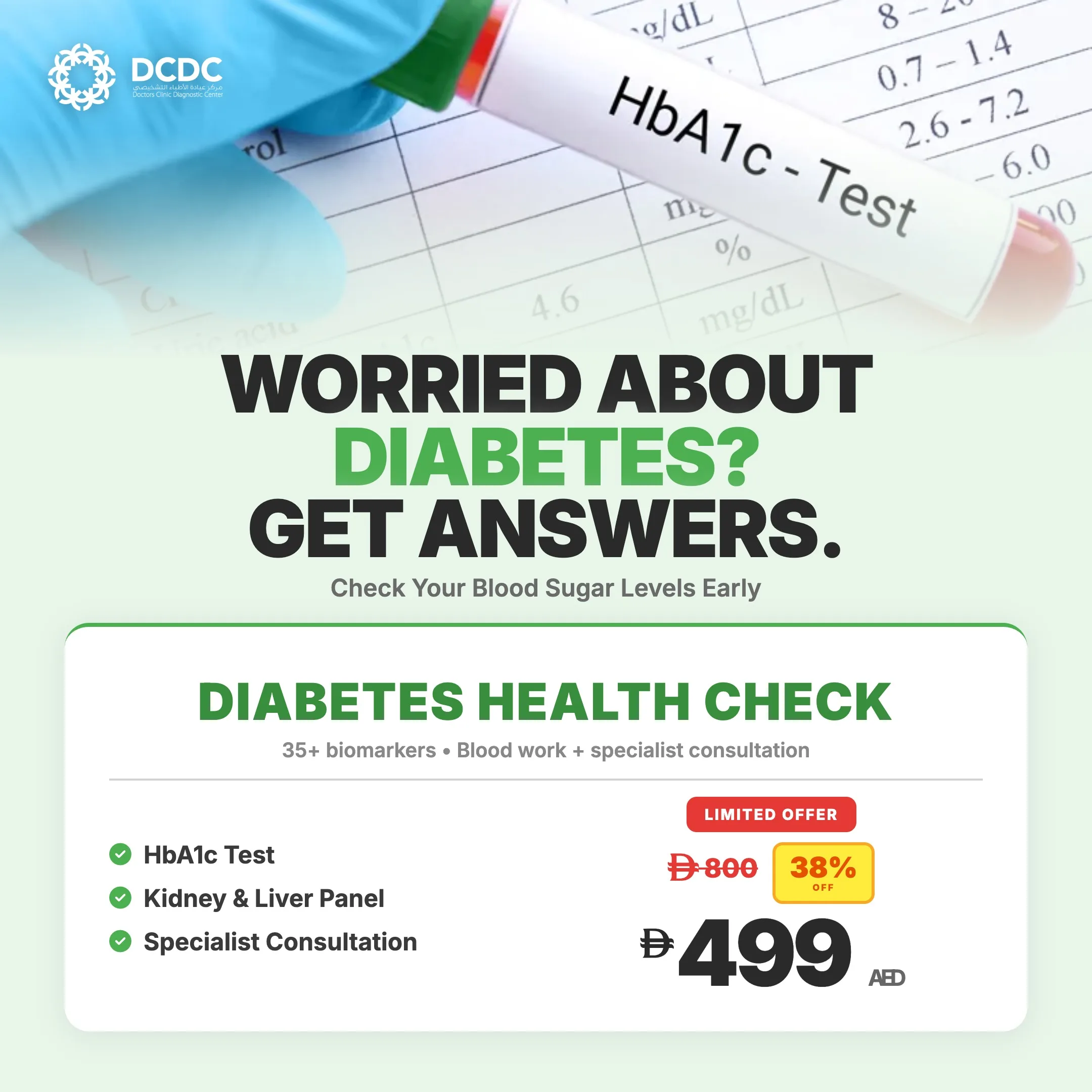
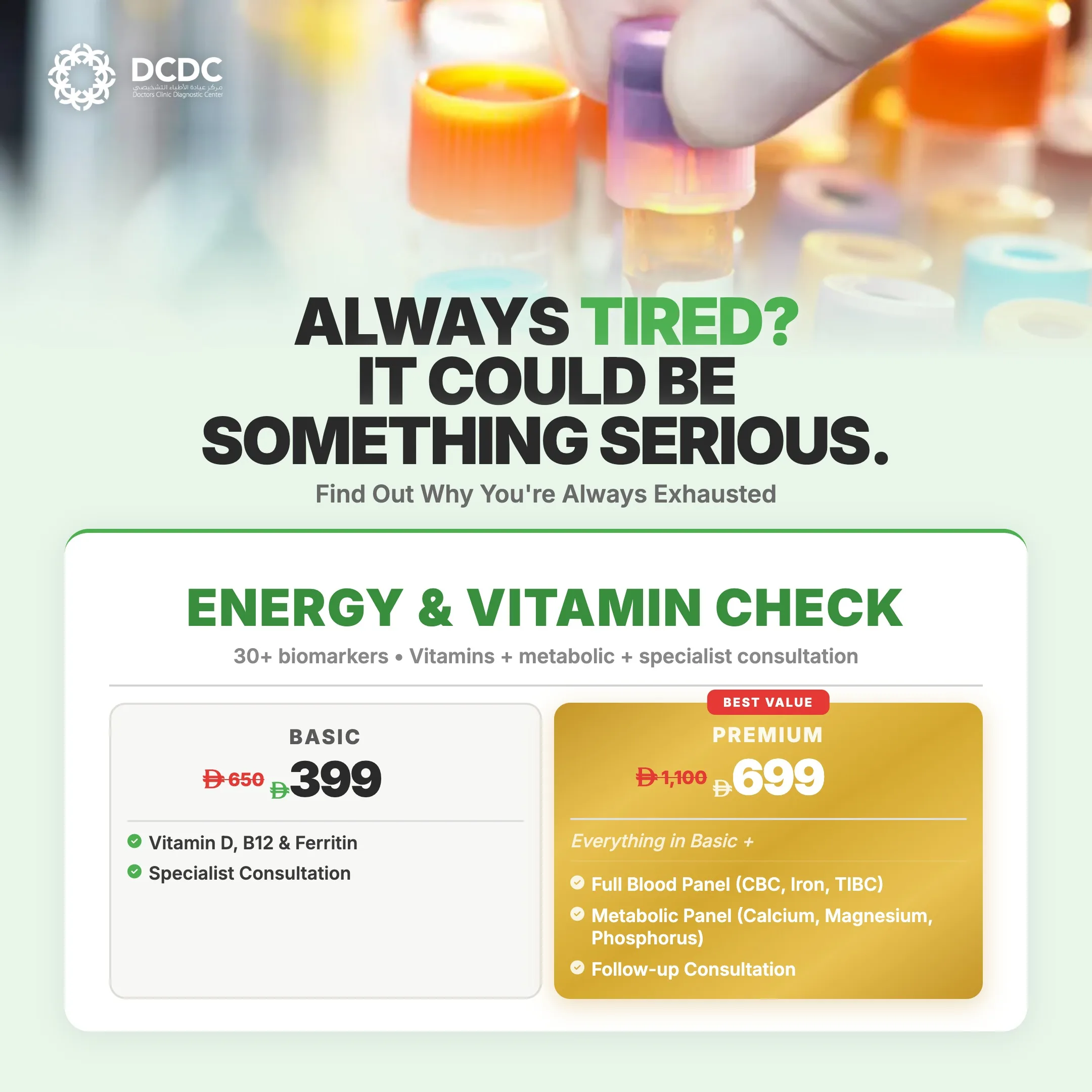
Health Screening Packages
Save with our bundled screening packages — specialist consultation included



CRP vs ESR: Head-to-Head Comparison
| Feature | CRP | ESR |
|---|---|---|
| What it measures | Protein produced by liver in response to inflammation | Rate at which red blood cells settle in a tube |
| Response time | Rises within 6-8 hours, peaks at 48 hours | Takes days to weeks to change |
| Returns to normal | Within days of inflammation resolving | Takes weeks to normalize |
| Specificity | Highly specific to inflammation | Affected by anemia, age, pregnancy, and other non-inflammatory factors |
| Normal range | <5 mg/L (check your lab's reference) | 0-22 mm/hr (men), 0-29 mm/hr (women) |
| Best for | Acute infections, post-surgical monitoring, treatment response | Chronic conditions like rheumatoid arthritis, lupus, temporal arteritis |
| Cardiovascular use | CRP measures inflammation | Not used for cardiac risk |
| Cost (AED) | 30-60 | 30-50 |
When to Use CRP
- Acute infections: CRP rises rapidly and helps distinguish bacterial from viral infections (CRP is much higher in bacterial)
- Post-surgical monitoring: CRP peaks at day 2-3 and should decline steadily — failure to decline suggests complications
- Treatment response: CRP drops within days of effective treatment, providing rapid feedback
- Inflammation: CRP is a general marker; your doctor interprets the result alongside symptoms and other tests
- Sepsis screening: Very high CRP (>100) suggests serious bacterial infection
When to Use ESR
- Rheumatoid arthritis: ESR correlates with disease activity over time
- Temporal arteritis: ESR is the classic diagnostic marker (often >50-100)
- Polymyalgia rheumatica: Elevated ESR is a diagnostic criterion
- Lupus monitoring: ESR tracks disease flares (CRP is often normal in lupus)
- Long-term monitoring: ESR's slow response makes it useful for tracking chronic disease trends
When to Order Both
Many physicians order CRP and ESR together because they provide complementary information. CRP gives the acute picture while ESR reflects the chronic trend. A rising CRP with stable ESR suggests a new acute process. Both elevated suggest ongoing active inflammation.
Cost in Dubai
| Test | Cost (AED) |
|---|---|
| CRP (standard) | 149 |
| ESR | 99 |
| CRP + ESR together | Quote on request |
Related Services at DCDC
Expert care and advanced diagnostics at Dubai Healthcare City
Frequently Asked Questions
Final Thoughts
CRP and ESR are complementary inflammation markers with distinct strengths. Understanding when each is most useful leads to better diagnostic accuracy and treatment monitoring.
If you have an acute illness, CRP provides the fastest actionable information. For chronic inflammatory conditions, ESR provides valuable trend data over time.
For inflammation testing in Dubai, DCDC Dubai Healthcare City offers both CRP and ESR with rapid results.
Sources & References
This article was reviewed by our medical team and references the following sources:
Medical content on this site is reviewed by DHA-licensed physicians. See our editorial policy for more information.

Written by
Dr. Hadi Komshi
Specialist Internal Medicine
MD, DHA-Licensed
Dr. Hadi Komshi is a DHA-licensed Internal Medicine Specialist at Doctors Clinic Diagnostic Center in Dubai Healthcare City, with extensive experience in managing acute and chronic medical conditions including musculoskeletal pain and rehabilitation.
Related Articles
Blood Test Cost Dubai: Complete Guide
Full Body Checkup Dubai Guide
More in Laboratory

Fitness Blood Tests Dubai: What to Check (2026)
Read More
HbA1c vs Fasting Blood Sugar Dubai: Guide (2026)
Read More
TB Test Cost Dubai: From AED 100–690 (2026)
Read MoreHIV Test Cost Dubai: Pricing & Guide (2026)
Read MorePaternity Test Dubai: How It Works (2026)
Read More
Blood Test Results Dubai: What's Normal (2026)
Read More© 2026 Doctors Clinic Diagnostic Center (DCDC), Dubai Healthcare City. Originally published at https://doctorsclinicdubai.ae/blog/crp-vs-esr-test-dubai. All rights reserved. Unauthorized reproduction is prohibited.