
Key Takeaways
- Reference ranges are statistical norms based on the middle 95% of a healthy population — falling slightly outside the range does not automatically mean illness, and falling inside does not guarantee optimal health.
- A complete blood count (CBC), metabolic panel, and lipid profile together cover more than 25 individual markers from a single blood draw.
- Blood tests at DCDC start from AED 99, with same-day results for routine CBC, metabolic, and lipid panels.
- Normal ranges vary by laboratory, gender, age, and pregnancy status — always compare your results to the reference range printed on your own report, not a generic chart online.
- Flags like "H" (high) or "L" (low) highlight values outside the standard range and deserve a conversation with your doctor, not immediate panic.
- Understanding kidney (creatinine, eGFR), liver (ALT, AST), and thyroid (TSH) markers helps you spot organ dysfunction long before symptoms appear.
- DCDC's MOHAP-licensed laboratory offers walk-in blood draws from 8 AM with same-day doctor review of results, no separate follow-up appointment required.
Getting your blood test results back and seeing a page of unfamiliar abbreviations, decimals, and the occasional "H" or "L" next to a number can feel more confusing than reassuring. This guide breaks down exactly how to read a blood test report, what "normal" really means statistically, and what the most commonly ordered markers — from your complete blood count to your thyroid panel — actually measure, using the same reference ranges applied in DCDC's Dubai Healthcare City laboratory.
At Doctors Clinic Diagnostic Center (DCDC), blood tests start from AED 99 and are processed in a MOHAP-licensed, on-site laboratory with same-day results for routine panels. With a 4.8/5 Google rating from over 1,000 reviews and 98% patient satisfaction, DCDC combines walk-in convenience with same-day doctor follow-up, so a flagged result never has to wait weeks for an explanation.
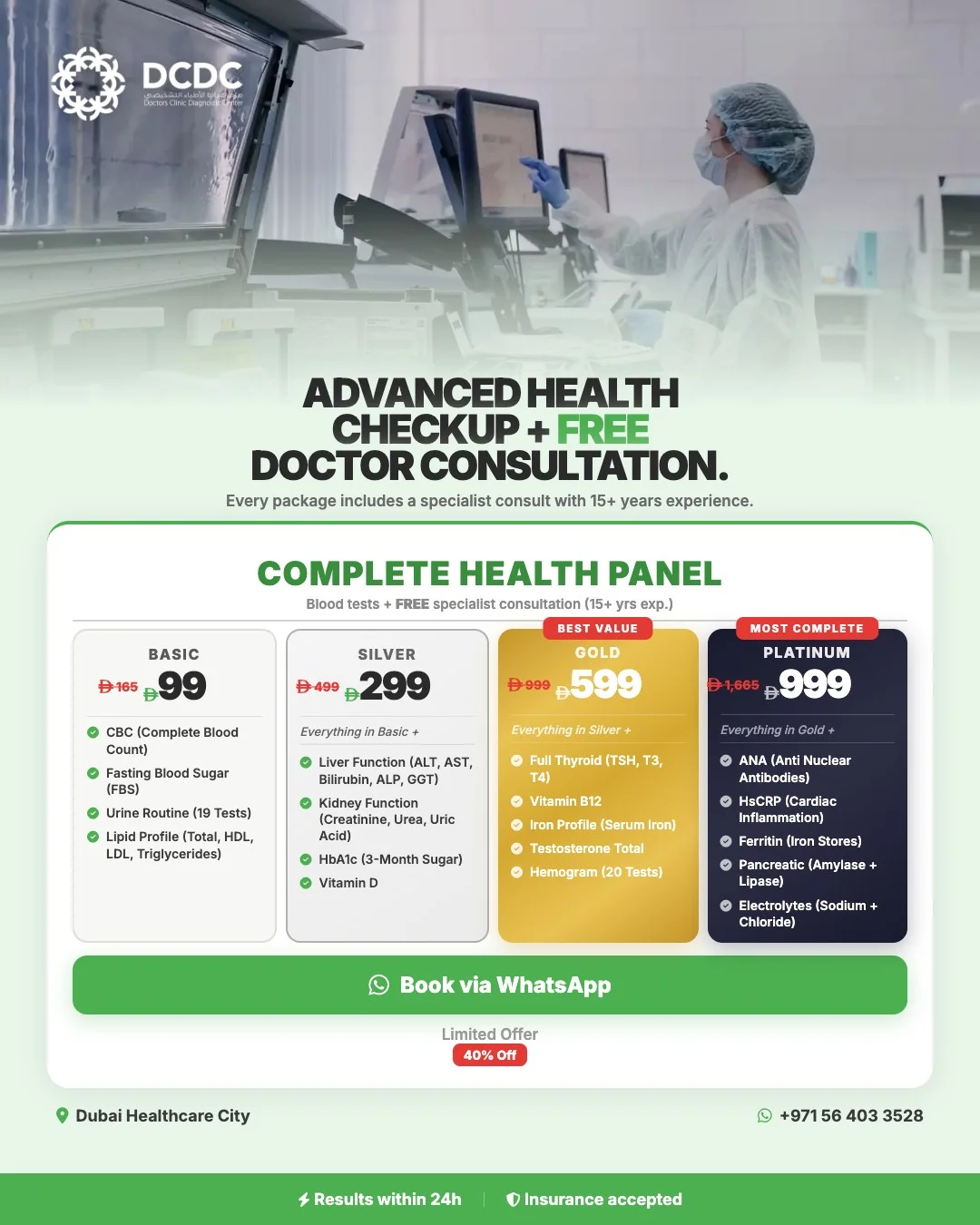
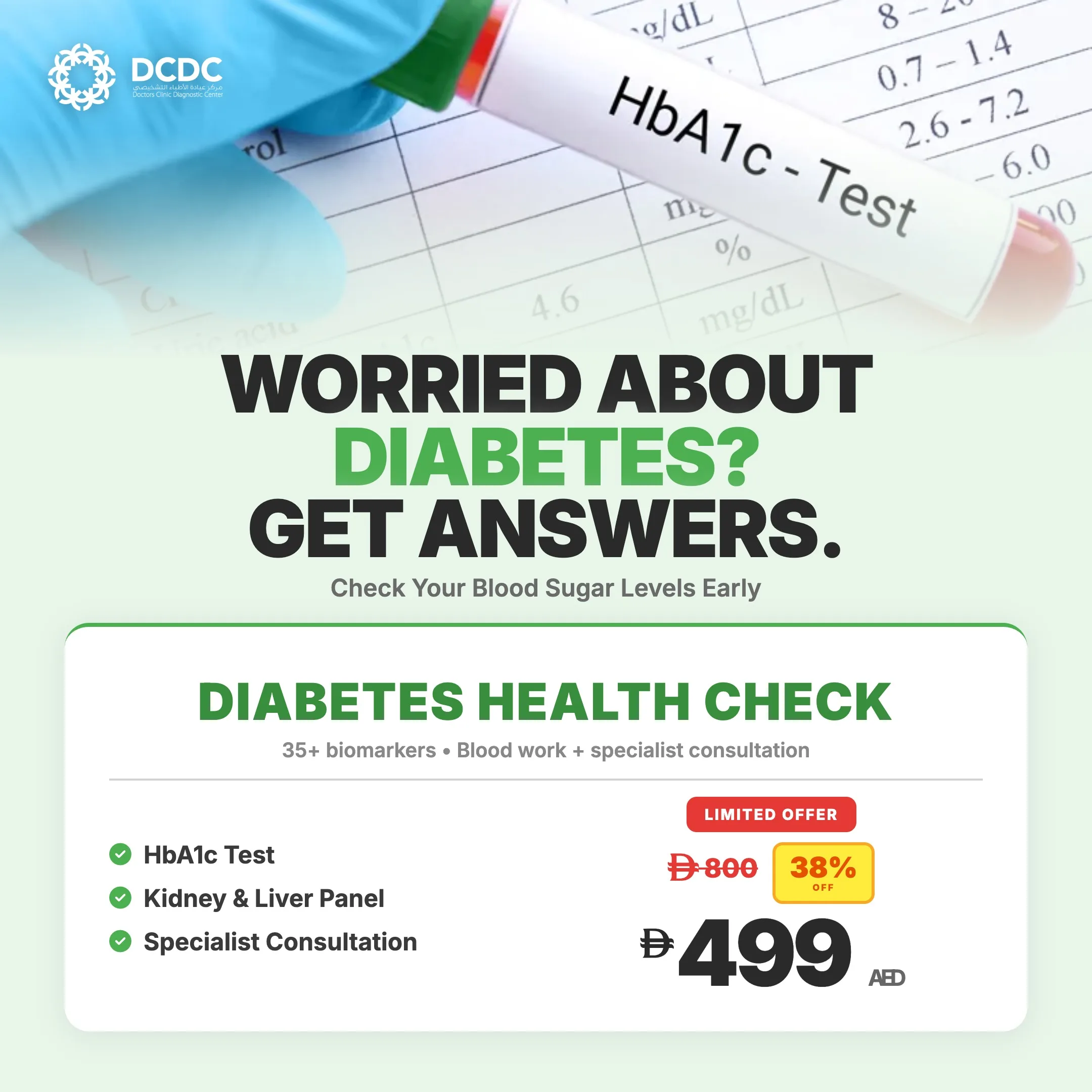
Health Screening Packages
Save with our bundled screening packages — specialist consultation included




How to Read Your Blood Test Report: Terminology, Flags & Units
Opening a lab report full of abbreviations, decimals, and columns can feel like reading a foreign language. Once you understand the basic structure, though, almost every blood test report in the world follows the same format, whether it comes from a hospital in Dubai, a government lab, or your DCDC patient portal. Learning to read a blood test result properly is one of the most valuable health literacy skills you can develop, because it lets you follow trends over time and ask your doctor sharper questions instead of simply hearing "everything is normal" or feeling alarmed by a single flagged value.
The Four Columns Every Report Shares
Most laboratory reports, including the ones generated at DCDC, present four pieces of information for every marker tested: the name of the test (often abbreviated, such as Hb for hemoglobin or TSH for thyroid-stimulating hormone), your measured result, the unit of measurement (g/dL, mmol/L, mIU/L, and so on), and the reference range — the span of values considered typical for a healthy population. Some reports add a fifth column for flags.
What Is a Reference Range?
A reference range, sometimes called a normal range, is calculated by testing a large sample of healthy people and defining the range that captures roughly 95% of those results. That statistical definition matters: it means that even in a population with no disease, about 1 in 20 healthy individuals will have a value that falls just outside the "normal" range purely by chance. A single flagged marker is a prompt to look closer, not a diagnosis. Reference ranges can also vary slightly between laboratories because different analyzers and reagents produce marginally different baselines, which is why you should always compare your result to the specific range printed on your own report rather than to numbers found online.
Understanding H, L, and Abnormal Flags
- H (High) — your result is above the laboratory's reference range for that marker
- L (Low) — your result is below the laboratory's reference range
- Asterisk (*) or "Abnormal" — used by some analyzers instead of H/L, or to flag a critical value that needs urgent attention
- No flag — your result falls within the expected range for that test, which is the outcome you want for most markers
- Critical or panic values — results so far outside range that the lab calls your doctor immediately, common for markers like potassium or glucose
A value inside the reference range is statistically typical, but "normal" and "optimal" are not always the same thing — a cholesterol level at the very top of the normal range is not equivalent to one in the middle. Likewise, a single value outside the range does not automatically mean disease is present. Doctors interpret flagged results in the context of your symptoms, medical history, medications, and other test results, and they often look for patterns across several related markers rather than reacting to one number in isolation.
Complete Blood Count (CBC) Results Explained
The complete blood count, or CBC, is the most frequently ordered blood test in medicine and usually the first section on any lab report. It evaluates three cell lines: red blood cells, which carry oxygen; white blood cells, which fight infection; and platelets, which help blood clot. A CBC alone can reveal anemia, infection, inflammation, dehydration, and early signs of certain blood disorders.
| Parameter | Normal Range (Men) | Normal Range (Women) | What It Measures |
|---|---|---|---|
| Red Blood Cells (RBC) | 4.5–5.5 million/mcL | 4.0–5.0 million/mcL | Number of oxygen-carrying cells |
| Hemoglobin (Hb) | 13.5–17.5 g/dL | 12.0–16.0 g/dL | Oxygen-carrying protein; primary anemia marker |
| Hematocrit (Hct) | 38.3–48.6% | 35.5–44.9% | Percentage of blood volume made up of red cells |
| White Blood Cells (WBC) | 4,500–11,000/mcL | 4,500–11,000/mcL | Total infection-fighting cells |
| Platelets | 150,000–400,000/mcL | 150,000–400,000/mcL | Cells responsible for blood clotting |
| MCV (Mean Corpuscular Volume) | 80–100 fL | 80–100 fL | Average size of red blood cells |
| MCH (Mean Corpuscular Hemoglobin) | 27–33 pg | 27–33 pg | Average hemoglobin amount per red cell |
| MCHC (Mean Corpuscular Hb Concentration) | 32–36 g/dL | 32–36 g/dL | Concentration of hemoglobin within red cells |
Standard CBC reference ranges for adults — always compare to your own lab's printed range
A low hemoglobin and hematocrit generally point toward anemia, with the MCV helping classify the type: a low MCV suggests iron deficiency, a normal MCV suggests chronic disease or recent blood loss, and a high MCV suggests vitamin B12 or folate deficiency. An elevated WBC count often reflects infection, inflammation, or stress on the body, while a low WBC count can indicate a viral infection or, less commonly, a bone marrow issue. Platelet counts below 150,000/mcL are called thrombocytopenia and raise bleeding risk, while counts above 400,000/mcL may reflect inflammation or, rarely, a blood disorder that needs specialist follow-up.
Metabolic Panel Results: Glucose, Electrolytes & Calcium
The basic or comprehensive metabolic panel is usually the second block of numbers on your report. It checks your blood sugar, electrolyte balance, and calcium level, offering a broad snapshot of how your kidneys, hydration status, and hormonal systems are functioning. If your doctor also ordered a complete blood count alongside your metabolic panel, our detailed CBC test Dubai guide breaks down every red and white cell parameter in depth.
| Parameter | Normal Range | What It Assesses |
|---|---|---|
| Fasting Glucose | 74–99 mg/dL | Blood sugar control; screens for prediabetes and diabetes |
| Sodium | 136–144 mmol/L | Fluid balance and nerve/muscle function |
| Potassium | 3.7–5.1 mmol/L | Heart rhythm and muscle contraction |
| Chloride | 98–107 mmol/L | Acid-base balance, works with sodium |
| Bicarbonate (CO2) | 22–30 mmol/L | Acid-base balance and metabolic status |
| Calcium | 8.5–10.2 mg/dL | Bone health, nerve and muscle function |
| BUN (Blood Urea Nitrogen) | 7–21 mg/dL | Kidney function and protein metabolism |
| Creatinine | 0.58–0.96 mg/dL | Kidney filtration efficiency |
Standard basic metabolic panel reference ranges for adults
A fasting glucose above 99 mg/dL but below 126 mg/dL falls into the prediabetes range, while a reading of 126 mg/dL or higher on two separate occasions is diagnostic of diabetes. Electrolyte abnormalities are usually driven by hydration, kidney function, or medications such as diuretics, and a doctor will typically repeat an abnormal sodium or potassium reading before taking action, since lab or collection errors are a common cause of an isolated abnormal value.
Lipid Profile Results Explained
Your lipid profile, or cholesterol panel, measures the fats circulating in your bloodstream and is one of the most important predictors of long-term cardiovascular risk. Unlike the CBC, a lipid panel typically requires 9 to 12 hours of fasting for the most accurate triglyceride reading, although newer guidelines allow non-fasting lipid testing in some circumstances.
| Parameter | Optimal / Normal | Borderline High | High |
|---|---|---|---|
| Total Cholesterol | Below 200 mg/dL | 200–239 mg/dL | 240 mg/dL and above |
| LDL ("Bad") Cholesterol | Below 100 mg/dL | 130–159 mg/dL | 160 mg/dL and above |
| HDL ("Good") Cholesterol | 60 mg/dL and above | 40–59 mg/dL | Below 40 mg/dL (low, undesirable) |
| Triglycerides | Below 150 mg/dL | 150–199 mg/dL | 200 mg/dL and above |
Standard adult lipid profile reference categories (fasting sample)
Unlike most markers, HDL cholesterol is interpreted in reverse: a higher number is protective, while a low HDL is the undesirable result. LDL cholesterol is the primary target for treatment decisions because it directly contributes to plaque buildup in the arteries, and doctors often calculate a more personalized LDL goal based on your overall cardiovascular risk factors, including age, blood pressure, smoking status, and family history. Elevated triglycerides are closely tied to diet, alcohol intake, and blood sugar control, and they often improve significantly with lifestyle changes alone.
Liver Function Tests Explained
Liver function tests, sometimes grouped under the abbreviation LFT, measure enzymes and proteins that reflect how well your liver is working. The liver processes medications, filters toxins, produces essential proteins, and stores energy, so even mild dysfunction can show up on this panel well before symptoms appear.
- ALT (Alanine Aminotransferase) — normal range roughly 7–56 U/L; the most liver-specific enzyme, rises with fatty liver, hepatitis, or medication effects
- AST (Aspartate Aminotransferase) — normal range roughly 10–40 U/L; found in liver and muscle, so it is interpreted alongside ALT
- ALP (Alkaline Phosphatase) — normal range roughly 44–147 U/L; elevated in bile duct blockage, bone disease, or pregnancy
- Total Bilirubin — normal range roughly 0.1–1.2 mg/dL; a breakdown product of red blood cells, elevated levels cause jaundice
- Albumin — normal range roughly 3.5–5.5 g/dL; a protein made by the liver, low levels can reflect chronic liver disease or malnutrition
A mild, isolated elevation in ALT or AST is common and often reflects fatty liver disease, recent alcohol intake, or certain supplements and medications rather than serious pathology. Levels several times above the upper limit of normal, especially combined with elevated bilirubin or symptoms like jaundice, abdominal pain, or dark urine, warrant prompt evaluation. Repeating the test after avoiding alcohol and reviewing your medication list for two to four weeks is often the first step your doctor will suggest for a mildly abnormal result.
Kidney Function Markers Explained
Kidney function is assessed through creatinine, BUN, estimated glomerular filtration rate (eGFR), and uric acid. These markers work together to show how efficiently your kidneys are filtering waste from your blood. If your metabolic panel also flagged your cholesterol for follow-up, our lipid profile and cholesterol test guide explains each category in more depth, since kidney disease and cardiovascular risk are closely linked.
- Creatinine — normal range roughly 0.58–0.96 mg/dL for women and 0.74–1.35 mg/dL for men; a waste product from muscle metabolism filtered by the kidneys
- BUN (Blood Urea Nitrogen) — normal range roughly 7–21 mg/dL; reflects protein breakdown and kidney clearance
- eGFR (Estimated Glomerular Filtration Rate) — normal is 90 mL/min/1.73m² or higher; the single best overall measure of kidney function, calculated from creatinine, age, and gender
- Uric Acid — normal range roughly 3.5–7.2 mg/dL for men and 2.6–6.0 mg/dL for women; elevated levels are linked to gout and kidney stones
An eGFR between 60 and 89 mL/min/1.73m² may simply reflect normal age-related decline, but a persistently lower eGFR, especially below 60 for three months or more, meets the clinical definition of chronic kidney disease and should be discussed with a doctor. Elevated creatinine can also be caused by dehydration, high-protein diets, intense exercise the day before testing, or certain medications, which is why isolated abnormal readings are usually repeated before any diagnosis is made.
Book Your Blood Test at DCDC
Get a full panel of blood tests reviewed by a doctor the same day. Walk-in blood draws from 8 AM, fasting and non-fasting panels, and direct insurance billing with 20+ providers.
Call +971 54 219 5008 or WhatsApp us
Thyroid Panel Results Explained
Thyroid testing evaluates the small gland at the base of your neck that regulates metabolism, energy, weight, and mood. The standard thyroid panel includes TSH (thyroid-stimulating hormone) along with Free T4 and, in some cases, Free T3.
| Parameter | Normal Range | What It Indicates |
|---|---|---|
| TSH (Thyroid-Stimulating Hormone) | 0.4–4.0 mIU/L | Primary screening marker; high TSH suggests underactive thyroid, low TSH suggests overactive thyroid |
| Free T4 (Thyroxine) | 0.8–1.8 ng/dL | Main circulating thyroid hormone |
| Free T3 (Triiodothyronine) | 2.3–4.2 pg/mL | Active thyroid hormone, checked when T4 and TSH are inconsistent |
Standard adult thyroid panel reference ranges
A high TSH combined with a low Free T4 confirms hypothyroidism, which often presents with fatigue, weight gain, cold intolerance, and dry skin. A low TSH with a high Free T4 confirms hyperthyroidism, associated with weight loss, rapid heartbeat, and anxiety. TSH alone is used as the initial screening test because it is more sensitive to early thyroid dysfunction than T4 or T3 on their own, which is why many routine health checkups begin with TSH before adding the full panel.
Vitamin and Mineral Levels Explained
Vitamin and mineral testing is not always included in a standard panel but is frequently added based on symptoms like fatigue, hair loss, or bone pain, or as part of a comprehensive annual health checkup. The most commonly tested markers in Dubai, given the high prevalence of deficiency linked to limited sun exposure and dietary patterns, are Vitamin D, Vitamin B12, and ferritin (iron stores).
| Marker | Normal Range | Deficiency Threshold |
|---|---|---|
| Vitamin D (25-OH) | 30–100 ng/mL | Below 20 ng/mL is deficient; 20–29 ng/mL is insufficient |
| Vitamin B12 | 200–900 pg/mL | Below 200 pg/mL is deficient |
| Ferritin (Men) | 24–336 ng/mL | Below 24 ng/mL suggests depleted iron stores |
| Ferritin (Women) | 11–307 ng/mL | Below 11 ng/mL suggests depleted iron stores |
| Serum Iron | 60–170 mcg/dL | Below range suggests iron deficiency |
Common vitamin and mineral reference ranges tested in Dubai
Vitamin D deficiency is remarkably common in the UAE despite abundant sunshine, largely because of indoor working hours, sun avoidance, and extensive clothing coverage; studies have reported deficiency in more than 60% of the resident population. Low ferritin is the earliest laboratory sign of iron deficiency, often appearing well before hemoglobin drops low enough to be classified as anemia on a CBC, which is why doctors frequently order ferritin alongside a CBC when investigating fatigue.
What to Expect at DCDC for Your Blood Test
Understanding your results starts with a smooth testing experience. At DCDC in Dubai Healthcare City, the process from arrival to reviewing your numbers with a doctor is designed to take a single visit. If your results come back with a flagged thyroid marker, our dedicated thyroid test Dubai guide walks through TSH, T3, and T4 interpretation in more detail.
- Walk in, no appointment needed — most routine panels (CBC, metabolic, lipid) accept walk-ins from 8 AM, ideal for fasting tests before breakfast
- Register at reception — bring your Emirates ID and insurance card; DCDC offers direct billing with 20+ insurance partners
- 5–10 minute blood draw — an experienced phlebotomist collects your sample with minimal wait time
- Same-day processing — routine panels are processed on-site in DCDC's MOHAP-licensed laboratory, with most results ready within 24 hours and many the same day
- Results on the patient portal — you can review your report, including flagged values and reference ranges, from your phone as soon as it is released
- Same-day doctor follow-up — because DCDC is co-located with specialist clinics, any abnormal or unclear result can be reviewed with a doctor the same day, without a separate appointment cycle
Blood tests at DCDC start from AED 99, and fasting panels can be booked in early morning slots so you can eat breakfast right after your draw. Because the laboratory sits inside the same building as DCDC's general medicine and specialist clinics, a doctor can review your CBC, metabolic panel, or lipid profile face-to-face the same day the results are released — no waiting weeks for a separate consultation to make sense of a flagged number.
When to Worry About Abnormal Results
Seeing a flag on your report naturally raises concern, but context matters enormously. A single mildly abnormal value, especially one just outside the reference range, is often not clinically significant on its own. Here is a practical framework for deciding how urgently to act.
Low Concern: Monitor and Repeat
A value flagged only slightly outside the range, with no accompanying symptoms, and no abnormal trend on previous tests, is usually managed by simply repeating the test in a few weeks or at your next scheduled checkup. Dehydration, recent exercise, minor illness, and lab variability are common, benign explanations.
Moderate Concern: Discuss With Your Doctor Soon
A value moderately outside range, a pattern across several related markers (for example, low hemoglobin combined with low ferritin), or a result that has been trending in the wrong direction over multiple tests deserves a conversation with your doctor within the next one to two weeks, even without acute symptoms.
High Concern: Seek Same-Day Medical Attention
- Potassium below 3.0 or above 6.0 mmol/L
- Hemoglobin below 7–8 g/dL
- Platelet count below 50,000/mcL
- Fasting glucose above 250 mg/dL, especially with symptoms like excessive thirst or confusion
- Any result your lab or doctor specifically flags as a "critical" or "panic" value
These thresholds are general guidance, not a substitute for professional interpretation. DCDC's laboratory automatically flags critical values for immediate physician notification, and any patient with a critical result is contacted directly rather than waiting for the standard portal release.
A Doctor's Perspective: Why Regular Screening Matters
"Most of the serious conditions I catch early — diabetes, thyroid disease, anemia, early kidney dysfunction — are silent in their earliest stages," says Dr. Hadeel Elnur, General Practitioner at DCDC. "Patients often feel completely well when a routine blood test first shows a borderline glucose or a slightly low ferritin. That is exactly the point of screening: catching a trend while it is still easy to reverse, rather than waiting for symptoms to appear."
Dr. Elnur recommends that healthy adults repeat a core panel — CBC, metabolic panel, and lipid profile — annually, with additional markers like thyroid function, Vitamin D, and HbA1c added based on age, family history, and risk factors. "I always tell patients to keep their old lab reports," she adds. "A single result tells you where you stand today, but a series of results over several years tells you where you are heading, which is far more useful for preventing disease than any single snapshot."
Understand Your Results With a Doctor, Not Just a PDF
Numbers on a page rarely tell the whole story. Book a same-day doctor consultation at DCDC to walk through your blood test results, discuss what each flagged value means for you, and plan next steps if needed.
Blood tests from AED 99 — walk-ins welcome, Sat–Thu 8 AM–10 PM
Related Services at DCDC
Expert care and advanced diagnostics at Dubai Healthcare City
Frequently Asked Questions
Final Thoughts
Blood test results are a snapshot, not a verdict. Reference ranges are built from population statistics, which means a small deviation is common and often harmless, while a pattern across related markers or a value far outside range is what genuinely warrants closer attention. Learning the basic structure of a lab report — marker, result, unit, reference range, and flag — turns a confusing document into a useful tool for tracking your health over time.
At DCDC in Dubai Healthcare City, blood tests start from AED 99 with walk-in blood draws from 8 AM, same-day results for routine panels, and same-day doctor review for any result that needs a closer look. Whether you are due for an annual checkup or trying to make sense of a result you already have in hand, call +971 54 219 5008 or WhatsApp us to book your blood test or a same-day consultation.
Sources & References
This article was reviewed by our medical team and references the following sources:
- WHO – Anaemia Fact Sheet
- Mayo Clinic – Complete Blood Count (CBC)
- NHS – Blood Tests: Types
- Cleveland Clinic – Basic Metabolic Panel (BMP)
- MedlinePlus – How to Understand Your Lab Results
- NIH – National Heart, Lung, and Blood Institute: Blood Tests
Medical content on this site is reviewed by DHA-licensed physicians. See our editorial policy for more information.

Written by
Dr. Hadeel Elnur
General Practitioner
MD, General Practice
Dr. Hadeel Elnur is a General Practitioner at Doctors Clinic Diagnostic Center (DCDC) in Dubai Healthcare City.
Related Articles

Blood Test Dubai: Types, Cost & Fasting Guide
CBC Test Dubai: Price, Results & Meaning
Lipid Profile Test Dubai: Cholesterol Levels
HbA1c Test Dubai: Diabetes Monitoring Guide

Thyroid Test Dubai: TSH, T3 & T4 Explained
More in Laboratory

Fitness Blood Tests Dubai: What to Check (2026)
Read More
HbA1c vs Fasting Blood Sugar Dubai: Guide (2026)
Read More
TB Test Cost Dubai: From AED 100–690 (2026)
Read MoreHIV Test Cost Dubai: Pricing & Guide (2026)
Read MorePaternity Test Dubai: How It Works (2026)
Read More
Stool Test Dubai: Types, Results & Cost (2026)
Read More© 2026 Doctors Clinic Diagnostic Center (DCDC), Dubai Healthcare City. Originally published at https://doctorsclinicdubai.ae/blog/blood-test-results-explained-dubai. All rights reserved. Unauthorized reproduction is prohibited.