Key Takeaways
- HSG (hysterosalpingography) is a 15-30 minute fluoroscopy procedure that evaluates the uterus and fallopian tubes using contrast dye, and is the gold standard for diagnosing tubal infertility
- Most women rate HSG pain at 3-6 out of 10 during dye injection, and taking 400-600 mg ibuprofen 30-60 minutes beforehand significantly reduces discomfort
- Schedule between cycle days 7 and 12, after your period ends but before ovulation, to ensure clear imaging and rule out early pregnancy
- Normal side effects include mild cramping (2-4 hours), light spotting (1-2 days), and brief dizziness, with full recovery within 24-48 hours
- Studies show increased pregnancy rates in the 3-6 months after HSG, especially with oil-based contrast (40% vs 29% in the landmark H2Oil trial)
- Serious complications such as pelvic infection or allergic reaction occur in fewer than 1-2% of cases
- HSG test cost in Dubai ranges from AED 1,500-3,500 depending on the contrast type used and the clinic chosen
- An HSG can detect blocked tubes, uterine septum, polyps, fibroids, adhesions, and congenital uterine anomalies in a single procedure
The HSG test (hysterosalpingography) is one of the most important diagnostic procedures in a fertility workup. If your gynecologist has recommended an HSG, you probably have many questions: What exactly happens during the test? Will it hurt? How do I prepare? What do the results mean? And could HSG itself actually help me get pregnant?
This guide consolidates everything you need to know about the HSG test into one comprehensive resource. From preparation checklists and a step-by-step procedure walkthrough to honest pain assessments, results interpretation, blocked tube diagnosis, and the evidence behind the HSG fertility boost, we cover it all based on clinical evidence and over a decade of HSG experience at DCDC Dubai Healthcare City.
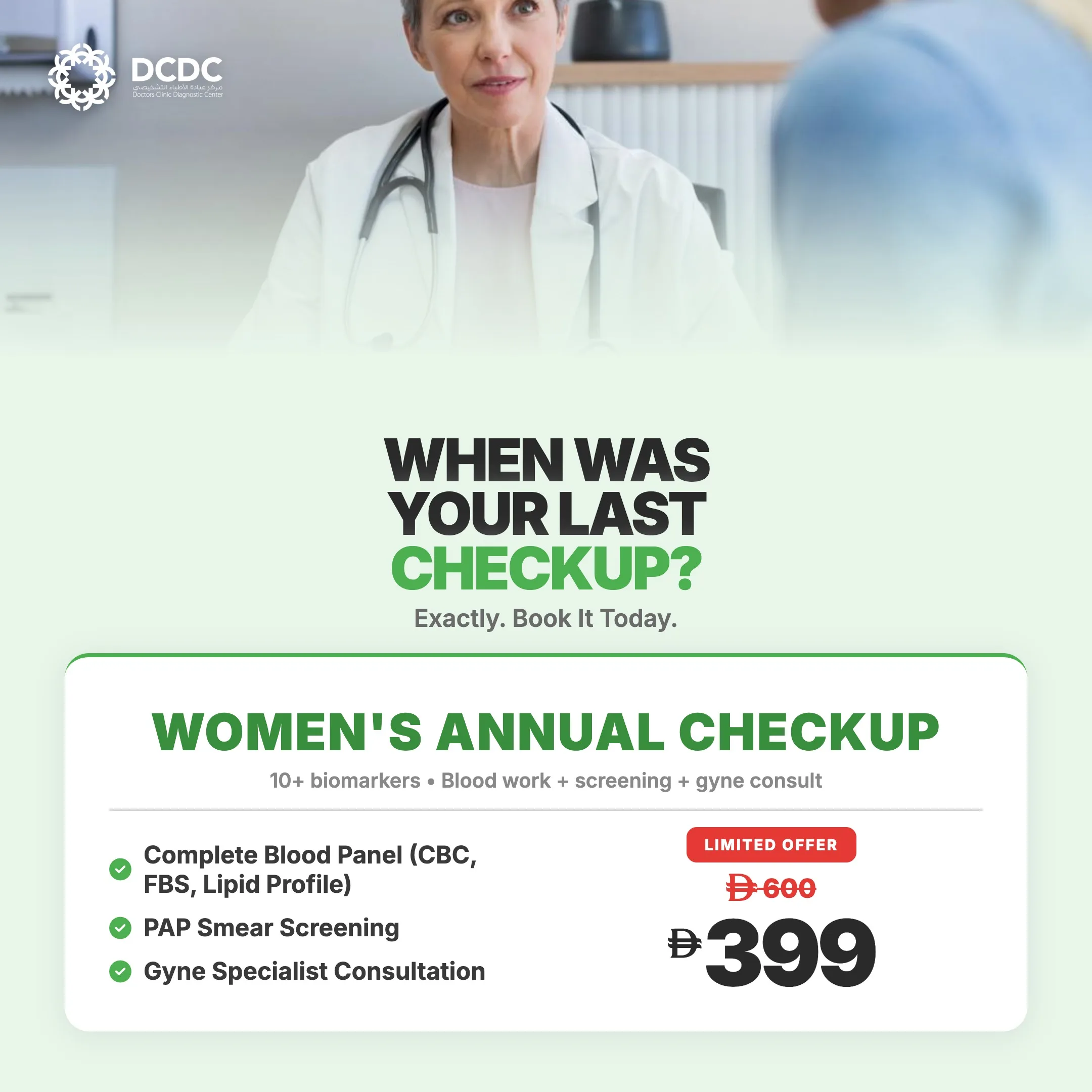
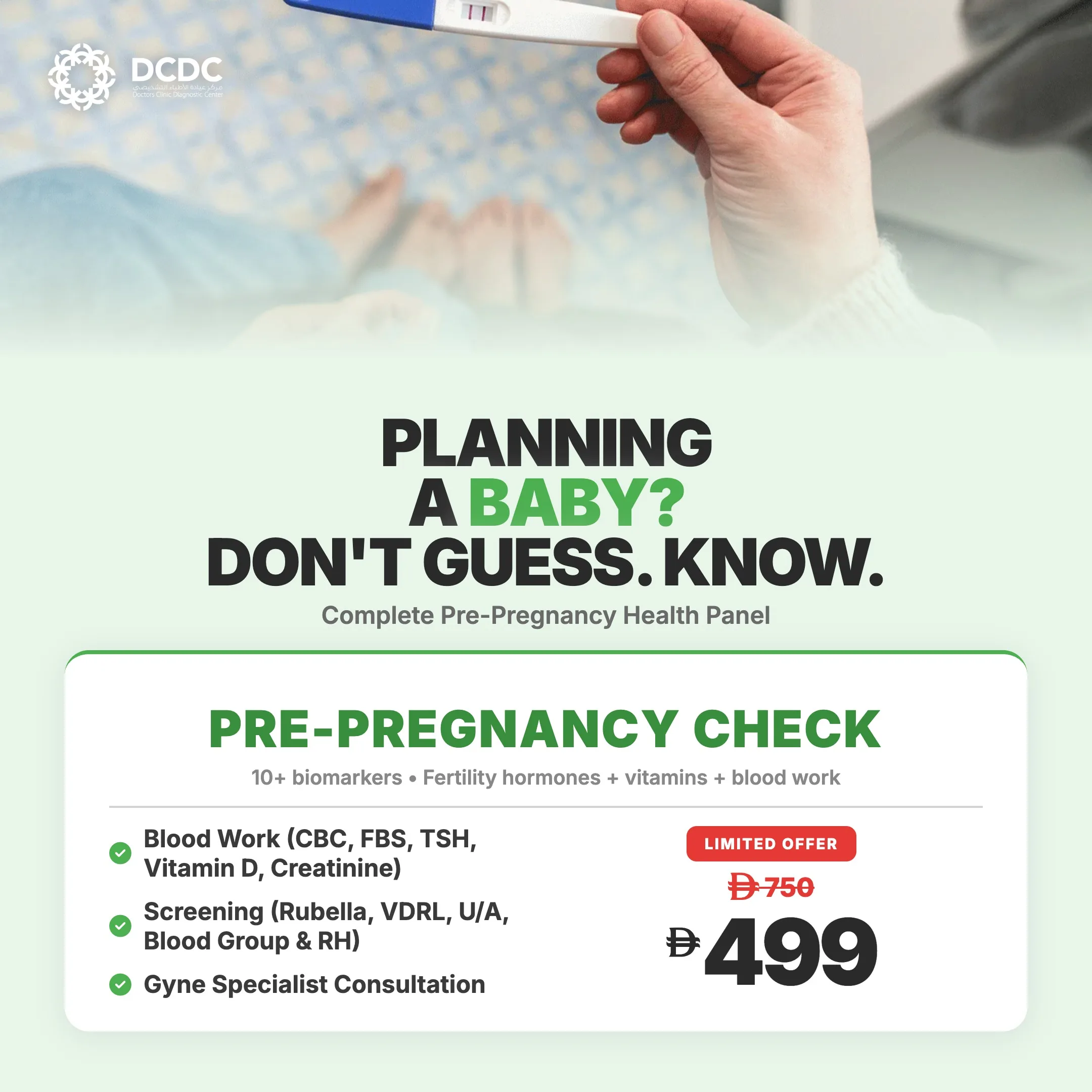
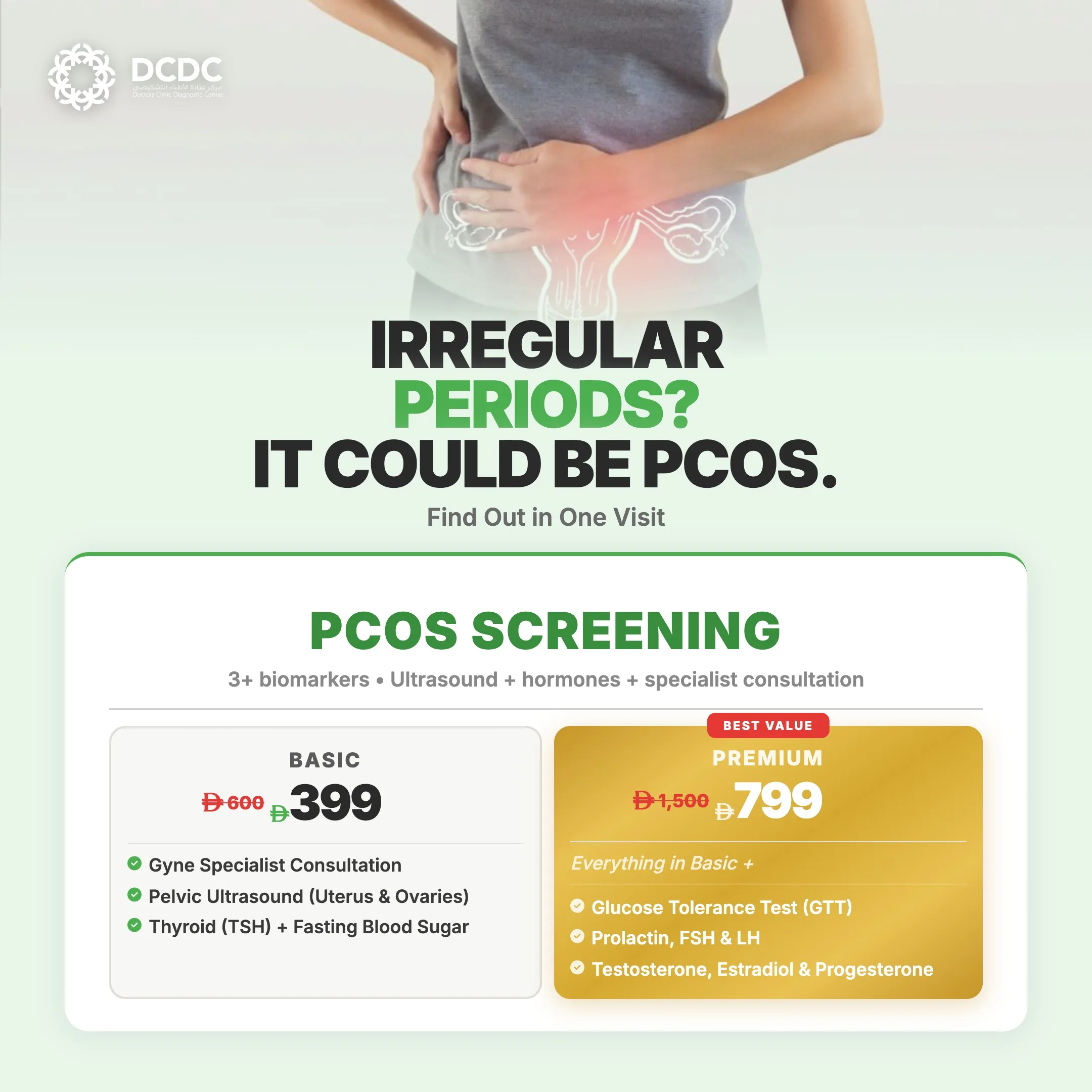
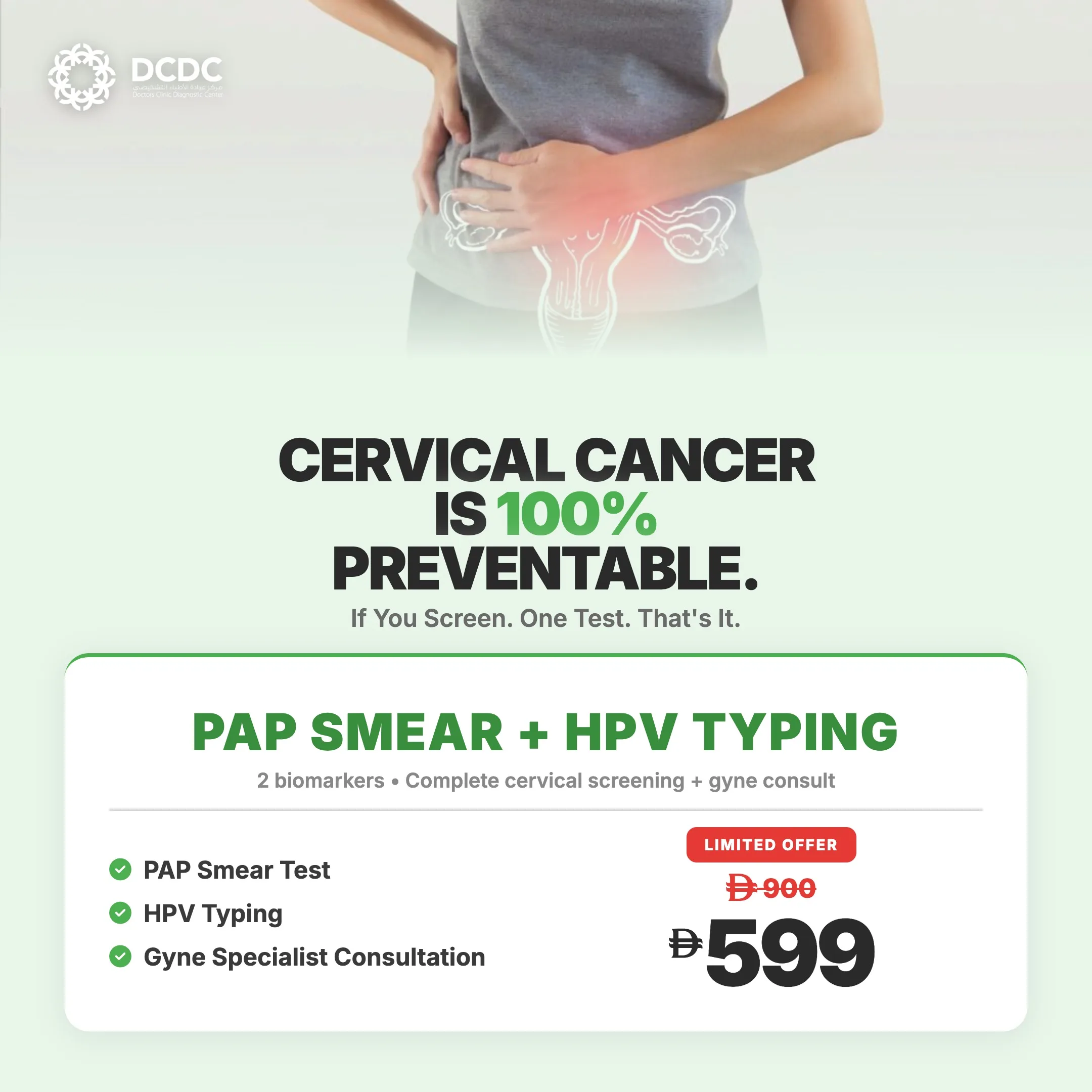
Health Screening Packages
Save with our bundled screening packages — specialist consultation included


What Is an HSG Test?
HSG stands for hysterosalpingography, a word derived from three Greek roots: hystero (uterus), salpingo (fallopian tubes), and graphy (imaging). It is a fluoroscopy-guided procedure where contrast dye is gently injected through the cervix into the uterus and fallopian tubes. Real-time X-ray images are captured as the dye flows, allowing the radiologist to assess whether the fallopian tubes are open (patent) or blocked, and whether the uterine cavity has a normal shape.
HSG is considered the gold standard for evaluating tubal patency and is one of the most cost-effective early investigations in infertility assessment. Unlike other imaging methods, our HSG procedure provides permanent radiographic records that can be compared over time, visualizes the detailed internal architecture of the tubes, and has a well-documented therapeutic flushing effect that may temporarily improve fertility.
According to the American Society for Reproductive Medicine, tubal factor infertility accounts for approximately 25-35% of all female infertility cases, making HSG one of the first tests any fertility specialist will recommend. The procedure has been refined over decades and is now safer and more comfortable than ever, particularly at centres like DCDC where experienced consultant radiologists perform the procedure using modern fluoroscopy equipment.
Who Needs an HSG Test?
Blocked fallopian tubes account for approximately 25-30% of female infertility cases, making tubal evaluation an essential early step. Your gynecologist may recommend an HSG test in the following situations.
- Fertility workup: You have been trying to conceive for 12 months (or 6 months if you are over 35) without success
- History of pelvic infection: Previous pelvic inflammatory disease (PID), sexually transmitted infections, or abdominal surgery that may have caused adhesions
- Recurrent pregnancy loss: Two or more miscarriages that may be related to uterine abnormalities such as septum, polyps, or adhesions
- Pre-IVF evaluation: Before starting IVF or IUI cycles, to identify tubal issues (particularly hydrosalpinx) that could reduce success rates
- Post-surgical follow-up: After tubal surgery, ectopic pregnancy treatment, or tubal ligation reversal to confirm tube patency
- Suspected uterine anomalies: To evaluate congenital conditions like bicornuate, unicornuate, or T-shaped uterus
- Unexplained infertility: When blood tests, semen analysis, and ovulation tracking have all returned normal results but pregnancy has not occurred
A 32-year-old teacher from Abu Dhabi had been trying to conceive for 14 months. Her gynecologist recommended an HSG as part of a standard fertility workup. The test revealed a partial blockage in her right tube and a small uterine septum, both treatable conditions. Without HSG, these findings might have gone undetected for months.
How to Prepare for Your HSG Test
Proper preparation makes a significant difference in your HSG experience. The procedure itself takes only 15-30 minutes, but preparation begins well in advance.
The Ideal Timing: Cycle Days 7 to 12
HSG is scheduled during a specific window in your menstrual cycle, between day 7 and day 12 (counting from the first day of your period). This timing ensures your menstrual bleeding has stopped (for clear imaging), your uterine lining is thin enough for optimal visualization, ovulation has not yet occurred (eliminating risk to an early pregnancy), and you are at the ideal point in your cycle for accurate tubal assessment.
One Week Before Your HSG
- Confirm your appointment date falls within cycle days 7-12
- Complete any pre-procedure blood tests ordered by your doctor
- Inform your doctor about any allergies, especially to iodine or contrast dye
- Review current medications with your doctor (especially blood thinners)
- Ask whether prophylactic antibiotics are recommended (typically doxycycline for women with PID history)
- Avoid unprotected intercourse from the start of your period until test day
The Day Before Your HSG
- Eat and hydrate normally - no fasting is required
- Prepare comfortable, loose-fitting clothing for the appointment
- Pack a sanitary pad for potential spotting afterward
- Set out your documents: Emirates ID or passport, insurance card, referral letter, and any previous imaging reports
- Arrange transport home if you prefer not to drive after the test
The Morning of Your HSG
Ibuprofen timing is critical. Take 400-600 mg of ibuprofen (such as Advil or Brufen) exactly 30-60 minutes before your scheduled procedure time. Do NOT take aspirin, as it can increase bleeding. Eat a light meal and drink water normally. Avoid wearing jewellery in the abdominal area.
What NOT to Do Before Your HSG
- Do not have unprotected intercourse from the start of your period until the test (risk of early pregnancy)
- Do not use vaginal douches, creams, or suppositories for 24 hours before the procedure
- Do not insert tampons on the day of the test
- Do not take aspirin (increases bleeding risk)
- Do not skip prophylactic antibiotics if prescribed
- Do not schedule the test if there is any possibility you could be pregnant
- Do not schedule during active menstrual bleeding
The HSG Procedure: Step by Step
Understanding exactly what happens during each stage of the HSG helps reduce anxiety and allows you to prepare mentally. A 29-year-old marketing executive told us: "Once I knew what each step involved, I felt much calmer going in. The anticipation was worse than the actual procedure."
Step 1: Check-In and Preparation
When you arrive at DCDC, you will be greeted at reception and guided to a private changing area. You will change into a hospital gown and complete any remaining paperwork. A nurse will confirm your identity, check your allergy status, verify that you have taken your ibuprofen, and take your vital signs (blood pressure and pulse). This step takes approximately 10-15 minutes and helps our team ensure everything is in order before the procedure begins.
Step 2: Positioning on the Fluoroscopy Table
You will lie on the fluoroscopy table in a position similar to a pelvic exam (on your back with knees bent and feet in supports). The radiologist and a nurse or technician will be present throughout. The room contains the fluoroscopy equipment, which looks similar to a standard X-ray setup but includes a real-time imaging monitor. The team will explain what they are doing at each step to help you feel informed and in control.
Step 3: Speculum Insertion and Cervical Cleaning
A speculum is gently inserted into the vagina to visualize the cervix. This feels similar to a routine Pap smear and causes minimal discomfort. The cervix is then cleaned with an antiseptic solution to reduce the risk of introducing bacteria into the uterus. Some women feel a brief cool sensation during the cleaning.
Step 4: Catheter Placement and Balloon Inflation
A thin, flexible catheter (tube) is carefully guided through the cervix into the uterine cavity. A small balloon at the tip of the catheter is inflated to hold it in place and create a seal that prevents dye from leaking back out. You may feel a brief cramping sensation during this step, typically rated 2-4 out of 10 by most women. The sensation is similar to mild period cramps and lasts only a few seconds. Women who have given birth vaginally often find this step easier because the cervical canal is slightly more relaxed.
Step 5: Contrast Dye Injection and Real-Time Imaging
This is the main diagnostic phase and typically the most uncomfortable part of the procedure. Contrast dye (either water-based or oil-based) is slowly injected through the catheter over approximately 30-60 seconds. The dye fills the uterine cavity first, then flows into the fallopian tubes. As the dye flows, the radiologist captures fluoroscopic (real-time X-ray) images on a monitor. Most women describe the dye injection as a strong menstrual cramp lasting 30-60 seconds, typically rated 3-6 out of 10. The radiologist watches for free spill of dye from the ends of the fallopian tubes (indicating open, patent tubes) and examines the uterine cavity shape. Multiple images are captured from different angles, and the radiologist may ask you to shift position slightly for optimal views. This imaging phase takes approximately 5-10 minutes.
Step 6: Catheter Removal and Recovery
The catheter balloon is deflated and gently removed, followed by the speculum. The entire active procedure from speculum to catheter removal takes 15-30 minutes. You will rest in the recovery area for 10-15 minutes, during which the radiologist will share preliminary findings with you. At DCDC, our team provides a comfortable recovery environment with refreshments while you rest before discharge.
| Stage | Duration | What Happens | Typical Pain (0-10) |
|---|---|---|---|
| Check-in and preparation | 10-15 minutes | Change into gown, complete paperwork, take final vital signs | 0 |
| Positioning and speculum | 2-3 minutes | Lie on table, speculum inserted to visualize cervix | 1-2 |
| Catheter placement | 1-2 minutes | Thin catheter guided through cervix, balloon inflated | 2-4 |
| Dye injection and imaging | 5-10 minutes | Contrast dye injected, real-time X-ray images captured | 3-6 |
| Catheter removal | 1 minute | Catheter and speculum removed | 1-2 |
| Post-procedure rest | 10-15 minutes | Rest in recovery area, receive preliminary findings | 1-3 |
| Total visit time | 30-60 minutes | From arrival to discharge | -- |
HSG procedure steps with timing, description, and typical pain rating at each stage.
Pain Management: Before, During, and After HSG
Pain during HSG is the most common concern women have, and you deserve an honest answer rather than the vague reassurance of "mild discomfort." The truth is that pain varies significantly between women, but effective pain management strategies exist for every stage of the procedure.
Before the Procedure: Pre-Medication Options
| Medication | Dosage | When to Take | Purpose |
|---|---|---|---|
| Ibuprofen (Brufen/Advil) | 400-600 mg | 30-60 minutes before | Reduces cramping by blocking prostaglandin production |
| Naproxen (Aleve) | 500 mg | 60 minutes before | Alternative NSAID if ibuprofen is not tolerated |
| Buscopan (hyoscine) | 20 mg | 30 minutes before (if prescribed) | Antispasmodic that reduces uterine and tubal spasm |
| Doxycycline (if prescribed) | 100 mg | 1 hour before and after | Prophylactic antibiotic for women with PID history |
Pre-medication options for HSG. Always follow your doctor's specific instructions.
During the Procedure: Comfort Strategies
- Deep breathing: Focus on slow, deep breaths throughout the procedure. Exhale through the most uncomfortable moments. Tensing up increases pain perception significantly
- Communication with the team: Tell the radiologist how you are feeling. You can ask for a brief pause at any point if you need a moment to collect yourself
- Distraction techniques: Some patients find it helpful to count backwards, focus on a point on the ceiling, or listen to music through earbuds
- Local cervical anaesthesia: If needed, a local anaesthetic spray or gel can be applied to the cervix to numb the area before catheter placement
- Slow dye injection: At DCDC, our radiologists use a controlled, slow injection technique that minimises the pressure build-up and reduces cramping intensity
After the Procedure: Post-Procedure Pain Relief
- Continue ibuprofen: Take another 400 mg ibuprofen 4-6 hours after the procedure if cramping persists
- Warm compress: A heating pad or hot water bottle on your lower abdomen helps relax uterine muscles and reduce cramping
- Rest: Take it easy for the remainder of the day. Lie down if the cramping is bothersome
- Stay hydrated: Drinking plenty of water helps your body clear the contrast dye more quickly
- Paracetamol: If you cannot take NSAIDs, paracetamol (500-1,000 mg) provides milder pain relief
Why Some Women Feel More Pain Than Others
- Tubal blockage: The most significant factor. When dye cannot pass through a blocked tube, pressure builds behind the blockage, causing stronger cramping
- Cervical stenosis: A narrow cervical canal can make catheter insertion more uncomfortable and take slightly longer
- Anxiety and muscle tension: Tensing the pelvic floor muscles in response to anxiety amplifies the cramping sensation significantly
- Uterine position: A retroverted (tilted) uterus may require more manipulation during catheter placement
- Previous deliveries: Women who have given birth vaginally often find catheter insertion easier and less painful
- Individual pain threshold: Pain perception varies naturally between individuals. This does not mean you are weak or overreacting if you find it more uncomfortable
How HSG Pain Compares to Other Procedures
| Procedure | Typical Pain Rating | Comparison to HSG |
|---|---|---|
| Pap smear | 1-2/10 | HSG catheter insertion is similar; dye injection adds more cramping |
| Menstrual cramps (moderate) | 4-5/10 | HSG dye injection feels similar to a strong menstrual cramp |
| IUD insertion | 4-7/10 | Generally similar to or slightly more intense than HSG |
| Endometrial biopsy | 5-8/10 | Usually more painful than HSG |
| Surgical procedure (under anaesthesia) | 0 during / varies after | HSG does not require general anaesthesia |
Comparisons are approximate and vary between individuals.
DCDC Comfort Protocol
- Pre-procedure consultation to address anxiety and explain each step
- Ibuprofen timing guidance given at booking
- Warm, private procedure room with supportive nursing staff
- Gentle catheter technique by experienced consultant radiologists who have performed thousands of HSG procedures
- Real-time communication throughout the procedure so you know exactly what is happening
- Option to pause at any point if you need a moment
- Comfortable recovery area with refreshments after the procedure
A 35-year-old nurse from Sharjah shared her experience: "I was terrified because a friend told me it was the worst pain she ever felt. But my experience was completely different. The catheter part was a brief pinch, and the dye injection felt like strong period cramps for about 30 seconds. The deep breathing technique really helped. I wish I had not spent two weeks worrying about it."
Comfortable HSG Testing at DCDC Dubai
Our experienced radiology team performs HSG tests with patient comfort as a top priority. We guide you through every step and provide comprehensive pain management support. Book your HSG test at DCDC Dubai Healthcare City.
Call or WhatsApp us to schedule your appointment.
HSG Side Effects: Common vs Rare
Understanding the difference between normal, expected side effects and rare complications helps you know what to watch for after your HSG. The vast majority of women experience only the common side effects listed below, which resolve within 24-48 hours without medical intervention.
| Side Effect | Frequency | Duration | Severity | Action Needed |
|---|---|---|---|---|
| Mild to moderate cramping | Very common (80-90%) | 2-4 hours | Mild to moderate | Ibuprofen, warm compress, rest |
| Light spotting or pink discharge | Very common (60-70%) | 1-2 days | Mild | Panty liner; no treatment needed |
| Brief dizziness or lightheadedness | Common (20-30%) | 5-15 minutes | Mild | Rest, eat a snack, drink water |
| Watery vaginal discharge | Common (30-40%) | Up to 24 hours | Mild | Normal contrast drainage; no treatment |
| Shoulder tip pain | Occasional (10-15%) | Several hours | Mild to moderate | Sign of open tubes; resolves as dye absorbs |
| Mild nausea | Occasional (10-20%) | 30-60 minutes | Mild | Rest, small sips of water |
| Pelvic infection | Rare (approximately 1%) | Appears 2-7 days post-procedure | Serious | Seek medical attention immediately |
| Allergic reaction to contrast dye | Very rare (less than 0.5%) | Minutes to hours | Potentially serious | Emergency treatment if severe |
| Uterine perforation | Extremely rare (less than 0.1%) | Immediate | Serious | Usually heals without intervention |
| Vagal response (fainting) | Rare (1-2%) | Minutes | Moderate | Elevate legs, recovery position, monitoring |
Common and rare side effects of HSG with their frequency, duration, and recommended actions.
Normal Side Effects in Detail
Cramping: Mild to moderate cramping is the most common side effect. The uterus contracts in response to the contrast dye, similar to menstrual cramps. Most women find that the cramping peaks within the first 30 minutes after the procedure and gradually subsides over 2-4 hours. Ibuprofen or paracetamol is usually sufficient, and a warm compress on the lower abdomen helps.
Light spotting: Light vaginal spotting or a small amount of pink or brownish discharge is normal for 1-2 days. This comes from catheter placement through the cervix and is not a sign of injury. A panty liner is usually all you need. The spotting should be much lighter than a normal period and should not contain clots.
Shoulder pain: This side effect surprises many women because it seems unrelated to a uterine procedure. If contrast dye leaks into the abdominal cavity through open fallopian tubes (which is actually a sign that your tubes are open), it can irritate the diaphragm and cause referred pain in the shoulder tip area. This resolves as the body absorbs the dye, usually within several hours.
Warning Signs: When to Call Your Doctor
While serious complications after HSG are rare (fewer than 1-2% of cases), it is important to know the warning signs. Contact your doctor or visit an emergency department immediately if you experience any of the following.
- Fever of 38 degrees Celsius (100.4 degrees Fahrenheit) or higher, especially 1-3 days after the procedure, as this could indicate a pelvic infection
- Heavy vaginal bleeding that soaks through a pad in less than one hour
- Foul-smelling vaginal discharge, which could indicate infection in the uterus or fallopian tubes
- Severe or worsening abdominal pain not responding to over-the-counter pain medication
- Allergic reaction signs: hives, difficulty breathing, swelling of face or throat, widespread rash
- Fainting or prolonged dizziness lasting more than 30 minutes after the procedure
- Chills or rigors (uncontrollable shaking), which may indicate a systemic infection
HSG Recovery Timeline: Day 1 Through Day 7
Most women recover fully from HSG within 24-48 hours. Here is a detailed day-by-day guide to what you can expect during the recovery period and what activities are safe at each stage.
| Timeframe | What to Expect | Recommendations | Activities to Avoid |
|---|---|---|---|
| Day 1 (Procedure Day) | Cramping for 2-4 hours, light spotting, possible dizziness, watery discharge from remaining dye | Rest at home, take ibuprofen as needed, warm compress, stay hydrated | Strenuous exercise, heavy lifting, sexual intercourse, baths |
| Day 2 | Minimal or no cramping, light spotting may continue, slight fatigue possible | Resume light daily activities including desk work | Swimming, intense exercise, baths, hot tubs |
| Day 3 | Most side effects resolved, normal discharge resuming | Resume normal work and moderate activities | Swimming pools, hot tubs, sea |
| Day 4-5 | Fully recovered for most women, no cramping or spotting | Resume sexual intercourse, gentle exercise | None for most women |
| Day 6-7 | All side effects should be completely resolved | Resume all activities including intense exercise and swimming | No restrictions |
Day-by-day HSG recovery timeline. Most women feel completely normal by day 2 or 3.
Returning to Work and Exercise
Most women can return to work the same day or next day. Light walking is fine on procedure day. Postpone intense exercise (running, weights, HIIT) for 24-48 hours. Listen to your body and ease back in gradually. At DCDC, our HSG test procedure at DCDC includes a comfortable recovery area where you can rest and receive preliminary results before heading home.
Intimacy and Bathing After HSG
Wait at least 48 hours before sexual intercourse, allowing the cervix to close fully. Showers are fine immediately. Avoid soaking baths, hot tubs, pools, and the sea for 48 hours to prevent introducing bacteria. Use pads or panty liners instead of tampons for any spotting. For more information on the recovery process and fertility after HSG, see our guide on pregnancy after HSG test.
Understanding Your HSG Results
"I review every HSG systematically," explains Dr. Osama Elzamzami, Consultant Radiologist at DCDC. "First the uterine cavity shape, then I trace each fallopian tube from its origin to the fimbrial end, looking for free spill of dye into the pelvis. Every detail matters for guiding the right treatment." Preliminary findings are usually discussed immediately, with a detailed written report available within 24-48 hours.
Normal HSG Results
A normal HSG shows a smooth, inverted-triangle shaped uterine cavity with no filling defects, and contrast dye flowing freely through both fallopian tubes with "free peritoneal spillage" at the fimbrial ends. This confirms that both tubes are patent (open) and the uterine cavity is structurally normal. Approximately 60-65% of HSG tests show completely normal findings.
Abnormal HSG Results: What Each Finding Means
If your HSG shows abnormal findings, understanding them helps you prepare for the next steps. Here are the most common abnormalities detected on HSG, what they look like, and what they mean for your fertility journey.
| Finding | What It Looks Like on HSG | Clinical Significance | Prevalence |
|---|---|---|---|
| Proximal tubal blockage | Dye stops at the cornual region (where tube meets uterus) | May be caused by mucus plug, spasm, or scarring. 10-20% are false positives from tubal spasm | 15-20% of abnormal HSGs |
| Distal tubal blockage / Hydrosalpinx | Tube fills but dye does not spill; sausage-shaped dilation at the fimbrial end | Often caused by previous infection. Hydrosalpinx reduces IVF success and may require surgical removal | 10-15% of abnormal HSGs |
| Mid-segment blockage | Dye stops in the isthmus or ampulla portion of the tube | May be amenable to surgical reanastomosis (reconnection) | 5-10% of abnormal HSGs |
| Uterine septum | V-shaped or Y-shaped uterine cavity | Associated with recurrent miscarriage; often correctable with hysteroscopic surgery | 3-5% of women |
| Filling defects (polyps/fibroids) | Areas where dye flows around a structure within the uterine cavity | May cause abnormal bleeding or implantation failure; removable via hysteroscopy | 5-10% of HSGs |
| Intrauterine adhesions (Asherman syndrome) | Irregular filling pattern, dye unable to fill portions of the cavity | Caused by previous uterine surgery or infection; treatable with hysteroscopic adhesiolysis | 2-5% of HSGs |
| Congenital anomalies | Bicornuate (heart-shaped), unicornuate (half-sized), didelphys (double), or T-shaped cavity | Varies in clinical significance; some types associated with pregnancy complications | 3-7% of women |
Common abnormal HSG findings with their appearance, significance, and approximate frequency.
Tubal Spasm vs. True Blockage: Avoiding False Positives
An important caveat: 10-20% of apparent proximal tubal blockages on HSG are actually caused by tubal spasm rather than a true structural blockage. The muscle at the tubal opening may contract during the procedure, temporarily preventing dye flow. Experienced radiologists use several techniques to distinguish spasm from blockage: repeating the dye injection after a brief pause, administering an antispasmodic medication, changing the patient position, or recommending a follow-up procedure to confirm. At DCDC, our radiologists are well-practiced in identifying this distinction, which prevents unnecessary anxiety and inappropriate treatment recommendations.
Next Steps After Abnormal HSG Results
| Finding | Recommended Next Step | Timeline |
|---|---|---|
| Unilateral (one-sided) tubal blockage | Natural conception possible through the open side; monitor with timed intercourse | Try naturally for 6-12 months |
| Bilateral (both sides) blockage | Confirm with laparoscopy; IVF may be recommended if confirmed | Confirm within 1-2 months |
| Hydrosalpinx | Surgical evaluation; salpingectomy may be recommended before IVF to improve success rates | Surgical consultation within 1 month |
| Uterine septum | Hysteroscopic septum resection, especially if associated with recurrent miscarriage | Surgery within 2-3 months |
| Polyps or fibroids | Hysteroscopic removal if causing symptoms or fertility issues | Assessment within 1-2 months |
| Intrauterine adhesions | Hysteroscopic adhesiolysis (surgical removal of scar tissue) | Surgery within 1-2 months |
| Suspected tubal spasm | Repeat HSG, selective salpingography, or laparoscopy to confirm | Repeat in 1-2 months |
Your gynecologist will create a tailored treatment plan based on your specific findings and timeline.
A 38-year-old patient from Dubai received abnormal HSG results showing bilateral tubal blockage. She was understandably upset, but a repeat HSG at DCDC revealed that one tube had been in spasm during the first test. With one confirmed patent tube and targeted treatment for the other side, her fertility specialist was able to adjust her treatment plan. She conceived naturally eight months later.
Blocked Fallopian Tubes: Causes, Types, and Treatment
Blocked fallopian tubes are often called a "silent" cause of infertility because they usually produce no symptoms. Most women discover they have blocked tubes only during fertility investigations like HSG. For a complete guide on fertility testing options, see our HSG test cost in Dubai guide.
What Causes Fallopian Tube Blockages?
- Pelvic inflammatory disease (PID): The most common cause. Bacterial infections ascend from the cervix and cause inflammation and scarring in the tubes
- Endometriosis: Endometrial tissue growing outside the uterus can cause adhesions that block or distort the tubes
- Previous pelvic or abdominal surgery: Adhesions from appendectomy, ovarian cyst removal, or caesarean section can involve the tubes
- Ectopic pregnancy: A previous ectopic pregnancy or its surgical treatment can damage or scar a tube
- Other causes: Tuberculosis (in endemic regions), hydrosalpinx, congenital anomalies, fibroids near the tubal opening, or previous tubal ligation
Can Blocked Fallopian Tubes Be Unblocked?
| Treatment | Best For | Success Rate | Approximate Cost (AED) |
|---|---|---|---|
| Selective tubal catheterization | Proximal blockages (mucus plug, mild scarring) | 60-80% recanalization rate | 3,000-6,000 |
| Laparoscopic surgery | Distal blockages, adhesions, endometriosis | Varies; 20-60% pregnancy rate depending on severity | 15,000-30,000 |
| Tubal reanastomosis | Mid-segment blockages, tubal ligation reversal | 40-80% pregnancy rate with microsurgical technique | 20,000-40,000 |
| IVF | Severe bilateral blockage, failed surgical repair, hydrosalpinx | Bypasses tubes entirely; 40-50% success per cycle under 35 | 30,000-50,000 per cycle |
Treatment options depend on the type, location, and severity of blockage. Costs are approximate Dubai market ranges.
You can still get pregnant with one blocked fallopian tube, as the open tube can pick up eggs from either ovary. Fertility rates with one patent tube are approximately 50-70% of normal, and many women conceive naturally within 12 months.
HSG vs. Sonosalpingography (SSG): Choosing the Right Test
Sonosalpingography (SSG), also known as HyCoSy (Hysterosalpingo Contrast Sonography) or saline sonogram, is an alternative to HSG that uses ultrasound instead of X-rays to evaluate the fallopian tubes. Understanding the differences helps you and your doctor choose the right test for your situation.
| Feature | HSG | SSG / HyCoSy / Saline Sonogram |
|---|---|---|
| Imaging method | X-ray fluoroscopy with iodine contrast | Transvaginal ultrasound with saline or foam contrast |
| Radiation | Low dose (equivalent to few days of background radiation) | None |
| Contrast type | Iodine-based (water or oil) | Saline or ExEm foam (no iodine) |
| Tubal detail | Excellent - detailed internal architecture visible | Good - confirms patency but less architectural detail |
| Uterine cavity imaging | Excellent - permanent radiographic record | Good - real-time visualization with additional pelvic info |
| Therapeutic effect | Yes - documented fertility-enhancing flushing effect | Minimal - lower pressure and volume |
| Pain level | Moderate (3-6/10 during dye injection) | Mild to moderate (2-4/10 typically) |
| Duration | 15-30 minutes | 10-20 minutes |
| Sensitivity for tubal patency | 85-95% | 80-92% |
| Permanent images | Yes - X-ray films for comparison | No - relies on real-time interpretation |
| Ovarian assessment | No - only visualises uterus and tubes | Yes - can simultaneously evaluate ovaries and follicles |
| Cost in Dubai | AED 1,500-3,500 | AED 1,000-2,500 |
HSG remains the gold standard for tubal assessment, but SSG is a valid alternative in certain situations.
When to Choose HSG
HSG is the better choice when you need detailed tubal architecture assessment, permanent imaging records for comparison, accurate evaluation of suspected hydrosalpinx, documentation for insurance or IVF pre-authorization, or when you want the added fertility-enhancing flushing effect.
When to Choose SSG
SSG may be preferred if you have an iodine or contrast dye allergy, have concerns about radiation exposure, need a quick initial screening, want simultaneous pelvic assessment (ovaries and uterus via prenatal ultrasound), or have had a previous contrast reaction.
A 33-year-old patient from Al Ain had an initial SSG at another facility that suggested bilateral tubal blockage. She was devastated and was told she would need IVF. She sought a second opinion and had an HSG at DCDC, which revealed that both tubes were actually patent with free spill. The initial SSG had produced a false positive. Dr. Osama notes: "This case demonstrates why HSG remains the gold standard. Its superior imaging detail and permanent records give us greater confidence in the diagnosis."
Can HSG Help You Get Pregnant? The Fertility Boost
One of the most remarkable aspects of HSG is that it may be more than just a diagnostic test. Multiple clinical studies have documented increased pregnancy rates in the months following HSG, a phenomenon known as the "flushing effect." This makes HSG one of the few diagnostic procedures that can also have a therapeutic benefit.
What the Research Shows
The most significant evidence comes from three landmark studies.
- The H2Oil Trial (NEJM, 2017): 1,119 women were randomized to oil-based or water-based HSG contrast. 40% pregnancy rate with oil-based contrast vs. 29% with water-based within 6 months. This landmark trial, published in the New England Journal of Medicine, provided the strongest evidence for the HSG flushing effect
- The FLUSH Trial (Lancet, 2019): A larger multi-center study that confirmed the fertility-enhancing effect of oil-based contrast, supporting the H2Oil findings across different populations and clinical settings
- 2015 Cochrane Review: A comprehensive meta-analysis of earlier studies that found a statistically significant increase in pregnancy rates after HSG with oil-based contrast compared to no intervention
How the Flushing Effect Works
Several theories explain why HSG may improve fertility. The pressure of injected dye may mechanically dislodge minor mucus plugs, cellular debris, or tiny adhesions within the fallopian tubes. Oil-based contrast coats the tubal lining, potentially creating a more favorable environment for embryo transport. There may also be an immunomodulatory effect where the contrast alters the local immune response in a way that favours implantation.
Oil-Based vs. Water-Based Contrast for Fertility
| Factor | Oil-Based (Lipiodol) | Water-Based |
|---|---|---|
| Pregnancy rate (6 months) | ~40% | ~29% |
| Flushing effectiveness | Stronger mechanical and coating effect | Lower viscosity, less flushing effect |
| Image quality | Excellent | Good |
| Cost | Higher (AED 2,000-3,500) | Lower (AED 1,500-2,500) |
| Absorption | Slower (weeks to months) | Rapid (hours) |
| Safety profile | Small risk of oil embolism (extremely rare) | Well-established safety |
Discuss contrast type options with your doctor based on your clinical situation and fertility goals.
Month-by-Month Fertility Guide After Your HSG
- Month 1: Resume trying to conceive immediately - you can try in the same cycle. Track ovulation with OPK strips or basal body temperature. Start or continue prenatal vitamins with folic acid. If you do not already have a prenatal care provider, consider scheduling pregnancy care early so you have support in place from the start
- Months 2-3: The peak fertility window after HSG. Time intercourse around ovulation, maintain a healthy weight and lifestyle. Consider a partner semen analysis if not already done
- Months 4-6: If not yet pregnant, reassess with your fertility specialist. Consider ovulation induction medications (clomiphene, letrozole) combined with timed intercourse or IUI
- Beyond 6 months: If no pregnancy has occurred, discuss IUI or IVF with your specialist. The flushing effect is most pronounced in the first 3-6 months and diminishes over time
Tips to Maximize Your Chances After HSG
- Track ovulation using OPK strips, BBT charting, or both
- Time intercourse every 1-2 days during your fertile window (5 days before ovulation through ovulation day)
- Take prenatal vitamins with at least 400 mcg folic acid daily
- Maintain a healthy BMI (18.5-24.9)
- Limit caffeine to 200 mg per day (about one cup of coffee)
- Stop smoking and limit alcohol completely
- Manage stress through exercise, mindfulness, or counselling
- Ensure your partner has had a semen analysis to rule out male factor infertility
- Stay well-hydrated, particularly during Dubai's hot summer months when dehydration can affect reproductive function
A word of realistic expectation: While a 40% pregnancy rate with oil-based HSG is encouraging, it also means 60% of women did not become pregnant within 6 months. HSG is one important step in a fertility journey, not a standalone fertility treatment. If pregnancy does not occur within 6 months, there are many effective next steps available.
HSG Test Cost in Dubai
Understanding the cost of HSG testing in Dubai helps you plan financially and compare options. Pricing varies based on the contrast type used, the facility, and whether additional services are included.
| Service | Cost Range (AED) | Notes |
|---|---|---|
| HSG with water-based contrast | 1,500-2,500 | Standard option; lower cost, adequate imaging quality |
| HSG with oil-based contrast (Lipiodol) | 2,000-3,500 | Higher fertility benefit; recommended for women actively trying to conceive |
| DCDC HSG Test | From AED 1,500 | Includes consultation, procedure, and report |
| Sonosalpingography (SSG/HyCoSy) | 1,000-2,500 | Ultrasound alternative; no radiation |
| Follow-up gynecology consultation | From AED 400 | To review results and plan next steps |
HSG pricing in Dubai (2026). Most insurance plans cover HSG with a gynecologist referral. For detailed pricing, see our HSG cost guide.
At DCDC, we offer competitive pricing with transparent, itemised billing. Most comprehensive insurance plans in the UAE cover HSG as a medically necessary diagnostic procedure when ordered by a gynecologist. Our insurance team handles pre-authorisation with 20+ insurance partners including Daman, AXA, and Bupa. For a complete breakdown of pricing and insurance coverage, read our HSG test cost in Dubai guide.
HSG Testing at DCDC Dubai Healthcare City
At Doctors Clinic Diagnostic Center in Dubai Healthcare City, we believe that exceptional HSG testing combines diagnostic expertise with compassionate patient care. With over 13 years of operation and thousands of HSG procedures performed, our team brings deep experience to every case. DCDC maintains a 4.8/5 Google rating from over 1,000 verified patient reviews and a 98% patient satisfaction rate.
Why Choose DCDC for Your HSG
- Experienced consultant radiologists: Dr. Osama Elzamzami and our radiology team have performed thousands of HSG procedures with subspecialty expertise in women's imaging
- Modern fluoroscopy equipment: Advanced digital fluoroscopy with low-dose radiation protocols for optimal imaging with minimal exposure
- Both contrast options available: We offer both oil-based (Lipiodol) and water-based contrast, with guidance on which is best for your fertility goals
- Coordinated care: Our gynecology team, led by experienced OB-GYN specialists, works directly with radiology for seamless referral, results communication, and treatment planning
- MOHAP-licensed facility: Located in Dubai Healthcare City with free parking and convenient hours
- Direct insurance billing: Pre-authorisation support with 20+ insurance partners
Our Comprehensive Aftercare Protocol
- Post-procedure monitoring period at the clinic before discharge, ensuring you are comfortable and stable
- Written aftercare instructions in your preferred language, with a clear list of normal vs. warning signs
- Direct contact line to our radiology team for any post-procedure questions or concerns
- Same-day results discussion with your referring doctor or our team
- Follow-up coordination with your gynecologist for seamless transition to your next treatment step
- Guidance on oil-based vs. water-based contrast options based on your fertility goals
Getting Your HSG Results
Preliminary findings are shared immediately after the procedure while you rest in the recovery area. The radiologist can show you the fluoroscopy images and explain what they observed. A formal written report with detailed analysis is typically available within 24-48 hours and can be shared directly with your referring gynecologist.
If you experience any concerning symptoms after your HSG at DCDC, our team is available to assist you. For emergencies outside clinic hours, the nearest emergency facility is Mediclinic City Hospital, located within Dubai Healthcare City.
Book Your HSG Test at DCDC Dubai
Our experienced consultant radiologists perform HSG tests with patient comfort and diagnostic accuracy as top priorities. We offer both oil-based and water-based contrast options and provide comprehensive pre- and post-procedure care. Book your HSG test today.
Or call us for more information about the procedure, contrast options, and pricing.
Related Services at DCDC
Expert care and advanced diagnostics at Dubai Healthcare City
Frequently Asked Questions
Final Thoughts
The HSG test is a safe, well-established diagnostic procedure that provides essential information about your fallopian tubes and uterus. Understanding the complete picture, from preparation and the step-by-step procedure to pain management, results interpretation, and the evidence-based fertility boost, empowers you to approach the test with confidence.
The most common side effects (mild cramping, light spotting, and brief dizziness) are temporary and resolve within 24-48 hours. Serious complications are rare, occurring in fewer than 1-2% of cases. And the potential fertility-enhancing effect, particularly with oil-based contrast, makes HSG one of the few diagnostic tests that may also improve your chances of pregnancy.
At Doctors Clinic Diagnostic Center in Dubai Healthcare City, we combine diagnostic expertise with compassionate patient care. Our consultant radiologists have performed thousands of HSG procedures, and our comprehensive approach includes thorough preparation guidance, gentle technique, clear results communication, and coordinated aftercare. For pricing and insurance information, visit our HSG test cost guide.
Sources & References
This article was reviewed by our medical team and references the following sources:
- New England Journal of Medicine - H2Oil Trial: Oil-Based vs Water-Based Contrast for HSG (Dreyer et al., 2017)
- The Lancet - FLUSH Trial: Fertility Outcomes After Tubal Flushing (2019)
- Cochrane Database - Tubal Flushing for Subfertility (2015)
- American College of Obstetricians and Gynecologists - Hysterosalpingography
- American Society for Reproductive Medicine - Tubal Factor Infertility
- Radiological Society of North America - HSG Patient Information
- NICE Guidelines - Fertility Assessment and Treatment (CG156)
- World Health Organization - Infertility Fact Sheet
Medical content on this site is reviewed by DHA-licensed physicians. See our editorial policy for more information.

Written by
Dr. Osama Elzamzami
Consultant Radiologist
MD, Radiology
Dr. Osama Elzamzami is a Consultant Radiologist with over 13 years of experience specializing in diagnostic imaging including MRI, CT, ultrasound, and fluoroscopy procedures such as HSG at DCDC Dubai Healthcare City.
Related Articles

HSG Test Cost in Dubai: Pricing & Insurance Guide

Pregnancy After HSG Test: Fertility Boost Guide
Women's Health Screening: Complete Guide
Semen Analysis: Fertility Test Guide for Men
AMH Test Cost Dubai: Fertility Hormone Guide
More in Women's Health
Emsella vs Incontinence Surgery Dubai (2026)
Read More
Double Marker Test Dubai: Timing, Results & Price (2026)
Read More
Emsella Side Effects & Safety Dubai (2026)
Read More
FSH & LH Test Dubai: Day 3 Levels, Ratio & Price
Read More
NIPT Test Dubai: Cost, Accuracy & Timing (2026)
Read More
NIPT Results: High-Risk vs Low-Risk Explained (2026)
Read More© 2026 Doctors Clinic Diagnostic Center (DCDC), Dubai Healthcare City. Originally published at https://doctorsclinicdubai.ae/blog/hsg-test-side-effects-recovery. All rights reserved. Unauthorized reproduction is prohibited.