Key Takeaways
- Ovarian cancer is called "the silent killer" because early symptoms such as bloating and pelvic discomfort mimic common digestive and urinary conditions.
- The key warning pattern is symptoms that are new, frequent (most days) and persistent for three weeks or more, not occasional bloating.
- There is no proven routine screening test for average-risk women, so symptom awareness and prompt assessment are essential.
- CA-125 can be normal in early cancer and raised in benign conditions such as endometriosis, so it is interpreted alongside ultrasound and symptoms.
- Risk factors include age over 50, family history and BRCA1/BRCA2 mutations; oral contraceptives and pregnancy are linked to lower risk.
- DCDC offers a female gynecologist, on-site pelvic ultrasound, CA-125 (AED 149) and CT/MRI, and refers confirmed cases to oncology specialists; we do not provide cancer treatment.
Ovarian cancer is often called "the silent killer" because its early symptoms, such as bloating, a feeling of fullness and pelvic discomfort, look so much like everyday digestive or urinary problems that they are easy to dismiss. If these symptoms have become frequent and persistent, a gynecology consultation at DCDC in Dubai Healthcare City is the right first step, with ultrasound and blood testing available under the same roof.
October is Cancer Awareness Month, a good moment to learn what ovarian cancer can look like, who is at higher risk, how it is diagnosed and when to seek help. This guide covers ten warning signs, the diagnostic pathway, the strengths and limits of the CA-125 test, and what to expect at DCDC. DCDC is a diagnostic centre: we assess, test and refer, but we do not provide cancer treatment.
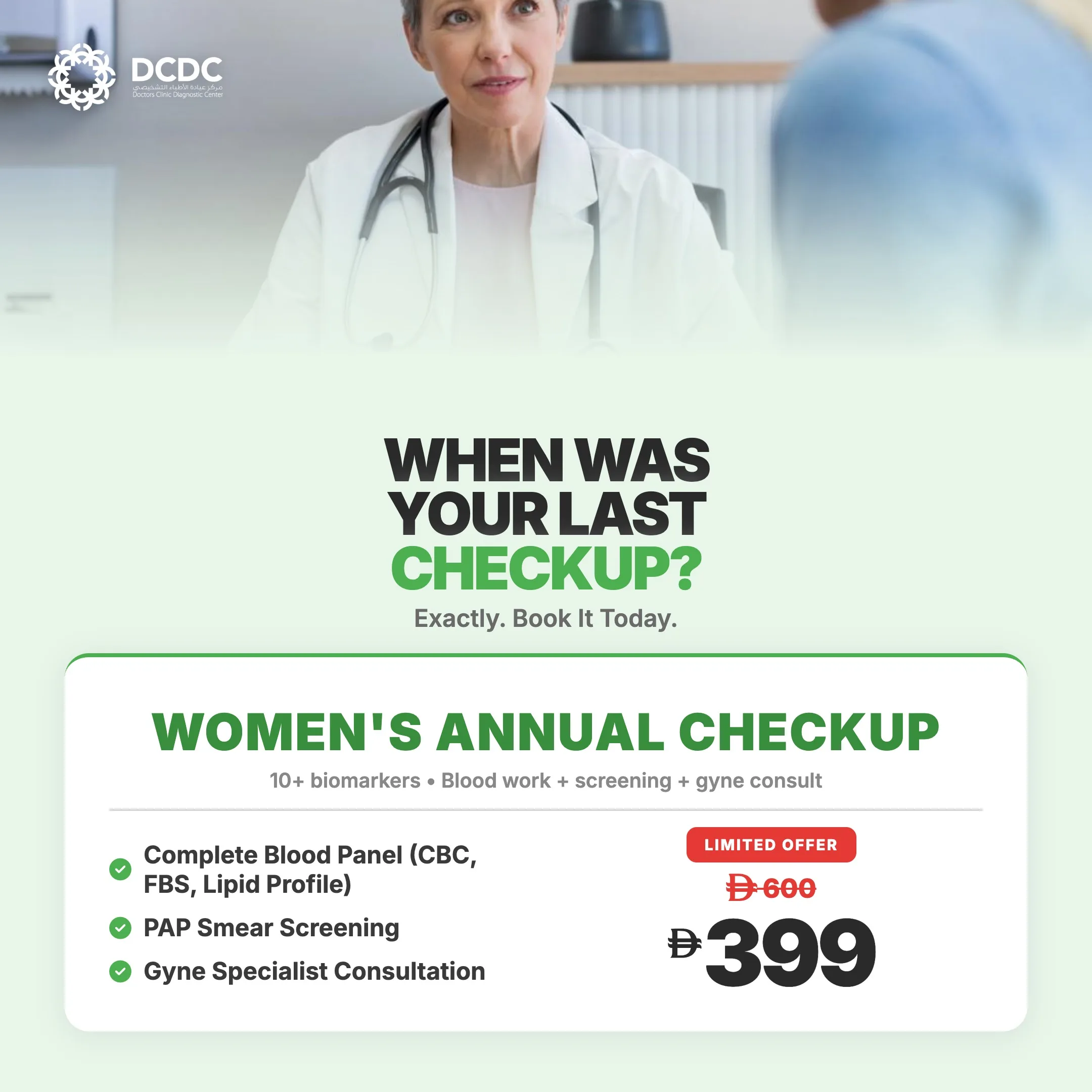
Health Screening Packages
Save with our bundled screening packages — specialist consultation included





Why Ovarian Cancer Is Hard to Detect Early
Ovarian cancer earns its reputation as a "silent" disease for three connected reasons. First, the ovaries sit deep in the pelvis, so a small tumour rarely causes pain or a lump you can feel. Second, the earliest symptoms, such as bloating, a full feeling or needing the bathroom more often, are extremely common and usually caused by harmless conditions like irritable bowel syndrome, diet or stress. Third, there is currently no reliable population screening test for women at average risk.
This is the key difference from other gynecological cancers. Cervical cancer can be found before it develops through Pap smear and HPV testing, and breast cancer is screened with mammography. For a comparison of how these programmes work, see our guides to cervical cancer screening in Dubai and breast cancer screening and BRCA testing. Ovarian cancer has no equivalent routine test. Large trials of CA-125 blood tests combined with ultrasound in women without symptoms have not shown a clear reduction in deaths, which is why major guidelines do not recommend routine screening for average-risk women.
The practical result is that a large share of ovarian cancers are found at stage III or IV, when the disease has already spread within the abdomen. Survival is considerably better when the disease is found while still confined to the ovary, which is why recognising persistent symptoms and acting on them matters so much. Awareness, not screening, is currently the most powerful tool most women have.
The most useful principle is persistence and change. A symptom that comes and goes with meals or your cycle is rarely worrying. A symptom that is new for you, happens almost every day and does not settle within a few weeks deserves a proper medical assessment.
Key Warning Signs of Ovarian Cancer
Research has identified a cluster of symptoms that occur more often in women with ovarian cancer than in women without it. None of them proves cancer on its own, and most women who have them will turn out to have a benign cause. What matters is the pattern: symptoms that are persistent, new and frequent. The ten signs below are the ones most often described.
1. Persistent Bloating
Everyone feels bloated sometimes. The warning sign is bloating that is persistent, meaning present most days for three weeks or more, and that does not follow your usual pattern around meals or your period. You may notice that clothes feel tighter around the waist, that your abdomen looks visibly swollen, or that bloating does not ease when you change your diet. In ovarian cancer, bloating can be caused by fluid (ascites) building up in the abdomen or by the tumour itself.
2. Pelvic or Abdominal Pain
A dull ache, pressure or discomfort in the lower abdomen or pelvis that keeps returning is another recognised symptom. It can feel like period pain outside your period, or like a constant heaviness. Sharp, sudden severe pain is different and needs urgent care (see the urgent section below), but ongoing low-grade pelvic pain should not be ignored simply because it is bearable.
3. Difficulty Eating or Feeling Full Quickly
Eating much less than usual before you feel full, or losing your appetite without a clear reason, can happen when a growing ovarian mass or abdominal fluid presses on the stomach and bowel. If you find yourself leaving meals half-finished on a regular basis, and this is new for you, mention it to your doctor.
4. Urinary Urgency or Frequency
A pelvic mass can press on the bladder, causing a sudden urgent need to urinate or needing to go much more often, without the burning that usually signals an infection. If urine tests come back clear and the symptom persists, it is worth looking for other pelvic causes.
5. Changes in Bowel Habits
New constipation, diarrhoea or a feeling that your bowels have not fully emptied can result from pressure on the rectum or bowel. Because these symptoms are so often attributed to diet or irritable bowel syndrome, they are one reason ovarian cancer is frequently diagnosed late. A first presentation of "IBS" in a woman over 50 should always prompt a question about the ovaries.
6. Unexplained Weight Loss or Gain
Losing weight without trying is a general red flag for many cancers. In ovarian cancer, weight may also increase because of abdominal fluid, even when you are eating less. Any change of several kilograms over a few weeks without a change in diet or activity should be evaluated.
7. Fatigue That Does Not Improve With Rest
Tiredness is one of the most common symptoms in medicine and has many causes, including anaemia, thyroid problems and poor sleep. Fatigue linked to cancer is typically deeper and does not improve with rest. On its own it is not a reason to suspect ovarian cancer, but fatigue combined with any of the other signs here strengthens the case for an assessment.
8. Lower Back Pain
Persistent lower back pain that is not explained by posture, exercise or an old injury can occasionally be caused by an ovarian mass pressing on surrounding structures. Back pain is extremely common, so it is most meaningful when it appears together with bloating, pelvic discomfort or bowel and bladder changes.
9. Menstrual Changes
Any vaginal bleeding after menopause, meaning 12 months or more without a period, must always be investigated, although it is more often caused by conditions of the uterus than the ovaries. In women who are still menstruating, new irregular periods, much heavier bleeding or bleeding between periods deserve review. Many ovarian cancers do not change periods at all, so normal cycles are not reassurance on their own.
10. Pain During Intercourse
Deep pain during sex (dyspareunia) is a symptom that women often feel embarrassed to raise. It has many benign causes, including endometriosis, fibroids and pelvic infection, and also can occur with ovarian masses. It is a legitimate medical symptom, and your gynecologist will discuss it in confidence.
A simple rule of thumb: if you have bloating, pelvic or abdominal pain, difficulty eating or a feeling of fullness, or urinary urgency on most days for more than three weeks, and this is new for you, book a gynecology assessment rather than waiting to see if it passes.
Risk Factors for Ovarian Cancer
Having a risk factor does not mean you will develop ovarian cancer, and many women with the disease have no obvious risk factor. Knowing your risk helps your doctor decide how closely to investigate symptoms and whether genetic counselling is appropriate.
- Age over 50: Risk rises with age, and most cases are diagnosed after menopause, with the average age at diagnosis in the early 60s.
- Family history: Having a mother, sister or daughter with ovarian, breast, fallopian tube or primary peritoneal cancer raises your risk, as does a family history of bowel or endometrial cancer in some hereditary syndromes (such as Lynch syndrome).
- BRCA1 and BRCA2 mutations: These inherited gene changes are the strongest known risk factors. Published estimates suggest a lifetime ovarian cancer risk of roughly 40 percent for BRCA1 carriers and 10 to 20 percent for BRCA2 carriers, compared with around 1 to 2 percent for the general population. The same mutations raise breast cancer risk; see our breast cancer screening and BRCA guide.
- Endometriosis: Women with endometriosis have a modestly higher risk of certain ovarian cancer subtypes, although the absolute risk remains low.
- Never having been pregnant: Pregnancy and breastfeeding reduce the number of lifetime ovulations and are associated with a lower risk. Women who have never carried a pregnancy have a somewhat higher risk.
- Hormone replacement therapy (HRT): Long-term use of menopausal hormone therapy has been associated with a small increase in risk. Decisions about HRT should be made with your doctor, weighing symptom relief against risks.
- Obesity: A higher body mass index has been linked to a greater risk of some ovarian cancer types.
If several relatives have had breast or ovarian cancer, discuss genetic counselling with your gynecologist. Testing can clarify your risk and guide decisions about enhanced surveillance and risk-reducing options. For a broader view of tests recommended at different ages, read our guide to cancer screening in Dubai.
How Ovarian Cancer Is Diagnosed
There is no single test that confirms ovarian cancer. Doctors build up the picture step by step, moving from simple, non-invasive checks to more specialised investigations only as needed.
Step 1: Consultation and Pelvic Examination
Your gynecologist begins by taking a detailed history: which symptoms you have, how long they have lasted, your menstrual and pregnancy history and your family history of cancer. A pelvic and abdominal examination can detect an enlarged ovary, a mass or fluid in the abdomen, although small tumours are often too deep to feel.
Step 2: Pelvic Ultrasound
Transvaginal and transabdominal ultrasound are usually the first imaging tests. They show the size, shape and internal structure of the ovaries. Features such as solid areas, thick internal walls, multiple compartments, and blood flow within the mass raise suspicion, whereas thin-walled, simple fluid-filled cysts are almost always benign. Ultrasound can suggest that a mass is concerning, but it cannot prove it is cancer.
Step 3: CA-125 Blood Test
CA-125 is a protein that is often raised in women with ovarian cancer. It is used alongside the ultrasound findings and your symptoms to estimate the likelihood that a mass is malignant. Its limitations are important and are explained in the next section.
Step 4: CT or MRI Imaging
If ultrasound or blood tests are concerning, CT or MRI scans provide a more detailed view. A CT scan of the abdomen and pelvis assesses whether disease has spread to lymph nodes, the lining of the abdomen or other organs. MRI offers excellent soft-tissue detail for characterising a pelvic mass. These scans help specialists plan the next steps.
Step 5: Biopsy and Surgical Diagnosis
A definitive diagnosis of ovarian cancer requires examination of tissue under the microscope. This is usually obtained during surgery, or occasionally by a needle biopsy or by sampling abdominal fluid. This step, and all treatment, is carried out by gynecologic oncology specialists at dedicated oncology centres.
| Step | What it shows | Where at DCDC |
|---|---|---|
| Gynecology consultation and pelvic exam | Symptoms, risk profile, examination findings | Female gynecologist, Dr. Parisa Dini |
| Pelvic ultrasound | Size and structure of ovaries and uterus | On-site, same-day results |
| CA-125 blood test | Marker level to support the overall assessment | On-site laboratory, AED 149, same-day results |
| CT scan (from AED 600) or MRI (from AED 900) | Detailed imaging if further assessment is needed | On-site imaging |
| Biopsy / surgery and treatment | Definitive diagnosis and cancer treatment | Referral to oncology specialists |
Typical diagnostic pathway and how DCDC supports each step (pricing is indicative and may vary by individual requirements)
CA-125 Test: What You Need to Know
CA-125 (Cancer Antigen 125) is the best-known blood marker associated with ovarian cancer, and it is often the first test women hear about. It is useful, but easily misunderstood. For a detailed explanation, see our dedicated guide to the CA-125 test in Dubai.
Why CA-125 Is Not a Perfect Test
- Not every ovarian cancer raises CA-125. A significant proportion of early-stage ovarian cancers, roughly half in some studies, have a normal CA-125 level. A normal result does not rule out cancer.
- Many benign conditions raise it. Endometriosis, uterine fibroids, pelvic inflammatory disease, ovarian cysts, pregnancy, menstruation, liver disease and even heart failure can cause a high reading. Most women with a raised CA-125 do not have ovarian cancer.
- It varies with your cycle. Levels can be higher around menstruation, which is why timing can matter in premenopausal women.
- It works better after menopause. In postmenopausal women, there are fewer benign causes for a raised level, so the result is more informative.
How CA-125 Is Actually Used
CA-125 is most valuable for monitoring women already diagnosed with ovarian cancer, tracking response to treatment and watching for recurrence. In women with symptoms, it helps doctors decide how urgently to investigate. For example, NICE guidance in the UK recommends measuring CA-125 in women aged 50 and over who have persistent symptoms such as bloating, and following up with ultrasound if the level is raised. It is not recommended as a stand-alone screening test for women without symptoms and at average risk.
At DCDC, the CA-125 test is performed at our on-site laboratory for AED 149, with same-day results. We always interpret the number together with your symptoms, examination and ultrasound findings, never in isolation.
What to Expect at DCDC
Important note: DCDC is a diagnostic centre. We provide consultation, screening and diagnostic testing and, where cancer is suspected or confirmed, we refer you to appropriate oncology specialists for treatment. We do not provide cancer surgery or chemotherapy on site. Our role is to get you clear, fast answers and a smooth hand-over to the right specialist.
Here is what the pathway looks like when you come to us with concerning symptoms.
- Initial assessment with a female gynecologist: Dr. Parisa Dini, Obstetrician and Gynecologist, takes a full history and examines you in a private, unhurried consultation. Gynecology consultations start from AED 299.
- On-site pelvic ultrasound: Transvaginal or transabdominal imaging is performed in the same building, with same-day results, so you do not have to book a separate visit elsewhere.
- CA-125 blood test: Taken at our on-site laboratory for AED 149, with same-day results available.
- CT and MRI if needed: If the findings call for more detail, CT (from AED 600) or MRI (from AED 900) can be arranged on site.
- Referral pathway: If a concerning finding or confirmed diagnosis emerges, we explain your results clearly, share your reports, and refer you to oncology centres and gynecologic oncology specialists for confirmation and treatment.
- Convenience: We are located in Dubai Healthcare City with free parking and extended hours (Saturday to Thursday 8 AM to 10 PM, Friday 9 AM to 9 PM).
- Insurance: We work with 20+ insurance partners with direct billing. Coverage depends on your individual policy, so please check with our team before your visit.
Because consultation, laboratory and imaging are all under one roof, many women complete the first stage of investigation in a single visit instead of travelling between clinics over several weeks. Waiting for results is stressful, and a coordinated one-stop pathway helps reduce that. Please note that DCDC does not promise any specific outcome; our aim is timely, accurate assessment and appropriate onward care.
Book a Gynecology Consultation at DCDC
Concerned about persistent bloating, pelvic pain or other symptoms? See a female gynecologist, with on-site ultrasound and CA-125 testing and same-day results.
Dubai Healthcare City | Free Parking | Sat–Thu 8 AM–10 PM, Fri 9 AM–9 PM | 20+ Insurance Partners
When to See a Doctor Urgently
Most of the symptoms above call for a prompt appointment, not an emergency visit. However, certain situations need same-day medical attention. Go to an emergency department or seek urgent care if you have:
- Sudden, severe pelvic or abdominal pain, especially with vomiting, fever or fainting, which can signal a twisted or ruptured ovarian mass
- Rapid, marked swelling of the abdomen over days
- Significant vaginal bleeding after menopause, or heavy bleeding that soaks through pads quickly
- Persistent vomiting or inability to eat or drink, or signs of bowel obstruction such as severe cramping, a swollen abdomen and no passing of gas or stool
- Shortness of breath, new chest pain, or one swollen, painful leg, which can indicate fluid around the lungs or a blood clot, both of which can occur with cancer
Book a gynecology appointment within days, not months, if you have bloating, pelvic pain, early fullness or urinary symptoms on most days for three weeks or more, if you are over 50 and notice new bowel or bladder changes, or if you have a strong family history of breast or ovarian cancer and any new symptom. If you are unsure whether something is serious, it is always reasonable to have it checked. Most of the time the cause is benign, and ruling out serious disease is itself valuable.
Prevention and Risk Reduction
There is no guaranteed way to prevent ovarian cancer, but several factors are associated with lower risk.
- Oral contraceptives: Combined oral contraceptive pills are associated with a substantially lower ovarian cancer risk, with the protective effect increasing with years of use and lasting for many years after stopping. They also carry their own risks, so this decision should be individual and made with your doctor.
- Pregnancy and breastfeeding: Both are associated with a lower lifetime risk.
- Healthy weight and active lifestyle: Maintaining a healthy weight, exercising regularly and not smoking support overall cancer prevention.
- Review HRT carefully: If you use or are considering hormone therapy, discuss the lowest effective dose and duration with your doctor.
- Know your family history: Ask relatives about breast, ovarian, bowel and endometrial cancer, and share this with your gynecologist.
Women at High Risk and BRCA Carriers
Women who carry BRCA1 or BRCA2 mutations, or who have a strong family history, may be offered a personalised plan. This can include genetic counselling, regular specialist review, and in some cases risk-reducing surgery to remove the ovaries and fallopian tubes after childbearing is complete. Surveillance with transvaginal ultrasound and CA-125 has not been proven to reduce deaths, so these decisions are made individually with a genetics and gynecologic oncology team. Your gynecologist can help you decide whether referral is appropriate.
It is also important to attend your routine women's health checks. Regular Pap smears or HPV tests and breast screening do not detect ovarian cancer, but a regular gynecology relationship means any new symptom is more likely to be recognised early. See our overview of cancer screening by age in Dubai to plan your checks.
Ovarian Cancer vs Ovarian Cysts
Many women worry that a cyst found on ultrasound means cancer. In reality, the great majority of ovarian cysts are benign, functional cysts that form during the normal menstrual cycle and disappear by themselves within a few cycles. Cancer risk is much lower in premenopausal women and rises with age. Features that prompt closer attention include solid components, irregular walls, rapid growth, a postmenopausal cyst, or a raised CA-125 alongside suspicious ultrasound findings. Read more in our guide to ovarian cyst symptoms and treatment in Dubai.
Related Services at DCDC
Expert care and advanced diagnostics at Dubai Healthcare City
Frequently Asked Questions
Final Thoughts
Ovarian cancer is difficult to catch early because its symptoms are subtle and there is no proven screening test for women at average risk. What you can do is know the pattern: persistent bloating, pelvic or abdominal pain, feeling full quickly, and urinary urgency, lasting more than three weeks and new for you. Add bowel changes, unexplained weight change, deep fatigue, lower back pain, menstrual changes and pain during intercourse, and the picture becomes clearer.
Most women with these symptoms will not have cancer, but the only way to know is to be assessed. A gynecology consultation, pelvic ultrasound and CA-125 test can be done in one place and often on the same day. If your symptoms have lasted more than three weeks, or you have a strong family history, do not wait. Book a gynecology consultation at DCDC in Dubai Healthcare City, and if further care is needed we will refer you to the right oncology specialist.
This article is for general information and does not replace personal medical advice.
Sources & References
This article references the following sources:
- World Health Organization (WHO) - Cancer fact sheet
- NHS - Ovarian cancer: symptoms, causes and diagnosis
- Mayo Clinic - Ovarian cancer: symptoms and causes
- American Cancer Society - Ovarian cancer detection, risk factors and survival statistics
- NICE guideline NG12 - Suspected cancer: recognition and referral (ovarian cancer recommendations)
- Ovarian Cancer Research Alliance - Symptoms of ovarian cancer
- PubMed - Ovarian cancer symptom index and early detection literature
- PubMed - Screening for ovarian cancer: randomized trial evidence (CA-125 and ultrasound)
- PubMed - BRCA1 and BRCA2 mutations and lifetime ovarian cancer risk
This information is educational and does not replace individual medical advice. See our editorial policy for more information.

Written by
Dr. Parisa Dini
Obstetrics & Gynecology
MD, OB-GYN
Dr. Parisa Dini is an Obstetrician and Gynecologist at Doctors Clinic Diagnostic Center (DCDC) in Dubai Healthcare City, specializing in preventive women's health and PCOS management.
Related Articles

CA-125 Test Dubai: Ovarian Cancer Marker

Cancer Screening Dubai: Tests & Cost by Age

Cervical Cancer Screening Dubai: Pap Smear & HPV

Ovarian Cyst Dubai: Symptoms & Treatment
Breast Cancer Screening: Mammogram & BRCA Guide
More in Women's Health
Emsella vs Incontinence Surgery Dubai (2026)
Read More
Double Marker Test Dubai: Timing, Results & Price (2026)
Read More
Emsella Side Effects & Safety Dubai (2026)
Read More
FSH & LH Test Dubai: Day 3 Levels, Ratio & Price
Read More
NIPT Test Dubai: Cost, Accuracy & Timing (2026)
Read More
NIPT Results: High-Risk vs Low-Risk Explained (2026)
Read More© 2026 Doctors Clinic Diagnostic Center (DCDC), Dubai Healthcare City. Originally published at https://doctorsclinicdubai.ae/blog/ovarian-cancer-warning-signs-dubai. All rights reserved. Unauthorized reproduction is prohibited.