Key Takeaways
- Emsella is a non-invasive, walk-in-walk-out treatment: you sit fully clothed for 28 minutes while the HIFEM chair delivers about 11,000 supramaximal pelvic floor contractions per session.
- Mid-urethral sling surgery (TVT/TOT) remains the surgical gold standard for stress urinary incontinence, with long-term cure rates of 70–90% but carries risks of mesh erosion, voiding difficulty and infection.
- About 95% of Emsella patients reported improved quality of life and roughly two-thirds reduced or stopped pad use in the Samuels 2019 study, with no anaesthesia, incisions or recovery period.
- Emsella contraindications include pregnancy, pacemakers or implanted electronic devices, metal pelvic implants, copper IUD (relative), active pelvic malignancy and recent pelvic surgery.
- At DCDC, the Emsella pathway begins with a gynaecologist assessment (urine test and pelvic ultrasound) from AED 299, ensuring the treatment matches the diagnosis before any sessions start.
- Surgery is usually reserved for moderate-to-severe stress incontinence that has not responded to conservative treatment, while Emsella suits mild-to-moderate cases and patients who prefer to avoid anaesthesia.
Deciding between a non-invasive pelvic floor chair and an operating theatre is one of the most consequential choices a woman with urinary incontinence faces. At one end of the spectrum, Emsella pelvic floor therapy strengthens the muscles without undressing, anaesthesia or downtime; at the other, surgical procedures such as a mid-urethral sling offer higher long-term cure rates for severe leaking but come with the risks inherent in any operation. This guide puts both approaches side by side -- evidence, recovery, risks, costs and who each one genuinely helps -- so that you can walk into your consultation at DCDC in Dubai Healthcare City with a clear framework for the conversation.
Urinary incontinence affects roughly one in three women at some point in their lives, according to the International Continence Society. In Dubai, the conversation has shifted in recent years as non-surgical technologies such as BTL Emsella have joined the treatment landscape alongside established surgical options. Below, we compare Emsella against three categories of surgery: mid-urethral sling procedures (TVT and TOT), Burch colposuspension and urethral bulking agents.
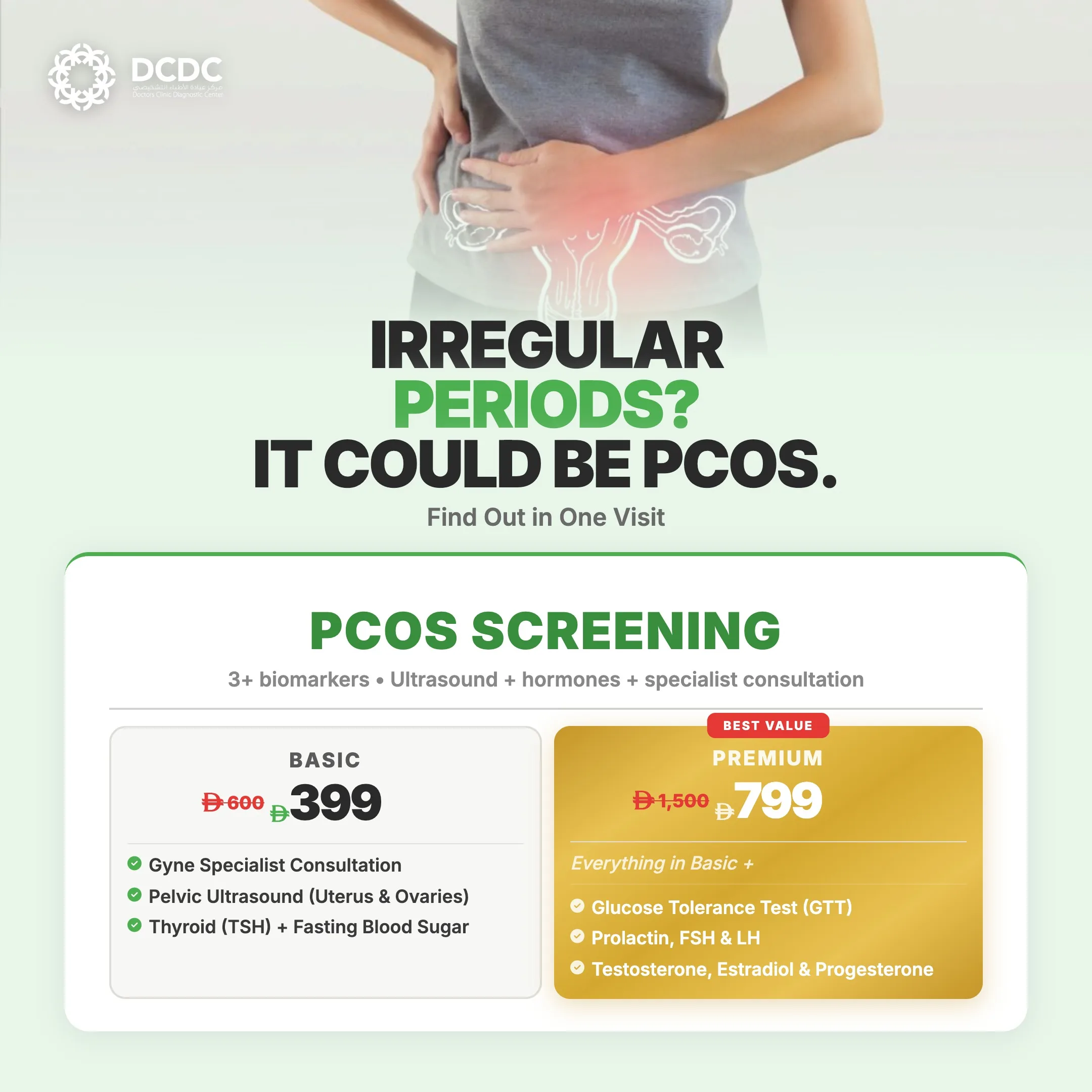
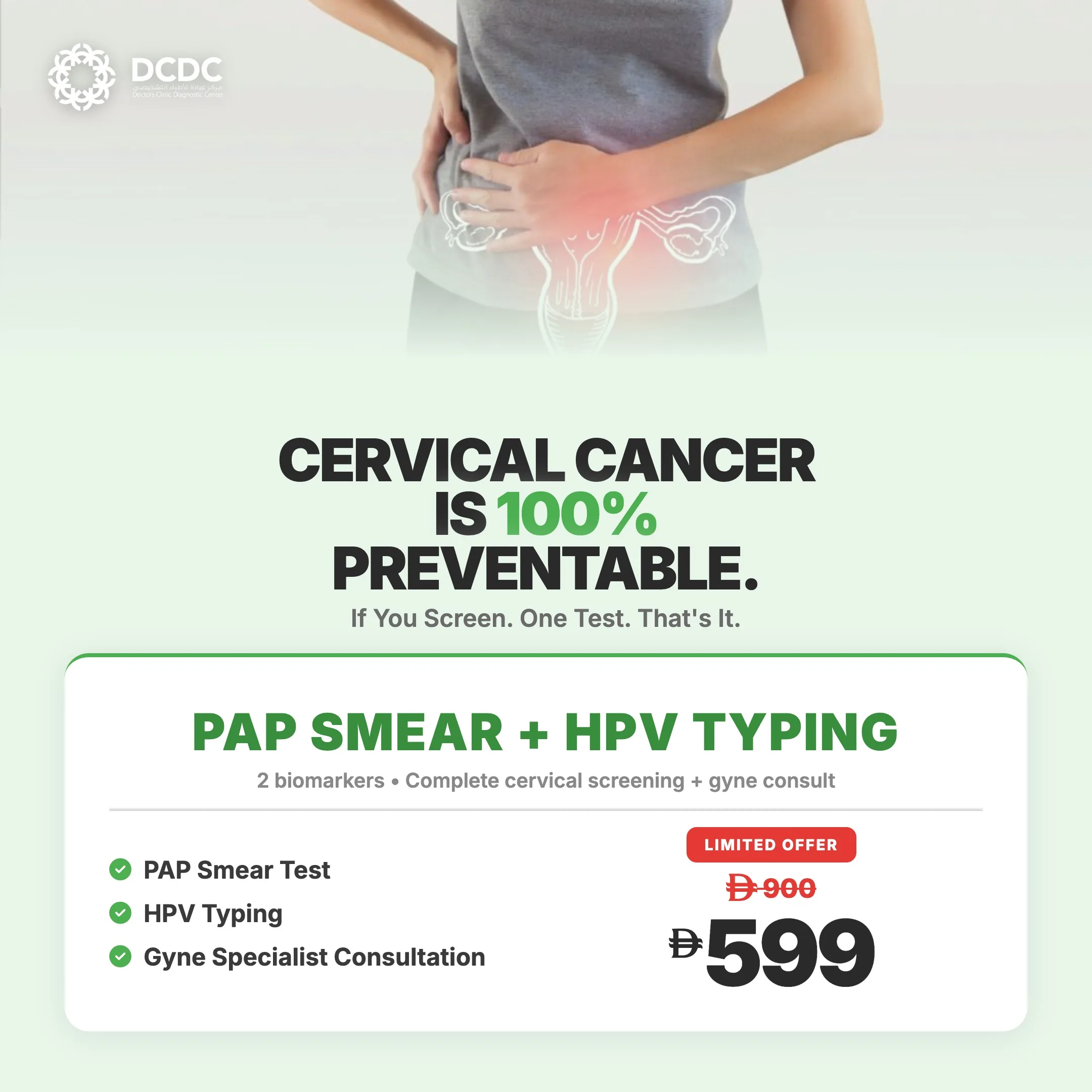
Health Screening Packages
Save with our bundled screening packages — specialist consultation included




Emsella vs Incontinence Surgery: Quick Comparison Table
Before examining each option in detail, this table captures the headline differences. Use it as a reference point while reading the sections that follow.
| Factor | Emsella (HIFEM) | Mid-urethral sling (TVT/TOT) | Burch colposuspension | Urethral bulking agents |
|---|---|---|---|---|
| How it works | Electromagnetic field triggers ~11,000 supramaximal pelvic floor contractions per 28-minute session, fully clothed | A synthetic mesh tape is placed under the mid-urethra through small vaginal and abdominal or groin incisions | The bladder neck is lifted and sutured to the Cooper ligament behind the pubic bone, open or laparoscopic | A bulking substance (e.g. Bulkamid) is injected around the urethra under local anaesthesia to narrow the lumen |
| Anaesthesia | None | General or spinal | General or spinal | Local (often outpatient) |
| Sessions / procedures | 6 sessions over ~3 weeks (standard course) | Single procedure | Single procedure | 1–2 injections; may need top-up |
| Recovery time | None — return to activities immediately | 2–6 weeks; avoid lifting and intercourse for 4–6 weeks | 4–6 weeks; longer than sling | 24–48 hours; minimal restrictions |
| Long-term cure rate (SUI) | Symptom improvement reported in ~95% (Samuels 2019); long-term data still emerging | 70–90% objective cure at 5–10 years (Ford 2017 Cochrane review) | ~85% cure at 5 years; comparable to sling (Lapitan 2017 Cochrane) | ~50–70% improvement at 1 year; often declines and requires repeat |
| Best suited for | Mild-to-moderate SUI, mixed UI, postpartum, menopause, patients avoiding surgery | Moderate-to-severe SUI not responding to conservative measures | SUI with concurrent prolapse repair or when mesh is contraindicated | Mild SUI, frail or elderly patients, those unfit for general anaesthesia |
| Key risks | Mild tingling or pelvic muscle soreness (temporary); contraindicated with pacemakers, metal implants, pregnancy | Mesh erosion (2–4%), voiding difficulty, groin pain, bladder perforation, infection | Voiding difficulty, UTI, longer hospital stay, anterior compartment prolapse risk | Injection-site pain, UTI, urinary retention (temporary); effect wanes over 1–3 years |
Emsella vs surgical options for urinary incontinence in Dubai (2026)
How Emsella Works: A Non-Surgical Approach
Emsella uses High-Intensity Focused Electromagnetic (HIFEM) technology to generate a powerful magnetic field beneath a specially designed chair. When you sit on the chair -- fully clothed -- the field penetrates the pelvic floor and triggers supramaximal contractions: contractions stronger and faster than anything you could achieve through voluntary effort. Each 28-minute session delivers roughly 11,000 of these contractions, remodelling the muscle fibres and restoring neuromuscular control over time.
The standard course is six sessions spread over approximately three weeks, typically two sessions per week. There is no preparation, no undressing, no anaesthesia and no recovery period. You walk in, sit down, and walk out. For a detailed explanation of the mechanism, see our guide on how Emsella works.
What Emsella evidence shows
The most frequently cited early study is Samuels et al. (2019), which found that about 95% of treated patients reported improved quality of life and roughly two-thirds reduced or entirely stopped using incontinence pads. A 2025 systematic review and meta-analysis confirmed statistically significant improvements in validated incontinence questionnaires (ICIQ-SF) across multiple studies, with effects maintained at three months. However, long-term data beyond one to two years remains limited compared with decades of surgical follow-up, and head-to-head randomised trials against surgery have not yet been published.
How Incontinence Surgery Works
Surgical intervention for stress urinary incontinence has evolved substantially over the past three decades. The three main categories used in Dubai are described below. For broader context on the condition itself, read our urinary incontinence treatment guide.
Mid-urethral sling (TVT and TOT)
A tension-free vaginal tape (TVT) or trans-obturator tape (TOT) procedure involves placing a thin synthetic mesh tape beneath the mid-urethra. The tape acts as a hammock, providing support when intra-abdominal pressure increases (coughing, sneezing, exercise). The operation takes 20–40 minutes under general or spinal anaesthesia. The Ford et al. (2017) Cochrane review, covering 81 randomised trials, found objective cure rates of 71–97% for retropubic slings, with subjective cure around 62–98% depending on the definition and follow-up period. Recognised complications include mesh erosion through the vaginal wall (approximately 2–4% of cases), voiding difficulty requiring intermittent catheterisation, groin pain (more common with TOT), and bladder perforation during insertion (more common with TVT).
Burch colposuspension
This older open or laparoscopic procedure lifts the tissues around the bladder neck and sutures them to the Cooper ligament behind the pubic bone. The Lapitan et al. (2017) Cochrane review of 55 trials found approximately 85% continence at one year and durable results at five years. Colposuspension avoids mesh entirely, making it an option when synthetic material is contraindicated, and can be combined with prolapse repair. Downsides include a longer hospital stay (2–5 days), higher voiding difficulty rates and a risk of de novo urgency or anterior compartment prolapse.
Urethral bulking agents
Bulking agents such as Bulkamid (polyacrylamide hydrogel) are injected around the urethra under local anaesthesia, usually as an outpatient procedure taking 15–20 minutes. The injected material adds volume to the urethral wall, helping it close more effectively. Improvement rates of 50–70% at one year have been reported, though the effect tends to diminish over time and many patients need repeat injections at 12–36 months. The procedure is best suited to mild stress incontinence, frail patients, or women who cannot tolerate general anaesthesia.
Effectiveness: Emsella vs Surgery for Incontinence
Direct head-to-head randomised controlled trials comparing Emsella with sling surgery do not yet exist. The available evidence must therefore be weighed indirectly.
- Mid-urethral sling: 70–90% objective cure at 5–10 years (Ford 2017 Cochrane review of 81 trials, over 12,000 women). The longest-running data extends beyond 15 years.
- Burch colposuspension: ~85% continence at 5 years (Lapitan 2017 Cochrane review of 55 trials). Comparable to sling in head-to-head data.
- Emsella: About 95% patient-reported quality-of-life improvement and roughly two-thirds pad reduction or cessation (Samuels 2019). A 2025 meta-analysis confirmed significant symptom improvement on validated questionnaires. Published follow-up currently extends to 6–12 months in most studies.
- Bulking agents: 50–70% improvement at one year. Effect typically declines and repeat injections are common.
The key take-away: surgery -- especially the mid-urethral sling -- offers the highest documented long-term cure rates, but Emsella shows strong short-to-medium-term improvement without any of the risks that come with an operation. Emsella's evidence base is growing but still relatively young compared with decades of surgical follow-up.
Recovery and Downtime Compared
Recovery is often the deciding factor for women in Dubai who are balancing work, childcare and social commitments. To learn more about what happens during and after Emsella sessions, see our Emsella results timeline guide.
| Recovery aspect | Emsella | Mid-urethral sling | Burch colposuspension | Bulking agents |
|---|---|---|---|---|
| Time off work | None | 1–2 weeks | 2–4 weeks | 0–1 day |
| Exercise restriction | None | 4–6 weeks no heavy lifting or high-impact exercise | 6–8 weeks no heavy lifting | 48 hours light restriction |
| Sexual activity | No restriction | Avoid for 4–6 weeks | Avoid for 6 weeks | Usually 24–48 hours |
| Catheter / drain | No | Often overnight; sometimes 1–3 days if voiding difficulty occurs | Usually 1–2 days | No (rarely overnight if retention) |
| Hospital stay | Outpatient (walk-in, walk-out) | Day surgery or overnight | 1–3 nights | Outpatient |
Recovery timeline comparison: Emsella vs incontinence surgery options
Risks and Side Effects: Emsella vs Surgical Options
Every medical treatment carries risks. The difference here is one of scale: Emsella side effects are generally mild and temporary, while surgery introduces the inherent risks of anaesthesia, incision and (in the case of slings) implanted synthetic material. For a full discussion of Emsella-specific side effects, see our Emsella safety guide.
Emsella risks
- Mild pelvic muscle soreness after the first 1–2 sessions (similar to post-exercise soreness), resolves within hours
- Tingling sensation during treatment
- No reported serious adverse events in published clinical studies
- Contraindications (important): pregnancy, pacemakers or other implanted electronic devices, metal pelvic implants (e.g. hip replacement), copper IUD (relative contraindication -- discuss with your doctor), active malignancy in the pelvic area, recent pelvic surgery
Sling surgery risks
- Mesh erosion through the vaginal wall: 2–4% of cases, may require further surgery to remove exposed mesh
- Voiding difficulty or urinary retention: 2–7%, sometimes requiring intermittent self-catheterisation
- Groin pain: more common with TOT approach, usually resolves within weeks but occasionally chronic
- Bladder perforation during insertion: ~4% with TVT, <1% with TOT
- Urinary tract infection: 5–10% in the early postoperative period
- De novo urgency or overactive bladder: can occur in 5–15% of patients
Bulking agent risks
- Injection-site discomfort and temporary urinary retention
- UTI risk similar to any urethral procedure
- Effect wanes over 1–3 years in many patients; repeat injections needed
- Migration of injected material (rare with modern hydrogel agents)
Cost Considerations in Dubai
Cost should never be the sole factor in a medical decision, but it is a practical reality. For a detailed look at Emsella pricing, see our Emsella cost guide. Below is an overview of what each option typically costs in the Dubai market.
- Emsella: Prices vary widely between clinics. A single session typically costs AED 1,000–2,500 in Dubai, with six-session courses often discounted. Contact DCDC for current pricing and package offers.
- Mid-urethral sling: AED 15,000–40,000 including surgeon fees, anaesthesia, theatre time and hospital stay. Insurance may cover the procedure if conservative treatment has failed and a specialist referral is documented.
- Burch colposuspension: AED 25,000–50,000 due to longer theatre time and hospital stay. Less commonly performed in Dubai than sling procedures.
- Bulking agents: AED 5,000–15,000 per injection. Lower upfront cost, but repeat treatments increase the cumulative expense.
- Initial assessment at DCDC: Gynaecology consultation from AED 299, physiotherapy session from AED 250.
Health insurance policies in the UAE increasingly recognise incontinence treatment as a medical necessity rather than a cosmetic procedure, though pre-authorisation is almost always required for surgery. Ask your insurer whether Emsella is covered under your plan -- some policies categorise it as a physiotherapy modality.
Who Is a Good Candidate for Each Option?
There is no single best treatment for incontinence. The right choice depends on the type and severity of your symptoms, your medical history and your personal preferences.
Emsella may be the right choice if you
- Have mild-to-moderate stress urinary incontinence (SUI) or mixed urinary incontinence
- Are postpartum and want to restore pelvic floor strength without surgery -- read our Emsella after childbirth guide
- Are experiencing pelvic floor weakness at menopause
- Want to avoid anaesthesia, incisions and recovery downtime
- Have tried Kegel exercises but cannot perform them correctly or consistently -- see our Emsella vs Kegels comparison
- Do not have any of the Emsella contraindications listed above
Surgery may be the right choice if you
- Have moderate-to-severe SUI that significantly limits your daily activities
- Have completed a supervised course of conservative treatment (physiotherapy, Emsella or both) without sufficient improvement
- Have anatomical factors such as urethral hypermobility or intrinsic sphincter deficiency confirmed on urodynamic testing
- Need concurrent pelvic organ prolapse repair (colposuspension can address both)
- Understand and accept the risks of mesh implantation (for sling) or the longer recovery of open surgery
Bulking agents may suit you if
- You have mild SUI and prefer a minimally invasive option
- You are elderly or medically unfit for general anaesthesia
- You accept that the effect may wane and repeat injections may be needed
Decision Framework: Choosing Between Emsella and Surgery
Use the questions below as a starting framework. Your specialist will refine this based on a clinical assessment including a pelvic examination, urine tests and possibly urodynamic studies.
- Step 1 -- Severity: Is your leaking mild (occasional drips when coughing or exercising), moderate (daily pad use) or severe (constant leaking affecting work and sleep)? Mild-to-moderate often responds well to Emsella; severe usually warrants surgical discussion.
- Step 2 -- Conservative treatment tried?: NICE, AUA and ICS guidelines all recommend at least 3 months of supervised pelvic floor muscle training before considering surgery. Emsella can be part of this conservative phase.
- Step 3 -- Contraindications: Check the Emsella contraindication list above. If any apply, the decision defaults to physiotherapy, bulking agents or surgery.
- Step 4 -- Lifestyle and priorities: If zero downtime is essential, Emsella is the clear choice. If you want a single definitive procedure and accept the recovery, sling surgery may appeal more.
- Step 5 -- Specialist assessment: Book a gynaecology consultation to confirm the type of incontinence (stress, urge or mixed) and identify any underlying factors such as prolapse, infection or oestrogen deficiency that affect which treatment is appropriate.
What to Expect at DCDC in Dubai Healthcare City
DCDC offers Emsella through its gynaecology department. The pathway is designed so that every patient receives a proper diagnosis before any treatment begins -- not just an Emsella session sold as a standalone product.
- Arrival: The clinic is in Building 64, Block A, Al Razi Medical Complex in DHCC, with free dedicated parking. Opening hours are Saturday–Thursday 8 AM–10 PM and Friday 9 AM–9 PM.
- Gynaecologist assessment (from AED 299): A female gynaecologist reviews your symptoms, medical history and goals. A urine test and on-site pelvic ultrasound are performed to rule out infection, prolapse or other conditions that could mimic or complicate incontinence.
- Treatment plan: Based on assessment findings, the gynaecologist may recommend Emsella alone, Emsella combined with pelvic floor physiotherapy (from AED 250 per session), or a referral for surgical consultation if the clinical picture suggests surgery would be more appropriate.
- Emsella sessions: If Emsella is recommended, you sit fully clothed on the chair in the gynaecology suite. Each session lasts about 28 minutes. Most patients describe the sensation as an intense but tolerable muscle contraction. You can drive home and resume normal activities immediately.
- Follow-up: After the standard six-session course, a review appointment assesses improvement and determines whether maintenance sessions, additional physiotherapy or further investigation is needed.
DCDC holds a 4.8/5 Google rating from over 1,000 verified patient reviews, with 20+ direct-billing insurance partners handling pre-authorisation. The multilingual team (Arabic, English, Farsi, Urdu, Hindi) can assist with booking and insurance queries.
Not Sure Whether You Need Emsella or Surgery?
Book a gynaecology consultation at DCDC from AED 299. A female specialist will assess your symptoms, perform a pelvic ultrasound and recommend the right treatment path for you -- whether that is Emsella, physiotherapy, surgery or a combination.
Call +971 54 219 5008 or WhatsApp +971 50 970 3884 to book your assessment.
Can You Combine Emsella with Other Treatments?
Yes, and in many cases a combined approach produces better outcomes than any single treatment alone. Emsella strengthens the pelvic floor muscle, but it does not teach you voluntary control. Adding supervised pelvic floor physiotherapy helps you learn to activate the muscle on demand -- during a sneeze, before lifting a child, or when you feel urgency. At DCDC, pelvic floor physiotherapy can be integrated alongside or after an Emsella course.
Some patients also use Emsella as pre-habilitation before planned surgery, strengthening the muscles beforehand so that post-surgical rehabilitation progresses faster. After certain surgeries, Emsella may be used once healing is complete to maintain long-term muscle tone, though this should only be done under specialist guidance.
Frequently Asked Questions
Related Services at DCDC
Expert care and advanced diagnostics at Dubai Healthcare City
Emsella Pelvic Floor Therapy
Non-invasive HIFEM pelvic floor strengthening for urinary incontinence.
Book AppointmentPelvic Health
Assessment and treatment of pelvic floor weakness, prolapse and incontinence.
Book AppointmentPhysiotherapy
Pelvic floor physiotherapy and rehabilitation programmes.
Book AppointmentFrequently Asked Questions
Final Thoughts
The choice between Emsella and incontinence surgery is not binary. Most women benefit from starting with conservative treatment -- physiotherapy, Emsella or both -- and progressing to surgery only if symptoms remain unacceptable. Emsella offers a genuine treatment effect with zero downtime and no surgical risk, while sling surgery provides the highest documented long-term cure rates for severe stress incontinence. The right answer depends on your diagnosis, severity, medical history and personal priorities.
At DCDC in Dubai Healthcare City, the Emsella pathway always begins with a proper gynaecologist assessment from AED 299, because the treatment that will work for you depends entirely on what is causing your symptoms. Book a consultation to discuss your options -- call +971 54 219 5008 or WhatsApp +971 50 970 3884.
Sources & References
This article references the following sources:
- Samuels JB et al. - Safety and Efficacy of a Non-Invasive High-Intensity Focused Electromagnetic Field (HIFEM) Device for Treatment of Urinary Incontinence (2019)
- Ford AA et al. - Mid-urethral sling operations for stress urinary incontinence in women, Cochrane Review (2017)
- Lapitan MCM et al. - Open retropubic colposuspension for urinary incontinence in women, Cochrane Review (2017)
- NICE Guideline NG123 - Urinary incontinence and pelvic organ prolapse in women: management (2019, updated)
- International Continence Society - Prevalence and incidence of urinary incontinence
- Silantyeva E et al. - A Comparative Study on the Effects of High-Intensity Focused Electromagnetic Technology and Electrostimulation for the Treatment of Pelvic Floor Muscles (2020)
This information is educational and does not replace individual medical advice. See our editorial policy for more information.

Written by
Dr. Parisa Dini
OB-GYN
MD, OB-GYN
Dr. Parisa Dini is an OB-GYN at Doctors Clinic Diagnostic Center (DCDC) in Dubai Healthcare City, with a focus on PCOS, menopause and preventive women's health.
Related Articles

Emsella Cost Guide: What You Will Pay (2026)

Urinary Incontinence Dubai: Causes & Care (2026)

Emsella After Childbirth Dubai: Postpartum Guide (2026)
Pelvic Floor Physiotherapy Dubai: Who Needs It (2026)
Emsella Side Effects & Safety Dubai (2026)
More in Women's Health
PMS Symptoms & Relief in Dubai: Guide (2026)
Read MoreOveractive Bladder Treatment Dubai: Guide (2026)
Read More
Pregnancy Test Dubai: Types & Accuracy (2026)
Read More
Ovarian Cancer Warning Signs Dubai (2026)
Read More
Double Marker Test Dubai: Timing, Results & Price (2026)
Read MoreEmsella Side Effects & Safety Dubai (2026)
Read More© 2026 Doctors Clinic Diagnostic Center (DCDC), Dubai Healthcare City. Originally published at https://doctorsclinicdubai.ae/blog/emsella-vs-incontinence-surgery-dubai. All rights reserved. Unauthorized reproduction is prohibited.