Key Takeaways
- Emsella is a chair that delivers HIFEM (High-Intensity Focused Electromagnetic) energy to the pelvic floor. You sit fully clothed for about 28 minutes while the device triggers roughly 11,000 supramaximal muscle contractions — a volume no one can reproduce with voluntary Kegels.
- The technology is FDA-cleared (510(k) K181497) and CE-marked for the treatment of male and female urinary incontinence, and it is non-invasive: no undressing, no probes, no anaesthesia and no downtime.
- The standard protocol is 6 sessions over about 3 weeks, two per week. Most patients notice a change after 2–3 sessions, and results typically keep building for several weeks after the final session.
- Published research (Samuels et al., Lasers in Surgery and Medicine, 2019) reports that around 95% of treated patients described improved quality of life and about two-thirds reduced or stopped using pads.
- Emsella suits stress, urge and mixed urinary incontinence, postpartum and menopause-related pelvic floor weakness, and post-prostatectomy incontinence in men — but it is not a substitute for a proper diagnosis first.
- At DCDC in Dubai Healthcare City the pathway starts with a female gynecologist consultation from AED 299 (history, examination, urine test and on-site pelvic ultrasound if indicated), followed by suitability screening for HIFEM. Optional pelvic floor physiotherapy starts from AED 250.
- Emsella at DCDC is offered as single sessions and as a 6-session course. Pricing is not published online — contact DCDC for current Emsella pricing and package offers. Across Dubai clinics, Emsella is typically self-pay and not covered by insurance, although the consultation often is.
- Emsella is not suitable during pregnancy or for anyone with a pacemaker, defibrillator, implanted electronic device or metal implant in the pelvic or hip region. Suitability is always screened at consultation.
If you have been searching for how the Emsella chair works, the short answer is this: it uses a focused electromagnetic field to make your pelvic floor muscles contract about 11,000 times in a 28-minute session, while you sit fully clothed and do nothing at all. That is roughly the equivalent of an intense pelvic floor workout you could never perform voluntarily, repeated six times over three weeks. At Doctors Clinic Diagnostic Center (DCDC) in Dubai Healthcare City, Emsella pelvic floor therapy is delivered through the Gynecology & Obstetrics department under Dr. Parisa Dini, always after a proper clinical assessment rather than as a walk-in beauty treatment. This guide explains the physics, the protocol, the published evidence, the side effects, and what a course realistically costs in Dubai in 2026.
Urinary incontinence is far more common than the silence around it suggests. The NHS estimates that stress incontinence alone affects millions of women, and international data consistently shows that a quarter to a third of adult women experience some degree of involuntary urine leakage. In Dubai, where many women return to demanding work schedules within weeks of giving birth and where high-intensity gym culture is the norm, the problem tends to be tolerated rather than treated. Emsella has changed that conversation, largely because it removes the two biggest barriers to treatment: embarrassment and downtime. But it works best when it is used as one part of a diagnosed treatment plan, not as a standalone gadget.
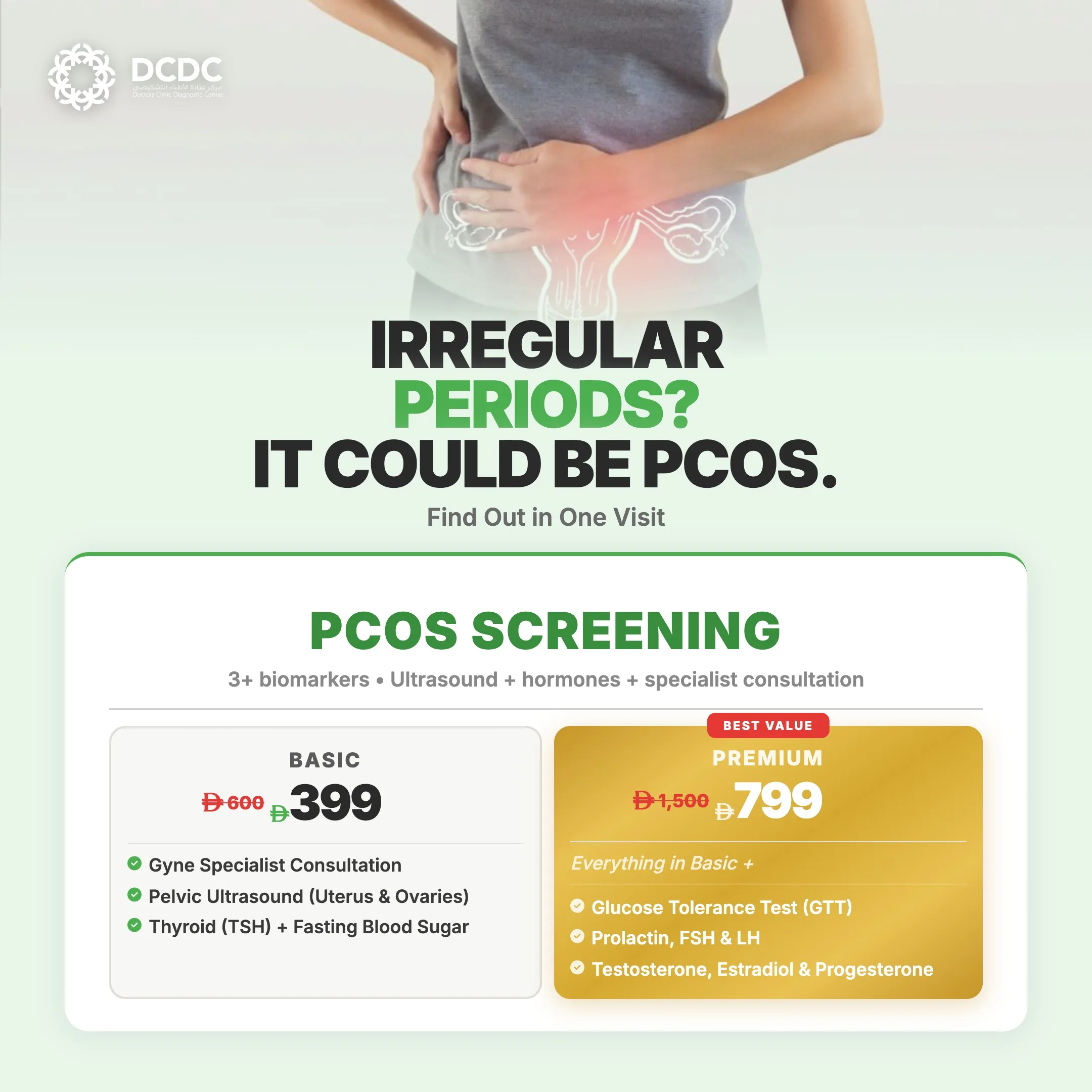
Health Screening Packages
Save with our bundled screening packages — specialist consultation included





What Is the Emsella Chair?
Emsella is a treatment chair manufactured by BTL that looks, at first glance, like an ordinary armchair with a slightly raised seat. Built into that seat is an electromagnetic coil. When the device is switched on, the coil generates a rapidly changing magnetic field that passes straight through clothing and skin into the deep muscles of the pelvic floor. Those muscles respond the only way muscles can respond to that stimulus — they contract.
The important word in the description is non-invasive. You remain fully dressed. Nothing is inserted, nothing is applied to the skin, and no anaesthetic or sedation is used. You sit down, the practitioner positions you correctly over the centre of the coil, the intensity is dialled up to a level you tolerate comfortably, and the device does the work. Most patients read, scroll on their phone or talk to the practitioner for the duration.
Emsella received FDA 510(k) clearance in 2018 under the number K181497 as a non-implanted electrical continence device for the treatment of male and female urinary incontinence, and it carries a CE mark for the same indication. That regulatory status matters: it means the device has been formally reviewed for its stated purpose, rather than being marketed on cosmetic claims alone.
How Does Emsella Work? Inside HIFEM Technology
The technology behind Emsella is called HIFEM — High-Intensity Focused Electromagnetic energy. The principle rests on a piece of physics known as electromagnetic induction. A coil carrying a rapidly alternating current produces a magnetic field. When that changing field passes through conductive tissue, it induces small electrical currents inside the tissue. Motor neurons are exquisitely sensitive to electrical current, so those induced currents depolarise the nerves that supply the pelvic floor muscles, and the muscles fire.
What makes HIFEM different from a home pelvic floor trainer or a TENS-style stimulator is the frequency and the depth. The field is focused into the pelvic region rather than dissipating at the skin surface, and it pulses fast enough that the muscle never fully relaxes between impulses. The result is a supramaximal contraction — a sustained, complete contraction that recruits essentially the whole muscle group at once. Voluntary effort cannot do this. When you perform a Kegel, your nervous system recruits motor units progressively and, in a weakened or poorly coordinated pelvic floor, it may recruit very few of them at all.
The 11,000 contractions, put in context
A single 28-minute Emsella session delivers approximately 11,000 supramaximal pelvic floor contractions. To appreciate that number, consider a realistic home Kegel programme: three sets of ten squeezes, three times a day, is 90 contractions daily — and adherence studies repeatedly show that most people do far fewer than they report. At 90 a day, it would take about four months of perfect compliance to accumulate what one Emsella session delivers in under half an hour, and those home contractions would be submaximal and, in many cases, technically incorrect.
The second mechanism is neuromuscular re-education. Many women with pelvic floor dysfunction have genuinely lost the ability to locate and isolate these muscles — a common finding after childbirth or after years of chronic straining. Repeated forced contraction restores the sensory map. Patients frequently report that after a course of Emsella they can finally feel their pelvic floor working, which makes any subsequent home programme dramatically more effective.
- Electromagnetic induction — a changing magnetic field induces current in pelvic tissue, depolarising motor nerves.
- Supramaximal contraction — the whole muscle group fires at once, beyond what voluntary effort can achieve.
- Muscle hypertrophy and hyperplasia — repeated high-intensity loading thickens and strengthens the levator ani complex over the course.
- Neuromuscular re-education — patients relearn where the pelvic floor is and how to engage it.
- Improved urethral support — a stronger, better-timed pelvic floor resists the pressure spikes that cause stress leakage when you cough, sneeze, laugh or lift.
What a 28-Minute Emsella Session Actually Feels Like
This is the question patients ask most often, and the honest answer is that it feels strange rather than painful. As the intensity increases you become aware of a deep tingling and a distinct pulling or lifting sensation inside the pelvis. There is a rhythm to it: periods of intense contraction alternating with brief tapping-like pulses that allow the muscle to recover and help clear metabolic by-products, similar to the active recovery phase of a gym set.
The intensity is adjusted to your tolerance and increased gradually across the course. Session one is usually run at a moderate setting; by session four or five most patients comfortably tolerate a much higher output. You should never feel sharp pain. Mild muscle fatigue in the pelvic floor afterwards — the same dull ache you would expect from any hard workout — is normal and typically settles within a day.
Positioning matters more than most people realise. Sitting slightly too far forward or too far back moves the pelvic floor away from the focus of the field and reduces the effect, which is one reason a supervised clinical setting produces better outcomes than an unsupervised one. At DCDC the practitioner checks your seated position at the start and re-checks it once the intensity is up.
Who Is Emsella For? Conditions It Helps
Emsella is designed for pelvic floor weakness and the symptoms that follow from it. The clearest candidates are people with urinary incontinence, but the indication list is broader than leakage alone.
Stress, urge and mixed urinary incontinence
Stress incontinence is leakage triggered by a rise in abdominal pressure — coughing, sneezing, laughing, running, lifting a toddler or a barbell. It responds particularly well to pelvic floor strengthening because the underlying problem is mechanical: the sphincter and the supporting sling cannot resist the pressure spike. Urge incontinence is the sudden, overwhelming need to pass urine, often with leakage before you reach the toilet, and it reflects bladder overactivity rather than pure weakness. Mixed incontinence combines both. Clinical studies of HIFEM have reported improvement across all three patterns, with the strongest effect in stress and mixed presentations. If you are still working out which pattern applies to you, our guide to urinary incontinence causes and treatment in Dubai walks through the differences in detail.
After childbirth
Pregnancy loads the pelvic floor for nine months regardless of delivery mode, and vaginal delivery — particularly a long second stage, an instrumental delivery or a significant tear — can stretch and partially denervate the levator ani. Emsella is generally introduced only once the postnatal recovery period is complete and the treating doctor is satisfied that healing is established. It pairs well with structured postnatal recovery physiotherapy, especially where there is also abdominal separation.
Around and after menopause
Falling oestrogen thins the urethral and vaginal tissues and reduces the collagen content of the pelvic supports, which is why incontinence often appears or worsens in the perimenopausal years even in women who had no problem after childbirth. Emsella addresses the muscular component; it does not replace hormonal or local oestrogen treatment where that is indicated, and the two are frequently used together. Our overview of menopause treatment options in Dubai covers the wider picture.
Mild prolapse symptoms
For mild pelvic organ prolapse, strengthening the muscular support can reduce the sensation of heaviness or dragging. Emsella is supportive here, not curative — established prolapse of a higher grade needs gynecological assessment and may need a pessary or surgical opinion.
Men
Men have a pelvic floor too, and Emsella is FDA-cleared for male urinary incontinence. The most common male indication is incontinence following prostate surgery, where the external sphincter has to take over work previously shared with structures removed during surgery. Men with lower urinary tract symptoms from an enlarged prostate (BPH) should be assessed first, because obstruction needs different treatment from weakness.
Emsella Results and Timeline: What the Studies Show
The most frequently cited clinical paper is Samuels and colleagues, published in Lasers in Surgery and Medicine in 2019. In that study of patients treated with the HIFEM device over six sessions, approximately 95% reported an improvement in quality of life related to their incontinence, and about two-thirds (67%) reduced or eliminated pad use. Follow-up data at three months showed that the gains were largely maintained. It is worth stating plainly that much of the Emsella evidence base is industry-sponsored and the sample sizes are modest by the standards of large drug trials, so these figures should be read as encouraging rather than definitive.
What that means in practice is a realistic conversation about expectations. Emsella reliably improves symptoms for a majority of appropriately selected patients. It does not guarantee that every patient becomes completely dry, and patients with severe incontinence, significant prolapse or an anatomical cause of leakage may need additional or different treatment.
| Stage of treatment | Timing | What most patients notice |
|---|---|---|
| Sessions 1–2 | Week 1 | Awareness of the pelvic floor returns; mild muscle fatigue afterwards. Symptom change is usually not yet obvious. |
| Sessions 3–4 | Week 2 | First reported improvements — fewer leaks with coughing or exercise, and less urgency for some patients. |
| Sessions 5–6 | Week 3 | Clearer symptom reduction; many patients report needing fewer pads or none on ordinary days. |
| Weeks 4–8 after the course | 1–2 months post-treatment | Results continue to build as muscle adaptation consolidates. This is when the end-of-course review is most informative. |
| 6–12 months | Maintenance phase | Benefit is generally durable; single maintenance sessions may be advised, particularly if home pelvic floor exercises are not being continued. |
Typical Emsella results timeline across the standard 6-session course. Individual response varies with the type and severity of incontinence.
One factor consistently predicts a better outcome: continuing pelvic floor exercises at home after the course. Emsella builds the strength and restores the awareness; a simple daily maintenance programme keeps it. Patients who stop everything once the six sessions end are the ones most likely to need maintenance treatment sooner.
Emsella vs Kegels vs Pelvic Floor Physiotherapy
Emsella is often marketed as a replacement for Kegel exercises. That framing is misleading. Pelvic floor muscle training remains the first-line treatment recommended by NICE and by the NHS, and it is supported by a far larger evidence base than any device. The realistic position is that these three approaches address different weaknesses and work best in combination.
| Factor | Emsella (HIFEM) | Home Kegel exercises | Pelvic floor physiotherapy |
|---|---|---|---|
| Contractions per session | About 11,000, supramaximal | 30–100, submaximal | Variable; supervised and technique-corrected |
| Time commitment | 28 minutes, 6 sessions over 3 weeks | 5–10 minutes daily, indefinitely | 45–60 minutes per session, typically 6–12 sessions |
| Requires correct technique | No — the device recruits the muscle for you | Yes, and roughly a third of women do it incorrectly unsupervised | Technique is taught and corrected directly |
| Addresses coordination and timing | Partially (re-education effect) | Yes, if done correctly | Yes — the main strength of this approach |
| Addresses posture, breathing and core | No | No | Yes |
| Evidence base | Moderate; several studies, many industry-sponsored | Strong; first-line in NICE and NHS guidance | Strong; supervised training outperforms unsupervised |
| Typical cost in Dubai | Contact DCDC for current pricing; market rates apply per session or per course | Free | From AED 250 per session at DCDC |
| Best for | Patients who cannot isolate the muscles, or who have failed home exercises | Prevention and long-term maintenance | Complex cases, postnatal recovery, prolapse, pain |
Emsella vs Kegels vs pelvic floor physiotherapy — how the three approaches compare on effort, evidence and cost in Dubai.
In our experience the most effective sequence is assessment first, then Emsella to restore strength and awareness, then a physiotherapy-guided home programme to hold the gains. If you want to understand what supervised rehabilitation involves before deciding, read our guide to pelvic floor physiotherapy in Dubai.
Emsella Side Effects and Contraindications
Emsella has a favourable safety profile in the published literature, with no serious adverse events reported in the main trials. The side effects that do occur are mild, short-lived and predictable.
Common, expected effects
- Tingling and a deep pulling sensation during the session — this is the treatment working, not a side effect to be avoided.
- Pelvic floor muscle fatigue or a dull ache for a few hours to a day afterwards, comparable to post-gym soreness.
- Temporary increase in urinary frequency in the first day or two for a minority of patients, which settles.
- Mild aching in the buttocks or thighs if adjacent muscle groups are recruited.
- No downtime — you can drive, return to work and exercise immediately after a session.
Who should not have Emsella
These are screened at the consultation before any session is booked. Do not assume a device-based treatment is automatically safe simply because it is non-invasive — a strong electromagnetic field interacts with metal and with implanted electronics.
- Pregnancy — Emsella is not used during pregnancy at any stage.
- Cardiac pacemakers, implantable defibrillators, neurostimulators or any implanted electronic device — an absolute contraindication.
- Metal implants in the pelvis or hip, including hip replacements and pelvic fixation hardware.
- Copper IUD — treated as a relative contraindication and discussed individually with your doctor. Hormonal (plastic) IUDs are generally acceptable, but always confirm the device type at consultation.
- Recent pelvic or abdominal surgery — treatment is deferred until healing is complete and the surgeon is satisfied.
- Active malignancy in the treatment area, or a history of cancer in the pelvis without oncology clearance.
- Bleeding disorders or anticoagulant therapy — requires medical review before proceeding.
- Severe cardiac disorders, uncontrolled arrhythmia or fever.
- Menstruation is not a contraindication, but sessions may feel less comfortable and can usually be rescheduled.
There is one more caution that is easy to overlook: leakage is a symptom, not a diagnosis. An untreated urinary tract infection can produce urgency and leakage that will not respond to muscle strengthening, which is why a urine test is part of the assessment. Our article on UTI symptoms and treatment in Dubai explains the overlap in more detail.
Not Sure If Emsella Is Right for You? Start with an Assessment
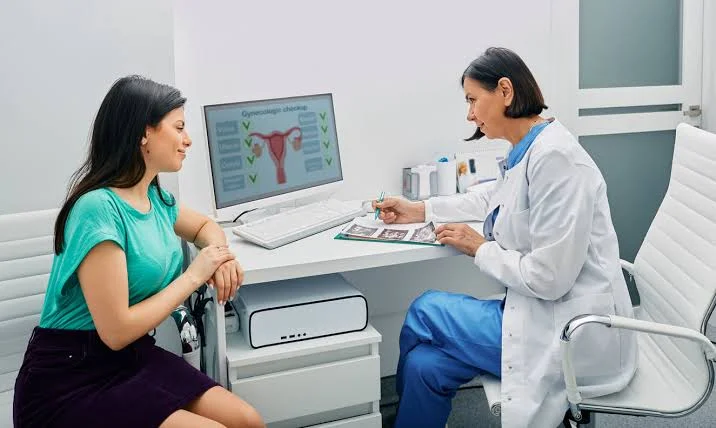
At Doctors Clinic Diagnostic Center in Dubai Healthcare City, Emsella always begins with a consultation with a female gynecologist — history, examination, urine test and on-site pelvic ultrasound if indicated — so that the treatment is matched to the actual cause of your symptoms. Our average wait time is just 15 minutes.
Gynecology consultation from AED 299. Open Sat–Thu 8 AM–10 PM, Fri 9 AM–9 PM. Free on-site parking and direct billing with 20+ insurance providers.
How Much Does Emsella Cost in Dubai?
Emsella pricing in Dubai is unusually opaque. Most clinics that offer the chair — including the larger hospital groups — publish no figure at all and quote only after an assessment, because the number of sessions depends on the severity of the problem. International pricing gives a useful reference point: published US cost surveys put a single Emsella session at roughly USD 150–400 and a full six-session package at USD 1,800–3,000. Converted and adjusted for the local market, Dubai clinics typically fall in the region of AED 800–1,500 per session and AED 4,000–8,000 for a six-session course, with lower effective per-session rates when a course is booked as a package.
Emsella pricing at DCDC is not published online. Emsella at DCDC is offered as single sessions and as a 6-session course — contact the clinic for current pricing and package offers. What we can publish are the fixed anchors around it: the gynecology consultation that must come first, and pelvic floor physiotherapy if it is added to the plan.
| Item | At DCDC | Typical Dubai market range | Notes |
|---|---|---|---|
| Gynecology consultation and pelvic floor assessment | From AED 299 | AED 300–800 | Includes history, examination and urine test. Required before any Emsella session. |
| Single Emsella session (28 minutes) | Contact DCDC for current pricing | AED 800–1,500 | Fully clothed, no downtime. Rarely booked as a one-off outside a maintenance context. |
| Six-session Emsella course (over about 3 weeks) | Offered as a package — contact DCDC | AED 4,000–8,000 | The standard protocol. Package pricing normally reduces the effective per-session cost. |
| Pelvic floor physiotherapy session | From AED 250 | AED 250–500 | Optional add-on through DCDC's rehabilitation department; session packs available. |
| Women's health screening packages | AED 299–1,499 | Varies widely | Useful where incontinence sits alongside menopause, hormonal or general health questions. |
| Insurance coverage | Consultation frequently covered; Emsella typically self-pay | Same across the market | DCDC offers direct billing with 20+ insurers, so the covered portion is settled at the clinic. |
Emsella cost in Dubai 2026 — DCDC price anchors alongside typical market ranges. Contact DCDC for current Emsella pricing.
A note on value: because Emsella is usually self-pay, it is worth comparing a course against the alternative. Pads and liners bought continuously for years add up quietly, and the indirect cost — avoiding exercise, avoiding travel, avoiding social plans — does not appear on any invoice. That said, the cheapest effective option remains a correctly performed home pelvic floor programme, and any honest clinic will tell you to try that first if you can do it properly.
What to Expect at DCDC
DCDC is located in Building 64, Block A, Al Razi Medical Complex, Dubai Healthcare City, with free dedicated on-site parking — a small detail that matters when you are coming twice a week for three weeks. The clinic is MOHAP-licensed (licence number NIMY7VY5-240925) and is open Saturday to Thursday from 8 AM to 10 PM and Friday from 9 AM to 9 PM, which makes early-morning or after-work session slots realistic for working patients.
Step 1 — Consultation with a female gynecologist
Every Emsella pathway at DCDC starts here, from AED 299. Dr. Parisa Dini or one of our other female gynecologists takes a full history — when the leakage happens, how much, what triggers it, obstetric history, menopausal status, medication — and performs an examination. A urine test rules out infection. If the picture suggests prolapse, fibroids, ovarian pathology or bladder abnormality, an on-site pelvic ultrasound is performed in the same visit rather than sending you elsewhere and waiting a week.
Step 2 — HIFEM suitability screening
This is the safety checkpoint: pregnancy status, pacemakers and implanted electronics, metal implants in the pelvis or hip, IUD type, recent surgery, anticoagulation and cancer history are all reviewed. If anything on that list applies, we say so and redirect the plan rather than proceeding. Patients who are not Emsella candidates are usually offered supervised pelvic floor physiotherapy instead.
Step 3 — The six-session course
Sessions are booked two per week for three weeks. You arrive, you are shown to the treatment room, you sit on the chair fully clothed, positioning is checked, and the 28 minutes begin. Intensity is stepped up progressively across the course as your tolerance improves. There is no changing, no gown, no recovery area — patients routinely book a session during a lunch break and go straight back to the office.
Step 4 — Optional pelvic floor physiotherapy
DCDC's rehabilitation department offers pelvic floor physiotherapy from AED 250 per session, with flexible session packs. Running physiotherapy alongside or immediately after the Emsella course is what converts short-term strength into a durable result, particularly for postnatal patients and anyone with a coordination or breathing-pattern component to their symptoms.
Step 5 — End-of-course review
You return to the gynecologist after the sixth session to review symptom change objectively, discuss whether maintenance sessions are worthwhile, and set up a home programme. DCDC holds a 4.8/5 Google rating from over 1,000 verified patient reviews and a 98% patient satisfaction rate, and the review appointment is where most of that feedback about pelvic health treatment actually comes from — patients want to know what happens next, not just what happened.
How to Prepare for an Emsella Session and What to Do Afterwards
Preparation is genuinely minimal, which is part of the appeal, but a few practical points make each session more comfortable and more effective.
Before your session
- Empty your bladder immediately before you sit down — a full bladder makes the contractions uncomfortable and can trigger leakage during treatment.
- Wear light, comfortable clothing such as leggings or cotton trousers. Thick denim and heavy fabrics are fine physically but less comfortable over 28 minutes.
- Remove all metal — belts with large buckles, keys, coins, phones and jewellery in the pocket area must be left outside the field.
- Tell the practitioner about any change since your screening: a new implant, a possible pregnancy, a new IUD, recent surgery or a suspected UTI.
- Stay normally hydrated. There is no need to fast, restrict fluids or stop any medication.
After your session
- Return to normal activity immediately — driving, work, gym and travel are all unrestricted.
- Expect mild pelvic floor fatigue for a few hours. It is a good sign, not a complication.
- Do not add heavy home Kegel sessions on the same day — the muscle has already had a substantial workload. Space voluntary training between treatment days.
- Keep a simple symptom diary: number of leaks, number of pads, number of night-time trips to the toilet. Objective numbers make the end-of-course review far more useful than impressions.
- Continue the maintenance programme once the course finishes. This is the single biggest determinant of how long your results last.
Combining Emsella with Pelvic Floor Physiotherapy
Emsella and physiotherapy solve different halves of the same problem. HIFEM builds raw contractile strength efficiently but cannot teach timing, cannot correct a breath-holding or bearing-down pattern, and cannot address the postural and abdominal contributions to pelvic floor load. A physiotherapist can assess all of those but cannot manufacture 11,000 contractions in 28 minutes.
The combination is particularly valuable in postnatal patients, where pelvic floor weakness commonly coexists with abdominal wall separation. If that describes you, our guide to diastasis recti physiotherapy treatment explains why treating the abdominal wall and the pelvic floor as one unit produces better results than treating either alone. DCDC's rehabilitation department works in the same building as the gynecology clinic, so the two plans are coordinated rather than run in parallel by strangers.
When You Need a Doctor Instead: Red Flags
Emsella is a treatment for a symptom. Before treating the symptom, someone has to be confident about the cause. The following features need medical assessment before any device-based treatment, and some of them need it urgently.
- Blood in the urine, visible or found on a dipstick, at any age — this requires investigation, not pelvic floor training.
- Pain on passing urine, fever or flank pain — suggests infection, which must be treated first.
- Sudden onset of incontinence over days rather than months, particularly with back pain, leg weakness, numbness in the saddle area or difficulty passing urine — this needs same-day medical assessment to exclude a neurological cause.
- A visible or palpable bulge at the vaginal opening, or a heavy dragging sensation that worsens through the day — suggests prolapse needing gynecological grading.
- Continuous leakage rather than leakage on effort or urgency, especially after pelvic surgery — needs specialist assessment.
- Recurrent urinary infections, three or more in a year.
- Incomplete emptying, straining to void, or a weak stream — obstruction and retention are treated very differently from weakness.
- Faecal incontinence or new anal leakage — needs assessment in its own right.
Where imaging is needed to answer these questions, DCDC can perform it in the same building — on-site pelvic ultrasound in the gynecology clinic, and pelvic MRI through the radiology department with reports returned within 18–24 hours and same-day reporting for urgent cases.
Doctor's Perspective on Pelvic Floor Health

Obstetrician & Gynecologist
Dr. Parisa Dini is an Obstetrician & Gynecologist at Doctors Clinic Diagnostic Center (DCDC) in Dubai Healthcare City, with a focus on PCOS, menopause and preventive women's health.
"The thing that strikes me most about incontinence is how long women wait before mentioning it," says Dr. Parisa Dini. "It is not unusual for a patient to tell me, almost as an afterthought at the end of a routine appointment, that she has been leaking when she coughs since her second child — eight years ago. She has stopped running, she plans her day around toilets, and she assumed this was simply what happens after childbirth. It is not." She adds: "Emsella is a genuinely useful tool because it removes the barriers that stop women starting treatment — there is nothing to undress for, nothing invasive, and it takes less time than a coffee. But I am equally clear with patients that the chair is not the whole plan. We examine first, we rule out infection and prolapse, and we finish with a home programme. Treated that way, most women get a result that lasts."
That clinical caution reflects how the service is structured at DCDC. If you would prefer to be seen by a female specialist throughout, our article on choosing a female gynecologist in Dubai explains how appointments are arranged.
Common Myths About the Emsella Chair
Marketing around HIFEM devices has outpaced the evidence in places. It is worth separating what the technology reliably does from what it is sometimes claimed to do.
- Myth: Emsella replaces Kegel exercises permanently. It does not. Muscle strength gained without maintenance is lost, in the pelvic floor exactly as in any other muscle group. Emsella gets you to a strength level from which home training becomes possible and effective.
- Myth: It is a weight-loss or body-contouring treatment. Emsella targets the pelvic floor for continence. Body-contouring devices from the same manufacturer are different products with different indications.
- Myth: One session is enough. The protocol is six sessions for a reason — muscle adaptation requires repeated loading over weeks.
- Myth: It cures prolapse. It can improve symptoms of mild prolapse by improving muscular support; it does not reverse established anatomical descent.
- Myth: Non-invasive means no contraindications. The electromagnetic field is powerful and interacts with implanted metal and electronics. Screening is not a formality.
Book an Emsella Pelvic Floor Session at DCDC
Emsella pelvic floor therapy at DCDC is delivered through our Gynecology & Obstetrics department in Dubai Healthcare City — fully clothed, 28 minutes per session, six sessions over three weeks, with optional pelvic floor physiotherapy from AED 250 to consolidate your results. Emsella is offered as single sessions and as a 6-session course; contact the clinic for current pricing and package offers.
Consultation with a female gynecologist from AED 299. MOHAP-licensed, 4.8/5 from 1,000+ reviews, free parking, open Sat–Thu 8 AM–10 PM and Fri 9 AM–9 PM.
Related Services at DCDC
Expert care and advanced diagnostics at Dubai Healthcare City
Emsella Pelvic Floor Therapy
Non-invasive HIFEM pelvic floor strengthening for urinary incontinence, delivered fully clothed in 28-minute sessions.
Book AppointmentPelvic Health
Assessment and treatment of pelvic floor weakness, incontinence and prolapse symptoms by female gynecologists.
Book AppointmentPhysiotherapy
Pelvic floor and postnatal rehabilitation with supervised exercise programmes from AED 250.
Book AppointmentFrequently Asked Questions
Final Thoughts
Emsella is one of the few treatments in women's health where the mechanism is easy to explain and the patient experience is genuinely undemanding: a focused electromagnetic field, about 11,000 pelvic floor contractions, 28 minutes, fully clothed, six times over three weeks. The published data — around 95% of patients reporting better quality of life and roughly two-thirds reducing or stopping pad use — is encouraging, and the safety profile in the literature is good. What the marketing tends to leave out is that the evidence base is moderate rather than overwhelming, that the results depend on maintenance, and that the chair only works well when the diagnosis underneath it is correct.
That is why the sequence matters more than the device. Leakage can come from muscular weakness, from an overactive bladder, from prolapse, from infection, from obstruction or occasionally from a neurological cause, and only the first of those responds well to strengthening alone. A proper assessment sorts this out in a single visit, and it is the difference between a treatment that works and six sessions that change nothing.
If urinary leakage has been quietly shaping your decisions — which exercise class you take, how far you travel, whether you laugh freely — it is worth having it assessed properly. Book a consultation with a female gynecologist at Doctors Clinic Diagnostic Center in Dubai Healthcare City from AED 299, and ask about Emsella pelvic floor therapy. Emsella is offered as single sessions and as a 6-session course; contact the clinic for current pricing and package offers. Call or WhatsApp DCDC, or book online — we are open Saturday to Thursday 8 AM to 10 PM and Friday 9 AM to 9 PM, with free on-site parking.
Sources & References
This article was reviewed by our medical team and references the following sources:
- Samuels JB et al. - Safety and Efficacy of a Non-Invasive HIFEM Device for Treatment of Urinary Incontinence and Enhancement of Quality of Life (Lasers in Surgery and Medicine, 2019)
- US FDA - 510(k) Clearance K181497, BTL Emsella Non-Implanted Electrical Continence Device
- NHS - Urinary Incontinence: Overview
- NHS - Urinary Incontinence: Treatment and Pelvic Floor Muscle Training
- NICE - Urinary Incontinence and Pelvic Organ Prolapse in Women: Management (NG123)
- Cleveland Clinic - Urinary Incontinence: Causes, Types and Treatment
- Mayo Clinic - Kegel Exercises: A How-To Guide for Women
- American Urological Association - Stress Urinary Incontinence (SUI) Guideline
- NIDDK (National Institutes of Health) - Bladder Control Problems
- ACOG - Urinary Incontinence FAQ
Medical content on this site is reviewed by DHA-licensed physicians. See our editorial policy for more information.

Written by
Dr. Parisa Dini
Obstetrician & Gynecologist
MD, OB-GYN
Dr. Parisa Dini is an Obstetrician & Gynecologist at Doctors Clinic Diagnostic Center (DCDC) in Dubai Healthcare City.
Related Articles

Emsella After Childbirth Dubai: Postpartum Guide (2026)
Emsella vs Kegels Dubai: Which Works Better? (2026)

Urinary Incontinence Dubai: Causes & Care (2026)
Pelvic Floor Physiotherapy Dubai: Who Needs It (2026)
Postnatal Recovery: Physiotherapy After Delivery (2026)

Menopause Treatment Dubai: Symptoms & HRT Options (2026)
Female Gynecologist Dubai: Dr. Dini (2026)
More in Women's Health

BRCA Test: Who Should Consider Genetic Counselling?
Read More
Breast Cancer Awareness Month: October 2026 Dubai
Read More
Dense Breast Tissue: What Your Mammogram Report Means
Read MoreEmsella After Childbirth Dubai: Postpartum Guide (2026)
Read MorePelvic Floor Physiotherapy Dubai: Who Needs It (2026)
Read MorePostnatal Recovery: Physiotherapy After Delivery (2026)
Read More© 2026 Doctors Clinic Diagnostic Center (DCDC), Dubai Healthcare City. Originally published at https://doctorsclinicdubai.ae/blog/how-emsella-works-pelvic-floor-chair-dubai. All rights reserved. Unauthorized reproduction is prohibited.