Key Takeaways
- Breast density describes tissue on a mammogram; it is not a cancer diagnosis.
- Density categories C and D are called dense. They differ from the numbered BI-RADS assessment of a finding.
- Extra tests are an individual decision. Keep your recommended follow-up and ask how your overall risk affects the plan.
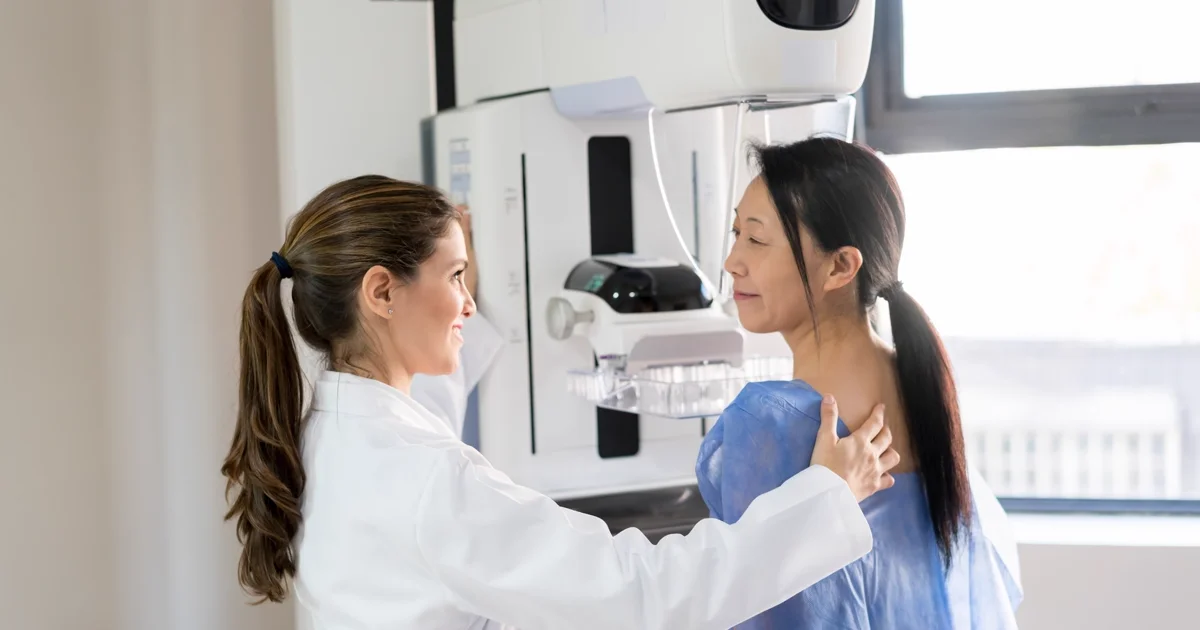
If your mammogram report mentions dense breast tissue, the useful next step is to discuss what that means for your screening plan. The phrase describes how much fibrous and glandular tissue is visible compared with fat. It does not tell you that cancer has been found. The National Cancer Institute explains this distinction.
This guide focuses on the density wording in your report. For a numbered assessment such as BI-RADS 0, 3 or 4, see the separate mammogram results and BI-RADS guide. Both pieces of information can appear in the same report, but they answer different questions.
What do categories A, B, C and D mean?
| Category | Description | Classified as dense? |
|---|---|---|
| A | Almost entirely fatty | No |
| B | Scattered areas of fibroglandular tissue | No |
| C | Heterogeneously dense tissue | Yes |
| D | Extremely dense tissue | Yes |
These descriptions come from the radiologist’s assessment of the mammogram. Breast size, how firm a breast feels, or a self-examination cannot establish the density category. The American Cancer Society’s density guide explains the tissue types and report terminology.
Why does density matter?
Density has two implications: some cancers can be harder to see on a mammogram, and dense tissue is itself associated with higher breast cancer risk. Dense tissue and some abnormal findings look white on mammography, which can make a finding less visible. The FDA’s explanation of breast density describes why the report should be considered alongside personal risk, rather than read as an all-clear or a diagnosis.
Should you arrange an ultrasound or MRI immediately?
Not everyone with a dense report needs the same additional test. The USPSTF screening recommendation finds insufficient evidence to recommend for or against supplemental ultrasound or MRI for all women with dense breasts and an otherwise negative screening mammogram. This is a statement about a universal screening policy; it does not mean an additional test can never be appropriate.
Discuss both possible benefit and downsides with your clinician. Additional imaging can find abnormalities, but may also lead to callbacks or biopsies that do not show cancer. A symptom, an abnormal finding or a high-risk history creates a different clinical situation from density alone. Your clinician can explain whether the proposed test is routine screening or investigating a particular concern. ACS discusses these decisions.
A simple way to prepare for your results review
- Bring the whole report. Include the impression and recommendation, not just the sentence about density.
- Find the comparison date. Ask whether earlier images were available and whether the radiologist wants them.
- Describe any current changes. Mention a lump or nipple change even if the latest screening report sounds reassuring.
- Record the agreed plan. Write down the test, reason, timing and person responsible for arranging it.
- Check practical details. Ask about cost, insurance approval, preparation and how the result will reach you.
Questions worth asking at the appointment
| Your question | What it helps clarify |
|---|---|
| What is my density category? | Which wording applies to this examination. |
| What does the final assessment recommend? | Whether there is a follow-up action separate from density. |
| How does my history affect my risk? | Whether a general screening schedule fits your situation. |
| What would an extra test change? | The purpose, benefits and possible false alarms. |
| When should I return? | A clear date rather than an open-ended reminder. |
Two report details that are easy to mix up
“Category C density” and “BI-RADS 3 assessment” are not interchangeable. One describes tissue composition; the other communicates the assessment of imaging findings and the recommended follow-up. Read the conclusion and recommendation with your clinician before deciding what to do. Do not replace a requested short-interval review with an annual reminder simply because the report also mentions density.
What to expect at DCDC
You can request a women’s health consultation or ask the mammography team about a report review in Dubai Healthcare City. Bring the images where available. If you are considering an October package, first check whether its listed tests match the recommendation in your report. The Gold Upgrade adds cervical screening; it is not an extra breast-density investigation.
At the consultation, explain your main concern and share previous reports before deciding on tests. DCDC has on-site digital mammography and ultrasound; the clinician will discuss which assessment, if any, is appropriate. Before leaving, confirm how results will be reviewed and how any specialist referral will be arranged. Ask the team for the expected reporting time for your specific examination.
Related Services at DCDC
Expert care and advanced diagnostics at Dubai Healthcare City
Frequently Asked Questions
Your next step
Bring your questions and previous reports to a clinical discussion. An individual plan is more useful than choosing tests by a package name alone.
Sources & References
This article references the following sources:
- NCI: Dense breasts
- ACS: Breast density and your report
- FDA: Understanding breast density
- USPSTF: Breast cancer screening recommendation
This information is educational and does not replace individual medical advice. See our editorial policy for more information.

Written by
DCDC Editorial Team
Patient education
Patient information from Doctors Clinic Diagnostic Center, based on the references listed here. This article supports a clinical discussion and does not provide an individual diagnosis.
Related patient guides

Mammogram results and BI-RADS
Mammogram or ultrasound?
October breast awareness plan
More in Women's Health

Emsella vs Incontinence Surgery Dubai (2026)
Read More
Double Marker Test Dubai: Timing, Results & Price (2026)
Read More
Emsella Side Effects & Safety Dubai (2026)
Read More
FSH & LH Test Dubai: Day 3 Levels, Ratio & Price
Read More
NIPT Test Dubai: Cost, Accuracy & Timing (2026)
Read More
NIPT Results: High-Risk vs Low-Risk Explained (2026)
Read More© 2026 Doctors Clinic Diagnostic Center (DCDC), Dubai Healthcare City. Originally published at https://doctorsclinicdubai.ae/blog/dense-breast-tissue-mammogram-guide. All rights reserved. Unauthorized reproduction is prohibited.