Key Takeaways
- An enlarged prostate, medically known as benign prostatic hyperplasia (BPH), is a non-cancerous growth of the prostate gland that affects roughly half of men over 50 and up to 80% of men over 80
- The hallmark signs are lower urinary tract symptoms (LUTS): a weak or interrupted stream, frequent urination, waking at night to urinate (nocturia), urgency, hesitancy, straining, and a feeling of incomplete bladder emptying
- BPH and prostate cancer are different conditions that can cause similar early urinary symptoms, which is why a PSA blood test and clinical evaluation -- not symptoms alone -- are needed to tell them apart
- The International Prostate Symptom Score (IPSS), a simple seven-question self-assessment, helps classify symptoms as mild, moderate, or severe and guides how urgently you should see a doctor
- Warning signs that need urgent medical attention include complete inability to urinate, visible blood in urine, fever with urinary symptoms, and severe lower abdominal pain
- Most men with BPH manage their symptoms successfully with lifestyle changes and medication; surgery is reserved for a smaller number of moderate-to-severe cases that do not respond to other treatment
- At DCDC in Dubai Healthcare City, a prostate health assessment -- consultation, on-site PSA blood test, and ultrasound imaging when needed -- can typically be completed with same-day results, starting from AED 249 for the blood test
Waking up two or three times a night to urinate, noticing your stream has become weaker, or feeling like your bladder never fully empties are not simply signs of getting older -- they are classic symptoms of an enlarged prostate, a condition that becomes increasingly common in men from their late 40s onward. Because these urinary symptoms can also occasionally signal something more serious, understanding what is normal, what warrants a check-up, and what requires urgent care is essential. Our PSA blood test service at DCDC in Dubai Healthcare City offers same-day results alongside a same-visit consultation, giving you clarity on what is causing your symptoms without weeks of waiting.
This guide walks through the full spectrum of enlarged prostate symptoms, how they differ from warning signs of prostate cancer, a simple self-assessment tool you can use today, and exactly what to expect if you come in for an evaluation.
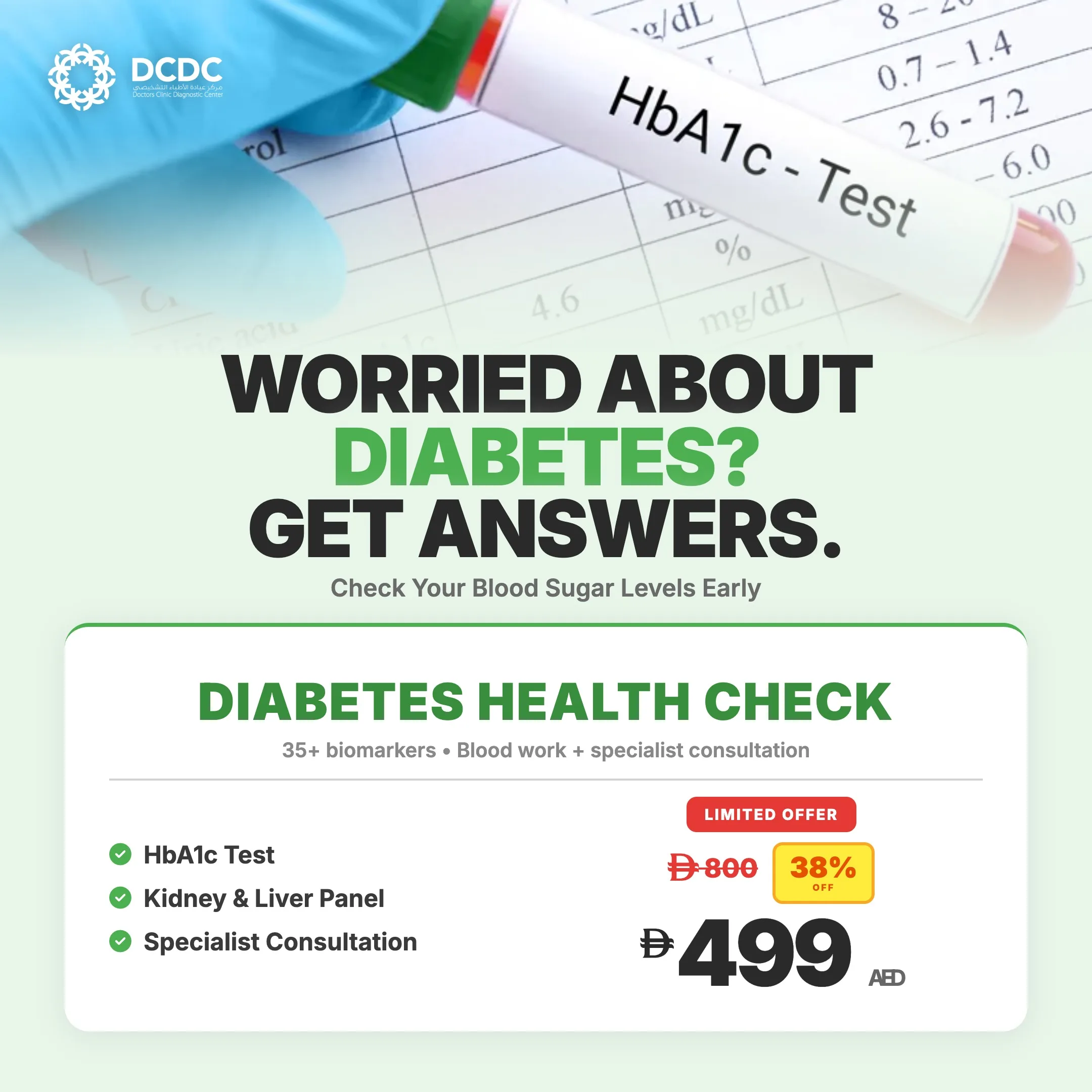
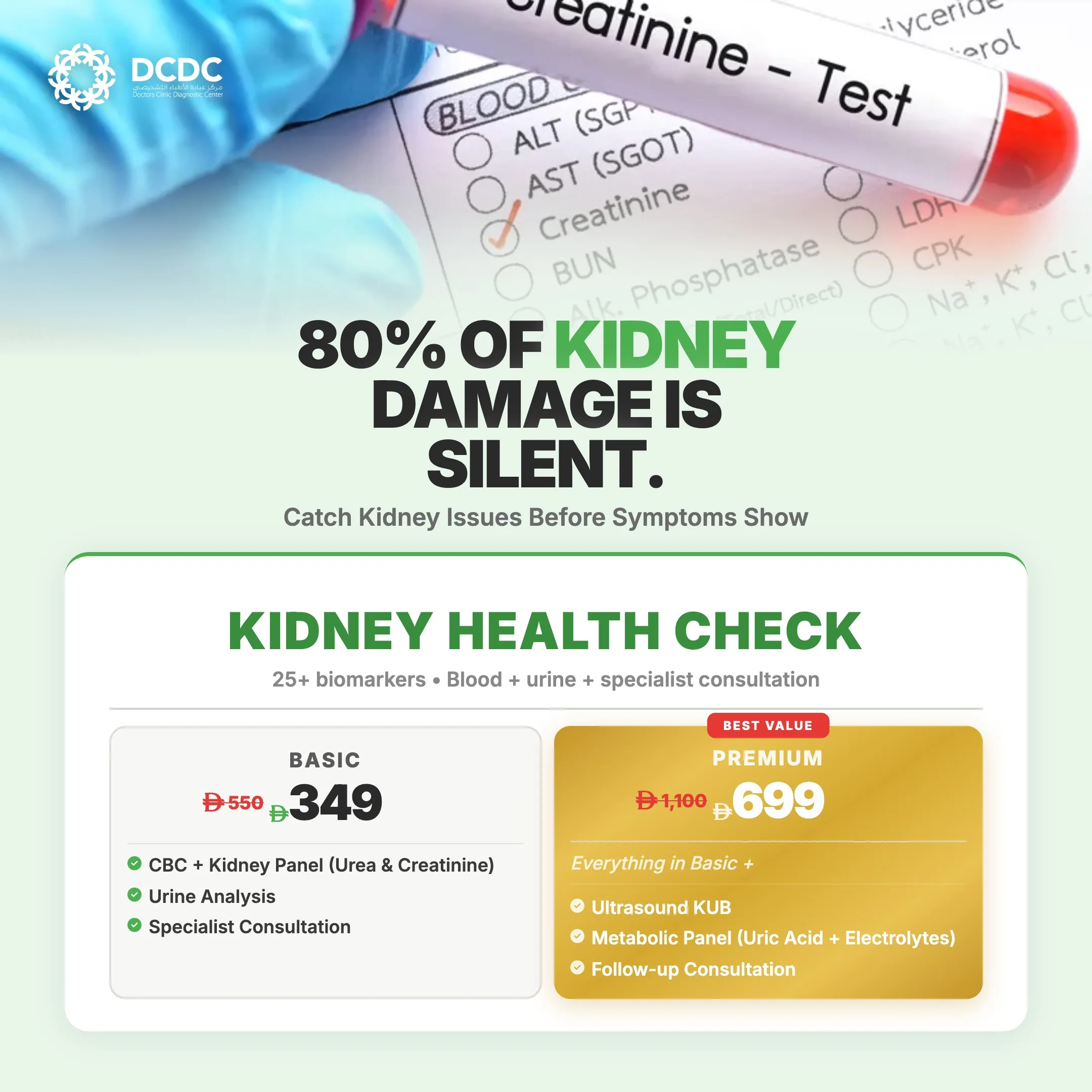
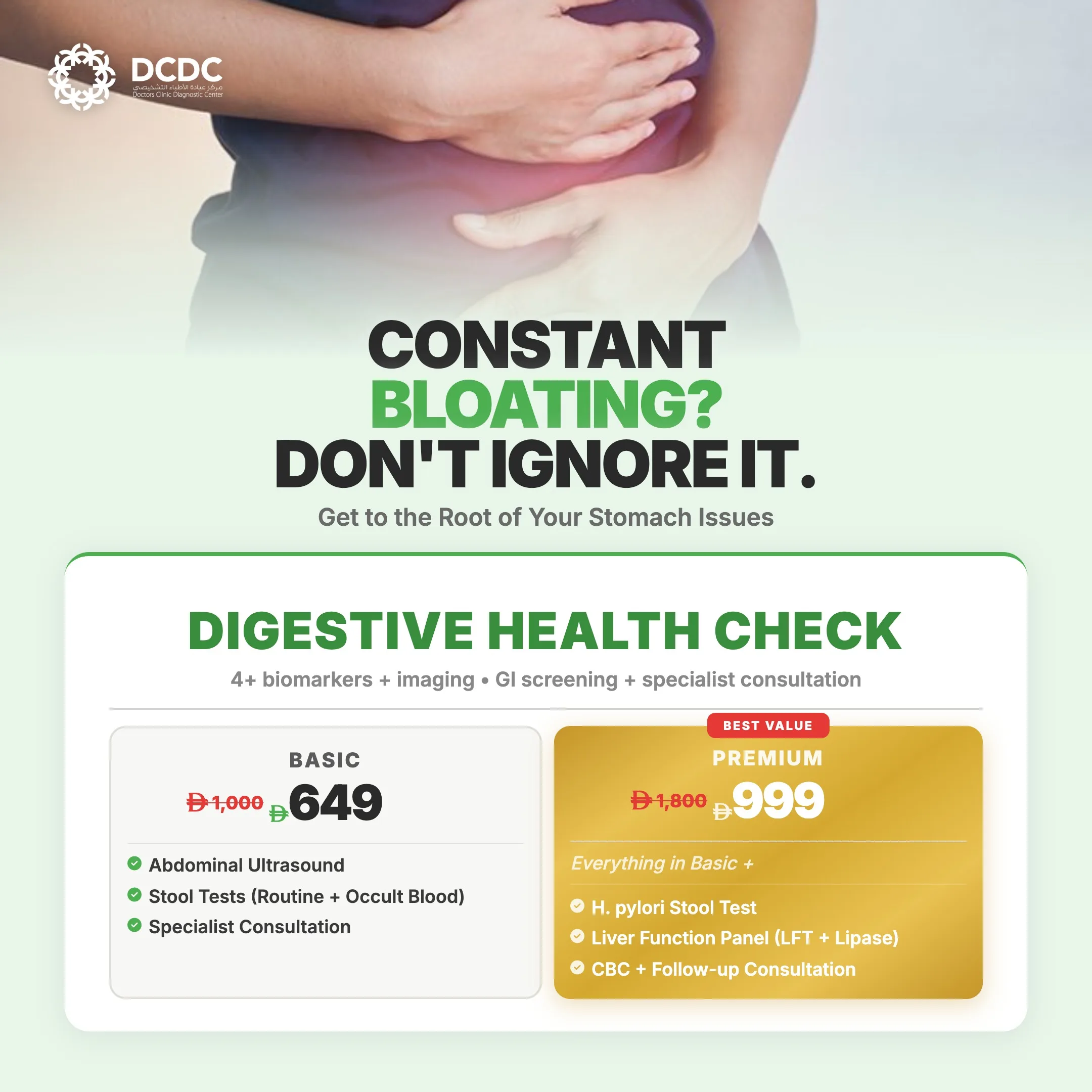
Health Screening Packages
Save with our bundled screening packages — specialist consultation included



What Is an Enlarged Prostate (BPH)?
The prostate is a small, walnut-sized gland located just below the bladder, surrounding the urethra -- the tube that carries urine out of the body. Benign prostatic hyperplasia (BPH) is the medical term for a non-cancerous enlargement of this gland. As men age, prostate tissue can gradually grow larger, and because the urethra runs directly through the center of the prostate, this growth can squeeze the tube like a fist closing around a straw. The result is a range of urinary symptoms that develop gradually, often over years, and tend to worsen slowly if left unaddressed.
It is important to understand that BPH is not cancer and does not turn into cancer. The two conditions are entirely separate processes that happen to occur in the same organ and can, confusingly, cause some of the same urinary symptoms. This overlap is precisely why symptoms alone cannot tell you which condition you have -- only proper evaluation can.
How Common Is BPH? Global and Regional Prevalence
BPH is one of the most common conditions affecting aging men worldwide, and Dubai's demographics make it especially relevant locally. Studies consistently show that microscopic prostate enlargement is present in roughly 50% of men by their 50s, and that figure climbs to approximately 80-90% of men by their 80s, according to data cited by the American Urological Association and the European Association of Urology. Not every man with an enlarged prostate develops bothersome symptoms, but a significant proportion do -- and the likelihood of noticeable symptoms increases steadily with age.
Dubai's population includes a large cohort of working-age and older expatriate men, many of whom prioritize demanding careers over routine health checkups and may go years without a general physical examination. Long working hours, high caffeine intake, and inconsistent hydration habits in the region's hot climate can all make urinary symptoms feel worse day to day, even though they do not directly cause BPH. The net effect is that many men live with undiagnosed or unmanaged BPH symptoms for far longer than necessary, often dismissing early signs as an unavoidable part of getting older.
Enlarged Prostate Symptoms: Recognizing the Signs (LUTS)
Doctors group enlarged prostate symptoms under the umbrella term lower urinary tract symptoms, or LUTS. These symptoms are typically divided into two categories: storage symptoms, related to how the bladder holds urine, and voiding symptoms, related to how the bladder empties. Recognizing which symptoms you are experiencing -- and how often -- is the first step toward understanding whether an enlarged prostate could be the cause.
Storage Symptoms
- Frequent urination (urinary frequency): Needing to urinate more than eight times in 24 hours, even when fluid intake has not increased
- Urgency: A sudden, strong need to urinate that is difficult to postpone
- Nocturia: Waking one or more times per night specifically to urinate, disrupting normal sleep
- Urge incontinence: In more advanced cases, leaking a small amount of urine before reaching the bathroom
Voiding Symptoms
- Weak or slow urinary stream: The flow of urine is noticeably less forceful than it used to be
- Hesitancy: Difficulty starting urination, or a delay between trying to go and urine actually flowing
- Straining: Needing to push or bear down to urinate or to maintain the flow
- Intermittency: The stream stops and starts multiple times during a single trip to the bathroom
- Terminal dribbling: Urine continues to dribble after you believe you have finished
- Incomplete bladder emptying: A persistent sensation that the bladder is not fully empty, even right after urinating
Most men do not experience every symptom at once -- BPH usually starts with one or two mild changes, such as a slightly weaker stream or an extra nighttime bathroom trip, and gradually adds more symptoms over months or years. Because these symptoms develop so slowly, many men adapt without realizing how much their quality of life has been affected. If you are unsure whether your urinary symptoms are typical for your age or whether they need attention, our guide to men's health screening tests by age outlines what proactive checks are recommended at each life stage.
How to Self-Assess: The IPSS Symptom Score
The International Prostate Symptom Score (IPSS) is a validated, seven-question self-assessment used worldwide by urologists to quantify how bothersome BPH symptoms are. Each question -- covering incomplete emptying, frequency, intermittency, urgency, weak stream, straining, and nocturia -- is scored from 0 (not at all) to 5 (almost always), giving a total possible score of 0 to 35. An eighth question separately rates how much these symptoms affect your quality of life. While the IPSS is not a diagnosis on its own, it is a useful, doctor-recommended way to track symptom severity over time and decide how quickly to seek an evaluation.
| IPSS Score Range | Symptom Severity | What It Typically Means | Recommended Action |
|---|---|---|---|
| 0-7 | Mild | Symptoms are present but generally not bothersome; minimal impact on daily activities or sleep | Discuss at your next routine checkup; watchful waiting with lifestyle adjustments is often appropriate |
| 8-19 | Moderate | Symptoms occur regularly and begin to interfere with sleep, work, or daily comfort | Schedule a doctor's consultation for evaluation and to discuss medication options |
| 20-35 | Severe | Symptoms are frequent and significantly disrupt daily life, sleep, and in some cases bladder function | See a doctor promptly for full diagnostic workup; earlier treatment reduces the risk of complications |
International Prostate Symptom Score (IPSS) interpretation guide. This self-assessment tool helps quantify BPH symptom severity but does not replace a clinical evaluation.
BPH vs Prostate Cancer: How to Tell the Difference
One of the most common questions men ask after noticing urinary symptoms is whether an enlarged prostate means they have prostate cancer. The honest answer is that symptoms alone cannot tell you -- BPH and prostate cancer are two entirely different conditions that can, in their early stages, both produce similar lower urinary tract symptoms because both can involve prostate tissue pressing on the urethra. BPH is far more common than prostate cancer and, unlike cancer, does not spread or invade other tissue.
- BPH typically develops gradually over years, usually causes symmetrical enlargement of the prostate, and is not life-threatening, though it can significantly affect quality of life if untreated
- Prostate cancer may cause no symptoms at all in its early, most treatable stages, which is exactly why screening -- rather than waiting for symptoms -- is recommended for men in certain age and risk groups
- Overlapping symptoms can include weak stream, frequency, and urgency, but symptoms that are more specific to prostate cancer (though not exclusive to it) include unexplained blood in the urine or semen, new erectile difficulty, and unexplained pain in the hips, back, or pelvis
- The only reliable way to distinguish the two is through a combination of a PSA blood test, a digital rectal examination (DRE), and, when indicated, imaging or a referral for further specialist assessment
A PSA (prostate-specific antigen) test measures a protein produced by the prostate; levels can rise with both BPH and prostate cancer, so an elevated result is not a diagnosis on its own but rather a signal for further evaluation. Our detailed guide on PSA testing and prostate screening in Dubai explains how the test works, what the numbers mean, and how often it should be repeated.
Risk Factors for an Enlarged Prostate
While the exact cause of BPH is not fully understood, research points to hormonal changes that occur naturally with aging, along with several factors that increase an individual man's likelihood of developing symptomatic prostate enlargement.
- Age: The single strongest risk factor. BPH is rare before age 40 and becomes progressively more common with each decade after that
- Family history: Men with a father or brother who had BPH are more likely to develop it themselves, suggesting a genetic component
- Obesity: Excess body weight, particularly abdominal obesity, is linked to a higher risk of BPH and more severe symptoms
- Type 2 diabetes and metabolic syndrome: These conditions are associated with faster prostate growth and worse urinary symptoms over time
- Sedentary lifestyle: Low levels of physical activity are consistently linked to a higher risk of BPH; regular exercise has the opposite, protective effect
- Heart disease and high blood pressure: Some studies associate cardiovascular disease with an increased likelihood of BPH, likely through shared underlying mechanisms
Several of these risk factors -- obesity, diabetes, and a sedentary lifestyle -- are increasingly common among working professionals in Dubai, where long desk-bound hours and demanding schedules can crowd out regular exercise. Left unaddressed, untreated BPH can occasionally lead to complications such as urinary retention or, in some cases, visible blood in the urine; our guide on blood in urine causes and diagnosis explains when this particular symptom needs urgent attention.
When to See a Doctor: Warning Signs That Need Urgent Attention
Most enlarged prostate symptoms develop slowly and are not medical emergencies, but a smaller subset of warning signs should prompt immediate care. Knowing the difference helps you respond appropriately rather than either panicking unnecessarily or delaying care that is genuinely urgent.
Seek Emergency Care Immediately If You Experience
- Complete inability to urinate despite a full, painful bladder (acute urinary retention)
- Visible blood in your urine, especially if it is heavy or accompanied by clots
- Fever, chills, and urinary symptoms together -- suggesting a urinary tract or kidney infection
- Severe lower abdominal or pelvic pain associated with urinary symptoms
- Signs of kidney involvement, such as flank pain, nausea, or significant swelling in the legs
Schedule a Doctor's Appointment Soon If You Notice
- A weak or interrupted urinary stream that has developed or worsened over the past several months
- Waking two or more times per night to urinate on a regular basis
- A persistent feeling that your bladder never fully empties
- New difficulty starting urination or needing to strain to void
- Urinary symptoms that are starting to affect your sleep, work, or daily comfort
- You are over 50 (or over 40 with a family history of prostate problems) and have never had a baseline prostate evaluation
Important: Acute urinary retention -- a sudden, complete inability to urinate -- is a medical emergency that requires immediate treatment, typically with a temporary catheter to relieve the bladder, followed by evaluation for the underlying cause.
How BPH Is Diagnosed
Diagnosing an enlarged prostate involves a combination of history-taking, physical examination, laboratory testing, and, when needed, imaging. No single test provides a complete picture on its own -- the goal is to confirm that BPH is the cause of your symptoms, rule out other explanations such as infection or cancer, and assess how significantly the prostate is affecting bladder function.
Medical History and Symptom Review
Your doctor will ask about the specific urinary symptoms you are experiencing, how long they have been present, how much they affect your daily life and sleep, your family history of prostate conditions, and any medications you take that could affect bladder function, such as decongestants or certain antihistamines.
Digital Rectal Examination (DRE)
A brief physical examination in which the doctor gently checks the size, shape, and texture of the prostate through the rectal wall. It helps assess whether the prostate feels smoothly and symmetrically enlarged, which is typical of BPH, or whether there are irregular, hard areas that would warrant further investigation.
PSA Blood Test
A simple blood draw that measures prostate-specific antigen levels. It helps assess overall prostate health and, combined with the DRE and your symptom pattern, guides whether further prostate cancer screening is warranted. PSA testing is available on-site with same-day results.
Urinalysis
A urine test that checks for signs of infection, blood, or other abnormalities that could explain urinary symptoms independently of or alongside BPH.
Ultrasound Imaging
An abdominal or pelvic ultrasound can measure prostate size, assess how well the bladder empties (post-void residual volume), and check for kidney changes that can occur when an enlarged prostate has caused prolonged urinary obstruction. This imaging is non-invasive, uses no radiation, and is available on-site.
Uroflowmetry
A specialized test that measures the speed and pattern of your urine flow, providing an objective measurement of how significantly the prostate is obstructing urine flow. This test may be arranged through a specialist referral when a more detailed urodynamic picture is needed.
BPH Treatment Options
Treatment for an enlarged prostate is tailored to how bothersome your symptoms are, your IPSS score, prostate size, and your overall health and preferences. Not every man with BPH needs medication or a procedure -- treatment exists on a spectrum from simple observation to surgery.
Watchful Waiting
For men with mild symptoms (IPSS 0-7) that are not significantly affecting quality of life, doctors often recommend regular monitoring rather than immediate treatment, combined with the lifestyle adjustments described in the next section.
Medications
- Alpha-blockers (such as tamsulosin): Relax the muscles of the prostate and bladder neck, improving urine flow within days to weeks. These are often the first medication tried
- 5-alpha reductase inhibitors (such as finasteride and dutasteride): Work more slowly, over several months, to shrink prostate tissue itself, making them more suitable for larger prostates
- Combination therapy: Some men benefit from taking both classes of medication together for more comprehensive symptom control
Minimally Invasive Procedures
For men whose symptoms do not respond adequately to medication, several minimally invasive office- or day-case procedures can reduce prostate tissue or relieve pressure on the urethra with a shorter recovery time than traditional surgery. These are typically performed by a urologist after specialist evaluation.
Surgery
Surgical options, such as transurethral resection of the prostate (TURP), are reserved for moderate-to-severe cases that have not responded to other treatments, or for men who develop complications such as recurrent urinary retention or bladder stones. When a case requires this level of specialist care, our medical team coordinates referral to a trusted urology specialist; our guide to finding a urologist explains what to expect from specialist men's health care.
Lifestyle Changes That Help BPH Symptoms
Regardless of whether medication is needed, several practical lifestyle adjustments can meaningfully reduce the day-to-day impact of BPH symptoms, particularly nocturia and urgency.
- Limit fluids in the evening: Reduce fluid intake two to three hours before bedtime to cut down on nighttime bathroom trips, while still maintaining adequate hydration earlier in the day
- Reduce caffeine and alcohol: Both act as bladder irritants and mild diuretics, worsening urgency and frequency
- Double voiding: After urinating, wait a moment and try again to help empty the bladder more completely
- Bladder training: Gradually increasing the interval between bathroom visits can help retrain bladder capacity over time
- Stay physically active: Regular moderate exercise is associated with fewer and less severe BPH symptoms
- Maintain a healthy weight: Weight loss can reduce symptom severity in men who are overweight or obese
- Review your medications: Some over-the-counter decongestants and antihistamines can worsen urinary symptoms; ask your doctor about alternatives if you take these regularly
Prostate Health Screening by Age: What Dubai Men Should Know
Proactive screening, rather than waiting for symptoms to become bothersome, gives you and your doctor a baseline to track changes over time. The right starting point depends on your age and personal risk factors.
| Age Group | Recommended Approach | Why It Matters |
|---|---|---|
| 40-49 | Discuss family history with your GP; baseline PSA if you have a father or brother with prostate cancer or BPH | Family history significantly raises risk; an early baseline helps track future changes |
| 50-54 | Baseline PSA test and symptom review for average-risk men; earlier for higher-risk men | This is when BPH prevalence starts rising sharply; a baseline aids future comparison |
| 55-69 | PSA test and symptom (IPSS) review roughly every 1-2 years, or sooner if symptoms appear | Peak decades for both BPH symptoms and prostate cancer risk |
| 70+ | Individualized decision with your doctor based on overall health, symptoms, and prior results | Screening decisions shift toward managing symptoms and overall health context |
General prostate health screening guidance by age. Individual recommendations vary based on family history, ethnicity, and overall health -- discuss your personal screening schedule with your doctor.
Noticing Urinary Symptoms? Get a Prostate Health Check
At Doctors Clinic Diagnostic Center in Dubai Healthcare City, a prostate health assessment includes a same-visit consultation, an on-site PSA blood test with same-day results, and ultrasound imaging when needed -- all under one MOHAP-licensed roof. Our average wait time is just 15 minutes.
PSA blood test from AED 149. Open Sat-Thu 8 AM-10 PM, Fri 9 AM-9 PM. 20+ insurance partners with direct billing.
What to Expect at DCDC for Prostate Health Assessment
Understanding the process in advance can make it easier to take the first step. Here is what a typical prostate health assessment looks like at Doctors Clinic Diagnostic Center in Dubai Healthcare City.
- 1. Arrival and registration: Walk-ins are welcome, or you can book online or via WhatsApp in advance. DCDC is located in Building 64, Block A, Al Razi Medical Complex, DHCC, with free dedicated on-site parking and an average wait time of 15 minutes
- 2. Insurance verification: Our front desk team confirms your coverage with any of our 20+ direct-billing insurance partners, including Daman, AXA, and Bupa, before your consultation
- 3. Consultation with Dr. Hadeel Elnur or a member of our medical team: A detailed review of your urinary symptoms, an IPSS-style symptom discussion, relevant medical and family history, and a focused physical examination
- 4. On-site PSA blood test: A quick blood draw processed in our on-site laboratory, with same-day results for routine testing rather than a multi-day wait
- 5. Ultrasound imaging, if indicated: If your doctor recommends assessing prostate size or bladder emptying, an abdominal or pelvic ultrasound can be performed the same day in our on-site imaging suite
- 6. Results and personalized plan: Your doctor reviews your PSA result, symptom score, and imaging findings together to explain what is causing your symptoms and outline next steps, whether that is lifestyle guidance, medication, or a specialist referral
- 7. Referral coordination, if needed: For men who need a urologist for further evaluation or a procedure, our team coordinates the referral and shares your results directly, avoiding repeat testing
DCDC maintains a 4.8/5 Google rating from over 1,000 verified reviews and a 98% patient satisfaction rate, with multilingual staff fluent in Arabic, English, Farsi, Urdu, and Hindi to support our diverse patient population.
DCDC Diagnostic Tests and Pricing for Prostate Health (2026)
Understanding the cost of a prostate health assessment helps you plan your visit. The table below outlines commonly used tests and their estimated cost at DCDC; most are covered by health insurance when medically indicated.
| Test / Service | What It Includes | Estimated Cost (AED) |
|---|---|---|
| GP Consultation | Symptom review, IPSS-style assessment, physical examination, test ordering | From AED 250 |
| PSA Blood Test | Prostate-specific antigen level as part of a blood test panel, on-site, same-day results | From AED 149 |
| Urinalysis | Checks for infection, blood, and other abnormalities affecting urinary symptoms | From AED 149 |
| Abdominal / Pelvic Ultrasound | Prostate sizing, bladder emptying assessment, kidney check | From AED 300-600 |
| Men's Health Checkup Package | Comprehensive screening including prostate markers, blood pressure, and general health panel | From AED 249 |
Estimated costs for prostate health assessment at DCDC Dubai Healthcare City (2026). Prices are approximate and may vary. Insurance coverage applies for medically indicated tests.
Doctor's Perspective: Why Ignoring Urinary Symptoms Is a Mistake

General Practitioner
Dr. Hadeel Elnur is a General Practitioner at Doctors Clinic Diagnostic Center (DCDC) in Dubai Healthcare City.
"Many men dismiss urinary symptoms as just part of aging, but BPH is a treatable condition. A simple PSA test and consultation can identify the cause and significantly improve quality of life," says Dr. Hadeel Elnur. "I often meet patients who have been getting up three or four times a night for years before mentioning it to a doctor, simply because they assumed nothing could be done. In reality, most men respond very well to lifestyle changes and medication once we understand what is happening. The first step is always the same: a straightforward evaluation to find out what is actually causing the symptoms, rather than guessing."
Take the First Step Toward Better Prostate Health
Doctors Clinic Diagnostic Center in Dubai Healthcare City offers same-visit consultations, on-site PSA blood testing, and ultrasound imaging for men experiencing urinary symptoms. With a 4.8/5 Google rating, 98% patient satisfaction, and 20+ direct-billing insurance partners, getting answers does not have to mean weeks of waiting.
Health checkup packages from AED 249. Building 64, Block A, Al Razi Medical Complex, DHCC. Free parking. Walk-ins welcome.
Related Services at DCDC
Expert care and advanced diagnostics at Dubai Healthcare City
PSA Test
PSA blood test for prostate cancer screening and prostate health monitoring.
Book AppointmentAbdominal Ultrasound
Non-invasive imaging to assess prostate size and bladder function.
Book AppointmentHealth Checkup
Comprehensive health screening packages including prostate markers for men over 40.
Book AppointmentFrequently Asked Questions
Final Thoughts
An enlarged prostate is one of the most common conditions affecting men as they age, and its symptoms -- while sometimes inconvenient or embarrassing to discuss -- are highly treatable once properly identified. The key is not to wait until symptoms become severe or to assume that a weaker stream and extra nighttime bathroom trips are simply an unavoidable part of getting older. A short conversation with a doctor, combined with a PSA blood test and, when needed, ultrasound imaging, can provide clear answers and open the door to effective treatment.
At DCDC in Dubai Healthcare City, prostate health assessment is designed to be simple and fast: a same-visit consultation, on-site PSA blood testing with same-day results, and ultrasound imaging when clinically indicated, all under one MOHAP-licensed roof. If urinary symptoms have been affecting your sleep, comfort, or daily routine, do not wait for them to worsen -- schedule an evaluation and get answers today.
Sources & References
This article was reviewed by our medical team and references the following sources:
- American Urological Association - Benign Prostatic Hyperplasia (BPH) Guideline
- European Association of Urology - Management of Non-neurogenic Male LUTS Guidelines
- Mayo Clinic - Benign Prostatic Hyperplasia (BPH): Symptoms and Causes
- NHS - Enlarged Prostate (Benign Prostate Enlargement)
- Cleveland Clinic - Benign Prostatic Hyperplasia (BPH)
- National Institute of Diabetes and Digestive and Kidney Diseases (NIDDK) - Prostate Enlargement (Benign Prostatic Hyperplasia)
Medical content on this site is reviewed by DHA-licensed physicians. See our editorial policy for more information.

Written by
Dr. Hadeel Elnur
General Practitioner
MD, General Practice
Dr. Hadeel Elnur is a General Practitioner at Doctors Clinic Diagnostic Center (DCDC) in Dubai Healthcare City.
Related Articles

PSA Test Dubai: Prostate Screening Guide
Men's Health Screening Dubai: Tests by Age
Blood in Urine Dubai: Causes & Diagnosis

Urologist Dubai: Men's Health Guide
Kidney Function Test Dubai: KFT Guide
More in Internal Medicine
Hiatal Hernia Dubai: Symptoms & Treatment (2026)
Read MoreDiabetic Foot Care Dubai: Warning Signs (2026)
Read MoreColonoscopy vs Endoscopy Dubai: Guide (2026)
Read MoreDiabetic Diet Plan Dubai: Foods & Tips (2026)
Read MoreCholesterol-Lowering Foods & Diet Dubai (2026)
Read More
Lactose Intolerance Dubai: Symptoms & Test (2026)
Read More© 2026 Doctors Clinic Diagnostic Center (DCDC), Dubai Healthcare City. Originally published at https://doctorsclinicdubai.ae/blog/enlarged-prostate-bph-symptoms-dubai. All rights reserved. Unauthorized reproduction is prohibited.