
Key Takeaways
- The most recognisable signs of lupus are a butterfly rash, unexplained fatigue, joint pain, sun sensitivity, mouth ulcers, hair loss, cold colour-changing fingers, pleuritic chest pain, foamy urine and recurrent fevers. It is the pattern of several signs, not any single one, that raises suspicion.
- Lupus mostly affects women aged 15 to 45, and is more common in people of African, Asian, Hispanic and Middle Eastern ancestry. Gulf studies estimate 19 to 103 cases per 100,000 people.
- No single test diagnoses lupus. Doctors combine symptoms with ANA, CBC, ESR, CRP, kidney and urine tests, then anti-dsDNA and complement levels where needed.
- Lupus nephritis can be silent, so foamy urine, swelling or new high blood pressure needs prompt testing. Nephrology is available at DCDC.
- At DCDC, a GP consultation starts from AED 249, and the on-site lab offers ANA (AED 149), CRP (AED 149), ESR (AED 99), CBC (AED 149) and kidney function (AED 149), with same-day results for routine tests.
Feeling tired for weeks, with achy joints, a rash that appears in the sun and mouth ulcers that keep returning, is easy to blame on stress or a busy life. For some people, that combination is an early sign of lupus, a long-term autoimmune disease that is treatable but often diagnosed late because its symptoms mimic so many other problems.
This guide lists the ten key signs of lupus, explains who is at risk, shows how doctors reach a diagnosis, compares lupus with similar conditions and sets out when to seek help. It also explains what a first assessment at DCDC in Dubai Healthcare City involves. This article is educational and does not replace medical advice.
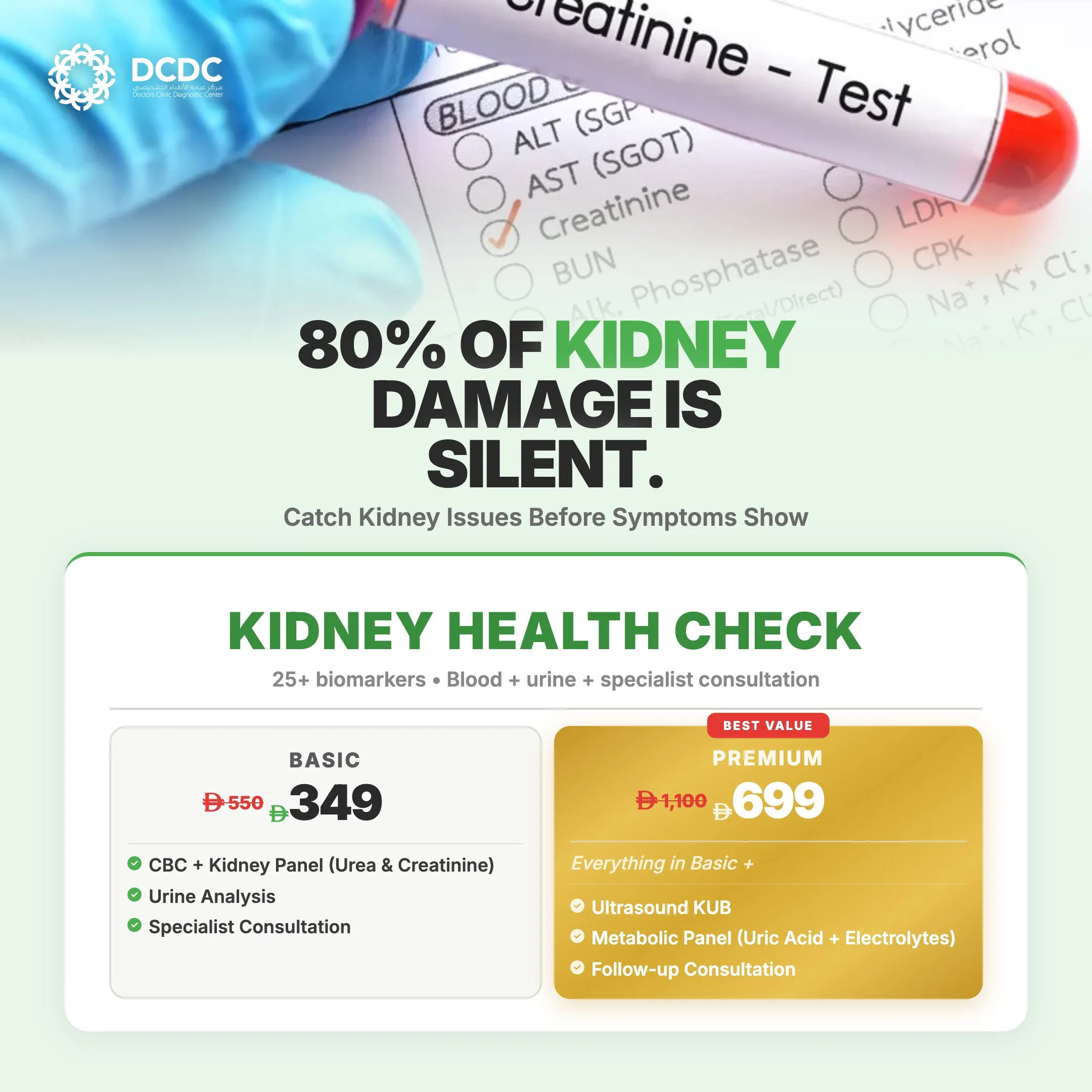
Health Screening Packages
Save with our bundled screening packages — specialist consultation included





What Is Lupus? Understanding the Autoimmune Mechanism
Systemic lupus erythematosus (SLE), usually just called lupus, is a long-term autoimmune disease. In a healthy body, the immune system attacks viruses and bacteria and leaves your own tissues alone. In lupus, that safeguard fails. The immune system produces autoantibodies that target the body's own cells, particularly components of the cell nucleus, and the resulting inflammation can affect the skin, joints, kidneys, lungs, heart, blood cells and brain.
Because lupus can involve almost any organ, it is often called "the great imitator". Symptoms come and go in episodes called flares, separated by quieter periods of remission. They also overlap with many everyday problems such as stress, viral infections, thyroid disease and anaemia. That overlap is why many people wait months or even years for a diagnosis. Learning to recognise the signs of lupus early, and to notice when several of them occur together, is the single most useful thing you can do.
This guide covers the ten most recognisable warning signs, who is most at risk, how doctors confirm the diagnosis, how lupus differs from look-alike conditions, and what treatment involves. If you are already worried about a combination of symptoms, our autoimmune testing at DCDC can start the work-up on site, often with same-day results for routine bloods.
How common is lupus in Dubai and the Gulf?
Published estimates for the Arabian Gulf range from roughly 19 to 103 cases per 100,000 people, which is comparable to or higher than figures reported in many Western countries. A population study of UAE nationals estimated an age-standardised prevalence of about 103 per 100,000. A clinic-based study of 151 SLE patients living in Dubai found that women outnumbered men about 20 to 1 and that the average age at onset was around 29 years. Gulf studies also suggest kidney and nervous system involvement may be more frequent than in some other regions, which is one reason regular kidney monitoring matters. These figures come from different studies and methods, so treat them as indicative rather than exact.
10 Warning Signs of Lupus
No single symptom proves lupus, and you do not need all ten. What raises suspicion is a pattern: two or more of these signs, lasting weeks, often affecting more than one body system. Use the list below as a self-assessment checklist and note which signs apply to you, how long they have lasted, and whether they come and go.
1. Butterfly Rash (Malar Rash)
A flat or slightly raised red rash across both cheeks and the bridge of the nose, shaped like a butterfly, is the best-known sign of lupus. It affects roughly one in three to half of people with SLE. The rash usually spares the folds beside the nose, which helps distinguish it from rosacea, and it often worsens after sun exposure. It may be mildly itchy or sore, or completely painless, and can fade and return over days or weeks.
Other lupus skin changes include round, scaly, coin-shaped patches (discoid lesions) on the face, scalp or ears, and red, ring-shaped patches on sun-exposed arms and chest.
2. Unexplained Fatigue
Fatigue is among the most common early complaints and often the most disabling. Lupus fatigue is not ordinary tiredness: it persists despite adequate sleep, can arrive suddenly, and may be out of proportion to your activity. It can occur even when other symptoms are quiet, but it often worsens before a flare.
Because fatigue has so many causes, including low iron, thyroid problems, vitamin D or B12 deficiency, sleep disorders and stress, doctors usually check those first. Our guide to chronic fatigue causes in Dubai explains that wider differential. Fatigue plus any other sign on this list deserves a closer look.
3. Joint Pain and Swelling
Joint pain, stiffness and swelling affect more than 90% of people with lupus at some stage. Typically the small joints of the hands, wrists and knees are involved on both sides of the body. Morning stiffness is common. Unlike rheumatoid arthritis, lupus arthritis usually does not erode the joint, but it can still be painful and can cause deformity in a minority of people.
Muscle aches (myalgia) are also frequent. Pain that migrates from joint to joint over days is a recognised lupus pattern.
4. Photosensitivity (Sun Sensitivity)
Many people with lupus find that sunlight, and sometimes fluorescent or LED lighting, triggers a rash or a flare of fatigue and joint pain. The reaction can appear hours to days after exposure. This matters in Dubai, where UV levels are high for much of the year, and people can be caught out by exposure through car windows or on short outdoor walks.
If you notice that sun exposure repeatedly brings on a rash that lingers longer than a typical sunburn, mention it to your doctor.
5. Mouth and Nose Ulcers
Painless or mildly sore ulcers on the roof of the mouth, inside the cheeks, on the gums or inside the nose can be an early and easily overlooked sign. They tend to last longer than ordinary canker sores and may recur in episodes. Because they often do not hurt, people sometimes only discover them during a dental check or doctor's examination.
6. Hair Loss
Lupus can cause diffuse thinning, patchy loss, or breakage along the hairline (sometimes called "lupus hair"). Active inflammation or scarring from discoid lesions on the scalp can cause patches of hair loss. Hair often regrows when the disease is controlled, but scarring lesions can cause permanent loss, which is another reason for early treatment.
Hair loss also has many other causes, including iron deficiency, thyroid disease, stress and hormonal changes, so it is rarely meaningful on its own.
7. Raynaud's Phenomenon (Cold, Colour-Changing Fingers)
In Raynaud's phenomenon the small blood vessels in the fingers and toes over-react to cold or stress. The digits turn white, then blue, then red as blood flow returns, often with numbness or throbbing. Around one in three people with lupus experience it. In a city with strong air conditioning, many people notice it indoors rather than outdoors.
Raynaud's can occur by itself and is often harmless, but new Raynaud's in an adult, especially with joint pain or rash, is a reason to be tested.
8. Chest Pain with Deep Breathing (Pleurisy)
Inflammation of the lining around the lungs (pleurisy) or around the heart (pericarditis) causes a sharp chest pain that worsens when you breathe in deeply, cough or lie flat, and eases when you lean forward. Fluid can collect around the lungs or heart in some cases. This is one of the more common serious manifestations of lupus.
Sudden chest pain is never something to assume is lupus. Seek assessment promptly, particularly if it comes with breathlessness (see the urgent red flags section below).
9. Kidney Problems (Foamy Urine and Swelling)
Lupus nephritis, inflammation of the kidneys, develops in up to half of adults with SLE. It is often silent at first, which is why it can only be caught with testing. When symptoms do appear they include foamy or frothy urine (from protein leak), swelling of the ankles, legs or around the eyes, blood in the urine, and new or worsening high blood pressure.
Nephritis usually appears within the first five years of disease, so anyone with suspected or confirmed lupus should have urine and kidney function checked regularly. Our kidney function test guide explains what creatinine and eGFR results mean.
10. Recurrent Fevers
Low-grade fevers, typically between 37.5 and 38.5 degrees Celsius, that come and go without an infection are common, especially at the onset of a flare. They are often put down to a virus. Persistent unexplained fever, together with night sweats, swollen glands or weight loss, needs medical assessment to rule out infection, lymphoma and other inflammatory diseases.
Other signs that may accompany lupus
- Dry eyes and dry mouth, sometimes with Sjogren's syndrome overlap.
- Swollen lymph nodes in the neck, armpits or groin.
- Headaches, memory problems or mood changes, which can reflect nervous system involvement.
- Easy bruising or a low blood count: anaemia, low white cells or low platelets often show up on routine bloods before any symptom.
- Blood clots or recurrent miscarriage, which can point to antiphospholipid antibodies.
Self-assessment checklist
Tick the statements that apply to you. This is not a diagnostic tool, but it helps you describe your symptoms clearly to a doctor.
- I have had unexplained fatigue for more than four weeks.
- I have joint pain or swelling in several joints, with morning stiffness.
- I get a facial rash, or a rash that appears after sun exposure.
- I have had mouth or nose ulcers that keep coming back.
- My fingers change colour (white, blue, red) in the cold.
- I notice more hair shedding or thinning than usual.
- I have had a fever with no clear infection.
- My urine is foamy, or my ankles and eyelids are swollen.
- I have sharp chest pain when I breathe in deeply.
- A close relative has lupus or another autoimmune condition.
How to read your result: 0 to 1 ticks is unlikely to signal lupus, though persistent symptoms still deserve review. Two to three ticks, particularly if they involve different body systems, justify a GP assessment and basic blood tests. Four or more ticks, or any kidney or chest signs, means you should book an assessment soon rather than waiting.
Worried About a Pattern of Symptoms?
A DCDC GP consultation starts from AED 249. We can arrange ANA, CRP, ESR, CBC and kidney tests in our on-site lab. Message us on WhatsApp with "Hi, I would like to book an autoimmune assessment at DCDC." or call +971 54 219 5008.
Who Is at Risk of Lupus?
Lupus can affect anyone, but several factors raise the likelihood.
- Sex: About nine in ten people with lupus are women. Oestrogen is thought to play a role, and symptoms often change with puberty, pregnancy and the menstrual cycle.
- Age: Most cases begin between the ages of 15 and 45, during the childbearing years. Lupus can also start in childhood or after 50, and in men it is often diagnosed later.
- Ethnicity: Lupus is more common, and often more severe, in people of African, Asian, Hispanic and Middle Eastern ancestry than in people of European ancestry.
- Family history: Having a close relative with lupus or another autoimmune disease such as thyroid disease, rheumatoid arthritis or type 1 diabetes increases risk. Most relatives of people with lupus never develop it, however.
- Environmental triggers: Ultraviolet light, infections (including Epstein-Barr virus), smoking, silica dust exposure and certain medications can trigger lupus in people who are genetically susceptible.
- Hormonal factors: Hormonal changes, such as pregnancy, the postpartum period or starting oestrogen-containing medication, can unmask or worsen disease in some women.
Being in a higher-risk group does not mean you will develop lupus. It simply means that persistent, multi-system symptoms should be taken more seriously and not dismissed.
How Lupus Is Diagnosed
There is no single test for lupus. Diagnosis rests on three things taken together: your symptoms and examination findings, blood and urine tests, and the exclusion of other conditions. Many people see several doctors before the pieces are connected, so bringing a symptom diary and photos of any rash can help.
Step 1: History and examination
Your doctor will ask about the pattern, duration and triggers of your symptoms, medications, family history and sun reactions. Examination looks at the skin, scalp, mouth, joints, heart and lungs, blood pressure and signs of fluid retention.
Step 2: First-line blood and urine tests
- ANA (antinuclear antibody): The key screening test. About 97 to 98% of people with SLE have a positive ANA, so a negative result makes lupus very unlikely. However, ANA can also be positive in healthy people and in other autoimmune conditions, so a positive result is a reason to investigate further, not a diagnosis. Read more in our ANA test and pattern guide.
- CBC (complete blood count): Looks for anaemia, low white cells (leukopenia or lymphopenia) and low platelets, all of which are common in lupus.
- ESR and CRP: Inflammation markers. In lupus the ESR is often high while the CRP stays relatively low unless there is infection or serositis, a pattern that can be a useful clue. See our CRP test guide.
- Kidney function and urine tests: Creatinine, eGFR and a urinalysis (protein, blood, casts) screen for lupus nephritis. A urine protein-to-creatinine ratio quantifies protein loss.
Step 3: Confirmatory and monitoring antibodies
- Anti-dsDNA: Highly specific for lupus (rarely positive in healthy people), and levels often track disease activity and kidney involvement. Only a proportion of patients test positive, so a negative result does not exclude lupus.
- Anti-Smith (anti-Sm): Very specific for lupus but present in only a minority of patients.
- Complement C3 and C4: Proteins used up during active immune inflammation. Falling levels, together with rising anti-dsDNA, often signal an active flare.
- Antiphospholipid antibodies: Relevant to clotting and pregnancy risk.
- Anti-Ro/SSA and anti-La/SSB: Important for Sjogren's overlap, skin disease and pregnancy planning.
Which of these are needed depends on your first results and symptoms. Our guide to ANA and wider antibody panels explains how doctors choose them. If specialist antibody tests or a rheumatology opinion are needed after the first-line results, your DCDC doctor will advise on the next step.
The classification criteria doctors use
In 2019 the European Alliance of Associations for Rheumatology (EULAR) and the American College of Rheumatology (ACR) published updated classification criteria for SLE. They were designed mainly for research and to standardise how patients are described, not as a checklist for diagnosis, but they reflect how specialists think about the disease:
- Entry requirement: a positive ANA (at a titre of 1:80 or higher) at least once.
- Scoring: If ANA is positive, clinical features (such as fever, low blood counts, rash, mouth ulcers, joint involvement, serositis, neurological and kidney involvement) and immunological findings (antiphospholipid antibodies, low complement, specific antibodies like anti-dsDNA or anti-Smith) are each given weighted points.
- Classification: A total of 10 or more points, with at least one clinical feature, classifies a patient as having SLE. In the validation study the criteria had a sensitivity of about 96% and specificity of about 93%.
A clinician can diagnose lupus in someone who does not strictly meet the criteria, and the criteria can also be met by someone whose symptoms have another explanation. Judgement matters.
Types of Lupus
The word "lupus" covers several related conditions.
Systemic lupus erythematosus (SLE)
The most common and most serious form, accounting for the large majority of cases. It can involve any organ and requires long-term specialist-guided treatment.
Cutaneous lupus
Limited to the skin. It includes discoid lupus (scarring, coin-shaped patches), subacute cutaneous lupus (red, scaly or ring-shaped patches on sun-exposed skin) and acute cutaneous lupus (including the butterfly rash). A proportion of people with discoid lupus go on to develop SLE, so ongoing monitoring is wise.
Drug-induced lupus
Caused by certain long-term medications, most classically hydralazine and procainamide, and less commonly isoniazid, minocycline and some anti-TNF biologics. Symptoms usually include joint pain, muscle aches, fever and pleurisy, with a positive ANA. Kidney and brain involvement are uncommon, and symptoms typically settle weeks to months after the medication is stopped under medical supervision. Never stop a prescribed medicine on your own.
Neonatal lupus
A rare condition in babies born to mothers with anti-Ro/SSA or anti-La/SSB antibodies, which cross the placenta. Babies may have a temporary rash, abnormal blood counts or liver tests that resolve as maternal antibodies clear over several months. A small minority develop congenital heart block, which is why mothers with these antibodies need specialist pregnancy monitoring.
Lupus vs Other Conditions: How to Tell Them Apart
Many conditions share symptoms with lupus. The table below highlights typical differences, but only testing and clinical assessment can separate them. Overlap is also possible: some people have lupus together with fibromyalgia or Sjogren's syndrome.
| Feature | Lupus (SLE) | Rheumatoid Arthritis | Fibromyalgia | Sjogren's Syndrome / Other Autoimmune |
|---|---|---|---|---|
| Main problem | Immune attack on many organs | Immune attack on joint lining | Altered pain processing; not autoimmune | Immune attack on tear and saliva glands (or thyroid, in Hashimoto's) |
| Typical onset | Women aged 15 to 45 | Often 30 to 60 | Often 30 to 55 | Often 40 and older |
| Joint pattern | Pain and swelling, usually non-erosive | Persistent symmetric swelling; erosions can develop | Widespread tenderness, no swelling | Joint aches, mild swelling possible |
| Skin | Butterfly rash, photosensitivity, discoid patches | Rheumatoid nodules | No rash | Dry skin; sometimes rash |
| Fatigue | Common, can be severe | Common | Very common, with unrefreshing sleep | Common |
| Kidney involvement | Common (lupus nephritis) | Uncommon | None | Occasional |
| Key blood tests | Positive ANA, anti-dsDNA, anti-Sm, low complement | RF and anti-CCP, raised CRP/ESR | Normal results | Anti-Ro/SSA, anti-La/SSB; thyroid antibodies in Hashimoto's |
| Visible inflammation on tests | Yes, variable | Yes | No | Yes, variable |
A positive ANA alone cannot tell these apart, which is why doctors combine it with other antibodies, inflammation markers, urine tests and examination. The article on ANA and antibody panels goes into more detail.
Lupus Treatment and Management
Lupus is not curable at present, but it is treatable, and modern care has transformed outcomes. With early diagnosis and consistent treatment, most people live full lives. The goals are to control inflammation, induce remission or low disease activity, prevent flares and protect organs, particularly the kidneys.
Medications
- Hydroxychloroquine: The cornerstone for almost everyone with lupus. It reduces flares, protects organs and lowers the risk of clots. Regular eye screening is recommended with long-term use.
- NSAIDs: For joint pain and pleurisy, used with caution because of kidney and stomach risks.
- Corticosteroids: Fast-acting for flares, but doctors aim to use the lowest effective dose for the shortest time because of long-term side effects.
- Immunosuppressants: Azathioprine, methotrexate, mycophenolate and cyclophosphamide for more severe or organ-threatening disease, including lupus nephritis.
- Biologic and targeted therapies: Belimumab and anifrolumab are approved for SLE, and belimumab and voclosporin for lupus nephritis, for people who do not respond adequately to standard treatment.
- Supportive treatment: Blood pressure control (ACE inhibitors or ARBs protect the kidneys), cholesterol management, and bone protection (calcium, vitamin D) if on steroids.
Lifestyle and flare prevention
- Sun protection: Broad-spectrum SPF 50 sunscreen, hats, long sleeves and sunglasses, and avoiding peak UV hours. This is especially important in Dubai.
- Take medicines consistently: Stopping hydroxychloroquine is a well-recognised cause of flares.
- Do not smoke: Smoking worsens skin disease and reduces the effect of hydroxychloroquine.
- Exercise gently and regularly: Walking, swimming and low-impact activity reduce fatigue and joint stiffness.
- Eat a balanced, anti-inflammatory style diet, and keep vitamin D levels checked, since sun avoidance often lowers them.
- Manage stress and sleep: Stress and poor sleep are commonly reported flare triggers.
- Stay up to date with vaccinations (non-live vaccines are generally recommended; discuss live vaccines with your doctor), and treat infections promptly.
- Plan pregnancy: Pregnancy goes best when lupus has been quiet for at least six months, and medications may need adjusting beforehand.
- Attend regular monitoring: Regular blood and urine tests allow flares and kidney involvement to be caught early.
Monitoring over time
Typical follow-up includes blood pressure, CBC, kidney function, urine protein, anti-dsDNA and complement, every few months depending on disease activity. Regular checks are a core part of care, because organ damage often develops silently.
What to Expect at DCDC
Doctors Clinic Diagnostic Center (DCDC) is located in Building 64, Block A, Al Razi Medical Complex, Dubai Healthcare City, with free parking. We are open Saturday to Thursday 8 AM to 10 PM and Friday 9 AM to 9 PM. With a 4.8 out of 5 Google rating from over 1,000 reviews, patients value the clear explanations and coordinated care. Here is how an assessment for possible lupus typically works.
1. GP first assessment
A GP consultation starts from AED 249. Dr. Hadeel Elnur and the GP team will take a detailed history, examine your skin, joints, mouth, heart and lungs, check your blood pressure and decide which tests are appropriate. Bring a list of your symptoms, photos of any rash and your current medication list.
2. On-site laboratory testing
Our on-site lab means you can have blood drawn during the same visit, and routine results are usually available the same day. Typical first-line tests and prices:
- ANA test: AED 149
- CRP test: AED 149
- ESR test: AED 99
- CBC (complete blood count): AED 149
- Kidney function panel: AED 149
Browse the full range on our autoimmune testing at DCDC page.
3. Results, explanation and next steps
Your doctor will explain your results in plain language. A normal ANA makes lupus very unlikely and prompts a search for other causes. A positive ANA, or abnormal blood counts or kidney results, leads to further antibody tests and, where appropriate, a specialist referral.
4. Nephrology if the kidneys are involved
If urine or kidney tests suggest lupus nephritis, DCDC's nephrology service is available for specialist assessment, so you do not have to start again in a new facility. Early kidney involvement is far easier to treat than established damage.
5. Insurance and coordinated care
DCDC offers direct insurance billing with more than 20 partners. Check your policy for outpatient lab and consultation cover, and our team can help you confirm it before your visit. Your GP coordinates your tests, specialist input and follow-up so that results are not left unexplained.
Book an Autoimmune Assessment at DCDC
Start with a GP consultation from AED 249 and on-site lab tests with same-day results for routine bloods. Book through WhatsApp (message: "Hi, I would like to book an autoimmune assessment at DCDC.") or call +971 54 219 5008.
When to See a Doctor: An Urgency Framework
Book a routine appointment (within 1 to 2 weeks) if you have:
- Two or more of the warning signs above lasting more than a few weeks.
- Persistent fatigue with joint pain, rash or recurrent mouth ulcers.
- A facial rash or sun-triggered rash that keeps coming back.
- A close relative with lupus and new unexplained symptoms.
- Known positive ANA with no follow-up yet.
Book a prompt appointment (within 2 to 3 days) if you notice:
- Foamy urine, new ankle or eyelid swelling, or new high blood pressure.
- Fever lasting more than a few days without a clear cause.
- Rapidly worsening joint swelling, rash or weight loss.
- Known lupus with symptoms of a flare, or you have missed medication.
Seek emergency care immediately for red flags:
- Sudden chest pain, severe shortness of breath or coughing up blood.
- Severe headache, seizure, confusion, sudden weakness, trouble speaking or vision loss.
- Blood in the urine with a marked drop in urine output, or severe swelling.
- A swollen, painful leg or sudden breathlessness, which can signal a blood clot.
- High fever with chills in someone taking immunosuppressants, which may be a serious infection.
- Vomiting blood or black stools.
In an emergency, call 998 for an ambulance in Dubai or go to the nearest emergency department.

General Practitioner
Dr. Hadeel Elnur is a General Practitioner at Doctors Clinic Diagnostic Center (DCDC) in Dubai Healthcare City, working in internal medicine and general health. She sees patients with persistent, unexplained symptoms and coordinates blood testing, specialist input and follow-up.
Related Services at DCDC
Expert care and advanced diagnostics at Dubai Healthcare City
Autoimmune & Inflammatory Tests
ANA, CRP, ESR and comprehensive autoimmune panel testing at DCDC.
Book AppointmentGeneral Consultation
First-step GP assessment for symptoms that may indicate lupus or autoimmune conditions.
Book AppointmentKidney Function Test
Creatinine and kidney panel to monitor for lupus nephritis.
Book AppointmentFrequently Asked Questions
Key Points to Remember
Lupus is a treatable autoimmune disease, and early recognition protects the kidneys and other organs. Do not dismiss a pattern of persistent fatigue, joint pain, rashes, ulcers and fevers.
A GP can start the work-up quickly with ANA, CBC, ESR, CRP and kidney tests, and arrange further steps or specialist referral if results are abnormal. A positive ANA is a prompt for evaluation, not a diagnosis.
If you have symptoms that fit, book an assessment at DCDC: message us on WhatsApp or call +971 54 219 5008. Seek emergency care straight away for chest pain with breathlessness, seizures, sudden weakness or confusion.
Sources & References
This article references the following sources:
- Lupus Foundation of America: What is lupus?
- Lupus Foundation of America: Glossary of lupus blood tests
- American College of Rheumatology: Lupus patient fact sheet
- NHS: Lupus
- Mayo Clinic: Lupus symptoms and causes
- PubMed: 2019 EULAR/ACR classification criteria for systemic lupus erythematosus (Aringer et al.)
- PubMed: Clinical and immunological manifestations in 151 SLE patients living in Dubai
This information is educational and does not replace individual medical advice. See our editorial policy for more information.

Written by
Dr. Hadeel Elnur
General Practitioner
MD, General Practice
Dr. Hadeel Elnur is a General Practitioner at Doctors Clinic Diagnostic Center (DCDC) in Dubai Healthcare City, working in internal medicine and general health.
Related Articles
ANA Test Dubai: Positive Result & Pattern Explained
Autoimmune Panel Test Dubai: ANA & Guide
CRP Test Dubai: Inflammation Marker Guide

Kidney Function Test Dubai: Results Guide
Chronic Fatigue Causes Dubai: Why Always Tired
More in Internal Medicine
Elevated Liver Enzymes: Causes & Next Steps (2026)
Read MoreH. Pylori Test Cost Dubai: From AED 300 (2026)
Read More
Iron Infusion Cost Dubai: From AED 500 (2026)
Read More
Enlarged Prostate Dubai: BPH Symptoms (2026)
Read More
Hiatal Hernia Dubai: Symptoms & Treatment (2026)
Read MoreDiabetic Foot Care Dubai: Warning Signs (2026)
Read More© 2026 Doctors Clinic Diagnostic Center (DCDC), Dubai Healthcare City. Originally published at https://doctorsclinicdubai.ae/blog/lupus-signs-autoimmune-dubai. All rights reserved. Unauthorized reproduction is prohibited.