Key Takeaways
- Up to 60% of adults over the age of 60 have some degree of hiatal hernia, though most people with a small hernia have no symptoms at all and never know it is there.
- There are four types of hiatal hernia, but roughly 95% of cases are Type I (sliding), where the gastroesophageal junction moves up and down through the diaphragm opening.
- A hiatal hernia often causes or worsens acid reflux and GERD because it disrupts the normal function of the lower esophageal sphincter, allowing stomach acid to move upward more easily.
- Common symptoms include heartburn, regurgitation, chest discomfort, difficulty swallowing, excessive belching, and feeling full after only a small amount of food.
- Most hiatal hernias are managed successfully without surgery, through a combination of dietary changes, weight management, and acid-reducing medication such as PPIs or H2 blockers.
- At DCDC in Dubai Healthcare City, evaluation for hiatal hernia starts with a consultation from AED 250, with on-site CT scanning from AED 600 and abdominal ultrasound from AED 400 available for same-day imaging.
- Surgery, such as laparoscopic Nissen fundoplication, is reserved for large paraesophageal hernias, hernias causing complications, or symptoms that do not respond to medical management.
A burning sensation after meals, a feeling that food is stuck behind your breastbone, or heartburn that never seems to fully go away — these symptoms send many patients to the gastroenterology services at DCDC believing they simply have acid reflux. In a significant number of cases, the underlying cause is a hiatal hernia. Research suggests that up to 60% of adults over the age of 60 have some degree of hiatal hernia, and while many never notice a single symptom, for others it becomes the hidden driver of chronic heartburn, regurgitation, and chest discomfort that standard reflux treatment alone never quite resolves. Understanding what a hiatal hernia actually is, and how it differs from ordinary acid reflux, is the first step toward getting the right treatment.
This guide walks through what a hiatal hernia is, the different types, the symptoms to watch for, and what causes the diaphragm's opening to weaken in the first place. We also explain how hiatal hernia relates to GERD, how the condition is diagnosed, and the full range of treatment options available in Dubai — from diet and lifestyle changes through medication to surgery, for the small number of cases that need it. Finally, we cover what a hiatal hernia evaluation looks like at DCDC in Dubai Healthcare City, and what it costs.
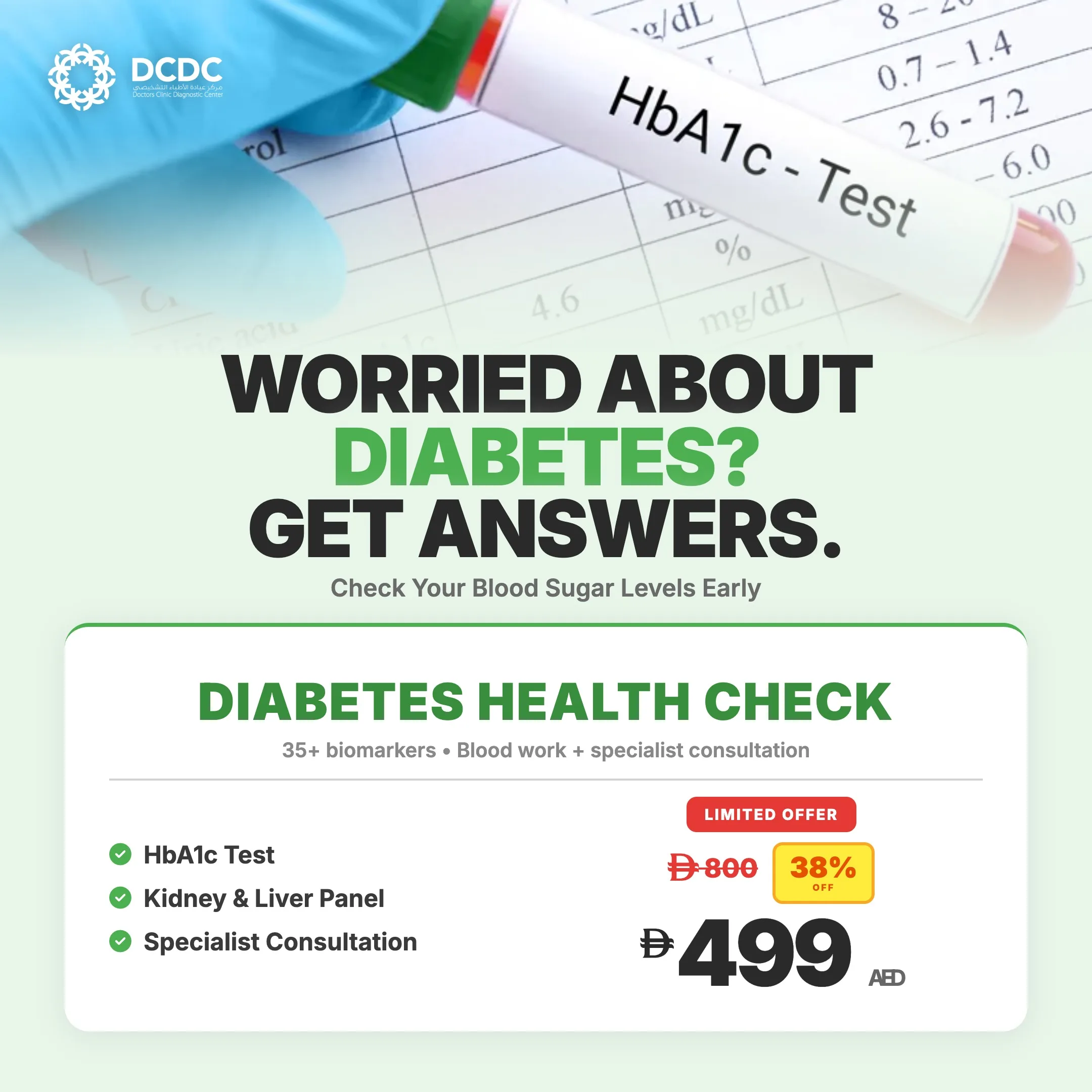
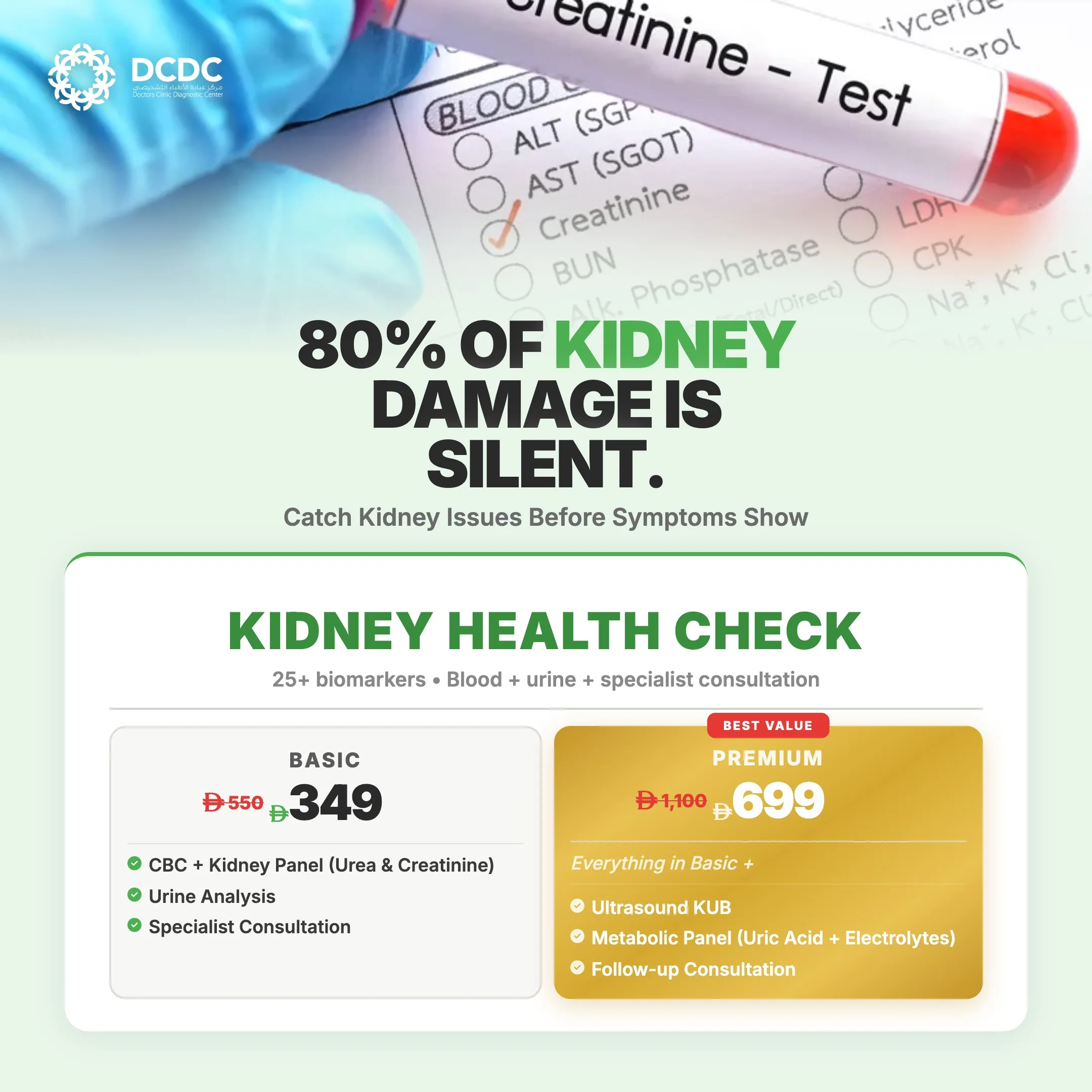
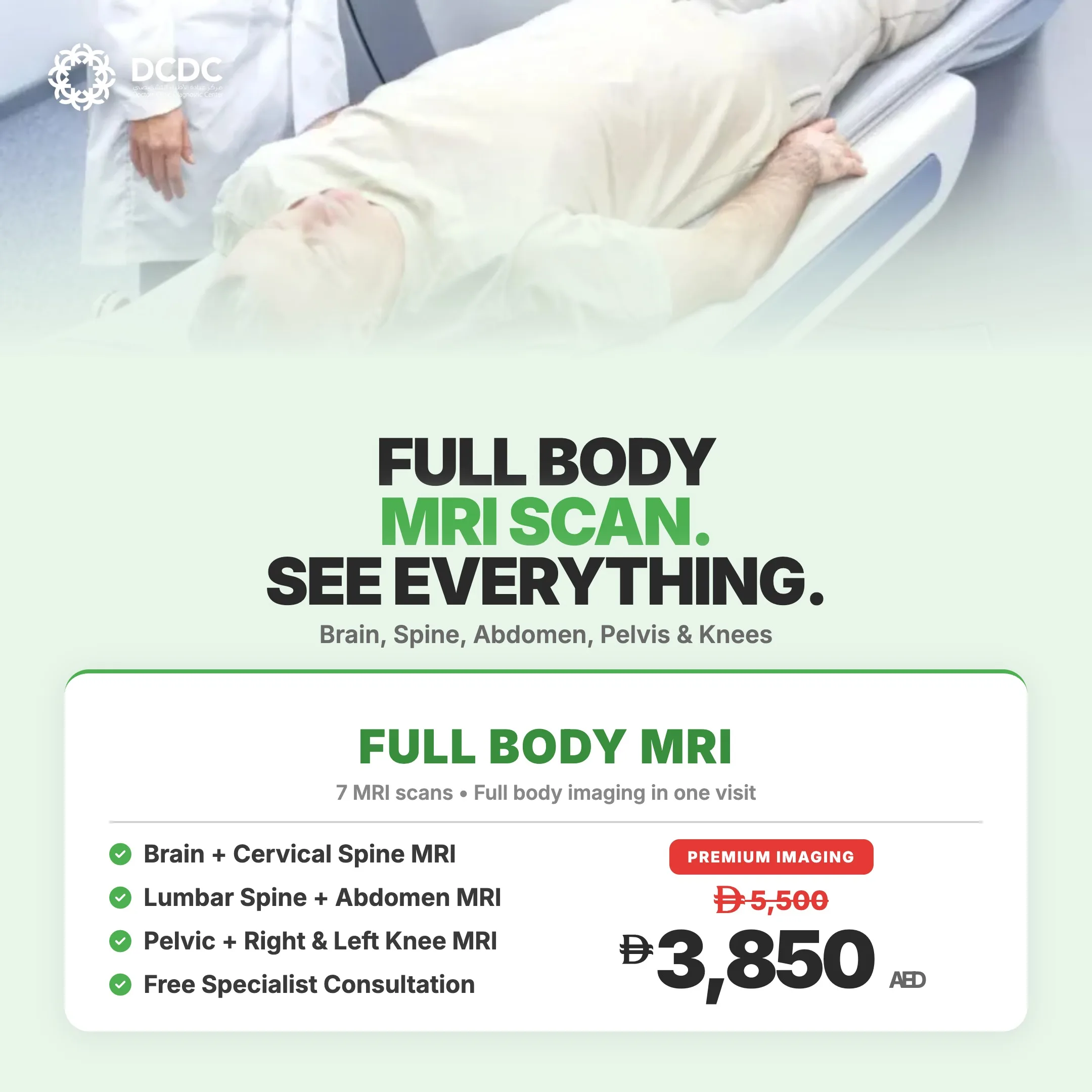
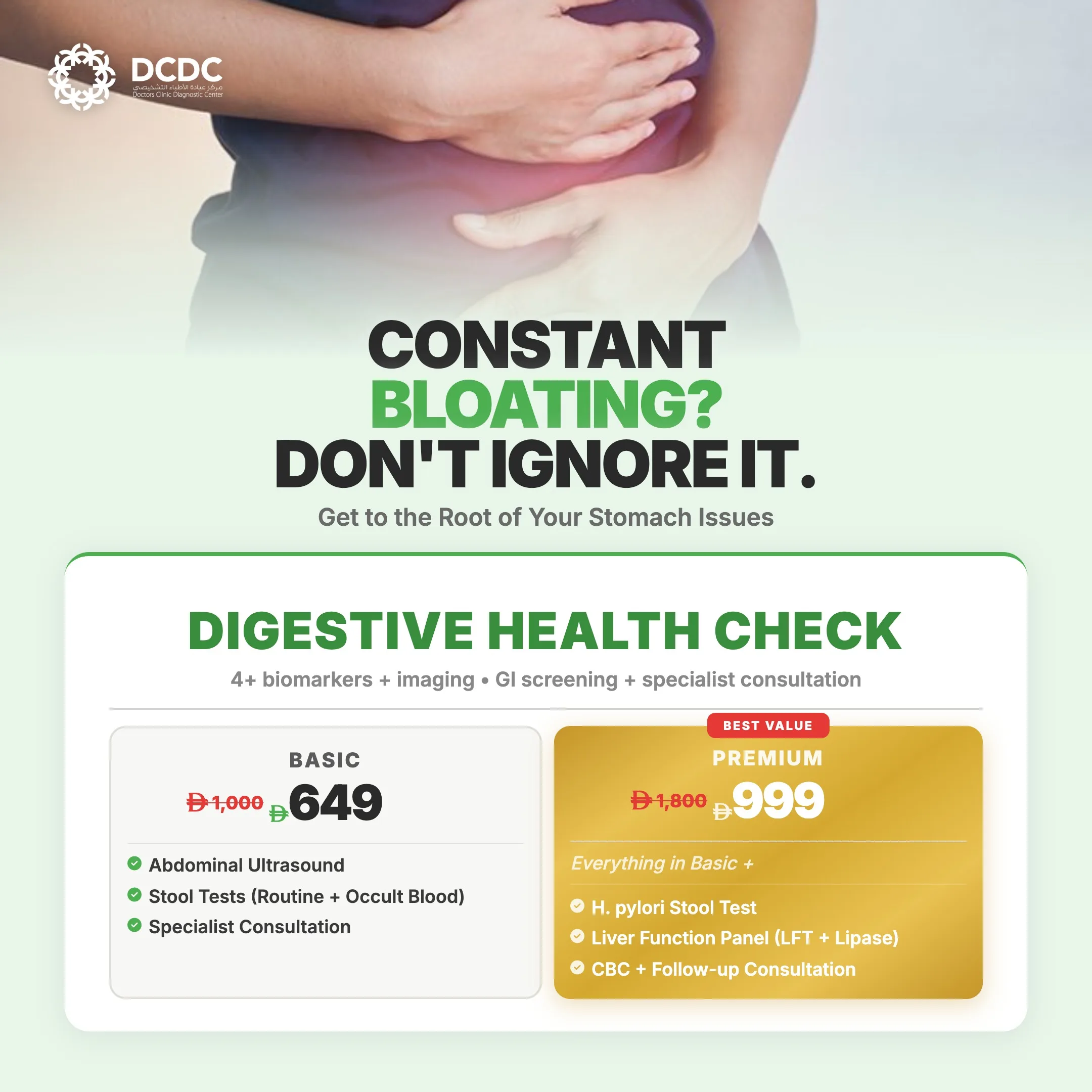
Health Screening Packages
Save with our bundled screening packages — specialist consultation included


What Is a Hiatal Hernia?
The diaphragm is the dome-shaped muscle that separates your chest cavity from your abdominal cavity, and it plays a central role in breathing. The esophagus, the tube that carries food from your throat to your stomach, passes through a small opening in the diaphragm called the hiatus before connecting to the stomach. A hiatal hernia occurs when part of the stomach pushes upward through this opening into the chest cavity, alongside or instead of the esophagus.
Normally, the hiatus is snug enough to hold the stomach securely below the diaphragm while still allowing the esophagus to pass through freely. When the muscle tissue around the hiatus weakens or the opening becomes abnormally wide, whether from age-related changes, increased pressure in the abdomen, or a structural predisposition, the upper part of the stomach can slip upward. This displacement can be small and barely noticeable, or large enough to cause significant symptoms and, in rare cases, serious complications.
Hiatal hernia is extremely common, and prevalence increases steadily with age. Many people carry a small hiatal hernia for years or decades without ever being diagnosed, because it produces no symptoms and is only discovered incidentally during imaging or endoscopy performed for an unrelated reason. Others develop persistent digestive symptoms that prompt them to seek evaluation, at which point a hiatal hernia is often found to be a contributing or primary cause.
Types of Hiatal Hernia
Hiatal hernias are classified into four types based on how the stomach and gastroesophageal junction (the point where the esophagus meets the stomach) are positioned relative to the diaphragm. This classification matters because it directly influences symptoms, risk of complications, and the treatment approach your doctor recommends.
| Type | What Happens | Approximate Prevalence |
|---|---|---|
| Type I — Sliding hiatal hernia | The gastroesophageal junction and a portion of the stomach slide up and down through the hiatus, often moving in and out of the chest with position and pressure changes. | About 95% of all hiatal hernias |
| Type II — Paraesophageal (rolling) hernia | The gastroesophageal junction stays in its normal position, but part of the stomach fundus rolls up through the hiatus alongside the esophagus. | Uncommon, true isolated Type II is rare |
| Type III — Combined sliding and paraesophageal | Both the gastroesophageal junction and a portion of the stomach herniate into the chest. This is the most common form of paraesophageal hernia seen clinically. | Most paraesophageal hernias fall into this category |
| Type IV — Complex paraesophageal hernia | In addition to the stomach, other abdominal organs such as the colon, spleen, or small bowel herniate into the chest cavity through the widened hiatus. | Rare, but the most severe form |
Type I sliding hernias are usually small, frequently asymptomatic, and rarely require surgery. Types II through IV, collectively known as paraesophageal hernias, carry a higher risk of complications such as strangulation (where the herniated stomach loses its blood supply) or volvulus (where the stomach twists on itself), and are more likely to eventually need surgical repair, particularly as they grow larger over time.
Hiatal Hernia Symptoms to Watch For
Many small sliding hiatal hernias produce no symptoms whatsoever and are discovered by chance. When symptoms do occur, they are usually the result of the hernia disrupting the normal barrier against acid reflux, or, in the case of larger hernias, from the physical displacement of stomach tissue into the chest. If you have been managing reflux symptoms for a while without full relief, our acid reflux and GERD treatment guide is a useful companion to this article, since the two conditions overlap so closely.
- Frequent heartburn: A burning sensation behind the breastbone that often worsens after meals, when bending over, or when lying down.
- Regurgitation: Stomach acid or partially digested food backing up into the throat or mouth, sometimes leaving a sour or bitter taste.
- Chest pain or pressure: Discomfort that can be mistaken for a cardiac issue, particularly with larger hernias. Any new or severe chest pain should always be evaluated urgently to rule out a heart-related cause.
- Difficulty or pain swallowing (dysphagia): A sensation that food is catching or moving slowly through the chest, more common with larger paraesophageal hernias that compress the esophagus.
- Excessive belching or bloating: The displaced stomach can trap swallowed air, leading to frequent belching and a bloated feeling after eating.
- Feeling full quickly (early satiety): Because part of the stomach is displaced upward, its effective capacity is reduced, so patients often feel full after eating only a small amount.
- Shortness of breath: Large paraesophageal hernias can compress the lungs or the surrounding chest structures, causing breathlessness, particularly after eating or when lying flat.
- Chronic cough or hoarseness: When acid reflux associated with a hiatal hernia reaches the throat and airway, it can trigger a persistent cough, throat clearing, or voice changes.
Certain symptoms warrant prompt medical evaluation rather than waiting: unintentional weight loss, vomiting blood or material resembling coffee grounds, black or tarry stools, persistent vomiting, or sudden, severe chest or abdominal pain. These can indicate a complication such as bleeding, strangulation of the herniated tissue, or a large paraesophageal hernia requiring urgent care.
What Causes a Hiatal Hernia
A hiatal hernia develops when the muscular tissue surrounding the diaphragmatic hiatus weakens or when pressure within the abdomen repeatedly pushes the stomach upward against this opening. In most cases, it is the result of several contributing factors acting together rather than a single identifiable cause.
- Age-related muscle weakening: The connective tissue and muscle around the hiatus naturally loosens with age, which is why hiatal hernia becomes far more common after age 50 and is present in a majority of people by their sixties and seventies.
- Increased intra-abdominal pressure: Anything that repeatedly raises pressure inside the abdomen, such as chronic straining, can force the stomach upward through a vulnerable hiatus over time.
- Obesity: Excess abdominal fat increases pressure on the stomach and diaphragm continuously, making obesity one of the strongest modifiable risk factors for hiatal hernia.
- Pregnancy: The growing uterus raises intra-abdominal pressure, and hormonal changes during pregnancy can also relax connective tissue, both of which contribute to hernia formation.
- Chronic coughing: Conditions such as chronic bronchitis, uncontrolled asthma, or long-term smoking-related cough repeatedly strain the diaphragm.
- Heavy lifting or straining: Repeated heavy lifting, whether occupational or during intense exercise without proper technique, can gradually widen the hiatal opening.
- Chronic constipation: Frequent straining during bowel movements has a similar effect to heavy lifting on intra-abdominal pressure.
- Congenital predisposition: Some people are simply born with a naturally wider or weaker hiatal opening, which explains why hiatal hernia occasionally occurs in younger adults and even children with no other risk factors.
- Previous trauma or surgery: Injury to the diaphragm or prior abdominal or chest surgery can occasionally weaken the area around the hiatus.
Hiatal Hernia vs GERD: What's the Difference?
Hiatal hernia and gastroesophageal reflux disease (GERD) are frequently confused, and understandably so, because the two conditions overlap so heavily and often occur together. However, they are not the same thing. A hiatal hernia is a structural or anatomical problem, part of the stomach is physically displaced through the diaphragm, while GERD is a functional condition defined by the frequent backward flow of stomach acid into the esophagus. The relationship between the two runs in one clear direction in most patients: a hiatal hernia frequently causes or significantly worsens GERD, rather than the other way around.
| Feature | Hiatal Hernia | GERD |
|---|---|---|
| What it is | A structural condition — part of the stomach pushes through the diaphragm into the chest | A functional condition — stomach acid flows backward into the esophagus |
| Primary cause | Weakening or widening of the diaphragmatic hiatus | A weak lower esophageal sphincter, often worsened by an underlying hiatal hernia |
| Can it be silent? | Yes — many small hiatal hernias cause no symptoms at all | Rarely silent — symptoms such as heartburn are usually how GERD is recognised |
| How it is confirmed | Barium swallow, endoscopy, or CT/ultrasound imaging | Symptom assessment, response to acid-suppressing medication, endoscopy, pH monitoring |
| Typical treatment | Often managed medically; surgery only for large or complicated hernias | Lifestyle changes and medication first-line; surgery reserved for refractory cases |
| Relationship between the two | Can impair the lower esophageal sphincter and directly cause or worsen GERD | May exist independently, but a hiatal hernia is a very common underlying contributor |
In practice, this means a patient with persistent heartburn who is not responding well to standard GERD treatment should be evaluated for an underlying hiatal hernia, since treating the reflux symptoms alone will not correct the anatomical issue driving them. This is one of the reasons imaging plays such an important role in the workup of stubborn digestive symptoms in Dubai and elsewhere.
How Hiatal Hernia Is Diagnosed
Because a hiatal hernia is a structural finding, diagnosis typically requires imaging or direct visualisation rather than symptoms alone. Your doctor will usually begin with a detailed history and physical examination, then select from the following investigations depending on the severity and nature of your symptoms.
- Barium swallow (esophagram): You drink a barium contrast solution while X-ray images are taken, allowing the radiologist to see the outline of the esophagus and stomach and clearly identify a hiatal hernia, including its size and type.
- Upper endoscopy (EGD): A thin, flexible camera is passed through the mouth into the esophagus and stomach. This is often the most informative test, since it allows direct visualisation of the hernia, assessment of any esophageal inflammation, and biopsies if needed.
- CT scan: A CT scan of the abdomen and chest can clearly demonstrate a hiatal hernia, particularly larger paraesophageal hernias, and is useful for assessing the position of the stomach and any involved organs before surgical planning.
- Esophageal manometry: This test measures pressure and coordination within the esophagus and is sometimes used before anti-reflux surgery to evaluate esophageal muscle function.
- Abdominal ultrasound: While less commonly the primary tool for diagnosing hiatal hernia itself, ultrasound is useful for evaluating related abdominal structures and ruling out other causes of upper abdominal symptoms.
At DCDC, our on-site CT scanner and abdominal ultrasound allow much of this imaging workup to happen without needing to travel between facilities. If findings suggest the need for endoscopy or specialist gastroenterology assessment, our team coordinates that referral directly. For a broader look at when specialist input is needed, see our guide on when to see a gastroenterologist in Dubai.
What to Expect at DCDC for Hiatal Hernia
At Doctors Clinic Diagnostic Center in Dubai Healthcare City, our approach to persistent digestive symptoms is designed to move efficiently from first consultation to a clear treatment plan, ideally all under one roof.
- Step 1 — Arrival and check-in: You will arrive at Building 64, Block A, Al Razi Medical Complex in Dubai Healthcare City, where our multilingual reception team (Arabic, English, Farsi, Urdu, Hindi) will verify your insurance and register you quickly. Free parking is available on-site.
- Step 2 — Consultation: You will be seen by a GP or an internal medicine specialist who will take a detailed history of your symptoms, including frequency, triggers, and any red-flag features, followed by a physical examination.
- Step 3 — Blood tests: To rule out complications such as anaemia from chronic, low-grade bleeding associated with reflux or a hernia, we run relevant blood tests, including a complete blood count and iron studies, in our on-site laboratory.
- Step 4 — Imaging: If your doctor recommends confirming the diagnosis or assessing the size and type of hernia, an abdominal CT scan or abdominal ultrasound can typically be arranged the same day at our on-site imaging suite.
- Step 5 — Referral, if needed: If upper endoscopy or a specialist gastroenterology opinion is required, particularly for larger paraesophageal hernias or symptoms that need direct visual assessment, we coordinate this referral and explain what to expect next.
- Step 6 — Treatment plan and follow-up: Based on your assessment and results, your doctor will outline a personalised plan, typically starting with dietary and lifestyle changes plus medication if appropriate, along with a follow-up schedule to monitor your response.
Digital results from blood work and imaging are typically available within 18-24 hours, so your treatment plan is rarely delayed by waiting on lab turnaround. DCDC is MOHAP-licensed, maintains a 4.8/5 rating across more than 1,000 Google reviews, reports a 98% patient satisfaction rate, and works with over 20 insurance partners offering direct billing.
According to Dr. Hadeel Elnur, "Many patients with persistent heartburn or chest discomfort assume it's just acid reflux, but a hiatal hernia may be the underlying cause. At DCDC, we use a combination of clinical assessment and imaging to identify the root cause and create a targeted management plan — in most cases, surgery is not needed."
Persistent Heartburn or Chest Discomfort?
Do not assume it is just acid reflux. Our team at DCDC in Dubai Healthcare City can assess whether a hiatal hernia is contributing to your symptoms, with same-day consultation, blood work, and imaging available on-site. Over 20 insurance partners accepted with direct billing.
Consultation from AED 250 | Abdominal CT from AED 600 | Most insurance accepted
Non-Surgical Treatment for Hiatal Hernia
The great majority of hiatal hernias, particularly small Type I sliding hernias, are managed successfully without ever needing surgery. Treatment focuses on controlling the acid reflux symptoms the hernia contributes to and reducing the pressure and habits that make the hernia worse.
Lifestyle Modifications
- Elevate the head of your bed: Raising the head of the bed 15-20 cm using risers or a wedge pillow uses gravity to reduce nighttime reflux.
- Avoid lying down soon after eating: Waiting 2-3 hours after a meal before reclining gives the stomach time to empty and reduces the chance of acid moving upward through the hernia.
- Eat smaller, more frequent meals: Large meals distend the stomach and increase pressure on the already-weakened hiatus.
- Avoid tight clothing and belts: Anything that increases pressure around the abdomen can push stomach contents upward through the hernia.
- Quit smoking: Smoking weakens the lower esophageal sphincter and worsens chronic coughing, both of which aggravate a hiatal hernia.
Medications
- Antacids: Provide quick, short-lived relief by neutralising stomach acid, suitable for occasional mild symptoms.
- H2 receptor blockers (such as famotidine): Reduce acid production and offer longer-lasting relief than antacids, useful for mild to moderate symptoms.
- Proton pump inhibitors (PPIs) such as omeprazole or esomeprazole: The most effective medication class for controlling acid production, typically the first-line prescription treatment for hiatal hernia-related reflux.
- Prokinetics: Occasionally used to help the stomach empty more efficiently, reducing the volume of contents available to reflux.
Weight Management
Because excess abdominal weight is one of the strongest drivers of increased pressure on the hiatus, even a modest weight loss of 5-10% of body weight can meaningfully reduce symptoms in overweight patients. Weight management is frequently the single most impactful non-surgical intervention for symptomatic hiatal hernia.
Hiatal Hernia Diet: Foods to Eat and Avoid
Diet plays a central role in controlling hiatal hernia symptoms because certain foods either increase stomach acid production, relax the lower esophageal sphincter, or slow gastric emptying, all of which make reflux more likely. In Dubai's food culture, where spicy dishes, rich shawarma, strong coffee, and late dinners are all part of daily life, being mindful about timing and portion size often matters as much as the specific foods themselves.
| Generally Well Tolerated | Common Triggers to Limit |
|---|---|
| Lean proteins — grilled chicken, fish, legumes | Fatty and fried foods — shawarma, deep-fried items, creamy curries |
| Whole grains — oatmeal, brown rice, wholegrain bread | Spicy dishes and hot sauces |
| Non-citrus fruits — bananas, melons, apples, pears | Citrus fruits and juices |
| Vegetables — leafy greens, cucumbers, root vegetables | Tomato-based sauces and ketchup |
| Ginger and low-fat dairy | Coffee, strong tea, and carbonated beverages |
| Water, sipped throughout the day | Chocolate, peppermint, onions, and garlic |
During Ramadan, patients with a hiatal hernia often find that symptoms worsen around iftar, when a long fast is broken with a large, rich meal eaten quickly. Breaking your fast with something light, such as dates and water, before moving on to a smaller main meal, and avoiding lying down immediately after eating, can meaningfully reduce nighttime symptoms during the fasting month. If your symptoms extend beyond heartburn into bloating and abdominal discomfort, our guide on bloating causes and treatment covers additional dietary strategies that pair well with hiatal hernia management.
Exercises and Lifestyle Tips for Hiatal Hernia
While a hiatal hernia is a structural issue that exercise cannot reverse, certain habits and gentle exercises can reduce the pressure that aggravates it, while others should be approached with more caution.
- Diaphragmatic breathing exercises: Slow, deep breathing that engages the diaphragm can help strengthen the muscle surrounding the hiatus and may ease mild symptoms over time. Practice lying flat with one hand on your chest and one on your abdomen, breathing so that only the lower hand rises.
- Maintain good posture: Slouching increases pressure on the abdomen. Sitting and standing upright, particularly during and after meals, reduces strain on the hiatus.
- Sleep on your left side: Studies show left-side sleeping reduces reflux episodes compared with lying on the right side or back, because of how the stomach and gastroesophageal junction are positioned anatomically.
- Walk after meals instead of resting: A gentle walk aids digestion and gastric emptying, unlike lying down, which encourages reflux.
- Avoid heavy lifting and straining: Exercises that involve heavy weights, intense abdominal crunches, or breath-holding while straining (Valsalva manoeuvre) can increase intra-abdominal pressure and potentially worsen a hiatal hernia over time. Low-impact cardio, swimming, and walking are generally safer choices.
- Manage chronic constipation and cough: Since both cause repeated straining, treating underlying constipation or a lingering cough removes an ongoing source of pressure on the diaphragm.
When Surgery Is Needed for Hiatal Hernia
Surgery is not the first-line treatment for most hiatal hernias, and the majority of patients, particularly those with small Type I sliding hernias, never need an operation. Surgical repair becomes appropriate in a smaller subset of cases.
- Symptoms unresponsive to medical management: When lifestyle changes and medication fail to adequately control reflux symptoms or quality of life remains significantly affected.
- Large paraesophageal hernias (Types II-IV): These carry a higher risk of complications such as strangulation or volvulus and are more often recommended for repair, particularly once symptomatic.
- Complications: Evidence of bleeding, ulceration, obstruction, or a hernia that has become incarcerated or twisted requires prompt surgical evaluation.
- Progressive difficulty swallowing: When a hernia is significantly compressing the esophagus and causing worsening dysphagia.
The standard surgical approach is laparoscopic Nissen fundoplication, in which the upper part of the stomach is wrapped around the lower esophagus to reinforce the barrier against reflux, typically performed together with repair of the hiatal opening itself. This minimally invasive procedure, performed through small incisions, has strong long-term success rates for symptom control. At DCDC, our role is to accurately diagnose and characterise the hernia, initiate appropriate medical management, and coordinate a timely referral to a surgical specialist when the assessment indicates that surgery is the right next step.
Hiatal Hernia Treatment Cost in Dubai
Understanding what a hiatal hernia workup typically costs in Dubai can help you plan your care with confidence. Prices vary between clinics, and the table below offers a general guide for consultation, imaging, and laboratory testing. At DCDC, we accept over 20 insurance providers with direct billing, so for insured patients, out-of-pocket costs are often limited to a copayment.
| Service | DCDC Price | Dubai Average |
|---|---|---|
| GP Consultation | From AED 250 | AED 300-500 |
| Specialist Consultation | From AED 400 | AED 500-800 |
| Abdominal CT Scan | From AED 600 | AED 800-1,500 |
| Abdominal Ultrasound | From AED 400 | AED 500-800 |
| CBC Blood Test | From AED 149 | AED 150-250 |
| Iron Studies Panel | From AED 299 | AED 300-500 |
If endoscopy or surgical repair is recommended following your initial assessment, these are typically arranged through a referral partner, and our team will help you understand the associated costs and insurance coverage before proceeding. Our reception staff verify your insurance benefits ahead of any test so there are no surprises.
Get Your Hiatal Hernia Symptoms Properly Assessed
Whether you are dealing with new heartburn or reflux that has never fully responded to treatment, DCDC in Dubai Healthcare City offers same-day consultation, blood work, and imaging to identify what is really going on. Over 20 insurance partners with direct billing. Book online or message us on WhatsApp.
Building 64, Block A, Al Razi Medical Complex | Sat–Thu 8 AM–10 PM, Fri 9 AM–9 PM
Related Services at DCDC
Expert care and advanced diagnostics at Dubai Healthcare City
Frequently Asked Questions
Final Thoughts
A hiatal hernia is far more common than most people realise, and for many patients it exists quietly in the background without ever causing a problem. For others, it is the missing piece that explains why standard reflux treatment has not fully worked, and identifying it changes the entire approach to management. The key distinction to remember is that a hiatal hernia is a structural finding, while GERD is the functional consequence that often follows from it.
The reassuring news is that the overwhelming majority of hiatal hernias are managed successfully without surgery. Dietary adjustments, weight management, sensible lifestyle changes, and appropriate medication resolve symptoms for most patients. Surgery remains available and effective for the smaller group of patients with large paraesophageal hernias or symptoms that do not respond to conservative treatment.
If you have been living with persistent heartburn, chest discomfort, or a feeling of fullness that has never quite made sense, it is worth getting a proper evaluation rather than continuing to manage symptoms indefinitely with over-the-counter remedies. At DCDC in Dubai Healthcare City, our team provides the consultation, blood work, and imaging needed to identify whether a hiatal hernia is contributing to your symptoms, and a clear plan for what to do next.
Sources & References
This article was reviewed by our medical team and references the following sources:
- NHS — Hiatus Hernia
- Mayo Clinic — Hiatal Hernia: Symptoms and Causes
- Cleveland Clinic — Hiatal Hernia
- National Institute of Diabetes and Digestive and Kidney Diseases (NIDDK) — Acid Reflux (GER & GERD) in Adults
- American College of Gastroenterology — Digestive Health Topics
- PubMed — Guidelines for the Management of Hiatal Hernia (SAGES Guidelines Committee)
Medical content on this site is reviewed by DHA-licensed physicians. See our editorial policy for more information.

Written by
Dr. Hadeel Elnur
General Practitioner
MD, General Practice
Dr. Hadeel Elnur is a General Practitioner at Doctors Clinic Diagnostic Center (DCDC) in Dubai Healthcare City.
Related Articles
Acid Reflux Dubai: GERD Symptoms & Care

Gastritis Treatment Dubai: Symptoms & Relief

Gastroenterologist Dubai: When to See One
Bloating Causes & Treatment in Dubai

Gastritis vs GERD Dubai: Key Differences
More in Internal Medicine

Enlarged Prostate Dubai: BPH Symptoms (2026)
Read MoreDiabetic Foot Care Dubai: Warning Signs (2026)
Read MoreColonoscopy vs Endoscopy Dubai: Guide (2026)
Read MoreDiabetic Diet Plan Dubai: Foods & Tips (2026)
Read MoreCholesterol-Lowering Foods & Diet Dubai (2026)
Read MoreLactose Intolerance Dubai: Symptoms & Test (2026)
Read More© 2026 Doctors Clinic Diagnostic Center (DCDC), Dubai Healthcare City. Originally published at https://doctorsclinicdubai.ae/blog/hiatal-hernia-symptoms-treatment-dubai. All rights reserved. Unauthorized reproduction is prohibited.