Key Takeaways
- Lactose intolerance affects up to 65-70% of adults worldwide to some degree, with markedly higher rates among Middle Eastern, South Asian, and East Asian populations -- groups that make up a large share of Dubai's expatriate community.
- Symptoms typically appear 30 minutes to 2 hours after consuming dairy and include bloating, gas, cramping, and diarrhea -- but these overlap heavily with milk allergy and IBS, which is why self-diagnosis is often wrong.
- Two reliable tests confirm the diagnosis: the hydrogen breath test and the blood glucose (lactose tolerance) response test, both available on-site at DCDC.
- Lactose intolerance is not the same as a milk allergy. One is a digestive enzyme deficiency; the other is an immune reaction that can, in rare cases, be life-threatening.
- Most people with confirmed lactose intolerance can still tolerate small amounts of dairy -- often up to 12-15g of lactose (roughly half a cup of milk) at a time -- when testing defines their personal threshold.
- Dubai's multicultural food culture -- Arabic coffee with milk, karak chai, laban, and Persian saffron ice cream -- makes hidden dairy exposure common, so knowing your exact threshold prevents unnecessary restriction.
- Lactose-free and plant-based dairy alternatives are now widely stocked in Dubai supermarkets, making dietary management far easier than it was a decade ago.
If a glass of milk, a cappuccino, or a scoop of ice cream reliably leaves you bloated, gassy, or running to the bathroom, you are far from alone. Lactose intolerance is one of the most common digestive complaints seen at gastroenterology clinics in Dubai, and its prevalence here is likely higher than in Western countries because so many residents trace their ancestry to regions -- East Asia, South Asia, and parts of the Middle East -- where lactase production naturally declines after childhood. Yet many people in Dubai never get a formal diagnosis; they simply cut out dairy on a hunch and live with the uncertainty. This guide explains what lactose intolerance actually is, how it differs from a milk allergy and IBS, which tests confirm it, what they cost, and how to manage your diet with confidence rather than guesswork.
At Doctors Clinic Diagnostic Center (DCDC) in Dubai Healthcare City, we see a steady stream of patients who have already eliminated dairy from their diet without ever confirming why. Our approach is different: a focused clinical history, targeted testing through our on-site laboratory, and a clear, personalized threshold -- so you know exactly how much dairy you can safely enjoy rather than avoiding it indefinitely out of caution.
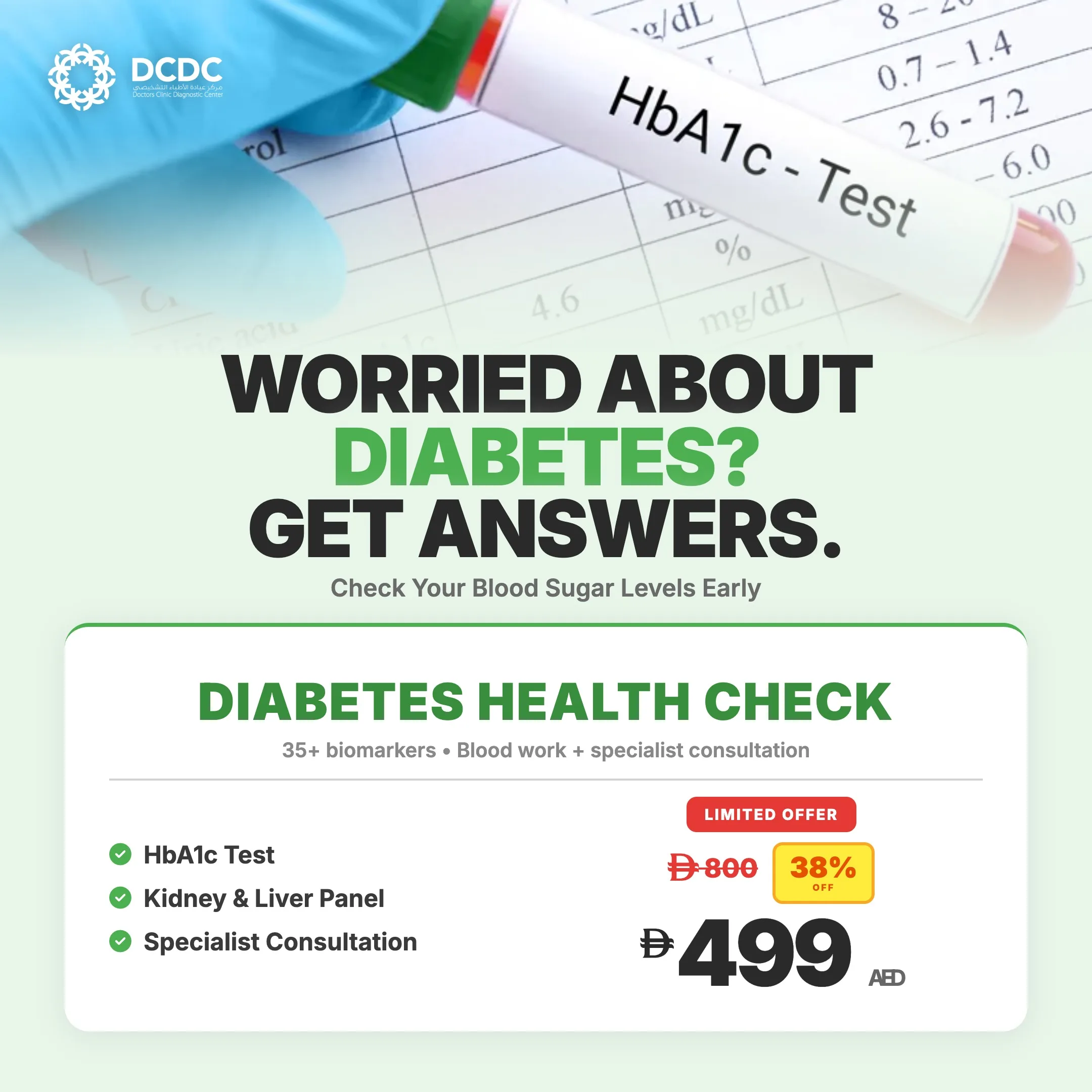
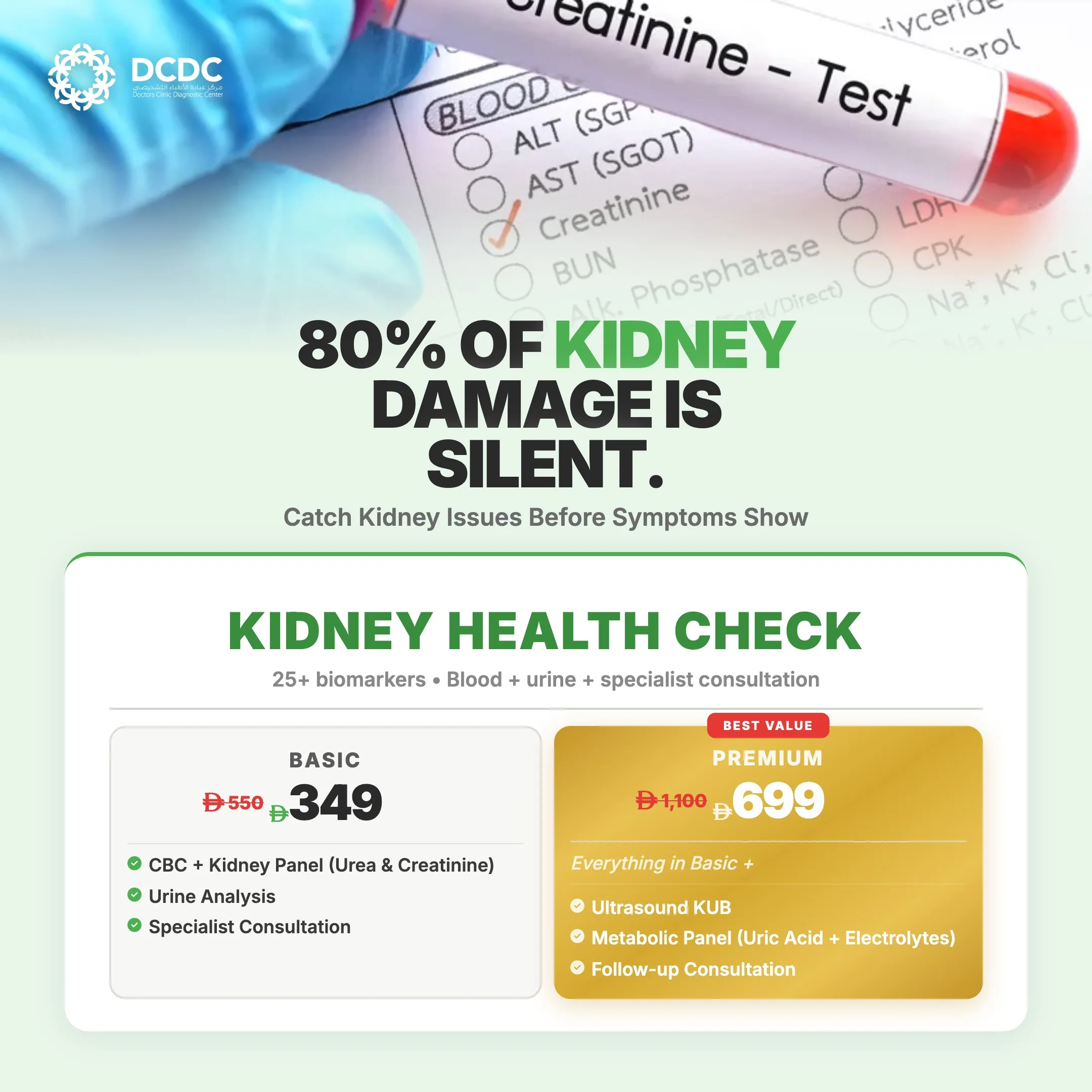
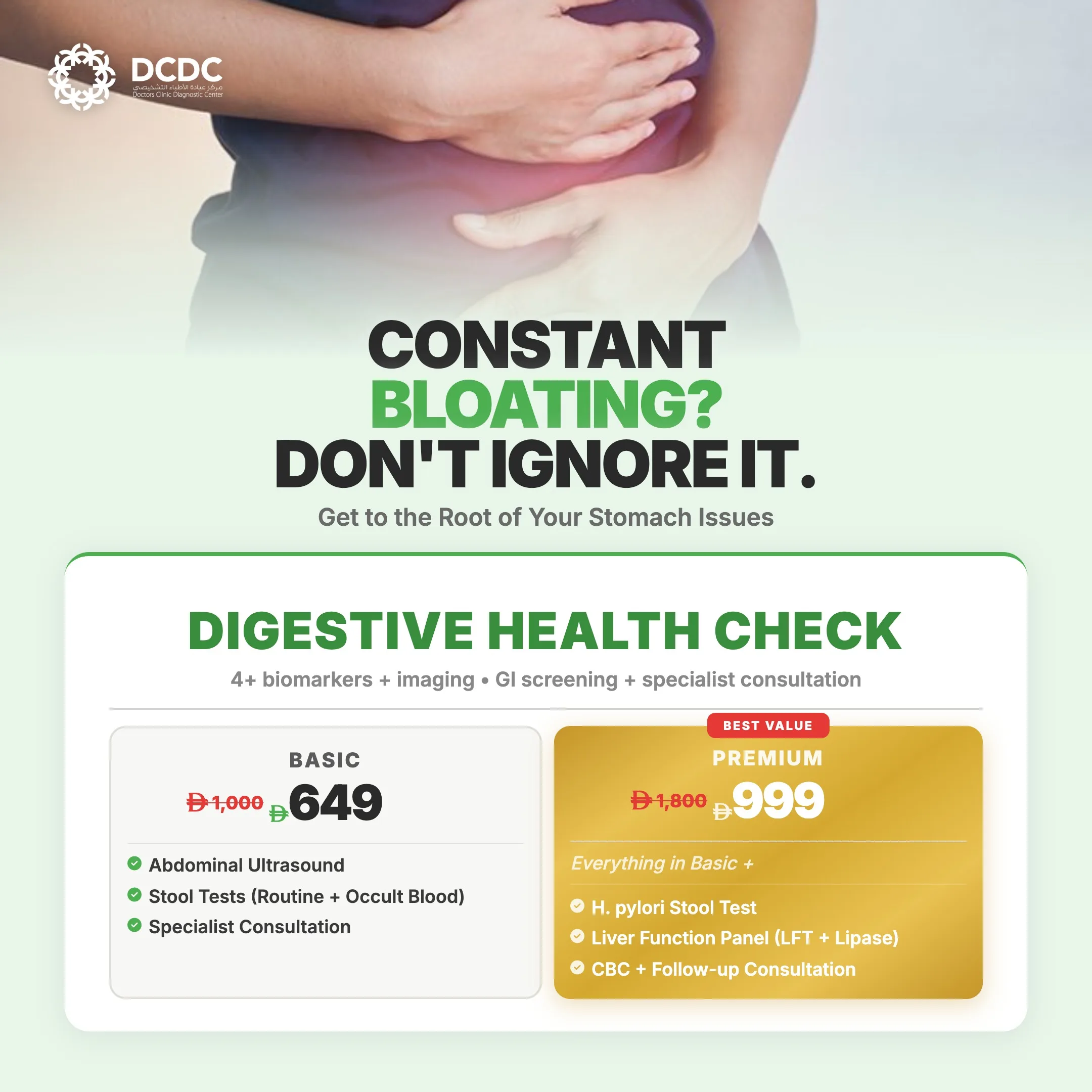
Health Screening Packages
Save with our bundled screening packages — specialist consultation included



What Is Lactose Intolerance? Understanding the Basics
Lactose intolerance occurs when your small intestine does not produce enough lactase, the enzyme responsible for breaking down lactose -- the natural sugar found in milk and dairy products -- into simpler sugars (glucose and galactose) that the body can absorb. Without enough lactase, undigested lactose travels into the colon, where gut bacteria ferment it, producing hydrogen, methane, and carbon dioxide gas. This fermentation process, along with lactose's ability to pull water into the intestine osmotically, is what causes the classic symptoms of bloating, gas, cramping, and diarrhea.
It is important to understand that lactose intolerance is a matter of degree, not an all-or-nothing condition. Lactase activity exists on a spectrum -- some people produce very little and react to even trace amounts of dairy, while others retain partial lactase activity and can tolerate moderate quantities without symptoms. This is why two people with a positive test result can have very different practical experiences with dairy in daily life.
Common Symptoms of Lactose Intolerance
Symptoms are almost always digestive and are triggered specifically by consuming lactose-containing foods. The severity depends on how much lactose was consumed, how much lactase activity remains, and individual gut sensitivity.
- Bloating and abdominal distension: A sensation of fullness or visible swelling in the abdomen, usually starting within an hour of eating dairy.
- Excess gas (flatulence): Caused by bacterial fermentation of undigested lactose in the colon.
- Abdominal cramping or pain: Often described as a griping or colicky pain around the navel or lower abdomen.
- Diarrhea: Loose, watery stools caused by osmotic fluid drawn into the bowel by unabsorbed lactose.
- Nausea: Some people feel queasy or occasionally vomit after consuming larger amounts of dairy.
- Audible bowel sounds (borborygmi): Gurgling or rumbling noises from increased gas and fluid movement in the intestine.
- In infants and young children: Symptoms may also include irritability, poor weight gain, and diaper rash from acidic stools -- these cases require prompt pediatric evaluation.
Symptom Onset and Severity
Symptoms typically begin 30 minutes to 2 hours after consuming dairy and resolve on their own within a few hours once the lactose has passed through the digestive tract. The severity is dose-dependent: a splash of milk in coffee may cause no symptoms at all, while a large glass of milk or a creamy dessert can trigger significant discomfort. This dose-response relationship is exactly what a properly conducted test measures -- it is not simply a yes/no diagnosis.
What Causes Lactose Intolerance? The Four Types
Not all lactose intolerance has the same origin. Understanding which type you have affects both the outlook and the management plan.
- Primary lactose intolerance (most common): A genetically programmed decline in lactase production that begins after weaning and progresses through childhood and adolescence. This is the type most adults with lactose intolerance have, and its prevalence varies enormously by ancestry -- much higher in East Asian, Middle Eastern, and African populations than in those of Northern European descent, where a genetic mutation allows lactase production to persist into adulthood.
- Secondary lactose intolerance: Caused by damage to the small intestinal lining from another condition -- gastroenteritis, celiac disease, Crohn's disease, or chemotherapy, for example. This type is often temporary and can improve once the underlying condition is treated and the gut lining heals.
- Congenital lactase deficiency: An extremely rare inherited condition present from birth, in which infants produce little to no lactase at all. It requires immediate dietary intervention with lactose-free infant formula.
- Developmental lactase deficiency: Seen in premature infants whose digestive systems have not yet matured enough to produce adequate lactase; this typically resolves as the infant develops.
Because secondary lactose intolerance can be triggered by other digestive conditions, patients with new-onset symptoms in adulthood -- especially alongside weight loss, fatigue, or other food reactions -- may benefit from broader testing. Our detailed guide on food intolerance testing in Dubai covers the full IgG panel approach used to identify multiple food triggers at once, which is useful when lactose is only one piece of the puzzle.
Lactose Intolerance vs Milk Allergy vs IBS: How to Tell the Difference
These three conditions are frequently confused because they can all cause bloating, cramping, and diarrhea after eating -- but they have entirely different mechanisms, risks, and treatments. Getting the right diagnosis matters, particularly because a milk allergy carries a risk of severe, even life-threatening, reactions that lactose intolerance does not.
| Feature | Lactose Intolerance | Milk Allergy | IBS |
|---|---|---|---|
| Underlying mechanism | Enzyme deficiency (lactase) -- a digestive issue, not immune | Immune system reaction to milk proteins (casein, whey) | Disorder of gut-brain interaction; no single trigger |
| Onset after trigger | 30 minutes to 2 hours after dairy | Minutes (IgE-mediated) to hours or days (non-IgE) after dairy | Not necessarily tied to dairy specifically; varies by trigger food |
| Key symptoms | Bloating, gas, cramping, diarrhea | Hives, lip/facial swelling, wheezing, vomiting, diarrhea | Bloating, abdominal pain, alternating diarrhea/constipation |
| Life-threatening potential | No | Yes, in IgE-mediated cases (risk of anaphylaxis) | No |
| Diagnostic test | Hydrogen breath test, blood glucose response test | Skin prick test, specific IgE blood test, oral food challenge | Rome V clinical criteria plus tests to exclude other causes |
| Treatment approach | Reduce/manage lactose intake, lactase enzyme supplements | Strict avoidance of milk protein; emergency epinephrine if severe | Low-FODMAP diet, gut-directed therapy, targeted medication |
Key differences between lactose intolerance, milk allergy, and IBS to help guide the right diagnostic pathway.
How Common Is Lactose Intolerance in Dubai and the UAE?
Dubai's population is one of the most ethnically diverse in the world, and lactase persistence -- the genetic trait that allows adults to keep digesting dairy comfortably -- varies dramatically by ancestry. Genetic studies of Gulf populations, including neighbouring Oman and Yemen, show that lactase persistence in the region is linked to distinct gene variants shaped by centuries of pastoralist tradition, and prevalence differs widely even within the Arabian Peninsula. Meanwhile, large communities in Dubai with South Asian and East and Southeast Asian ancestry come from populations where lactase non-persistence -- and therefore lactose intolerance -- is especially common, in some cases affecting the majority of adults.
This mix means lactose-related symptoms are extremely common in daily clinical practice here, but they are also easy to miss because dairy is woven into so many local and expatriate food traditions -- Arabic coffee (qahwa) sometimes served with milk, Emirati laban, Indian and Pakistani chai, Persian saffron ice cream (bastani), and paneer-based dishes all introduce lactose in ways that are not always obvious. A structured evaluation helps separate genuine lactose intolerance from other overlapping digestive issues that are just as prevalent in the same population.
How Lactose Intolerance Is Diagnosed: Testing Methods
Self-diagnosis based on "I feel bloated after milk" is a reasonable starting clue, but it is not reliable enough to build a long-term dietary strategy on. Objective testing removes the guesswork and tells you precisely how much lactose your body can handle.
Hydrogen Breath Test (Gold Standard)
The hydrogen breath test is considered the gold-standard, non-invasive method for confirming lactose malabsorption, with sensitivity and specificity both regularly reported in the 80-100% range in clinical studies. After drinking a lactose solution, you breathe into a collection device at regular intervals over roughly 2-3 hours. If undigested lactose is being fermented by colonic bacteria, hydrogen (and sometimes methane) levels in your breath rise measurably above baseline -- a rise of 20 parts per million or more is generally considered a positive result.
Blood Glucose (Lactose Tolerance) Test
This test measures your blood glucose level before and at intervals after drinking a lactose solution. In a person with normal lactase activity, blood glucose rises as lactose is broken down and absorbed. In someone with lactose intolerance, glucose levels rise minimally because the lactose is not being properly digested and absorbed into the bloodstream. This test is a useful alternative when breath testing is not suitable.
Elimination Diet and Rechallenge
Under clinical guidance, dairy is removed from the diet for 2-4 weeks. If symptoms resolve, dairy is then gradually reintroduced in controlled amounts while symptoms are tracked. This method is useful for confirming a diagnosis and, importantly, for mapping out your personal tolerance threshold once lactose intolerance has already been confirmed by breath or blood testing.
Stool Acidity Test (Infants and Young Children)
For infants and young children who cannot reliably perform a breath test, a stool sample can be checked for acidity and the presence of reducing substances, both of which indicate unabsorbed lactose fermenting in the gut. This is used alongside a careful clinical history and, when needed, referral to a pediatrician.
Because bloating and altered bowel habits are also hallmark features of irritable bowel syndrome, patients whose symptoms do not fully resolve on a lactose-free diet are often advised to explore whether an overlapping condition is present. Our guide to IBS treatment and symptoms in Dubai explains the Rome V diagnostic criteria and how IBS is distinguished from a straightforward food intolerance.
How to Prepare for Your Lactose Intolerance Test
Proper preparation affects test accuracy. Follow these steps in the days before a hydrogen breath test or blood glucose response test.
- Fast for 8-12 hours before the test -- water is usually permitted, but check with your doctor.
- Avoid antibiotics for at least 2-4 weeks prior, as they can alter gut bacteria and skew breath test results.
- Avoid probiotics and fiber supplements for at least 1-2 weeks before testing.
- Skip high-fiber, slow-to-digest meals (legumes, whole grains, bran) the evening before, as residual fermentation can raise baseline hydrogen levels.
- Do not smoke on the morning of the test, as it can interfere with breath hydrogen readings.
- Brush your teeth without swallowing toothpaste and avoid chewing gum before arriving, since oral bacteria can also affect early readings.
Diagnostic Test Pricing at DCDC
One of the advantages of testing at DCDC is transparent, upfront pricing combined with an on-site laboratory, so most of your workup can be completed in a single visit rather than being referred elsewhere.
| Service | What It Detects / Includes | Typical Duration | Indicative Cost |
|---|---|---|---|
| General Consultation | Initial symptom review and clinical assessment with a general practitioner | Same day | From AED 150 |
| Gastroenterology Consultation | Specialist evaluation for persistent, complex, or overlapping symptoms | Same day | From AED 299 |
| Blood Test (Lactose Tolerance / Glucose Response) | Blood glucose response after a measured lactose dose | Same-day draw, results same day | From AED 249 |
| Food Intolerance Testing (IgG Panel) | Broader panel testing delayed reactivity to 200+ foods including dairy proteins | Same-day draw, 5-7 days for results | From AED 500 |
| Abdominal Ultrasound (if needed) | Rules out gallstones or structural causes of digestive symptoms | 20-30 minutes | From AED 400 |
Indicative pricing for lactose intolerance evaluation at DCDC Dubai Healthcare City. Final cost depends on the specific tests ordered and insurance coverage (2026).
What to Expect at DCDC: Your Lactose Intolerance Testing Journey
If you are visiting DCDC for the first time to investigate possible lactose intolerance, here is what a typical visit looks like from arrival to your personalized dietary plan. Our average wait time is just 15 minutes.
Step 1: Arrival and Registration
Park in our free dedicated on-site parking at Building 64, Block A, Al Razi Medical Complex, Dubai Healthcare City. Reception will verify your insurance -- we offer direct billing with 20+ providers including Daman, AXA, and Bupa -- and record your vitals.
Step 2: Clinical Consultation
Your doctor will take a focused history: which dairy foods trigger symptoms, how quickly symptoms appear, their severity, your family history, and any red-flag features that might point toward a different diagnosis. Based on this, they will recommend either a hydrogen breath test, a blood glucose response test, or -- if a broader food sensitivity pattern is suspected -- an IgG food intolerance panel.
Step 3: Breath Test or Blood Test
For a breath test, you will drink a lactose solution and provide breath samples at set intervals over roughly 2-3 hours in a comfortable waiting area. For a blood test, a baseline sample is drawn, followed by additional samples after the lactose dose. Both are performed on-site in our laboratory, so there is no need to travel elsewhere mid-workup.
Step 4: Elimination Diet Guidance
Once a diagnosis is confirmed, your doctor will walk you through a structured approach: a short period of stricter dairy avoidance to let symptoms settle, followed by a careful, gradual reintroduction to map your personal tolerance threshold. You will leave with practical guidance on lactose content in common foods and how to read product labels.
Step 5: Results Timeline and Follow-Up
Breath test and blood glucose results are typically available the same day. If a broader IgG food intolerance panel is ordered, results take 5-7 days. A follow-up consultation -- in person or via telehealth -- reviews your results, finalizes your dietary plan, and addresses any remaining questions.
Some patients whose symptoms persist despite careful dairy avoidance may be dealing with an additional overlapping cause of bloating, such as SIBO or a separate food sensitivity. Our comprehensive guide on bloating causes and treatment in Dubai covers the full range of conditions that can produce similar symptoms and how they are worked up.
Living with Lactose Intolerance: Diet and Dairy Alternatives in Dubai
Managing lactose intolerance in Dubai has become considerably easier over the past several years, as supermarkets have expanded their range of lactose-free and plant-based options to meet growing demand.
- Lactose-free milk and yogurt: Widely available from major dairy brands, these products have the lactose pre-broken down (or lactase enzyme added) so they can be enjoyed without symptoms.
- Plant-based milks: Almond, oat, soy, coconut, and rice milk are stocked in virtually every Dubai supermarket, from mainstream chains to specialty health stores, and work well in coffee, cereal, and cooking.
- Lactase enzyme supplements: Over-the-counter tablets or drops that supply the missing enzyme, taken just before consuming dairy -- useful for occasional indulgence such as a birthday cake or restaurant dessert.
- Hard, aged cheeses: Cheeses like cheddar, parmesan, and gouda are naturally very low in lactose due to the fermentation process and are tolerated by many people with lactose intolerance.
- Plain yogurt with live cultures: The bacterial cultures in yogurt partially digest lactose during fermentation, which is why many lactose-intolerant people tolerate yogurt better than milk.
Cultural Food Considerations
Dubai's culinary landscape makes hidden dairy easy to miss. Arabic coffee (qahwa) is traditionally black, but milk versions and accompanying sweets often contain dairy. Karak chai, a beloved South Asian-style tea popular across the UAE, is typically brewed with full-fat milk or condensed milk -- a common overlooked trigger for symptomatic patients. Laban, a fermented yogurt drink central to Emirati and broader Levantine cuisine, contains lactose, though fermentation reduces the amount somewhat compared with fresh milk. Persian ice cream (bastani), rich with cream and saffron, is a frequent dessert trigger reported by patients who otherwise thought their diet was dairy-light. Once your threshold is defined through testing, you can enjoy small portions of these dishes strategically rather than avoiding them altogether.
How Much Dairy Can You Actually Eat? Understanding Your Threshold
According to the NIH Consensus Development Conference on lactose intolerance, many people with confirmed lactose intolerance can tolerate up to around 12g of lactose in a single sitting -- roughly the amount in one cup of milk -- with minimal or no symptoms, and can tolerate somewhat more when it is spread throughout the day and consumed alongside other food rather than on an empty stomach. This is precisely why testing that reveals your personal threshold is more useful than a blanket "no dairy" rule, which often leads to unnecessary and sometimes nutritionally limiting restriction.
- Milk (1 cup / 240ml): Roughly 12g lactose -- often the upper comfortable limit for many with lactose intolerance.
- Plain yogurt (1 cup): Roughly 5-8g lactose, typically better tolerated due to live bacterial cultures.
- Hard cheese (30g, e.g. cheddar): Less than 1g lactose -- usually well tolerated even by sensitive individuals.
- Ice cream (1/2 cup): Roughly 6g lactose, though the high fat content can slow digestion and reduce symptoms in some people.
- Butter (1 tablespoon): Negligible lactose -- generally safe in small amounts.
Dr. Hadeel Elnur's Perspective on Lactose Intolerance in Dubai
"Lactose intolerance is one of the most commonly self-diagnosed conditions we see in Dubai," explains Dr. Hadeel Elnur, General Practitioner at DCDC. "Many patients eliminate dairy entirely without ever testing -- they notice bloating once, assume the worst, and cut out milk, cheese, and yogurt indefinitely. A proper hydrogen breath test or blood glucose response test can confirm the diagnosis and determine your threshold, so you know exactly how much dairy you can safely consume rather than unnecessarily restricting your diet."
As a general practitioner working within a multi-specialty center, Dr. Elnur can coordinate directly with our on-site laboratory for breath and blood testing, and refer to gastroenterology or radiology when symptoms suggest an overlapping condition -- all without the patient needing to leave the building. This integrated approach reflects DCDC's 98% patient satisfaction rate and our commitment to efficient, evidence-based diagnosis rather than trial-and-error dietary elimination.
Stop Guessing About Dairy
Get a definitive answer with a hydrogen breath test or blood glucose response test at DCDC. Our on-site laboratory means most results are ready the same day. View our gastroenterology services or call to book.
Open Sat-Thu 8 AM-10 PM, Fri 9 AM-9 PM. Free dedicated parking. Direct billing with 20+ insurance providers.
When to See a Doctor: Red Flags
Occasional mild bloating after a heavy dairy-based meal is common and rarely worrying. However, you should book an evaluation promptly if you notice any of the following, since they may indicate a condition beyond simple lactose intolerance.
- Unexplained weight loss alongside digestive symptoms, which can suggest celiac disease, malabsorption, or another underlying condition.
- Blood in your stool, which always warrants prompt investigation.
- Persistent symptoms despite a strict dairy-free diet, suggesting the true cause may be something other than lactose intolerance.
- Fever accompanying digestive symptoms, which can indicate infection or inflammation.
- Symptoms in an infant or young child, including poor weight gain, prolonged irritability, or persistent diarrhea, which require pediatric assessment rather than home management.
- Any signs suggestive of an allergic reaction -- hives, facial swelling, or difficulty breathing after dairy -- which requires urgent evaluation for a possible milk allergy rather than intolerance.
Get Tested, Get Answers
DCDC is rated 4.8/5 from over 1,000 Google reviews, with a 98% patient satisfaction rate. Our MOHAP-licensed clinic offers same-day lactose intolerance testing with results you can act on. Book your consultation today.
Building 64, Block A, Al Razi Medical Complex, Dubai Healthcare City. MOHAP Licensed. Free parking. 20+ insurance partners.
Related Services at DCDC
Expert care and advanced diagnostics at Dubai Healthcare City
Frequently Asked Questions
Final Thoughts
Lactose intolerance is extremely common, especially in a city as ethnically diverse as Dubai, but it is also one of the most over-assumed and under-tested digestive complaints. Cutting out dairy on a hunch may bring temporary relief, but without testing you cannot be sure you have identified the right cause -- or your true tolerance threshold.
At DCDC in Dubai Healthcare City, our on-site laboratory offers same-day hydrogen breath testing and blood glucose response testing, so you can move from consultation to confirmed diagnosis to a personalized dietary plan in a single visit. With a 4.8/5 Google rating from over 1,000 reviews, a 98% patient satisfaction rate, and direct billing with 20+ insurers, we aim to make getting a clear answer as straightforward as possible.
If dairy has been controlling your food choices without a confirmed diagnosis, take the first step: get tested, learn your threshold, and enjoy your food with confidence again.
Sources & References
This article was reviewed by our medical team and references the following sources:
- NIH Consensus Development Conference Statement -- Lactose Intolerance and Health (NIH Consens State Sci Statements, 2010)
- Hydrogen and Methane Breath Test in the Diagnosis of Lactose Intolerance (Diagnostics, 2021)
- Distribution of the Lactase Persistence-Associated Variant Alleles -13910*T and -13915*G Among the People of Oman and Yemen (Ann Hum Genet, 2013)
- Lactose Intolerance versus Cow's Milk Allergy in Infants: A Clinical Dilemma (2024)
- A Worldwide Correlation of Lactase Persistence Phenotype and Genotypes (BMC Evol Biol, 2010)
- Lactose Intolerance -- StatPearls (NCBI Bookshelf)
Medical content on this site is reviewed by DHA-licensed physicians. See our editorial policy for more information.

Written by
Dr. Hadeel Elnur
General Practitioner
MD, General Practice
Dr. Hadeel Elnur is a General Practitioner at Doctors Clinic Diagnostic Center (DCDC) in Dubai Healthcare City.
Related Articles

Food Intolerance Test Dubai: From AED 500

IBS vs Food Intolerance Dubai: Which Is It?

Celiac Disease Symptoms Dubai: Diagnosis
Bloating Causes & Treatment in Dubai
Gastroenterologist Dubai: When to See One
More in Internal Medicine

Enlarged Prostate Dubai: BPH Symptoms (2026)
Read More
Hiatal Hernia Dubai: Symptoms & Treatment (2026)
Read MoreDiabetic Foot Care Dubai: Warning Signs (2026)
Read MoreColonoscopy vs Endoscopy Dubai: Guide (2026)
Read MoreDiabetic Diet Plan Dubai: Foods & Tips (2026)
Read MoreCholesterol-Lowering Foods & Diet Dubai (2026)
Read More© 2026 Doctors Clinic Diagnostic Center (DCDC), Dubai Healthcare City. Originally published at https://doctorsclinicdubai.ae/blog/lactose-intolerance-symptoms-test-dubai. All rights reserved. Unauthorized reproduction is prohibited.