Key Takeaways
- People with diabetes have roughly 2 to 4 times the risk of heart disease, and it tends to appear 10 to 15 years earlier than in people without diabetes.
- High blood sugar damages artery linings, speeds up plaque build-up, raises clotting risk and can weaken the heart muscle, while nerve damage can make heart attacks painless.
- The key numbers to know and track are HbA1c (around 7% or lower for most adults), blood pressure (below 130/80 mmHg) and LDL cholesterol (often below 1.8 mmol/L in higher-risk patients).
- Essential checks include HbA1c, lipid profile, kidney tests and ECG, with echocardiogram, stress test or CT calcium score added according to risk.
- At DCDC in Dubai Healthcare City, diabetes screening and cardiac testing can be done in one visit: HbA1c AED 149, lipid profile panel AED 199, GP consultation from AED 249, cardiology consultation from AED 250.
If you or someone you love has diabetes, protecting the heart is as important as controlling blood sugar. Research consistently shows that people with diabetes have 2 to 4 times the risk of heart disease compared with people without it, and cardiovascular disease is the leading cause of death among them. At Doctors Clinic Diagnostic Center (DCDC) in Dubai Healthcare City, our diabetes care team works alongside our on-site cardiology department so that both conditions are assessed together.
This guide explains the diabetes and heart disease risk connection in plain language: how high blood sugar harms the heart, the numbers behind the risk, the types of heart disease involved, symptoms that should never be ignored, the tests that matter, how type 1 and type 2 compare, and practical steps to lower your risk. It is written for people living in Dubai and the UAE, including those newly diagnosed, those with prediabetes and those who have lived with diabetes for years.
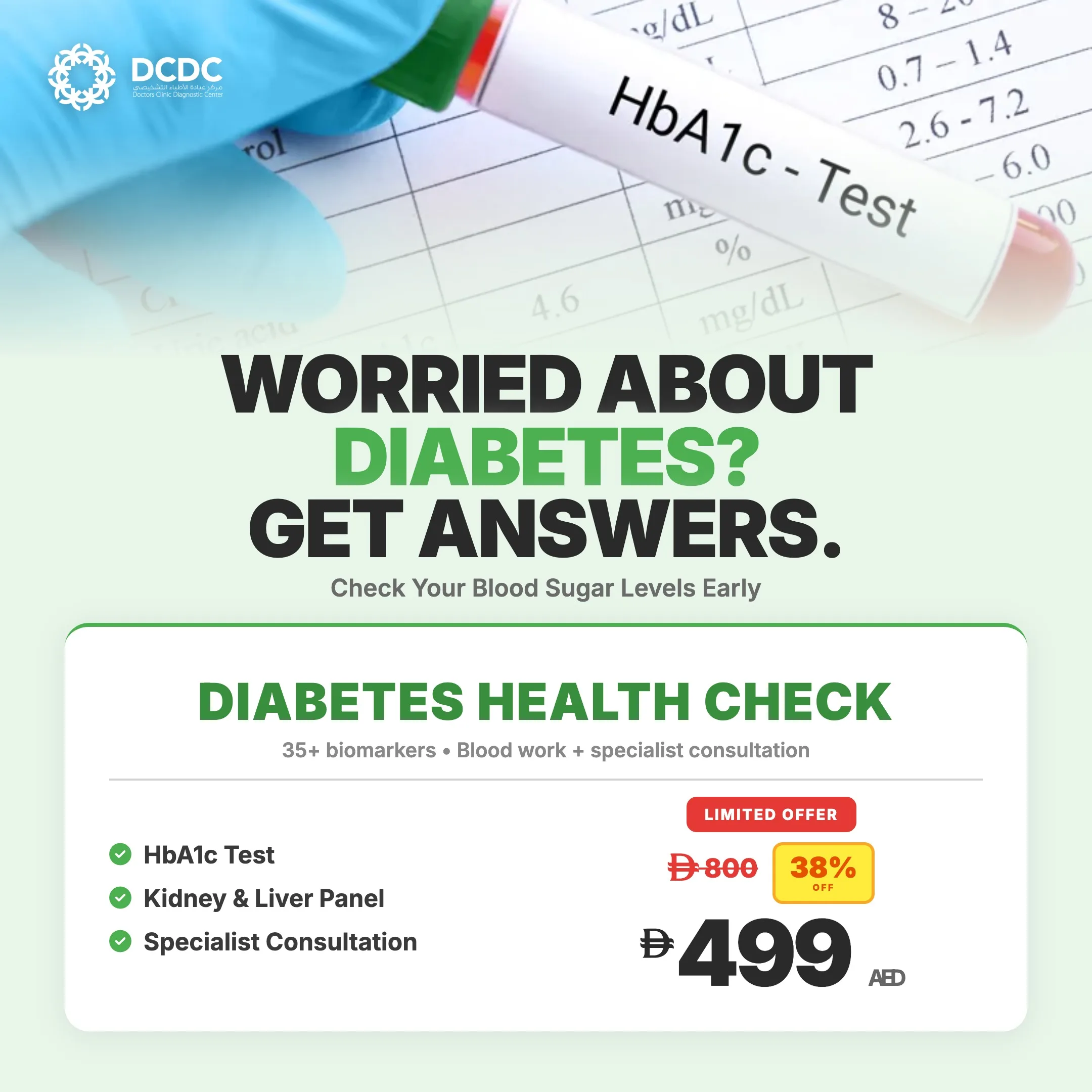
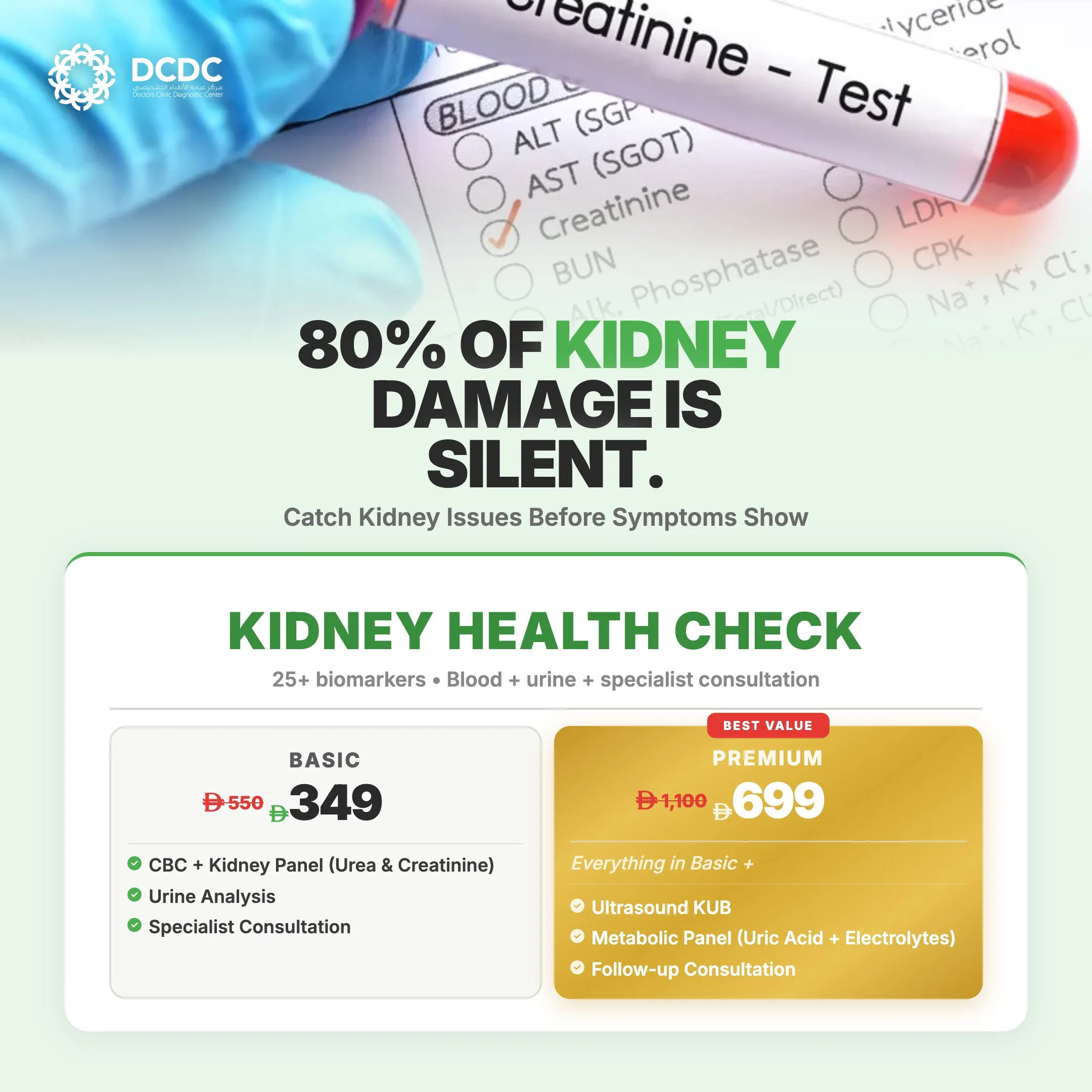
Health Screening Packages
Save with our bundled screening packages — specialist consultation included




How Diabetes Damages the Heart
Diabetes is often described as a blood sugar problem, but for the heart it is better understood as a blood vessel problem. Glucose that stays high for months and years changes the way arteries, the heart muscle and the nerves that regulate the heart behave. The damage is slow and usually silent, which is why many people first learn about it through a heart attack rather than a routine check.
1. High blood sugar injures the lining of blood vessels
The inner lining of every artery, called the endothelium, is a thin layer of cells that keeps vessels flexible and prevents clots. Persistently high glucose produces excess free radicals and sticky compounds known as advanced glycation end-products. Together they inflame the endothelium, reduce its production of nitric oxide (the molecule that relaxes arteries), and make the vessel wall stiffer and more prone to injury.
2. Atherosclerosis develops earlier and moves faster
Once the lining is damaged, cholesterol particles slip into the artery wall and trigger a build-up of plaque. In people with diabetes, this process, called atherosclerosis, starts earlier, spreads across more of the arterial tree and produces plaque that is more likely to rupture. Diabetes also changes the cholesterol pattern: triglycerides tend to be high, protective HDL cholesterol tends to be low, and LDL particles are smaller and denser, which makes them more damaging to artery walls even when the LDL number looks only mildly raised.
3. Blood becomes more likely to clot
Platelets in people with diabetes are more reactive, and clotting proteins such as fibrinogen are often elevated. When a plaque ruptures, the resulting clot is larger and more stubborn, which helps explain why heart attacks in diabetics tend to be more extensive.
4. The heart muscle itself is affected
Diabetes can cause diabetic cardiomyopathy, a weakening or stiffening of the heart muscle that occurs even without blocked arteries. High glucose and insulin resistance change how heart cells use energy, and scarring (fibrosis) gradually builds up. The result can be heart failure that develops quietly over years.
5. Nerve damage hides the warning signs
Cardiac autonomic neuropathy damages the nerves that control heart rate and blood pressure. It can cause a fast resting heart rate, dizziness on standing and, importantly, painless heart attacks. A person with diabetes may feel only tiredness, nausea or breathlessness during a heart attack, or nothing at all.
6. Diabetes rarely travels alone
Type 2 diabetes commonly comes with high blood pressure, abdominal obesity, fatty liver and abnormal cholesterol. Each of these independently raises cardiovascular risk, and together they multiply it. Kidney damage, another common diabetic complication, adds further strain on the heart by raising blood pressure and promoting fluid retention. This is why doctors treat diabetes and heart health as one connected problem rather than two separate ones.
If you are living with diabetes, our companion guide on diabetes management in Dubai covers day-to-day control, while this article focuses on what that control means for your heart.
The Diabetes-Heart Disease Connection by the Numbers
Large studies following hundreds of thousands of people have measured how much diabetes raises cardiovascular risk. The figures below are approximate and drawn from major published research and guideline summaries. Individual risk depends on age, sex, duration of diabetes, blood pressure, cholesterol, smoking and kidney function.
| Measure | What the research shows |
|---|---|
| Overall risk of heart disease | People with diabetes have roughly 2 to 4 times the risk of developing cardiovascular disease compared with people without diabetes |
| Coronary heart disease | About 2 times higher risk in pooled analyses of nearly 700,000 people |
| Ischaemic stroke | About 2 times higher risk, with worse recovery on average |
| Heart failure | Roughly 2 times higher in men and up to 4 to 5 times higher in women in long-running population studies |
| Heart attack without prior heart disease | A diabetic person with no previous heart attack can have a risk of a future heart attack similar to a non-diabetic person who has already had one (Finnish study from 1998; later studies show this varies by individual) |
| Effect of HbA1c | Each 1 percentage point rise in HbA1c has been linked to roughly a 14% higher risk of heart attack in the UKPDS study |
| Age at onset | Heart disease tends to appear 10 to 15 years earlier in people with diabetes |
| Leading cause of death | Cardiovascular disease is the most common cause of death in people with type 2 diabetes |
| Silent heart disease | A significant share of diabetic heart attacks are painless or have unusual symptoms because of nerve damage |
The practical message is not that heart disease is inevitable. Most of the extra risk comes from factors that can be measured and treated: blood sugar, blood pressure, cholesterol, weight and smoking. Studies consistently show that people with diabetes who keep these within target have cardiovascular outcomes much closer to those of the general population.
This matters especially in the UAE, where diabetes is common. International Diabetes Federation estimates place the UAE among the countries with the highest adult diabetes prevalence in the region, and many cases remain undiagnosed for years. Add a largely sedentary, car-based lifestyle, high summer temperatures that discourage outdoor exercise, and diets rich in refined carbohydrates, and the setting is one where diabetes-related heart risk deserves early attention.
Types of Heart Disease Linked to Diabetes
"Heart disease" in diabetes is not one condition. It is a family of related problems affecting the heart muscle, the coronary arteries, the legs and the brain. Understanding each helps you recognise symptoms and ask the right questions.
Coronary artery disease (CAD)
This is the build-up of plaque in the arteries that feed the heart muscle. In diabetes, CAD is more likely to affect several arteries at once and the smaller branches, which can make treatment more complex. It can lead to angina (chest pain on exertion), heart attack and sudden cardiac events. Many diabetics have CAD for years without symptoms. Our guide to heart disease symptoms in Dubai lists the signs in more detail.
Heart failure
Heart failure means the heart cannot pump or fill efficiently enough to meet the body's needs. In diabetes it can follow a heart attack, but it can also arise from diabetic cardiomyopathy, long-standing high blood pressure or both. Early signs include breathlessness on exertion, ankle swelling, waking at night short of breath and unexplained fatigue. Heart failure is one of the most frequent and underrecognised complications of type 2 diabetes.
Peripheral artery disease (PAD)
PAD is atherosclerosis in the arteries of the legs. It causes cramping calf or thigh pain when walking that eases with rest (claudication), cold feet, slow-healing sores and, in advanced cases, tissue loss. Combined with diabetic nerve damage, PAD makes foot ulcers more likely and harder to heal, and is a major driver of amputations. Having PAD is also a strong signal that the coronary and brain arteries are affected.
Stroke and cerebrovascular disease
Diabetes roughly doubles the risk of ischaemic stroke, caused by a blocked artery supplying the brain. Atrial fibrillation, an irregular heart rhythm that is also more common in diabetes, adds to the risk because it allows clots to form in the heart. Sudden facial droop, arm weakness, speech difficulty or loss of vision are emergencies that need an ambulance immediately.
Rhythm problems and sudden cardiac death
Scarred heart muscle and autonomic nerve damage can disturb the heart's electrical system. Palpitations, fainting or a very fast resting pulse in a person with diabetes should be evaluated with an ECG.
Warning Signs Diabetics Should Never Ignore
Because diabetes can dull pain signals, the usual textbook chest pain is not always present. Treat any of the following as a reason to seek assessment, and treat the first group as an emergency.
Call 998 or go to emergency care immediately if you have
- Chest pressure, tightness or pain lasting more than a few minutes, or spreading to the arm, jaw, neck or back
- Sudden severe breathlessness at rest
- Cold sweat, nausea or light-headedness together with chest or upper abdominal discomfort
- Fainting or near-fainting
- Stroke signs: face drooping, arm weakness, slurred speech, sudden vision loss or severe sudden headache
Book an appointment soon if you notice
- Unusual tiredness or reduced stamina that you cannot explain, especially if you can no longer climb stairs or walk distances you managed before
- Breathlessness when lying flat or waking at night gasping for air
- Swelling of the ankles, feet or abdomen
- Cramping leg pain when walking that eases with rest
- Sores on the feet or legs that heal slowly or not at all
- Palpitations, a racing heart or dizziness on standing
- Indigestion-like discomfort or nausea on exertion that settles with rest (this can be angina in disguise)
- Persistently high blood pressure readings at home
- Numbness, tingling or burning in the feet, which signals nerve damage and a need for broader review
A useful rule: in diabetes, new unexplained symptoms on exertion deserve a heart check even if the pain does not fit the textbook pattern.
Essential Tests for Diabetic Heart Health
Good heart protection starts with measuring the right things at the right intervals. The tests below form the core of a diabetes-heart assessment. Your doctor will choose from them depending on your age, how long you have had diabetes, symptoms and existing results.
Blood tests
- HbA1c (AED 149): reflects your average blood sugar over about three months. It is the main measure of long-term control, and most adults with diabetes aim for around 7% or lower unless advised otherwise. See our HbA1c test guide for ranges.
- Fasting or random glucose (AED 99): a snapshot of current blood sugar that complements HbA1c.
- Lipid profile panel (AED 199): total cholesterol, LDL, HDL and triglycerides. In diabetes, LDL targets are lower than for the general population. Our lipid profile guide and cholesterol levels by age chart explain the numbers.
- Diabetes panel (AED 499): a bundled set of diabetes-related blood tests for a broader view in one sample.
- Kidney function and urine albumin: early kidney damage is a powerful marker of raised cardiovascular risk.
- High-sensitivity CRP: a marker of inflammation that can add information about cardiovascular risk when the picture is uncertain. Your doctor will advise if it is useful for you.
Heart tests
- Resting ECG: a quick, painless recording of the heart's electrical activity that can show previous silent heart attacks, rhythm problems and strain on the heart.
- Echocardiogram: an ultrasound of the heart that shows pumping strength, valve function and wall thickness, and can detect early heart failure or diabetic cardiomyopathy. Learn more in our echocardiogram guide.
- Treadmill stress test: an ECG recorded while you walk on a treadmill with gradually increasing effort. It can reveal blockages that only cause problems when the heart is working hard.
- CT coronary calcium score: a quick, non-invasive multi-slice CT scan that measures calcium in the coronary arteries. A score of zero is reassuring, while a high score shows established plaque and may justify more intensive treatment.
- CT coronary angiography: a detailed CT picture of the coronary arteries, used when symptoms or other tests suggest a blockage.
DCDC lists the exact pricing for ECG, echocardiogram, stress testing and CT scans on request, as the right test and package depend on your clinical situation. Your doctor will recommend the tests you actually need after the initial review.
How often? As a general guide, HbA1c is checked every three to six months, a lipid profile at least yearly (more often when treatment is being adjusted), and kidney tests yearly. A resting ECG is typically done at diagnosis and when symptoms or risk change. Advanced imaging is chosen individually.
Risk Factor Comparison: Type 1 vs Type 2 Diabetes
Both main forms of diabetes raise cardiovascular risk, but they do so through somewhat different routes and on different timelines.
| Factor | Type 1 diabetes | Type 2 diabetes |
|---|---|---|
| Typical age at onset | Childhood to young adulthood | Usually adulthood, increasingly younger |
| Main driver of heart risk | Long exposure to high glucose and inflammation over decades | High glucose combined with insulin resistance, obesity, high blood pressure and abnormal cholesterol |
| When heart disease tends to appear | Often after 15 to 20 years of diabetes; can be early if control is poor | Frequently already present at diagnosis, as risk factors build up for years beforehand |
| Cholesterol pattern | Often near normal if well controlled | High triglycerides, low HDL, small dense LDL |
| Blood pressure | Rises mainly when kidney disease develops | Often high at diagnosis |
| Excess risk vs general population | Substantially higher, particularly in younger women and with poor control or kidney disease | About 2 to 4 times higher |
| Kidney involvement | Important driver of risk after many years | Common and often early |
| Key protective steps | Tight but safe glucose control, blood pressure and cholesterol treatment, no smoking | Weight management, blood pressure and cholesterol control, glucose targets, regular activity, no smoking |
| Screening approach | Start heart risk assessment as years of diabetes accumulate or as other risk factors appear | Assess heart risk at diagnosis and review at least yearly |
Neither type is "safe" for the heart. The good news is that the same toolkit works for both: tight, individualised glucose control, blood pressure and cholesterol treatment, stopping smoking and staying active.
What to Expect at DCDC
One of the biggest obstacles to good diabetes-heart care is fragmentation. Blood tests happen in one place, the heart specialist is in another building, imaging is elsewhere, and results arrive on different days. At Doctors Clinic Diagnostic Center (DCDC) in Dubai Healthcare City, diabetes screening and cardiac testing can be done in a single visit, under one roof. You can read more about our diabetes care services on the service page.
Step 1: A joined-up consultation
You start with a general practitioner or internal medicine review (GP consultation from AED 249), where your history, medicines, symptoms, family history and previous results are reviewed. If you already know you have a heart concern, you can go directly to a cardiologist (cardiology consultation from AED 250). Our internal medicine and cardiology departments are both on site, so referral between them does not require a second appointment elsewhere.
Step 2: Same-day laboratory testing
Blood tests are drawn on site. Depending on your situation these may include HbA1c (AED 149), a glucose test (AED 99), a lipid profile panel (AED 199) or the broader diabetes panel (AED 499), plus kidney tests. Your doctor can review results the same day when timing allows.
Step 3: Heart testing without a second trip
If your risk or symptoms justify it, tests are performed in our own department: ECG, echocardiogram and treadmill stress test. For a detailed look at the coronary arteries, our multi-slice CT scanner can perform coronary calcium scoring and CT coronary angiography.
Step 4: One plan, explained clearly
Your results are reviewed together rather than in isolation. A glucose result that looks acceptable on its own may take on a different meaning when your lipid profile and echocardiogram are seen alongside it. You leave with a plan covering medication, targets, lifestyle steps and when to repeat tests, and your doctors can coordinate directly if both disciplines are involved.
Practical details
- Location: Building 64, Block A, Al Razi Medical Complex, Dubai Healthcare City (DHCC)
- Hours: Saturday to Thursday 8 AM to 10 PM; Friday 9 AM to 9 PM
- Parking: free parking for patients
- Insurance: accepted from more than 20 insurance partners; check coverage for your plan when booking
- Preparation: some blood tests, especially fasting glucose and lipid profiles, may require fasting for 8 to 12 hours. Bring your medicines and previous reports. Wear comfortable shoes if a treadmill test is planned.
Reducing Your Risk: A Practical Guide
Most of the extra heart risk linked to diabetes can be reduced. The evidence is strongest when several risk factors are tackled together. The numbers below are common guideline targets; your doctor will set personalised goals depending on your age, other conditions and risk of low blood sugar.
Typical targets for adults with diabetes
| Measure | Common target | Notes |
|---|---|---|
| HbA1c | Around 7% (53 mmol/mol) or lower | Looser for older adults or those with frequent hypoglycaemia; tighter for some younger people |
| Blood pressure | Below 130/80 mmHg | Home monitoring is useful; see our <a href="/blog/blood-pressure-chart-normal-ranges-dubai" class="text-primary-600 hover:underline">blood pressure chart</a> |
| LDL cholesterol | Below 2.6 mmol/L (100 mg/dL) as a minimum; below 1.8 mmol/L (70 mg/dL) or lower for higher-risk patients | Guidelines for very high risk go lower still |
| Triglycerides | Below 1.7 mmol/L (150 mg/dL) | Improved by weight loss, less sugar and alcohol |
| Waist circumference | Under about 94 cm (men) and 80 cm (women) | Ethnic-specific thresholds may apply |
| Urine albumin | Normal | Any rise signals kidney and heart risk |
Blood sugar
Consistent control matters more than occasional perfection. Take medicines as prescribed, monitor as advised, and attend regular HbA1c checks. Some newer diabetes medicines, such as SGLT2 inhibitors and GLP-1 receptor agonists, have been shown in large trials to reduce heart attacks, heart failure admissions and kidney decline in selected patients. Ask your doctor whether one of them suits you.
Blood pressure
High blood pressure and diabetes are a particularly damaging combination. Reduce salt, limit processed foods, maintain a healthy weight, and take prescribed blood pressure medicines consistently. Medicines such as ACE inhibitors or ARBs are often preferred when there is kidney involvement.
Cholesterol
Most adults with diabetes over 40 are advised to take a statin, and many younger people with additional risk factors are too. Statins reduce heart attacks and strokes in diabetics by roughly a fifth for every 1 mmol/L fall in LDL. If LDL remains above target, additional medicines can be added. Our guide on cholesterol management explains your options.
Food and weight
- Build meals around vegetables, legumes, whole grains, fish, nuts and olive oil; the Mediterranean pattern has strong evidence for heart protection
- Be careful with large portions of white rice, bread, dates and sweetened drinks, which are staples at many tables in the Gulf
- Choose grilled or baked over fried, and limit processed meat
- Losing 5 to 10% of body weight can improve glucose, blood pressure and cholesterol together
- Limit alcohol and avoid sugary juices, including those marketed as healthy
Movement
Aim for at least 150 minutes of moderate exercise per week, for example brisk walking, swimming or cycling, plus two sessions of resistance training. In Dubai's summer heat, walk early in the morning, use air-conditioned malls or indoor gyms and stay well hydrated. If you have not exercised for a long time, or have symptoms, speak to a doctor first; a stress test can help set a safe level.
Smoking, sleep and stress
Smoking, including shisha and vaping, sharply multiplies cardiovascular risk in diabetes. Stopping is the single most effective lifestyle change after blood sugar control. Aim for seven to eight hours of sleep, and treat sleep apnoea if it is suspected: loud snoring and daytime sleepiness are common in type 2 diabetes. Persistent stress and depression also worsen outcomes, and are worth discussing.
Vaccines and foot care
Annual influenza vaccination and up-to-date pneumococcal protection lower the risk of heart complications triggered by infection. Check your feet daily for sores and see a doctor early if one appears, since circulation problems and neuropathy combine dangerously there.
When to See a Doctor
| Situation | What to do | Timeframe |
|---|---|---|
| Chest pain or pressure, sudden severe breathlessness, fainting, stroke signs | Call 998 or go to the nearest emergency department. Do not drive yourself | Immediately |
| New breathlessness on exertion, ankle swelling, reduced stamina, palpitations | Book a cardiology or GP appointment with ECG and further tests as needed | Within days |
| Leg pain on walking, foot sores that do not heal | See your doctor for vascular and foot assessment | Within a week |
| Newly diagnosed diabetes (any type) | Full heart risk assessment including lipids, blood pressure and kidney function | At diagnosis |
| Known diabetes without recent heart check | HbA1c, lipid profile, blood pressure, kidney tests, and ECG; further tests if risk is high | At least once a year |
| Diabetes with age over 40, smoking, family history of early heart disease, or long duration | Discuss ECG, echocardiogram, stress test or CT calcium score | At the next routine visit |
| Prediabetes or strong family history of diabetes | Screening HbA1c and glucose; lifestyle plan | Every 1 to 3 years, or as advised |
If you are unsure, it is safer to be assessed. Our team can help you decide which tests are relevant to your situation. For a fuller list of warning signs, see our guide to heart disease symptoms in Dubai.
Check Your Diabetes and Heart Health in One Visit
Book a GP consultation from AED 249 or a cardiology consultation from AED 250 at DCDC, Dubai Healthcare City. Blood tests (HbA1c AED 149, lipid profile panel AED 199, glucose AED 99, diabetes panel AED 499) and heart testing are available on site. Learn more about our diabetes care services, message us on WhatsApp, or call +971 54 219 5008.
Open Saturday to Thursday 8 AM to 10 PM and Friday 9 AM to 9 PM. Free parking and 20+ insurance partners.
Related Services at DCDC
Expert care and advanced diagnostics at Dubai Healthcare City
Frequently Asked Questions
Final Thoughts
The link between diabetes and heart disease is strong, but it is not a sentence. Most of the added risk comes from things that can be measured and treated: blood sugar, blood pressure, cholesterol, weight, smoking and inactivity. Because diabetes can hide the warning signs of heart disease, regular testing matters even when you feel well, and any new exertional symptom deserves attention.
At DCDC in Dubai Healthcare City, you do not have to travel between clinics to get the full picture. Our internal medicine and cardiology teams, laboratory, ECG, echocardiogram, treadmill stress testing and multi-slice CT are all under one roof, so diabetes screening and cardiac testing can be completed in a single visit. A GP consultation starts from AED 249 and a cardiology consultation from AED 250. We are open Saturday to Thursday 8 AM to 10 PM and Friday 9 AM to 9 PM, with free parking and more than 20 insurance partners. Call +971 54 219 5008 or message us on WhatsApp at wa.me/971509703884 to book.
This article is for general information and does not replace personal medical advice. If you have chest pain, severe breathlessness, fainting or stroke symptoms, call 998 or go to the nearest emergency department immediately.
Sources & References
This article references the following sources:
- Diabetes mellitus, fasting glucose, and risk of cause-specific death (Emerging Risk Factors Collaboration, N Engl J Med, PubMed)
- Diabetes mellitus, fasting blood glucose concentration, and risk of vascular disease (Emerging Risk Factors Collaboration, Lancet, PubMed)
- Mortality from coronary heart disease in subjects with type 2 diabetes and in nondiabetic subjects with and without prior myocardial infarction (Haffner et al., N Engl J Med, PubMed)
- Association of glycaemia with macrovascular and microvascular complications of type 2 diabetes, UKPDS 35 (BMJ, PubMed)
- 2019 ESC Guidelines on diabetes, pre-diabetes, and cardiovascular diseases (Eur Heart J, PubMed)
- Mortality and cardiovascular disease in type 1 and type 2 diabetes (Rawshani et al., N Engl J Med, PubMed)
This information is educational and does not replace individual medical advice. See our editorial policy for more information.

Written by
Dr. Hadeel Elnur
General Practitioner
MD, General Practice
Dr. Hadeel Elnur is a General Practitioner at Doctors Clinic Diagnostic Center (DCDC) in Dubai Healthcare City.
Related Articles

Diabetes Management Dubai: Complete Guide

Heart Disease Symptoms Dubai: 8 Signs to Watch
Cholesterol Levels by Age Dubai: Chart
HbA1c Test Dubai: Normal Ranges & Cost

Lipid Profile Test Dubai: Cost & Guide
More in Internal Medicine

Indigestion Dubai: Causes & When to Worry (2026)
Read More
Blood in Stool Dubai: Causes & When to Worry (2026)
Read More
Signs of Lupus Dubai: Autoimmune Guide (2026)
Read More
Elevated Liver Enzymes: Causes & Next Steps (2026)
Read More
H. Pylori Test Cost Dubai: From AED 300 (2026)
Read More
Iron Infusion Cost Dubai: From AED 500 (2026)
Read More© 2026 Doctors Clinic Diagnostic Center (DCDC), Dubai Healthcare City. Originally published at https://doctorsclinicdubai.ae/blog/diabetes-heart-disease-risk-dubai. All rights reserved. Unauthorized reproduction is prohibited.