
Key Takeaways
- The UAE has one of the highest diabetes rates in the world, with 1 in 5 adults affected. You're not alone, and expert care is available.
- HbA1c testing every 3-6 months tracks your average blood sugar control. Most people should aim for below 7%
- Type 2 diabetes can go into remission with significant weight loss, so it is not a life sentence for everyone
- Annual screening for kidney, eye, and heart complications catches problems early when they're treatable
- Ramadan fasting is possible for many people with diabetes but requires planning and medication adjustment
- Diabetes care at DCDC includes consultation, testing, and complication screening. Most insurance accepted
Diabetes doesn't have to control your life. With the right knowledge, support, and care, most people with diabetes live full, active lives. But diabetes does require attention because ignoring it leads to complications that are far harder to manage than the diabetes itself. Our General Consultation service at DCDC offers same-day appointments in Dubai Healthcare City.
The UAE has one of the highest diabetes rates in the world. Nearly 1 in 5 adults here lives with diabetes, and many more have prediabetes without knowing it. The combination of genetic predisposition, rapid urbanization, dietary changes, and sedentary lifestyles has created a diabetes epidemic. But awareness is growing, and so is access to excellent care. This guide covers what you need to know about living with diabetes in Dubai, from understanding your condition to practical daily management to preventing complications that can affect your quality of life.
Health Screening Packages
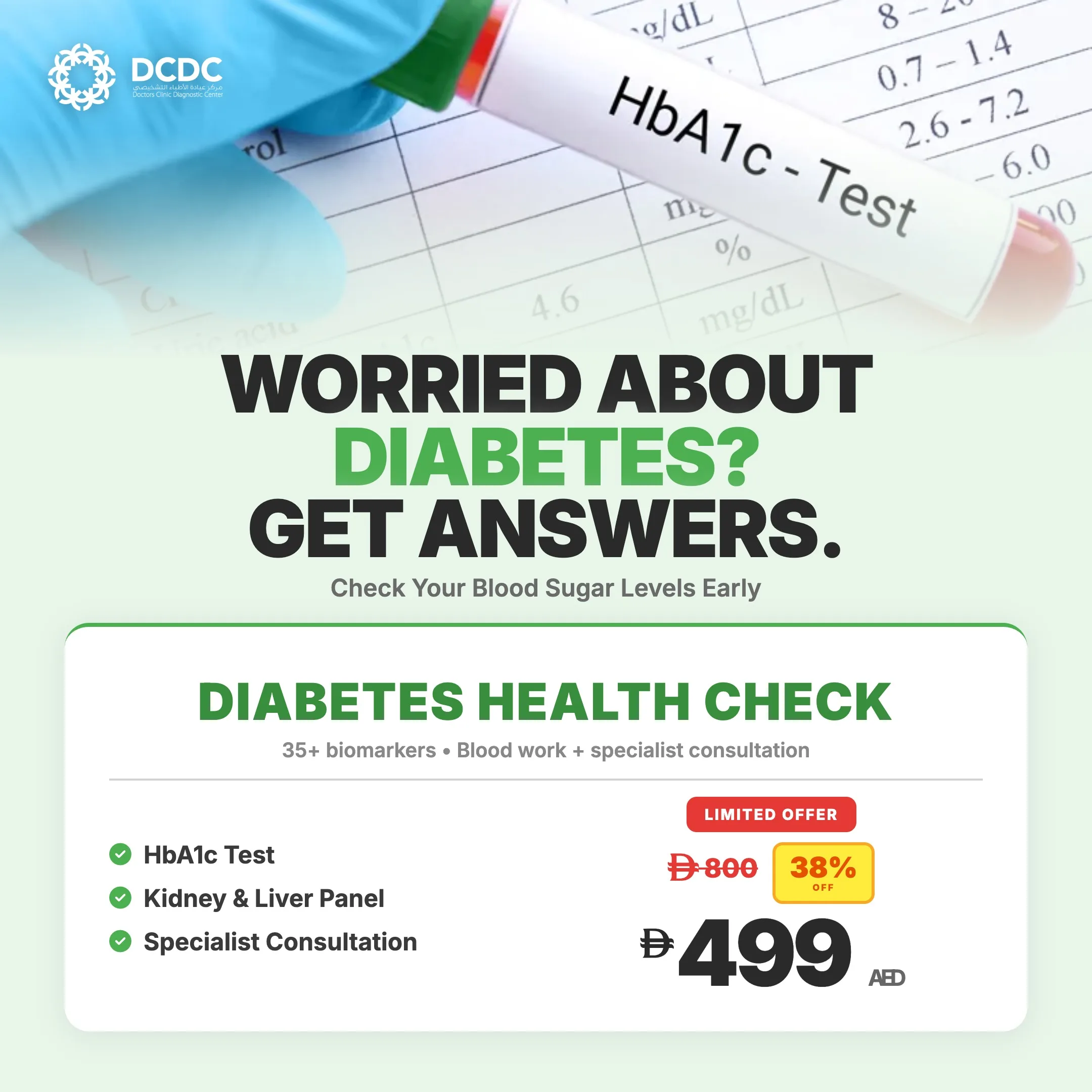
Save with our bundled screening packages — specialist consultation included





Understanding Diabetes
Diabetes is a condition where your body can't properly regulate blood sugar (glucose). Glucose is your body's main energy source, and insulin (a hormone made by the pancreas) helps glucose enter cells. In diabetes, this system doesn't work correctly. If you suspect you may have diabetes or need ongoing management, our diabetes care team at DCDC provides comprehensive assessment and long-term support.
Type 1 Diabetes
Type 1 diabetes is an autoimmune condition in which the immune system attacks and destroys insulin-producing cells in the pancreas. Without insulin, glucose can't enter cells and builds up in the blood. Type 1 typically develops in childhood or young adulthood (though it can occur at any age) and always requires insulin therapy. About 5-10% of diabetes cases are type 1.
Type 2 Diabetes
Type 2 diabetes is a metabolic condition where the body becomes resistant to insulin and/or the pancreas doesn't produce enough. It's strongly linked to lifestyle factors (diet, weight, activity) and genetics. Type 2 typically develops in adulthood, though increasingly it's seen in younger people. About 90% of diabetes cases are type 2. Type 2 may be managed with lifestyle changes alone initially, progressing to oral medications and sometimes insulin.
Prediabetes
Prediabetes means blood sugar levels are higher than normal but not yet in the diabetes range. It's a warning sign: without changes, most people with prediabetes will develop type 2 diabetes within 5-10 years. The good news: lifestyle changes at this stage can prevent or delay diabetes. If you have prediabetes, this is your opportunity to act.
Risk Factors for Type 2 Diabetes
- Family history: Parent or sibling with diabetes
- Weight: Overweight or obesity, especially abdominal fat
- Ethnicity: South Asian, Arab, and African populations have higher risk
- Age: Risk increases over 45 (though increasingly affecting younger adults)
- Inactivity: Sedentary lifestyle
- Gestational diabetes: History of diabetes during pregnancy
- PCOS: Polycystic ovary syndrome
- Prediabetes: Previously identified elevated blood sugar
The Pillars of Diabetes Management
Effective diabetes management rests on several interconnected pillars. Neglecting any one of them makes the others less effective.
1. Blood Sugar Monitoring
You cannot manage what you do not measure. Blood sugar monitoring helps you understand how food, activity, stress, and medications affect your levels.
- Self-monitoring (finger prick): Quick daily checks before meals, after meals, or when you feel unwell. Essential for anyone on insulin or medications that can cause low blood sugar.
- HbA1c test: A diabetes blood test that reflects your average blood sugar over 2-3 months. Checked every 3-6 months at your clinic. Most people aim for below 7% (53 mmol/mol).
- Continuous glucose monitoring (CGM): A sensor worn on the body that tracks glucose continuously and shows trends. Increasingly used for type 1 and insulin-treated type 2 diabetes.
HbA1c Target Ranges by Patient Type
Not everyone has the same HbA1c target. Your goal is individualized based on your age, diabetes type, complications, and risk of hypoglycemia:
| Patient Type | Target HbA1c | Target Fasting Glucose (mmol/L) | Monitoring Frequency |
|---|---|---|---|
| Type 1 Diabetes (most adults) | <7% (53 mmol/mol) | 4.0-7.0 | HbA1c every 3 months; daily self-monitoring |
| Type 2 Diabetes (most adults) | <7% (53 mmol/mol) | 4.0-7.0 | HbA1c every 3-6 months; frequency of self-monitoring depends on medications |
| Elderly/Frail/Multiple Comorbidities | <8% (64 mmol/mol) | 5.0-9.0 | HbA1c every 6 months; less frequent self-monitoring to avoid hypoglycemia |
| Pregnancy with Diabetes | <6% (42 mmol/mol) | 3.5-5.5 | HbA1c monthly; multiple daily self-monitoring checks |
| Pre-diabetes | 5.7-6.4% (39-46 mmol/mol) | 5.6-6.9 (fasting) | Annual HbA1c; lifestyle monitoring |
HbA1c and blood glucose targets are individualized. Discuss your specific goals with your diabetes care team at DCDC.
2. Healthy Eating
Diet is fundamental to diabetes management. There is no single "diabetes diet"; the goal is a sustainable, balanced eating pattern that helps control blood sugar, weight, and cardiovascular risk.
- Reduce refined carbohydrates: White rice, white bread, pastries, and sugary drinks cause rapid blood sugar spikes. Choose whole grains, brown rice, and vegetables instead.
- Control portions: Even healthy foods affect blood sugar. Plate half with vegetables, quarter with protein, quarter with whole grains.
- Include protein and healthy fats: These slow down carbohydrate absorption. Fish, chicken, legumes, nuts, olive oil.
- Limit processed foods: High in hidden sugars, unhealthy fats, and sodium.
- Don't skip meals: Regular eating helps prevent blood sugar swings.
- Watch drinks: Fruit juice and sweetened beverages can raise blood sugar rapidly. Water, unsweetened coffee, and tea are better choices.
3. Physical Activity
Exercise improves insulin sensitivity, helps control weight, reduces cardiovascular risk, and improves mood. The challenge in Dubai is the climate, but solutions exist.
- Aim for 150 minutes per week: Moderate activity like brisk walking, swimming, or cycling. Can be broken into 30-minute sessions, 5 days a week.
- Include resistance training: Weight training or bodyweight exercises 2-3 times per week builds muscle, which improves blood sugar control.
- Find indoor options: Gyms, mall walking, swimming pools, home exercise videos. Don't let summer heat be an excuse for inactivity.
- Start slowly: If you've been inactive, begin with 10-minute walks and gradually increase. Any movement is better than none.
- Monitor blood sugar: If you take insulin or certain medications, check before and after exercise. Carry glucose tablets in case of low blood sugar.
4. Medication Management
Many people with type 2 diabetes need medications in addition to lifestyle changes. Taking medications as prescribed is essential because skipping doses leads to poor control and complications.
- Metformin: Usually the first medication for type 2 diabetes. Improves insulin sensitivity and is generally well-tolerated.
- SGLT2 inhibitors: Newer medications that also protect the heart and kidneys. Increasingly recommended early in treatment.
- GLP-1 receptor agonists: Injectable medications that improve blood sugar and promote weight loss. Some are weekly injections.
- DPP-4 inhibitors, sulfonylureas, and others: Additional options when first-line medications aren't enough.
- Insulin: Required for all type 1 diabetes and some type 2 diabetes. Modern insulin regimens are flexible and can be tailored to your lifestyle.
The right medication combination depends on your individual situation: blood sugar control, weight, kidney function, cardiovascular risk, and personal preferences. We work with you to find the best approach.
Diabetes Medication Comparison
Understanding how different diabetes medications work helps you have informed discussions with your doctor:
| Medication Class | How It Works | Weight Effect | Hypoglycemia Risk | Heart/Kidney Benefit | Cost Range (Monthly) |
|---|---|---|---|---|---|
| Metformin | Reduces glucose production in liver; improves insulin sensitivity | Neutral or slight loss | Very low | Some cardiovascular benefit | AED 30-100 (generic) |
| Sulfonylureas (Glimepiride, Gliclazide) | Stimulates pancreas to release more insulin | Weight gain (1-3 kg) | Moderate to high | No specific benefit | AED 40-120 (generic) |
| GLP-1 Agonists (Ozempic, Trulicity) | Increases insulin release; slows stomach emptying; reduces appetite | Weight loss (3-7 kg) | Very low | Strong heart protection; some kidney benefit | AED 800-1,500 (brand) |
| SGLT2 Inhibitors (Jardiance, Forxiga) | Removes glucose through urine; reduces blood pressure | Weight loss (2-3 kg) | Very low | Strong heart and kidney protection | AED 300-600 (brand) |
| DPP-4 Inhibitors (Januvia, Trajenta) | Increases insulin release; decreases glucagon | Weight neutral | Low | Neutral | AED 250-450 (brand) |
| Insulin (various types) | Replaces or supplements natural insulin | Weight gain (2-4 kg) | Moderate to high | Essential for type 1; effective for type 2 | AED 199 (depends on type/dose) |
Medication costs vary by insurance coverage. Most UAE insurance plans cover diabetes medications with co-pay. Your doctor will select based on your specific needs, not just cost.
Diabetes Test Costs in Dubai
Understanding the cost of diabetes monitoring and screening helps you budget for ongoing care. At DCDC, we offer competitive pricing with most insurance plans accepted: For related information, see our guide on Heart Screening Dubai: Checkup Packages & Prevention.
| Test/Service | Cost Range (AED) | Frequency Recommended | Insurance Coverage |
|---|---|---|---|
| HbA1c Test | 149 | Every 3-6 months | Usually covered |
| Fasting Glucose | 99 | As needed for monitoring | Usually covered |
| Full Diabetes Panel (HbA1c, glucose, lipids, kidney function) | 300-500 | Annually for comprehensive assessment | Usually covered with pre-approval |
| Diabetic Eye Screening (Retinal Exam) | 200-400 | Annually | Usually covered |
| Diabetic Foot Assessment | 150-300 | Annually | Usually covered |
| Kidney Function Tests (Creatinine, eGFR, Urine Albumin) | 149 | Annually | Usually covered |
| Continuous Glucose Monitor (CGM) Device | 800-1,500 (monthly) | For type 1 or insulin-treated type 2 | Partial coverage varies by plan |
Prices at DCDC Dubai Healthcare City. Most insurance plans cover diabetes monitoring. We verify coverage before testing.
Preventing Complications
The real danger of diabetes is not high blood sugar itself but the damage that high blood sugar causes over time. Diabetes affects blood vessels throughout the body, leading to complications in multiple organs. The good news is that complications are largely preventable with good blood sugar control and regular screening.
Kidney Disease (Diabetic Nephropathy)
Diabetes is the leading cause of kidney failure. High blood sugar damages the tiny blood vessels in the kidneys that filter waste from your blood.
- Prevention: Good blood sugar control, blood pressure control (below 130/80), and avoiding nephrotoxic medications
- Screening: Annual urine test for albumin (protein) and blood test for creatinine/eGFR
- Treatment: ACE inhibitors or ARBs (blood pressure medications that protect kidneys), SGLT2 inhibitors, managing blood sugar and blood pressure
- Our support: Our nephrology department provides specialized care if kidney problems develop
Heart Disease
People with diabetes have 2-4 times higher risk of heart disease and stroke. Diabetes accelerates atherosclerosis (plaque buildup in arteries).
- Prevention: Blood sugar control, cholesterol management (statins for most people with diabetes over 40), blood pressure control, not smoking, healthy weight
- Screening: Annual lipid panel, blood pressure monitoring, cardiovascular risk assessment. ECG and cardiac evaluation if symptoms or high risk.
- Treatment: Statins, aspirin (for some), blood pressure medications, newer diabetes medications that protect the heart (SGLT2 inhibitors, GLP-1 agonists)
- Our support: Our cardiology department provides cardiac screening and management
Eye Disease (Diabetic Retinopathy)
Diabetes damages blood vessels in the retina, potentially leading to vision loss or blindness. Early stages have no symptoms.
- Prevention: Blood sugar control, blood pressure control
- Screening: Annual dilated eye examination by an ophthalmologist or trained optometrist. At diagnosis for type 2, after 5 years for type 1.
- Treatment: Laser therapy, injections, or surgery if problems develop. Much more effective when caught early.
Nerve Damage (Diabetic Neuropathy)
High blood sugar damages nerves, especially in the feet and legs. This causes numbness, tingling, pain, and increases risk of foot ulcers and amputations.
- Prevention: Blood sugar control, avoiding alcohol excess, good foot care
- Screening: Annual foot examination checking sensation, pulses, and skin integrity
- Treatment: Medications for nerve pain, foot care education, specialized footwear if needed
Living with Diabetes in Dubai
Eating Out in Dubai
Dubai's dining culture presents both challenges and opportunities for people with diabetes. With planning, you can enjoy restaurants while managing blood sugar.
- Choose wisely: Grilled meats and fish, salads, vegetables. Ask for dressings and sauces on the side.
- Watch portions: Restaurant portions are often large. Consider sharing or taking half home.
- Avoid fried foods: The batter adds carbohydrates, and frying adds unhealthy fats.
- Skip the bread basket: Or limit to one piece with your meal.
- Be careful with "healthy" options: Smoothies, fruit salads, and granola can be high in sugar.
- Plan for special occasions: It's okay to enjoy occasional treats. Adjust medication timing if advised by your doctor, or take a longer walk afterward.
Ramadan Fasting with Diabetes
Many Muslims with diabetes wish to fast during Ramadan. For some, this is safe with proper preparation, while for others, it is medically inadvisable.
- High-risk (should not fast): Type 1 diabetes, recent severe hypoglycemia, diabetic ketoacidosis in past 3 months, end-stage kidney disease, pregnancy with diabetes, unstable angina or recent stroke/heart attack
- Moderate risk (individual assessment): Type 2 on insulin or sulfonylureas, moderately controlled diabetes, mild-moderate kidney disease
- Lower risk (usually can fast): Well-controlled type 2 on lifestyle alone or metformin, no complications
If you plan to fast, consult 1-2 months before Ramadan. We adjust medications, provide blood sugar monitoring guidance, and create a safe fasting plan. During Ramadan, break your fast immediately if blood sugar drops below 4 mmol/L or rises above 16.7 mmol/L.
Exercise in Dubai's Climate
Summer temperatures make outdoor exercise challenging, but activity remains essential year-round.
- Indoor options: Gyms, swimming pools, mall walking (many people walk laps in Dubai's air-conditioned malls)
- Timing: Early morning (before 7 AM) or evening (after 7 PM) for outdoor activities in summer
- Hydration: Dubai's heat and low humidity cause significant fluid loss. Drink water before, during, and after exercise.
- Hypoglycemia risk: Heat can accelerate insulin absorption. Monitor blood sugar and carry glucose.
- Year-round consistency: The key is finding activities you'll do regardless of weather.
Diabetes Care at DCDC
At Doctors Clinic Diagnostic Center in Dubai Healthcare City, we provide comprehensive diabetes care including consultation (AED 300-500), HbA1c testing (AED 149), comprehensive diabetes panels (AED 500-1,000), and annual diabetes reviews (AED 1,000-1,500). Most insurance covers diabetes care including consultations, lab tests, and medications.
When to Seek Medical Attention
Urgent Situations (Go to Emergency)
- Blood sugar above 20 mmol/L (360 mg/dL) with nausea, vomiting, or confusion
- Severe hypoglycemia (unable to treat yourself, loss of consciousness)
- Chest pain, shortness of breath, or signs of stroke
- Signs of diabetic ketoacidosis: fruity breath, deep rapid breathing, confusion, vomiting
Schedule an Appointment If
- Your blood sugar is consistently outside target despite following your plan
- You're experiencing frequent hypoglycemia (low blood sugar episodes)
- You have new symptoms: increased urination, excessive thirst, unexplained weight loss
- You notice foot problems: cuts that don't heal, numbness, pain, color changes
- You have questions about medications or management
- It's time for your regular diabetes checkup
Your Diabetes Care at DCDC
Managing diabetes is a team effort. At DCDC, our diabetes clinic provides comprehensive care including:
- Internal medicine consultations for diabetes assessment and management
- HbA1c testing and comprehensive diabetes lab panels
- Medication management including initiation and adjustment of insulin
- Nephrology care for kidney complications
- Cardiology services for heart disease prevention and management
- Nutritional counseling and lifestyle guidance
- Ramadan fasting planning and support
- Coordination with ophthalmologists for eye screening
Diabetes requires ongoing attention, but it should not consume your life. With the right support, you can manage your condition effectively and focus on what matters most to you. We are here to help.
Related Services at DCDC
Expert care and advanced diagnostics at Dubai Healthcare City
Frequently Asked Questions
Related Resources
Heart Disease Prevention: Essential Guide for Dubai
Kidney Health: Prevention Tips for Dubai Residents
Vitamin D Deficiency in Dubai: What You Need to Know
Executive Health Checkups: Complete Guide
Sources & References
This article was reviewed by our medical team and references the following sources:
- Dubai Health Authority - Diabetes Prevention and Management
- UAE Ministry of Health and Prevention - National Diabetes Guidelines
- International Diabetes Federation - Middle East and North Africa Region
- American Diabetes Association - Standards of Medical Care
- Emirates Diabetes Society - Clinical Practice Guidelines
Medical content on this site is reviewed by DHA-licensed physicians. See our editorial policy for more information.

Written by
Dr. Hadi Komshi
Specialist Internal Medicine
MD, Specialist in Internal Medicine
Dr. Hadi Komshi is a specialist in internal medicine at DCDC Dubai Healthcare City. He has extensive experience in managing chronic conditions including diabetes, hypertension, and metabolic disorders. He believes in a patient-centered approach that combines evidence-based medicine with practical lifestyle guidance tailored to life in the UAE.
Related Articles

Heart Disease Prevention: Essential Guide for Dubai

Kidney Health: Prevention Tips for Dubai Residents

Vitamin D Deficiency in Dubai: What You Need to Know

Executive Health Checkups: Complete Guide
More in Internal Medicine

H. Pylori Test Cost Dubai: From AED 300 (2026)
Read More
Iron Infusion Cost Dubai: From AED 500 (2026)
Read More
Enlarged Prostate Dubai: BPH Symptoms (2026)
Read More
Hiatal Hernia Dubai: Symptoms & Treatment (2026)
Read MoreDiabetic Foot Care Dubai: Warning Signs (2026)
Read MoreColonoscopy vs Endoscopy Dubai: Guide (2026)
Read More© 2026 Doctors Clinic Diagnostic Center (DCDC), Dubai Healthcare City. Originally published at https://doctorsclinicdubai.ae/blog/diabetes-management-dubai. All rights reserved. Unauthorized reproduction is prohibited.