Key Takeaways
- Dubai's heat increases kidney stone risk, so aim for 2.5-3.5 liters of water daily to produce light-colored urine
- 10% of UAE residents will experience a kidney stone; 50% will have another within 5-10 years without prevention
- Diabetes and high blood pressure are the leading causes of chronic kidney disease, so get screened annually
- Early kidney disease has no symptoms; a simple blood and urine test can detect problems before damage is severe
- Regular NSAID use (ibuprofen) can harm kidneys, especially with dehydration. Use paracetamol when possible
- Dietary calcium is protective; don't reduce dairy unless advised. Instead, reduce salt, sugar, and excess protein
Your kidneys filter about 180 liters of blood every day, removing waste, balancing fluids, and regulating blood pressure. Yet most people never think about kidney health until something goes wrong. In Dubai's extreme heat, where dehydration is common and kidney stones are frequent, understanding how to protect these vital organs is essential. Our Chronic Kidney Disease service at DCDC offers same-day appointments in Dubai Healthcare City.


Why Kidney Problems Are So Common in the UAE
The UAE has some of the highest rates of kidney stones in the world, and chronic kidney disease is increasingly prevalent. Several factors contribute:
- Extreme heat: Even with AC, you lose more fluid than you realize
- Chronic dehydration: Many people simply don't drink enough water
- Diabetes prevalence: The UAE has one of the world's highest diabetes rates, and diabetes is the #1 cause of kidney failure
- High blood pressure: Often undiagnosed and untreated, causing silent kidney damage
- Dietary factors: High salt, high protein, sugary drinks
- Medication overuse: Regular painkiller use without hydration
Approximately 1 in 10 people in the UAE will experience a kidney stone during their lifetime, with rates significantly higher than global averages due to climate and dietary factors. — UAE Ministry of Health
Kidney Stones: Prevention in Dubai's Climate
Kidney stones form when minerals in concentrated urine crystallize into solid masses. The pain of passing a stone is often described as worse than childbirth. Our stone disease specialists treat all types of kidney stones, and the good news is that most stones are preventable.
Hydration: The Single Most Important Factor
In Dubai's climate, you need to drink more than you think:
- Target: 2.5-3.5 liters of fluids daily
- Goal: Urine should be light yellow, almost clear
- Timing: Drink throughout the day, not all at once
- Summer: Increase intake, especially if outdoors or exercising
- Tip: Keep a water bottle at your desk and set reminders
Dietary Changes That Reduce Stone Risk
- Reduce salt: High sodium increases calcium in urine; avoid processed foods
- Moderate protein: Excessive animal protein increases stone risk
- Add citrus: Lemon, lime, and orange contain citrate, which prevents stone formation
- Eat normal calcium: Dietary calcium actually binds oxalate and reduces stone risk
- Limit oxalates: If prone to stones, moderate spinach, rhubarb, beets, and nuts
- Avoid sugary drinks: Fructose in sodas increases stone risk
Surprising Fact About Dairy: Many people with kidney stones avoid dairy, thinking calcium causes stones. Actually, dietary calcium reduces kidney stone risk by binding to oxalate in the gut. Don't restrict dairy unless specifically advised by your doctor. Calcium supplements, however, may increase risk if not taken with meals.
Common Kidney Stone Types and How to Prevent Them
Not all kidney stones are the same. Understanding which type you form helps guide prevention. Your doctor can analyze a passed stone or perform a 24-hour urine collection to determine your stone type.
| Stone Type | Frequency | Primary Cause | Prevention Diet Tips |
|---|---|---|---|
| Calcium Oxalate | ~70% | High oxalate intake, dehydration, low citrate levels | Drink 3+ liters/day, eat normal calcium with meals, limit spinach/rhubarb/beets, add lemon juice daily |
| Uric Acid | ~10% | Acidic urine, high purine diet, gout, obesity | Reduce red meat and shellfish, limit alcohol, drink alkaline water, maintain healthy weight |
| Struvite (Infection) | ~10% | Chronic urinary tract infections | Treat <a href="/services/nephrology/uti-treatment" class="text-primary-600 hover:underline">UTIs</a> promptly and completely, maintain good hygiene, adequate hydration |
| Cystine | ~5% | Genetic condition (cystinuria) | Very high fluid intake (4+ liters/day), alkalinize urine, limit salt and animal protein |
Common kidney stone types, their frequency, causes, and dietary prevention strategies. Percentages are approximate.
If you have had a kidney stone and want to understand your risk better, a comprehensive health checkup that includes metabolic stone workup can identify the specific factors contributing to your stone formation.
Get a Kidney Health Assessment at DCDC
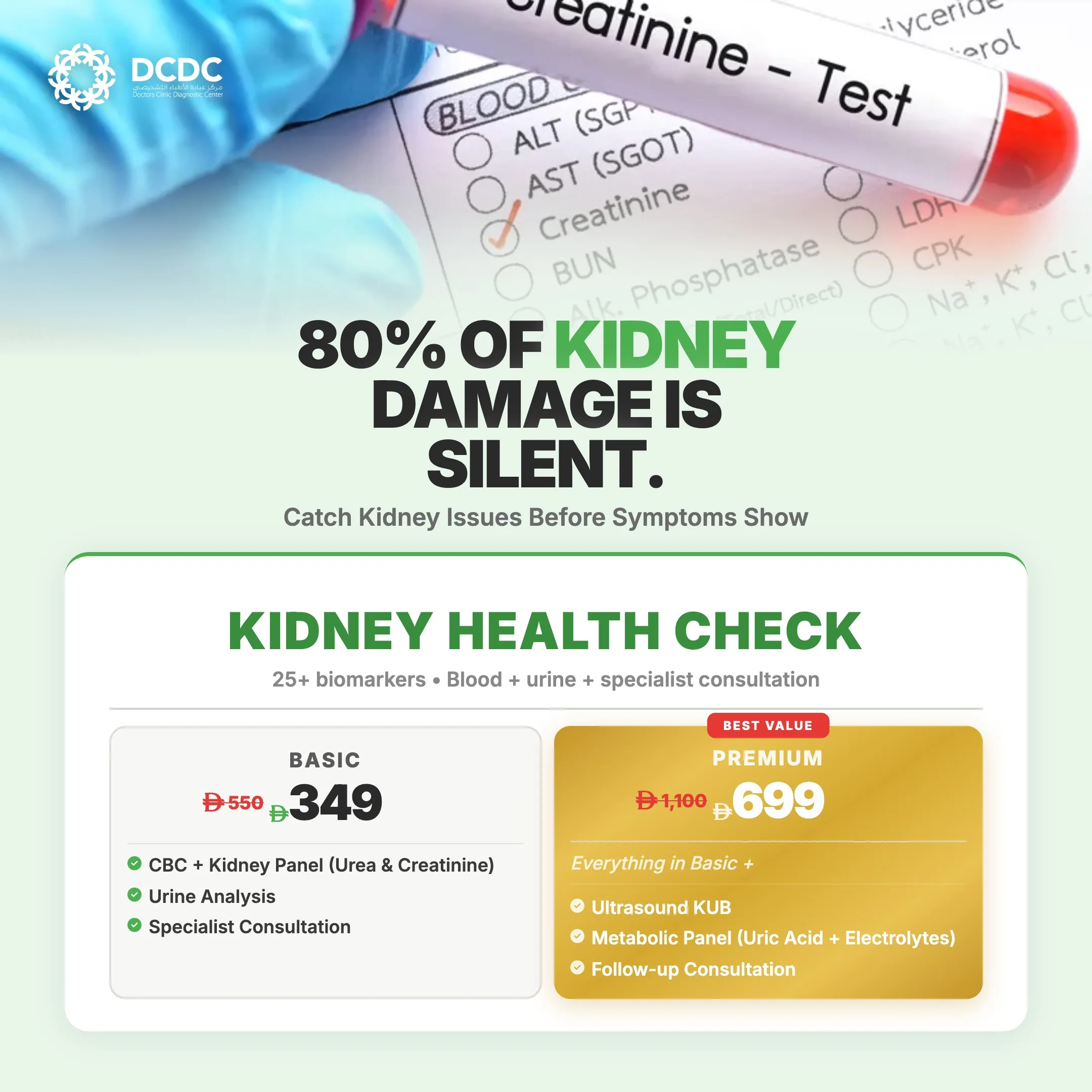
Don't wait for symptoms. Our nephrology team at Doctors Clinic Diagnostic Center offers comprehensive kidney evaluations including blood work, urine analysis, and kidney ultrasound. Early detection is the key to preserving kidney function.
Located in Dubai Healthcare City. Walk-ins welcome or book your appointment today.
Chronic Kidney Disease: The Silent Threat
Chronic kidney disease (CKD) affects millions of people in the UAE, and most don't know they have it until the disease is advanced. By the time symptoms appear, significant kidney function has already been lost.
Who Is at Risk for CKD?
- Diabetes: The leading cause of kidney failure worldwide
- High blood pressure: Damages kidney blood vessels over time
- Family history: Kidney disease often runs in families
- Age over 60: Kidney function naturally declines with age
- Obesity: Increases risk of diabetes and hypertension
- Smoking: Accelerates kidney damage
- Frequent NSAID use: Regular painkiller use can harm kidneys
Diabetes and high blood pressure together account for about 70% of all chronic kidney disease cases. Controlling these conditions is the most effective way to protect your kidneys. — National Kidney Foundation
Warning Signs of Kidney Disease
Early CKD often has no symptoms. When symptoms do appear, they may include:
- Fatigue and weakness (from anemia)
- Swelling in ankles, feet, hands, or face
- Foamy or bubbly urine (protein in urine)
- Blood in urine (pink or cola-colored)
- Increased urination, especially at night
- Decreased urine output
- Persistent itching
- Loss of appetite, nausea
- Difficulty concentrating
- High blood pressure that's hard to control
Kidney Function Testing: What to Expect
Kidney function is assessed with simple blood and urine tests. Here's what they measure:
Blood Tests
- Creatinine: A waste product filtered by kidneys; high levels suggest reduced function
- eGFR: Estimated glomerular filtration rate, the best overall measure of kidney function
- BUN: Blood urea nitrogen, another waste product
- Electrolytes: Sodium, potassium, calcium (kidneys balance these)
Urine Tests
- Albumin/protein: Protein in urine is an early sign of kidney damage
- Blood: Microscopic blood may indicate kidney or urinary tract problems
- Urine albumin-to-creatinine ratio (UACR): Detects early diabetic kidney disease
Kidney Test Costs in Dubai (2025)
| Test | Price Range (AED) |
|---|---|
| Basic Kidney Panel (Creatinine, BUN) | 100 - 200 |
| Comprehensive Renal Panel | 200 - 400 |
| Urine Albumin (Microalbumin) | 80 - 150 |
| Kidney Ultrasound | 400 - 700 |
| Nephrology Consultation | 400 - 600 |
Kidney Diagnostic Imaging and Tests Compared
When your doctor suspects a kidney problem, several diagnostic tests may be used depending on what they are looking for. Here is a comparison of the most common kidney tests and imaging studies available in Dubai.
| Test | What It Detects | Preparation | Estimated Cost (AED) | Notes |
|---|---|---|---|---|
| Blood Test (Creatinine/eGFR) | Kidney function level | No special preparation | 100 - 200 | First-line screening test for kidney disease |
| Urine Test (Albumin-to-Creatinine Ratio) | Protein leaking from kidneys | No special preparation | 149 | Essential for diabetics; detects early kidney damage |
| Kidney Ultrasound | Stones, blockages, cysts, structural abnormalities | No special preparation | 500 - 800 | Painless, no radiation; first-line imaging for kidney problems |
| CT KUB (Non-contrast) | Small stones, urinary tract obstruction | No contrast needed; involves radiation | 1,000 - 1,500 | Gold standard for detecting kidney stones; very fast scan |
| Renal Doppler Ultrasound | Blood flow problems, renal artery stenosis | No special preparation | 800 - 1,200 | Evaluates kidney blood supply; important for hypertension workup |
Comparison of kidney diagnostic tests available at DCDC Dubai Healthcare City. Prices are approximate and may vary.
For a detailed look at kidney blood flow assessment, read our guide on renal Doppler ultrasound. For broader pricing information on all ultrasound types, see our ultrasound cost guide for Dubai.
Protecting Your Kidneys: Practical Steps
1. Stay Hydrated
This can't be overstated in Dubai. Carry water with you, set phone reminders, and monitor your urine color.
2. Control Diabetes and Blood Pressure
If you have diabetes, keep your HbA1c below 7%. Learn more in our guide on diabetes management in Dubai. If you have hypertension, aim for blood pressure below 130/80 -- read why in our article on hypertension as a silent killer. These two conditions cause most kidney disease, and controlling them preserves kidney function.
3. Use Painkillers Wisely
NSAIDs (ibuprofen, naproxen, diclofenac) can damage kidneys with regular use, especially if you're dehydrated. For chronic pain, discuss alternatives with your doctor. Paracetamol is generally safer for kidneys.
4. Don't Smoke
Smoking accelerates kidney damage and increases the risk of kidney cancer. Quitting protects not just your lungs but your kidneys too.
5. Get Regular Checkups
If you have risk factors (diabetes, hypertension, family history, age over 60), get annual kidney function tests. Early detection allows treatment before irreversible damage occurs.
Patient Story: How a Dubai Professional Learned About Kidney Stone Prevention
Ahmed, a 42-year-old marketing director based in Dubai Marina, had been experiencing occasional dull pain in his lower right back for several months. He attributed it to long hours at his desk and stress. Like many busy professionals, he rarely drank water during back-to-back meetings, relying instead on three or four cups of coffee throughout the day. He had not visited a doctor in over two years.
One evening, the dull ache suddenly escalated into the most intense pain he had ever experienced. It radiated from his lower back around to his groin. He was sweating, nauseated, and unable to find a comfortable position. His wife drove him to the emergency department, where a CT KUB scan revealed a 6-millimeter calcium oxalate stone lodged in his right ureter, partially blocking urine flow and causing his kidney to swell.
The stone passed on its own after three days of intense discomfort, pain medication, and aggressive hydration. But it was a wake-up call. Ahmed's nephrologist at DCDC ordered a metabolic stone workup, which showed low urine volume, high urine calcium, and low citrate -- a perfect recipe for recurrent stones. His blood work also revealed borderline high blood pressure that he had not known about.
Ahmed made fundamental changes: he now drinks at least 3 liters of water daily, starts every morning with lemon water, has reduced his salt intake dramatically, and takes his blood pressure medication consistently. He gets a kidney ultrasound and blood tests every year. Two years later, he remains completely stone-free. "I never want to go through that pain again," he says. "The prevention is so simple compared to the treatment. I just wish I had paid attention to the warning signs earlier."
Ahmed's story is common in Dubai. The combination of heat, sedentary office work, inadequate hydration, and high-sodium diets puts professionals at elevated risk. If you have risk factors, a proactive executive health checkup can catch kidney problems before they become emergencies.
When to See a Nephrologist
You should see a kidney specialist (nephrologist) if you have:
- eGFR below 60 (moderate kidney disease)
- Protein in your urine persistently
- Blood in urine after other causes ruled out
- Recurrent kidney stones
- Difficult-to-control blood pressure
- Family history of kidney failure
- Rapid decline in kidney function
Concerned About Your Kidney Health?
At Doctors Clinic Diagnostic Center in Dubai Healthcare City, our nephrology team offers comprehensive kidney evaluations including blood work, urine analysis, and kidney ultrasound. We provide stone prevention programs and CKD management.
Book a kidney health checkup today. Same-day appointments available. Most insurance accepted.
Related Services at DCDC
Expert care and advanced diagnostics at Dubai Healthcare City
Frequently Asked Questions
Final Thoughts
Kidney health is often overlooked until problems arise, but prevention is far easier than treatment. In Dubai's climate, staying hydrated is the single most important thing you can do for your kidneys. Combined with regular checkups, blood pressure control, and smart medication use, you can significantly reduce your risk of kidney stones and chronic kidney disease.
If you have diabetes, high blood pressure, or a family history of kidney problems, don't wait for symptoms. Get tested annually and work with your healthcare team to protect these vital organs. Early detection and lifestyle changes can preserve kidney function for decades.
Sources & References
This article was reviewed by our medical team and references the following sources:
- Dubai Health Authority - Kidney Disease Prevention Initiative
- UAE Ministry of Health and Prevention - Chronic Kidney Disease Guidelines
- Emirates Nephrology Society - Clinical Standards
- KDIGO Clinical Practice Guidelines for CKD
- National Kidney Foundation - Patient Resources
Medical content on this site is reviewed by DHA-licensed physicians. See our editorial policy for more information.

Written by
Dr. Manish Tripathi
Consultant Nephrologist
MD, DM Nephrology
Dr. Manish Tripathi is a Consultant Nephrologist with expertise in chronic kidney disease, kidney stone prevention, and dialysis management. He practices at DCDC Dubai Healthcare City.
Related Articles
Diabetes Management: Protecting Your Kidneys

Hypertension: The Silent Kidney Killer
Executive Health Checkup: What It Includes
More in Nephrology

Urinary Incontinence Dubai: Causes & Care (2026)
Read More
Kidney Cyst Dubai: Types & When to Worry (2026)
Read MoreKidney Stones vs UTI Dubai: Key Differences (2026)
Read MoreDiabetic Nephropathy Dubai: Prevention Guide (2026)
Read MoreKidney Stone Symptoms Dubai: Warning Signs (2026)
Read More
When to See a Nephrologist Dubai: Key Signs (2026)
Read More© 2026 Doctors Clinic Diagnostic Center (DCDC), Dubai Healthcare City. Originally published at https://doctorsclinicdubai.ae/blog/kidney-health-prevention-tips. All rights reserved. Unauthorized reproduction is prohibited.