Key Takeaways
- Cervical cancer screening (Pap smear/HPV) starts at age 25, making it one of the most preventable cancers when caught early through regular screening
- Annual mammograms from age 40, or earlier with risk factors. Early detection gives 99% survival rate for localized breast cancer
- Bone density screening at age 65, or earlier if you have risk factors like early menopause or family history
- Don't ignore abnormal periods, pelvic pain, or heavy bleeding. Conditions like PCOS and fibroids are treatable when diagnosed
- Menopause symptoms don't have to be suffered through. Hormone therapy and other treatments are safe options for most women
- Women's health package at DCDC (AED 1,500-4,000) includes gynecological exam, Pap smear, ultrasound, and comprehensive blood work
Women often put everyone else first: children, partners, parents, careers. Health screenings get pushed to "later" or forgotten entirely. But here's what I've learned in years of practicing gynecology: the women who prioritize their health aren't being selfish. They're making sure they're around and healthy for everyone who depends on them. Our General Consultation General Womens Health service at DCDC offers same-day appointments in Dubai Healthcare City.
Preventive screening isn't about finding problems. It's about finding them early, when they're easily treatable or even curable. Cervical cancer, for instance, is nearly 100% preventable with regular Pap smears. Breast cancer caught early has a 99% five-year survival rate. Osteoporosis can be treated before a fracture occurs. The common thread: early detection saves lives. This guide walks through the screenings every woman needs at different life stages: what they are, why they matter, when to get them, and what to expect.
Health Screening Packages
Save with our bundled screening packages — specialist consultation included
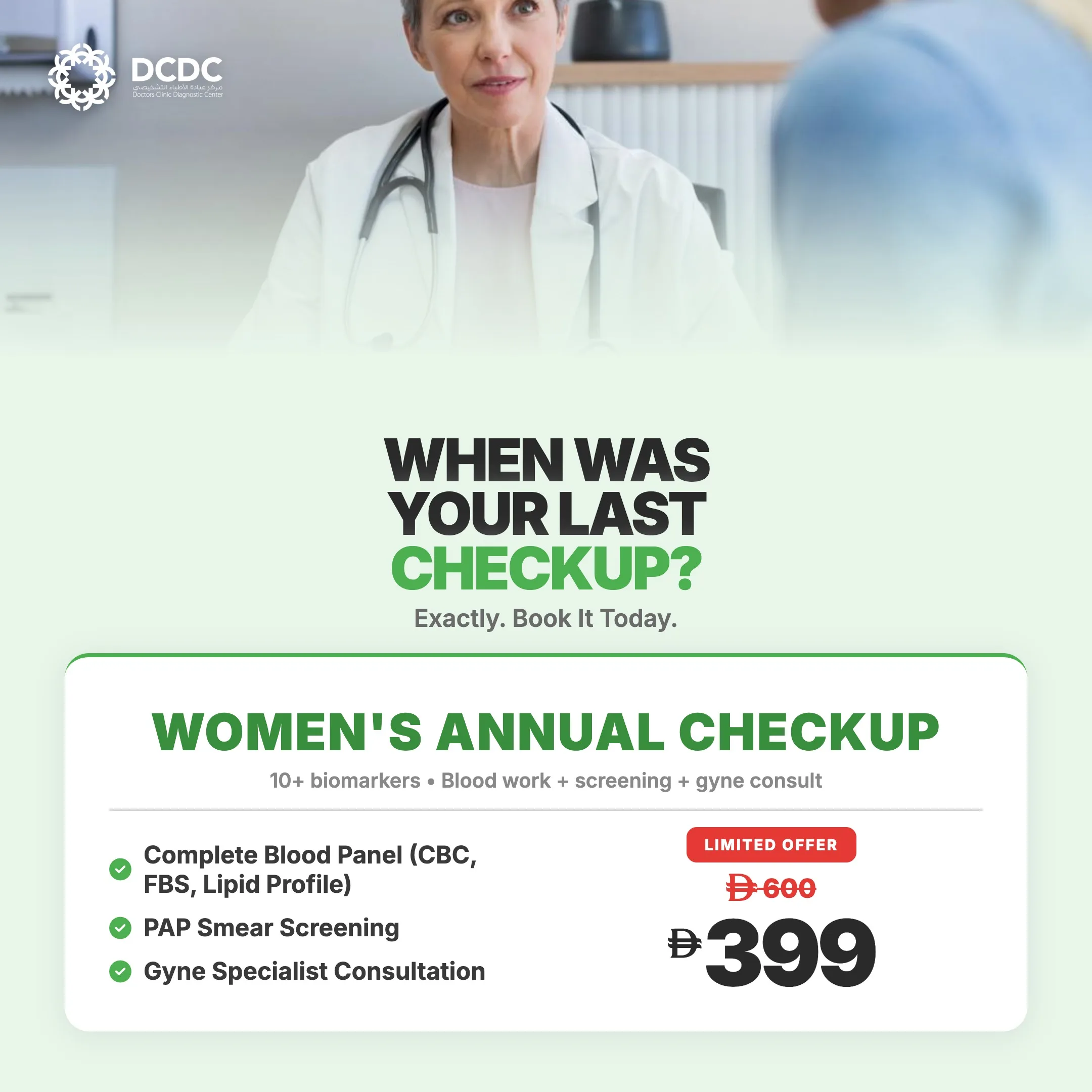

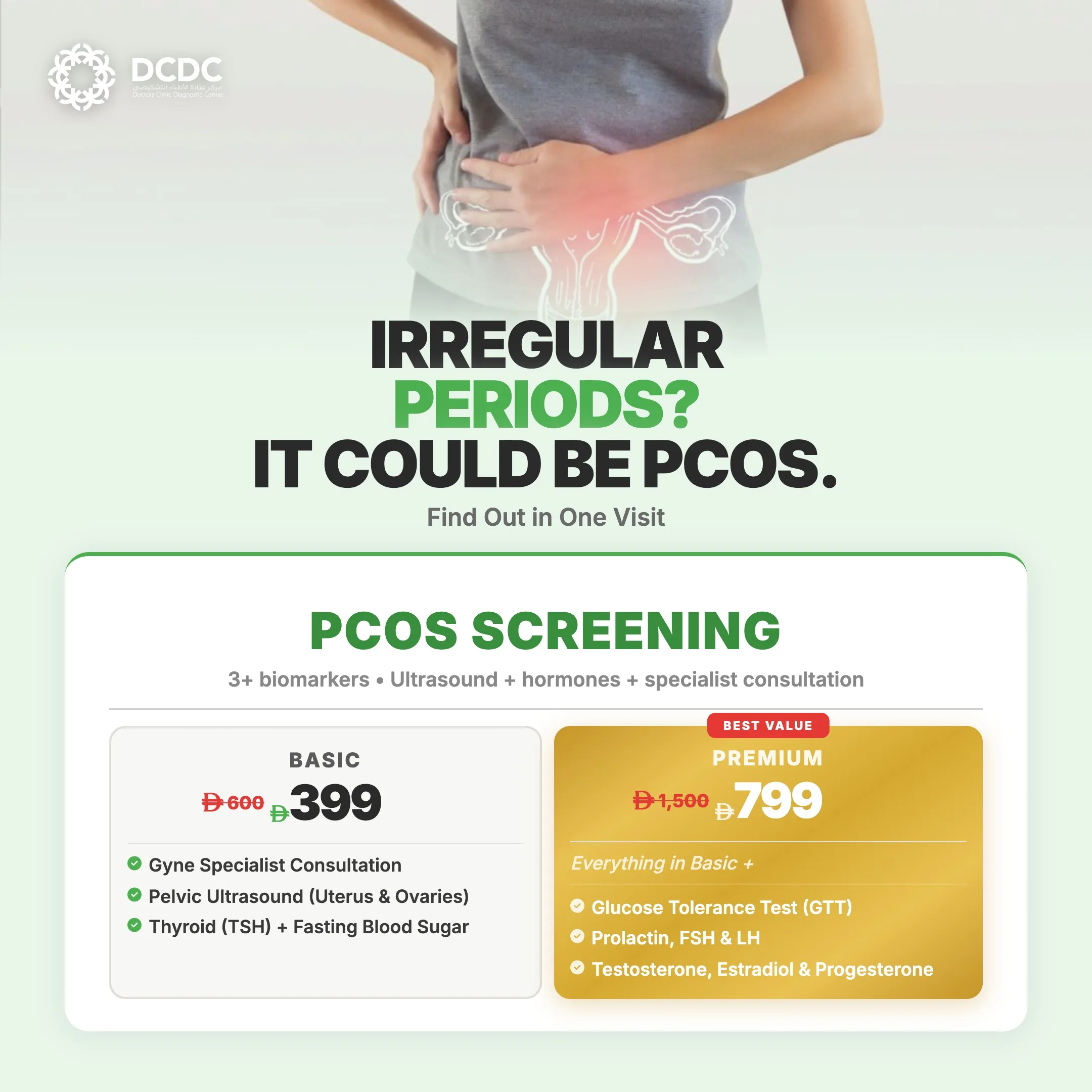

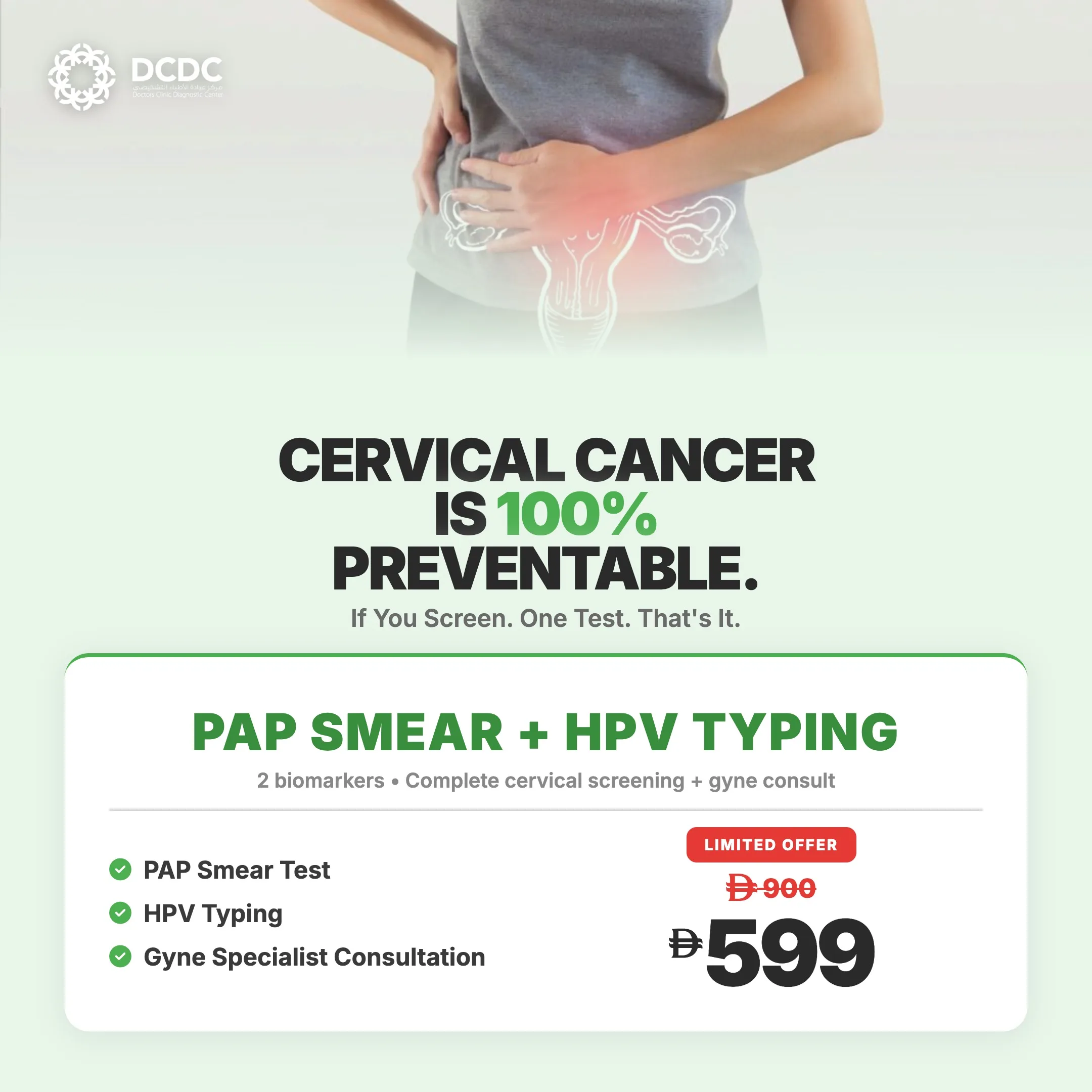

Screening at a Glance: What You Need by Decade
Before we dive into the details, here is a quick overview of the key screenings recommended at each stage of life. Use this as a reference alongside the detailed sections below.
| Age Group | Key Screenings | Frequency |
|---|---|---|
| 20s | Pap smear, STI testing, blood pressure, clinical breast exam, HPV vaccination | Pap every 3 years; STI annually if at risk; BP every 2 years |
| 30s | Pap smear/HPV co-testing, clinical breast exam, fertility assessment (AMH), thyroid panel, diabetes screening if risk factors | Pap/HPV co-test every 5 years; thyroid as needed |
| 40s | Mammogram, Pap smear/HPV, diabetes screening (HbA1c), lipid panel, perimenopause evaluation | Mammogram annually; diabetes at 45; lipids every 4-6 years |
| 50s | Mammogram, colorectal screening (colonoscopy), cardiovascular assessment, menopause management, Pap smear/HPV | Mammogram annually; colonoscopy every 10 years; Pap per schedule |
| 60s+ | DEXA bone density scan, mammogram, hearing and vision tests, cardiovascular monitoring, cancer screenings | DEXA every 2 years; mammogram annually through 74; eye/hearing exams annually |
Screening timelines are general guidelines. Your doctor may adjust recommendations based on personal and family risk factors.
Screening in Your 20s: Building the Foundation
Your twenties feel invincible, but this is the decade to establish screening habits and baseline health markers. Starting a relationship with a women's health specialist early sets the foundation for lifelong preventive care.
Cervical Cancer Screening (Pap Smear)
When to start: Age 25 (some guidelines say 21)
How often: Every 3 years if Pap smear only
The Pap smear is one of medicine's great success stories. It detects abnormal cervical cells years before they become cancer, allowing treatment that prevents cancer entirely. The procedure takes a few minutes: a speculum is inserted into the vagina, and cells are gently collected from the cervix. It may be slightly uncomfortable but shouldn't be painful.
HPV testing can be added to your Pap smear (co-testing). HPV (human papillomavirus) causes nearly all cervical cancers. If both tests are negative, you may only need screening every 5 years.
STI Screening
Sexually transmitted infections are common and often symptomless. Chlamydia and gonorrhea testing is recommended annually for sexually active women under 25, and for older women with new partners or other risk factors. HIV testing is recommended at least once for everyone.
Blood Pressure and General Health
Blood pressure should be checked at least every 2 years starting in your 20s. This is also a good time for baseline cholesterol screening, especially if you have family history of heart disease.
Contraception and Reproductive Planning
Whether you're planning pregnancy soon, later, or never, your 20s are a good time to discuss reproductive goals with your gynecologist. Understanding your options, from long-acting reversible contraceptives to fertility preservation, allows informed decision-making.
- Pap smear starting at 25 (every 3 years)
- STI testing annually if sexually active with new/multiple partners
- Blood pressure check every 2 years
- Clinical breast exam every 1-3 years
- HPV vaccination if not already completed (through age 26, or discuss with doctor for older)
- Baseline cholesterol if family history of heart disease
Screening in Your 30s: Expanding Prevention
Your thirties often bring career growth, relationships, and possibly pregnancy, all good reasons to maintain your health.
Cervical Cancer Screening Options
From age 30, you have three options:
- Pap smear alone every 3 years
- HPV testing alone every 5 years
- Co-testing (both) every 5 years
Discuss with your doctor which approach makes sense for you based on your history and preferences.
Breast Health
Continue clinical breast exams every 1-3 years. Mammogram screening typically starts at 40, but discuss earlier screening if you have:
- First-degree relative (mother, sister) with breast cancer
- Known BRCA1/BRCA2 gene mutation
- History of chest radiation before age 30
- Other high-risk conditions
Fertility Awareness
If you're planning future pregnancy, your 30s are a good time to understand your fertility. Ovarian reserve testing (AMH blood test and antral follicle count on ultrasound) can provide information about your egg supply. This doesn't predict whether you can get pregnant, but can inform family planning decisions.
Thyroid and Metabolic Health
Thyroid disorders are common in women and can affect energy, weight, mood, and fertility. If you have symptoms or family history, thyroid testing (TSH) is appropriate. Diabetes screening becomes relevant if you have risk factors (family history, PCOS, overweight, previous gestational diabetes).
Due for Your Annual Screening?
Whether you're in your 20s establishing baseline health or in your 30s expanding your screening routine, our DHA-licensed gynecologists at Dubai Healthcare City are here to help. Book your women's health consultation today.
Same-week appointments available. Most insurance plans accepted.
A Story That Could Be Yours: Why Routine Screening Matters
Fatima (name changed for privacy) was 38 when she came to DCDC for a routine Pap smear. She felt perfectly healthy, had no symptoms, and almost cancelled the appointment because of a busy work week. Her results came back showing high-grade squamous intraepithelial lesion (HSIL), meaning significantly abnormal cells were found on her cervix. A follow-up colposcopy confirmed cervical intraepithelial neoplasia (CIN 3), which is the stage just before cancer develops.
Because we caught it at this pre-cancerous stage, Fatima was treated with a simple outpatient LEEP procedure that removed the abnormal tissue. No chemotherapy. No radiation. No major surgery. She returned for follow-up Pap smears every six months for two years, and every result has been normal since. Today she is 41, cancer-free, and the most vocal advocate among her friends for regular cervical screening. "I almost skipped that appointment," she told us at her last visit. "I think about that every day."
Screening in Your 40s: Adding Key Tests
Your forties bring important additions to your screening schedule.
Mammogram Screening Begins
This is the decade to start regular mammograms. Guidelines vary slightly (annual vs. biennial), but most recommend beginning at age 40. For more about breast cancer screening, see our dedicated guide. At DCDC, we typically recommend annual screening, with the option to discuss individual risk factors and preferences.
What to expect: The mammogram takes about 20 minutes. Each breast is compressed between two plates for a few seconds while X-ray images are taken. It's uncomfortable but quick. Schedule for the week after your period when breasts are least tender.
Diabetes and Cardiovascular Screening
Diabetes screening (fasting glucose or HbA1c) is recommended starting at 45 for everyone, or earlier with risk factors. Cholesterol screening becomes more important as cardiovascular risk increases with age.
Perimenopause Recognition
Many women enter perimenopause in their 40s, the transitional years before menopause. Symptoms may include:
- Irregular periods (shorter, longer, heavier, lighter)
- Hot flashes and night sweats
- Sleep disturbances
- Mood changes
- Vaginal dryness
These symptoms are manageable. Learn more about menopause treatment options in Dubai, and discuss them with your gynecologist rather than suffering in silence.
- Annual mammogram (starting at 40)
- Continue Pap smear/HPV testing per schedule
- Diabetes screening (fasting glucose or HbA1c) at 45
- Lipid panel (cholesterol) every 4-6 years
- Blood pressure check every 2 years
- Discuss perimenopause symptoms if present
- Eye exam (presbyopia often develops in 40s)
Screening in Your 50s: Managing Menopause
The average age of menopause is 51. This decade brings important transitions and new screening considerations.
Menopause Management
Menopause is confirmed after 12 consecutive months without a period. Symptoms may continue for years. Treatment options include:
- Hormone replacement therapy (HRT): Most effective for hot flashes and vaginal symptoms. Safe for most women within 10 years of menopause.
- Non-hormonal medications: Options for women who can't or prefer not to take hormones.
- Vaginal estrogen: Low-dose, minimal absorption. Safe for most women for vaginal dryness.
- Lifestyle modifications: Exercise, cooling strategies, trigger avoidance.
Colorectal Cancer Screening Begins
Colon cancer screening is recommended starting at 45-50. Options include colonoscopy (every 10 years if normal), stool tests (annually). Discuss with your doctor which approach suits you.
Cardiovascular Risk Increases
After menopause, women's cardiovascular risk increases significantly because estrogen was providing protection. This is when heart disease prevention becomes especially important: blood pressure control, cholesterol management, diabetes prevention, and healthy lifestyle.
Screening in Your 60s and Beyond: Bone Health and Beyond
Bone Density Screening (DEXA Scan)
At age 65, bone density screening becomes standard for all women. The DEXA scan is quick (10-15 minutes), painless, and uses minimal radiation. It measures bone density at the hip and spine, identifying osteoporosis or osteopenia (early bone loss) before fractures occur.
Earlier screening is recommended if you have risk factors:
- Early menopause (before 45)
- Fracture after age 50
- Family history of osteoporosis or hip fracture
- Low body weight
- Long-term steroid use
- Smoking or excessive alcohol
- Rheumatoid arthritis or inflammatory conditions
Continuing Cancer Screening
Breast cancer screening (mammograms) typically continues through age 74, and may continue beyond if you're in good health with life expectancy over 10 years. Cervical cancer screening can stop after age 65 if you've had regular normal screenings for the previous 10 years.
Hearing and Vision
Hearing loss and vision changes become more common. Regular eye exams (including glaucoma and macular degeneration screening) and hearing tests are appropriate.
Common Women's Health Concerns: When to Get Help
Abnormal Bleeding
Don't ignore abnormal bleeding. Seek evaluation for:
- Periods lasting more than 7 days
- Bleeding so heavy you soak through a pad/tampon every 1-2 hours
- Bleeding between periods
- Bleeding after menopause (any bleeding)
- Bleeding after intercourse
PCOS (Polycystic Ovary Syndrome)
PCOS affects about 10% of women and causes irregular periods, excess androgen (acne, excess hair), and metabolic issues. It's treatable but needs proper diagnosis. Symptoms include:
- Irregular or absent periods
- Difficulty getting pregnant
- Excess facial or body hair
- Severe acne
- Weight gain, especially around the middle
Pelvic Pain
Chronic pelvic pain deserves investigation. A pelvic ultrasound is often the first step in diagnosis. Possible causes include endometriosis, fibroids, ovarian cysts, pelvic inflammatory disease, or musculoskeletal issues. Don't assume pain is "normal" because there's usually a cause and often a treatment.
Women's Health Screening Packages and Costs at DCDC
We offer three tiers of women's health screening packages at DCDC Dubai Healthcare City, designed to match different age groups and risk profiles. All packages include a consultation with a specialist gynecologist.
| Package | Price (AED) | What's Included |
|---|---|---|
| Basic Screening | 1,500 | Gynecological consultation & exam, Pap smear, pelvic ultrasound, CBC, blood glucose, urinalysis |
| Comprehensive Screening | 2,500 | Everything in Basic plus: mammogram referral, thyroid panel (TSH, T3, T4), vitamin D, iron studies, hormonal assessment (FSH, LH, estradiol), lipid profile |
| Premium / Executive | 4,000 | Everything in Comprehensive plus: DEXA bone density scan, cardiac markers (CRP, homocysteine), tumor markers (CA-125, CA 15-3), nutritional panel, body composition analysis, personalized wellness report |
Prices as of 2026. Most insurance plans cover annual wellness exams and age-appropriate screenings. We verify your coverage before your visit. Custom packages available on request.
Find the Right Screening Package for Your Age
Not sure which screening package is right for you? Our gynecologists will review your age, family history, and risk factors to recommend the ideal screening plan. Contact us or WhatsApp to get started.
Packages from AED 1,500. Insurance accepted. Dubai Healthcare City, Building 47.
Taking the Next Step
When was your last gynecological checkup? If you're overdue or can't remember, that's your signal to schedule. If you have symptoms you've been ignoring (abnormal bleeding, pelvic pain, menopausal symptoms affecting quality of life), this is the time to address them.
At DCDC, our gynecology and obstetrics department provides comprehensive women's health care. We offer:
- General women's health consultations
- Cervical cancer screening
- Mammography services
- Menopause management
- Bone density scanning
- Customized health screening packages
Ready to Prioritize Your Health?
At Doctors Clinic Diagnostic Center in Dubai Healthcare City, we provide comprehensive women's health services with experienced gynecologists. From Pap smears to mammograms to menopause management, we're here for every stage of your health journey.
Related Services at DCDC
Expert care and advanced diagnostics at Dubai Healthcare City
General Women's Health Consultation
Comprehensive gynecological consultations and wellness checks
Book AppointmentCervical Cancer Screening & Pap Smear
Essential cervical screening with HPV testing for early detection
Book AppointmentMammogram
Digital mammography for breast cancer screening and early detection
Book AppointmentFrequently Asked Questions
Investing in Your Health
Book your women's health checkup at our Dubai Healthcare City clinic. Investing in your health isn't selfish. It's essential.
The women who prioritize their health aren't just taking care of themselves. They're ensuring they can be there for everyone who depends on them. Regular screening catches problems early, when they're easiest to treat. Don't wait for symptoms. Prevention is always better than cure.
Sources & References
This article was reviewed by our medical team and references the following sources:
- Dubai Health Authority - Women's Health Services Program
- UAE Ministry of Health and Prevention - Women's Health Guidelines
- Emirates Obstetrics and Gynecology Society - Clinical Standards
- American College of Obstetricians and Gynecologists - Screening Guidelines
- North American Menopause Society - Clinical Recommendations
Medical content on this site is reviewed by DHA-licensed physicians. See our editorial policy for more information.

Written by
Dr. Parisa Dini
Specialist OB/GYN
MD, Specialist in Obstetrics and Gynecology
Dr. Parisa Dini is a specialist in obstetrics and gynecology at DCDC Dubai Healthcare City. She provides comprehensive women's health care from adolescence through menopause, including preventive screening, reproductive health, and management of gynecological conditions. She believes in empowering women with knowledge to make informed decisions about their health.
Related Resources
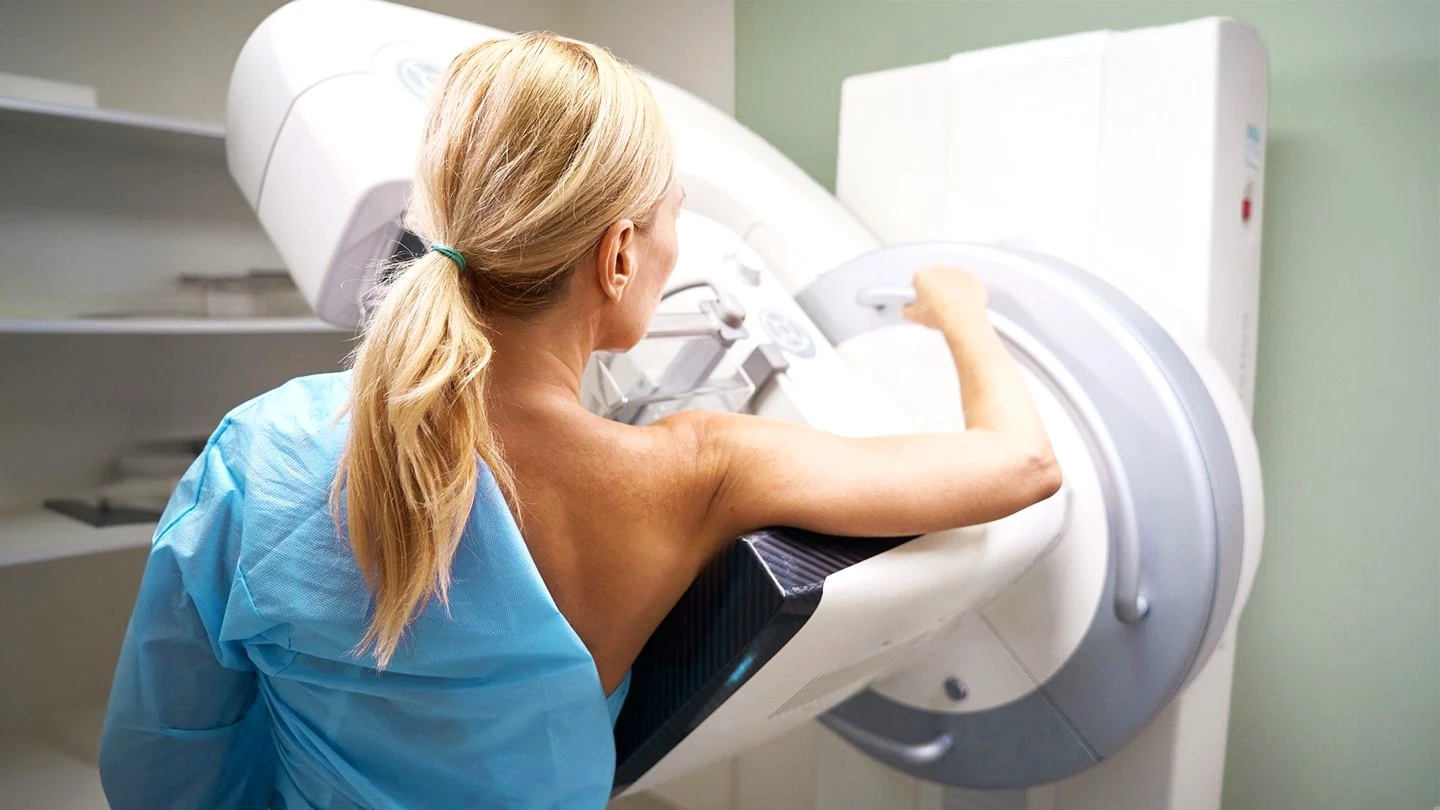
Breast Cancer Screening: Complete Guide to Mammograms

Early Pregnancy Scans: What to Expect
Executive Health Checkups: What's Included

Pelvic Ultrasound for Women: Types, Preparation & What to Expect
More in Obstetrics & Gynecology
© 2026 Doctors Clinic Diagnostic Center (DCDC), Dubai Healthcare City. Originally published at https://doctorsclinicdubai.ae/blog/womens-health-screening. All rights reserved. Unauthorized reproduction is prohibited.