Key Takeaways
- Early pregnancy scans (6-12 weeks) confirm the pregnancy is in the uterus, detect the heartbeat, and establish your due date
- The heartbeat is usually visible by 6-7 weeks, but if not seen, a follow-up scan in 1-2 weeks often shows normal development
- Transvaginal (internal) ultrasound provides the clearest images in early pregnancy and is safe and generally well-tolerated
- The NT scan at 11-13 weeks screens for chromosomal conditions like Down syndrome, serving as an important screening milestone
- Early scanning at DCDC costs AED 500-1,000; many insurance plans cover pregnancy ultrasounds with a referral
- Partners are welcome at all scans, and seeing the heartbeat together is often a meaningful milestone for couples
That positive pregnancy test is just the beginning. The early pregnancy scan, usually your first glimpse of your developing baby, confirms what the test showed and provides information that guides your pregnancy care. For many women, seeing that flickering heartbeat for the first time is when pregnancy truly feels real.
Early pregnancy can feel uncertain. You may have symptoms, or you may not. You may have had previous losses, or this may be your first pregnancy. Whatever brings you to our clinic, the early pregnancy scan provides answers: Is the pregnancy developing normally? Is it in the right place? When is my due date? Is there one baby or more? This guide walks through everything you need to know about early pregnancy scans in Dubai: when to have them, what to expect, and what the results mean.
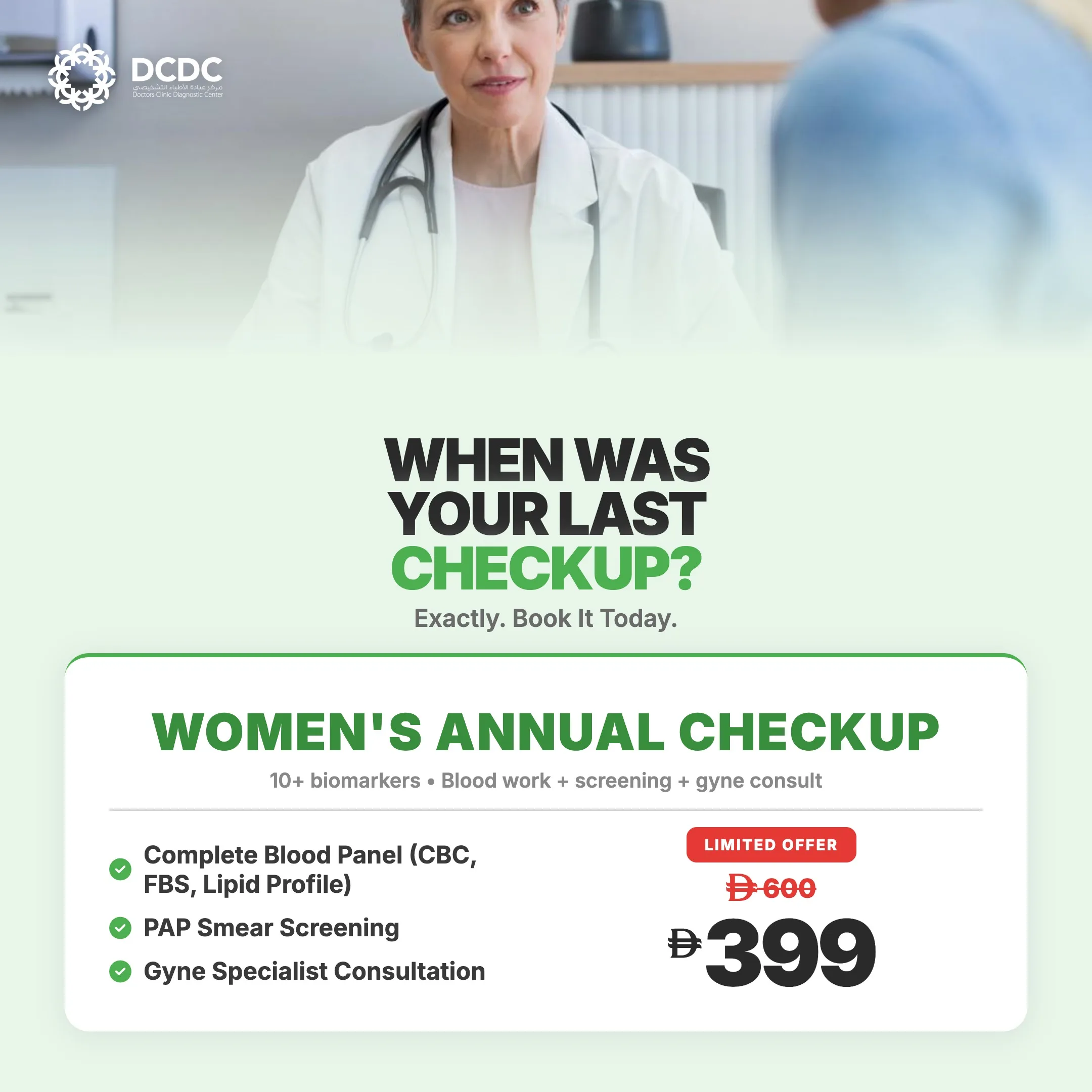
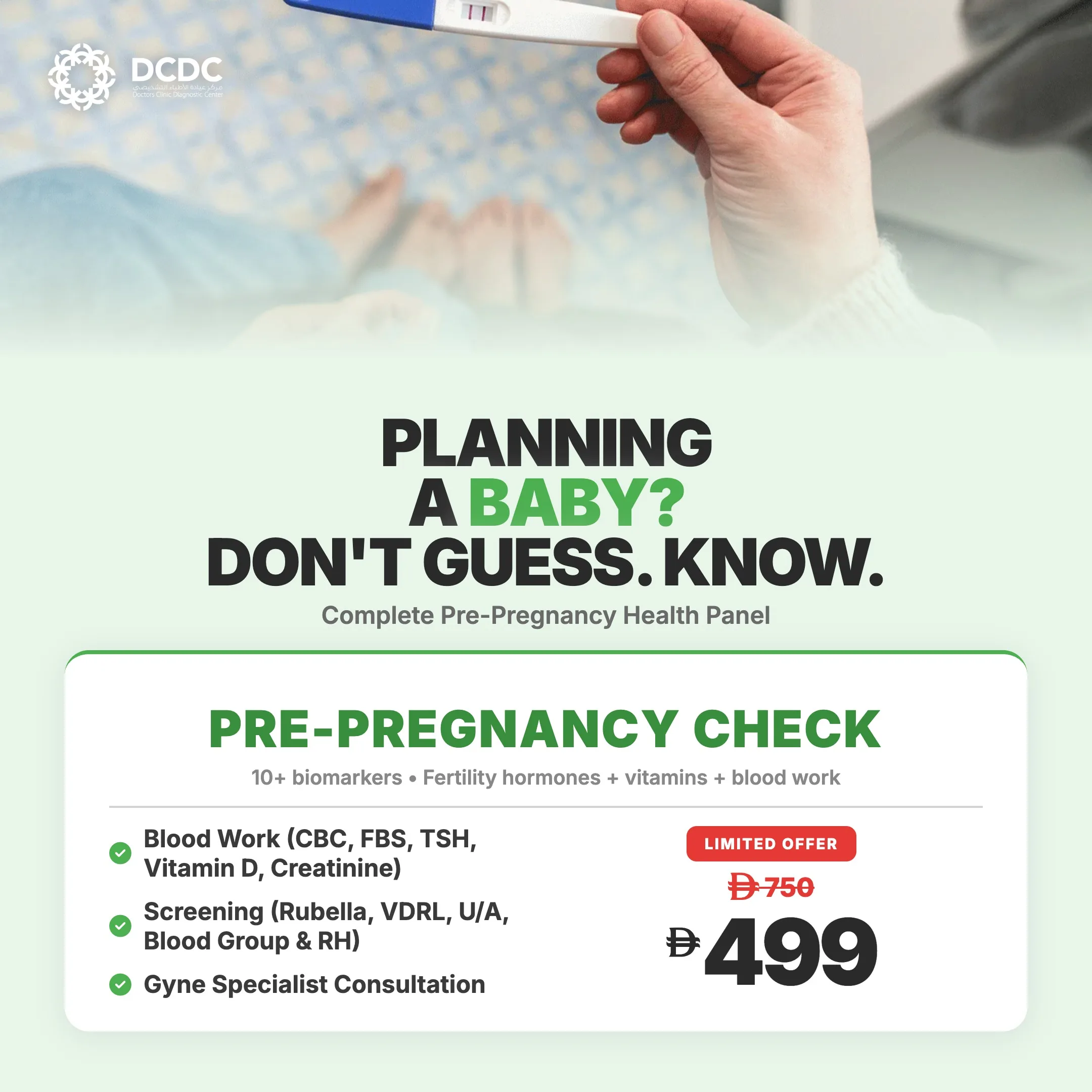
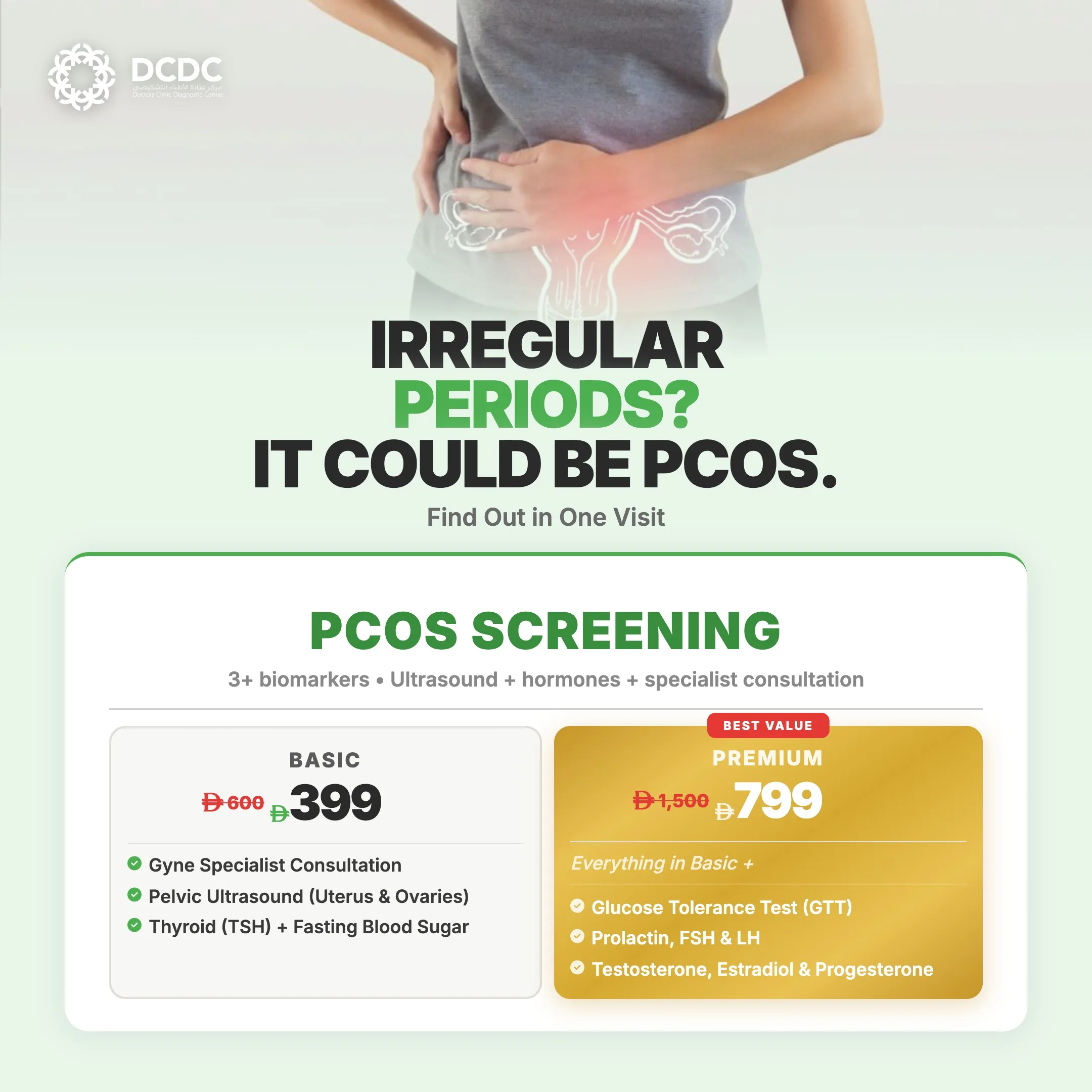
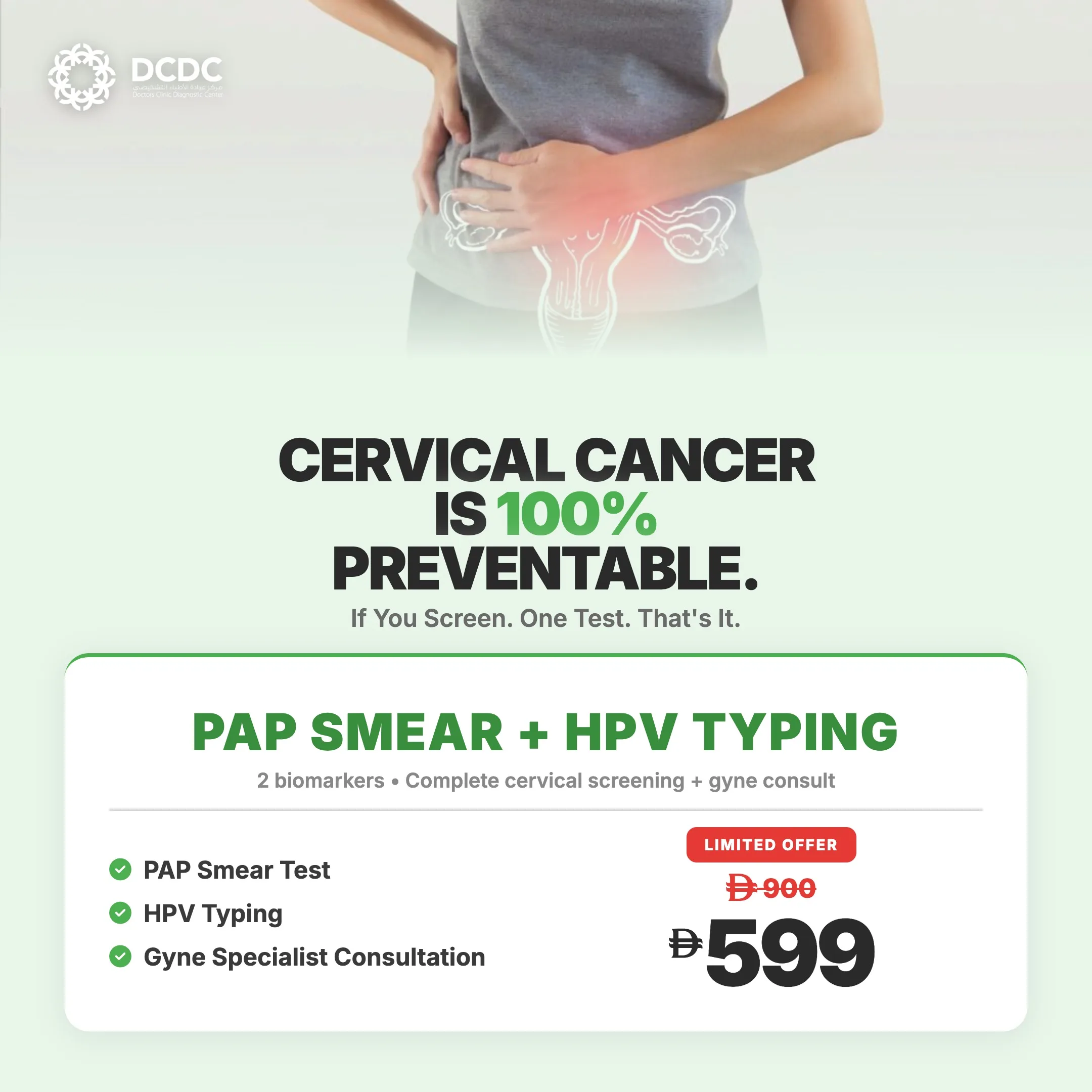
Health Screening Packages
Save with our bundled screening packages — specialist consultation included


What Is an Early Pregnancy Scan?
An early pregnancy scan is an ultrasound examination performed in the first trimester (the first 12-13 weeks of pregnancy). Unlike later pregnancy scans where you can see detailed baby anatomy, early scans focus on fundamental questions:
Location: Is the pregnancy inside the uterus? (Ruling out ectopic pregnancy)
Viability: Is there a heartbeat? Is the pregnancy developing normally?
Dating: How far along is the pregnancy? What is the estimated due date?
Number: Is there one baby, or multiples (twins, triplets)?
Depending on when you have the scan, different structures will be visible. The pregnancy develops rapidly in these early weeks, so what we see at 6 weeks looks very different from 10 or 12 weeks.
Types of Early Pregnancy Scans
Dating Scan (6-10 Weeks)
The dating scan, also called a viability scan, is often the first scan of pregnancy. It confirms the pregnancy is located inside the uterus (not ectopic), there is an embryo with a heartbeat (viability), the size of the embryo which determines gestational age and due date, and whether there is one baby or multiples.
At 6-7 weeks, we typically see a gestational sac, yolk sac, and a small embryo with a flickering heartbeat (if viable). The embryo is only a few millimeters long at this stage. By 8-10 weeks, the embryo is larger (about 2-3 cm), the heartbeat is stronger, and early limb buds may be visible.
NT Scan / Nuchal Translucency Scan (11-13 Weeks)
The NT scan is a specialized first-trimester screening test performed between 11 weeks and 13 weeks 6 days. It measures the fluid collection at the back of the baby's neck (the nuchal translucency) which, when combined with maternal age and blood tests, screens for chromosomal conditions like Down syndrome (Trisomy 21), Edwards syndrome (Trisomy 18), and Patau syndrome (Trisomy 13).
The NT scan also confirms the dating of pregnancy (crown-rump length measurement), checks for major structural abnormalities visible at this stage, confirms the number of babies and in twins the type of twin pregnancy (important for care planning), and assesses the nasal bone and other markers.
| Timing | Scan Type | Purpose |
|---|---|---|
| 6-7 weeks | First viability scan | Confirm heartbeat and location |
| 8-10 weeks | Dating scan | Dates uncertain or reassurance needed |
| 11-13 weeks | NT scan | Chromosomal screening |
If you have a history of ectopic pregnancy, recurrent miscarriage, or IVF pregnancy, we may recommend earlier or more frequent scanning.
What Happens During an Early Pregnancy Scan?
Before the Scan
Preparation is minimal. For transvaginal scans (most common before 10-11 weeks), you don't need a full bladder. An empty bladder is actually more comfortable. For transabdominal scans, a moderately full bladder may help. We'll advise you when you book. For related information, see our guide on Women's Health Screening Dubai: Tests by Age.
Wear comfortable clothing that allows easy access to your lower abdomen. You can bring your partner or a support person. Have your last menstrual period (LMP) date ready if you know it, along with any previous scan reports or relevant medical history.
During the Scan
Transvaginal ultrasound: You'll undress from the waist down (a sheet is provided for modesty) and lie on the examination bed with your knees bent. A slim ultrasound probe, covered with a protective sheath and lubricating gel, is gently inserted into the vagina. The probe sends sound waves that create images on the screen. The examination takes about 10-15 minutes. It may feel slightly uncomfortable but should not be painful.
Transabdominal ultrasound: You remain clothed except for your lower abdomen. Gel is applied to your skin, and the probe is moved across your abdomen. This is completely painless.
During the scan, the sonographer or doctor will measure the embryo, check for a heartbeat, examine the pregnancy structures, and take images. You'll usually be able to see the screen and hear explanations as we go. If you prefer not to see the screen until we've confirmed everything looks normal, let us know.
After the Scan
You'll receive a report and images immediately. We'll discuss the findings, explain what they mean, and answer your questions. If everything looks normal, you'll leave with a confirmed due date and printed images of your baby. If there are concerns, we'll explain the findings, discuss next steps, and provide support.
What We Look for Week by Week
5-6 Weeks
At this very early stage, we look for the gestational sac (a small fluid-filled structure in the uterus, the first sign of pregnancy on ultrasound), the yolk sac (a small circular structure inside the gestational sac that nourishes the early embryo), and the fetal pole (the earliest visible embryo, appearing as a small thickening).
A heartbeat may or may not be visible at 5-6 weeks. If the gestational sac and yolk sac look appropriate but no heartbeat is seen, we typically schedule a follow-up in 1-2 weeks rather than drawing conclusions.
7-8 Weeks
The embryo is now clearly visible, measuring approximately 10-16 mm (crown-rump length). The heartbeat is typically strong and easily seen, appearing as a reassuring flickering on the screen. You may begin to see early limb buds. The yolk sac is still visible alongside the embryo.
9-10 Weeks
The embryo is now referred to as a "fetus" and measures approximately 2-3 cm. Limbs are more defined. Movement may be visible. The fetus is starting to look more human-like, though still very small. Head and body are distinguishable.
11-13 Weeks
This is the window for the NT scan. The fetus measures approximately 4-8 cm and is clearly baby-shaped. Arms, legs, hands, and feet are visible. The brain, stomach, bladder, and other structures can be assessed. Active movement is common. The NT measurement (fluid at the back of the neck) is taken for screening purposes.
Understanding Your Results
Good News: Normal Findings
A normal early pregnancy scan shows pregnancy located inside the uterus (intrauterine pregnancy), embryo/fetus with a visible heartbeat, size appropriate for gestational age (within 5-7 days of expected dates), and normal-appearing pregnancy structures.
Seeing a heartbeat at 8 weeks reduces the risk of subsequent miscarriage to less than 2% in women without symptoms (no bleeding or pain). This is tremendously reassuring for many women, especially those with previous losses.
When Findings Are Uncertain
Sometimes early scan results are inconclusive, meaning not clearly normal but not clearly abnormal. Common scenarios include pregnancy earlier than expected (if your dates are uncertain, the pregnancy may simply be earlier than we thought; a follow-up scan in 1-2 weeks often shows normal development), no heartbeat yet (at very early stages or if dates are off, the heartbeat may not be visible yet; we schedule a follow-up rather than jumping to conclusions), and pregnancy of unknown location (occasionally, we see signs of early pregnancy in blood tests but can't yet locate it on ultrasound, which requires close monitoring).
Uncertainty is stressful, but patience is important. Nature sometimes needs a few extra days to declare itself, and rushing to conclusions can lead to unnecessary worry or, worse, unnecessary intervention.
Difficult News: When Something Is Wrong
Unfortunately, early pregnancy scans sometimes reveal problems: missed miscarriage (an embryo with no heartbeat, or an empty gestational sac that should have a visible embryo), ectopic pregnancy (pregnancy located outside the uterus, usually in the fallopian tube, requiring urgent treatment), or molar pregnancy (abnormal development of placental tissue, requiring specialized care).
Receiving difficult news is devastating. If we find something concerning, we take time to explain the findings clearly, discuss options, provide emotional support, and ensure you have access to appropriate care and counseling. Early pregnancy loss is common (affecting 10-20% of known pregnancies), but that doesn't make it any less painful. You're not alone, and support is available.
| Scan Type | Price Range (AED) | Description |
|---|---|---|
| Viability / Dating Scan (6-10 weeks) | 500 - 700 | Confirms pregnancy location, heartbeat, and due date |
| NT Scan with Screening (11-13 weeks) | 800 - 1,200 | Includes NT measurement and optional combined screening blood test |
| Reassurance Scan | 400 - 500 | Quick scan to check heartbeat and growth (for women with anxiety or previous loss) |
Most insurance covers pregnancy ultrasounds with a referral. We verify coverage before your appointment.
Who Should Have Early Pregnancy Scans?
While not every pregnancy requires a very early scan, there are many reasons to have one. You may also find our Anomaly Scan Dubai: Cost, Timing & Results helpful.
Medical Indications
Uncertain dates: If you don't know when your last period was, or if your cycles are irregular, early scanning establishes your due date more accurately.
Previous ectopic pregnancy: Early scanning confirms the pregnancy is in the uterus.
Previous miscarriage: Early confirmation of viability can provide reassurance (or early detection of problems).
IVF or fertility treatment: Close monitoring is standard after assisted conception.
Bleeding or pain: These symptoms warrant investigation to rule out miscarriage or ectopic pregnancy.
Multiple pregnancy suspected: Family history of twins or fertility treatment can result in multiples.
Personal Reasons
Reassurance: Anxiety in early pregnancy is normal. Seeing a heartbeat provides significant reassurance.
Bonding: For many couples, the early scan is when pregnancy feels real and becomes a meaningful milestone.
Planning: An accurate due date helps with work, travel, and life planning.
Common Concerns and Questions
Is Ultrasound Safe?
Yes. Diagnostic ultrasound has been used in pregnancy for over 50 years with no known harmful effects. Unlike X-rays, ultrasound uses sound waves, not radiation. We follow international safety guidelines for exposure time and intensity. That said, we perform scans when there's a medical or clinical reason rather than for purely entertainment purposes.
What If I'm Having Twins?
Early scanning is particularly valuable for multiple pregnancies. We determine whether there is one placenta or two, and whether twins share a sac (important for risk assessment and monitoring). Twin pregnancies require more intensive monitoring, and knowing the type of twin pregnancy from the start is crucial for planning appropriate care.
Can I Tell the Gender This Early?
Gender cannot reliably be determined before about 12-14 weeks, and even then it's not always possible to see. If knowing the gender is important to you, we typically recommend waiting until the anatomy scan at 18-22 weeks for accurate gender identification. Non-invasive prenatal testing (NIPT) from about 10 weeks can also reveal gender through blood test analysis of fetal DNA.
Your Pregnancy Journey at DCDC
At DCDC, we understand that early pregnancy is a time of excitement, hope, and sometimes anxiety. Our gynecology and obstetrics department provides compassionate, expert care from the earliest stages of pregnancy.
Our early pregnancy services include prenatal ultrasound with experienced sonographers, pregnancy care from confirmation through delivery, gynecology consultations for any pregnancy concerns, support for pregnancy loss and early pregnancy complications, and genetic screening and counseling.
Whether this is your first pregnancy or you've been here before, whether everything is straightforward or you have complex needs, we're here to support you. Early pregnancy is just the beginning of your journey, and we're honored to be part of it.
Book Your Early Pregnancy Scan
At Doctors Clinic Diagnostic Center in Dubai Healthcare City, we provide comprehensive prenatal ultrasound services with experienced sonographers and specialist OB/GYNs. We offer dating scans, viability scans, and complete pregnancy care.
Related Services at DCDC
Expert care and advanced diagnostics at Dubai Healthcare City
Frequently Asked Questions
Related Resources
For more information about pregnancy care and women's health, explore our related articles: Women's Health Screening: Complete Guide by Age, Breast Cancer Screening: What You Need to Know, and Pregnancy Care Services at DCDC.
At DCDC, we're committed to providing comprehensive pregnancy care from the earliest stages through delivery. Our experienced team of specialists is here to support you every step of the way. If you have any questions or concerns about your pregnancy, don't hesitate to reach out to us.
Sources & References
This article was reviewed by our medical team and references the following sources:
- Dubai Health Authority - Maternal Health Guidelines
- UAE Ministry of Health and Prevention - Pregnancy Care Standards
- Royal College of Obstetricians and Gynaecologists - Early Pregnancy Guidelines
- American College of Obstetricians and Gynecologists - First Trimester Ultrasound
- International Society of Ultrasound in Obstetrics and Gynecology
Medical content on this site is reviewed by DHA-licensed physicians. See our editorial policy for more information.

Written by
Dr. Parisa Dini
Specialist OB/GYN
MD, Specialist in Obstetrics and Gynecology
Dr. Parisa Dini is a specialist in obstetrics and gynecology at DCDC Dubai Healthcare City. She provides comprehensive pregnancy care from early pregnancy through delivery, with particular expertise in high-risk pregnancy and fertility. She is passionate about supporting women through all stages of pregnancy and ensuring every patient feels informed and cared for.
Related Articles

Women's Health Screening: Complete Guide by Age
Breast Cancer Screening: What You Need to Know
Pregnancy Care Services at DCDC
More in Obstetrics & Gynecology
© 2026 Doctors Clinic Diagnostic Center (DCDC), Dubai Healthcare City. Originally published at https://doctorsclinicdubai.ae/blog/early-pregnancy-scan-importance. All rights reserved. Unauthorized reproduction is prohibited.