Key Takeaways
- Colonoscopy preparation begins 5–7 days before your procedure with a low-residue diet, moves to clear liquids only the day before, and finishes with a prescribed bowel-cleansing solution
- Split-dose bowel prep — half the evening before and half 4–6 hours before your appointment — produces significantly cleaner results than taking the entire dose the night before
- Screening colonoscopy is recommended for all average-risk adults starting at age 45, continuing through age 75, per updated American Cancer Society and USPSTF guidelines
- The colonoscopy itself takes only 20–30 minutes under sedation, so you feel no pain and typically have no memory of the procedure afterward
- GI consultation at DCDC starts from AED 300–500, and colonoscopy procedures in Dubai typically range from AED 2,000–5,000 depending on the facility and whether biopsies or polyp removal are needed
- Most insurance plans in Dubai cover diagnostic colonoscopy when ordered by a physician — DCDC partners with 20+ insurers, including Daman, AXA, Bupa, MetLife, and Cigna, for direct billing
- Inadequate bowel preparation is the single most common reason colonoscopies need to be repeated, so following the diet and prep instructions precisely matters more than any other factor in a successful exam
A colonoscopy is one of the most effective tools in modern medicine for preventing colorectal cancer, yet many people in Dubai delay or avoid the procedure simply because the preparation feels overwhelming. The truth is that colonoscopy preparation is a well-defined, step-by-step process — a low-residue diet, a day of clear liquids, and a bowel-cleansing solution — that the vast majority of patients complete successfully with the right guidance. At DCDC's gastroenterology department in Dubai Healthcare City, our physicians walk patients through every stage of preparation, from the initial consultation to the morning of the procedure, so you know exactly what to expect and why each step matters.
This guide breaks down colonoscopy preparation in Dubai in full detail for 2026: why the procedure matters, who should have one and at what age, a day-by-day preparation timeline, the low-residue and clear liquid diets, bowel prep solutions and how to take them, what happens during the procedure, what it costs in Dubai, and what recovery looks like. Reviewed by Dr. Hadeel Elnur, General Practitioner at DCDC Dubai Healthcare City.
Health Screening Packages
Save with our bundled screening packages — specialist consultation included





Why Colonoscopy Screening Matters: When You Need One
Colorectal cancer is among the most common cancers worldwide and one of the very few that can be almost entirely prevented — not just detected early, but prevented outright — through screening. During a colonoscopy, a doctor can find and remove precancerous growths called polyps before they ever have the chance to turn into cancer, a transformation that typically takes 10–15 years. This long window is exactly why regular screening colonoscopy is so effective: it interrupts the disease process long before symptoms would ever appear.
Beyond routine screening, colonoscopy is also the key diagnostic step when certain symptoms appear. Persistent changes in bowel habits, rectal bleeding, unexplained abdominal pain, unintentional weight loss, or iron-deficiency anaemia with no obvious cause all warrant evaluation. If you have been experiencing ongoing digestive discomfort, our guide on abdominal pain causes and diagnosis in Dubai explains when symptoms cross the line from "watch and wait" to "see a doctor now."
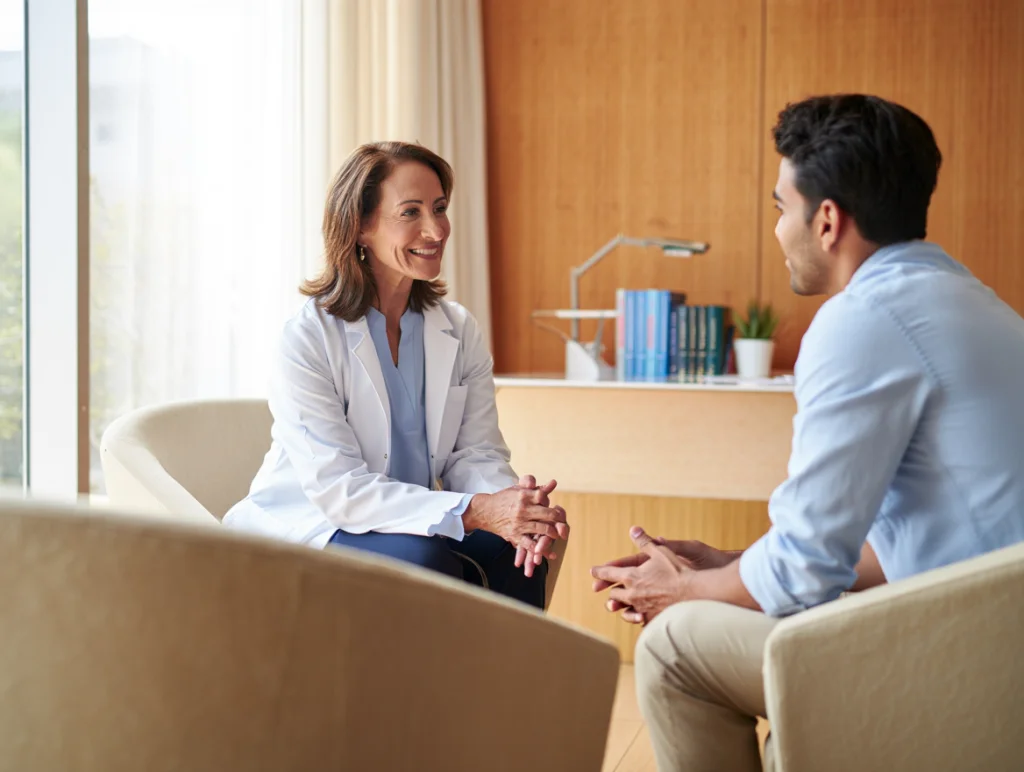
According to Dr. Hadeel Elnur, General Practitioner at DCDC Dubai Healthcare City, "Many patients delay colonoscopy screening because they're anxious about the preparation. Understanding the step-by-step process makes it much more manageable, and the procedure itself takes only 20–30 minutes. The preparation is genuinely the hardest part — once that's done, the rest is straightforward."
Understanding Colonoscopy: What the Procedure Involves
A colonoscopy is a procedure in which a doctor uses a thin, flexible tube fitted with a camera and light — called a colonoscope — to examine the entire lining of the large intestine (colon) and rectum. The scope is inserted through the rectum and gently advanced through the length of the colon while the doctor views real-time, high-definition images on a monitor. Small amounts of air or carbon dioxide are used to gently inflate the colon so the lining can be seen clearly.
Colonoscopy is both diagnostic and therapeutic in a single session. If a polyp is found, it is typically removed on the spot using a wire loop or forceps passed through the scope — a procedure called polypectomy — and sent to a laboratory for analysis. If an area of concern such as inflammation or an ulcer is identified, a small tissue sample (biopsy) can be taken painlessly. This is one of the reasons colonoscopy is considered the gold-standard test for the colon: it combines examination, sampling, and treatment in one visit.
The procedure is performed under sedation, most commonly conscious IV sedation, which keeps you relaxed and drowsy throughout. Most patients feel nothing during the exam and have little to no memory of it afterward. The scope portion of the visit generally takes 20–30 minutes, though the full appointment — including check-in, sedation, the procedure, and initial recovery — usually takes 2–3 hours from arrival to discharge.
Who Should Get a Colonoscopy? Age and Risk Guidelines
Current international guidelines, including those from the American Cancer Society and the US Preventive Services Task Force, recommend that all average-risk adults begin colorectal cancer screening at age 45, continuing through age 75 for those in good health. If a first screening colonoscopy is completely normal, the next one is typically not needed for another 10 years. For a full breakdown of screening intervals, test options, and what your results mean, see our dedicated colon cancer screening guide.
Screening should start earlier — often at age 40, or 10 years before the age a relative was diagnosed — for people with a first-degree relative (parent, sibling, or child) who had colorectal cancer or advanced polyps, a personal history of inflammatory bowel disease such as Crohn's disease or ulcerative colitis, a hereditary cancer syndrome such as Lynch syndrome or familial adenomatous polyposis, or a personal history of colon polyps or colorectal cancer.
It's also worth distinguishing screening from symptom-driven referral. Many people with functional digestive complaints such as bloating, cramping, or irregular bowel habits actually have irritable bowel syndrome rather than a structural problem — our guide to IBS symptoms and treatment in Dubai explains how these conditions are told apart. That said, "alarm" symptoms — rectal bleeding, unexplained weight loss, new-onset symptoms after age 45, or a strong family history — should always prompt a colonoscopy referral regardless of age.
7-Day Countdown: Complete Preparation Timeline
Colonoscopy preparation is a gradual process, not something you can rush the night before. The table below outlines a typical 7-day countdown. Your DCDC doctor will confirm exact timings and the specific bowel prep product prescribed for you, since instructions vary slightly by product and appointment time.
| Timeline | What to Do | Diet |
|---|---|---|
| 7 days before | Confirm your appointment and collect your bowel prep kit. Tell your doctor about all medications and supplements, especially blood thinners, iron tablets, and diabetes medication. | Normal diet; increase water intake |
| 5–6 days before | Stop taking iron supplements if advised — iron can darken the bowel lining and obscure the view. Confirm any blood-thinner adjustments with your prescribing doctor. | Begin easing off high-fibre foods |
| 3–5 days before | Begin the low-residue diet in full. Avoid nuts, seeds, whole grains, popcorn, and raw fruit and vegetable skins. | Low-residue diet (see table below) |
| 1 day before | Switch entirely to clear liquids from breakfast onward. Begin the first (evening) dose of your bowel prep solution as instructed on your kit. | Clear liquids only, all day |
| Morning of the procedure | Take the second bowel prep dose at the time given (typically 4–6 hours before arrival). Stop all liquids 2 hours before your appointment time. | Nothing after the cut-off time |
| Procedure day, on arrival | Arrive with a driver or companion, your ID and insurance card, and a list of current medications. Wear comfortable, loose clothing. | Fasting |
General colonoscopy preparation timeline. Always follow the specific instructions provided by your DCDC physician for your prescribed bowel prep solution.
The Low-Residue Diet: What to Eat and Avoid (5–7 Days Before)
A low-residue diet reduces the amount of undigested fibre and roughage left in your intestines, which makes it much easier for the bowel prep solution to fully clean the colon. Most doctors recommend starting this diet 5–7 days before the procedure, though some patients — particularly those with a history of constipation — may be advised to start even earlier. If constipation is a regular issue for you, our guide on managing constipation in Dubai has practical tips that pair well with your prep plan.
| Food Category | Allowed (Low-Residue) | Avoid |
|---|---|---|
| Grains | White bread, white rice, refined pasta, plain crackers | Whole grain bread, brown rice, bran, granola |
| Proteins | Tender cooked chicken, fish, eggs, tofu | Tough or processed meat, sausages with casings, beans, lentils |
| Fruits | Peeled, seedless fruit (ripe banana, melon), fruit juice without pulp | Whole fruit with skin or seeds, dried fruit, berries |
| Vegetables | Well-cooked, peeled vegetables (no skins or seeds) | Raw vegetables, corn, peas, leafy salads |
| Dairy | Milk, plain yoghurt, mild cheese, in moderation | None restricted, but avoid combining with high-fibre foods |
| Nuts, seeds & legumes | None recommended in this phase | All nuts, seeds, popcorn, beans, lentils, chia and flax |
| Sweets & extras | Plain cakes, gelatin, honey, clear hard candy | Anything with nuts, seeds, coconut, or dried fruit mixed in |
Low-residue diet guidance for the 5–7 days before a colonoscopy. Individual instructions from your doctor take precedence.
The Clear Liquid Diet: Day Before Your Colonoscopy
The day before your colonoscopy, all solid food stops completely and you move to a clear liquid diet for the full day. "Clear" means you should be able to see through the liquid — it does not have to be colourless, but it cannot contain any pulp, milk, or solid particles. Acceptable options include water, clear broth or bouillon, plain tea or black coffee (no milk or creamer), clear fruit juices such as apple juice without pulp, sports drinks, clear soda, and plain gelatin or ice pops. Avoid anything red, purple, or blue in colour, as these dyes can be mistaken for blood or stain the colon lining, making the exam harder to interpret.
This is also the day you begin your bowel prep solution. Most colonoscopy centres in Dubai, including DCDC, now recommend a split-dose regimen — roughly half of the prescribed solution taken in the evening the day before, and the second half taken 4–6 hours before your appointment the following morning. Split dosing has been shown to produce a significantly cleaner colon and a more comfortable experience than drinking the entire solution the night before, because the effect of the second dose is timed much closer to the procedure itself.
Bowel Prep Solutions: Types and How to Take Them
Your doctor will prescribe one of several bowel prep formulations, each of which works by drawing water into the colon to flush out stool. The most common types used in Dubai clinics include large-volume polyethylene glycol (PEG) solutions, taken as roughly 3–4 litres split into two doses; low-volume PEG combined with ascorbic acid, a smaller-volume alternative that many patients find easier to tolerate; and sodium picosulfate with magnesium citrate, a stimulant-based option taken in two smaller sachets. Each has similar effectiveness when taken correctly and on schedule — the important factor is completing the full prescribed dose, not which brand is used.
- Chill the solution: Most preps taste more tolerable cold. Refrigerate the mixed solution and drink it through a straw to reduce contact with taste buds.
- Drink steadily, not all at once: Follow the pacing instructions on your kit (usually one 250ml glass every 10–15 minutes) rather than gulping large amounts quickly, which can trigger nausea.
- Protect your skin: Frequent bowel movements can irritate the skin. Use a barrier cream or wet wipes instead of dry toilet paper to reduce soreness.
- Stay near a bathroom: Bowel movements typically begin within 1–3 hours of starting the solution and continue for several hours. Plan to be home with easy bathroom access.
- Expect clear or pale-yellow output: The goal of the prep is to reach clear, watery, light-coloured stool by the end of your dose. If your output remains brown or solid close to your appointment time, contact your DCDC doctor for advice — you may need additional preparation.
- Take medications as directed: Some regular medications should be taken with a small sip of water even while fasting; others, especially diabetes medication and blood thinners, need specific timing adjustments. Confirm this with your doctor in advance rather than guessing.
Ready to Book Your GI Consultation?
Speak with a DCDC physician about colonoscopy screening or referral. We assess your symptoms, review your risk factors, and coordinate the full preparation and procedure pathway.
MOHAP-licensed facility in Dubai Healthcare City. Direct billing with 20+ insurers. Call or WhatsApp to book.
Morning of the Procedure: Final Steps
The morning of your colonoscopy is about following the final instructions precisely and arriving prepared. A few practical steps make the process smoother for both you and the clinical team.
- Stop all liquids on schedule: Typically 2 hours before your appointment time, all fluids — including water — must stop completely to ensure your stomach is empty for sedation.
- Take your second bowel prep dose on time: If you're on a split-dose regimen, the second dose is usually timed 4–6 hours before arrival. Set an alarm if your appointment is early.
- Arrange a driver: Sedation means you cannot drive yourself home. Arrange for a family member, friend, or taxi/driver to bring you and take you home afterward — most clinics will not proceed without this confirmed.
- Wear comfortable clothing: Loose, easy-to-remove clothing and flat shoes make the pre- and post-procedure process more comfortable.
- Bring your documents: Emirates ID or passport, insurance card, a list of current medications and allergies, and your referral letter if you have one.
- Remove jewellery and contact lenses: These are typically requested to be removed before sedation for safety.
What to Expect During the Colonoscopy
Understanding the sequence of events on procedure day helps ease anxiety. After check-in, a nurse reviews your medical history and confirms your bowel prep was completed, places an IV line, and attaches monitors for your heart rate, blood pressure, and oxygen levels. The anaesthetist or endoscopist then administers sedation through the IV line — you'll feel relaxed and drowsy within seconds. For a deeper look at how colonoscopy compares with other types of endoscopic procedures, see our full endoscopy guide for Dubai.
Once sedated, you'll be positioned on your side and the colonoscope is gently guided through the rectum and along the length of the colon. Small amounts of air or carbon dioxide gently expand the colon so the lining is clearly visible on the monitor. The doctor examines every section carefully, removing any polyps found and taking biopsies where needed. The scope portion typically takes 20–30 minutes. Afterward, you're moved to a recovery area to rest for 30–60 minutes as the sedation wears off, and the doctor will discuss preliminary findings with you and your companion once you're alert.
Colonoscopy Cost in Dubai: What to Budget
GI consultation at DCDC starts from AED 300–500. Colonoscopy procedures in Dubai typically range from AED 2,000–5,000 depending on the facility and whether biopsies or polyp removal are needed. Additional costs may apply for bowel prep kits, laboratory pathology fees if tissue samples are analysed, and pre-procedure blood tests. The table below outlines typical costs across the full colonoscopy pathway in Dubai for 2026.
| Item | Estimated Cost (AED) | Notes |
|---|---|---|
| GI / gastroenterology consultation | 300–500 | Initial assessment and referral |
| Pre-procedure blood work | 150–400 | CBC, coagulation profile, and other tests as indicated |
| Bowel prep kit / solution | 80–200 | Purchased from pharmacy or provided by clinic |
| Diagnostic colonoscopy | 2,000–3,500 | No biopsy or polyp removal |
| Colonoscopy with polypectomy | 3,000–5,000 | Includes polyp removal and pathology |
| Biopsy / pathology (per specimen) | 300–800 | If tissue sampling is performed |
| Follow-up consultation | 200–400 | To review results and pathology |
Estimated colonoscopy-related costs in Dubai as of 2026. Actual pricing varies by facility, sedation type, and whether therapeutic intervention is required.
Insurance coverage for colonoscopy is generally comprehensive across Dubai when the procedure is ordered by a physician based on clinical indication or age-based screening guidelines. DCDC works with 20+ insurance partners — including Daman, AXA, Bupa, MetLife, and Cigna — offering direct billing so you typically pay only your co-pay at the time of your consultation, with the referral and pre-authorisation for the procedure itself handled by our team.
Recovery After Colonoscopy: Timeline and Tips
Recovery from colonoscopy is generally quick and straightforward. In the immediate recovery period, you'll rest for 30–60 minutes while the sedation wears off, feeling groggy and possibly bloated from the air used to inflate the colon during the exam. This bloating and mild cramping is completely normal and usually resolves within a few hours as trapped air passes — walking gently around the recovery area or at home helps speed this along. If bloating is a recurring issue for you beyond the day of the procedure, our guide on bloating causes and treatment in Dubai covers when it needs further evaluation.
You can typically resume a light diet within a few hours, gradually returning to your normal eating pattern by the next day. Avoid alcohol, driving, operating machinery, and making important decisions for the rest of the day, as sedation can affect judgement and reflexes for several hours after the procedure. Most people return to work and normal activities the following day, though if a polyp was removed, your doctor may advise avoiding strenuous exercise and blood-thinning medications for a few days.
A small amount of spotting or mucus in the first bowel movement or two after the procedure — especially if a polyp was removed — is usually normal. However, contact your doctor promptly if you experience heavy or persistent rectal bleeding, severe abdominal pain, fever, or dizziness. If you notice ongoing rectal discomfort or bleeding unrelated to the procedure itself, our guide on hemorrhoid treatment in Dubai may help you understand a common and separate cause of rectal bleeding.
What to Expect at DCDC: Your GI Consultation Journey
DCDC Dubai Healthcare City is designed to be your first point of contact for colonoscopy referral and the entire preparation process, coordinating each step under one roof rather than sending you between multiple unconnected clinics.
- Step 1 — Initial GI consultation: You meet with a DCDC physician, such as Dr. Hadeel Elnur, who reviews your symptoms, family history, and risk factors to determine whether a screening or diagnostic colonoscopy is appropriate. As your first point of contact, she coordinates any multi-specialty workup needed before the procedure.
- Step 2 — Pre-procedure assessment and lab work: DCDC's on-site laboratory performs required blood tests — including full blood count and coagulation screening where needed — with on-site sample collection and comprehensive panels available same day.
- Step 3 — Referral coordination: If colonoscopy is indicated, our team prepares your referral, verifies insurance coverage, and handles pre-authorisation with your insurer before scheduling.
- Step 4 — Preparation instructions: You receive a detailed, personalised preparation plan covering the low-residue diet, clear liquid diet, and your specific bowel prep solution, along with a contact number for any questions during preparation.
- Step 5 — Procedure day: The colonoscopy is performed at a coordinated specialist facility, with most patients home the same day within a few hours.
- Step 6 — Follow-up at DCDC: Once pathology results are available (typically 5–7 working days if a biopsy or polypectomy was performed), you return to DCDC to review findings, discuss next steps, and set your future screening schedule.
As a one-stop diagnostic centre in Building 64, Block A, Al Razi Medical Complex, DHCC, DCDC brings imaging, laboratory testing, and specialist consultation together in a single MOHAP-licensed facility. Patients consistently rate the clinic 4.8 out of 5 from more than 1,000 verified reviews, with a 98% patient satisfaction rate and an average wait time of just 15 minutes. Free dedicated parking is available, and the clinic is open Saturday to Thursday 8am–10pm and Friday 9am–9pm. If you'd like more background on how GI specialists in Dubai approach digestive health more broadly, our gastroenterologist Dubai guide is a helpful next read.
Have Questions About Colonoscopy Preparation?
Book a consultation at DCDC to discuss your risk factors, get a personalised preparation plan, and have your colonoscopy referral coordinated in one place.
Building 64, DHCC. Direct billing with 20+ insurers. Call or WhatsApp to book.
Frequently Asked Questions About Colonoscopy Preparation in Dubai
Below are answers to the questions patients ask most often about preparing for a colonoscopy in Dubai.
Related Services at DCDC
Expert care and advanced diagnostics at Dubai Healthcare City
Gastroenterology
Expert digestive health consultations including colonoscopy referrals and follow-up care
Book AppointmentBlood Tests
Pre-procedure blood work and comprehensive lab panels
Book AppointmentGeneral Consultation
Initial consultation to assess whether colonoscopy is recommended
Book AppointmentFrequently Asked Questions
Final Thoughts
Colonoscopy preparation can feel intimidating from the outside, but broken down into its steps — a low-residue diet, a day of clear liquids, and a bowel prep solution taken in two doses — it is a manageable process that most patients complete without major difficulty. The payoff is significant: colonoscopy remains one of the only medical tests that can both detect and prevent cancer in the same visit, by removing precancerous polyps before they progress.
At DCDC Dubai Healthcare City, our team supports you through every stage — from the initial GI consultation and pre-procedure lab work to insurance coordination, personalised preparation instructions, and post-procedure follow-up. With a 4.8/5 Google rating from over 1,000 patient reviews, MOHAP licensing, direct billing with 20+ insurers, and an average wait time of just 15 minutes, DCDC is built to make the process as straightforward as possible. If you're due for screening or have symptoms that need evaluation, book a consultation and let our team guide you through preparation with confidence.
Sources & References
This article was reviewed by our medical team and references the following sources:
- Mayo Clinic — Colonoscopy: Overview and Preparation
- NHS — Colonoscopy: How to Prepare
- Cleveland Clinic — Colonoscopy: Preparation, Procedure, and Recovery
- American Cancer Society — Colorectal Cancer Screening Guideline
- US Preventive Services Task Force — Colorectal Cancer Screening Recommendation
- PubMed Central — Low-Residue Diet for Colonoscopy: Bowel Preparation Outcomes
- World Health Organization — Cancer Fact Sheet
Medical content on this site is reviewed by DHA-licensed physicians. See our editorial policy for more information.

Written by
Dr. Hadeel Elnur
General Practitioner
MD, General Practice
Dr. Hadeel Elnur is a General Practitioner at Doctors Clinic Diagnostic Center (DCDC) in Dubai Healthcare City.
Related Articles
Colon Cancer Screening: Complete Guide (2026)
Endoscopy Dubai: Types, Cost & Guide (2026)
Gastroenterologist Dubai: Complete Guide (2026)
IBS Symptoms & Treatment Dubai (2026)
Constipation Causes & Treatment Dubai (2026)
Bloating Causes & Treatment Dubai (2026)
More in Internal Medicine
Enlarged Prostate Dubai: BPH Symptoms (2026)
Read More
Hiatal Hernia Dubai: Symptoms & Treatment (2026)
Read MoreDiabetic Foot Care Dubai: Warning Signs (2026)
Read MoreColonoscopy vs Endoscopy Dubai: Guide (2026)
Read MoreDiabetic Diet Plan Dubai: Foods & Tips (2026)
Read MoreCholesterol-Lowering Foods & Diet Dubai (2026)
Read More© 2026 Doctors Clinic Diagnostic Center (DCDC), Dubai Healthcare City. Originally published at https://doctorsclinicdubai.ae/blog/colonoscopy-preparation-dubai. All rights reserved. Unauthorized reproduction is prohibited.