Key Takeaways
- Allergies (allergic rhinitis) are an immune reaction to airborne particles such as dust, pollen, or mould, and typically cause itchy eyes, clear watery discharge, and repeated sneezing that lasts as long as the trigger is present — often weeks or months.
- Sinus infections (sinusitis) usually follow a cold or prolonged allergic inflammation, cause thick yellow or green mucus and facial pressure, and typically resolve within 7 to 10 days when acute, or persist beyond 12 weeks when chronic.
- Chronic, untreated allergies can inflame and block the sinus drainage pathways, making allergy sufferers significantly more likely to develop a secondary sinus infection.
- Dubai's climate compounds the confusion: desert dust and shamal storms, air-conditioned indoor environments, construction dust, and high coastal humidity all trigger allergy-like symptoms year-round rather than in one defined "allergy season."
- Antihistamines and nasal steroid sprays relieve allergy symptoms but do little for a bacterial sinus infection, while antibiotics are ineffective against allergies and are not recommended for most sinus symptoms, which are viral.
- An allergy blood panel (IgE testing) identifies specific environmental or food triggers, while a sinus CT scan assesses structural blockage, chronic inflammation, and infection — both are available on-site at DCDC in Dubai Healthcare City.
- See an ENT specialist if symptoms last longer than 10 days, keep recurring several times a year, include a fever above 38.5°C, or involve severe one-sided facial pain — these point toward infection or a structural cause rather than simple allergies.
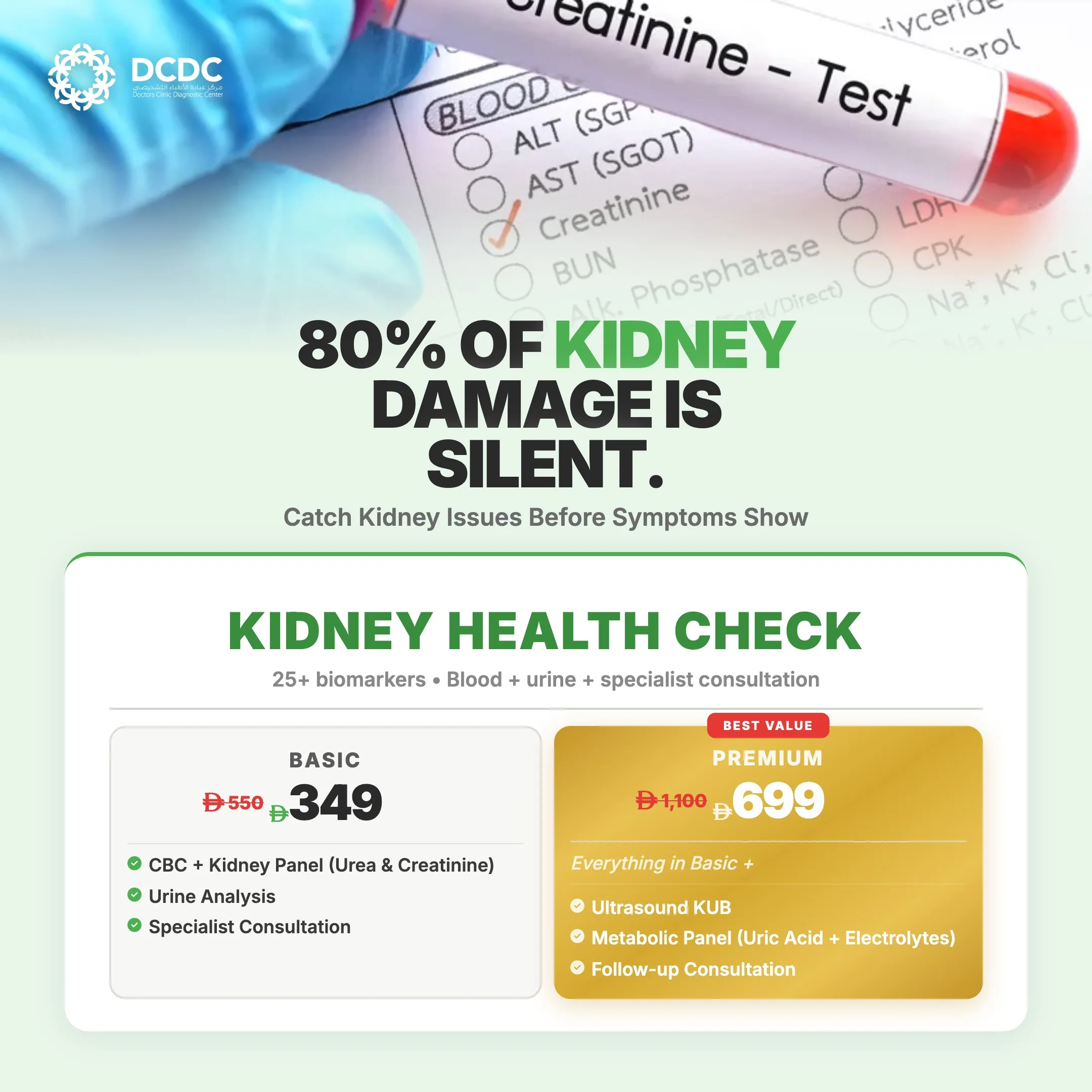
- At DCDC, ENT consultations start from AED 250, allergy blood panels start from AED 299, and sinus CT scans start from AED 600, with same-day appointments frequently available.
Is it allergies, or is it a sinus infection? In Dubai, where air-conditioned offices, sudden shamal dust storms, and high coastal humidity collide almost daily, this is one of the most common questions our ENT team hears at DCDC’s sinus treatment clinic in Dubai Healthcare City. Allergies and sinus infections share overlapping symptoms — congestion, nasal discharge, facial pressure, and fatigue — yet they have different causes, different timelines, and require very different treatments. Mistaking one for the other often means weeks of antihistamines that do nothing for a bacterial infection, or antibiotics prescribed for symptoms that are actually allergic. This guide breaks down exactly how to tell allergies from a sinus infection, why Dubai's environment makes the two so easy to confuse, and when it is time to stop guessing and book an ENT consultation.
Health Screening Packages
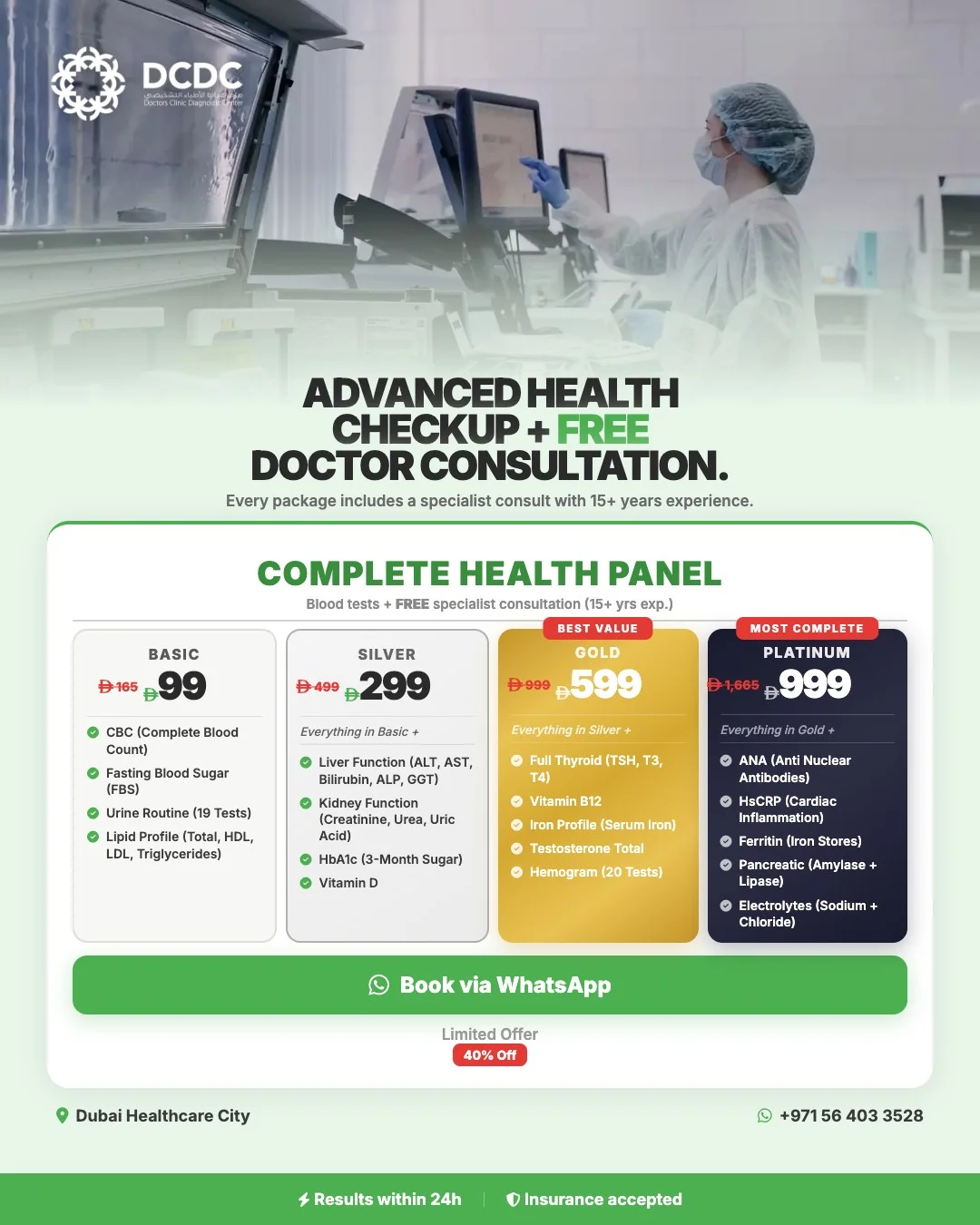
Save with our bundled screening packages — specialist consultation included




Is It Allergies or a Sinus Infection? Why Dubai Residents Get Confused
Every week, patients walk into DCDC describing weeks of "a cold that won't go away." In many cases it isn't a cold at all — it's either untreated allergic rhinitis or a lingering sinus infection, and the two are frequently mistaken for one another because they share so many overlapping features: a blocked or runny nose, pressure around the eyes and cheeks, post-nasal drip, and general fatigue. The confusion is especially common in Dubai, where the switch between icy air-conditioned interiors and hot, dusty outdoor air happens dozens of times a day, and where seasonal patterns don't follow the neat spring-to-summer allergy calendar familiar from Europe or North America.
Getting the distinction right matters because the treatments are almost opposite. Allergies respond to antihistamines, nasal steroid sprays, and trigger avoidance. A bacterial sinus infection may need antibiotics. Treating an allergy with antibiotics accomplishes nothing except unnecessary side effects and antibiotic resistance risk, while treating a bacterial sinus infection with antihistamines alone can let the infection linger and, in rare cases, spread beyond the sinuses. This article walks through the symptom differences, the Dubai-specific triggers behind both conditions, and exactly when it's time to see an ENT specialist rather than keep guessing at the pharmacy.
Allergy vs Sinus Infection: Quick Comparison Table
The fastest way to orient yourself is a side-by-side look at how allergic rhinitis and sinusitis typically present. No single row is diagnostic on its own, but the overall pattern across several rows usually points clearly in one direction.
| Feature | Allergic Rhinitis (Allergies) | Sinus Infection (Sinusitis) |
|---|---|---|
| Onset | Sudden, minutes to hours after exposure to a trigger | Often follows a cold; develops gradually over several days |
| Typical duration | Weeks to months, for as long as the trigger is present | 7 to 10 days if acute; 12+ weeks if chronic |
| Nasal discharge | Clear and watery | Thick, yellow or green, sometimes with an odor |
| Facial pain or pressure | Rare, usually mild | Common, often worse when bending forward |
| Itchy eyes, nose, or throat | Very common — a hallmark symptom | Uncommon |
| Sneezing | Frequent, often in repeated bouts | Occasional, if present at all |
| Fever | Rare or absent | Possible, especially with a bacterial infection |
| Sense of smell | Usually intact, sometimes mildly reduced | Often reduced or temporarily lost |
| Response to antihistamines | Noticeably improves symptoms | Little to no effect |
| Seasonal or trigger pattern | Often tied to a specific exposure (dust, AC, pollen) | Can occur at any time, often after a viral cold |
General patterns based on clinical presentation. Individual cases can overlap, which is why persistent or severe symptoms warrant an ENT assessment rather than self-diagnosis.
As the table shows, duration and the character of your nasal discharge are usually the two most reliable clues. Clear, watery discharge with itching that drags on for weeks points toward allergies. Thick, discolored discharge with facial pressure that follows a cold and either doesn't improve after 10 days or gets worse after initially improving points toward a sinus infection.
Symptom-by-Symptom: How to Tell Them Apart
Nasal Discharge: Clear and Watery vs. Thick and Discolored
Allergic rhinitis almost always produces thin, clear, watery discharge because the immune reaction causes blood vessels in the nasal lining to leak fluid rapidly. Sinus infections, by contrast, involve inflamed and often infected mucus that thickens and changes color as white blood cells and bacteria accumulate — typically appearing yellow, green, or occasionally brown-tinged. This single sign is one of the most useful at-home indicators, though it is not foolproof on its own.
Facial Pain and Pressure
Sinus infections commonly cause pressure or aching around the eyes, cheeks, forehead, or upper teeth, which typically worsens when bending forward or lying down. Allergies rarely cause true facial pain; at most, sufferers describe a mild, generalized fullness across the bridge of the nose without the localized, throbbing quality seen in sinusitis.
Itching vs. No Itching
Itchy eyes, an itchy nose, an itchy throat, or an itchy palate is one of the clearest markers of an allergic reaction and is rarely, if ever, present with a straightforward sinus infection. If you find yourself rubbing your eyes or the tip of your nose repeatedly, allergies are the far more likely explanation.
Fever, Fatigue, and Feeling Generally Unwell
Allergies can cause tiredness from poor sleep and constant congestion, but they do not typically cause fever. A fever above 38.5°C, combined with facial pressure and thick nasal discharge, is far more suggestive of a sinus infection, particularly a bacterial one that may benefit from medical treatment. For a deeper look at managing the itchy, sneezy end of the spectrum, see our guide to allergic rhinitis treatment in Dubai.
How Long Do Symptoms Last? Duration Is the Biggest Clue
If you remember only one rule from this article, make it this: duration is usually the single most reliable differentiator. Allergic rhinitis persists for as long as you're exposed to the trigger — that can mean weeks if you're reacting to your building's air conditioning, or months if it's a seasonal pollen you're sensitive to. Acute sinus infections, on the other hand, typically follow a predictable arc: they start as a common cold, seem to improve after 5 to 7 days, and then either resolve or take a turn for the worse with new fever, facial pain, and thicker discharge. Most ENT guidelines use the 10-day mark as a rough threshold — symptoms that persist unimproved beyond 10 days, or that improve and then suddenly worsen again, are more consistent with a bacterial sinus infection than a simple viral cold or allergy flare.
Chronic sinusitis is defined as sinus symptoms lasting 12 weeks or longer, and it is frequently linked to poorly controlled allergies, structural nasal issues, or recurring untreated acute infections. If you notice that your "sinus infections" seem to blend into one another with barely any symptom-free interval, the underlying driver may actually be unmanaged allergic inflammation rather than a series of separate infections.
Can Allergies Cause a Sinus Infection?
Yes — and this is one of the most important connections for Dubai residents to understand. When allergic rhinitis goes untreated, the constant swelling of the nasal lining narrows or blocks the small drainage openings (ostia) that connect the sinuses to the nasal cavity. Mucus that would normally drain freely becomes trapped inside the sinus cavities, creating a warm, moist, low-oxygen environment where bacteria can multiply. Within days, that trapped mucus can turn into a secondary bacterial sinus infection layered on top of the original allergy.
This is why people with chronic allergic rhinitis often report "getting sinus infections all the time" — the real problem is that their allergies were never adequately controlled, so every flare-up carries a higher risk of tipping over into infection. Treating the underlying allergy with antihistamines, nasal steroids, and trigger avoidance is often the most effective way to reduce how frequently sinus infections occur. If sinus infections are already a recurring problem for you, our guide to sinusitis treatment options covers the full range of medical and surgical approaches used in Dubai.
Allergy vs Cold vs Sinus Infection: What's the Difference?
A third condition often enters the confusion: the common cold. Colds, allergies, and sinus infections can look almost identical in the first 48 hours, which is exactly why so many people delay seeking help. The table below highlights the fastest ways to separate the three.
| Feature | Common Cold | Allergy | Sinus Infection |
|---|---|---|---|
| Cause | Viral infection | Immune reaction to a trigger | Often follows a cold or allergy; viral or bacterial |
| Onset | Gradual, over 1 to 3 days | Sudden, on exposure to trigger | Gradual, days after a cold begins |
| Duration | 7 to 10 days, self-resolving | Weeks to months while trigger persists | 7 to 10 days acute; 12+ weeks if chronic |
| Itchy eyes/nose | Uncommon | Common | Uncommon |
| Sore throat | Common | Uncommon (unless post-nasal drip) | Possible, from drip |
| Fever | Low-grade, possible | Absent | Possible, especially bacterial |
| Body aches | Common, mild | Absent | Uncommon |
Overlap between these three conditions is common in the first few days of any nasal illness, which is why duration and how symptoms evolve over time matter more than a single-day snapshot.
Dubai-Specific Triggers: Why the Confusion Is Worse Here
Dubai's environment doesn't just cause allergies and sinus problems more often — it also blurs the line between them, because many local triggers can provoke both an allergic reaction and, over time, a secondary infection. Understanding these triggers helps explain why nasal symptoms feel almost constant for many residents rather than confined to a single season.
Desert Dust and Shamal Storms
Sudden shamal wind events can blanket the city in fine desert dust within hours, carrying mineral particles, pollen fragments, and mould spores deep into the airways. These episodes commonly trigger acute allergic flare-ups — sneezing fits, itchy eyes, and congestion — that can persist for days after the dust has settled, especially indoors where fine particulate matter lingers in carpets and fabrics.
Air-Conditioning Systems: Mould and Dry Air
With air conditioning running for eight to ten months of the year, Dubai's indoor environments are prone to mould growth inside poorly maintained ducts and condensation trays, particularly Aspergillus and Cladosporium species. At the same time, constant AC use dries out the nasal lining, making it more vulnerable to irritation and slower to clear trapped mucus — a combination that raises the risk of both allergic symptoms and secondary sinus infections.
Construction Dust
Dubai's ongoing construction activity generates fine cement and aggregate dust that behaves similarly to desert sand in terms of airway irritation. Residents living or working near active construction sites often report chronic low-grade congestion that worsens on windy days, independent of any specific allergen sensitivity.
High Coastal Humidity
In coastal and marina-adjacent neighborhoods, high humidity supports dust mite populations and mould growth indoors, and thick, humid air can itself irritate the sinus lining. Humidity swings between air-conditioned interiors and humid outdoor air are a common trigger for sinus pressure that many residents describe simply as "Dubai sinuses."
Indoor Dust Mites
Dust mites thrive in warm, air-conditioned indoor environments with soft furnishings — exactly the conditions found in most Dubai homes and offices. Dust mite sensitivity is among the most frequently identified triggers on allergy panels performed at DCDC, and symptoms from this trigger tend to be present year-round rather than seasonal.
Seasonal Pollens That Differ From Western Allergy Calendars
Because Dubai's extensive urban landscaping relies on imported ornamental trees, grasses, and date palms, the local pollen calendar looks nothing like the spring and autumn seasons familiar to residents who relocated from Europe or North America. Many long-term expatriates develop new sensitivities to these unfamiliar plant species only after several years of exposure, which is why symptoms that never used to be a problem can suddenly appear. To identify exactly which of these triggers affects you, see our guide to allergy testing costs in Dubai.
Not Sure Which One You Have? Get an ENT Assessment
Guessing at the pharmacy wastes time and money. Our ENT specialists can examine your nose, review your symptom pattern, and recommend the right test in a single visit. Learn about our sinus treatment services or contact us on WhatsApp to book.
When to See an ENT vs When to Self-Treat
Mild, occasional allergy symptoms can often be managed at home with over-the-counter antihistamines and a saline nasal rinse. However, certain warning signs mean it's time to book an ENT consultation rather than continue self-treating.
- Symptoms lasting longer than 10 days without improvement
- Symptoms that improve for a few days and then suddenly worsen again
- Fever above 38.5°C, especially alongside facial pain
- Severe or one-sided facial pain, which can also suggest a deviated septum rather than a simple infection
- Sinus infections recurring more than three or four times a year, which may point to underlying nasal polyps or uncontrolled allergies
- Nasal discharge with a foul odor, or symptoms on only one side of the nose
- Swelling around the eyes, vision changes, or severe headache — these require urgent same-day assessment
- Over-the-counter antihistamines or decongestants providing no relief after several days of consistent use
Diagnostic Tests: Allergy Panels vs Sinus CT Scan
When symptoms are unclear or recurring, testing removes the guesswork. DCDC offers the full diagnostic pathway on-site in Dubai Healthcare City, from allergy blood panels to nasal endoscopy and sinus imaging.
Allergy Blood Panel (Specific IgE Testing)
A blood-based IgE panel identifies exactly which environmental or food allergens are triggering your immune system, from dust mites and mould to specific pollens and pet dander. Unlike skin prick testing, blood testing requires no medication changes — you can continue taking antihistamines and your regular medications. At DCDC, allergy blood panels start from AED 299, with results typically available in 2 to 3 days.
Nasal Endoscopy
A nasal endoscopy uses a thin, flexible camera to directly visualize the nasal passages and sinus openings, checking for inflammation, polyps, structural blockages, or pus draining from the sinuses. It is performed on-site at DCDC during your ENT consultation, takes only a few minutes, and provides immediate visual confirmation that blood tests alone cannot offer.
Sinus CT Scan
A sinus CT scan gives a detailed cross-sectional view of the sinus cavities and is typically reserved for chronic or recurrent cases, suspected structural problems such as a deviated septum, or when surgery is being considered. At DCDC, sinus CT scans start from AED 600.
| Test | Starting Price | Typical Turnaround |
|---|---|---|
| ENT Consultation | from AED 250 | Same day |
| Allergy Blood Panel (IgE) | from AED 299 | 2 to 3 days |
| Nasal Endoscopy | Included in consultation | Same day |
| Sinus CT Scan | from AED 600 | Same day to 24 hours |
Prices are approximate starting rates for 2026 at DCDC, Dubai Healthcare City. Final cost depends on the specific panel or scan ordered and insurance coverage.
According to Dr. Yousra Mohamed, MBBS, Arab Board (ORL), MRCS, and ENT specialist at DCDC, "The pattern I see most often in Dubai is a patient who has treated the same 'sinus infection' three or four times in a year with repeated antibiotic courses, when the real issue is an unmanaged allergy that keeps re-triggering the same cycle. A short nasal endoscopy combined with an IgE panel usually tells us within one visit whether we're dealing with allergic inflammation, a genuine infection, or both together — and that changes the entire treatment plan."
Treatment Differences: Antihistamines, Nasal Steroids, Antibiotics, and More
Treating Allergic Rhinitis
Allergy treatment focuses on reducing the immune response and avoiding triggers where possible. First-line options include oral or nasal antihistamines, intranasal corticosteroid sprays, and saline nasal irrigation to physically clear allergens from the nasal lining. For patients with confirmed, persistent triggers, allergen immunotherapy can reduce sensitivity over the long term rather than just masking symptoms.
Treating a Sinus Infection
Most acute sinus infections are viral and resolve on their own within 7 to 10 days with supportive care: saline rinses, decongestants, and pain relief. Antibiotics are reserved for cases with strong evidence of bacterial infection — typically symptoms lasting longer than 10 days without improvement, a "double worsening" pattern, high fever, or severe facial pain. Using antibiotics for viral or allergic symptoms provides no benefit and contributes to antibiotic resistance, which is why an accurate diagnosis matters before starting any course of medication.
When Surgery or Procedures Are Considered
Chronic sinusitis that doesn't respond to medical treatment, along with structural issues such as a badly deviated septum or nasal polyps, may eventually require a minor procedure or surgery. These options are typically considered only after medical management has been tried, and DCDC's ENT team will always explain the least invasive appropriate option first.
What to Expect at DCDC: Your Visit Walkthrough
Getting a clear answer at DCDC in Dubai Healthcare City is designed to be straightforward, thorough, and fast.
- ENT consultation lasts 45 to 60 minutes, including a full examination of the nose, throat, and ears
- Nasal endoscopy is available on-site during the same visit if needed, with no separate appointment required
- Allergy blood panel (IgE testing) starts from AED 299, with no need to stop regular medications beforehand for a blood-based test
- Blood test results are typically ready in 2 to 3 days
- Same-day appointments are frequently available for urgent or worsening symptoms
- Free parking is available on-site at Dubai Healthcare City
- Extended hours: Saturday to Thursday 8 AM to 10 PM, and Friday 9 AM to 9 PM
- Direct billing is available with more than 20 insurance providers, so most patients don't need to pay upfront
DCDC is a MOHAP-licensed facility rated 4.8 out of 5 on Google from more than 1,000 reviews, with a 98% patient satisfaction rate. Our ENT team, led by specialists including Dr. Yousra Mohamed, focuses on reaching an accurate diagnosis in a single visit wherever possible rather than cycling patients through repeated rounds of guesswork medication.
Which Doctor Should You See? A Simple Decision Tree
If you're still unsure whether to book a consultation, walk through this simple decision path based on your dominant symptoms.
- Itchy eyes, clear runny nose, frequent sneezing, symptoms tied to a specific place or activity, lasting weeks — this points to allergies; start with an ENT consultation and consider an allergy blood panel
- Thick yellow or green discharge, facial pressure, symptoms following a cold, fever, lasting more than 10 days — this points to a sinus infection; book an ENT consultation for examination and possible nasal endoscopy
- Symptoms on one side only, a persistent blocked nostril, or frequent nosebleeds — this may indicate a structural issue such as a deviated septum; an ENT evaluation with endoscopy is the right first step
- Sinus infections recurring several times a year with little symptom-free time in between — this pattern often points to chronic sinusitis or nasal polyps, and warrants a CT scan alongside your consultation
- Severe facial swelling, high fever, vision changes, or confusion — these are red-flag symptoms that need same-day medical attention, not a wait-and-see approach
Book Your ENT Consultation at DCDC Dubai Healthcare City
Stop guessing between allergies and a sinus infection. Our ENT specialists offer same-day consultations starting from AED 250, with on-site nasal endoscopy and allergy testing. View our sinus treatment services or message us on WhatsApp to book.
Preventing Allergy and Sinus Flare-Ups in Dubai
While you can't control Dubai's dust storms or humidity, several habits meaningfully reduce how often allergies tip over into full sinus infections.
- Change or clean AC filters regularly, and have ductwork inspected periodically for mould
- Use a daily saline nasal rinse to clear trapped dust, pollen, and allergens from the nasal passages
- Keep windows closed during shamal dust storms and active construction nearby
- Run a HEPA air purifier in bedrooms, especially if you're sensitive to dust mites
- Wash bedding weekly in hot water to reduce dust mite populations
- Stay hydrated to help thin mucus and support natural sinus drainage in air-conditioned environments
- Treat known allergies proactively with antihistamines or nasal steroids rather than waiting for a full flare-up
- Get tested if triggers are unclear — targeted avoidance is far more effective than guessing
Related Services at DCDC
Expert care and advanced diagnostics at Dubai Healthcare City
Frequently Asked Questions
Final Thoughts: Getting the Right Diagnosis in Dubai
Allergies and sinus infections can feel nearly identical from the inside, but the clues are usually there if you know what to look for: duration, the color and thickness of your discharge, whether itching is present, and whether a fever has developed. In a city like Dubai, where desert dust, air-conditioned indoor air, and coastal humidity all overlap, it's genuinely common for symptoms to blur together, and it's genuinely common for the wrong treatment to be tried first.
At Doctors Clinic Diagnostic Center in Dubai Healthcare City, our ENT team, including Dr. Yousra Mohamed, combines in-clinic nasal endoscopy, allergy blood panels, and sinus imaging to reach an accurate answer in a single visit rather than a cycle of repeated guesswork. With ENT consultations from AED 250, allergy panels from AED 299, direct billing with more than 20 insurance providers, and same-day appointments frequently available, getting a clear diagnosis doesn't have to mean weeks of uncertainty. If your symptoms have lasted more than 10 days, keep coming back, or simply haven't responded to what you've already tried, contact us to book an ENT consultation.
Sources & References
This article was reviewed by our medical team and references the following sources:
- Mayo Clinic: Acute Sinusitis — Symptoms and Causes
- Mayo Clinic: Hay Fever (Allergic Rhinitis) — Symptoms and Causes
- NHS: Sinusitis
- NHS: Allergic Rhinitis
- AAAAI: Rhinitis and Sinusitis
- American Academy of Otolaryngology-Head and Neck Surgery: Sinusitis
- CDC: Sinus Infection (Sinusitis)
Medical content on this site is reviewed by DHA-licensed physicians. See our editorial policy for more information.

Written by
Dr. Yousra Mohamed
ENT Specialist
MBBS, Arab Board (ORL), MRCS
Dr. Yousra Mohamed is an ENT Specialist at Doctors Clinic Diagnostic Center (DCDC) in Dubai Healthcare City.
Related Articles

Allergic Rhinitis Treatment Dubai: Guide (2026)

Sinusitis Treatment Dubai: Guide (2026)
Allergy Test Cost Dubai: From AED 350 (2026)

Allergy Testing Dubai: IgE, Skin Prick & Cost (2026)
Nasal Polyps Treatment Dubai: Guide (2026)
More in General Health

Epilepsy Treatment Dubai: Symptoms & Care (2026)
Read More
Food Allergy vs Food Intolerance Dubai (2026)
Read More
Pneumonia vs Flu Dubai: Key Differences (2026)
Read More
Swollen Lymph Nodes Dubai: When to Worry (2026)
Read MoreFlu vs Cold Dubai: How to Tell the Difference (2026)
Read More
Sleep Study Cost Dubai: Tests & Pricing (2026)
Read More© 2026 Doctors Clinic Diagnostic Center (DCDC), Dubai Healthcare City. Originally published at https://doctorsclinicdubai.ae/blog/allergy-vs-sinus-infection-dubai. All rights reserved. Unauthorized reproduction is prohibited.