
Key Takeaways
- Allergy testing in Dubai starts from AED 350 for a basic IgE blood panel, with comprehensive panels ranging from AED 800 to AED 2,500 depending on the number of allergens tested
- Blood-based specific IgE testing is the most widely used method in Dubai clinics and does not require stopping medications, unlike skin prick tests which need a 5 to 7 day antihistamine washout period
- Dubai residents face unique allergy triggers including desert dust and sand particles, indoor mould from high humidity and air-conditioning systems, and year-round pollen from ornamental landscaping
- Most major insurance providers in the UAE cover allergy testing when ordered by a licensed physician, with DCDC offering direct billing through more than 20 insurance partners including Daman, AXA, Bupa, MetLife, and Cigna
- At DCDC, allergy blood test results are available within 2 to 3 days, with on-site sample collection at our MOHAP-licensed laboratory in Dubai Healthcare City
- Comprehensive allergy panels can test for 40 or more allergens in a single blood draw, covering food allergens, environmental triggers like dust mites and pet dander, and common drug allergies
If you are experiencing persistent sneezing, itchy eyes, unexplained rashes, or recurring sinus congestion in Dubai, allergy testing can identify your exact triggers and guide effective treatment. At Doctors Clinic Diagnostic Center (DCDC), we offer comprehensive allergy testing starting from AED 350, with specific IgE blood panels that screen for food, environmental, and drug allergens in a single appointment. Located in Dubai Healthcare City, our ENT specialists and on-site laboratory deliver results within 2 to 3 days. This guide breaks down allergy test pricing in Dubai for 2026, compares test types, explains what each panel covers, and helps you understand how insurance can reduce your out-of-pocket cost.
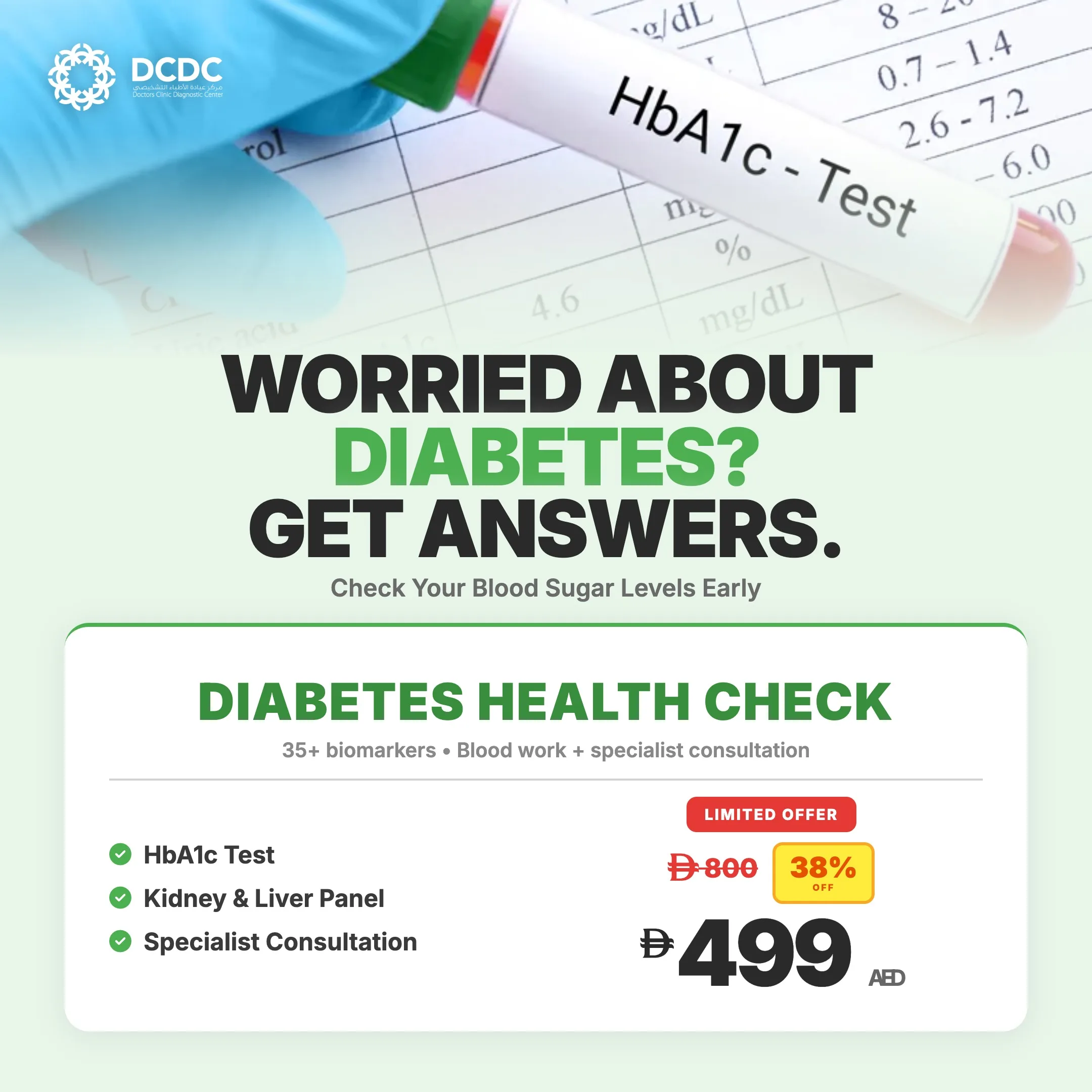
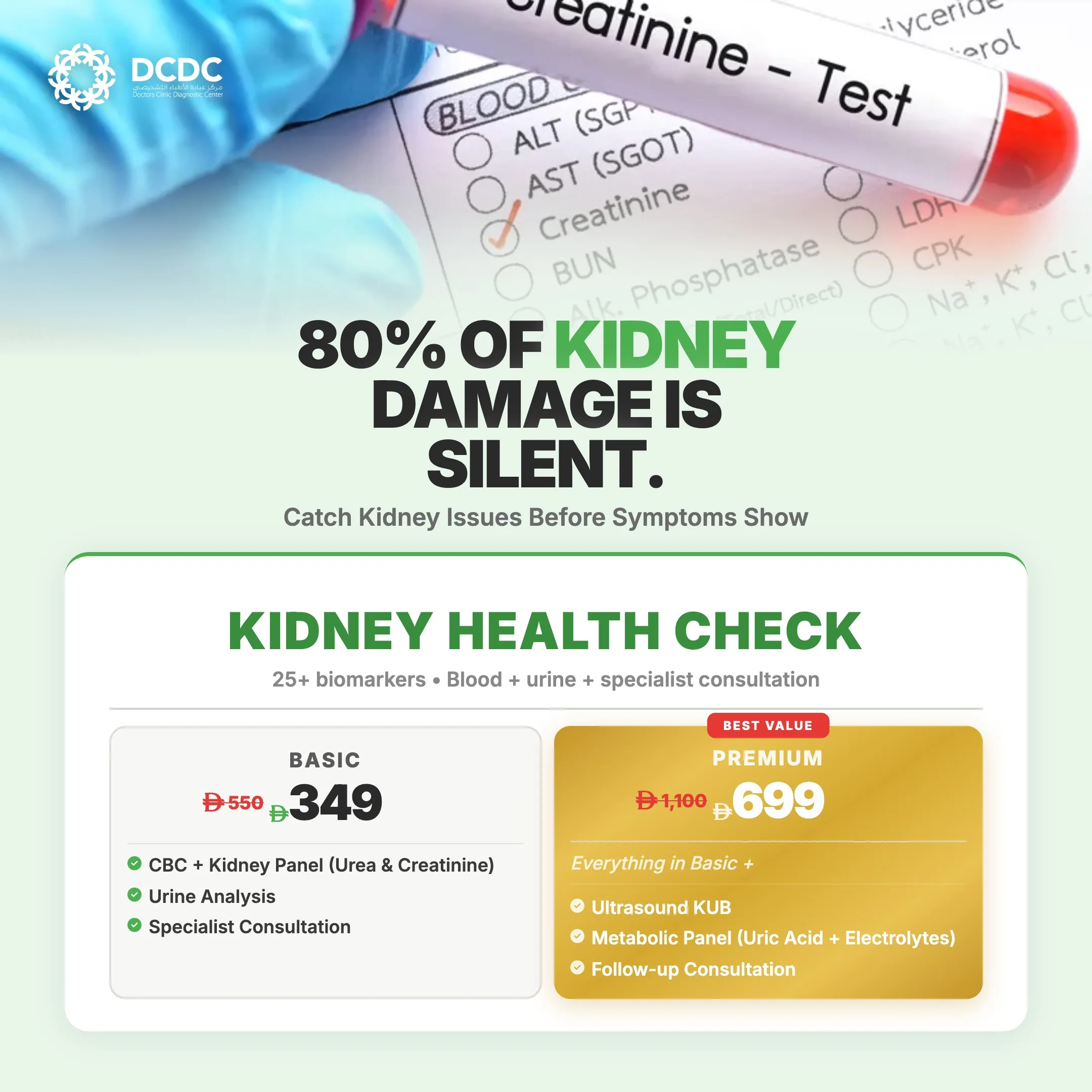
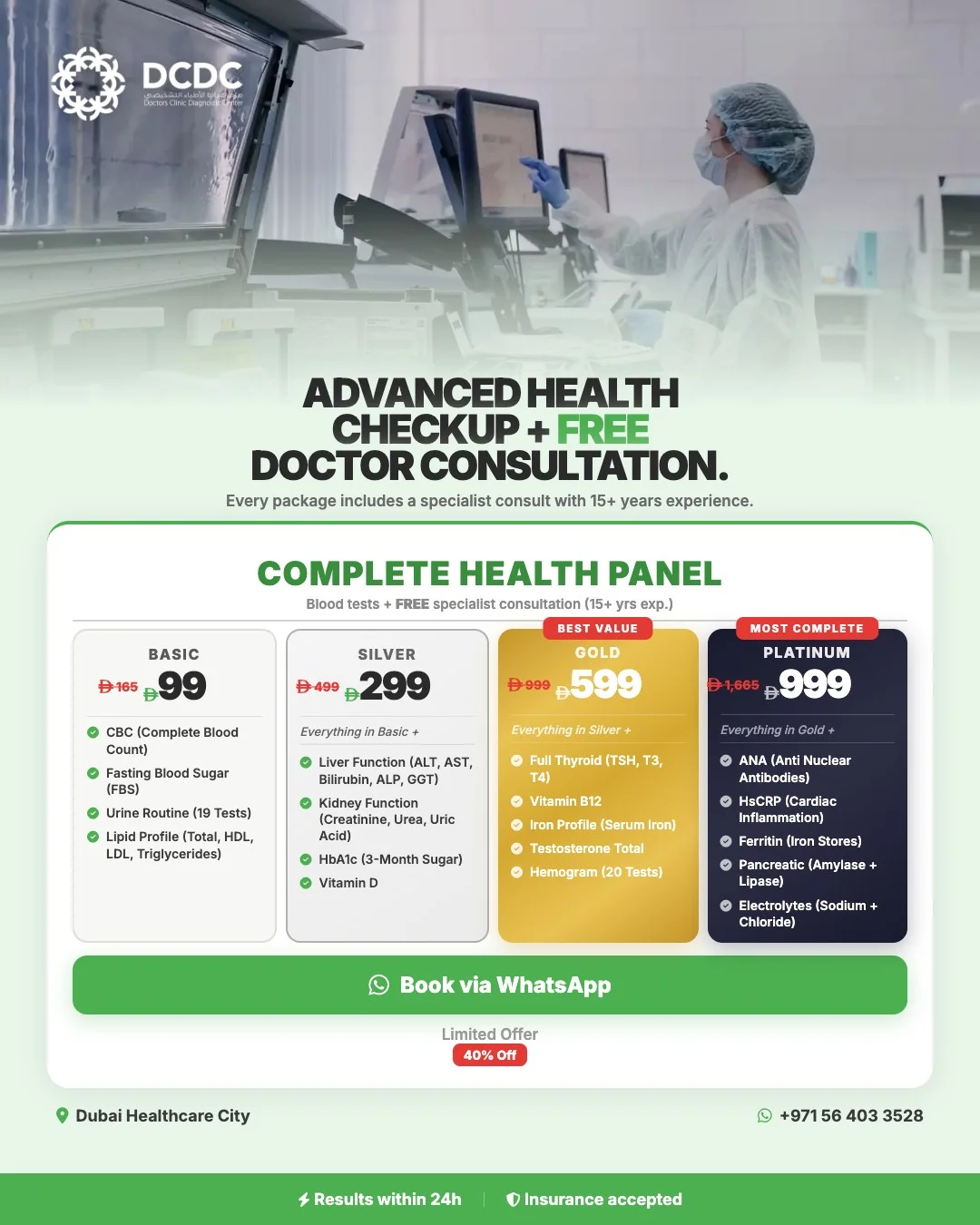
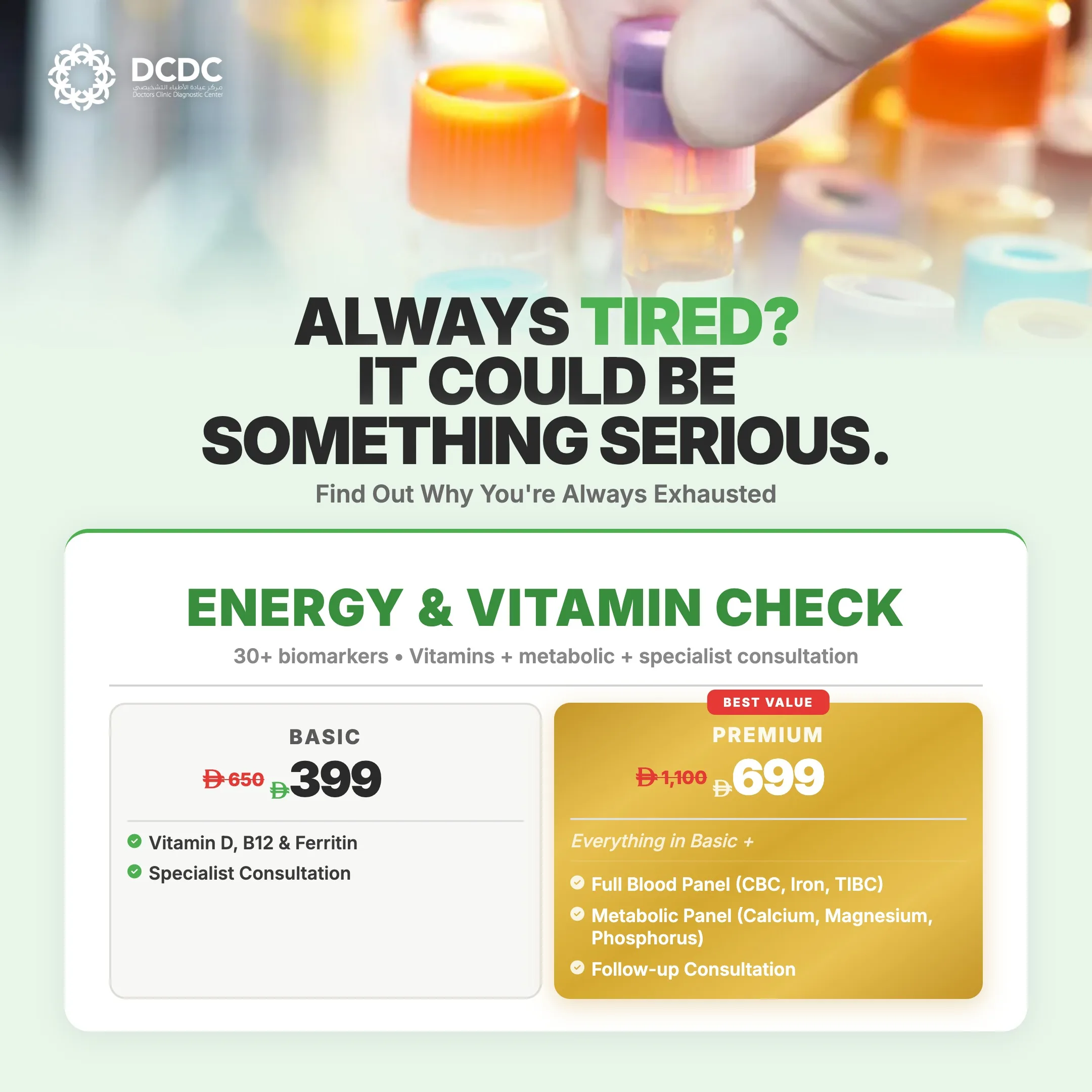
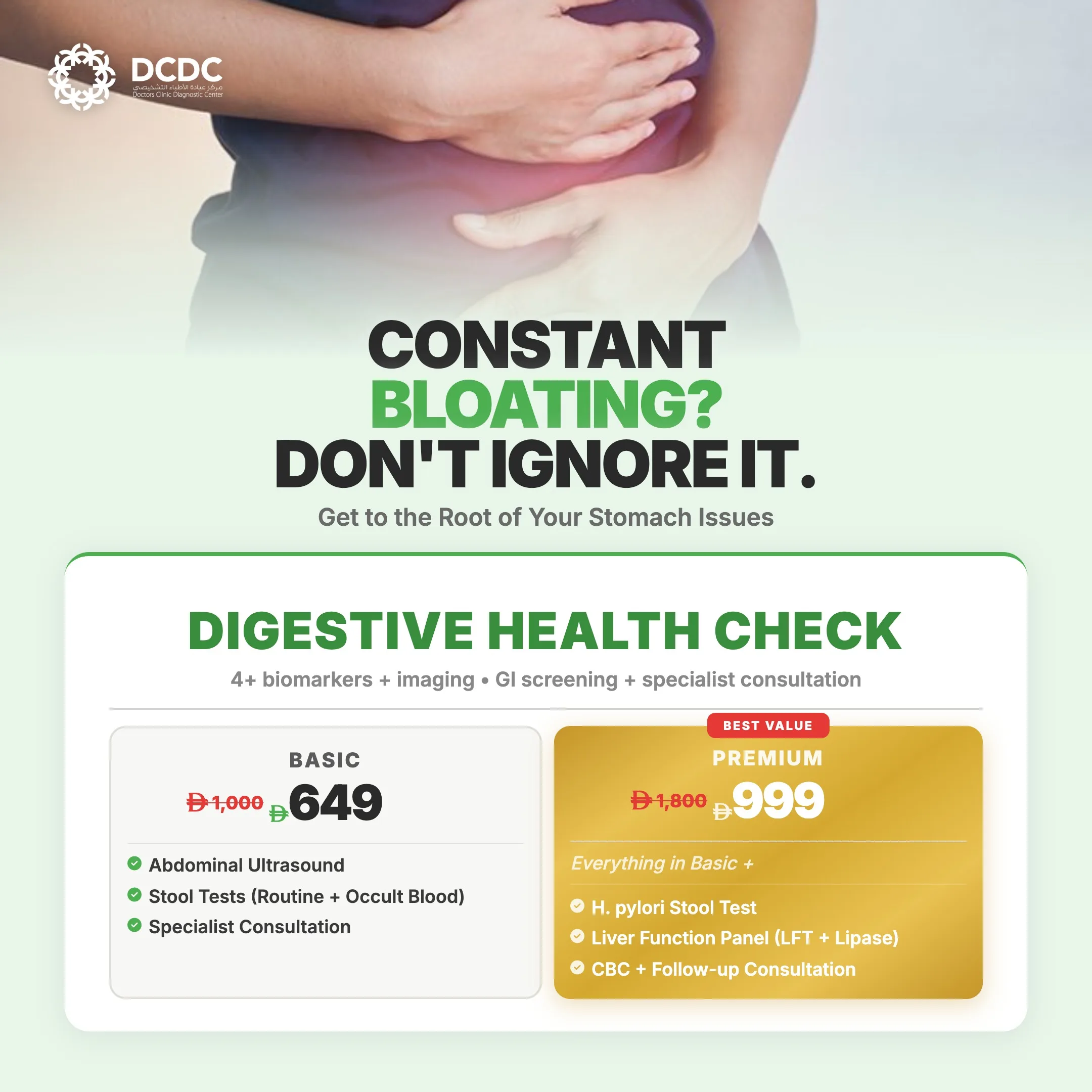
Health Screening Packages
Save with our bundled screening packages — specialist consultation included

How Much Does an Allergy Test Cost in Dubai?
Allergy test pricing in Dubai depends on the type of test, the number of allergens included in the panel, and whether the test is performed at a hospital, independent laboratory, or specialist clinic. Based on current market data for 2026, basic allergy blood tests start from AED 350, while comprehensive panels testing for 40 or more allergens can cost from AED 1,500 to AED 2,500. Skin prick tests, where available, typically range from AED 500 to AED 1,200 depending on the number of allergens tested.
| Test Type | Estimated Cost (AED) | Number of Allergens | Results Timeline |
|---|---|---|---|
| Basic IgE Blood Panel (food or inhalant) | 350 - 800 | 10 - 20 allergens | 2 - 3 days |
| Comprehensive IgE Panel (food + inhalant) | 800 - 1,500 | 20 - 40 allergens | 2 - 3 days |
| Extended Allergy Panel (food + inhalant + drugs) | 1,500 - 2,500 | 40 - 80+ allergens | 3 - 5 days |
| Skin Prick Test | 500 - 1,200 | 20 - 50 allergens | Same day (15 - 20 mins) |
| Patch Test (contact dermatitis) | 600 - 1,500 | 25 - 80 substances | 48 - 96 hours |
| Total IgE (screening only) | 100 - 300 | N/A (overall level) | 1 - 2 days |
| ENT or Allergist Consultation | 300 - 600 | N/A | Same day |
Prices are approximate based on Dubai market rates for 2026. Use "from AED" as minimum estimates. Actual costs vary by facility, panel size, and insurance coverage.
At DCDC, allergy testing starts from AED 350 for targeted IgE blood panels. Our pricing includes the blood draw, laboratory analysis at our on-site MOHAP-licensed lab, and a detailed report identifying each allergen tested along with its IgE level classification. Because our laboratory operates within the clinic in Dubai Healthcare City, there are no additional sample transport fees or facility surcharges. We also offer direct billing with over 20 insurance providers including Daman, AXA, Bupa, MetLife, and Cigna, which means many patients pay nothing out of pocket when the test is ordered by their physician.
Types of Allergy Tests Available in Dubai
Understanding the differences between allergy test types helps you choose the right option for your symptoms and budget. Each method has specific advantages, preparation requirements, and cost implications. The three primary categories are blood-based IgE testing, skin prick testing, and patch testing for contact allergies.
Blood IgE Testing (Specific IgE Panels)
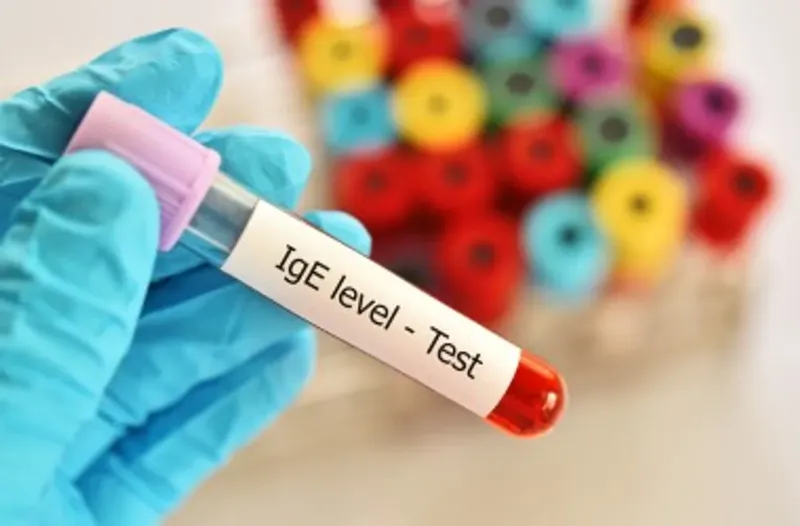
Blood-based specific IgE testing is the most commonly used method at DCDC and across Dubai clinics. A small venous blood sample is drawn from your arm and analysed in the laboratory for antibodies (immunoglobulin E) against specific allergens. Each allergen tested receives a numerical IgE level, typically reported on a scale from Class 0 (no detectable allergy) to Class 6 (very high allergy). This method can test for dozens of allergens from a single blood draw, making it efficient and cost-effective for comprehensive screening.
The key advantage of blood IgE testing is that it does not require you to stop taking antihistamines or other allergy medications before the test. It is also safe for patients with severe eczema, a history of anaphylaxis, or those who cannot tolerate skin testing. Results are typically available within 2 to 3 days. The main limitation is that blood tests measure sensitisation rather than clinical allergy, meaning a positive result indicates your immune system produces IgE against that allergen, but it does not guarantee you will experience symptoms upon exposure.
Skin Prick Testing
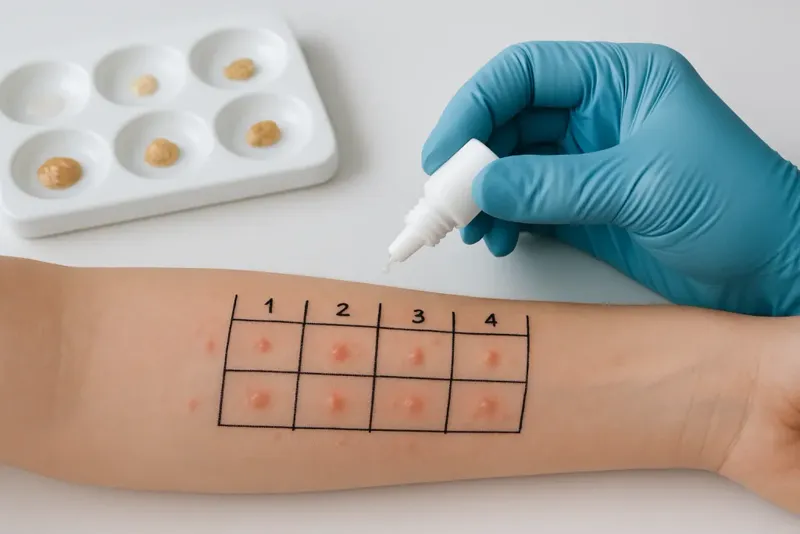
Skin prick testing involves placing small drops of allergen extracts on the forearm or back and gently pricking the skin beneath each drop. If you are allergic, a raised, itchy bump (wheal) appears within 15 to 20 minutes. This method provides immediate results and is considered the gold standard for diagnosing IgE-mediated allergies to inhalants and some foods. Costs range from AED 500 to AED 1,200 in Dubai depending on the number of allergens tested.
The critical preparation requirement for skin prick testing is stopping antihistamines 5 to 7 days before the appointment, as these medications suppress the skin reaction and can produce false-negative results. Certain other medications including some antidepressants and acid reflux drugs may also need to be paused. Skin prick tests are not recommended for patients with severe eczema covering the test area, those with a history of severe anaphylaxis, or patients who cannot discontinue antihistamines.
Patch Testing (Contact Allergy)
Patch testing is specifically designed to diagnose contact dermatitis, which is a delayed allergic reaction caused by substances that touch the skin such as nickel, fragrances, preservatives, rubber chemicals, and hair dyes. Small adhesive patches containing suspected allergens are applied to the back and left in place for 48 hours. The skin is then checked for reactions at 48 and 96 hours. Costs range from AED 600 to AED 1,500 in Dubai. Patch testing identifies Type IV (delayed) hypersensitivity reactions, which are different from the Type I (immediate) reactions detected by IgE blood tests and skin prick tests.
Allergy Test Cost Comparison: Blood IgE vs. Skin Prick vs. Patch Test
Choosing between test types involves balancing cost, convenience, accuracy, and your specific clinical situation. The following comparison table outlines the key differences to help you make an informed decision with your doctor. For a deeper dive into IgE-based testing specifically, see our detailed guide on IgE allergy testing in Dubai.
| Feature | Blood IgE Test | Skin Prick Test | Patch Test |
|---|---|---|---|
| Cost Range (AED) | 350 - 2,500 | 500 - 1,200 | 600 - 1,500 |
| Results Timeline | 2 - 3 days | 15 - 20 minutes | 48 - 96 hours |
| Number of Allergens | 10 - 80+ | 20 - 50 | 25 - 80 |
| Medication Restrictions | None | Stop antihistamines 5-7 days before | Minimal |
| Best For | Food, inhalant, drug allergies | Inhalant and some food allergies | Contact dermatitis only |
| Risk of Allergic Reaction | None (blood draw only) | Minimal (mild local reactions) | Mild skin irritation possible |
| Safe for Severe Eczema | Yes | No (needs clear skin) | No (needs clear back skin) |
| Suitable for Children | Yes (any age) | Yes (typically age 3+) | Yes (typically age 6+) |
| Available at DCDC | Yes | Referral if needed | Referral if needed |
Comparison based on typical Dubai clinic offerings for 2026. DCDC specialises in blood-based IgE panels for comprehensive allergen screening.
According to Dr. Yousra Mohamed, MBBS, Arab Board (ORL), MRCS, and ENT specialist at DCDC, many patients in Dubai mistake allergy symptoms for recurring colds or chronic sinus infections. "I frequently see patients who have been taking cold medications for months without improvement, only to discover through IgE testing that they have specific allergies to dust mites, mould spores, or even certain foods. Proper allergy testing identifies the exact triggers so we can develop a targeted treatment plan rather than simply managing symptoms. In Dubai's environment, where sand, dust, and air-conditioning create a unique set of airborne allergens, accurate diagnosis is especially important."
Factors That Affect Allergy Test Cost in Dubai
Several variables determine how much you will pay for allergy testing in Dubai. Understanding these factors helps you plan your budget and choose the most cost-effective approach for your situation.
Number of Allergens Tested
The single biggest factor affecting allergy test cost is the number of allergens included in your panel. A basic panel testing 10 to 20 common allergens starts from AED 350, while an extended panel covering 40 to 80 allergens can cost from AED 1,500 to AED 2,500. Your doctor will recommend the appropriate panel size based on your symptoms, medical history, and suspected triggers. In many cases, a targeted panel focusing on the most likely allergen categories is more clinically useful and more affordable than testing for everything at once.
Type of Allergens Screened
Allergy panels are typically categorised by allergen type. Inhalant panels cover airborne triggers such as dust mites, pollen, mould, and pet dander. Food panels screen for common dietary allergens including milk, eggs, wheat, nuts, seafood, and soy. Drug allergy panels test reactions to medications like penicillin, aspirin, and local anaesthetics. Mixed panels combining food and inhalant allergens offer better value per allergen tested than ordering separate panels. For families concerned about food allergies in younger patients, our guide on child food allergy signs in Dubai provides detailed symptom guidance.
Facility Type and Location
Independent diagnostic laboratories generally offer lower prices for standalone allergy panels, typically from AED 350 to AED 1,000. Hospital-based laboratories and specialist clinics in healthcare free zones like Dubai Healthcare City may charge from AED 500 to AED 2,500 but typically include specialist interpretation, comprehensive reporting, and immediate access to follow-up care. At DCDC, your ENT specialist can review results and recommend treatment during the same visit or at a follow-up appointment, saving you the time and cost of a separate consultation.
Insurance Coverage
Insurance coverage is the most impactful factor in reducing your out-of-pocket allergy test cost. Most employer-sponsored health insurance plans in Dubai cover diagnostic allergy testing when ordered by a licensed physician for a medically indicated reason such as chronic rhinitis, suspected food allergy, or recurrent urticaria. Premium plans from major providers typically cover the full cost with no co-payment, while basic plans may require a co-pay or have a cap on diagnostic test coverage.
Insurance Coverage for Allergy Testing in Dubai
Understanding your insurance benefits can significantly reduce or eliminate your out-of-pocket expense for allergy testing. Under DHA regulations, all employer-sponsored health insurance plans in Dubai must cover medically necessary diagnostic tests, and allergy testing generally qualifies when ordered for conditions like allergic rhinitis, asthma, food allergy, or eczema.
Insurance Providers That Commonly Cover Allergy Testing
- Daman (National Health Insurance Company) - covers allergy blood panels under outpatient diagnostic benefits when referred by a specialist
- AXA - most enhanced plans include allergy diagnostics including comprehensive IgE panels
- Bupa Global - comprehensive plans cover allergology consultations and IgE blood testing
- MetLife - enhanced and platinum plans typically include allergy diagnostics
- Cigna - international and global plans cover allergy testing as part of diagnostic workups
- NAS (NextCare), ADNIC, Oman Insurance, and Orient Insurance - coverage varies by plan tier; enhanced plans typically include allergy testing
At DCDC, we offer direct billing with more than 20 insurance providers, which means you do not need to pay upfront and file a claim later in most cases. Our insurance coordination team verifies your coverage before your appointment so you know your expected out-of-pocket cost in advance. If your plan requires pre-authorisation for diagnostic testing, we manage that process on your behalf.
Self-Pay Options
If your insurance does not cover allergy testing or you prefer to pay out of pocket, DCDC offers transparent pricing with no hidden fees. Self-pay patients benefit from the same comprehensive testing and specialist interpretation as insured patients. Our basic IgE panels start from AED 350, and bundling a consultation with a panel test is often more cost-effective than separating the two appointments.
Check Your Allergy Test Coverage at DCDC
Our insurance team can verify your coverage for allergy testing and IgE blood panels before your visit. Contact us to confirm your benefits and book your appointment at Dubai Healthcare City.
Common Allergies in Dubai: Why Testing Matters Here
Dubai's unique climate and urban environment create a distinctive set of allergy triggers that differ significantly from those found in temperate Western countries. Understanding these local factors explains why so many Dubai residents experience persistent allergy symptoms and why targeted testing is essential for effective management. For a comprehensive overview of allergy diagnosis and management, see our complete allergy testing guide for Dubai.
Dust and Sand Allergies
Desert dust is one of the most common allergy triggers in Dubai. Fine sand particles and airborne dust from construction sites, desert winds (shamal), and unpaved areas carry allergens including dust mites, fungal spores, and mineral particles. During sandstorm events, particulate matter concentrations can spike dramatically, triggering acute allergic rhinitis, asthma exacerbations, and eye irritation in sensitised individuals. Dust mite allergy, specifically to Dermatophagoides pteronyssinus and Dermatophagoides farinae, is among the most frequently identified allergens in IgE panels performed in Dubai.
Air-Conditioning and Indoor Mould
Dubai's reliance on air conditioning for eight to ten months of the year creates indoor environments where mould thrives. Condensation in AC units, ducts, and around poorly sealed windows provides ideal conditions for mould growth, particularly Aspergillus, Alternaria, and Cladosporium species. Many patients who are symptom-free outdoors experience worsening nasal congestion, post-nasal drip, and coughing when spending extended periods in air-conditioned buildings. Allergy panels that include common mould species are particularly valuable for Dubai residents reporting indoor symptoms.
Pollen and Landscaping Allergens
While Dubai is a desert city, extensive urban landscaping with imported ornamental trees and plants introduces pollen allergens not naturally found in the region. Date palms, Prosopis (mesquite), bermuda grass, and imported European species all contribute to a year-round pollen calendar that differs from traditional temperate allergy seasons. Residents who never had pollen allergies in their home countries may develop sensitivities to these unfamiliar plant species after living in Dubai for several years.
Pet Dander and Cockroach Allergens
With a large expatriate population that keeps cats, dogs, and other pets in apartment settings, pet dander is a significant indoor allergen in Dubai. Cat allergen (Fel d 1) and dog allergen (Can f 1) are commonly detected on comprehensive inhalant panels. Additionally, cockroach allergens are an underrecognised trigger in the UAE, with research showing that cockroach sensitisation is particularly prevalent in humid coastal environments. These allergens can contribute to year-round rhinitis and asthma symptoms that are often misattributed to recurring viral infections.
What to Expect at DCDC: Your Allergy Testing Experience
Getting an allergy test at Doctors Clinic Diagnostic Center is a straightforward process designed for convenience and accuracy. Here is what a typical visit looks like from booking to receiving your results.
Booking and Preparation
You can book your allergy testing appointment through WhatsApp, phone, or our online booking system. Our allergy testing is blood-based (specific IgE), so no special preparation is required and you do not need to stop any medications, including antihistamines. Our team will confirm which panel is planned and provide any specific instructions when you book.
Arrival and Consultation
DCDC is located in Building 64, Block A, Al Razi Medical Complex, Dubai Healthcare City (DHCC). Free dedicated on-site parking is available for patients, and the clinic is easily accessible from Al Khail Road and Sheikh Zayed Road. Our hours are Saturday to Thursday 8 AM to 10 PM and Friday 9 AM to 9 PM. When you arrive, our reception team checks you in and the average wait time is just 15 minutes. Your ENT specialist will take a thorough history of your symptoms, review any previous allergy testing, and determine the most appropriate panel for your situation.
The Blood Draw
For IgE blood testing, a trained phlebotomist collects a small venous blood sample from your arm. The procedure takes less than five minutes and is no different from a standard blood test. The sample is processed at our on-site MOHAP-licensed laboratory, eliminating delays from external sample transport. The entire appointment, including the consultation and blood draw, typically takes 45 to 60 minutes.
Results and Follow-Up
Blood IgE panel results are typically available within 2 to 3 days. Your report will show each allergen tested along with its specific IgE level and classification (Class 0 through Class 6). Once results are ready, you can review them with Dr. Yousra Mohamed or another ENT specialist at DCDC during a follow-up appointment. Dr. Mohamed will interpret your results in the context of your symptoms, explain which allergens are clinically significant versus incidental findings, and recommend a treatment plan that may include allergen avoidance strategies, medication adjustments, or referral for immunotherapy. Results are also accessible through our patient portal.
Understanding Your Allergy Test Results
Interpreting allergy test results requires clinical expertise because a positive IgE result does not automatically mean you will experience symptoms upon exposure to that allergen. Your doctor correlates the laboratory findings with your clinical history to determine which allergens are truly causing your symptoms. If you are looking for specialist guidance on interpreting your results, our guide to finding an allergy specialist in Dubai can help.
IgE Level Classification
| IgE Class | IgE Level (kUA/L) | Interpretation |
|---|---|---|
| Class 0 | Below 0.35 | Negative - no detectable specific IgE |
| Class 1 | 0.35 - 0.70 | Low positive - equivocal, may or may not cause symptoms |
| Class 2 | 0.71 - 3.50 | Moderate positive - likely clinically relevant |
| Class 3 | 3.51 - 17.50 | High positive - strong sensitisation |
| Class 4 | 17.51 - 50.00 | Very high positive - significant allergy |
| Class 5 | 50.01 - 100.00 | Very high positive - strong clinical allergy |
| Class 6 | Above 100.00 | Extremely high - very strong allergy |
Based on standard ImmunoCAP specific IgE classification. Clinical significance should always be assessed by a qualified specialist in the context of your symptoms.
A Class 3 or higher result generally indicates clinically significant sensitisation, meaning the allergen is very likely contributing to your symptoms. However, Class 1 and Class 2 results require careful interpretation. A patient with a Class 2 result to cat dander who reports worsening symptoms around cats has a clinically meaningful allergy, while a patient with the same Class 2 result who has no symptoms around cats may simply be sensitised without clinical allergy. This is why specialist interpretation is a critical part of the testing process.
Total IgE vs. Specific IgE
A total IgE test measures the overall level of immunoglobulin E in your blood and costs from AED 100 to AED 300. While a high total IgE can suggest an allergic tendency, it is not diagnostic on its own because it does not identify which allergens are responsible. Specific IgE testing, which measures antibodies against individual allergens, is far more clinically useful and is the basis of the allergy panels offered at DCDC. Total IgE is sometimes ordered as a screening test, but a normal total IgE does not rule out specific allergies.
Allergy Testing for Children in Dubai
Children in Dubai are particularly susceptible to allergies due to early exposure to indoor allergens in air-conditioned environments and the multicultural dietary landscape that introduces diverse food allergens. Paediatric allergy testing follows the same IgE blood test methodology as adult testing and can be performed at any age. For very young children, the blood draw requires a smaller sample volume and is performed by experienced paediatric phlebotomists.
Common reasons for allergy testing in children include persistent nasal congestion or runny nose, recurrent ear infections, eczema or atopic dermatitis that does not respond to standard treatment, wheezing or asthma symptoms, suspected food allergies with symptoms like hives or vomiting after eating, and failure to thrive in infants with suspected food intolerances. For parents navigating food allergy concerns, our guide on child food allergy signs in Dubai provides comprehensive symptom checklists and when to seek testing.
The cost of paediatric allergy testing in Dubai is generally the same as adult testing, starting from AED 350 for basic panels. Some clinics offer child-specific panels that focus on the most common paediatric allergens such as cow's milk, egg, wheat, peanut, tree nuts, soy, and dust mites. At DCDC, our specialists work with parents to select the most appropriate and cost-effective panel based on the child's age, symptoms, and dietary history.
Food Allergy vs. Food Intolerance: Cost and Testing Differences
A common source of confusion and unnecessary spending is the difference between food allergy testing and food intolerance testing. True food allergies involve the immune system producing IgE antibodies against specific food proteins and can cause symptoms ranging from hives and swelling to life-threatening anaphylaxis. Food intolerances, such as lactose intolerance or sensitivity to certain food additives, involve different mechanisms that are not detected by IgE testing.
IgE-based food allergy panels at DCDC start from AED 350 and test for clinically validated allergens using medically accepted methodology. These tests are covered by most insurance plans. In contrast, IgG food sensitivity tests, which are widely marketed in Dubai, typically cost from AED 1,000 to AED 3,000 but are not recommended by major allergy organisations including the American Academy of Allergy, Asthma, and Immunology (AAAAI) or the European Academy of Allergy and Clinical Immunology (EAACI). The AAAAI has stated that IgG testing for food sensitivity has no clinical validity and should not be used to guide dietary elimination. For a more detailed comparison, see our guide on food intolerance testing in Dubai.
If you suspect a food intolerance rather than a true allergy, your doctor may recommend a structured elimination diet followed by supervised food challenges, hydrogen breath testing for lactose or fructose malabsorption, or coeliac disease screening through tTG-IgA blood testing. These approaches are evidence-based and more cost-effective than unvalidated IgG panels.
When Should You Get an Allergy Test in Dubai?
Allergy testing is recommended when symptoms are persistent, recurrent, or significantly impacting your quality of life. Many Dubai residents tolerate mild allergy symptoms for years before seeking testing, often assuming that their congestion or sneezing is just a normal response to the local environment. Testing is particularly valuable when symptoms do not respond to over-the-counter antihistamines, when you want to identify specific triggers to avoid, or when your doctor suspects allergies may be contributing to other conditions such as asthma, chronic sinusitis, or eczema. For information about sinus-related symptoms that may overlap with allergies, see our guide on sinusitis treatment in Dubai.
- You experience persistent sneezing, runny nose, or nasal congestion lasting more than four weeks that does not improve with standard cold medications
- You have recurring sinus infections (more than three per year) that may have an underlying allergic component
- You notice symptoms that worsen in specific environments, such as at home, at work, around pets, or during certain seasons or weather conditions
- You have eczema, hives, or skin rashes that appear without clear explanation or do not respond to topical treatment
- You experience digestive symptoms such as cramping, bloating, or diarrhoea after eating specific foods
- You have asthma that is poorly controlled despite appropriate inhaler use, suggesting unidentified allergic triggers
- You have developed new symptoms since moving to Dubai, suggesting sensitisation to local environmental allergens
- Your child has recurrent ear infections, persistent nasal congestion, or suspected food allergies
- You want to identify triggers before starting immunotherapy (allergy shots or sublingual therapy)
- You have experienced a suspected allergic reaction to a medication and need to confirm which drug caused the reaction
Dr. Yousra Mohamed notes, "Patients who relocate to Dubai from cooler, less dusty climates often develop allergy symptoms within their first one to two years here. The combination of year-round air conditioning, desert dust, and exposure to new pollen types means their immune system encounters allergens it has never faced before. I recommend testing for anyone whose symptoms have persisted for more than a month, as identifying the specific triggers early allows us to implement avoidance strategies and appropriate treatment before the condition becomes chronic."
Book Your Allergy Test at DCDC Dubai Healthcare City
Get tested for food, environmental, and drug allergies with our comprehensive IgE blood panels starting from AED 350. Our ENT specialists will interpret your results and create a personalised treatment plan. View our allergy testing services or contact us to schedule.
How to Reduce Your Allergy Test Cost in Dubai
While allergy testing is an investment in your health, there are several strategies to minimise your out-of-pocket costs without compromising the quality or completeness of your evaluation.
- Use your insurance. Verify your allergy testing coverage before your appointment. DCDC's insurance team can check your benefits and handle pre-authorisation if required. Most enhanced plans cover allergy blood panels in full when ordered by a specialist.
- Start with a targeted panel. Rather than ordering the most extensive panel available, work with your doctor to select allergens most relevant to your symptoms. A targeted panel of 10 to 20 allergens costs from AED 350 to AED 800 and often identifies the key triggers without the expense of testing 80 allergens.
- Combine with a consultation. Booking your allergy panel at the same visit as your ENT consultation can reduce overall costs by eliminating a separate follow-up appointment for the blood draw.
- Avoid unvalidated tests. Skip IgG food sensitivity tests that cost from AED 1,000 to AED 3,000 but lack clinical validity. Spend your budget on evidence-based IgE testing recommended by international allergy organisations.
- Bundle tests. If you need allergy testing alongside other blood work (such as a complete blood count or thyroid panel), combining tests in a single visit reduces phlebotomy fees and may qualify for package pricing.
- Choose a clinic with an on-site lab. Facilities like DCDC that process samples in-house eliminate external laboratory transport fees, which can add AED 50 to AED 150 to your total cost at some clinics.
Allergy Treatment Options After Testing
Allergy testing is the diagnostic foundation, but the real value comes from the treatment plan your doctor develops based on your results. Treatment options fall into three main categories: allergen avoidance, pharmacotherapy, and immunotherapy. Your ENT specialist at DCDC will recommend the most appropriate approach or combination based on your specific allergen profile, symptom severity, and lifestyle. For patients whose allergy symptoms predominantly affect the nose and sinuses, our ENT doctor guide for Dubai provides comprehensive information about specialist care options.
Allergen Avoidance
Once testing identifies your specific triggers, targeted avoidance strategies can dramatically reduce symptoms. For dust mite allergies, this includes using allergen-proof mattress and pillow covers, washing bedding weekly in hot water, maintaining indoor humidity below 50 percent, and using HEPA-filtered air purifiers. For mould allergies, addressing AC maintenance, improving ventilation in bathrooms and kitchens, and using dehumidifiers in humid areas of your home are key interventions. For pet allergies, strategies range from keeping pets out of bedrooms to using air purifiers with HEPA filtration.
Medication Management
Pharmacotherapy for allergies includes second-generation antihistamines such as cetirizine, loratadine, and fexofenadine for general symptom relief. Intranasal corticosteroid sprays like fluticasone and mometasone are the most effective treatment for allergic rhinitis. Leukotriene receptor antagonists such as montelukast may be added for patients with concurrent asthma. For allergic eye symptoms, antihistamine or mast cell stabiliser eye drops provide targeted relief. Your specialist will tailor medication choices based on your allergen profile and symptom patterns.
Immunotherapy
For patients with significant allergies that are not adequately controlled by avoidance and medications, allergen immunotherapy offers a disease-modifying treatment that can reduce sensitivity over time. Subcutaneous immunotherapy (allergy shots) involves regular injections of gradually increasing allergen doses over three to five years. Sublingual immunotherapy (under-the-tongue drops or tablets) is a convenient alternative for certain allergens. Immunotherapy is most effective for dust mite, pollen, and insect venom allergies, and detailed allergy test results are essential for formulating the correct immunotherapy extract.
Why Choose DCDC for Allergy Testing in Dubai?
Doctors Clinic Diagnostic Center has established itself as a trusted choice for allergy diagnostics in Dubai Healthcare City, combining specialist ENT expertise with on-site laboratory capabilities for a seamless testing experience.
- MOHAP-licensed facility with a 4.8 out of 5 Google rating from over 1,000 verified patient reviews and a 98 percent patient satisfaction rate
- On-site laboratory for same-facility sample processing with results in 2 to 3 days, no external transport delays
- Expert ENT specialists including Dr. Yousra Mohamed (MBBS, Arab Board ORL, MRCS) for specialist interpretation and personalised treatment planning
- Comprehensive IgE panels covering food allergens, environmental allergens (dust mites, pollen, pet dander, mould), and drug allergies
- Competitive pricing starting from AED 350 with transparent fees and no hidden charges
- Direct insurance billing with 20+ insurance partners including Daman, AXA, Bupa, MetLife, and Cigna
- Convenient location in Building 64, Block A, Al Razi Medical Complex, DHCC, with free dedicated on-site parking
- Extended hours Saturday to Thursday 8 AM to 10 PM, Friday 9 AM to 9 PM
- Short wait times averaging just 15 minutes from arrival to consultation
Related Services at DCDC
Expert care and advanced diagnostics at Dubai Healthcare City
Frequently Asked Questions
Final Thoughts on Allergy Test Cost in Dubai
Allergy testing is one of the most impactful diagnostic investments you can make for your long-term health and quality of life in Dubai. Starting from AED 350 for a basic IgE blood panel, the cost is modest compared to the ongoing expense of treating symptoms without knowing your specific triggers. Whether you are dealing with persistent nasal congestion, unexplained skin reactions, suspected food allergies, or worsening asthma symptoms, a properly selected allergy panel provides the diagnostic clarity needed for effective, targeted treatment.
At Doctors Clinic Diagnostic Center in Dubai Healthcare City, our ENT specialists and on-site laboratory make allergy testing accessible and efficient. Dr. Yousra Mohamed and our allergy care team provide expert interpretation of your results, personalised avoidance strategies, and evidence-based treatment recommendations. With direct billing for over 20 insurance providers, competitive self-pay pricing, and results within 2 to 3 days, we are committed to helping Dubai residents identify their allergy triggers and breathe easier. Contact us today to verify your insurance coverage and book your allergy testing appointment.
Sources & References
This article was reviewed by our medical team and references the following sources:
- ACAAI: Allergy Testing Overview
- AAAAI: Allergy Testing - What You Should Know
- Mayo Clinic: Allergy Skin Tests
- NHS: Allergies - Diagnosis
- WHO: Allergic Rhinitis and Its Impact on Asthma (ARIA) Guidelines
- EAACI: Position Paper on IgG4 Testing for Food Sensitivity
Medical content on this site is reviewed by DHA-licensed physicians. See our editorial policy for more information.

Written by
Dr. Yousra Mohamed
ENT Specialist
MBBS, Arab Board (ORL), MRCS
Dr. Yousra Mohamed is an ENT Specialist at Doctors Clinic Diagnostic Center (DCDC) in Dubai Healthcare City.
Related Articles

Complete Allergy Testing Guide Dubai
IgE Allergy Test: What to Know
Food Intolerance Test Dubai

Child Food Allergy Signs

ENT Doctor Guide Dubai
More in General Health
Epilepsy Treatment Dubai: Symptoms & Care (2026)
Read MoreFood Allergy vs Food Intolerance Dubai (2026)
Read More
Pneumonia vs Flu Dubai: Key Differences (2026)
Read More
Swollen Lymph Nodes Dubai: When to Worry (2026)
Read MoreFlu vs Cold Dubai: How to Tell the Difference (2026)
Read More
Sleep Study Cost Dubai: Tests & Pricing (2026)
Read More© 2026 Doctors Clinic Diagnostic Center (DCDC), Dubai Healthcare City. Originally published at https://doctorsclinicdubai.ae/blog/allergy-test-cost-dubai. All rights reserved. Unauthorized reproduction is prohibited.