Key Takeaways
- Most UAE health insurance plans reset on December 31 or your policy anniversary, and unused preventive benefits do not carry over
- Routine screening such as blood panels, cholesterol, diabetes and thyroid tests is often covered, but coverage depends on your specific plan
- Your ideal test list depends on your age, sex and family history, so use the checklist by decade as a starting point
- Check your network, co-payment and pre-authorization rules before you book, or let the clinic verify them for you
- DCDC offers direct billing with 20+ insurers and handles pre-authorization, so there is no pay-and-claim process for covered services
- Book in October or November to leave time for results and follow-up before your policy resets
Every year, a large share of the health benefits that UAE residents pay for through their premiums goes unused and expires when the policy resets. At Doctors Clinic Diagnostic Center (DCDC) in Dubai Healthcare City, we see people realise in December that they could have had a full preventive screening at little or no cost, if only they had booked earlier. This guide explains how insurance resets work in Dubai, which tests plans commonly cover, and how to use your benefits before they disappear.
Whether you are covered by an Essential Benefits Plan, an enhanced employer policy or an individual plan, the principle is the same: benefits are tied to a policy year. Use them within that year, or lose them. Below you will find a practical, step-by-step approach written by a DCDC general practitioner, with tables you can take to your appointment.
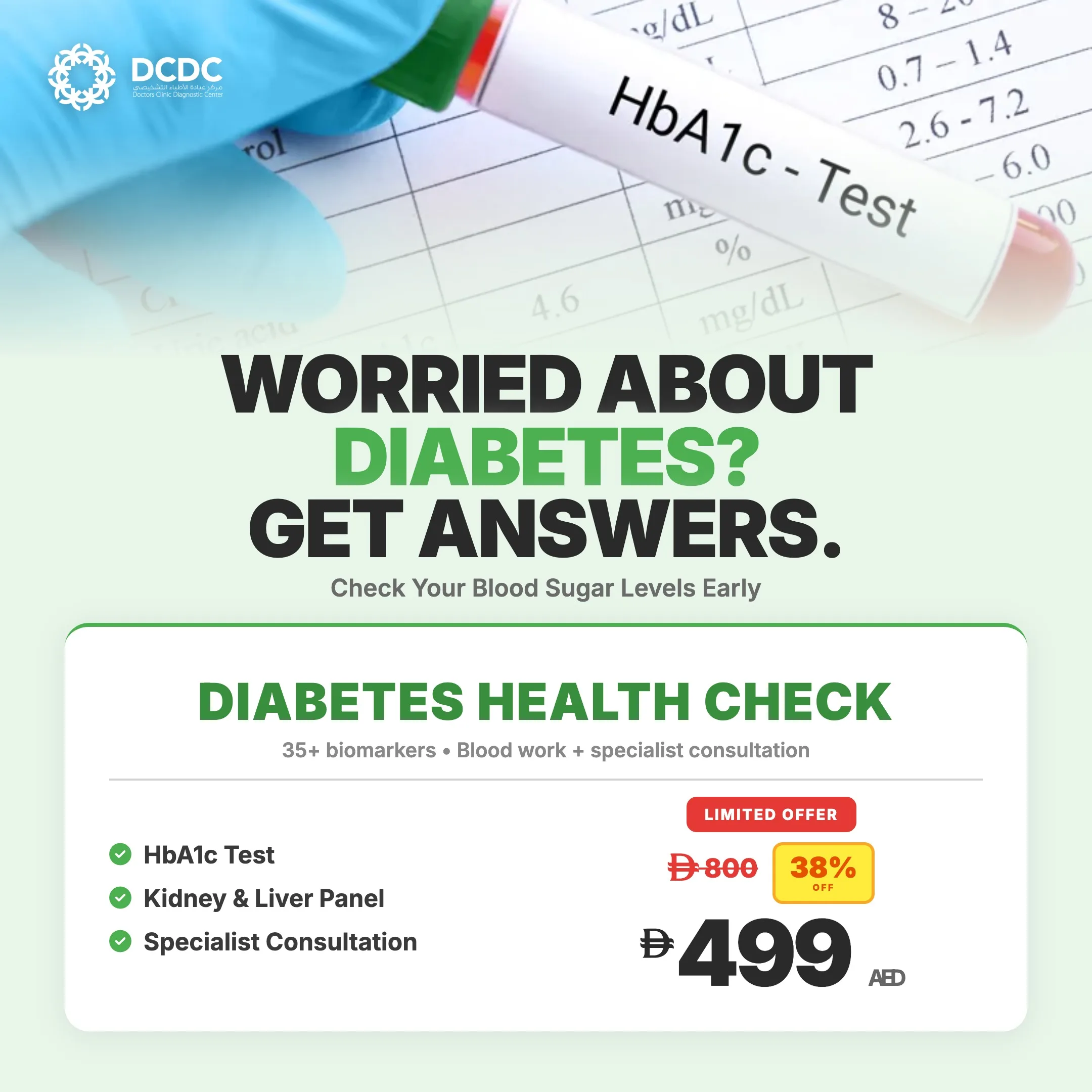
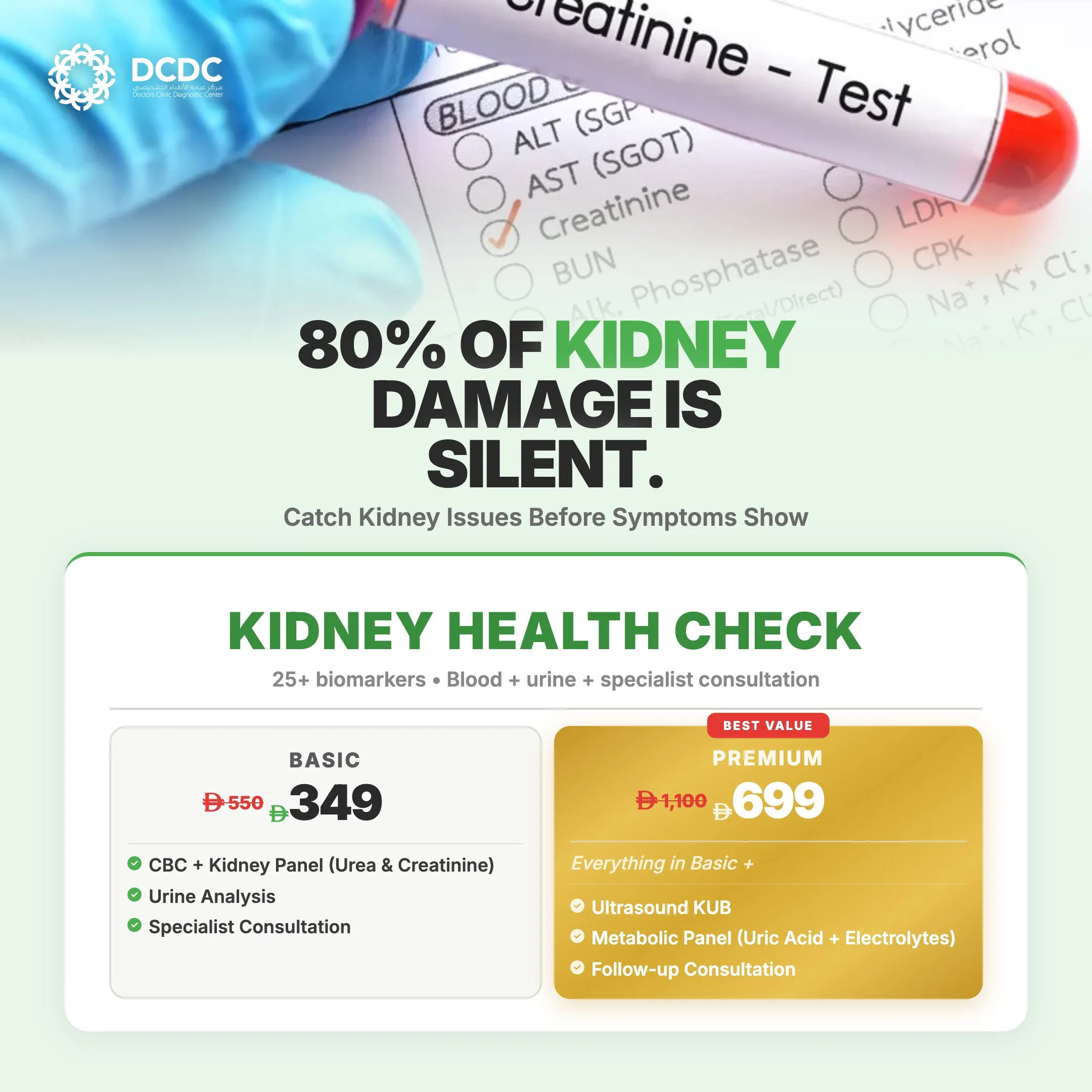
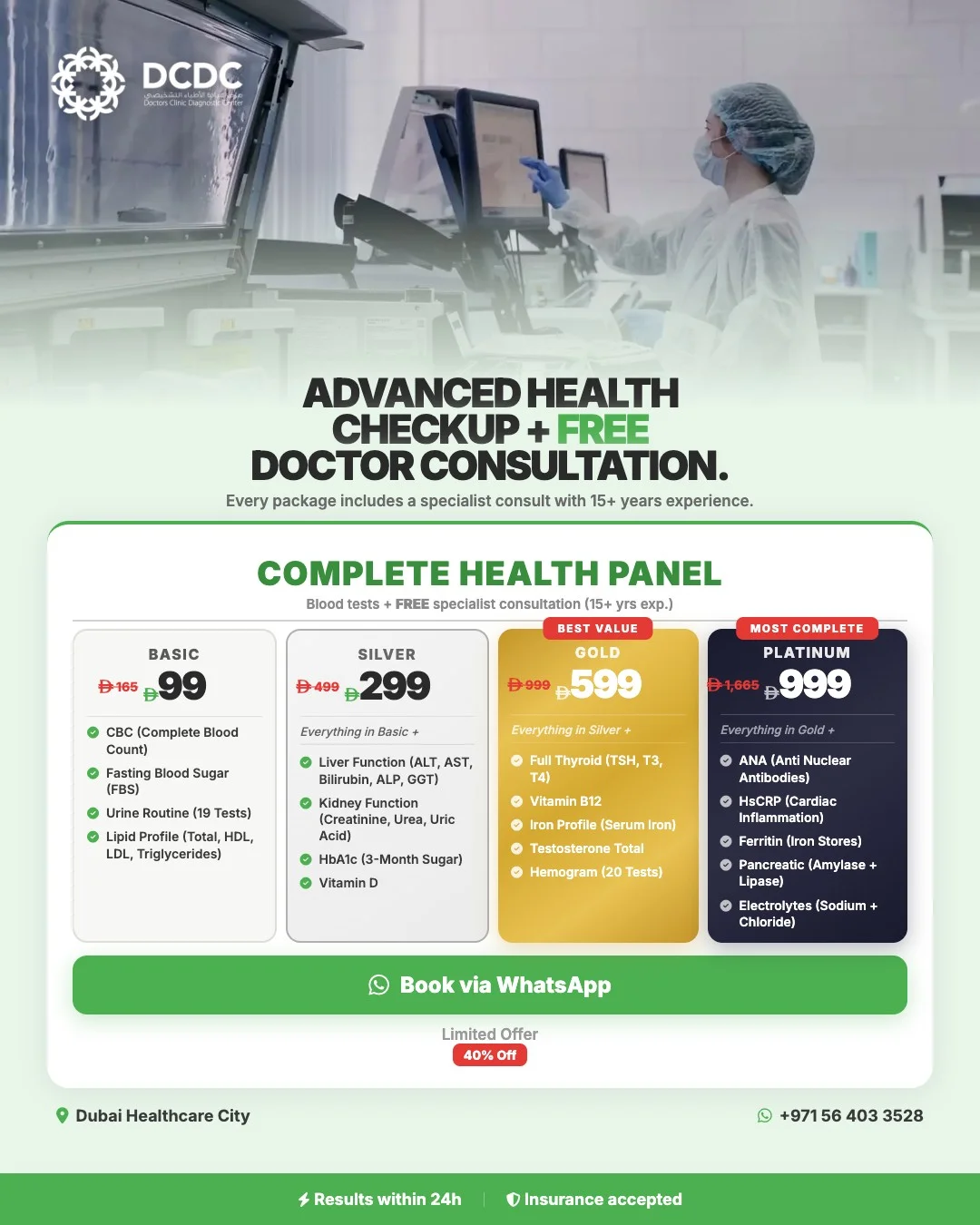
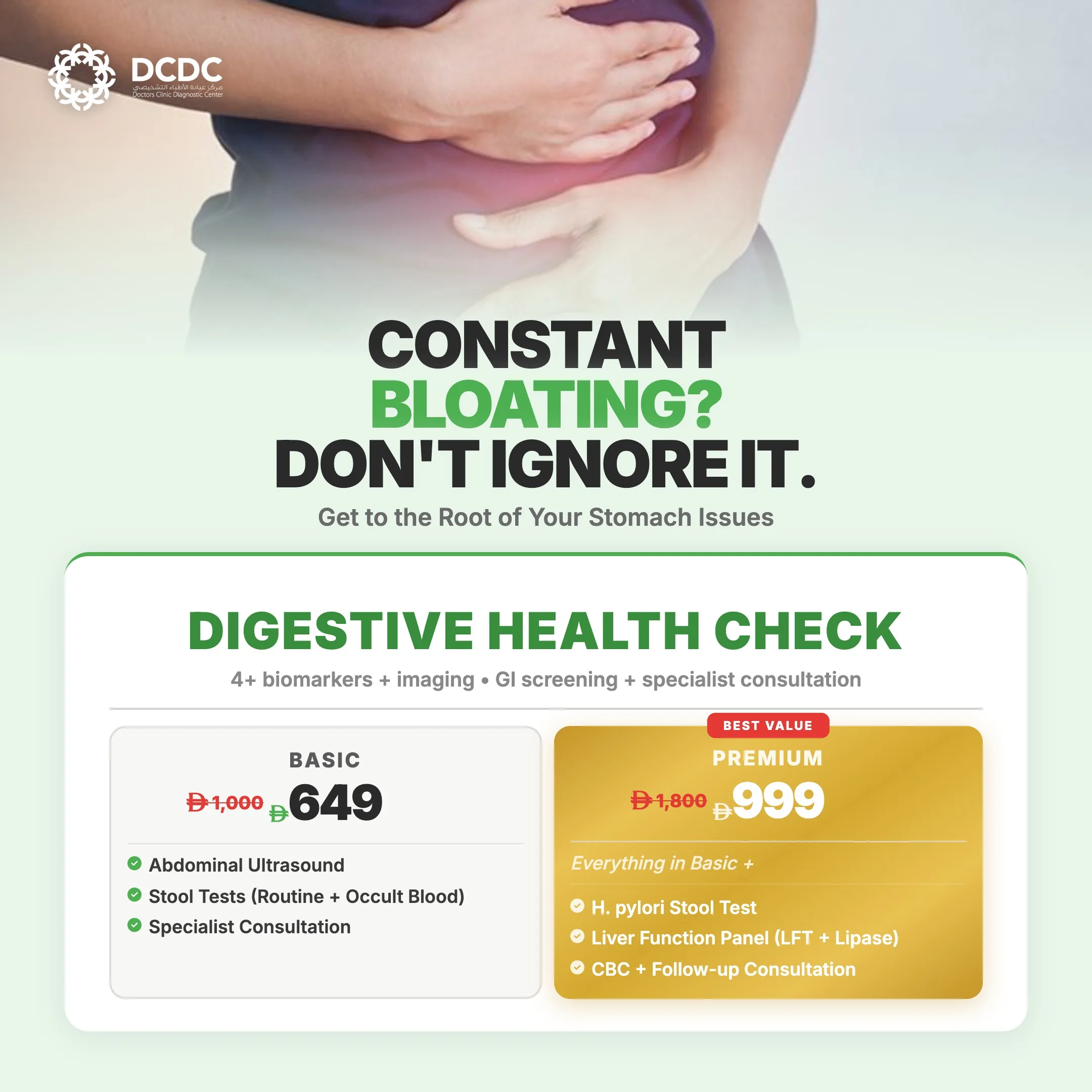
Health Screening Packages
Save with our bundled screening packages — specialist consultation included


Why Your Insurance Benefits Expire
Almost every health insurance policy in the UAE runs on a fixed twelve-month cycle. For many residents that cycle follows the calendar year and ends on December 31. For others, especially people covered through an employer, it ends on the policy anniversary, which could be any month. Either way, when the cycle ends, the annual limits on your plan reset to zero. Anything you did not use in that period does not carry over.
This is what people mean by "use it or lose it". Your insurer does not refund the unused portion of your annual limit, and it does not roll forward into next year. If your plan covers a preventive consultation and a set of baseline lab tests and you never book them, that entitlement simply lapses when the policy renews.
Common policy structures in Dubai
Health insurance is mandatory for everyone living in the emirate under Dubai's health insurance law, which is overseen by the Dubai Health Authority (DHA). In practice, most residents fall into one of these groups:
- Essential Benefits Plan (EBP): The DHA-regulated minimum plan, designed mainly for lower-income employees. It has an annual limit, set co-payments and a defined list of covered services. Preventive options are narrower than on richer plans, so check what is included before you assume anything.
- Enhanced and premium plans: Employer-provided or individually purchased plans with higher annual limits, wider provider networks and, often, a defined allowance for wellness or preventive care.
- Corporate group policies: Plans negotiated by an employer. Benefits vary a lot between companies, and the renewal date follows the company contract rather than January 1.
- International and individual plans: Cover bought directly from an insurer. Some include an annual preventive benefit that is separate from the main limit.
Because every plan is built differently, the right question is not "does my insurance cover screening?" but "which preventive benefits does my specific plan include, and when do they reset?" The sections below show you how to find that out and what to do with the answer.
Why year-end matters even if your renewal is mid-year
If your policy renews in, say, March, you still have a reason to plan around the end of the year: many employers renew group policies in January, and visa or job changes can alter your plan at short notice. A preventive visit completed in the fourth quarter gives you results and a clear picture of your health before any change in cover. If you are not sure of your renewal date, it is printed on your policy schedule and digital insurance card.
Read our companion guide on the annual check-up guide with tests by age for the medical reasoning behind each screening, and the cost breakdown for preventive packages in Dubai if you also want to compare self-pay prices.
Tests and Screenings Covered by Most Insurance Plans
Coverage differs by insurer and plan tier, so treat the table below as a guide to what is often included in preventive or wellness benefits, not a guarantee. Some items are covered only when your doctor documents a clinical reason, and others need pre-authorization. Patients with all insurance providers are welcome at DCDC, and our team will confirm what your own plan allows before you are seen.
| Screening or Test | What It Checks | Who It Is Usually For | Typical Coverage Notes |
|---|---|---|---|
| Complete blood count (CBC) | Anemia, infection, blood disorders | All adults | Commonly covered with a GP consultation |
| Lipid profile (cholesterol) | LDL, HDL, triglycerides, heart disease risk | Adults from 20, earlier with family history | Often covered as preventive or when risk factors are recorded |
| Fasting glucose / HbA1c | Pre-diabetes and diabetes | Adults over 30, or younger with high BMI or family history | Often covered; frequency limits may apply |
| Thyroid function (TSH) | Underactive or overactive thyroid | Adults with fatigue, weight change; women over 35 | Usually needs a clinical indication |
| Vitamin D and B12 | Common deficiencies in the UAE | Adults with symptoms or risk factors | Varies widely; check your plan |
| Liver and kidney function | Fatty liver, kidney health | Adults over 30, diabetics, hypertensives | Commonly covered with chronic-disease risk |
| ECG | Heart rhythm and electrical activity | Adults over 40, or with symptoms or risk factors | Often covered when ordered by a physician |
| Mammogram | Breast cancer screening | Women from 40 | Many plans cover screening mammography; some require pre-authorization |
| PSA | Prostate cancer marker | Men from 45 (earlier with family history), after discussion with a doctor | Depends on plan and clinical indication |
| DEXA bone density | Osteoporosis risk | Women from 50, men over 65 or with risk factors | Typically needs medical justification |
| Pap smear / HPV testing | Cervical cancer screening | Women from 25 who are or have been sexually active | Frequently included in women's preventive benefits |
| Colorectal screening referral | Colon polyps and cancer | Adults from 45 to 50 | Colonoscopy is often covered with pre-authorization |
Preventive services often included in UAE insurance plans (always verify against your own policy)
Notice the pattern: the more routine and widely recommended the test, the more likely it is to be covered. Specialised imaging and cancer markers are more likely to need a documented reason or pre-authorization. For a deeper look at lab panels, see our complete guide to blood tests in Dubai.
Your Year-End Checkup Checklist by Age
A good screening plan is built around your age, sex, family history and lifestyle. Use the table as a starting point and let your doctor adjust it. Each age band builds on the one before.
| Age Group | Core Tests | Women | Men |
|---|---|---|---|
| 20 to 29 | CBC, lipid profile, vitamin D, thyroid (TSH), blood pressure, BMI, STI screening where relevant | Pap smear from age 25; discuss HPV vaccination | Discuss testicular self-examination |
| 30 to 39 | Everything above, plus HbA1c, liver and kidney function, urine analysis, discussion of cancer risk markers where indicated | Pap/HPV testing; breast awareness and clinical breast exam | Cardiovascular risk review if family history |
| 40 to 49 | Everything above, plus ECG, full cardiovascular risk assessment | Annual mammogram from 40; consider DEXA if risk factors | PSA discussion from 45; earlier if family history |
| 50 and over | Everything above, plus comprehensive panels, colorectal screening referral, cardiac stress test where indicated | DEXA bone density; mammogram continues | PSA discussion; colonoscopy referral from 45 to 50 |
Suggested year-end screening checklist by age
Family history changes everything. If a parent or sibling developed diabetes, heart disease or cancer early, you may need to start certain tests a decade sooner than the table suggests. Bring that history to your appointment.
Chronic conditions need their own plan. If you already live with diabetes, high blood pressure or thyroid disease, your year-end visit is also the time to review your medication, refresh annual monitoring tests, and use any remaining chronic-care allowance on your plan.
How to Check Your Insurance Coverage
You do not need to be an insurance expert. Five short steps will tell you what you can use before your policy resets:
- Step 1: Read your policy document or benefit schedule. Look for sections titled "preventive care", "wellness", "outpatient", "laboratory" and "radiology". Note your annual limit and your renewal date.
- Step 2: Open your insurer's app or member portal. Most UAE insurers show your remaining limit, co-payment and network status online.
- Step 3: Call your insurer. Ask directly: "Which preventive tests are covered this policy year, and are there frequency limits?" Write down the name of the representative and the date.
- Step 4: Confirm the provider is in your network. Each plan has a network tier. Using a provider outside your tier can raise your co-pay or make a service uncovered.
- Step 5: Understand co-payment, deductible and pre-authorization. The co-pay is the share you pay at the visit, often a percentage with a cap. A deductible is an amount you pay before cover starts. Pre-authorization means the insurer approves a service in advance, and is more common for imaging and procedures than for basic labs.
If you would rather not do this alone, the DCDC team can verify your coverage for you. Send your insurance card details by WhatsApp and we will tell you what is likely to be covered before you come in.
How Direct Billing Works at DCDC
DCDC works with 20+ insurance partners, including Daman, AXA, Bupa, MetLife and Cigna, and patients with all insurance providers are welcome. For covered services we bill your insurer directly, so there is no pay-and-claim process and no waiting to be reimbursed. The process is simple:
- Bring your Emirates ID and insurance card. These are all reception needs to verify your eligibility.
- Our staff handles pre-authorization. If your plan requires approval for a test or scan, the clinic submits the request on your behalf rather than leaving you to chase the insurer.
- No upfront payment for covered services. You pay only your co-payment, if your plan has one, and any service your plan does not cover, which we tell you about before you proceed.
- Clear communication. If something is not covered, you will know before the test is done, so there are no surprise bills.
Direct billing matters most at year-end. When many people are rushing to use their benefits, avoiding claim forms and reimbursement delays keeps the process quick.
What to Expect at DCDC
Knowing what happens at each step makes the visit easier. Here is the typical patient journey at Doctors Clinic Diagnostic Center in Dubai Healthcare City:
- Step 1: Book your appointment. Message us on WhatsApp or call the clinic. Same-day appointments are frequently available, which helps if you are close to your renewal date. We are open Saturday to Thursday 8AM to 10PM and Friday 9AM to 9PM.
- Step 2: Arrive at our Dubai Healthcare City (DHCC) location. Parking is free. If your doctor has asked you to fast, arrive fasting (water only) so glucose and lipid results are accurate.
- Step 3: Present your insurance card at reception. Bring your Emirates ID too. Reception confirms your eligibility and policy details.
- Step 4: Pre-authorization is handled by our staff. You do not need to contact your insurer yourself.
- Step 5: Consultation and tests, often on the same day. You see a GP, who reviews your history and decides which tests are appropriate. Blood samples are taken at the clinic and other tests can often be arranged on the same visit.
- Step 6: Results. Routine lab results are typically ready the same day. Imaging reports usually take 18 to 24 hours.
- Step 7: Patient portal access. View your results online, share them with other doctors, and keep a record you can compare with next year's.
A GP consultation at DCDC starts from AED 249, preventive screening packages start from AED 249, and individual lab tests start from AED 99 for patients paying without insurance. If you have cover, many of these services may be billed directly to your insurer according to your plan. Learn more about our preventive screening packages.
Common Insurance Mistakes to Avoid Before Year-End
- Waiting until December. Clinics are busiest in the last weeks of the year, and pre-authorizations can take several working days. If an abnormal result needs follow-up, you want time to complete it within the same policy year. Book in October or November.
- Assuming everything needs pre-authorization. Many basic consultations and routine labs do not. Ask your clinic rather than delaying a visit while you wait for an approval you may not need.
- Not checking network status. Even a well-covered service can carry a higher co-pay if the provider is outside your network tier.
- Forgetting dental, vision and other benefits. Many plans include separate allowances for dental cleaning, optical or wellness items. These also reset, so check them in the same review.
- Confusing preventive and diagnostic care. A test done to screen a healthy person may be treated differently from a test ordered because of symptoms. Your doctor's notes affect how a service is classified, so describe any symptoms honestly.
- Ignoring family members' benefits. Dependants on your policy have their own limits, and they reset too.
- Skipping follow-up. A screening result is only useful if you act on it. Leave time to complete any recommended follow-up before your cover renews.
How Much Could You Save?
The figures below are illustrative examples, not quotations. Actual coverage and co-payment depend entirely on your plan. They show how using your benefits compares with paying out of pocket.
| Scenario | What Is Included | Paying Without Insurance (illustrative) | With Insurance Coverage (illustrative) |
|---|---|---|---|
| Basic baseline visit | GP consultation, CBC, lipid profile, fasting glucose | Consultation from AED 249 plus labs from AED 99 each | Often billed to insurer; you may pay only a co-pay if your plan has one |
| Mid-life preventive set | GP consultation, HbA1c, liver and kidney function, thyroid, vitamin D, ECG | Several hundred to over a thousand AED depending on tests chosen | Frequently covered in full or in part; co-pay applies if on your plan |
| Age 40+ comprehensive | Consultation, comprehensive blood panels, ECG, mammogram or PSA discussion, imaging as indicated | A larger out-of-pocket total, increasing with imaging | May need pre-authorization for imaging; clinic staff handle it |
Illustrative comparison of self-pay and insured visits
The real saving is not only the price of the tests. It is the value of catching a problem early, while treatment is simpler, and doing so with a benefit you have already paid for through your premium. If you have no coverage, see our guide to visiting a clinic without insurance in Dubai.
Use Your Benefits Before They Reset
Book a preventive visit at DCDC in Dubai Healthcare City. We verify your coverage, handle pre-authorization and bill your insurer directly.
Related Services at DCDC
Expert care and advanced diagnostics at Dubai Healthcare City
Frequently Asked Questions
Make Your Benefits Work for You
Your insurance premium has already been paid. The benefits attached to it are there to be used, and for most plans they reset every year. A preventive visit before the reset turns an unused entitlement into useful information about your health.
Start by checking your renewal date and your plan's preventive benefits, choose the tests that fit your age and family history, and book early enough to complete any follow-up. At DCDC in Dubai Healthcare City, our team verifies your coverage, handles pre-authorization and bills your insurer directly for covered services, with free parking and extended hours. Message us on WhatsApp to book your year-end visit, or explore our preventive screening packages.
Sources & References
This article references the following sources:
- Dubai Health Authority (DHA) - Health Insurance Regulations and Essential Benefits Plan
- Dubai Health Insurance Law (Law No. 11 of 2013) - Government of Dubai
- World Health Organization - Screening and Early Detection Guidelines
- UAE Ministry of Health and Prevention - Preventive Health Resources
- Department of Health Abu Dhabi - Health Insurance and Screening Programmes
This information is educational and does not replace individual medical advice. See our editorial policy for more information.

Written by
Dr. Hadeel Elnur
General Practice
MD, General Practice
Dr. Hadeel Elnur is a General Practitioner at Doctors Clinic Diagnostic Center (DCDC) in Dubai Healthcare City.
Related Articles

Annual Health Checkup: What Tests You Need at Every Age
Health Checkup Cost in Dubai: AED 800-6,000 by Package (2026)

Blood Test in Dubai: Types, Costs, Fasting Rules & Where to Go

Dubai Clinic Without Insurance: Cost Guide (2026)
Executive Health Checkup: What's Included & How to Choose (2026)
More in General Health

Weak Immune System Signs Dubai: When to Test (2026)
Read More
Strep Throat Treatment Dubai: Signs (2026)
Read More
Flu vs COVID Symptoms Dubai: Key Signs (2026)
Read More
CBC Test Price Dubai: AED 149, Normal Ranges & Results
Read MoreDubai Clinic Without Insurance: Cost Guide (2026)
Read More
Doctor at Home Dubai: Home Visit Cost From AED 349 (2026)
Read More© 2026 Doctors Clinic Diagnostic Center (DCDC), Dubai Healthcare City. Originally published at https://doctorsclinicdubai.ae/blog/year-end-insurance-checkup-dubai. All rights reserved. Unauthorized reproduction is prohibited.