
Key Takeaways
- Allergic rhinitis affects up to 33% of adolescents in the UAE, yet only 39% of those affected receive treatment — making it one of the most underdiagnosed conditions in Dubai
- Dust mites are the leading trigger for Dubai residents (59% of allergic rhinitis cases), followed by grass and pollen (44%) and animal dander (21%)
- Intranasal corticosteroid sprays are the first-line treatment recommended by international guidelines, outperforming oral antihistamines for nasal congestion and obstruction
- Allergen immunotherapy (SCIT injections or SLIT drops) is the only treatment that modifies the underlying allergic disease rather than just controlling symptoms
- ENT consultations for allergic rhinitis at DCDC start from AED 299, with blood IgE allergy panels available on-site and results within 2-3 days
- Dubai-specific triggers include AC duct mould, haboob sandstorm dust (peak March–August), indoor dust mites thriving in humid coastal air, and date palm pollen
If you experience persistent sneezing, nasal congestion, or itchy eyes in Dubai, you may be dealing with allergic rhinitis — a condition that affects up to one-third of adolescents in the UAE and at least 7% of the general population. Despite its prevalence, research shows that only 39% of affected patients in the Middle East receive treatment, leaving millions suffering unnecessarily. At DCDC in Dubai Healthcare City, our ENT specialists offer comprehensive allergy testing and personalised rhinitis management plans to identify your specific triggers and provide lasting relief.
This guide covers everything you need to know about allergic rhinitis in Dubai — from recognising symptoms and understanding Dubai-specific triggers to diagnosis, treatment options including immunotherapy, and what to expect when you visit DCDC. Reviewed by Dr. Yousra Mohamed, ENT Specialist at DCDC Dubai Healthcare City.
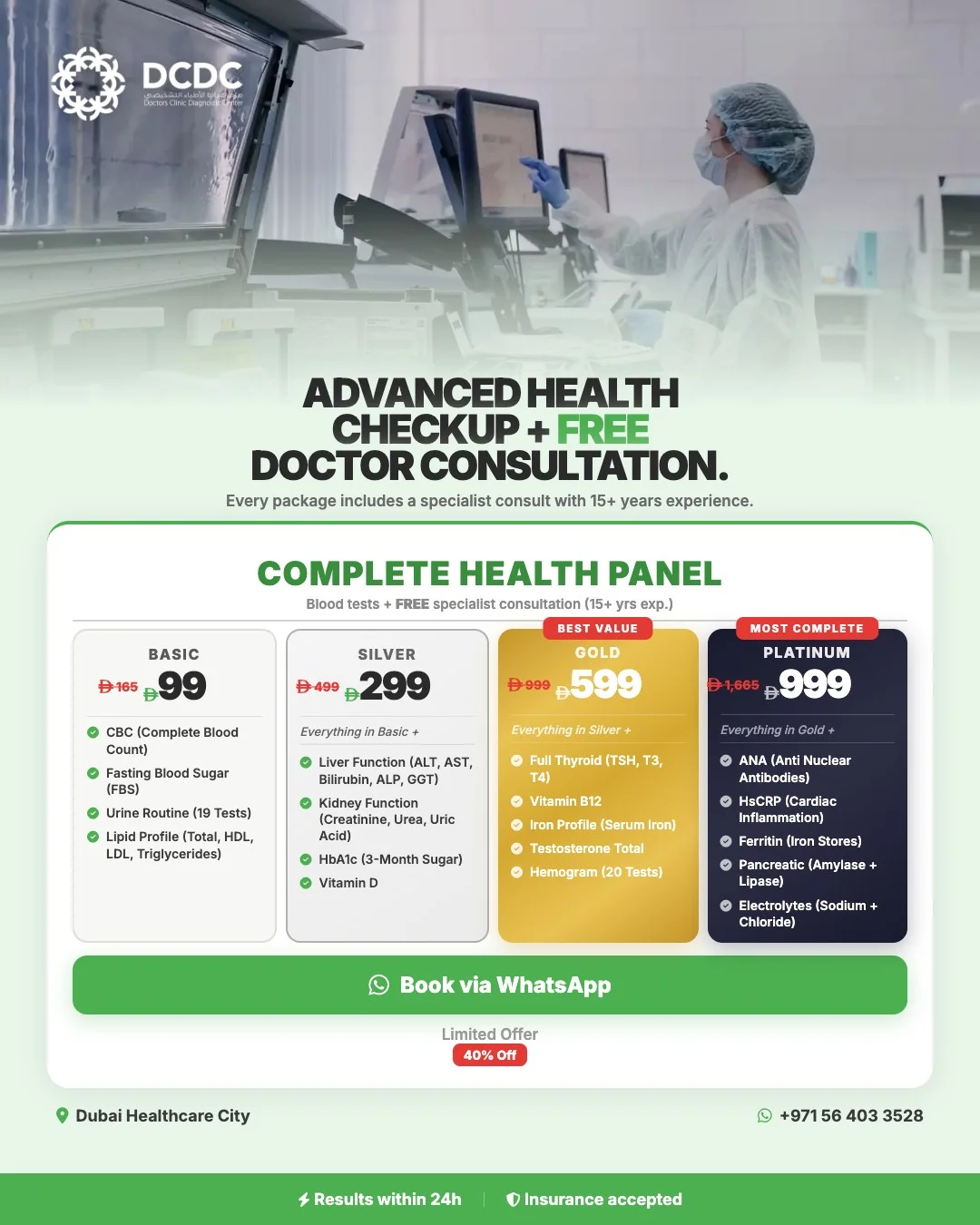
Health Screening Packages
Save with our bundled screening packages — specialist consultation included





What Is Allergic Rhinitis?
Allergic rhinitis is an inflammatory condition of the nasal passages triggered by an overreaction of the immune system to airborne allergens. When you inhale substances such as dust mites, pollen, mould spores, or pet dander, your immune system produces IgE antibodies that trigger the release of histamine and other inflammatory mediators. This cascade causes the characteristic symptoms: sneezing, nasal congestion, runny nose, and itchy, watery eyes.
The condition is classified as either seasonal (triggered by pollens during specific months) or perennial (year-round, typically driven by dust mites, mould, or pet dander). In Dubai, many patients experience a combination of both due to the unique climate that supports year-round indoor allergens alongside seasonal outdoor triggers.
Allergic rhinitis is not just an inconvenience. Left untreated, it significantly impacts sleep quality, work productivity, and overall wellbeing. It is also closely linked to asthma — a concept known as the "one airway" hypothesis — with up to 40% of allergic rhinitis patients also having asthma.
Allergic Rhinitis vs Common Cold: How to Tell the Difference
Many patients in Dubai mistake persistent allergic rhinitis for recurring colds. The distinction matters because treatment approaches are entirely different.
| Feature | Allergic Rhinitis | Common Cold |
|---|---|---|
| Duration | Weeks to months (or year-round) | 7–10 days |
| Nasal discharge | Clear, thin, watery | Starts clear, turns thick/yellow-green |
| Sneezing | Frequent, in rapid bursts | Occasional |
| Itchy eyes/nose/throat | Very common | Uncommon |
| Fever | Never | Possible (low-grade) |
| Body aches | No | Common |
| Seasonal pattern | Often worse at specific times | Any time of year |
| Responds to antihistamines | Yes | Minimally |
Allergic rhinitis vs common cold: symptom comparison
If your "cold" lasts more than 10 days, returns at the same time each year, or improves with antihistamines, it is likely allergic rhinitis rather than a viral infection.
Common Allergic Rhinitis Triggers in Dubai
Dubai's climate creates a unique allergen profile that differs significantly from temperate regions. Understanding your specific triggers is the first step toward effective management. For a detailed look at testing methods, see our allergy testing guide.
Indoor Allergens
- House dust mites — the number-one trigger in the UAE (59% of allergic rhinitis cases). Dubai's humidity, particularly in coastal areas, creates ideal breeding conditions in carpets, bedding, and upholstered furniture
- AC duct mould — air conditioning systems running continuously can harbour mould spores and distribute them throughout enclosed spaces. Regular AC cleaning is essential
- Cockroach allergens — a significant but often overlooked indoor trigger in the UAE
- Pet dander — cat and dog allergens (21% of cases), particularly problematic in well-sealed, air-conditioned apartments
Outdoor Allergens
- Haboob sandstorm dust — peak season March through August, carrying fine particulate matter that irritates nasal passages and worsens existing allergies
- Date palm pollen — a significant seasonal trigger unique to Gulf countries, peaking in spring
- Grass pollen — especially from irrigated landscaping in parks, golf courses, and residential communities (44% of patients)
- Mould spores — elevated outdoors during humid months and after rain events
Symptoms of Allergic Rhinitis
Allergic rhinitis symptoms range from mild to severely debilitating. The key symptoms include persistent sneezing (often in rapid bursts of 10–20 sneezes), clear watery nasal discharge, nasal congestion and obstruction, itching of the nose, palate, and throat, and itchy, red, watery eyes (allergic conjunctivitis).
Additional Symptoms That May Indicate Allergic Rhinitis
- Post-nasal drip causing a persistent cough or throat clearing
- Dark circles under the eyes ("allergic shiners")
- Reduced sense of smell and taste
- Ear fullness or popping due to Eustachian tube dysfunction
- Snoring and disrupted sleep from nasal obstruction
- Fatigue and difficulty concentrating ("brain fog")
- Frequent throat clearing or hoarseness
Seasonal vs Perennial Allergic Rhinitis in Dubai
Understanding which type you have determines the treatment approach and timing.
| Type | Timing | Main Triggers in Dubai | Management Approach |
|---|---|---|---|
| Seasonal | Specific months (spring, autumn) | Date palm pollen, grass pollen, haboob dust | Preventive medication before season starts |
| Perennial | Year-round, may fluctuate | Dust mites, AC mould, pet dander, cockroach | Continuous environmental control + daily medication |
| Mixed | Year-round with seasonal flares | Combination of indoor and outdoor triggers | Baseline treatment with seasonal intensification |
Seasonal vs perennial allergic rhinitis in Dubai
In Dubai, many patients experience mixed allergic rhinitis because they are exposed to perennial indoor allergens (dust mites in AC environments) while also reacting to seasonal outdoor triggers (sandstorm dust, pollen). This is why accurate allergy testing is particularly important for Dubai residents.
How Allergic Rhinitis Is Diagnosed
Accurate diagnosis is the foundation of effective treatment. At DCDC, diagnosis involves a thorough clinical history (symptom patterns, timing, suspected triggers), physical examination including nasal endoscopy to assess the nasal passages, and blood IgE allergy testing to identify specific allergens.
Blood-based specific IgE testing is the preferred method at DCDC because it is not affected by antihistamine medications (no need to stop your allergy medications before testing), can test for a broad panel of allergens from a single blood sample, and is safe for patients of all ages including young children. Results are typically available within 2–3 days, and your ENT specialist will review them with you to create a targeted management plan.
Allergic rhinitis can also trigger or worsen sinusitis. If you experience facial pain, thick nasal discharge, or a persistent cough, your doctor may investigate for concurrent sinusitis, which requires additional treatment.
Treatment Options for Allergic Rhinitis
Treatment follows a stepwise approach based on symptom severity, as recommended by international guidelines including ARIA and AAO-HNS.
Step 1: Allergen Avoidance
Reducing exposure to identified triggers is always the first step. Practical measures for Dubai residents include using allergen-proof bedding covers and washing sheets weekly in hot water (above 60°C), scheduling professional AC duct cleaning every 6-12 months, using HEPA air purifiers in bedrooms, keeping windows closed during sandstorm warnings and high-pollen days, showering and changing clothes after outdoor exposure, and maintaining indoor humidity below 50% to discourage dust mites.
Step 2: Pharmacotherapy
Intranasal corticosteroid sprays are the first-line treatment and are more effective than antihistamines for nasal congestion, obstruction, and overall symptom control. Common options include fluticasone, mometasone, and budesonide. They work best with daily use and may take 1–2 weeks to reach full effect.
Second-generation antihistamines (cetirizine, loratadine, fexofenadine) provide relief from sneezing, itching, and runny nose. They are non-sedating and can be combined with intranasal steroids for moderate-to-severe symptoms.
Additional options include antihistamine nasal sprays (azelastine), leukotriene receptor antagonists (montelukast) for patients with concurrent asthma, and short-term decongestant sprays (maximum 3-5 days to avoid rebound congestion).
Step 3: Immunotherapy
For patients who do not achieve adequate control with avoidance measures and medications, allergen immunotherapy offers the only treatment that modifies the underlying allergic disease.
Immunotherapy for Allergic Rhinitis: The Only Disease-Modifying Treatment
According to Dr. Yousra Mohamed, ENT Specialist at DCDC, "Many patients come to us after years of relying on antihistamines and nasal sprays without lasting relief. For these patients, immunotherapy can be transformative — it is the only treatment that retrains the immune system rather than just masking symptoms. In Dubai, where dust mite exposure is nearly unavoidable, immunotherapy is particularly valuable for patients with perennial symptoms."
Immunotherapy works by gradually exposing the immune system to increasing doses of specific allergens, training it to develop tolerance rather than triggering an allergic response. Two delivery methods are available.
| Feature | Subcutaneous Immunotherapy (SCIT) | Sublingual Immunotherapy (SLIT) |
|---|---|---|
| Delivery | Injections in clinic | Tablets or drops under the tongue at home |
| Frequency | Weekly (build-up), then monthly | Daily |
| Duration | 3–5 years | 3–5 years |
| Supervision | Must be given in clinic with 30-min observation | First dose in clinic, then self-administered |
| Best for | Multiple allergens, severe symptoms | Specific allergens (dust mite, grass pollen) |
| Evidence | Strong (50+ years of clinical data) | Strong (growing evidence base) |
SCIT vs SLIT immunotherapy comparison
Studies show that immunotherapy can reduce symptoms by 30–40%, decrease medication requirements, prevent development of new allergies, and reduce the risk of asthma developing in children with allergic rhinitis. Benefits often persist for years after treatment completion.
Managing Allergies in Dubai's Climate
Dubai's desert climate with extreme heat, air conditioning dependence, and periodic sandstorms creates challenges not found in temperate regions. Dubai residents with allergic rhinitis need strategies tailored to these local conditions.
- AC maintenance — schedule professional cleaning every 6-12 months. Replace filters monthly during peak summer. Consider UV-C air purification units in ductwork
- Sandstorm preparedness — monitor weather alerts and stay indoors during haboobs. Use a nasal saline rinse after exposure. Keep car windows closed and use recirculated air
- Indoor humidity control — use dehumidifiers to keep levels below 50%. High humidity in coastal areas (Jumeirah, Marina) encourages dust mite proliferation
- Bedroom allergen reduction — encase pillows, mattresses, and duvets in allergen-proof covers. Choose hard flooring over carpets where possible
- Outdoor timing — exercise outdoors early morning or after sunset to avoid peak pollen and dust exposure. Avoid outdoor activity during red/orange air quality days
Patients with related respiratory conditions such as asthma should coordinate their allergy and respiratory management, as poorly controlled rhinitis can significantly worsen asthma control.
What to Expect at DCDC for Allergic Rhinitis
At DCDC in Dubai Healthcare City, your allergic rhinitis journey follows a structured, efficient pathway designed to get you from diagnosis to relief as quickly as possible.
Arrival and Check-in
DCDC is located in Building 64, Block A, Al Razi Medical Complex in DHCC — just 10 minutes from Downtown Dubai and Business Bay. Free dedicated parking is available on-site. Average wait time is 15 minutes, and same-day appointments are frequently available. The clinic is open extended hours: Saturday to Thursday 8 AM–10 PM, Friday 9 AM–9 PM.
ENT Consultation
Your consultation with Dr. Yousra Mohamed includes a detailed history of your symptoms (timing, triggers, severity, impact on daily life), nasal examination including endoscopy to assess the nasal passages for inflammation, polyps, or structural issues, and a discussion of your allergy history and any previous treatments. The consultation takes approximately 30–45 minutes.
Allergy Testing
If allergy testing is indicated, blood samples are collected on-site for specific IgE panels. The test covers environmental allergens common in the UAE (dust mites, moulds, pollens, pet dander), food allergens when suspected, and can screen a broad panel from a single sample. No antihistamine stoppage is required before blood-based IgE testing. Results are typically available within 2–3 days.
Treatment Plan and Follow-up
Based on your consultation and test results, you receive a personalised treatment plan including avoidance strategies specific to your identified triggers, medication prescriptions optimised for your symptom pattern, referral for immunotherapy evaluation if appropriate, and a follow-up schedule to monitor your response. DCDC offers direct billing with over 20 insurance providers including Daman, AXA, and Bupa, with pre-authorisation handled by clinic staff.
Struggling with Persistent Nasal Congestion or Sneezing?
Book an ENT consultation at DCDC to identify your allergy triggers and start a personalised treatment plan. Same-day appointments often available.
Call +971 54 219 5008 or WhatsApp us
When to See an ENT Specialist for Allergies
While mild, occasional allergic symptoms can often be managed with over-the-counter antihistamines, you should see an ENT specialist if your symptoms persist beyond 7-10 days despite over-the-counter treatment, allergies significantly affect your sleep, work, or daily activities, you experience frequent sinus infections (three or more per year), you develop nasal polyps or chronic nasal obstruction, over-the-counter medications cause side effects or are losing effectiveness, or you want to explore immunotherapy for long-term control.
With a 4.8/5 Google rating from over 1,000 verified patient reviews and a 98% patient satisfaction rate, DCDC provides expert ENT care in a MOHAP-licensed facility staffed by multilingual professionals (Arabic, English, Farsi, Urdu, Hindi).
Allergic Rhinitis Treatment Cost in Dubai
Treatment costs vary depending on the type and extent of testing and the treatment approach selected.
| Service | DCDC Price | Dubai Market Range |
|---|---|---|
| ENT consultation | From AED 299 | AED 300–800 |
| Blood IgE allergy panel (20 allergens) | From AED 550 | AED 500–1,500 |
| Specific IgE (per allergen) | From AED 80 | AED 80–150 |
| Nasal endoscopy | Included with consultation | AED 200–500 separately |
| Intranasal corticosteroid spray (monthly) | AED 50–150 | AED 50–200 |
| Immunotherapy (annual estimate) | Varies by protocol | AED 3,000–8,000/year |
Allergic rhinitis diagnosis and treatment costs in Dubai (2026)
Most allergy consultations and blood tests are covered by major insurance plans with a physician referral. DCDC handles pre-authorisation directly, so you do not need to pay upfront and claim later.
Get Expert Allergy Diagnosis at DCDC
On-site blood IgE testing, personalised treatment plans, and immunotherapy referrals. Direct insurance billing with 20+ providers.
Book your ENT consultation today
Allergic Rhinitis in Children: What Dubai Parents Should Know
Allergic rhinitis is increasingly common in children living in the UAE, with studies showing prevalence rates of over 8% in children aged 6–9 and up to 26% in adolescents. Children with untreated allergic rhinitis may experience poor sleep leading to daytime fatigue and reduced school performance, mouth breathing causing dental and facial development issues, recurrent ear infections from Eustachian tube dysfunction, and increased risk of developing asthma.
Early identification and management of allergic rhinitis in children can prevent these complications and significantly reduce the likelihood of progression to asthma. Blood-based IgE allergy testing is safe and well-tolerated in children, requiring only a simple blood draw. Parents concerned about their child's allergy symptoms should also be aware of food allergy signs, as food and environmental allergies often coexist.
Related Services at DCDC
Expert care and advanced diagnostics at Dubai Healthcare City
Frequently Asked Questions
Final Thoughts
Allergic rhinitis is far more than a minor nuisance — it is a chronic condition that affects sleep, productivity, and quality of life for hundreds of thousands of Dubai residents. The combination of year-round dust mite exposure, seasonal sandstorms, and AC-dependent indoor environments makes Dubai a particularly challenging city for allergy sufferers. Yet with accurate diagnosis, targeted treatment, and Dubai-specific management strategies, most patients can achieve significant symptom control.
If over-the-counter medications are not providing adequate relief, or if your symptoms have persisted for weeks or months, an ENT consultation is the logical next step. At DCDC in Dubai Healthcare City, you can receive comprehensive allergy testing, personalised treatment plans, and immunotherapy referrals — all under one roof, with same-day appointments, extended hours, and direct insurance billing. Call +971 54 219 5008 or WhatsApp to book your consultation.
Sources & References
This article was reviewed by our medical team and references the following sources:
- PMC - Prevalence and triggers of allergic rhinitis in the UAE
- PMC - Clinical burden of allergic rhinitis in five Middle Eastern countries (SNAPSHOT)
- Cleveland Clinic - Allergic Rhinitis (Hay Fever): Symptoms & Treatment
- Mayo Clinic - Allergic Rhinitis Specialty Group
- PMC - Allergic Rhinitis and Treatment Modalities: A Review
- World Allergy Organization Journal - Prevalence of asthma and allergies among children in the UAE
Medical content on this site is reviewed by DHA-licensed physicians. See our editorial policy for more information.

Written by
Dr. Yousra Mohamed
ENT Specialist
MBBS, Arab Board (ORL), MRCS
Dr. Yousra Mohamed is an ENT Specialist at Doctors Clinic Diagnostic Center (DCDC) in Dubai Healthcare City.
Related Articles

Allergy Testing Dubai: IgE, Skin Prick & Cost (2026)

Sinusitis Treatment Dubai: ENT Relief Guide (2026)

ENT Consultation Cost Dubai: From AED 300 (2026)

Asthma Symptoms Dubai: Guide & Treatment (2026)

AC Sickness Dubai: Summer Cold Symptoms (2026)
More in General Health

Epilepsy Treatment Dubai: Symptoms & Care (2026)
Read More
Food Allergy vs Food Intolerance Dubai (2026)
Read MorePneumonia vs Flu Dubai: Key Differences (2026)
Read MoreSwollen Lymph Nodes Dubai: When to Worry (2026)
Read MoreFlu vs Cold Dubai: How to Tell the Difference (2026)
Read More
Sleep Study Cost Dubai: Tests & Pricing (2026)
Read More© 2026 Doctors Clinic Diagnostic Center (DCDC), Dubai Healthcare City. Originally published at https://doctorsclinicdubai.ae/blog/allergic-rhinitis-treatment-dubai. All rights reserved. Unauthorized reproduction is prohibited.