Key Takeaways
- AC sickness is a real clinical phenomenon driven by rapid temperature differentials (often 25-30 degrees Celsius) between outdoor heat and over-cooled indoor spaces — Dubai's summer months (June-September) see the highest rates of recurrent upper respiratory symptoms linked to air conditioning use
- The most common AC sickness symptoms are recurrent sore throat, nasal congestion, dry cough, headaches, and fatigue — these often mimic a common cold but recur cyclically because the environmental trigger (extreme AC) persists rather than resolving like a viral infection
- Maintaining indoor AC temperature at 23-24 degrees Celsius (rather than 18-20 degrees Celsius) reduces respiratory mucosal irritation by up to 60% according to indoor air quality research — a simple thermostat adjustment is the single most effective prevention strategy
- See a doctor if your symptoms persist beyond 10-14 days, worsen progressively, include fever above 38 degrees Celsius, or produce discoloured mucus — these may indicate a secondary bacterial infection or allergic condition requiring medical treatment
- Low vitamin D levels (common in Dubai due to sun avoidance and indoor lifestyles) weaken immune defences and increase susceptibility to recurrent AC-related respiratory infections — testing and supplementation can break the cycle of repeated summer colds
- At DCDC Dubai Healthcare City, AC sickness evaluation starts from AED 200 for a GP consultation with same-day blood tests (CBC, CRP, vitamin D) from AED 299, on-site allergy testing from AED 399, and direct billing with 20+ insurance partners
Every summer in Dubai, thousands of residents experience a frustrating cycle: step outside into 48 degrees Celsius heat, return to a heavily air-conditioned office or home set to 18 degrees Celsius, and within days develop a sore throat, runny nose, and persistent cough that never fully resolves. This is AC sickness — a cluster of respiratory symptoms triggered by extreme temperature differentials and dry indoor air that has become one of the most common reasons for general practice consultations at DCDC during the summer months. If you have been battling what feels like an endless summer cold, you are not alone, and there are effective solutions.
This comprehensive guide explains what AC sickness is, how to distinguish it from a true cold or allergies, when to seek medical attention, and practical prevention strategies tailored to Dubai's unique climate. Reviewed by Dr. Hadeel Elnur, General Practitioner at DCDC Dubai Healthcare City.
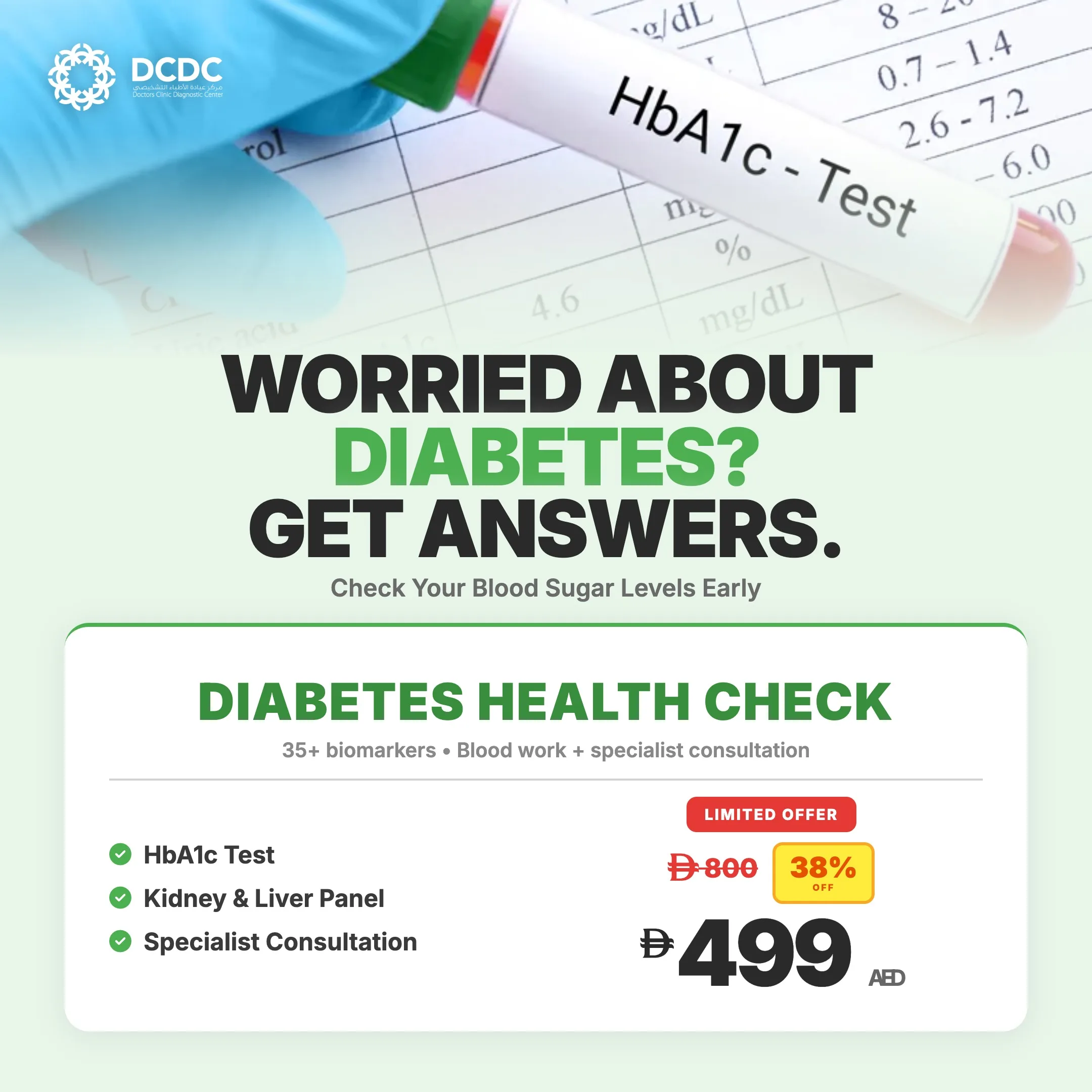
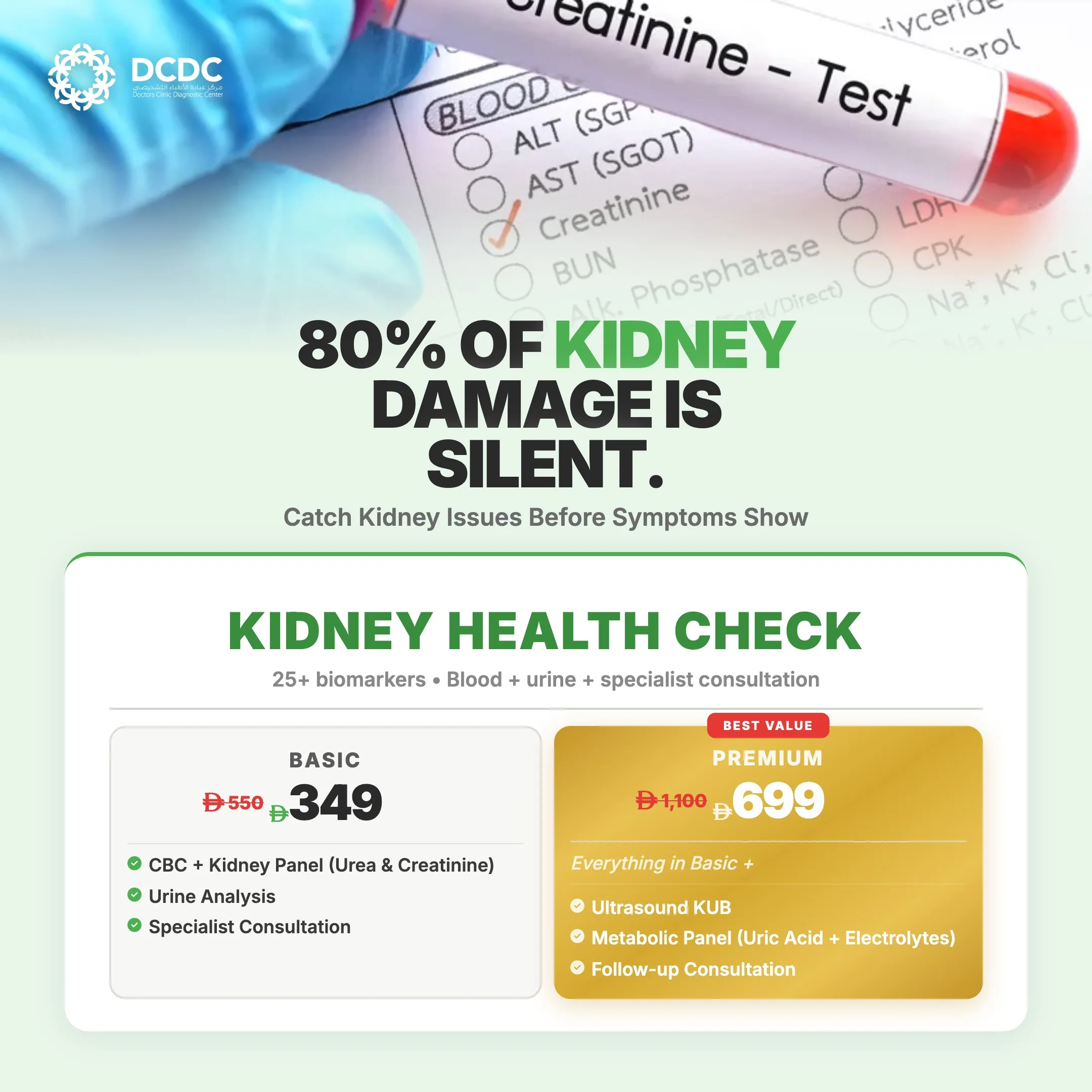
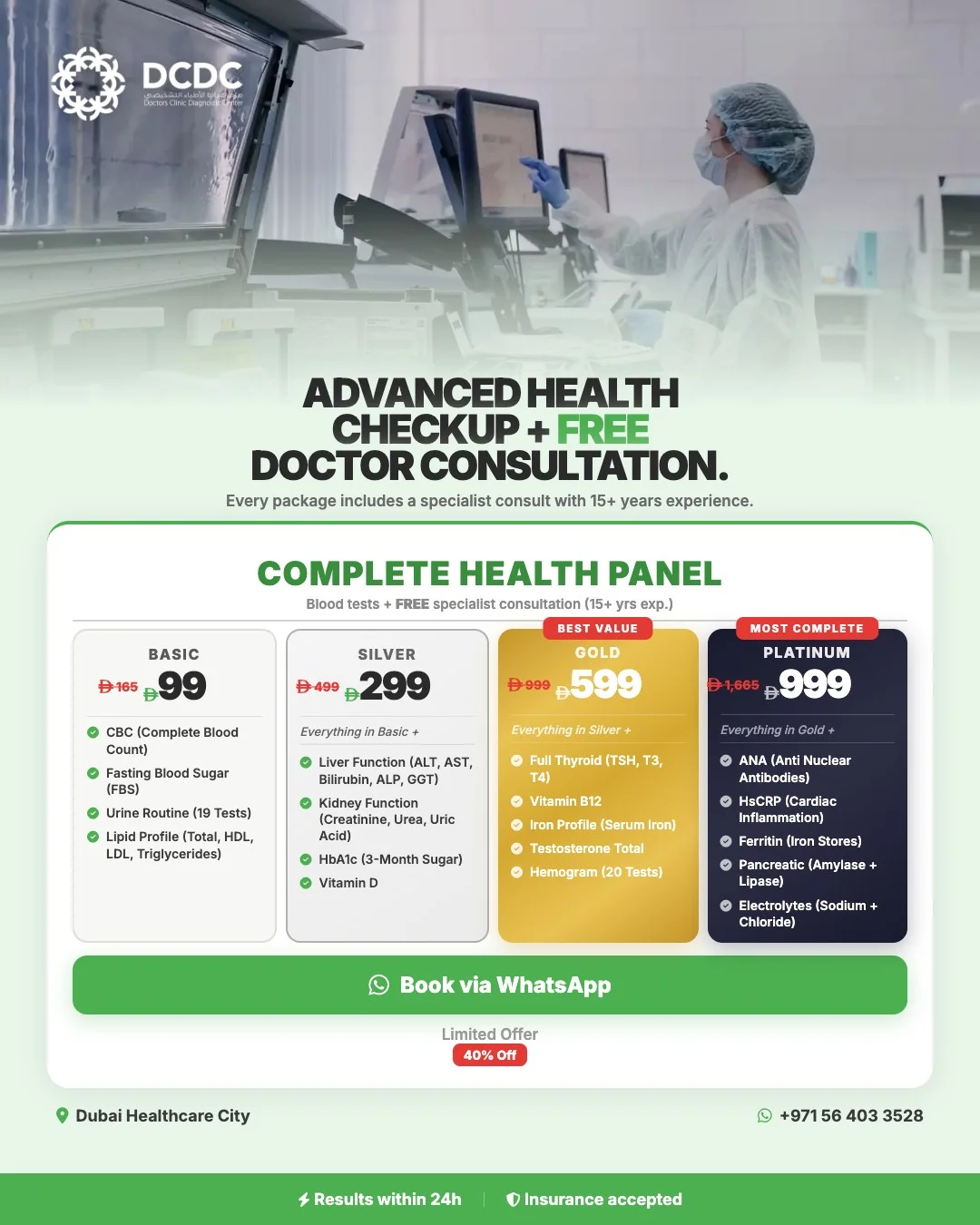
Health Screening Packages
Save with our bundled screening packages — specialist consultation included



What Is AC Sickness? Understanding the Dubai Summer Cold
AC sickness is not a single disease but rather a collection of upper respiratory symptoms caused by the physiological stress of repeatedly transitioning between extreme heat and heavily air-conditioned environments. While not a formal medical diagnosis, it is a widely recognised clinical phenomenon in Gulf countries — particularly in Dubai, where residents spend up to 90% of summer hours in air-conditioned spaces.
The underlying mechanism involves three interconnected pathways. First, the thermal shock effect: rapid cooling of the upper airways causes vasoconstriction (narrowing of blood vessels) in the nasal and pharyngeal mucosa, temporarily reducing local immune defences and ciliary function. Second, mucosal drying: air conditioning removes moisture from indoor air, often dropping relative humidity below 20%, which dehydrates the protective mucous membranes lining the nose, throat, and sinuses. Third, recirculated contaminants: closed-loop AC systems recirculate allergens, dust, mould spores, and viral particles without adequate fresh air exchange.
The result is a weakened first line of respiratory defence — dried, irritated mucous membranes that cannot effectively trap and expel pathogens. Combined with cold-induced local immune suppression, this creates ideal conditions for viral infections to take hold, bacterial overgrowth, and chronic irritation that mimics a perpetual cold.
Common Symptoms of AC-Related Illness in Dubai
AC sickness presents with a characteristic pattern of symptoms that patients in Dubai typically describe as a cold that never fully goes away or keeps coming back. Recognising these symptoms helps you identify whether air conditioning is the likely trigger:
Primary Symptoms (Most Common)
- Recurrent sore throat: A scratchy, dry, irritated throat that improves on weekends or holidays when AC exposure changes — this is the hallmark symptom
- Nasal congestion and stuffiness: Chronic nasal blockage that worsens after prolonged time in air-conditioned rooms
- Runny nose (clear discharge): Watery rhinorrhoea triggered by cold air exposure, often mistaken for allergies
- Dry, persistent cough: A non-productive cough that worsens in air-conditioned environments and improves in humidified spaces
- Sneezing episodes: Paroxysmal sneezing when entering cold indoor spaces from outdoor heat
- Headaches: Frontal or sinus-area headaches related to nasal congestion and sinus pressure changes
- Fatigue and general malaise: Persistent tiredness from disrupted sleep (nasal blockage) and chronic low-grade immune activation
Secondary Symptoms (Less Common but Significant)
- Dry, irritated eyes: Reduced humidity aggravates the tear film, causing redness and itching
- Dry skin and lips: Chronic dehydration of the skin from very low indoor humidity
- Post-nasal drip: Mucus draining down the back of the throat, causing throat clearing and occasional nausea
- Ear fullness or pressure: Eustachian tube congestion secondary to nasal and sinus inflammation
- Hoarse voice: Laryngeal dryness and irritation from breathing dry, cold air through the mouth
- Worsening of existing asthma or allergies: Cold air is a known trigger for bronchospasm in susceptible individuals
Self-Assessment: Is It AC Sickness?
Ask yourself these questions to determine whether your symptoms are likely AC-related:
- Do your symptoms improve on days when you spend less time in air-conditioned spaces?
- Did your symptoms start or worsen when summer began and AC usage increased?
- Do you notice your throat feels worse in the morning after sleeping with the AC on?
- Is your workplace or home AC set below 22 degrees Celsius?
- Have you had similar episodes in previous Dubai summers?
- Do your symptoms improve when you travel to a more temperate climate?
If you answered yes to three or more of these questions, AC-related respiratory irritation is the most likely explanation for your symptoms.
Why Dubai's Climate Makes AC Sickness So Common
Dubai occupies a unique position in terms of AC sickness risk. Several environmental and lifestyle factors converge to make this city one of the world's hotspots for air conditioning-related respiratory problems:
Extreme Temperature Differentials
During July and August, outdoor temperatures in Dubai routinely reach 45-50 degrees Celsius, while indoor spaces are often cooled to 18-20 degrees Celsius. This creates a temperature differential of 25-30 degrees — among the largest in the world. Each transition between outdoors and indoors subjects the respiratory system to a thermal shock equivalent to walking from a sauna into a cold room, multiple times per day. Research published in the International Journal of Environmental Research and Public Health has shown that temperature differentials exceeding 10 degrees Celsius significantly impair mucociliary clearance for up to 30 minutes after exposure.
Extended Indoor Time
Dubai residents spend significantly more time indoors during summer than residents of most other cities. From June through September, outdoor activity is limited to early morning or late evening. This means 16-20 hours per day of continuous exposure to air-conditioned air — far more than the body's respiratory system was designed to handle. The indoor lifestyle also reduces sun exposure and contributes to vitamin D deficiency, which further compromises immune function.
Low Indoor Humidity
Air conditioning systems function by removing moisture from the air as they cool it. In Dubai, where AC units run continuously for 4-5 months, indoor humidity frequently drops to 15-25% — well below the WHO-recommended minimum of 30-60% for respiratory health. At humidity levels below 20%, the nasal mucosa begins to crack and lose its barrier function, the protective mucus layer thins, and viral survival on indoor surfaces actually increases (many respiratory viruses survive longer in dry conditions).
Building Design and AC Systems
Many residential and commercial buildings in Dubai rely on centralised cooling systems that recirculate 70-80% of indoor air rather than drawing fresh air from outside. Without adequate filtration and maintenance, these systems become reservoirs for mould (particularly Aspergillus and Cladosporium species), bacteria, dust mite allergens, and volatile organic compounds. Regular AC servicing is essential but often neglected in rental properties.
If your symptoms include itchy eyes, skin rashes, or wheezing in addition to cold-like symptoms, an underlying allergy may be contributing. Consider reading our comprehensive guide on allergy testing in Dubai to understand whether environmental allergens circulating through your AC system could be a factor.
AC Sickness vs. Common Cold vs. Allergies: How to Tell the Difference
Distinguishing between AC-related irritation, a genuine viral cold, and allergic rhinitis is crucial because each requires a different management approach. Here is a clinical comparison:
| Feature | AC Sickness | Common Cold (Viral) | Allergic Rhinitis |
|---|---|---|---|
| Duration | Ongoing while AC exposure continues | 7-10 days then resolves | Seasonal or year-round (with allergen) |
| Fever | Absent | Low-grade (37.5-38.5°C) in first 2-3 days | Absent |
| Nasal discharge | Clear and watery | Starts clear, may become thick/yellow-green | Clear and watery, profuse |
| Pattern | Worse in AC, improves outdoors/holidays | Progresses then resolves day by day | Triggered by specific allergens |
| Body aches | Absent or minimal | Common in first 3-5 days | Absent |
| Itchy eyes/nose | Mild (dry irritation) | Uncommon | Prominent (hallmark symptom) |
| Sneezing | On entering cold spaces | Moderate, throughout illness | Frequent paroxysmal episodes |
| Season in Dubai | Summer peak (Jun-Sep) | Year-round (slight winter peak) | Variable or perennial |
A doctor can confirm the diagnosis with clinical examination and, if needed, blood tests (CRP to rule out infection) or allergy panels.
Important overlap: AC sickness often leads to genuine viral infections because the weakened mucosal barrier allows viruses to establish infection more easily. Many patients start with pure AC irritation symptoms that progress to a true cold within days. If you develop fever, thick coloured mucus, or significant fatigue, a viral or bacterial infection may have developed on top of the AC-related irritation.
When to See a Doctor for AC Sickness
While most AC-related symptoms can be managed with environmental modifications, certain situations require medical evaluation. Use this urgency guide to determine when professional assessment is needed:
See a Doctor Within a Few Days If:
- Your symptoms have persisted for more than 10-14 days without improvement despite adjusting AC settings
- You develop a fever above 38 degrees Celsius — this suggests a true infection rather than simple irritation
- Your nasal discharge becomes thick, yellow, or green and is accompanied by facial pain or pressure (suggesting sinusitis)
- You experience recurrent episodes (3 or more per summer) that disrupt your work or daily life
- You have wheezing or chest tightness that was not present before
- Over-the-counter medications provide no relief after 5-7 days of use
- You notice your symptoms are progressively worsening rather than remaining stable
- You have ear pain or reduced hearing suggesting eustachian tube dysfunction or middle ear involvement
Seek Same-Day Medical Attention If:
- You have difficulty breathing or shortness of breath at rest
- Your fever exceeds 39 degrees Celsius or you experience rigors (shaking chills)
- You notice blood in your nasal discharge or sputum
- You develop severe headache with neck stiffness
- Your child under 5 shows rapid breathing, chest retractions, or refusal to drink
At DCDC, same-day appointments are frequently available for respiratory symptoms. Our extended hours (Saturday to Thursday 8 AM to 10 PM, Friday 9 AM to 9 PM) accommodate urgent visits without requiring a trip to the emergency department for non-emergency concerns.
How Air Conditioning Affects Your Immune System
Understanding the immunological mechanisms behind AC sickness helps explain why some people are more susceptible than others and informs prevention strategies:
Cold Air and Local Immunity
When cold air hits the nasal mucosa, blood vessels constrict rapidly (a reflex called the nasal vasoconstrictor response). This reduces blood flow to the nasal lining and temporarily decreases the delivery of immune cells — white blood cells, antibodies, and inflammatory mediators — to the area. Research from Yale University has demonstrated that rhinoviruses (the most common cold-causing viruses) replicate more efficiently at 33 degrees Celsius (typical nasal temperature in cold air) than at core body temperature of 37 degrees Celsius. This means that air conditioning literally creates optimal conditions for cold viruses to multiply.
Mucociliary Clearance Impairment
The airways are lined with tiny hair-like structures called cilia that beat in coordinated waves to move mucus (and trapped pathogens) upward and out of the respiratory tract. This mucociliary escalator is your first-line defence against inhaled viruses and bacteria. Both cold temperatures and low humidity slow ciliary beat frequency — studies show that a drop in humidity from 50% to 20% reduces ciliary clearance speed by approximately 40%. In a Dubai office with AC set to 18 degrees Celsius and humidity at 15-20%, your mucociliary defence operates at significantly reduced capacity for most of the working day.
The Vitamin D Connection
Vitamin D is critical for innate immune function — it regulates the production of antimicrobial peptides (cathelicidins and defensins) that destroy respiratory pathogens on contact. Despite abundant sunshine, vitamin D deficiency affects 70-90% of Dubai residents due to sun avoidance during summer, indoor lifestyles, and modest clothing that limits skin exposure. Low vitamin D levels correlate strongly with increased susceptibility to upper respiratory infections. At DCDC, we frequently identify vitamin D deficiency as a contributing factor in patients with recurrent AC-related colds.
The connection between vitamin D deficiency and recurrent infections is well documented. If you suspect your summer colds may be linked to low vitamin D, our detailed guide on vitamin D deficiency explains testing, optimal levels, and supplementation protocols specific to Dubai residents.
Prevention Tips: Reducing AC Sickness in Dubai
Prevention is far more effective than treatment for AC sickness. These Dubai-specific strategies address the root causes rather than just managing symptoms:
Temperature and Humidity Management
- Set AC to 23-24 degrees Celsius: This is the WHO-recommended range for comfort without excessive thermal stress. Each degree warmer than the typical 18-20 degrees Celsius setting reduces the temperature shock by 1 degree per transition
- Use a humidifier in bedrooms and offices: Maintain 40-50% relative humidity. A hygrometer (AED 20-50 at any electronics store) lets you monitor levels. Cool-mist humidifiers are safest and most appropriate for Dubai's climate
- Avoid directing AC vents at your face, neck, or sleeping area: Direct cold airflow on the throat and nasal passages during sleep is a major trigger for morning sore throat
- Use the AC's timer function: Set the AC to increase temperature by 1-2 degrees during the deepest sleep hours (1 AM-5 AM) when the body's thermoregulation is reduced
- Layer clothing in heavily air-conditioned offices: Keep a light jacket or scarf for workspace use to reduce direct cold exposure to the throat and chest
AC Maintenance and Air Quality
- Service your AC professionally every 6 months: Duct cleaning, coil treatment, and filter replacement remove accumulated mould and bacteria
- Clean or replace AC filters monthly during summer: Dirty filters recirculate allergens and contaminants rather than removing them
- Request an air quality assessment: Some AC maintenance companies offer indoor air quality testing that identifies mould levels, particulate matter, and humidity
- Open windows briefly during cooler hours (early morning): Even 15-20 minutes of fresh air exchange reduces CO2 buildup and dilutes indoor contaminants
- Consider a HEPA air purifier: Particularly useful in bedrooms and offices where you spend extended hours
Personal Health Measures
- Stay well hydrated: Aim for 2.5-3 litres of water daily in summer. Adequate hydration keeps mucous membranes moist and functional
- Use saline nasal spray regularly: 2-3 sprays per nostril, 3-4 times daily during summer months moisturises the nasal mucosa and improves ciliary function
- Check your vitamin D levels: Request a blood test and supplement if deficient (most Dubai residents require 2000-4000 IU daily)
- Get adequate sleep: Sleep deprivation impairs immune function — aim for 7-8 hours in a properly humidified room
- Get your annual flu vaccine: While AC sickness itself is not caused by influenza, weakened respiratory defences make you more susceptible to flu — vaccination prevents the most serious viral respiratory infection
- Transition gradually between temperatures: Pause in lobbies, mall entrances, or shaded areas for 30-60 seconds before stepping into full outdoor heat or entering a deeply cooled space
What to Expect at DCDC: Your AC Sickness Consultation
If your AC-related symptoms are not responding to self-care or you want to rule out underlying conditions, here is exactly what happens during your visit to DCDC Dubai Healthcare City:
Step 1: Arrival and Check-In (Average Wait: 15 Minutes)
Arrive at DCDC in Building 64, Block A, Al Razi Medical Complex, Dubai Healthcare City. Free dedicated on-site parking is available. At reception, present your Emirates ID and insurance card (if applicable). Our multilingual staff (Arabic, English, Farsi, Urdu, Hindi) will register you promptly. Self-pay patients can register immediately with no pre-approval needed. Average wait time from check-in to consultation is approximately 15 minutes.
Step 2: GP Consultation with Dr. Hadeel Elnur (15-20 Minutes)
Dr. Hadeel Elnur will conduct a thorough assessment including detailed symptom history — duration, pattern (worse at work vs. home?), AC settings, previous episodes, and medications tried. Physical examination includes inspection of the nasal passages, throat, ears, and chest auscultation. She will assess for signs of infection, allergic disease, or structural issues (deviated septum, nasal polyps). Vital signs including temperature and oxygen saturation are recorded. Based on her clinical assessment, she will determine whether additional investigations are warranted.
Step 3: On-Site Diagnostics (If Required — Results Same Day)
If needed, investigations are performed immediately in DCDC's on-site laboratory — no referral to an external facility required. Common tests for AC sickness evaluation include:
- CBC (Complete Blood Count): Identifies elevated white blood cells (infection) or eosinophils (allergic component)
- CRP (C-Reactive Protein): Distinguishes inflammatory infection from simple irritation
- Vitamin D level: Frequently low in patients with recurrent colds — identifies a correctable immune deficiency
- Throat swab: If bacterial pharyngitis or streptococcal infection is suspected
- Allergy panel: If symptoms suggest allergic rhinitis or environmental allergy contributing to chronic symptoms
Routine blood tests (CBC, CRP, vitamin D) are typically completed within the same visit — one-visit diagnostics means you leave with answers, not just more appointments.
Step 4: Treatment Plan and Lifestyle Prescription
Based on examination and any test results, Dr. Hadeel provides a comprehensive management plan that typically includes medication (if a treatable infection or allergy is identified), specific AC and environmental modifications tailored to your living and working situation, hydration and supplement recommendations (including vitamin D if deficient), and clear guidance on when to return if symptoms persist or worsen.
Step 5: Insurance and Payment
DCDC partners with 20+ insurance providers for direct billing — meaning most insured patients pay only their co-pay or deductible at the point of care, with no need to pay the full amount and submit claims later. Self-pay patients receive transparent pricing with no hidden fees. DCDC is MOHAP licensed, ensuring all consultations and procedures meet UAE regulatory standards.
Struggling with a Summer Cold That Will Not Go Away?
Book a same-day GP consultation at DCDC Dubai Healthcare City. Dr. Hadeel Elnur specialises in respiratory symptoms and AC-related illness, with on-site blood tests and allergy panels for comprehensive same-day evaluation. General consultation from AED 200. MOHAP licensed, 4.8/5 Google rating from 1,000+ reviews.
Call +971 54 219 5008 or WhatsApp
Treatment Options for AC-Related Symptoms
Treatment for AC sickness depends on the specific symptoms and whether a secondary infection or allergy has developed. Here are the main treatment approaches:
Environmental Modifications (First-Line Treatment)
For pure AC irritation without infection, environmental changes are the primary treatment. Adjusting AC temperature to 23-24 degrees Celsius, adding humidification, improving air filtration, and ensuring regular AC maintenance often resolve symptoms within 5-7 days without any medication. This is always the first recommendation because it addresses the root cause rather than masking symptoms.
Symptomatic Relief
- Saline nasal irrigation: Neti pot or squeeze bottle with isotonic saline, twice daily — the single most effective non-pharmacological intervention for AC-related nasal congestion
- Topical nasal steroids (fluticasone, mometasone): For persistent congestion lasting more than 2 weeks. Reduces mucosal inflammation without systemic side effects. Available over-the-counter in UAE pharmacies
- Antihistamines: Second-generation (cetirizine, loratadine) if sneezing and rhinorrhoea are prominent. Particularly effective when allergic rhinitis overlaps with AC irritation
- Throat lozenges and warm saltwater gargles: For sore throat relief. Honey-based lozenges have additional antimicrobial properties
- Short-term decongestants (oxymetazoline nasal spray): Maximum 3-5 days to avoid rebound congestion. Useful for acute episodes only
Medical Treatment (When Infection Develops)
- Antibiotics: Only prescribed when bacterial sinusitis or pharyngitis is confirmed (symptoms lasting more than 10 days with purulent discharge, facial pain, and fever). Not appropriate for viral or irritation-only symptoms
- Vitamin D supplementation: If testing confirms deficiency (below 30 ng/mL), high-dose loading followed by maintenance dosing (typically 2000-4000 IU daily) strengthens immune defences over 6-8 weeks
- Allergy immunotherapy: For patients with confirmed environmental allergies contributing to chronic symptoms — sublingual or injection-based protocols for long-term desensitisation
A proactive approach to health includes regular check-ups to identify issues like vitamin D deficiency or allergic sensitisation before they cause recurrent problems. Our annual health checkup in Dubai guide explains what a comprehensive preventive assessment includes and how it can reduce your risk of recurrent illness.
The Role of Humidity and Indoor Air Quality
Indoor air quality is arguably the most overlooked factor in AC sickness. While most people focus on temperature, humidity levels and air purity often have a greater impact on respiratory symptoms:
Optimal Humidity for Respiratory Health
The World Health Organization recommends maintaining indoor relative humidity between 30% and 60% for respiratory health. Below 30%, mucous membranes dry out and lose their protective function. Above 60%, mould growth and dust mite proliferation increase. In Dubai's air-conditioned spaces, humidity commonly drops to 15-25% — significantly below the safe minimum. Investing in a hygrometer (a device that measures humidity) reveals that most Dubai homes and offices operate in a zone that actively damages respiratory health.
Indoor Air Pollutants from AC Systems
- Mould spores: Condensation in AC units creates ideal conditions for mould growth. Inhaled spores trigger allergic reactions and can cause fungal sinusitis in susceptible individuals
- Dust and particulate matter: Without regular filter replacement, AC systems recirculate fine particles that deposit in the airways
- Volatile organic compounds (VOCs): Off-gassing from furniture, carpets, and cleaning products accumulates in sealed, air-conditioned spaces without fresh air dilution
- Carbon dioxide: In crowded offices with poor ventilation, CO2 levels rise above 1000 ppm, causing headaches, fatigue, and reduced cognitive function
- Bacteria (Legionella): Though rare in modern systems, poorly maintained cooling towers can harbour Legionella bacteria — a serious respiratory pathogen
Practical Air Quality Improvements
Simple, affordable steps significantly improve indoor air quality: replace AC filters monthly (AED 30-80 per filter), run a HEPA air purifier in bedrooms (removes 99.97% of airborne particles), use a cool-mist humidifier in sleeping and working areas, and ensure professional AC deep-cleaning at least twice per year. These measures combined typically reduce AC-related symptoms by 50-70% within 2-3 weeks.
AC Sickness in Children: Special Considerations
Children are particularly vulnerable to AC sickness for several reasons: their airways are narrower (meaning even mild swelling causes proportionally greater obstruction), their immune systems are still developing, and they have less ability to communicate early symptoms. Parents in Dubai should be aware of these child-specific concerns:
Symptoms in Children
- Recurrent night-time cough: Often attributed to asthma but frequently caused by dry, cold bedroom air from AC running at low temperatures overnight
- Mouth breathing and snoring: Chronic nasal congestion from dry air forces mouth breathing, which further dries the throat
- Frequent ear infections: Eustachian tube dysfunction from chronic nasal congestion leads to middle ear fluid accumulation
- Poor sleep quality: Nasal blockage disrupts sleep, causing daytime irritability, poor concentration, and reduced school performance
- Worsening eczema: Extremely dry indoor air exacerbates atopic dermatitis in children with sensitive skin
Prevention for Children
- Set the child's bedroom AC to 24-25 degrees Celsius — children regulate temperature less efficiently than adults
- Always use a humidifier in the child's bedroom during summer months — target 40-50% humidity
- Never direct AC airflow directly at the cot or bed
- Ensure adequate daytime fluid intake — children often forget to drink enough during summer indoor activities
- Check vitamin D levels annually — deficiency is extremely common in Dubai children
- Keep the child's room AC filters clean — monthly cleaning or replacement during summer
When to See a Paediatrician
Take your child for medical evaluation if cold symptoms persist beyond 10 days, if they develop fever above 38.5 degrees Celsius, if you notice fast or laboured breathing, if ear pulling or pain suggests otitis media, or if they have more than 4-5 upper respiratory episodes per summer season. Recurrent infections in children may indicate underlying allergies, adenoid hypertrophy, or immune deficiency that requires investigation.
AC Sickness and Cost of Treatment in Dubai
Understanding the cost of evaluation and treatment helps you plan your visit and decide when professional assessment offers value over continued self-management. At DCDC Dubai Healthcare City, we maintain transparent pricing:
| Service | DCDC Price | Dubai Market Range |
|---|---|---|
| General Consultation (GP) | From AED 200 | AED 200 - 600 |
| Blood Test Panel (CBC + CRP) | From AED 150 | AED 150 - 400 |
| Vitamin D Test | From AED 99 | AED 99 - 250 |
| Allergy Panel (Environmental) | From AED 399 | AED 400 - 1,200 |
| Health Checkup Package | From AED 249 | AED 300 - 2,000 |
| Follow-up Consultation | From AED 150 | AED 150 - 400 |
Prices are starting points. Final costs depend on clinical needs and insurance coverage. DCDC partners with 20+ insurers for direct billing — most insured patients pay only their co-pay.
A typical first-visit AC sickness evaluation at DCDC (consultation + blood tests including vitamin D and CRP) costs approximately AED 350-500 without insurance. With insurance, most patients pay only their standard co-pay. The value proposition is clear: a single visit provides definitive answers (infection vs. irritation vs. allergy vs. vitamin D deficiency) and a targeted treatment plan, avoiding weeks of ineffective self-treatment or repeated pharmacy visits.
DCDC's 98% patient satisfaction rate and 4.8/5 Google rating from over 1,000 verified reviews reflect our commitment to thorough, patient-centred care at transparent pricing. The clinic is open extended hours (Saturday to Thursday 8 AM to 10 PM, Friday 9 AM to 9 PM) with same-day appointments frequently available.
Doctor's Perspective: Managing AC Sickness in Dubai
According to Dr. Hadeel Elnur, "In Dubai's summer months, I see a significant spike in patients presenting with what they call 'AC sickness' — recurrent colds, sore throats, and sinus congestion. The constant transition between 48 degrees Celsius outdoor heat and heavily air-conditioned indoor environments at 18-20 degrees Celsius stresses the respiratory mucosa. I always recommend patients maintain indoor temperatures at 23-24 degrees Celsius and ensure proper hydration to reduce these episodes."
Dr. Hadeel continues: "What I find most commonly is a combination of factors — the AC irritation is the trigger, but underlying vitamin D deficiency and sometimes undiagnosed dust mite or mould allergies are what make certain people so susceptible while others tolerate the same environment without issue. A comprehensive evaluation that includes blood work and sometimes allergy testing identifies these contributing factors so we can address all the layers, not just prescribe a decongestant and send the patient home to experience the same symptoms again in two weeks."
"I also want to reassure patients that AC sickness, while frustrating, is very manageable once you understand your specific triggers. Most patients see significant improvement within 2-3 weeks of implementing the right environmental changes and addressing any nutritional deficiencies. My door is always open for follow-up if symptoms persist — persistent symptoms deserve thorough investigation, not just repeated courses of unnecessary antibiotics." — Dr. Hadeel Elnur, MD, General Practice, DCDC Dubai Healthcare City
Long-Term Strategies: Breaking the Summer Cold Cycle
If you experience AC sickness every summer, a reactive approach (treating each episode as it occurs) is less effective than a proactive strategy that breaks the cycle. Here is a seasonal approach:
Before Summer (April-May)
- Schedule a professional AC service and deep clean for all home units
- Check vitamin D levels and begin supplementation if deficient (takes 6-8 weeks to optimise levels)
- Purchase a humidifier for your bedroom if you do not already have one
- Consider allergy testing if previous summers included persistent nasal symptoms
- Stock saline nasal sprays and begin regular use as daily preventive care
During Summer (June-September)
- Maintain AC at 23-24 degrees Celsius consistently — resist the temptation to drop to 18-20 degrees Celsius
- Run humidifiers nightly and monitor humidity levels with a hygrometer
- Change AC filters monthly
- Drink a minimum of 2.5 litres of water daily
- Use saline nasal spray 3-4 times daily as a preventive measure
- Take vitamin D supplement daily (if prescribed)
- If symptoms begin, act immediately with environmental changes rather than waiting for them to worsen
Post-Summer Review (October)
- Assess how the summer went compared to previous years
- If symptoms persisted despite prevention, book a comprehensive evaluation for allergy testing and immune assessment
- Consider an annual health checkup that includes vitamin D, CBC, and allergy markers
Take Control of Your Summer Health at DCDC
Stop suffering through another Dubai summer with recurring colds. Book a comprehensive AC sickness evaluation at DCDC Dubai Healthcare City — GP consultation, on-site blood tests, vitamin D check, and allergy panel all available in a single visit. Same-day appointments available. 20+ insurance partners with direct billing.
Call +971 54 219 5008 or WhatsApp
Related Services at DCDC
Expert care and advanced diagnostics at Dubai Healthcare City
Frequently Asked Questions
AC Sickness in Dubai: Take Action Before the Next Episode
AC sickness is one of Dubai's most underappreciated health challenges. It affects hundreds of thousands of residents every summer, yet many endure weeks of discomfort without realising that simple environmental modifications — adjusting AC temperature, adding humidification, and maintaining AC systems — can eliminate or dramatically reduce symptoms. The key insight is that AC sickness is preventable, not inevitable.
If self-care measures are not providing relief, or if your symptoms suggest something more than simple irritation (fever, coloured mucus, persistent worsening), a comprehensive medical evaluation identifies exactly what is happening and how to fix it. At DCDC Dubai Healthcare City, our MOHAP-licensed team provides same-day assessment with on-site diagnostics, 20+ insurance partners for direct billing, and a 4.8/5 Google rating from over 1,000 patient reviews. Whether you need confirmation that your symptoms are benign, a vitamin D test, an allergy panel, or treatment for a secondary infection — we are here to help you break the summer cold cycle. Walk in, call, or WhatsApp to book your consultation today.
Sources & References
This article was reviewed by our medical team and references the following sources:
- World Health Organization — WHO Guidelines for Indoor Air Quality: Dampness and Mould
- NHS UK — Common Cold: Treatment and Prevention
- Mayo Clinic — Nonallergic Rhinitis: Symptoms and Causes
- Cleveland Clinic — Sinusitis (Sinus Infection): Causes, Symptoms and Treatment
- American Lung Association — Indoor Air Quality
- International Journal of Environmental Research and Public Health — Effects of Indoor Temperature on Respiratory Health
Medical content on this site is reviewed by DHA-licensed physicians. See our editorial policy for more information.

Written by
Dr. Hadeel Elnur
General Practitioner
MD, General Practice
Dr. Hadeel Elnur is a General Practitioner at Doctors Clinic Diagnostic Center (DCDC) in Dubai Healthcare City.
Related Articles

Allergy Testing Dubai: Complete Guide (2026)

Vitamin D Deficiency Dubai: Signs & Treatment (2026)

Annual Health Checkup Dubai Guide (2026)

Child Dehydration Signs Dubai: When to Worry (2026)
More in General Health

Epilepsy Treatment Dubai: Symptoms & Care (2026)
Read More
Food Allergy vs Food Intolerance Dubai (2026)
Read More
Pneumonia vs Flu Dubai: Key Differences (2026)
Read More
Swollen Lymph Nodes Dubai: When to Worry (2026)
Read MoreFlu vs Cold Dubai: How to Tell the Difference (2026)
Read More
Sleep Study Cost Dubai: Tests & Pricing (2026)
Read More© 2026 Doctors Clinic Diagnostic Center (DCDC), Dubai Healthcare City. Originally published at https://doctorsclinicdubai.ae/blog/ac-sickness-summer-cold-dubai. All rights reserved. Unauthorized reproduction is prohibited.