Key Takeaways
- Swimmer's ear (otitis externa) is an infection of the ear canal itself, not the middle ear — it is triggered by trapped water and is distinct from the common childhood middle ear infection (otitis media).
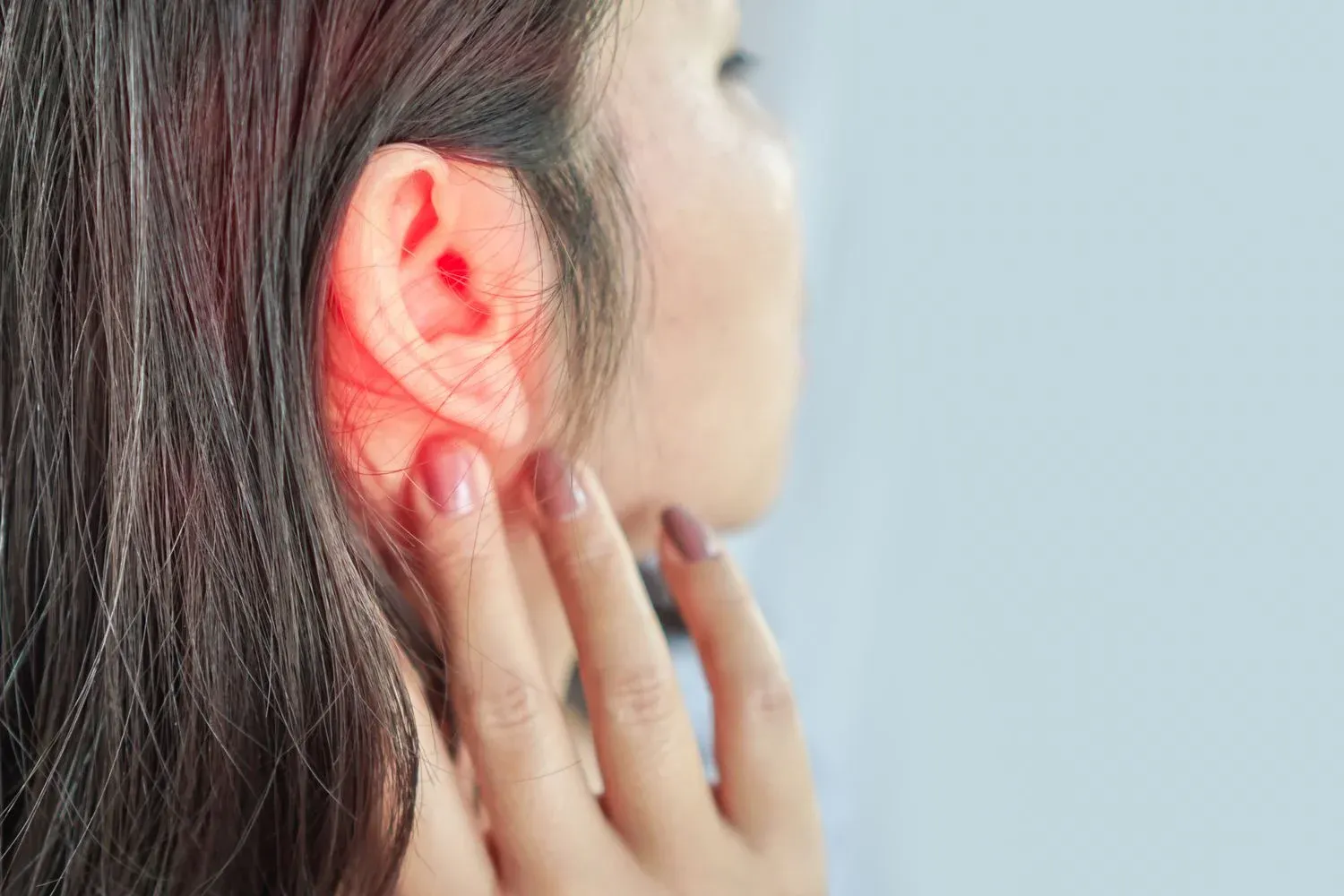
- The hallmark symptom is pain when you pull the earlobe or press the small cartilage flap (tragus) in front of the ear — a simple test that helps distinguish it from other ear pain.
- Dubai's year-round pool culture, beach clubs, water parks, and humidity above 80% in summer make swimmer's ear one of the most common ENT complaints seen between June and September.
- Cotton swabs do not prevent swimmer's ear — they push wax deeper, strip the ear canal's protective lining, and are a leading avoidable cause of otitis externa.
- Most cases resolve within 7–10 days with prescription antibiotic-steroid ear drops, but the ear canal often needs professional microsuction cleaning first so the drops can actually reach the infected skin.
- Left untreated, swimmer's ear can spread to the cartilage and soft tissue around the ear, and in rare cases — particularly in people with diabetes — can become a serious condition called malignant otitis externa.
- Prevention is simple and highly effective: dry your ears thoroughly after every swim, use silicone earplugs, and never insert cotton buds, fingers, or other objects into the ear canal.
If your ear has started to itch, throb, or feel painfully tender after a weekend at the beach club, a few laps in the compound pool, or a day at one of Dubai's water parks, you are almost certainly dealing with swimmer's ear — medically known as otitis externa. This infection of the outer ear canal is one of the most common reasons people in Dubai visit an ENT clinic during the summer months, when pools, beach days, and water park trips are part of daily life for residents and visitors alike. This guide covers everything you need to know about swimmer's ear treatment in Dubai — symptoms, causes, home care, when to see a specialist, treatment options, prevention, and costs — reviewed by our ENT specialist to help you get back in the water safely and pain-free.
Health Screening Packages
Save with our bundled screening packages — specialist consultation included






What Is Swimmer's Ear? Otitis Externa vs Middle Ear Infection
Swimmer's ear (otitis externa) is an infection or inflammation of the ear canal — the tube that runs from the opening of your ear to the eardrum. It happens when water becomes trapped inside the canal, softening the skin and washing away the thin layer of protective wax (cerumen) that normally keeps bacteria and fungi out. Once that barrier is gone, organisms such as Pseudomonas aeruginosa and Staphylococcus aureus — and, less commonly, fungi such as Aspergillus or Candida — multiply rapidly in the warm, moist environment, causing redness, swelling, and pain within the canal itself.
This is very different from a middle ear infection (otitis media), the type most commonly seen in young children after a cold. Otitis media happens behind the eardrum, usually following a blocked eustachian tube, while otitis externa happens in front of the eardrum, in the ear canal itself, and is almost always linked to water exposure or trauma to the canal. Knowing the difference matters because the treatment for each is completely different — swimmer's ear responds to topical ear drops applied directly into the canal, while middle ear infections may need oral antibiotics or, sometimes, no medication at all.
Swimmer's Ear vs Middle Ear Infection: Quick Comparison
| Feature | Swimmer's Ear (Otitis Externa) | Middle Ear Infection (Otitis Media) |
|---|---|---|
| Location | Ear canal (outer ear, in front of eardrum) | Behind the eardrum |
| Main trigger | Trapped water, pool chemicals, cotton swabs | Colds, blocked eustachian tube |
| Hallmark sign | Pain when pulling earlobe or pressing tragus | Deep ear pain, often with fever |
| Most common age group | Children and adults who swim regularly | Infants and young children |
| Typical treatment | Topical antibiotic-steroid ear drops | Watchful waiting or oral antibiotics |
| Peak season in Dubai | Summer — pools, beaches, water parks | Winter — cold and flu season |
How to tell swimmer's ear apart from a middle ear infection
Swimmer's Ear Symptoms: A Complete Checklist
Otitis externa symptoms typically develop gradually — often starting a day or two after swimming — and worsen over 24 to 48 hours if left untreated. Recognising the pattern early makes treatment faster and far more comfortable.
- Itching inside the ear canal: Usually the very first symptom, often mistaken for a minor irritation
- Pain when pulling the earlobe or pressing the tragus: The single most reliable sign of swimmer's ear — try gently tugging your ear; if it hurts, otitis externa is the likely cause
- Redness and swelling of the ear canal: The canal can narrow so much that it becomes difficult to fit an ear drop applicator or earphone inside
- Discharge: Clear and watery at first, becoming thicker, yellowish, or foul-smelling as the infection progresses
- A feeling of fullness or blockage: Caused by swelling and debris building up inside the narrowed canal
- Muffled hearing: Sound is dampened when the canal is swollen or filled with discharge
- Pain when chewing or moving the jaw: The canal sits close to the jaw joint, so more advanced infections can radiate pain there
- Fever and spreading redness beyond the ear: A red-flag sign that the infection is advancing and needs urgent medical review
Mild, Moderate, and Severe Otitis Externa
| Stage | What You'll Notice |
|---|---|
| Mild | Itching, mild discomfort, slight redness; canal not yet swollen shut |
| Moderate | Increasing pain, visible swelling, some discharge, canal partially blocked |
| Severe | Canal completely swollen shut, intense pain, thick discharge, swelling extends to the outer ear or surrounding skin, possible fever |
Severity typically corresponds to how quickly treatment is started
What Causes Swimmer's Ear? Water, Pool Chemicals & Cotton Swabs
Swimmer's ear develops when the ear canal's natural defences are overwhelmed — usually through a combination of moisture and mechanical damage rather than a single cause. Understanding these triggers is the key to preventing repeat episodes.
- Trapped water: Water left inside the ear canal after swimming or showering softens the skin (a process called maceration), making it easier for bacteria and fungi to invade
- Chlorinated pool water: Chlorine strips away the ear canal's protective wax layer and disrupts its naturally acidic, antibacterial environment
- High humidity: When ambient air is already saturated with moisture, as it is in Dubai for much of the year, the ear canal cannot dry out properly between swims
- Cotton swabs and other objects: Cotton buds, bobby pins, and fingernails scratch the delicate canal lining and push wax deeper instead of removing it, creating tiny entry points for infection
- Excessive ear cleaning: Removing too much wax strips away the canal's natural protective barrier, which is designed to be mildly acidic and water-repellent
- Earbuds, hearing aids, and swim caps: Anything that traps moisture against the ear canal for long periods increases risk
- Skin conditions: Eczema or psoriasis affecting the ear canal can make the skin more vulnerable to infection
- Natural sea water and lagoons: Water quality varies, and bacteria levels can be higher than in well-maintained, chlorinated pools
It is worth noting that earwax is not the enemy here — it is actually part of the ear's natural defence system. If you are unsure whether wax build-up or an infection is behind your discomfort, our guide to ear wax removal in Dubai explains how professional microsuction differs from home cleaning methods and why cotton buds should be avoided altogether.
Why Swimmer's Ear Is So Common in Dubai This Summer
Dubai's lifestyle and climate create close to ideal conditions for otitis externa, particularly from June through September when temperatures and humidity both peak. At DCDC, we consistently see a rise in swimmer's ear cases during the summer school holidays, when families spend far more time at pools, beach clubs, and water parks.
- Year-round pool access: Most residential compounds, hotels, and gyms have pools that are used daily, not just seasonally, giving the ear canal little chance to fully recover between swims
- Beach club culture: Long days at Dubai's beach clubs often mean repeated dips in the sea and pool across a single afternoon, with ears rarely drying out completely
- Water parks: Summer visits to water parks such as Wild Wadi, Aquaventure, and Laguna Waterpark involve hours of continuous water exposure, high-pressure slides that force water deep into the canal, and shared pool water
- Summer humidity above 80–90%: Even after leaving the water, Dubai's humid outdoor air slows evaporation from the ear canal, extending the window during which bacteria can take hold
- Intense heat driving more frequent swimming: With outdoor temperatures regularly above 40°C in summer, pools and the sea become the main way to cool down, multiplying daily water exposure
- Children's swim lessons and camps: Many summer camps in Dubai include daily swimming, increasing cumulative exposure in young children whose ear canals are already narrower and more prone to blockage
- Sea swimming at JBR and Kite Beach: Natural sea water carries a different bacterial load than chlorinated pools, and warmer sea temperatures in summer can support faster bacterial growth
Swimmer's Ear in Children vs Adults
Otitis externa affects both children and adults, but the presentation and risk factors differ. Children's ear canals are narrower and more prone to trapping water, and swim lessons or camps often mean daily exposure throughout the summer. Because young children cannot always describe pain clearly, parents should watch for tugging or rubbing the ear, unusual fussiness after swimming, reluctance to lie on the affected side, or visible discharge on the pillow.
Adults, on the other hand, tend to notice the classic pain-on-pulling symptom quickly and can usually pinpoint the trigger — a recent pool day, beach trip, or aggressive ear cleaning. Adults who wear hearing aids, in-ear headphones, or swim caps regularly are at somewhat higher risk of recurrent episodes because moisture stays trapped against the canal for extended periods throughout the day, not just during swimming.
Home Care vs When to See an ENT Doctor
Very mild cases — itching without pain, caught within the first day — may improve with simple home measures: keeping the ear completely dry, avoiding swimming until symptoms resolve, and using over-the-counter drying drops if the eardrum is known to be intact. However, once pain, swelling, or discharge appear, home remedies alone are rarely enough, because the swollen canal usually needs to be cleaned before any drops can reach the infected skin.
- See a doctor promptly if you have pain when pulling the ear or pressing the tragus — this almost always confirms otitis externa and needs prescription treatment
- See a doctor promptly if there is visible discharge, especially if it is thick, yellow, or foul-smelling
- See a doctor promptly if the ear feels blocked or hearing is noticeably muffled
- See a doctor promptly if symptoms do not improve, or worsen, after 48 hours of keeping the ear dry
- Seek urgent care if you have fever, swelling that spreads beyond the ear, or severe pain — this can indicate the infection is advancing into surrounding tissue
- Seek urgent care immediately if you have diabetes, a weakened immune system, and develop severe ear pain, as this raises the risk of a rare but serious complication called malignant otitis externa
Deciding whether ear pain in a child needs a doctor's visit can be difficult, especially when symptoms overlap with other common childhood ear complaints. Our guide on recognising ear infection signs in children walks through the specific cues to watch for at different ages and when a same-day appointment is worth booking.
Swimmer's Ear Treatment Options
Treatment for otitis externa is targeted directly at the ear canal rather than the whole body, which is why most cases resolve quickly once proper treatment begins.
Aural Toilet (Professional Ear Cleaning)
Before ear drops can work, debris, discharge, and dead skin often need to be gently removed from the canal by a doctor using microsuction or careful irrigation. This step, known as aural toilet, dramatically improves how well subsequent medication penetrates the infected tissue and is one of the most important — and most frequently skipped — parts of effective treatment.
Topical Antibiotic-Steroid Ear Drops
The mainstay of treatment is prescription ear drops combining an antibiotic (commonly ciprofloxacin or ofloxacin) with a corticosteroid to reduce inflammation and swelling quickly. Drops are typically used two to three times daily for 7 to 10 days, and most patients notice significant pain relief within 48 to 72 hours of starting treatment.
Ear Wick Insertion
If the canal is too swollen for drops to reach the affected skin, the doctor may insert a small sponge or gauze wick soaked in medication. The wick expands slightly and delivers drops directly to the inflamed tissue until swelling subsides enough for drops to be applied normally.
Oral Antibiotics and Antifungal Treatment
Oral antibiotics are reserved for cases where infection has spread beyond the ear canal, in immunocompromised patients, or when topical treatment has failed. If a fungal cause is suspected — more itchy than painful, with a cheesy or fluffy-looking discharge — antifungal drops are used instead of, or alongside, antibiotic drops.
Pain Management
Over-the-counter paracetamol or ibuprofen manages discomfort effectively while topical treatment takes effect. Avoid inserting anything into the ear to relieve itching, as this delays healing and risks worsening the infection.
Ear Pain After Swimming?
Book a same-day ENT consultation at DCDC Dubai Healthcare City. Our specialists diagnose and treat swimmer's ear quickly so you can get back to the pool or beach.
Building 64, Block A, Al Razi Medical Complex, DHCC — open until 10 PM Sat–Thu
Dr. Yousra Mohamed's Clinical Perspective on Swimmer's Ear in Dubai
"Every summer, we see a clear rise in swimmer's ear cases at DCDC, and it almost always tracks with school holidays and the hottest, most humid weeks of the year," says Dr. Yousra Mohamed, ENT Specialist at DCDC (MBBS, Arab Board ORL, MRCS). "The pattern is very consistent — a family spends the day at a beach club or water park, and within 24 to 48 hours one or more of the children, and often an adult too, comes in with a red, swollen, painful ear canal."
"The biggest mistake I see is patients trying to manage it themselves with cotton buds or olive oil before coming in. Cotton buds push debris deeper and can scratch the canal lining, which actually makes the infection worse and more painful. Olive oil has no antibacterial effect against the organisms that cause swimmer's ear — it may soften wax, but it does not treat an active infection. My advice is simple: if pulling your ear hurts, do not put anything in it yourself — come in so we can clean the canal properly and start the right drops. Most patients feel dramatically better within two to three days once treatment actually reaches the infected skin."
"For families living the Dubai summer lifestyle — daily pool time, beach weekends, water park trips — I recommend keeping a simple pair of silicone swim earplugs in every swim bag and making ear-drying a normal part of the after-swim routine, just like sunscreen. It takes ten seconds and prevents days of discomfort."
Complications of Untreated Swimmer's Ear
Most cases of otitis externa resolve fully with prompt, appropriate treatment. However, when swimmer's ear is ignored or repeatedly self-treated without medical evaluation, the infection can progress and cause complications that are far more difficult to manage.
- Spread to surrounding tissue: Infection can extend beyond the canal into the outer ear cartilage (perichondritis) or the soft tissue of the face and neck (cellulitis)
- Chronic otitis externa: Recurrent or poorly treated infections can become a long-standing, difficult-to-clear condition with persistent itching and mild discharge
- Temporary or persistent hearing loss: Ongoing swelling and discharge can block the canal and dampen sound conduction until fully treated
- Ear canal narrowing: Repeated episodes of inflammation can cause scar tissue to form, permanently narrowing the canal
- Malignant (necrotising) otitis externa: A rare but serious complication in which infection invades the bone at the base of the skull. It occurs almost exclusively in people with diabetes or weakened immune systems and requires urgent, intensive treatment
If an ear infection has left you with lingering ringing, buzzing, or muffled hearing even after the pain has resolved, it is worth getting checked rather than assuming it will settle on its own. Our guides to tinnitus treatment in Dubai and hearing tests in Dubai explain when these symptoms warrant further evaluation.
How to Prevent Swimmer's Ear: Tips for Dubai Swimmers
Prevention is straightforward and highly effective, which makes it well worth building into your — and your children's — regular swim routine, especially during the peak pool and beach months.
- Dry your ears thoroughly after every swim: Tilt your head to each side to let water drain out, then gently dry the outer ear with a towel
- Use a hairdryer on the lowest heat setting: Hold it at arm's length and aim it at the ear briefly to help evaporate any remaining moisture
- Wear silicone swim earplugs: Especially useful for children who swim daily during summer camps, or for anyone with a history of swimmer's ear
- Never insert cotton buds, fingers, or other objects into the ear: They damage the canal lining and push wax and debris deeper rather than removing it
- Consider preventive drying drops after swimming: A doctor-approved mix of isopropyl alcohol and white vinegar helps evaporate trapped water and restores the canal's normal acidic environment — only appropriate when the eardrum is intact
- Avoid swimming with an active infection or a perforated eardrum: Water exposure will delay healing and can worsen the condition
- Choose well-maintained pools where possible: Properly chlorinated pools generally carry a lower bacterial load than untreated or poorly maintained water
- Book a professional ear check before the summer swim season: If you or your child had swimmer's ear last year, a quick ENT review can catch early wax build-up or canal issues before they cause problems again
Swimmer's Ear Treatment Cost in Dubai
Costs for swimmer's ear care in Dubai vary depending on severity and whether professional ear cleaning or diagnostic testing is required. Below is a general guide to typical pricing at private clinics in Dubai. Most comprehensive health insurance plans cover ENT consultations and medically necessary treatment for otitis externa.
| Service | Estimated Cost (AED) | Notes |
|---|---|---|
| ENT specialist consultation | From AED 350 | Includes otoscopic examination and clinical assessment |
| Follow-up consultation | AED 150–300 | Checking treatment response after initial visit |
| Microsuction ear cleaning | From AED 300 | Removes debris and discharge so ear drops can penetrate effectively |
| Ear wick insertion | AED 150–300 | For severely swollen canals where drops cannot otherwise reach the infection |
| Antibiotic-steroid ear drops | AED 30–80 | Pharmacy cost; typically a 7–10 day course |
| Antifungal ear drops | AED 40–90 | Used when a fungal cause is identified or suspected |
| Oral antibiotics (course) | AED 30–70 | Only when infection has spread beyond the ear canal |
| Ear swab / culture and sensitivity | AED 150–350 | For recurrent or treatment-resistant infections |
Estimated swimmer's ear treatment costs in Dubai (2026). Prices are approximate and vary by provider.
DCDC partners with 20+ insurance providers in Dubai, including Daman, AXA, and Bupa, with direct billing so you generally do not need to pay upfront and claim later. Our reception team can verify your coverage before your appointment.
What to Expect at DCDC for Swimmer's Ear
Doctors Clinic Diagnostic Center (DCDC) is located in Building 64, Block A, Al Razi Medical Complex, in Dubai Healthcare City — a short drive from the beaches and beach clubs along Jumeirah. We are MOHAP licensed, hold a Google rating of 4.8/5 from more than 1,000 reviews, and report 98% patient satisfaction with an average wait time of around 15 minutes.
- Same-day appointments: Ear pain rarely waits for a convenient time — same-day slots are frequently available, and we are open until 10 PM Saturday to Thursday and until 9 PM on Friday, so evening pain does not have to wait until tomorrow
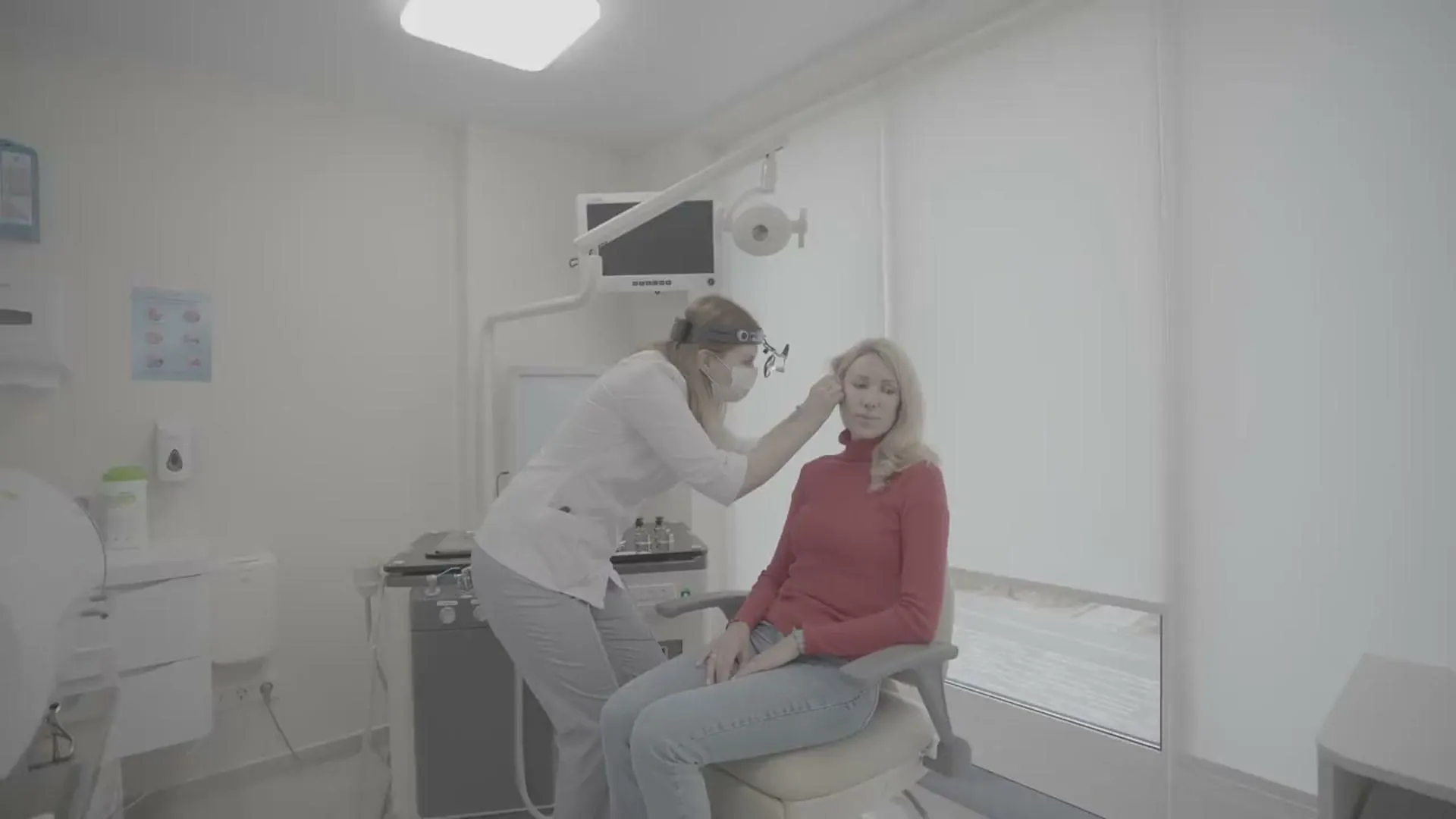
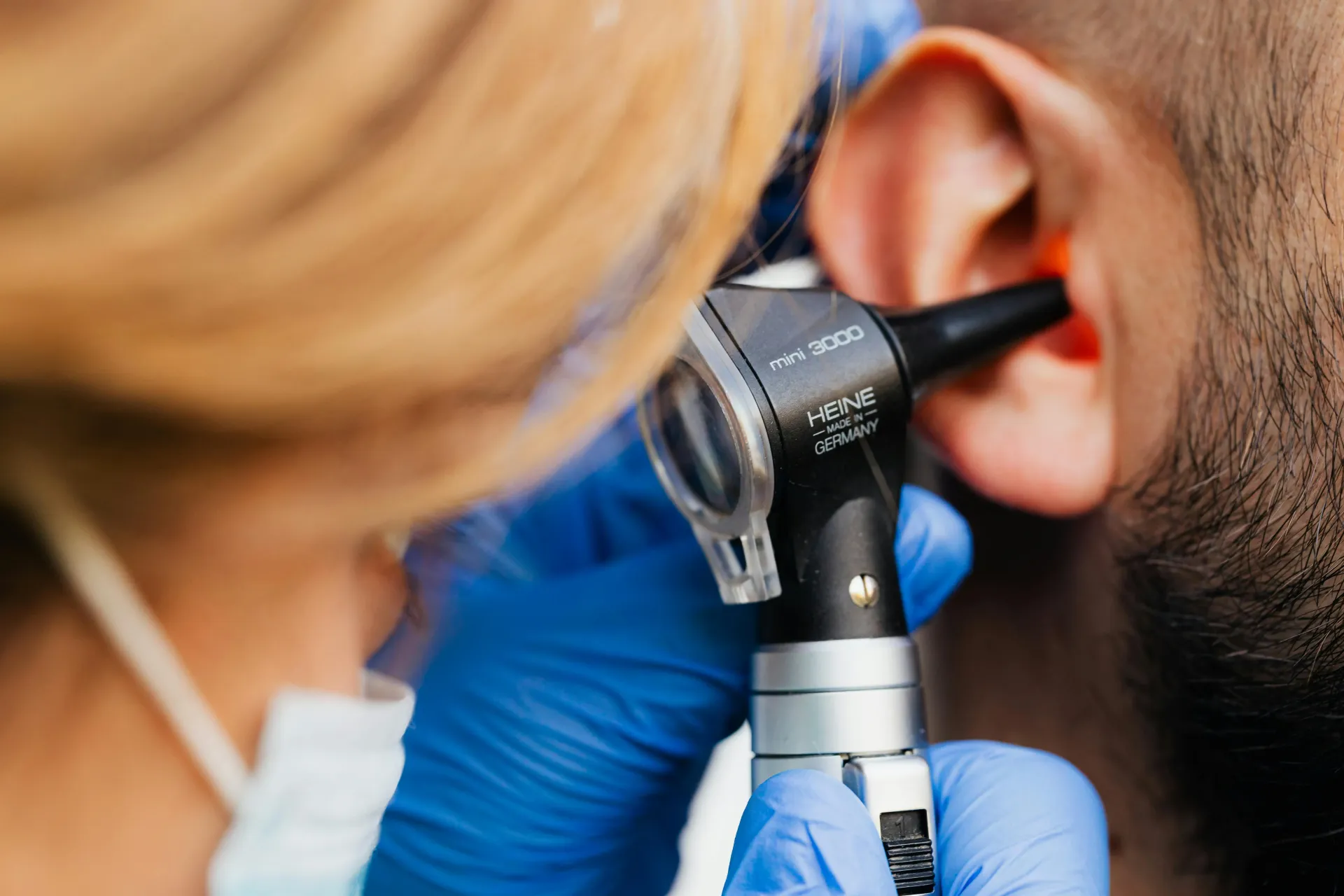
- Thorough otoscopic examination: Your ENT specialist examines the ear canal directly to confirm swimmer's ear and assess severity
- On-site microsuction cleaning: When needed, debris and discharge are gently cleared so prescribed drops can work effectively from the first dose
- Evidence-based prescribing: Treatment follows current international ENT guidelines — topical drops first, oral antibiotics only when genuinely indicated
- Multilingual care: Our team communicates in Arabic, English, Farsi, Urdu, and Hindi, so language is never a barrier to explaining symptoms or treatment
- Direct insurance billing: We work with 20+ insurance partners for a smoother, cashless visit wherever possible
- Free parking on-site: Convenient access whether you are coming straight from the beach or dropping in after work
Book Your Swimmer's Ear Consultation Today
Don't let ear pain ruin your summer. DCDC Dubai Healthcare City offers expert ENT evaluation, same-day appointments, and direct insurance billing for adults and children.
ENT consultations from AED 350 — 20+ insurance partners accepted
Related Services at DCDC
Expert care and advanced diagnostics at Dubai Healthcare City
ENT Consultation
Expert ENT evaluation and treatment for ear infections including swimmer's ear
Book AppointmentEar Infections
Diagnosis and treatment of otitis externa, middle ear infections, and chronic ear conditions
Book AppointmentHearing Assessment
Comprehensive hearing tests to check for infection-related hearing changes
Book AppointmentFrequently Asked Questions
Final Thoughts
Swimmer's ear is one of the most common — and most preventable — ENT complaints in Dubai during the summer months. The city's pool culture, beach clubs, and water parks are a wonderful part of life here, but they do mean the ear canal needs a little extra care, especially between June and September when humidity is at its peak.
Recognising the hallmark symptom — pain when pulling the earlobe or pressing the tragus — helps you act quickly and avoid days of unnecessary discomfort. Most cases respond very well to prompt treatment: professional ear cleaning followed by a short course of prescription drops typically brings noticeable relief within two to three days.
Prevention costs nothing more than a habit change: dry your ears thoroughly after every swim, keep a pair of silicone earplugs in your swim bag, and leave cotton buds out of the routine entirely. These simple steps make a real difference for families who swim regularly throughout the Dubai summer.
At Doctors Clinic Diagnostic Center in Dubai Healthcare City, our ENT team — led by specialists like Dr. Yousra Mohamed — sees and treats swimmer's ear every summer, with same-day appointments, on-site microsuction cleaning, and extended hours until 10 PM for when ear pain simply cannot wait until tomorrow. Most major insurance plans are accepted with direct billing, and our multilingual team is here to help in Arabic, English, Farsi, Urdu, and Hindi.
Sources & References
This article was reviewed by our medical team and references the following sources:
- Mayo Clinic — Swimmer's Ear (Otitis Externa): Symptoms and Causes
- NHS — Otitis Externa (Ear Infection)
- Cleveland Clinic — Swimmer's Ear (Otitis Externa): Symptoms & Care
- American Academy of Otolaryngology–Head and Neck Surgery — Swimmer's Ear (Otitis Externa)
- CDC — Healthy Swimming: Preventing Swimmer's Ear
- NIH StatPearls — Otitis Externa: Pathophysiology, Diagnosis, and Management
Medical content on this site is reviewed by DHA-licensed physicians. See our editorial policy for more information.

Written by
Dr. Yousra Mohamed
ENT Specialist
MBBS, Arab Board (ORL), MRCS
Dr. Yousra Mohamed is an ENT Specialist at Doctors Clinic Diagnostic Center (DCDC) in Dubai Healthcare City.
Related Articles
Ear Infection Treatment Dubai: Causes & Care
Ear Wax Removal Cost Dubai: What to Expect
Child Ear Infection Signs Every Parent Should Know
Hearing Test Dubai: Audiometry Types & Cost
Tinnitus Treatment Dubai: Causes & Relief
More in General Health
Flu vs COVID Symptoms Dubai: Key Signs (2026)
Read More
CBC Test Price Dubai: AED 149, Normal Ranges & Results
Read More
Dubai Clinic Without Insurance: Cost Guide (2026)
Read More
Doctor at Home Dubai: Home Visit Cost From AED 349 (2026)
Read More
Doctor on Call Dubai 24/7: Home, Hotel & Office Visits
Read MoreEar Wax Removal & Ear Cleaning Dubai: From AED 300 (2026)
Read More© 2026 Doctors Clinic Diagnostic Center (DCDC), Dubai Healthcare City. Originally published at https://doctorsclinicdubai.ae/blog/swimmers-ear-treatment-dubai. All rights reserved. Unauthorized reproduction is prohibited.