Key Takeaways
- Colds start gradually over 1 to 3 days with a runny nose and sore throat, while flu hits suddenly, often within hours, with high fever, severe body aches, and pronounced fatigue.
- Fever above 38.5°C, especially with chills and muscle pain, points toward flu; colds rarely cause fever in adults and, if present, it is usually mild.
- A cold typically resolves within 7 to 10 days, whereas flu symptoms can last 1 to 2 weeks, with fatigue and cough sometimes lingering for several weeks afterward.
- Antiviral medication for flu, such as oseltamivir, works best when started within 48 hours of symptom onset, which is why same-day diagnosis matters more than waiting it out.
- A rapid flu test at DCDC starts from AED 149 and delivers results the same visit, while a GP consultation to assess your symptoms starts from AED 250.
- Dubai's constant switching between air-conditioned interiors and hot, humid outdoor air, plus its role as a major travel hub, keeps cold and flu viruses circulating year-round rather than in one defined season.
- The seasonal flu vaccine, available at DCDC from AED 150, is the single most effective way to reduce your risk of severe influenza and is recommended annually for most residents.
- Warning signs that need urgent medical attention include difficulty breathing, chest pain, bluish lips, confusion, or a fever that will not come down — these require same-day or emergency assessment, not home management.
The UAE records well over 100,000 influenza cases every year, and countless more residents come down with a common cold in between — yet most people can't reliably tell the two apart until symptoms are already several days old. That distinction matters far more than it seems. Flu antivirals only work if started within 48 hours of symptom onset, a cold needs no medication at all, and mistaking one for the other can mean days of lost work, unnecessary medication, or a delayed diagnosis of something more serious. This guide breaks down exactly how to tell flu from a cold, what Dubai's climate and travel patterns add to the picture, and when a general consultation at DCDC is the faster, more accurate route than guessing at home.
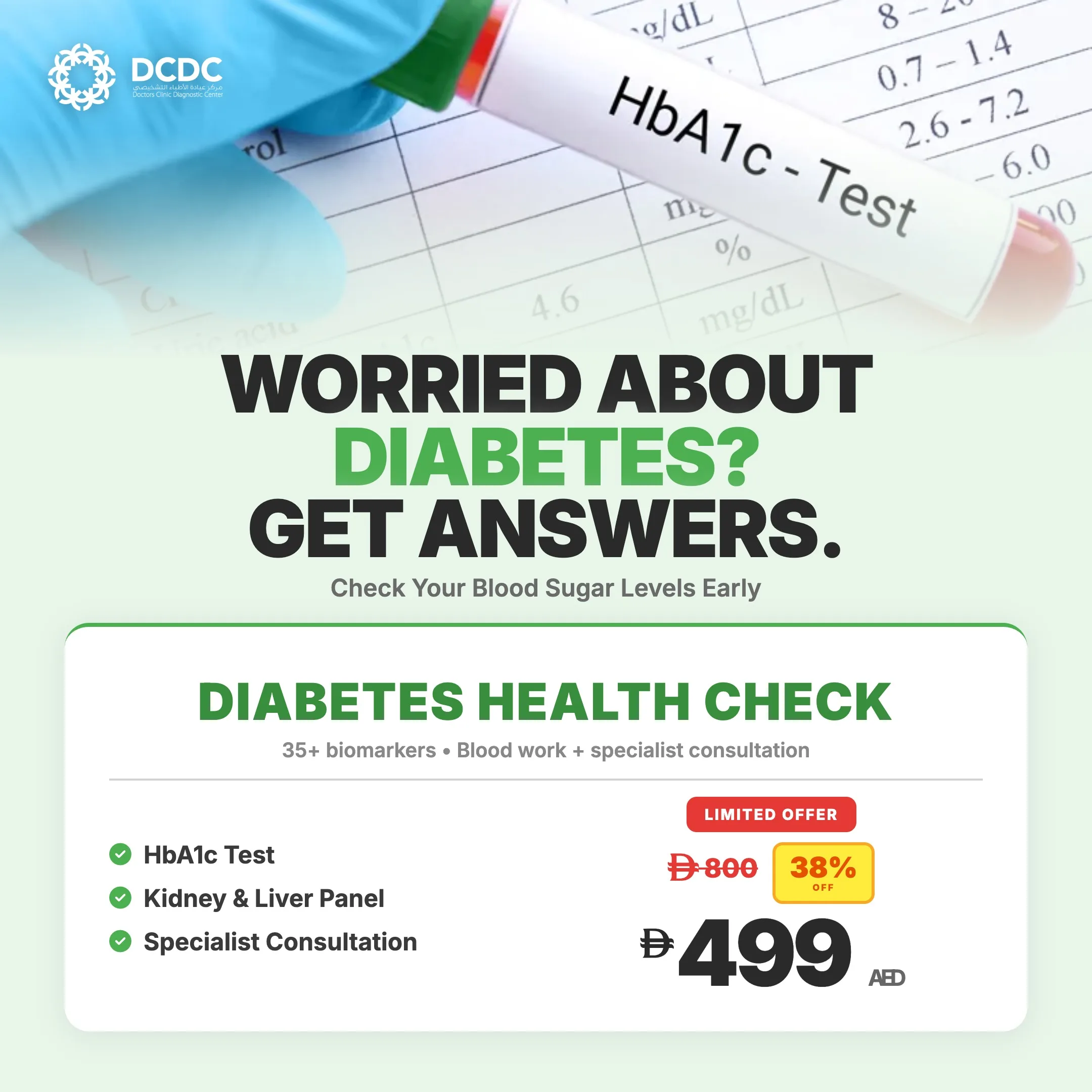
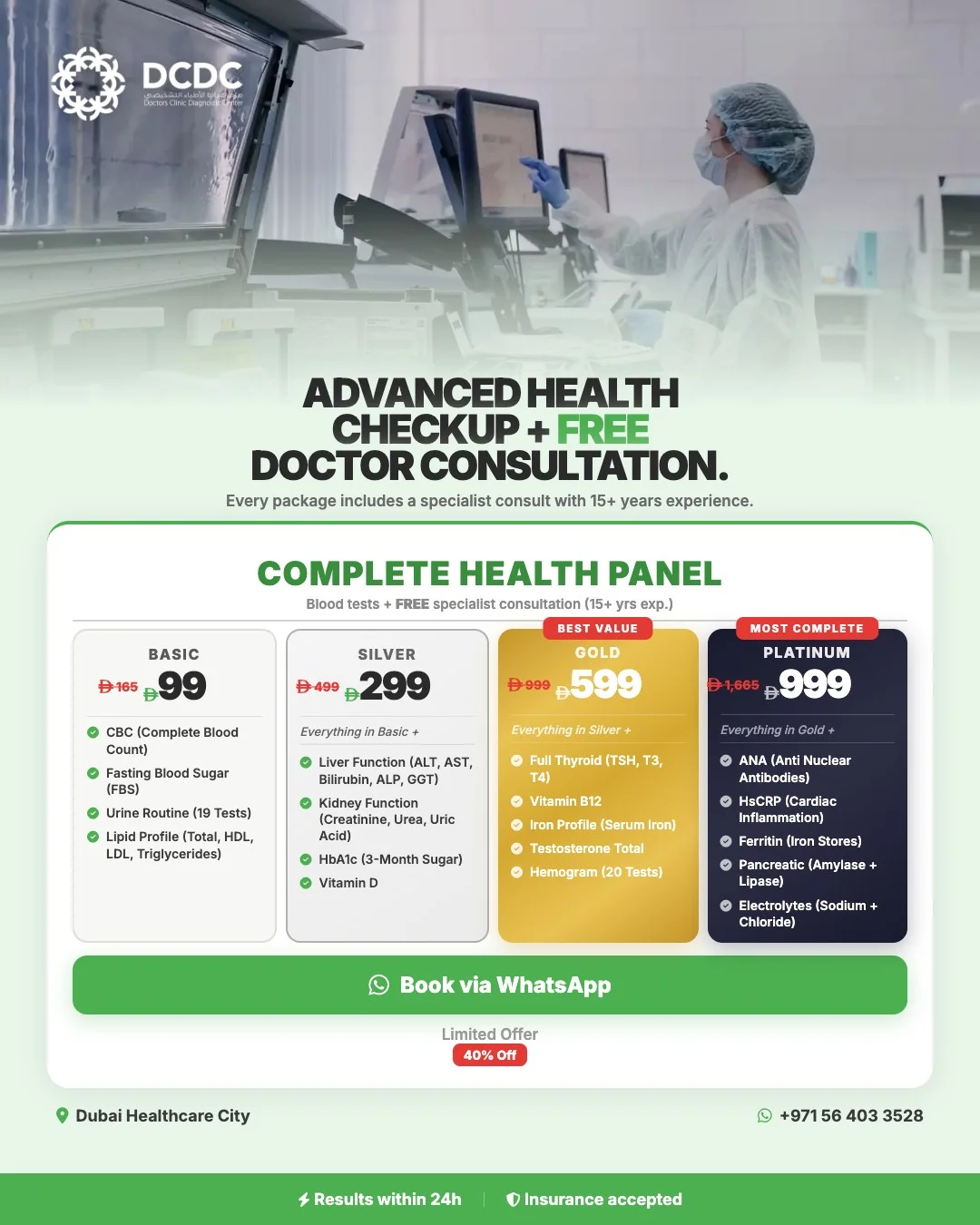
Health Screening Packages
Save with our bundled screening packages — specialist consultation included




Flu vs Cold: Key Symptom Differences
Both illnesses attack the respiratory tract and share several symptoms — congestion, cough, and a scratchy throat — which is exactly why they get confused so often. The clearest differences show up in how suddenly symptoms appear, how severe they feel, and whether fever and body aches are part of the picture. The table below lines up the two side by side using the patterns most commonly seen in clinic.
| Symptom | Common Cold | Influenza (Flu) |
|---|---|---|
| Onset | Gradual, over 1 to 3 days | Sudden, often within a few hours |
| Fever | Rare in adults, mild if present | Common, typically 38.5°C to 40°C, lasting 3 to 4 days |
| Body aches | Mild or absent | Common, often described as severe |
| Fatigue | Mild, manageable | Pronounced, can persist for 2 to 3 weeks |
| Headache | Uncommon | Common and often prominent |
| Cough | Mild to moderate, hacking | Common, can become severe and persistent |
| Sore throat | Common, often an early symptom | Sometimes present |
| Runny or stuffy nose | Very common | Sometimes present |
| Sneezing | Common | Uncommon |
| Chest discomfort | Mild, if present | Common, can be significant |
| Typical duration | 7 to 10 days | 1 to 2 weeks, with fatigue sometimes lingering longer |
General patterns seen in clinical practice. Symptoms can overlap, especially in the first 24 hours, which is why persistent or severe symptoms deserve a proper assessment rather than guesswork.
If you had to remember just two rows from this table, make it onset and fever. A cold creeps in — a scratchy throat one evening, a runny nose the next morning. Flu knocks you down within hours, often with a fever high enough that you know something is different from a typical cold. When those two signs point clearly in one direction, the rest of the pattern usually follows.
What Causes the Flu vs the Common Cold
Influenza is caused specifically by influenza A or influenza B viruses, which mutate frequently enough that a new vaccine formulation is needed every year to keep pace with circulating strains. These viruses target the respiratory tract aggressively, triggering the strong immune response responsible for flu's characteristic fever, body aches, and exhaustion.
The common cold, by contrast, is not caused by a single virus at all. More than 200 different virus strains can produce cold symptoms, with rhinoviruses responsible for the majority of cases, alongside seasonal coronaviruses (unrelated to COVID-19), respiratory syncytial virus (RSV), and parainfluenza viruses. Because so many different viruses can cause a cold, and because they tend to stay localized in the nose and throat rather than triggering a body-wide immune reaction, cold symptoms are generally milder and more confined to the upper airway than flu symptoms.
How Symptoms Develop: Flu vs Cold Timeline
Watching how symptoms unfold over the first several days is often more useful than any single symptom checklist, because the pattern of onset and progression rarely overlaps between the two illnesses.
| Timeframe | Common Cold | Influenza (Flu) |
|---|---|---|
| Day 1 | Scratchy throat and mild fatigue begin gradually | Sudden fever, chills, body aches, and headache appear abruptly |
| Day 2 to 3 | Runny or stuffy nose, sneezing, and a mild cough develop | Fever peaks between 38.5°C and 40°C; severe fatigue, muscle aches, and a dry cough set in |
| Day 4 to 5 | Symptoms peak: congestion, sore throat, mild cough | Fever begins to ease; cough and fatigue continue, and chest discomfort may appear |
| Day 6 to 7 | Gradual improvement, with a lingering cough possible | Fever resolves, but fatigue, cough, and general weakness commonly persist |
| Week 2 and beyond | Full recovery is typical | Fatigue and cough can linger for one to two more weeks; some patients develop complications |
A useful rule of thumb: colds build up gradually and fade gradually, while flu arrives abruptly and takes noticeably longer to fully clear.
Because flu symptoms can start so suddenly and escalate within a single day, waiting to "see how it develops" often means losing the narrow window where antiviral treatment is most effective. Our flu season preparation guide covers how to recognize early warning signs and get ahead of a bad flu season before symptoms peak.
When to See a Doctor for Flu or Cold in Dubai
Most colds and even many mild flu cases can be managed at home with rest, fluids, and over-the-counter symptom relief. However, certain signs mean it is time to book a consultation rather than wait it out, particularly for high-risk groups such as young children, adults over 65, pregnant women, and anyone with asthma, diabetes, heart disease, or a weakened immune system.
- Fever above 38.5°C that does not respond to paracetamol or lasts more than 3 days
- Severe or worsening body aches, chills, or headache that stop you from normal activity
- Shortness of breath, chest pain, or a cough that produces discolored or blood-tinged mucus
- Symptoms that seem to improve and then suddenly get worse again
- Sore throat severe enough to make swallowing difficult — see our guide to sore throat causes and treatment for more detail
- Pregnancy, chronic illness, or age over 65, where flu carries a higher risk of complications
- Symptoms in a young child that include unusual sleepiness, refusal to drink fluids, or a persistent high fever
- Any respiratory illness lasting longer than 10 days without improvement
How to Diagnose Flu vs Cold
Colds are almost always diagnosed clinically — a doctor reviews your symptoms and their pattern of onset, and no laboratory test is usually needed. Flu, on the other hand, can often be confirmed within minutes when it matters, which is particularly useful given how time-sensitive antiviral treatment is.
Rapid Influenza Test
A rapid flu test uses a nasal or throat swab to detect influenza A and B antigens, with results available within 15 to 20 minutes during the same clinic visit. It is the fastest way to confirm influenza and decide whether antiviral treatment is appropriate before the 48-hour window closes.
PCR Testing
PCR testing offers higher sensitivity than a rapid antigen test and can distinguish between influenza, RSV, and other respiratory viruses, including COVID-19, in a single combined panel. It takes longer to process — typically same-day to 24 hours — and is generally reserved for more complex cases, high-risk patients, or when a combined respiratory panel is clinically useful.
Blood Work: CBC and CRP
When symptoms are more severe or a secondary bacterial infection is suspected, a complete blood count (CBC) and C-reactive protein (CRP) test can help distinguish a straightforward viral illness from one that may need antibiotics. Both are available on-site at DCDC's on-site laboratory in Dubai Healthcare City, with results typically ready the same day.
| Service | DCDC Price | Dubai Average |
|---|---|---|
| GP Consultation | From AED 250 | AED 300-500 |
| Flu Rapid Test | From AED 150 | AED 200-350 |
| CBC Blood Test | From AED 149 | AED 150-250 |
| CRP Test | From AED 149 | AED 149 |
| Flu Vaccine (Seasonal) | From AED 150 | AED 200-350 |
Approximate starting prices for 2026 at DCDC, Dubai Healthcare City. Final cost depends on the specific test ordered and insurance coverage; direct billing is available with more than 20 insurance partners.
What to Expect at DCDC for Respiratory Symptoms
Getting a clear answer at DCDC in Dubai Healthcare City is designed to take a single visit rather than a guessing game spread over several days. From the moment you arrive at Building 64, the process is built around speed without cutting corners.
- Arrival and check-in at DCDC, Building 64, Dubai Healthcare City, with an average wait time of around 15 minutes
- GP consultation to review your symptoms, onset pattern, and medical history in detail
- Rapid flu test performed on-site if influenza is suspected, with results in 15 to 20 minutes
- Additional blood work, such as CBC and CRP, ordered from the on-site laboratory if a bacterial complication is suspected
- Same-day results for the rapid flu test and most blood work, so treatment decisions are not delayed
- Prescription and a clear follow-up plan, including guidance on when to return if symptoms worsen
- Extended hours, Saturday to Thursday 8 AM to 10 PM and Friday 9 AM to 9 PM, for symptoms that develop outside normal office hours
- Direct billing with more than 20 insurance providers, so most patients don't need to pay upfront
If your symptoms are centered on your throat more than your chest or sinuses, our detailed guide to sore throat causes and treatment covers when it's viral, when it's bacterial, and when it needs a closer look.
DCDC is a MOHAP-licensed facility rated 4.8 out of 5 on Google from more than 1,000 reviews, with a 98% patient satisfaction rate. Our general medicine team, including Dr. Hadeel Elnur, focuses on reaching an accurate diagnosis in one visit so patients aren't left cycling through trial-and-error medication for a week before finding out what they actually have.
Not Sure If It's Flu or a Cold? Get Checked Today
A same-day GP consultation and rapid flu test can settle the question in one visit, so you can start the right treatment before the 48-hour antiviral window closes. Book a general consultation or message us on WhatsApp.
Treatment Options: Flu vs Cold
Treating the Flu
Antiviral medications such as oseltamivir (commonly known by the brand name Tamiflu) can shorten the duration of flu symptoms and reduce the risk of complications, but only when started early. Beyond that window, antivirals offer little additional benefit, which is why prompt diagnosis matters more for flu than for almost any other common respiratory illness.
According to Dr. Hadeel Elnur, "The key to managing flu effectively is timing — antiviral medications like oseltamivir work best when started within 48 hours of symptom onset, which is why we encourage patients not to wait and self-diagnose at home."
Treating a Cold
There is no antiviral treatment for the common cold, and antibiotics are ineffective against it since it is caused by a virus, not bacteria. Management is entirely supportive: rest, fluids, saline nasal rinses, throat lozenges, and over-the-counter decongestants or pain relief to ease symptoms while your immune system clears the infection, typically within 7 to 10 days.
What Doesn't Work
Neither flu nor a cold responds to antibiotics, since both are viral illnesses. Using antibiotics for either provides no benefit and unnecessarily increases the risk of side effects and antibiotic resistance. Antibiotics are only appropriate when a secondary bacterial infection develops, such as a bacterial sinus infection or pneumonia, which is why a CBC and CRP blood test can be useful in confirming whether that has happened.
Flu vs Cold vs COVID-19: How to Tell Them Apart
Adding COVID-19 into the mix makes the picture even harder to sort out at home, since all three illnesses can overlap heavily in the first day or two. The table below highlights the features that tend to separate them most clearly.
| Symptom | Common Cold | Influenza (Flu) | COVID-19 |
|---|---|---|---|
| Onset | Gradual | Sudden | Gradual to sudden, 2 to 14 days after exposure |
| Fever | Rare | Common, often high | Common, but variable |
| Cough | Mild | Common, can be severe | Common, often dry |
| Loss of taste or smell | Rare, usually just from congestion | Rare | Common, a distinctive early sign |
| Body aches | Mild | Common, often severe | Common |
| Sore throat | Common | Sometimes | Sometimes |
| Shortness of breath | Rare | Rare, unless complicated | Can occur, particularly in moderate to severe cases |
| Fatigue | Mild | Severe | Variable, can be prolonged |
| Incubation period | 1 to 3 days | 1 to 4 days | 2 to 14 days |
| Confirmatory test | Usually clinical, no test needed | Rapid flu test or PCR | PCR or rapid antigen test |
Loss of taste or smell remains one of the most distinctive early signs of COVID-19, though it is not present in every case. When symptoms overlap this closely, testing is the only reliable way to confirm which virus is responsible.
Because these three illnesses can look nearly identical for the first 24 to 48 hours, testing removes the guesswork rather than waiting to see which symptoms show up next. A combined respiratory panel, available on-site at DCDC, can test for influenza, RSV, and COVID-19 from a single swab when the clinical picture is unclear.
Preventing Flu and Cold in Dubai
You can't eliminate every source of exposure in a city as busy and interconnected as Dubai, but several habits meaningfully lower your risk of catching — or spreading — both illnesses.
- Get the seasonal flu vaccine annually — it remains the single most effective protection against severe influenza
- Wash hands frequently with soap and water, especially after using public transport, malls, or the metro
- Avoid touching your face, particularly your eyes, nose, and mouth, after contact with shared surfaces
- Keep a light layer on hand for sharp transitions between hot outdoor air and heavily air-conditioned indoor spaces
- Stay well hydrated, since Dubai's dry, air-conditioned indoor air can dry out nasal passages and lower their resistance to viruses
- Prioritize sleep, since consistent poor sleep measurably weakens immune response
- Wear a mask on long-haul flights or in crowded terminals during peak travel periods through Dubai's airports
- Stay home when symptomatic, particularly in the first 3 to 4 days, when contagiousness is highest
For a complete cost breakdown before booking, our guide to flu vaccine cost in Dubai covers pricing, insurance coverage, and where to get vaccinated across the city.
Flu Vaccine in Dubai: Cost and When to Get It
The ideal window to get vaccinated in Dubai is typically September through November, ahead of the November-to-March period when flu activity tends to rise alongside cooler evening temperatures, greater indoor crowding, and a surge of travelers arriving from northern hemisphere winters. It takes about two weeks after vaccination for full immunity to develop, so earlier is better than waiting until symptoms are already circulating around you.
At DCDC, the seasonal flu vaccine starts from AED 150, is available as a walk-in during standard clinic hours, and takes only a few minutes to administer. Many insurance plans in the UAE cover the flu vaccine in full or in part, and DCDC's direct billing arrangements with over 20 insurance providers mean most patients don't need to pay out of pocket at the time of the visit.
- Adults over 50 and anyone with a chronic condition such as asthma, diabetes, or heart disease
- Pregnant women, at any stage of pregnancy
- Healthcare workers and anyone with frequent public-facing contact
- Children over 6 months of age, per standard pediatric guidance
- Frequent travelers, given Dubai's role as a major international travel hub
- Anyone living with, or caring for, a high-risk household member
Dubai-Specific Cold and Flu Risks
Dubai's environment adds a few factors to the standard cold-and-flu picture that residents elsewhere don't usually deal with. Air conditioning runs for most of the year, and the constant swing between icy indoor air and hot, humid outdoor air stresses the nasal lining's natural defenses, making it easier for viruses to take hold once you're exposed.
Indoor crowding compounds the problem. Malls, metro carriages, and office towers concentrate large numbers of people in enclosed, air-conditioned spaces for hours at a time, which is exactly the kind of environment where respiratory viruses spread most efficiently. Add Dubai's position as one of the world's busiest travel hubs, with millions of international passengers passing through its airports every month, and the city sees a near-constant influx of circulating virus strains rather than a single defined flu season.
None of this means Dubai residents get sick more often than anyone else, but it does mean cold and flu symptoms can appear at almost any time of year, and that a single defined "flu season" is a less useful mental model here than in temperate climates.
Flu and Cold Complications to Watch For
Most colds and cases of flu resolve without complications, but both can occasionally progress into something more serious, particularly in young children, older adults, pregnant women, and people with underlying health conditions.
- Pneumonia, a lung infection that can follow flu and causes worsening cough, chest pain, and difficulty breathing
- Bronchitis, an inflammation of the airways that can develop after either a cold or the flu — see our guide to bronchitis treatment for more detail
- Sinusitis, when a cold or flu leads to a secondary bacterial sinus infection with facial pressure and thick discharge
- Ear infections, more common in children following a cold
- Worsening of existing asthma or COPD symptoms
- Dehydration, particularly in children and older adults who reduce fluid intake while unwell
Seek emergency care immediately, rather than waiting for a scheduled appointment, if you or someone you're caring for develops any of the following: difficulty breathing or shortness of breath at rest, persistent chest pain or pressure, bluish lips or face, confusion or difficulty staying awake, severe or persistent vomiting, or a fever that does not respond to medication and is accompanied by a stiff neck or severe headache. A worsening cough that has spread to the chest may also point toward a chest infection that needs prompt evaluation.
Book Your Respiratory Consultation at DCDC Dubai Healthcare City
Whether it's flu, a cold, or something in between, our general medicine team can confirm it in a single visit with on-site rapid testing and lab work. Consultations start from AED 250. Book your consultation or contact us on WhatsApp.
Related Services at DCDC
Expert care and advanced diagnostics at Dubai Healthcare City
Frequently Asked Questions
Final Thoughts: Getting an Accurate Answer Fast
Flu and a cold can feel almost identical in the first few hours, but the pattern usually becomes clear within a day: colds build up gradually and stay relatively mild, while flu arrives suddenly with fever, severe body aches, and exhaustion that stop you in your tracks. In Dubai, where indoor crowding, constant air-conditioning transitions, and a huge volume of international travel keep respiratory viruses circulating year-round, waiting several days to "see what happens" often means missing the narrow window where flu treatment works best.
At Doctors Clinic Diagnostic Center in Dubai Healthcare City, our general medicine team, including Dr. Hadeel Elnur, combines same-day consultations with on-site rapid flu testing and laboratory work to confirm what you're dealing with in a single visit. With GP consultations from AED 250, rapid flu tests from AED 150, seasonal flu vaccines from AED 150, and direct billing with more than 20 insurance providers, getting a fast, accurate answer doesn't have to mean days of guesswork. If your symptoms came on suddenly, include a high fever, or simply haven't improved the way you'd expect, contact us to book a consultation.
Sources & References
This article was reviewed by our medical team and references the following sources:
- WHO: Influenza (Seasonal) Fact Sheet
- CDC: Similarities and Differences between Flu and Colds
- CDC: Similarities and Differences between Flu and COVID-19
- NHS: Common Cold
- Mayo Clinic: Influenza (Flu) — Symptoms and Causes
- Cleveland Clinic: Cold vs. Flu — How to Tell the Difference
- PubMed: Neuraminidase Inhibitors for Preventing and Treating Influenza
Medical content on this site is reviewed by DHA-licensed physicians. See our editorial policy for more information.

Written by
Dr. Hadeel Elnur
General Practitioner
MD, General Practice
Dr. Hadeel Elnur is a General Practitioner at Doctors Clinic Diagnostic Center (DCDC) in Dubai Healthcare City.
Related Articles

Flu Season Preparation Dubai: Stay Protected

Sore Throat Dubai: Causes & Treatment

Flu Vaccine Cost Dubai: Guide & Prices

Bronchitis Treatment Dubai: Symptoms & Care
Chest Infection Dubai: Symptoms & Treatment
More in General Health

Epilepsy Treatment Dubai: Symptoms & Care (2026)
Read More
Food Allergy vs Food Intolerance Dubai (2026)
Read MorePneumonia vs Flu Dubai: Key Differences (2026)
Read More
Swollen Lymph Nodes Dubai: When to Worry (2026)
Read More
Sleep Study Cost Dubai: Tests & Pricing (2026)
Read More
Calcium Deficiency Signs Dubai: Guide (2026)
Read More© 2026 Doctors Clinic Diagnostic Center (DCDC), Dubai Healthcare City. Originally published at https://doctorsclinicdubai.ae/blog/flu-vs-cold-differences-dubai. All rights reserved. Unauthorized reproduction is prohibited.