Key Takeaways
- Food allergy is an immune system reaction (IgE-mediated) that can start within minutes of eating and, in severe cases, cause life-threatening anaphylaxis — even trace amounts of the trigger food can be dangerous.
- Food intolerance is a non-immune, usually digestive reaction — often from a missing enzyme (like lactase) or sensitivity to food chemicals — that causes discomfort such as bloating, gas, or diarrhoea but is not life-threatening.
- The World Health Organization estimates food allergies affect more than 1 in 10 people worldwide, while food intolerances such as lactose intolerance are believed to affect an even larger share of the global population.
- In the UAE, egg, tree nuts, peanuts, milk, sesame, and shellfish are among the most common food allergens, with sesame increasingly recognised as a major regional allergen due to its presence in hummus, tahini, and baked goods.
- IgE blood testing is the medically recognised way to diagnose a true food allergy; IgG "food sensitivity" testing is not endorsed by the AAAAI or EAACI for diagnosing food allergy or intolerance and should not replace a doctor's assessment.
- Diagnosis typically starts with a detailed history and physical exam, followed by IgE blood testing (or skin prick testing) for suspected allergy, and elimination diets or breath testing for suspected intolerance.
- At DCDC, IgE allergy panels start from AED 550 with on-site sample collection and results in 1-3 days for routine tests, and Dr. Hadeel Elnur can coordinate further specialist referrals when needed.
- Seek emergency care (call 998) if you notice swelling of the lips or throat, difficulty breathing, dizziness, or widespread hives after eating — these are signs of anaphylaxis, not intolerance.
Food allergy vs food intolerance is one of the most common points of confusion we see in Dubai clinics, and getting it wrong can mean months of unnecessary food restriction — or, worse, missing a reaction that could become dangerous. Although both conditions can cause discomfort after eating, they involve entirely different body systems, carry different risks, and are diagnosed with different tests. A food allergy triggers your immune system and can become life-threatening within minutes, while a food intolerance is a digestive or chemical reaction that is unpleasant but not dangerous. This guide compares the two side by side — symptoms, causes, common UAE triggers, and testing options — and explains how allergy panel testing at DCDC in Dubai Healthcare City can help you find out, with certainty, which one you're dealing with.
Reviewed by Dr. Hadeel Elnur, General Practitioner at DCDC, this guide draws on clinical guidance from the American Academy of Allergy, Asthma & Immunology (AAAAI), the NHS, and Mayo Clinic, alongside current UAE testing and pricing information for 2026.
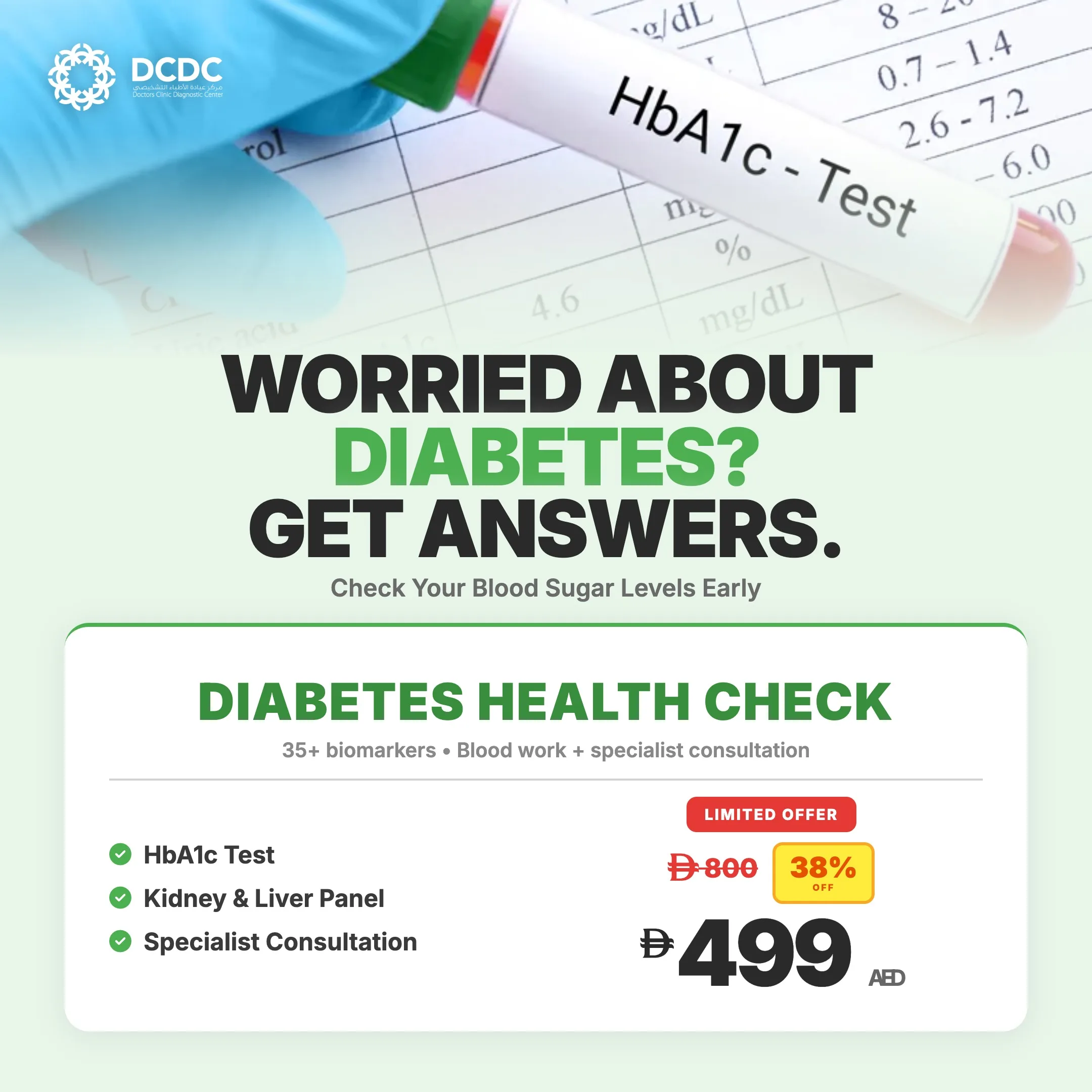
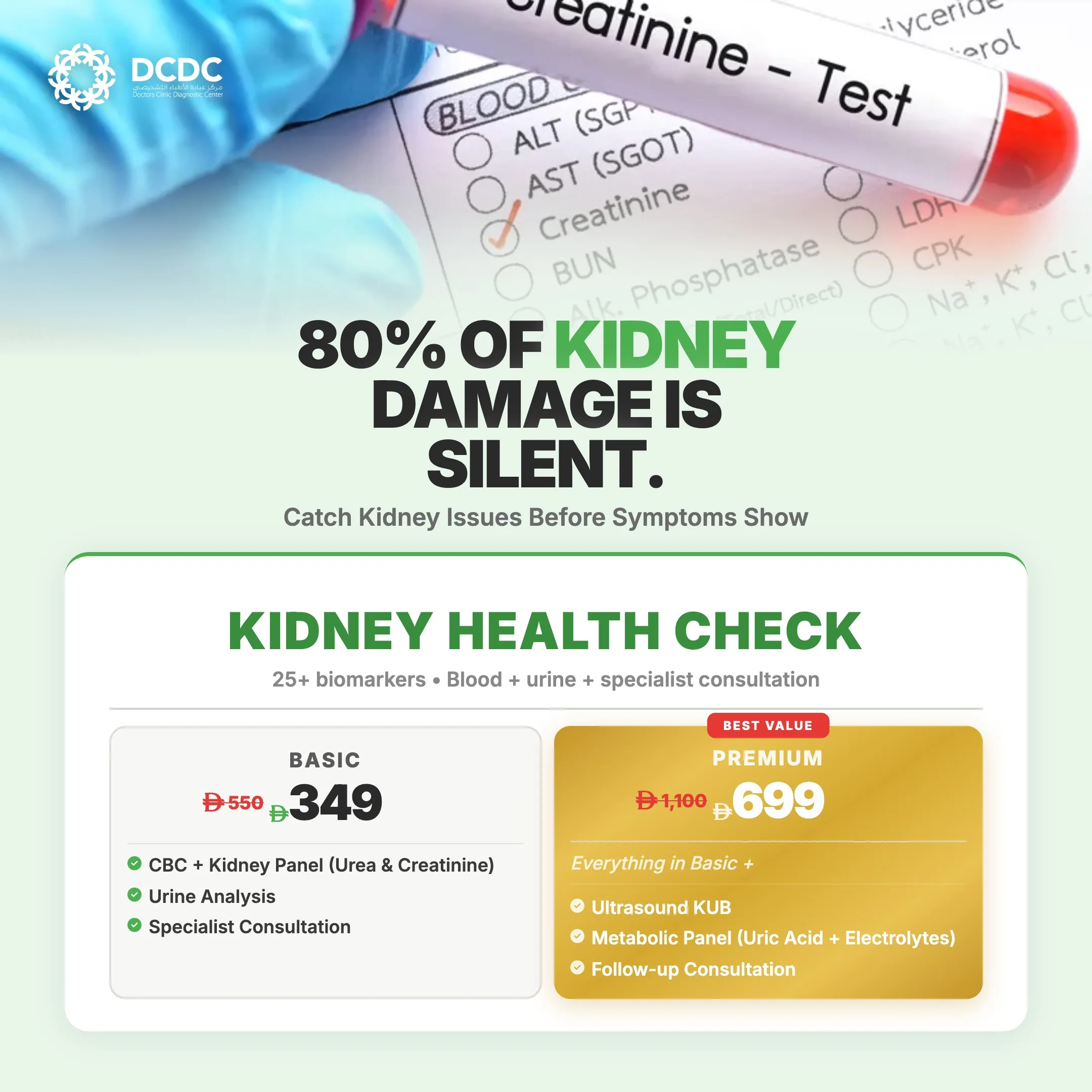
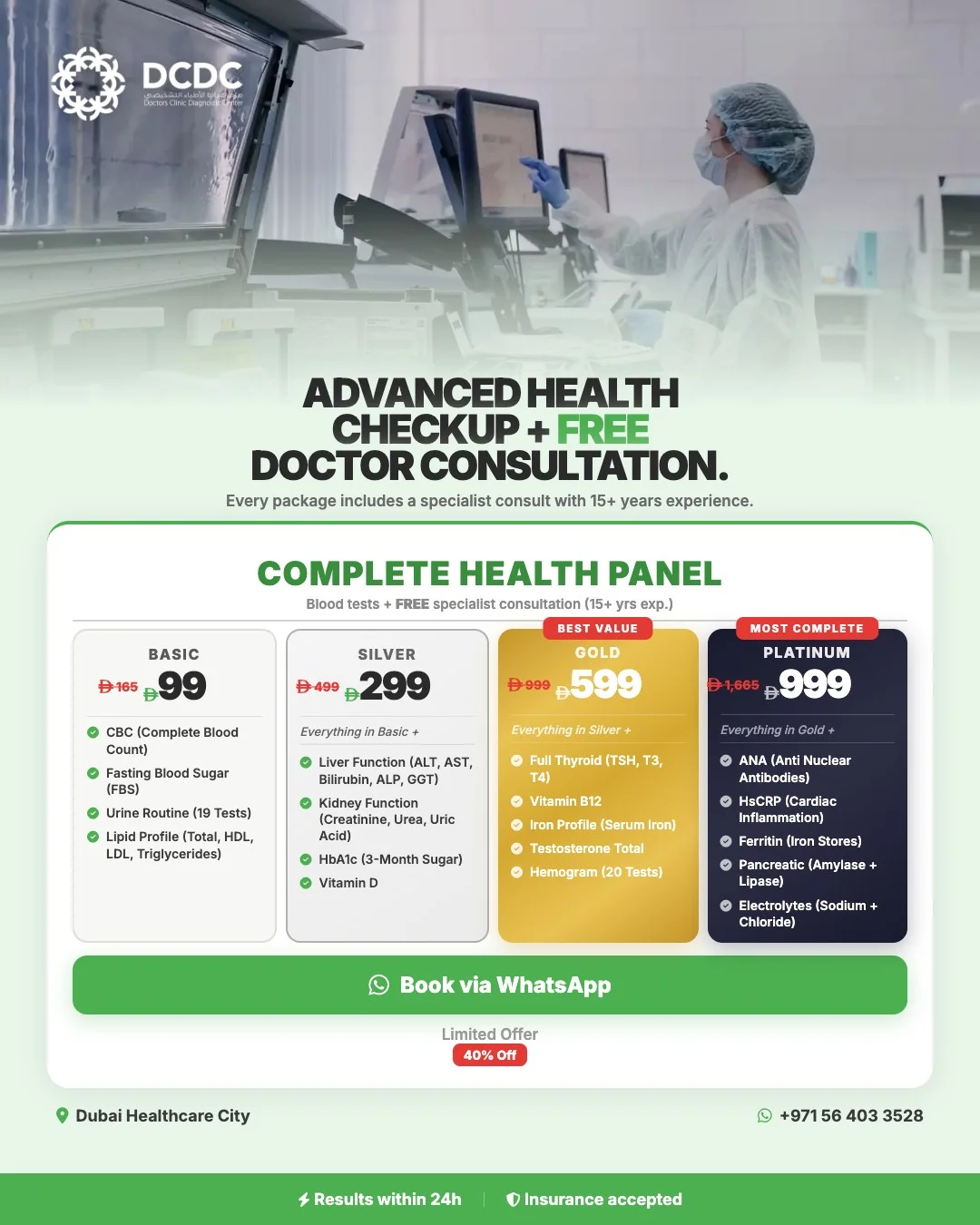
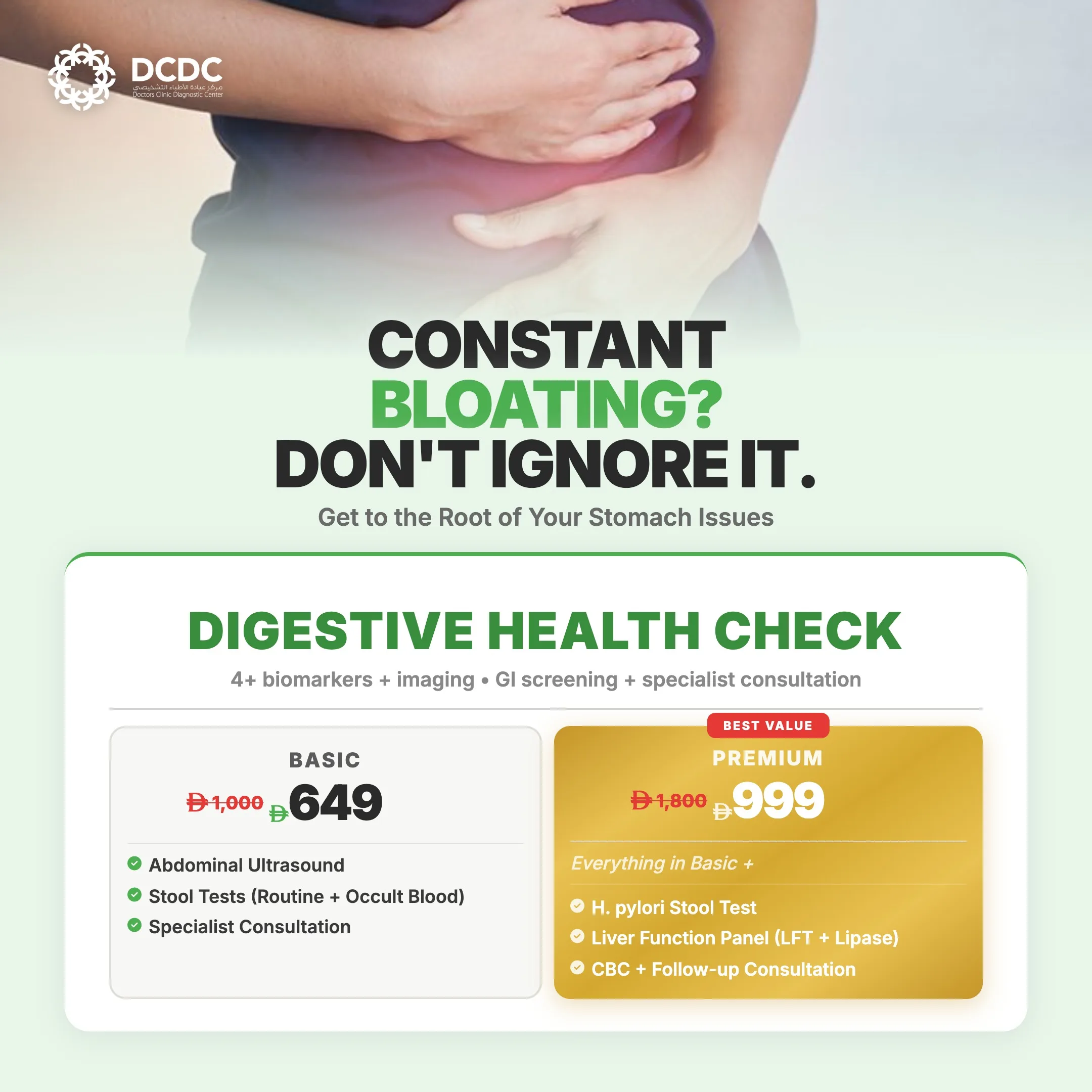
Health Screening Packages
Save with our bundled screening packages — specialist consultation included


Food Allergy vs Food Intolerance: Quick Comparison Table
Before diving into the detail, here is the fastest way to orient yourself. No single row is diagnostic on its own, but the overall pattern almost always points clearly toward one condition or the other.
| Feature | Food Allergy | Food Intolerance |
|---|---|---|
| Body system involved | Immune system (IgE antibodies) | Digestive system / metabolic — no immune involvement |
| Onset of symptoms | Minutes to about 2 hours after eating | Several hours up to 48 hours after eating |
| Amount needed to trigger | Even trace amounts can trigger a reaction | Usually only occurs above a certain quantity |
| Typical symptoms | Hives, swelling, vomiting, wheezing, anaphylaxis | Bloating, gas, diarrhoea, headache, fatigue |
| Can it be life-threatening? | Yes — anaphylaxis is a medical emergency | No — uncomfortable but not dangerous |
| Diagnostic test | IgE blood test or skin prick test | Elimination diet, hydrogen breath test, clinical history |
| Can you tolerate a small amount? | No — strict avoidance is required | Often yes, in small quantities |
| Typical duration | Usually lifelong, though some children outgrow it | Can improve if the underlying cause is managed |
Comparison based on AAAAI, NHS, and Mayo Clinic clinical guidance. Individual presentations vary — always confirm with testing.
What Is a Food Allergy?
A food allergy is an immune system reaction. When someone with a food allergy eats a trigger food, their immune system mistakes a specific protein in that food for a threat and produces Immunoglobulin E (IgE) antibodies against it. The next time that protein enters the body, those IgE antibodies trigger the release of histamine and other chemicals, producing an allergic reaction. Symptoms can include hives, swelling of the lips, face, or throat, a tingling mouth, vomiting, wheezing, and in severe cases a sudden drop in blood pressure and difficulty breathing — a reaction known as anaphylaxis, which is a medical emergency. The World Health Organization estimates food allergies now affect more than 10% of the general population worldwide, with prevalence rising steadily over the past two decades.
Common Food Allergens
- Peanuts and tree nuts (almonds, cashews, pistachios, walnuts)
- Cow's milk and dairy products
- Eggs
- Shellfish and fish
- Wheat
- Soy
- Sesame — increasingly significant in the Gulf region
What Is a Food Intolerance?
A food intolerance does not involve the immune system at all. Instead, it is typically caused by the digestive system's inability to properly process a certain food — most often because of a missing or insufficient enzyme, such as lactase for dairy — or a sensitivity to naturally occurring or added chemicals in food, such as histamine in aged cheese and wine, caffeine, or sulphites used as preservatives. Because there is no immune response, symptoms are generally confined to the digestive tract: bloating, cramping, gas, diarrhoea, and sometimes headaches or fatigue. Crucially, a food intolerance is not dangerous, and many people can tolerate small amounts of the offending food without any noticeable reaction at all.
Common Food Intolerances
- Lactose intolerance (dairy)
- Non-coeliac gluten sensitivity
- Histamine intolerance
- FODMAP intolerance, often linked to IBS
- Caffeine sensitivity
- Sulphite or additive sensitivity
Key Differences: Symptoms, Onset, and Severity
In the first hour after a reaction, food allergy and food intolerance can look confusingly similar — both may cause stomach discomfort or nausea. The differences become clearer as time passes and as you track the pattern. Allergic reactions tend to appear suddenly, often within minutes, and can involve the skin (hives, swelling) or breathing (wheezing, throat tightness) in addition to the gut. Intolerance symptoms build more gradually, are usually limited to the digestive system, and typically ease on their own within a day or two. Parents in particular need to know the specific childhood warning signs, since young children cannot always describe what they are feeling — our guide to recognising food allergy signs in children breaks down the age-specific red flags to watch for.
- Allergy red flags: hives or a raised, itchy rash; swelling of lips, face, tongue, or throat; sudden vomiting; wheezing or shortness of breath; dizziness or fainting
- Intolerance red flags: bloating and visible abdominal distension; excess gas; cramping; loose stools or diarrhoea; fatigue or brain fog after eating
- Timing clue: allergic reactions usually appear within 2 hours; intolerance symptoms can take up to 48 hours to fully develop
Common Food Allergens and Intolerances in the UAE Diet
Dubai's multicultural food scene brings its own pattern of triggers. Sesame is extremely common in Emirati and wider Middle Eastern cuisine — whole, as tahini, or pressed into oil — and appears in hummus, baked goods, and dressings, making it one of the region's most under-recognised allergens. Nut-heavy Ramadan sweets such as baklava, maamoul, and qatayef are a frequent source of reactions for people with tree nut or peanut allergies. Shellfish and fish feature heavily in the UAE's coastal seafood culture, while dairy-rich breakfasts (labneh, cheese, yoghurt) can trigger lactose intolerance in the large share of the regional population with reduced lactase activity into adulthood. A study of adults in Saudi Arabia found a self-reported food allergy rate of nearly 20%, with egg, tree nuts, peanuts, milk, and sesame the leading culprits — a pattern that broadly mirrors what we see in Dubai.
- Sesame — hummus, tahini, bread, pastries
- Tree nuts and peanuts — Ramadan sweets, desserts, savoury dishes
- Shellfish and fish — seafood restaurants and mixed grills
- Dairy — labneh, cheese, cream-based sauces
- Wheat and gluten — bread, pastries, thickened sauces
IgE vs IgG Testing: Which Test Do You Need?
This is where most confusion happens. A true food allergy is diagnosed using an IgE blood test, which measures allergen-specific IgE antibodies — the same antibodies responsible for the allergic reaction itself. This is the test used at DCDC's allergy panel and is backed by decades of clinical evidence. IgG tests, often marketed online as "food sensitivity" or "food intolerance" panels, measure a completely different antibody that is actually a normal marker of exposure and tolerance to a food — not evidence of a harmful reaction. The AAAAI and the European Academy of Allergy and Clinical Immunology (EAACI) both state that IgG testing should not be used to diagnose food allergy or intolerance, because a positive result simply reflects that you have eaten the food, not that it is causing you harm. If your symptoms point toward intolerance rather than true allergy, read our dedicated guide to food intolerance testing in Dubai for a full breakdown of the options that are actually clinically useful, such as elimination diets and breath testing.
- IgE blood test: the medically validated test for food allergy, measures immune antibody levels against specific foods
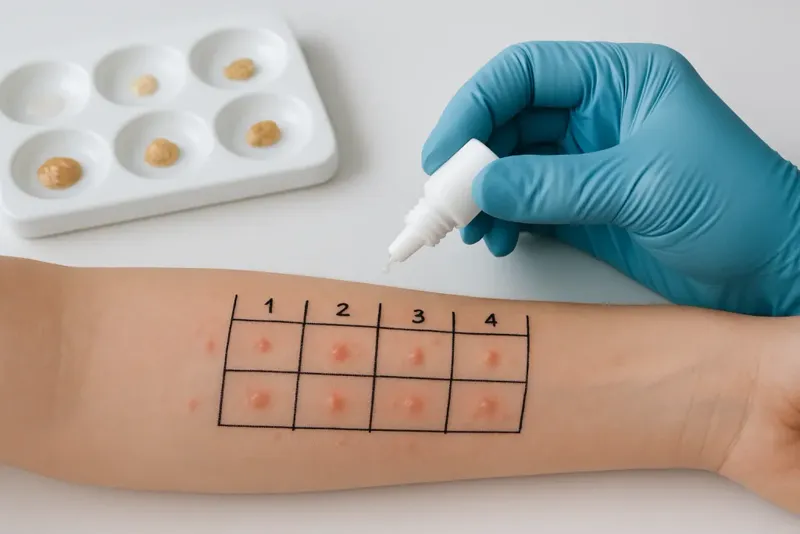
- Skin prick test: an alternative allergy test performed by an allergist, results in 15-20 minutes
- IgG test: not recommended by AAAAI/EAACI for diagnosing allergy or intolerance — marketed commercially but lacks clinical validation
- Hydrogen breath test: used to confirm lactose or fructose intolerance
- Elimination and reintroduction diet: the practical gold-standard approach for suspected intolerance, ideally supervised by a doctor
How Food Allergies and Intolerances Are Diagnosed
Diagnosis always starts the same way: a detailed conversation about what you ate, how quickly symptoms appeared, what they involved, and whether the same food has caused problems before. This history alone often points strongly toward allergy or intolerance before any test is run. For suspected allergy, the next step is usually an IgE blood test, sometimes followed by a supervised oral food challenge — considered the gold standard for confirming or ruling out a true allergy. For suspected intolerance, the doctor may recommend a structured elimination diet, removing the suspected food for two to three weeks and then reintroducing it under observation, or a hydrogen breath test if lactose or fructose intolerance is suspected. Coeliac disease, which can mimic gluten intolerance but is actually an autoimmune condition, should be ruled out with a specific blood test before anyone starts a lifelong gluten-free diet.
- Step 1: Clinical history and physical examination with a doctor
- Step 2: IgE blood test or skin prick test if allergy is suspected
- Step 3: Elimination diet, breath test, or coeliac screening if intolerance is suspected
- Step 4: Oral food challenge (specialist-supervised) to confirm allergy in uncertain cases
- Step 5: Management plan — avoidance strategy, emergency plan, or dietary adjustment
When to See a Doctor: Warning Signs You Shouldn't Ignore
Mild, occasional bloating after a heavy meal rarely needs urgent attention. But certain symptoms should never be self-managed or waited out. Seek same-day medical care if reactions are becoming more frequent or more severe, or if you cannot identify a clear trigger despite cutting out obvious suspects. Seek emergency care immediately — call 998 for an ambulance in the UAE — if you or someone with you develops swelling of the lips, tongue, or throat, difficulty breathing or swallowing, a rapid heartbeat, dizziness or fainting, or hives spreading rapidly across the body after eating. These are signs of anaphylaxis, and every minute matters.
- Book a consultation for: recurring digestive symptoms, unexplained skin reactions, suspected childhood allergy, or symptoms that don't improve with simple avoidance
- Go to the emergency room / call 998 for: swelling of the face or throat, breathing difficulty, fainting, or widespread hives after eating
What to Expect at DCDC: Your Testing Visit
Getting tested at DCDC in Dubai Healthcare City is designed to be simple and fast. Most patients start with a general consultation — you can walk in or book ahead — where Dr. Hadeel Elnur or one of our general practitioners takes a full history of your symptoms, timing, and suspected trigger foods. If your presentation points toward a true allergy, a blood sample for our IgE allergy panel is collected on-site the same day; no fasting or special preparation is required. Because the laboratory operates within the clinic, there is no sample transport delay, and results for routine tests are typically ready the same day, with full allergy panel results available in 1-3 days. You'll then return for a follow-up consultation where your doctor explains each result in plain language, builds a personalised avoidance or management plan, and refers you to an allergist, gastroenterologist, or dietitian if the picture calls for specialist input. For a full walkthrough of every allergy test we offer, including skin prick alternatives, see our complete allergy testing guide.
- Average wait time of around 15 minutes
- Free dedicated on-site parking
- On-site sample collection — no separate lab visit needed
- Same-day results for routine tests; allergy panels in 1-3 days
- MOHAP licensed (License No. NIMY7VY5-240925)
- 4.8/5 Google rating from 1,000+ verified reviews, with a 98% patient satisfaction rate
- Direct billing with 20+ insurance partners, including Daman, AXA, Bupa, MetLife, and Cigna
Not Sure If It's an Allergy or an Intolerance?
Book a consultation with Dr. Hadeel Elnur at DCDC Dubai Healthcare City. IgE allergy panels from AED 550, on-site sample collection, and results in 1-3 days.
Walk-in or appointment — 20+ insurance partners with direct billing
Food Allergy and Intolerance Testing Costs in Dubai
Testing costs in Dubai vary depending on the type of test, how many allergens are screened, and whether you go through a hospital, an independent lab, or a specialist clinic. As a general guide for 2026, targeted IgE blood panels start from AED 550, while broader panels covering food and environmental allergens together typically run from AED 900. General consultations, which are usually the first and most cost-effective step, start from AED 150, and our wider health checkup packages — useful if you want a broader baseline alongside allergy screening — start from AED 249. For a full cost breakdown across every allergy test type available in Dubai, including skin prick testing and comprehensive panels, see our dedicated allergy test pricing guide.
| Test / Visit | DCDC Price | Typical Dubai Market Range | Results Timeline |
|---|---|---|---|
| General / GP Consultation | from AED 150 | AED 150 – 400 | Same day |
| IgE Food Allergy Panel | from AED 550 | AED 500 – 1,500 | 1 – 3 days |
| Comprehensive IgE Panel (food + environmental) | from AED 900 | AED 900 – 2,500 | 2 – 3 days |
| Health Checkup Package (baseline + optional allergy add-on) | from AED 249 | AED 249 – 1,200 | Same day |
Prices are approximate 2026 estimates. "From AED" figures reflect minimum pricing; actual cost depends on panel size, clinic, and insurance coverage.
Treatment and Management Options
There is no cure for a true food allergy, so management centres on strict avoidance of the trigger food, careful reading of ingredient labels, and being prepared for accidental exposure. Patients with a history of severe reactions are usually prescribed an epinephrine auto-injector and taught how and when to use it, alongside an antihistamine for milder reactions. Emerging approaches such as oral immunotherapy exist for some allergies but require specialist supervision and are not appropriate for everyone. Food intolerance, by contrast, is generally managed through dietary adjustment rather than complete avoidance — many people can reduce symptoms significantly just by moderating portion size, using enzyme supplements such as lactase tablets, following a temporary low-FODMAP diet, or spacing out trigger foods rather than eliminating them altogether.
- Food allergy: strict avoidance, ingredient label reading, epinephrine auto-injector for severe cases, antihistamines for mild reactions
- Food intolerance: portion control, enzyme supplements (e.g. lactase), low-FODMAP or elimination diets, gradual reintroduction
- Both: keep a symptom and food diary to track patterns over time
Prevention and Living Well in Dubai
For food allergies, prevention mostly applies to infants: large clinical trials, including the landmark LEAP trial, found that early, guided introduction of allergenic foods like peanut in infancy can actually reduce the risk of developing that allergy, a shift from the older advice to delay these foods — always discuss timing with your paediatrician first. For everyone living with a confirmed allergy or intolerance in Dubai, day-to-day management comes down to communication: telling restaurant staff clearly about your allergy, checking packaged food labels (allergen labelling is required on retail food products in the UAE), and being extra cautious around sesame-heavy dishes like hummus and tahini sauces, which are easy to overlook. If your digestive symptoms overlap with classic irritable bowel syndrome patterns, our comparison of IBS vs food intolerance can help you work out which condition better fits what you're experiencing.
- Read ingredient labels every time, even for familiar products — recipes change
- Ask about sesame, nuts, and shellfish specifically when dining out in Dubai
- Discuss early allergen introduction timing for infants with your paediatrician
- Carry an epinephrine auto-injector if you have a diagnosed severe allergy, and make sure family or colleagues know how to use it
- Keep a food and symptom diary to spot intolerance patterns over several weeks
Doctor's Perspective: Dr. Hadeel Elnur on Food Reactions
“The majority of patients who come to me convinced they have a food allergy actually have a food intolerance — and the reverse is also true, where a genuine allergy gets dismissed as 'just sensitivity' for years,” says Dr. Hadeel Elnur, General Practitioner at DCDC. “My approach starts with listening carefully to the timing and nature of the reaction, because that alone tells me which type of testing will actually give a useful answer. I always steer patients away from unvalidated IgG 'sensitivity' panels and toward proper IgE testing when allergy is suspected, because acting on the wrong result can mean either living with unnecessary restrictions or, more worryingly, underestimating a real risk.” As a general practitioner, Dr. Elnur is typically the first point of contact for patients navigating food reactions in Dubai, coordinating the initial workup and referring to allergists, gastroenterologists, or dietitians when a case needs specialist input.
Which Test Do You Need? A Quick Decision Guide
If you are still unsure where to start, use this simple guide as a starting point — then confirm with a consultation, since self-diagnosis based on symptoms alone is unreliable for both conditions.
- Choose an IgE allergy panel if: symptoms appear within minutes to two hours, involve hives, swelling, or breathing difficulty, or any reaction has ever felt severe or frightening
- Consider an elimination diet or intolerance workup if: symptoms are mainly digestive, build up gradually over hours, and you can sometimes tolerate small amounts without issue
- See a doctor before testing if: you're unsure which category fits, symptoms are worsening, or a child is involved — a GP consultation helps direct you to the right test the first time
- Go straight to emergency care if: you notice facial or throat swelling, breathing difficulty, or fainting after eating — call 998
Get Tested at DCDC Dubai Healthcare City
IgE allergy panels from AED 550, on-site sample collection, and results in 1-3 days. MOHAP licensed, 4.8/5 rated, with 20+ insurance partners.
Building 64, Block A, Al Razi Medical Complex, DHCC — Sat-Thu 8AM-10PM, Fri 9AM-9PM
Related Services at DCDC
Expert care and advanced diagnostics at Dubai Healthcare City
Frequently Asked Questions
Final Thoughts
Food allergy and food intolerance are often used interchangeably, but they are medically distinct conditions with different risks, different tests, and different management strategies. Getting the label right matters: treating a true allergy as a mild intolerance can leave you unprepared for a dangerous reaction, while treating a manageable intolerance as a life-threatening allergy can mean years of unnecessary and restrictive dietary avoidance.
If you regularly react to certain foods and aren't sure which category fits, don't rely on guesswork or unvalidated online "sensitivity" tests. At Doctors Clinic Diagnostic Center in Dubai Healthcare City, our IgE allergy panel testing starts from AED 550, requires only a simple on-site blood draw, and comes with a doctor's consultation to explain exactly what your results mean. With same-day appointments, free parking, an average wait of 15 minutes, and 20+ insurance partners offering direct billing, getting a clear answer has never been more straightforward. Walk in or book online today.
Sources & References
This article was reviewed by our medical team and references the following sources:
- Mayo Clinic — Food Allergy vs. Food Intolerance: What's the Difference?
- NHS — Food Intolerance
- American Academy of Allergy, Asthma & Immunology (AAAAI) — Food Intolerance Versus Food Allergy
- AAAAI — Position Statement in Support of the EAACI Position Paper on IgG4 Testing
- World Health Organization — Food Allergy in the International Classification of Diseases (ICD-11)
- World Allergy Organization — White Book on Allergy
- NHS — Food Allergy
Medical content on this site is reviewed by DHA-licensed physicians. See our editorial policy for more information.

Written by
Dr. Hadeel Elnur
General Practitioner
MD, General Practice
Dr. Hadeel Elnur is a General Practitioner at Doctors Clinic Diagnostic Center (DCDC) in Dubai Healthcare City.
Related Articles

Allergy Testing Dubai: IgE, Skin Prick & Cost (2026)
Food Intolerance Test Dubai: From AED 500 (2026)

Child Food Allergy Dubai: Signs & Testing (2026)

IBS vs Food Intolerance Dubai: Which Is It? (2026)

Allergy Test Cost Dubai: From AED 350 (2026)
More in General Health

Epilepsy Treatment Dubai: Symptoms & Care (2026)
Read More
Pneumonia vs Flu Dubai: Key Differences (2026)
Read More
Swollen Lymph Nodes Dubai: When to Worry (2026)
Read MoreFlu vs Cold Dubai: How to Tell the Difference (2026)
Read More
Sleep Study Cost Dubai: Tests & Pricing (2026)
Read More
Calcium Deficiency Signs Dubai: Guide (2026)
Read More© 2026 Doctors Clinic Diagnostic Center (DCDC), Dubai Healthcare City. Originally published at https://doctorsclinicdubai.ae/blog/food-allergy-vs-intolerance-dubai. All rights reserved. Unauthorized reproduction is prohibited.