Key Takeaways
- Nasal polyps are non-cancerous growths in the nasal passages that cause progressive breathing difficulty, loss of smell, and chronic congestion affecting an estimated 4% of the population
- Dubai's climate — with constant air conditioning, low humidity, and airborne dust — creates ideal conditions for nasal lining inflammation that can trigger polyp formation
- Accurate diagnosis requires nasal endoscopy and often CT imaging; visual inspection alone misses up to 60% of polyps located deeper in the sinuses
- Most nasal polyps respond well to corticosteroid treatment (nasal sprays or short oral courses), with surgery reserved for cases that fail medical therapy
- Treating underlying conditions such as allergies, asthma, or aspirin sensitivity is critical to preventing polyp recurrence after initial treatment
- ENT consultation at DCDC starts from AED 300 with same-day nasal endoscopy available, and most major insurance plans are accepted with direct billing
Nasal polyps are soft, painless growths that develop on the lining of the nasal passages or sinuses. While individually harmless, they progressively obstruct airflow, diminish your sense of smell, and create a breeding ground for recurrent sinus infections. In Dubai, where residents constantly transition between extreme outdoor heat and cold, dry indoor air conditioning, the nasal lining faces unique stresses that make polyp formation more common than many patients realise. At DCDC's ENT department, we provide comprehensive nasal polyp assessment — from initial endoscopic examination to advanced CT imaging — with treatment plans tailored to the severity of your condition and your long-term health goals.
This guide covers everything you need to know about nasal polyps in Dubai: how to recognise the symptoms, what causes them, how they are diagnosed, the full spectrum of treatment options available, and what you can expect in terms of cost and recovery. Whether you are experiencing early symptoms or have been living with polyps for years, understanding your condition is the first step toward breathing freely again.
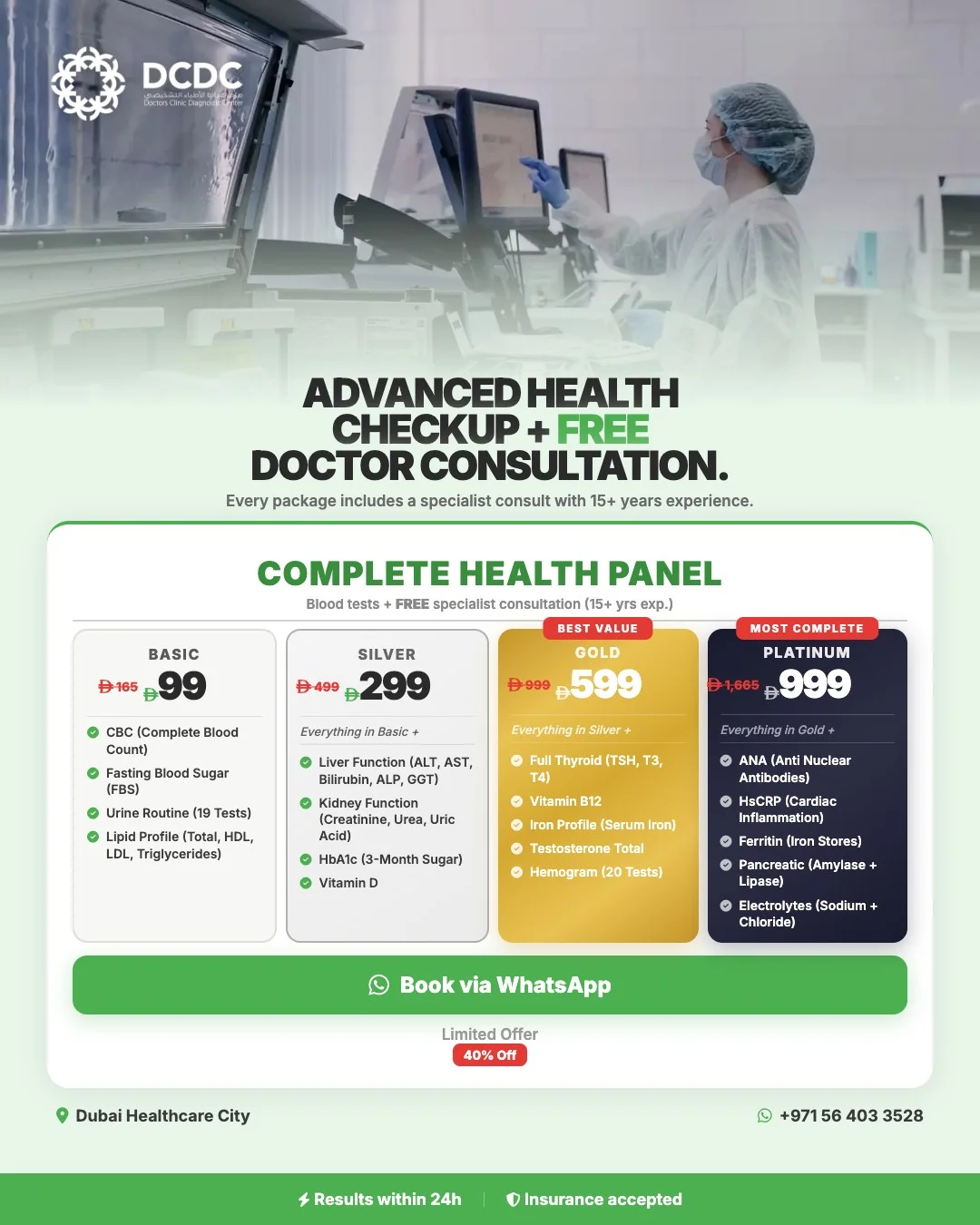
Health Screening Packages
Save with our bundled screening packages — specialist consultation included



What Are Nasal Polyps? Understanding the Condition
Nasal polyps are benign (non-cancerous) soft tissue growths that emerge from the mucous membrane lining the nasal cavity and paranasal sinuses. They typically appear as teardrop-shaped, semi-translucent masses that hang down like small grapes from the sinus openings into the nasal passages. Unlike the surrounding nasal tissue, polyps lack sensation — you cannot feel them with your finger unless they have grown large enough to protrude from the nostril.
Polyps develop when the nasal lining becomes chronically inflamed. This persistent inflammation causes the tissue to swell, fill with fluid, and eventually gravity pulls the waterlogged tissue downward, forming a polyp. They can range in size from a few millimetres (causing no symptoms) to several centimetres (completely blocking one or both nasal passages). According to research published by the European Academy of Allergology and Clinical Immunology, nasal polyps affect approximately 1-4% of the general adult population, with men affected roughly twice as often as women.
Types of Nasal Polyps
- Ethmoidal polyps: The most common type, arising from the ethmoid sinuses between the eyes. These typically appear bilaterally (both sides) and are strongly associated with allergies and asthma
- Antrochoanal polyps: Less common, arising from the maxillary sinus. These tend to be unilateral (one side only) and are more frequently seen in children and young adults
- Sphenochoanal polyps: Rare polyps originating from the sphenoid sinus, typically requiring CT imaging for proper identification
It is important to understand that nasal polyps are not tumours and do not increase cancer risk. However, any unilateral nasal mass in an adult — particularly one that bleeds — should be evaluated promptly by an ENT specialist to rule out other conditions.
Common Nasal Polyps Symptoms and Warning Signs
Nasal polyps develop gradually, and many patients adapt to their symptoms over months or years without realising how much their breathing has deteriorated. The symptoms overlap significantly with chronic sinusitis and allergic rhinitis, which is why professional evaluation is essential for accurate diagnosis.
Primary Symptoms
- Persistent nasal congestion: A feeling of constant blockage that does not respond to standard decongestant sprays. This is often the earliest and most prominent symptom
- Reduced or lost sense of smell (hyposmia/anosmia): Polyps physically block odour molecules from reaching the olfactory receptors high in the nasal cavity. Many patients also report diminished taste
- Postnasal drip: A constant sensation of mucus draining down the back of the throat, often causing throat clearing, coughing, or a feeling of something stuck in the throat
- Facial pressure or pain: Dull aching around the cheeks, forehead, or between the eyes, particularly when bending forward
- Runny nose: Clear, watery nasal discharge that persists regardless of whether you have a cold or infection
- Snoring and sleep disruption: Nasal obstruction forces mouth-breathing during sleep, leading to snoring, dry mouth, and poor sleep quality
When to Seek Medical Attention
- Nasal congestion lasting more than 10-12 days without improvement
- Complete loss of smell persisting for more than 2 weeks
- Difficulty breathing through the nose that affects sleep or exercise
- Recurrent sinus infections (3 or more per year)
- Symptoms worsening despite over-the-counter allergy medications
- Facial swelling, severe headache, or visual changes (seek immediate care)
What Causes Nasal Polyps to Develop
The exact mechanism behind nasal polyp formation is not fully understood, but research consistently points to chronic inflammation as the driving force. When the nasal mucosa remains inflamed for extended periods, inflammatory mediators cause tissue oedema, neovascularisation, and eventually polyp formation. Several conditions and risk factors significantly increase the likelihood of developing polyps.
Established Risk Factors
- Asthma: Up to 40% of patients with nasal polyps also have asthma. The shared inflammatory pathway (eosinophilic inflammation) drives both conditions
- Allergic rhinitis: Chronic allergic inflammation of the nasal lining is one of the strongest predictors of polyp development
- Aspirin-exacerbated respiratory disease (AERD): Also known as Samter's triad — the combination of nasal polyps, asthma, and aspirin/NSAID sensitivity affects approximately 10% of polyp patients
- Chronic sinusitis: Ongoing sinus infection or inflammation lasting 12 weeks or more frequently leads to polyp formation
- Cystic fibrosis: Approximately 40-50% of cystic fibrosis patients develop nasal polyps, often at a younger age
- Genetic predisposition: Family history of nasal polyps increases individual risk, suggesting a hereditary inflammatory tendency
- Vitamin D deficiency: Emerging research links low vitamin D levels to increased nasal polyp risk and recurrence
Understanding these connections is clinically important because treating the underlying condition — whether it is allergies, asthma, or aspirin sensitivity — is essential for long-term polyp management and preventing recurrence after treatment. If you experience recurring sinus infections alongside nasal polyps, our guide on sinusitis treatment in Dubai explains how chronic sinusitis and polyps are often interconnected conditions that benefit from coordinated care.
Nasal Polyps and Dubai's Climate: A Special Challenge
Dubai's unique environmental conditions create a particularly challenging setting for nasal health. The combination of extreme heat, pervasive air conditioning, airborne particulates, and rapid temperature transitions places continuous stress on the nasal mucosa — the very tissue from which polyps develop.
Environmental Factors in Dubai
- Air conditioning cycling: Moving between 45°C+ outdoor temperatures and 20-22°C indoor environments dozens of times daily forces the nasal lining to constantly adapt, leading to chronic irritation and inflammation
- Low indoor humidity: Air-conditioned environments in Dubai typically maintain humidity levels of 20-30%, far below the 40-60% range optimal for nasal health. This dries the nasal mucosa and impairs its natural protective function
- Desert dust and sand particles: Fine particulate matter from sandstorms and construction activity irritates the nasal passages and triggers inflammatory responses in sensitive individuals
- Indoor air pollutants: Sealed, air-conditioned buildings concentrate dust mites, mould spores, and volatile organic compounds that perpetuate nasal inflammation
- High pollen counts: Prosopis (Ghaf tree) and grass pollen seasons in Dubai can exacerbate underlying allergic inflammation that drives polyp growth
These factors explain why many expatriates and long-term Dubai residents develop nasal symptoms and polyps that they never experienced in their home countries. The constant environmental assault on the nasal lining, combined with inadequate humidification of indoor spaces, creates conditions where chronic inflammation becomes self-perpetuating.
How Nasal Polyps Are Diagnosed
Accurate diagnosis of nasal polyps requires more than a standard clinical examination. While large polyps near the nostril opening may be visible with a basic otoscope, the majority of polyps develop deeper in the nasal cavity and sinuses where they cannot be seen without specialised equipment. At DCDC, we follow a systematic diagnostic approach to identify not just the polyps themselves, but also the underlying causes driving their formation.
Diagnostic Steps
- Clinical history and examination: Detailed questioning about symptom duration, triggers, medication use, allergy history, asthma status, and family history of polyps
- Nasal endoscopy: A thin, flexible fibre-optic scope is gently inserted into the nasal cavity, providing magnified, illuminated views of the entire nasal passage and sinus openings. This is the gold-standard office examination for polyps and takes approximately 5-10 minutes
- CT scan of the sinuses: Cross-sectional imaging reveals the exact size, location, and extent of polyps within the sinuses. CT also identifies anatomical variants that may contribute to sinus obstruction and guides surgical planning if needed
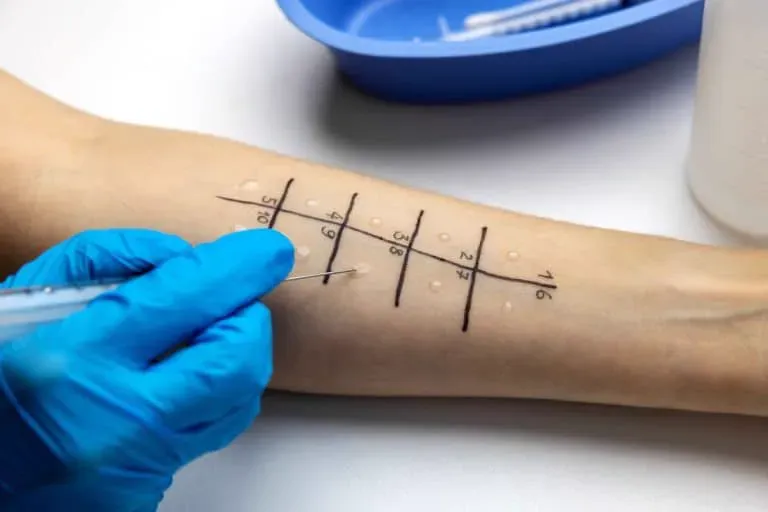
- Allergy testing (IgE panel): Blood-based specific IgE testing identifies specific allergens driving nasal inflammation, enabling targeted avoidance strategies and treatment
- Blood tests: Complete blood count may reveal elevated eosinophils (a type of white blood cell associated with allergic inflammation), and specific IgE levels help quantify allergic sensitisation
The nasal endoscopy is typically performed during the initial ENT consultation and provides immediate diagnostic clarity. It is well-tolerated — a topical decongestant and anaesthetic spray is applied beforehand to minimise discomfort. CT imaging is arranged when endoscopy confirms significant polyp disease or when surgical intervention is being considered.
Nasal Polyps Treatment Options in Dubai
Treatment for nasal polyps follows a stepwise approach, beginning with medical therapy and escalating to surgical options when medications alone are insufficient. The choice of treatment depends on polyp size, symptom severity, underlying conditions, and prior treatment history. The goal is not only to shrink or remove existing polyps but to control the inflammation that caused them and prevent recurrence.
Treatment Overview
- Intranasal corticosteroid sprays: First-line treatment for all polyp grades. Medications like mometasone or fluticasone reduce inflammation and can shrink small to moderate polyps over 4-12 weeks of consistent use
- Short-course oral corticosteroids: A 1-2 week course of prednisolone can rapidly shrink larger polyps, restore smell, and improve breathing. Used as a bridge while longer-term treatments take effect
- Biologic therapies: Newer injectable medications (dupilumab, omalizumab, mepolizumab) target specific inflammatory pathways and represent a breakthrough for patients with severe, recurrent polyps
- Saline nasal irrigation: High-volume saline rinses physically flush inflammatory debris and mucus from the nasal cavity, improving medication delivery and mucosal health
- Functional endoscopic sinus surgery (FESS): Minimally invasive surgery to remove polyps and widen sinus drainage pathways. Performed under general anaesthesia with no external incisions
- Allergy management: Identifying and treating underlying allergies through avoidance, antihistamines, or immunotherapy addresses a root cause of polyp formation
For patients with allergy-driven nasal polyps, identifying specific triggers through comprehensive testing is a critical component of the treatment plan. Our detailed guide on allergy testing in Dubai explains the IgE blood panel testing available at DCDC, including what to expect and how results guide your treatment.
Struggling with Nasal Congestion or Lost Smell?
Book an ENT consultation at DCDC Dubai Healthcare City. Same-day nasal endoscopy available for accurate polyp diagnosis. Most major insurance plans accepted with direct billing.
ENT consultation from AED 300 — call or WhatsApp to book
Medical Treatment: Corticosteroids and Biologics
Medical therapy remains the cornerstone of nasal polyp management. The vast majority of patients — even those with moderate polyp disease — achieve significant symptom improvement with appropriate medication protocols before surgery is considered.
Intranasal Corticosteroid Sprays
Topical nasal corticosteroids are the first treatment prescribed for virtually all nasal polyp patients. These sprays deliver anti-inflammatory medication directly to the polyp tissue with minimal systemic absorption. Evidence from multiple randomised controlled trials demonstrates that consistent use over 4-12 weeks reduces polyp size, improves nasal airflow, and partially or fully restores the sense of smell in many patients. Common options include mometasone furoate, fluticasone propionate, and budesonide. For optimal effectiveness, patients should use proper spray technique — aiming toward the ear on the same side rather than straight up — and maintain daily use even when symptoms improve.
Oral Corticosteroids
When nasal sprays alone are insufficient, a short course of oral prednisolone (typically 0.5 mg/kg daily for 5-14 days) can dramatically reduce polyp bulk. Patients often notice improved breathing and return of smell within 3-5 days. However, due to systemic side effects (blood sugar elevation, mood changes, bone density concerns), oral steroids are used judiciously — typically no more than 2-3 short courses per year.
Biologic Therapies: A New Era
For patients with severe, recurrent nasal polyps who have failed conventional medical and surgical treatment, biologic therapies represent a transformative advancement. These injectable medications target specific molecules in the inflammatory cascade. Dupilumab (targeting IL-4 and IL-13) has shown remarkable efficacy in clinical trials, reducing polyp size by up to 50% and significantly improving smell and quality of life. While these medications are currently expensive, they offer an alternative to repeated surgeries for the most severe cases and are increasingly available through specialist prescriptions in Dubai.
When Is Nasal Polyp Surgery Needed?
Surgery is recommended when nasal polyps fail to respond adequately to a full course of medical treatment (typically 8-12 weeks of topical steroids plus at least one course of oral steroids), or when polyps are so large that they cause complete nasal obstruction, recurrent infections, or complications. Functional endoscopic sinus surgery (FESS) is the standard surgical approach and is performed by ENT surgeons through the nostrils — no external cuts or visible scarring.
What FESS Involves
- Procedure duration: Typically 1-2 hours under general anaesthesia, performed as a day-case procedure
- Technique: The surgeon uses an endoscope and specialised instruments to remove polyp tissue and open blocked sinus drainage pathways
- Recovery: Most patients return to work within 5-7 days. Nasal packing (if used) is typically removed within 24-48 hours
- Post-operative care: Saline irrigations begin 24-48 hours after surgery. Topical steroid sprays restart after 2-3 weeks to prevent regrowth
- Success rate: Studies show 80-90% of patients report significant symptom improvement after FESS, with quality of life scores improving substantially
It is important to understand that surgery addresses the physical polyps but does not cure the underlying inflammatory tendency. Without ongoing medical maintenance (nasal steroid sprays, allergy management), polyps recur in approximately 40-60% of patients within 3-5 years. This is why post-surgical follow-up and maintenance therapy are considered essential components of comprehensive polyp care.
What to Expect at DCDC for Nasal Polyp Care
At Doctors Clinic Diagnostic Center (DCDC) in Dubai Healthcare City, nasal polyp assessment follows a structured, patient-centred pathway designed to provide clarity and a clear treatment plan within a single visit wherever possible. Our MOHAP-licensed facility integrates ENT consultation, on-site diagnostic imaging, and laboratory testing under one roof, eliminating the need to visit multiple clinics.
Your Visit Step by Step
- Step 1 — Registration and intake (10-15 minutes): Present your Emirates ID and insurance card. Our team verifies coverage instantly — we offer direct billing with 20+ insurance partners including Daman, AXA, ADNIC, and MetLife. Average wait time is just 15 minutes
- Step 2 — ENT consultation (20-30 minutes): Your doctor takes a detailed history covering symptoms, duration, triggers, allergies, medications, and previous treatments. A thorough head and neck examination is performed
- Step 3 — Nasal endoscopy (5-10 minutes): Performed in the consultation room using a slim flexible endoscope after topical anaesthetic spray. You can watch your nasal passages on screen in real-time. The doctor documents polyp location, size, and grading
- Step 4 — Additional investigations if needed: CT sinus imaging and allergy blood testing (IgE panel) can often be arranged same-day, with results available within 24-48 hours
- Step 5 — Treatment plan discussion: Based on findings, your doctor explains the diagnosis, polyp grade, treatment options, expected timeline, and arranges follow-up. Prescriptions are provided for immediate collection from our on-site pharmacy
- Step 6 — Follow-up: A review appointment is typically scheduled 4-6 weeks after starting treatment to assess response and adjust the plan if needed
DCDC maintains a 4.8 out of 5 Google rating from over 1,000 verified patient reviews, with a 98% patient satisfaction rate. Our extended operating hours — Saturday to Thursday 8 AM to 10 PM, Friday 9 AM to 9 PM — mean you can book consultations around your work schedule. Free parking is available on-site at the Al Razi Medical Complex in Dubai Healthcare City.
According to Dr. Hadeel Elnur, "Nasal polyps are far more common in Dubai than patients realise, particularly among those who spend long hours in air-conditioned environments. The constant cycling between extreme heat and cold, dry air irritates the nasal lining over time. We always investigate for underlying allergies or asthma, as treating these root causes is essential to prevent polyp recurrence after treatment."
For guidance on when nasal polyps or other ENT symptoms warrant specialist evaluation, our comprehensive resource on when to see an ENT doctor in Dubai outlines the key indicators and what to expect from your first specialist appointment.
Preventing Nasal Polyp Recurrence
Polyp recurrence is the biggest challenge in long-term management. Research shows that without preventive measures, polyps return in 40-60% of surgically treated patients within several years. A comprehensive prevention strategy addresses multiple factors simultaneously.
Evidence-Based Prevention Strategies
- Maintenance nasal corticosteroid spray: Long-term daily use of intranasal steroids is the single most effective measure to prevent regrowth. These are safe for years of continuous use with minimal systemic effects
- Daily saline nasal irrigation: High-volume rinses (240ml per side) mechanically clear inflammatory mediators and improve the mucosal environment. Especially important in Dubai's dry climate
- Allergy management: If allergies are identified, consistent avoidance of triggers, appropriate antihistamine use, and consideration of immunotherapy can reduce the inflammatory burden on the nasal lining
- Asthma control: Optimising asthma treatment with inhaled corticosteroids reduces systemic eosinophilic inflammation that drives polyp formation
- Indoor humidity control: Maintaining home and office humidity at 40-50% with a quality humidifier protects the nasal lining from drying. Particularly important in air-conditioned Dubai environments
- Avoid NSAIDs if sensitive: Patients with aspirin-exacerbated respiratory disease must avoid aspirin and NSAIDs, which trigger rapid polyp growth and severe asthma attacks
- Regular follow-up: Endoscopic monitoring every 6-12 months enables early detection of recurrence when small polyps can be managed medically rather than surgically
Nasal Polyps vs Chronic Sinusitis: Key Differences
Nasal polyps and chronic sinusitis are closely related conditions that frequently coexist — in fact, the current medical terminology groups them together as "chronic rhinosinusitis with nasal polyps" (CRSwNP) and "chronic rhinosinusitis without nasal polyps" (CRSsNP). Understanding the distinction helps patients communicate effectively with their healthcare provider and understand their treatment plan.
| Feature | Nasal Polyps (CRSwNP) | Chronic Sinusitis Without Polyps (CRSsNP) |
|---|---|---|
| Primary symptom | Loss of smell + nasal blockage | Facial pain/pressure + nasal discharge |
| Inflammation type | Predominantly eosinophilic (type 2) | Often neutrophilic or mixed |
| Allergy association | Strong (60-80% of patients) | Moderate (30-40% of patients) |
| Asthma association | High (30-40% of patients) | Lower (10-15% of patients) |
| Response to steroids | Excellent | Moderate |
| Recurrence after surgery | 40-60% within 3-5 years | 20-30% within 3-5 years |
| Biologic therapy option | Yes (dupilumab, omalizumab) | Limited evidence |
Comparison of nasal polyps (CRSwNP) and chronic sinusitis without polyps (CRSsNP)
The practical significance of this distinction lies in treatment approach. Polyp-dominant disease responds better to anti-inflammatory treatments (steroids and biologics), while sinusitis without polyps may require more emphasis on antibiotics, nasal irrigation, and addressing anatomical drainage issues. Many patients have elements of both, requiring a combined treatment strategy.
Nasal Polyps Diagnosis and Treatment Cost in Dubai
Understanding the cost of nasal polyp care helps patients plan their treatment journey. At DCDC, we maintain transparent, competitive pricing with direct insurance billing available for most major providers in the UAE. Below is a breakdown of typical costs for nasal polyp diagnostic and treatment services.
| Service | DCDC Price | Dubai Average |
|---|---|---|
| ENT consultation | From AED 300 | AED 400-800 |
| Nasal endoscopy | From AED 400 | AED 500-1,200 |
| Sinus CT scan | From AED 600 | AED 800-2,000 |
| IgE allergy panel | From AED 350 | AED 400-900 |
| Follow-up consultation | From AED 250 | AED 300-600 |
Nasal polyps diagnosis and treatment costs at DCDC vs Dubai average (2026)
DCDC offers direct billing with over 20 insurance partners, meaning most patients pay only their co-pay or deductible at the time of visit. Our insurance coordination team can verify your coverage before your appointment so there are no surprises. For patients without insurance or those choosing to self-pay, we provide transparent pricing with no hidden fees.
The total cost of nasal polyp management varies significantly depending on severity. Mild cases managed with corticosteroid sprays may require only the initial consultation and a follow-up visit. More complex cases requiring CT imaging, allergy testing, and potentially surgical referral will involve additional costs, though insurance typically covers medically necessary investigations and procedures.
Living with Nasal Polyps: Lifestyle and Home Management
While medical treatment forms the backbone of polyp management, daily habits and environmental modifications play a significant supportive role — particularly in Dubai's challenging climate. These measures complement prescribed treatments and can meaningfully improve symptoms and quality of life.
Practical Daily Measures
- Saline nasal rinses: Use a squeeze bottle or neti pot with isotonic or hypertonic saline twice daily. This flushes out allergens, dust, and inflammatory debris. Use distilled or boiled-then-cooled water only
- Humidification: Run a humidifier in your bedroom to maintain 40-50% humidity, counteracting the drying effect of air conditioning. Clean the humidifier weekly to prevent mould
- Air purification: A HEPA air purifier in the bedroom reduces airborne allergens (dust mites, mould spores, pet dander) that perpetuate nasal inflammation
- Dust mite control: Encase pillows and mattresses in allergen-proof covers. Wash bedding weekly at 60°C or above
- Steam inhalation: Breathing warm, humid steam for 10-15 minutes can temporarily relieve congestion and help mucus drainage. Add no essential oils — these can irritate inflamed tissue
- Head elevation during sleep: Elevating the head of your bed by 15-20 degrees promotes sinus drainage and reduces morning congestion
- Avoid known irritants: Cigarette smoke, strong perfumes, cleaning chemicals, and heavily polluted environments all aggravate nasal inflammation
Ready to Breathe Freely Again?
Book your ENT assessment at DCDC in Dubai Healthcare City. Nasal endoscopy, CT imaging, and allergy testing all available on-site with same-day or next-day appointments.
4.8/5 Google rating from 1,000+ reviews — direct insurance billing available
Complications of Untreated Nasal Polyps
While nasal polyps themselves are benign, leaving them untreated for prolonged periods can lead to secondary complications that are more difficult to manage. Understanding these potential consequences underscores the importance of seeking timely evaluation and treatment.
- Obstructive sleep apnoea: Large polyps can contribute to or worsen sleep-disordered breathing, with downstream effects on cardiovascular health, daytime alertness, and metabolic function
- Recurrent sinus infections: Polyps block sinus drainage, creating stagnant mucus pools that become infected. Repeated antibiotic courses contribute to resistance
- Permanent anosmia: Prolonged lack of airflow to the olfactory receptors can lead to nerve damage and irreversible loss of smell, which also significantly impairs taste and quality of life
- Broadening of the nasal bridge: Very large, long-standing polyps can physically widen the nose over time — a condition called nasal polyposis deformity
- Asthma exacerbation: The unified airway concept means that uncontrolled nasal inflammation worsens lower airway disease. Treating nasal polyps often improves asthma control
- Mucocele formation: Complete sinus obstruction can trap secretions, forming expanding mucous cysts (mucoceles) that may compress surrounding structures
These complications are largely preventable with appropriate treatment. Even patients who have lived with polyps for years can achieve significant improvement in symptoms and quality of life with modern medical and surgical approaches.
Related Services at DCDC
Expert care and advanced diagnostics at Dubai Healthcare City
Frequently Asked Questions
Final Thoughts on Nasal Polyps Treatment in Dubai
Nasal polyps are a common, treatable condition that no one should simply accept as their normal. Modern medical therapies — from corticosteroid sprays to biologic injections — and refined surgical techniques offer excellent outcomes for the vast majority of patients. The key is accurate diagnosis, appropriate treatment selection, and consistent long-term management to prevent recurrence.
Dubai's unique climate makes nasal care especially important. The combination of air conditioning, low humidity, and airborne particulates means that residents must be proactive about nasal health. If you have been experiencing persistent nasal congestion, reduced sense of smell, or recurrent sinus infections, these are not symptoms to dismiss — they warrant professional evaluation.
At Doctors Clinic Diagnostic Center (DCDC) in Dubai Healthcare City, we provide the full spectrum of nasal polyp care — from initial endoscopic assessment and allergy testing to medical management and surgical referral when needed. With same-day appointments, on-site diagnostics, and direct insurance billing, getting answers about your nasal symptoms has never been more accessible.
Sources & References
This article was reviewed by our medical team and references the following sources:
- NHS — Nasal Polyps: Overview, Symptoms, and Treatment
- Mayo Clinic — Nasal Polyps: Symptoms, Causes, and Treatment
- American Academy of Otolaryngology — Head and Neck Surgery: Nasal Polyps
- Cleveland Clinic — Nasal Polyps: Causes, Symptoms, Diagnosis and Treatment
- European Position Paper on Rhinosinusitis and Nasal Polyps (EPOS 2020)
- Journal of Allergy and Clinical Immunology — Dupilumab for Nasal Polyps
Medical content on this site is reviewed by DHA-licensed physicians. See our editorial policy for more information.

Written by
Dr. Hadeel Elnur
General Practitioner
MD, General Practice
Dr. Hadeel Elnur is a General Practitioner at Doctors Clinic Diagnostic Center (DCDC) in Dubai Healthcare City.
Related Articles
Sinusitis Treatment Dubai: ENT Relief Guide (2026)
Allergy Testing Dubai: IgE, Skin Prick & Cost (2026)
ENT Consultation Cost Dubai: Complete Guide (2026)
ENT Doctor Dubai: When to See a Specialist (2026)
Sleep Apnea & Snoring Dubai: Treatment & Cost (2026)
More in General Health
Epilepsy Treatment Dubai: Symptoms & Care (2026)
Read More
Food Allergy vs Food Intolerance Dubai (2026)
Read More
Pneumonia vs Flu Dubai: Key Differences (2026)
Read More
Swollen Lymph Nodes Dubai: When to Worry (2026)
Read MoreFlu vs Cold Dubai: How to Tell the Difference (2026)
Read More
Sleep Study Cost Dubai: Tests & Pricing (2026)
Read More© 2026 Doctors Clinic Diagnostic Center (DCDC), Dubai Healthcare City. Originally published at https://doctorsclinicdubai.ae/blog/nasal-polyps-treatment-dubai. All rights reserved. Unauthorized reproduction is prohibited.