Key Takeaways
- A normal blood pressure reading for most healthy adults is below 120/80 mmHg, though what counts as "normal" shifts slightly across different age groups from young adulthood into the senior years.
- The American Heart Association classifies blood pressure into five categories: normal, elevated, Stage 1 hypertension, Stage 2 hypertension, and hypertensive crisis, each with a different recommended course of action.
- High blood pressure is often called the "silent killer" because it typically causes no symptoms until it has already damaged the heart, kidneys, or blood vessels, which is why regular screening matters more than waiting for warning signs.
- Studies based on the Dubai Household Survey found that roughly 32.5% of adults in Dubai have hypertension, with awareness of the condition among affected residents estimated at only around 29%.
- Blood pressure in children and teenagers is assessed differently from adults, using percentile charts based on age, sex, and height rather than a single fixed number.
- Dr. Hadeel Elnur recommends annual blood pressure screening for all adults over 30, with more frequent monitoring for anyone with diabetes, obesity, or a family history of heart disease.
- At DCDC in Dubai Healthcare City, blood pressure screening is included in health checkup packages starting from AED 249, with 24-hour ambulatory monitoring, on-site ECG, and cardiology consultations all available under one roof.
Knowing your numbers is one of the simplest and most powerful things you can do for your long-term health. A blood pressure chart by age gives you a starting point for understanding what your reading actually means, but blood pressure is not a single fixed target for everyone. It shifts gradually across the decades, and what is considered healthy at 25 looks a little different from what is healthy at 65. Whether you just had a reading taken at a pharmacy kiosk, during a routine appointment, or as part of a health checkup at DCDC, this guide walks you through exactly what your numbers mean, how they compare across age groups, and when it is time to speak with a doctor about blood pressure management at DCDC.
Blood pressure is measured every single day in clinics, pharmacies, and homes across Dubai, yet many people still are not sure how to interpret the two numbers on the cuff readout. This matters because high blood pressure, or hypertension, is one of the leading modifiable risk factors for heart attack, stroke, and kidney disease worldwide, and it rarely produces symptoms until real damage has already occurred. Research based on the Dubai Household Survey found that close to a third of adults in the emirate live with hypertension, and fewer than one in three of them are even aware of it. This guide compiles the most current normal blood pressure ranges by age group, explains the American Heart Association's classification system, covers blood pressure in children, walks through the causes and symptoms of abnormal readings, and outlines exactly what to expect if you come in for a blood pressure assessment at Doctors Clinic Diagnostic Center (DCDC) in Dubai Healthcare City. Every range referenced here is grounded in current guidance from the American Heart Association (AHA), the European Society of Cardiology (ESC), the World Health Organization (WHO), and the UK's National Health Service (NHS).
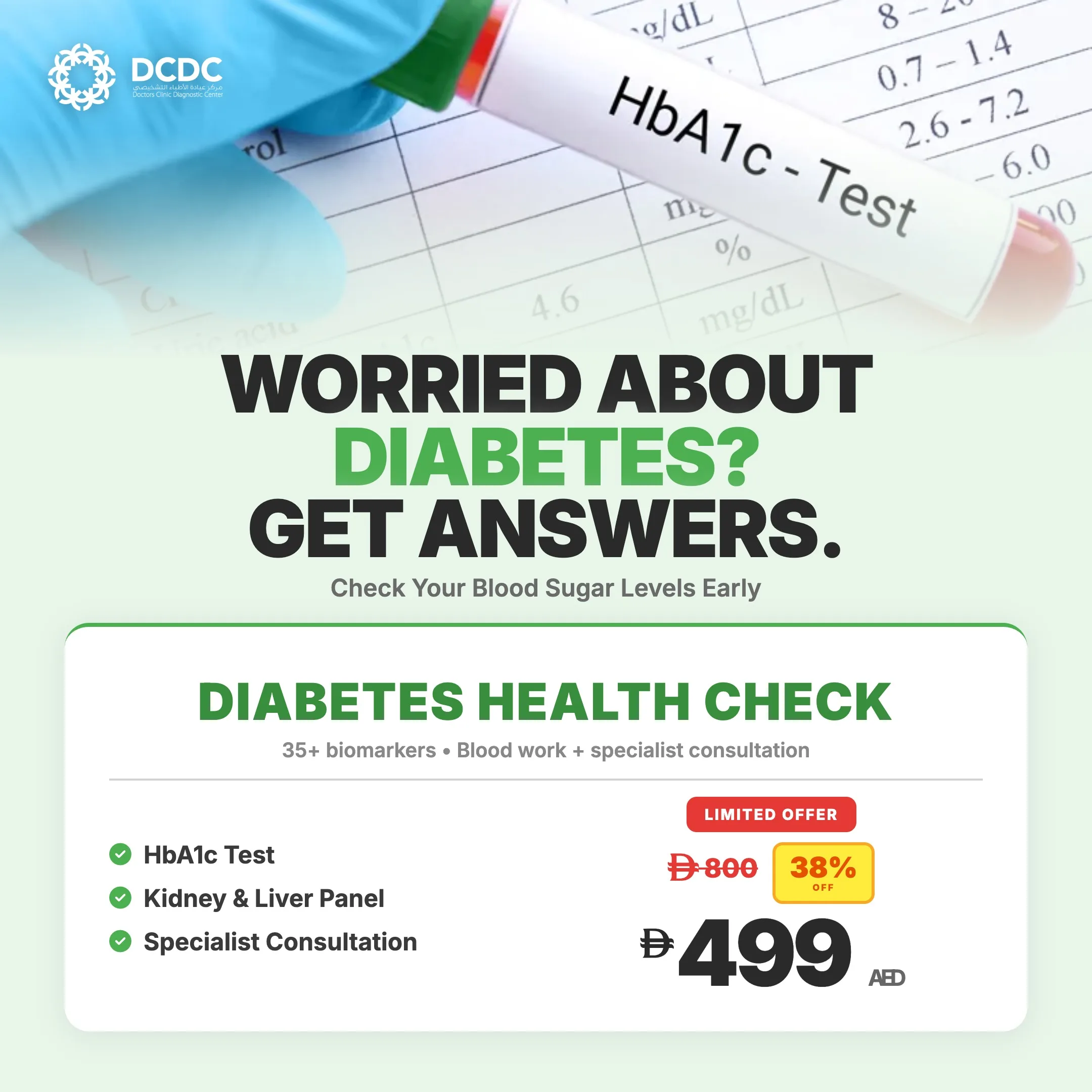
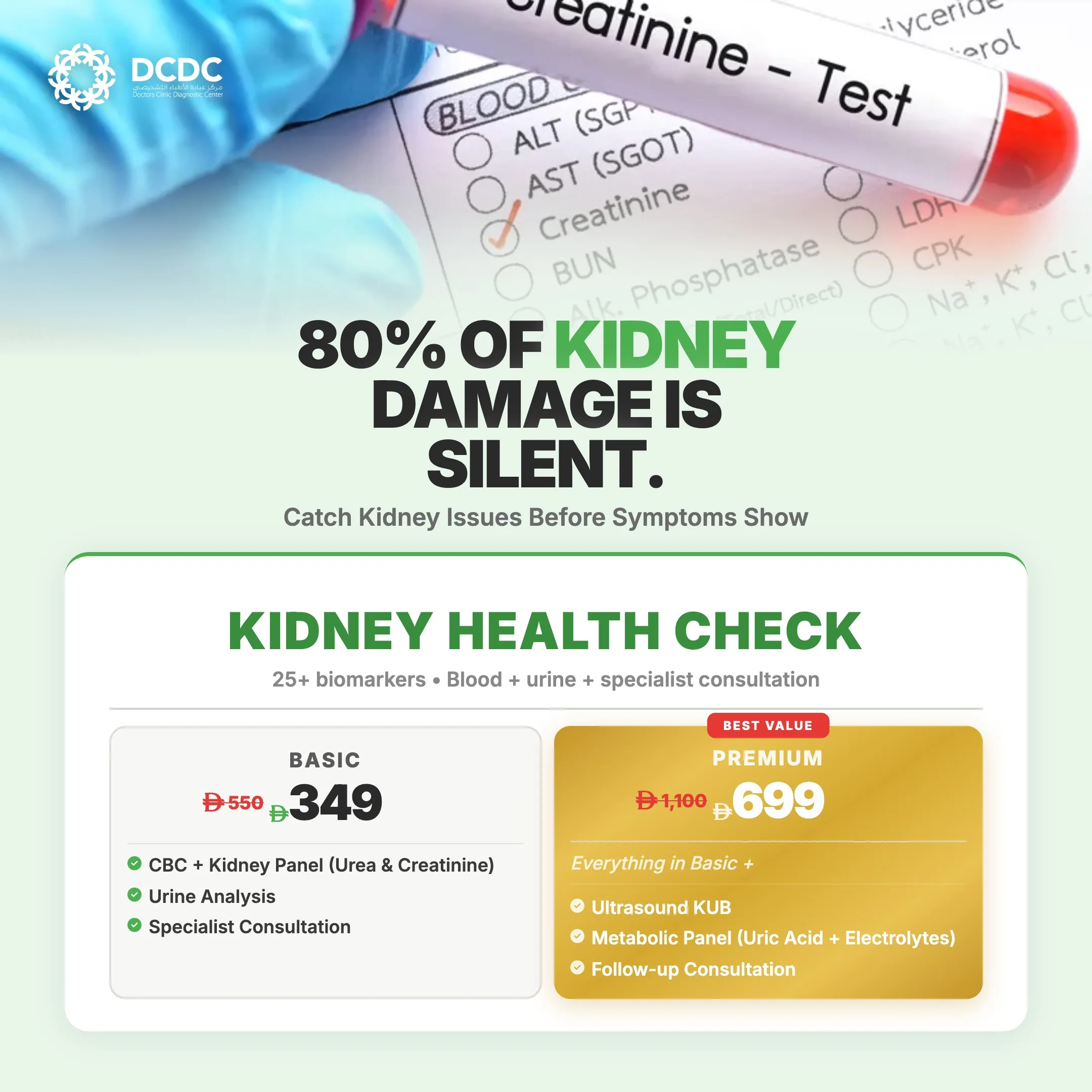
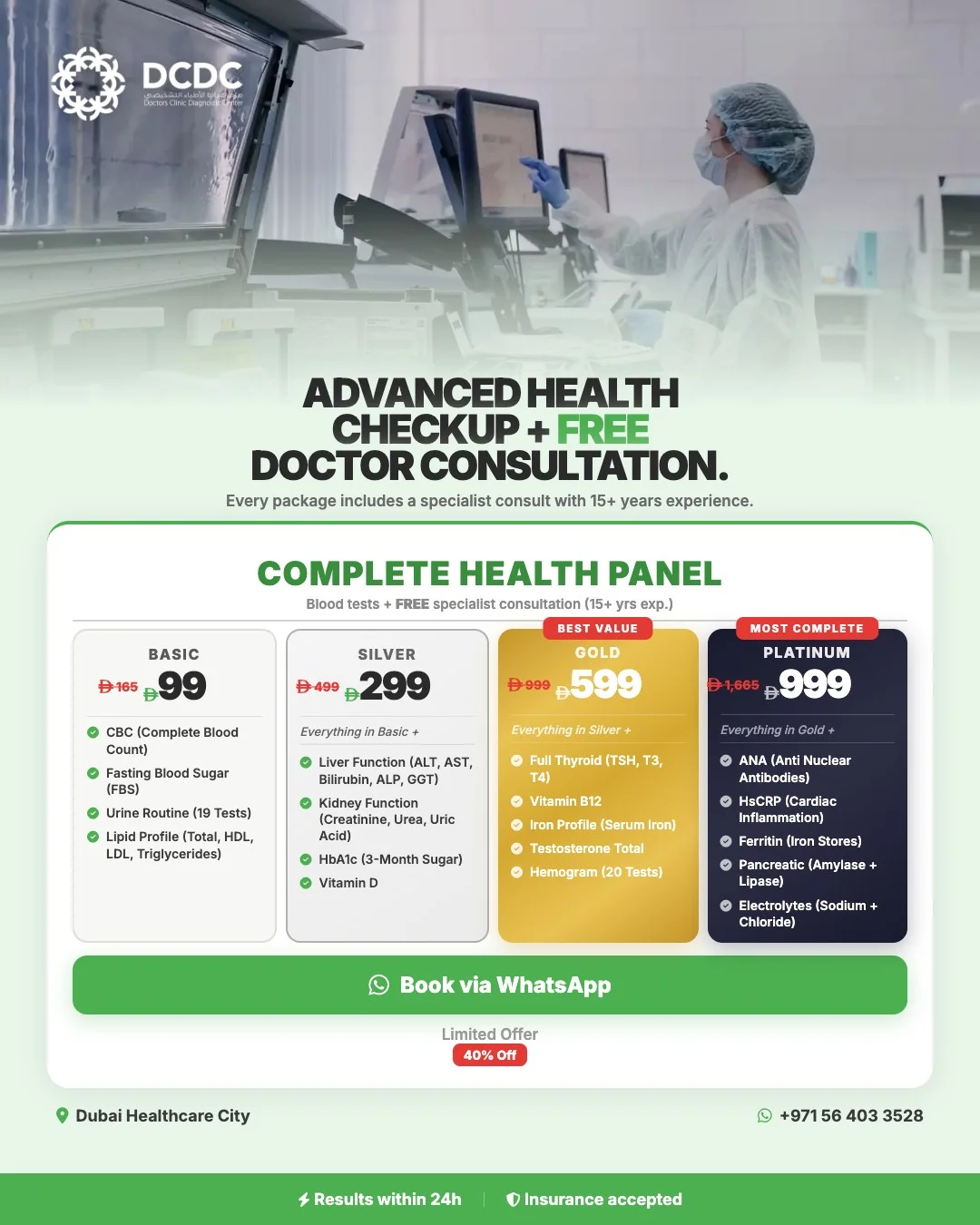
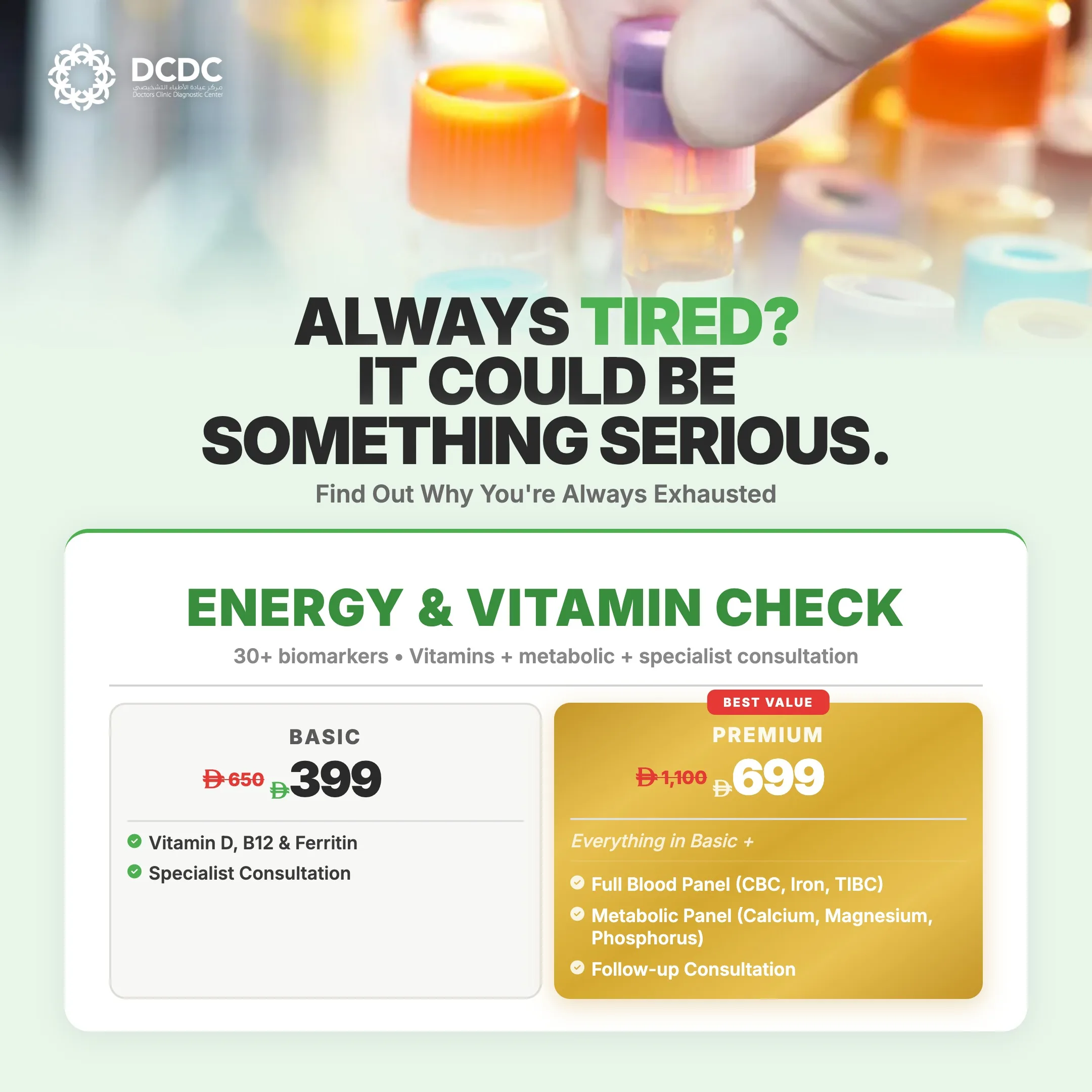
Health Screening Packages
Save with our bundled screening packages — specialist consultation included

What Is Blood Pressure? Understanding Your Reading
Blood pressure measures the force your blood exerts against the walls of your arteries as your heart pumps it around your body. Every reading is expressed as two numbers, written as a fraction, for example 118/76 mmHg (millimetres of mercury):
- Systolic pressure (the top number): The pressure in your arteries at the moment your heart contracts and pushes blood out. This number is generally the more clinically significant of the two, especially after age 50.
- Diastolic pressure (the bottom number): The pressure in your arteries when your heart rests between beats. Diastolic pressure tends to matter more as a risk indicator in younger adults.
Both numbers matter, and either one being elevated on its own is enough to shift you into a higher blood pressure category. A reading is never a single static fact about you; it naturally fluctuates throughout the day based on activity, stress, hydration, caffeine intake, and even how recently you have spoken or walked before the cuff was applied. This is why doctors rarely diagnose hypertension from a single reading and instead look at trends over multiple visits or a period of home monitoring.
Blood Pressure Chart by Age: Normal Ranges for Adults
While the American Heart Association's official categories (covered in the next section) apply to all adults regardless of age, average blood pressure does trend upward gradually as arteries naturally stiffen over the decades. The table below shows the typical range most healthy adults fall into by age group. These are population averages intended as a general reference point, not individual medical targets; your own ideal reading should always be interpreted by a doctor in the context of your overall health.
| Age Group | Typical Normal Systolic | Typical Normal Diastolic |
|---|---|---|
| 18-25 years | 110-120 mmHg | 70-78 mmHg |
| 26-35 years | 112-122 mmHg | 72-80 mmHg |
| 36-45 years | 115-125 mmHg | 75-83 mmHg |
| 46-55 years | 118-130 mmHg | 78-86 mmHg |
| 56-65 years | 120-135 mmHg | 78-88 mmHg |
| 65+ years | 125-140 mmHg | 70-85 mmHg |
Typical blood pressure ranges for healthy adults by age group. Individual targets vary based on overall cardiovascular risk; use the AHA category table below for clinical classification of any single reading.
Notice that the diastolic range for adults over 65 tends to plateau or even decrease slightly compared to middle age. This reflects a real physiological pattern: as arteries stiffen with age, systolic pressure (the top number) tends to keep climbing while diastolic pressure (the bottom number) can level off or drop. This pattern, called isolated systolic hypertension, is extremely common in older adults and is still treated as clinically significant even when the diastolic number looks perfectly normal.
Blood Pressure Categories: AHA Classification Guide
Regardless of your age, any single blood pressure reading falls into one of five official categories defined by the American Heart Association and the American College of Cardiology. This classification is what your doctor actually uses to decide whether you need lifestyle changes, medication, or urgent care. If your systolic and diastolic numbers fall into two different categories, the higher category always applies.
| Category | Systolic (mmHg) | Diastolic (mmHg) | Recommended Action |
|---|---|---|---|
| Normal | Less than 120 | Less than 80 | Annual check; maintain a heart-healthy lifestyle |
| Elevated | 120-129 | Less than 80 | Lifestyle changes; recheck within a few months |
| Stage 1 Hypertension | 130-139 | 80-89 | Lifestyle changes; medication may be considered based on overall risk |
| Stage 2 Hypertension | 140 or higher | 90 or higher | Medication combined with lifestyle changes, guided by a doctor |
| Hypertensive Crisis | 180 or higher | 120 or higher | Seek emergency medical care immediately |
Blood pressure categories based on American Heart Association / American College of Cardiology guidelines. A hypertensive crisis reading, especially with symptoms such as chest pain, shortness of breath, or vision changes, requires immediate emergency attention.
It is worth noting that the European Society of Cardiology (ESC) uses a slightly different framework, classifying 140/90 mmHg as the threshold for hypertension in clinic settings, while emphasising home and 24-hour ambulatory readings for a more accurate long-term picture. Both frameworks agree on the same fundamental point: consistently elevated readings, even in the "elevated" category below the formal hypertension threshold, meaningfully raise long-term cardiovascular risk and are worth addressing early rather than waiting until a diagnosis of hypertension is confirmed.
If you have recently been told your reading falls into Stage 1 or Stage 2, our detailed guide on high blood pressure as a silent killer explains why early intervention matters so much and what a realistic management plan looks like.
Blood Pressure in Children and Adolescents
Blood pressure in children cannot be judged against adult numbers. Instead, paediatricians use percentile charts that account for a child's age, sex, and height, because a healthy reading for a tall 10-year-old boy looks different from a healthy reading for a petite 6-year-old girl. As a general guide, normal blood pressure sits below the 90th percentile for a child's age, sex, and height group; a reading at or above the 95th percentile on repeated measurement is generally considered elevated in children under 13.
| Age Group | Approximate Normal Range | Notes |
|---|---|---|
| 1-5 years | 80-110 / 50-78 mmHg | Wide variation is normal; height and sex matter more than age alone |
| 6-9 years | 85-114 / 50-78 mmHg | Gradual increase as the cardiovascular system matures |
| 10-12 years | 95-119 / 57-80 mmHg | Upper normal limits approach adult ranges by age 12 |
| 13 years and older | Below 120 / Below 80 mmHg | Adult classification thresholds apply from age 13 onward |
Approximate normal blood pressure ranges for children and adolescents. Because paediatric hypertension is diagnosed using percentile charts specific to age, sex, and height, always have a child's reading interpreted by a paediatrician rather than compared directly to this table.
Childhood hypertension is more common than many parents assume, particularly in children who are overweight or have a family history of high blood pressure. Left unaddressed, it can carry forward into adulthood and accelerate cardiovascular risk. If your child's school or paediatrician has flagged an elevated reading, it is worth having it reassessed on at least two further occasions before drawing conclusions, since a single anxious or uncomfortable child can easily register a temporarily high number.
What Causes High Blood Pressure?
In the vast majority of cases (roughly 90-95%), high blood pressure has no single identifiable cause. This is called primary or essential hypertension, and it develops gradually over years as a combination of genetics, ageing, and lifestyle factors interact. The remaining cases, called secondary hypertension, stem from an identifiable underlying condition.
- Kidney disease: The kidneys play a central role in regulating blood volume and pressure, so kidney dysfunction is one of the most common causes of secondary hypertension.
- Hormonal disorders: Conditions affecting the thyroid or adrenal glands, including primary aldosteronism, can drive persistently elevated readings that do not respond well to standard first-line treatment.
- Obstructive sleep apnoea: Repeated overnight drops in oxygen levels trigger surges in blood pressure that can persist into waking hours.
- Certain medications: Some decongestants, hormonal contraceptives, and long-term use of nonsteroidal anti-inflammatory drugs (NSAIDs) can raise blood pressure.
- Pregnancy-related conditions: Preeclampsia and gestational hypertension develop specifically during pregnancy and require close monitoring.
Identifying whether high readings are primary or secondary matters clinically, because secondary hypertension often improves significantly once the underlying condition is treated. This is one of the reasons a doctor will typically order supporting blood tests alongside a blood pressure diagnosis rather than treating the number in isolation.
Risk Factors for Hypertension in Dubai
Beyond the general causes above, several factors are especially relevant to Dubai's population and lifestyle. Research using the Dubai Household Survey found hypertension prevalence among adults reaching approximately 32.5%, notably higher in men than women, with prehypertension affecting almost another third of the adult population on top of that.
- Sedentary, car-dependent lifestyle: Extreme summer heat pushes daily life indoors for much of the year, reducing the incidental walking and outdoor activity that helps keep blood pressure in check.
- High-sodium dietary patterns: Frequent restaurant dining, processed convenience foods, and traditional dishes high in salt all contribute to sodium intake well above the WHO's recommended limit of 5 grams per day.
- Obesity and metabolic syndrome: The UAE has one of the higher regional rates of obesity, which is one of the strongest modifiable risk factors for hypertension.
- Work-related stress: Long working hours and high-pressure professional environments common among Dubai's expatriate workforce contribute to chronic stress, which can elevate blood pressure both acutely and over time.
- Family history and genetics: South Asian, Middle Eastern, and East African populations, all well represented in Dubai's diverse residency base, carry a documented higher genetic predisposition to hypertension and its cardiovascular complications.
- Low awareness and screening rates: Studies suggest only around 29% of Dubai residents living with hypertension are aware they have it, largely because the condition produces no symptoms until it is advanced.
If two or more of these risk factors apply to you, annual screening regardless of age is a sensible precaution rather than an overreaction. For a broader look at how blood pressure interacts with other cardiovascular risk markers, see our guide on cholesterol levels by age, since high blood pressure and high cholesterol frequently occur together and compound each other's damage to the arteries.
Symptoms of High and Low Blood Pressure
High blood pressure earns its "silent killer" reputation because it typically causes no noticeable symptoms until it reaches a dangerously high level or has already caused organ damage. This is precisely why relying on symptoms rather than regular measurement is a risky strategy.
Warning Signs of Dangerously High Blood Pressure
The symptoms below typically only appear once blood pressure reaches crisis levels (180/120 mmHg or higher) and warrant an immediate trip to an emergency department, not a routine appointment:
- Severe headache, often described as the worst headache of one's life
- Chest pain or a feeling of pressure in the chest
- Shortness of breath
- Sudden vision changes or blurred vision
- Confusion or difficulty speaking
- Nosebleeds that are severe or will not stop
Symptoms of Low Blood Pressure
Low blood pressure (hypotension), generally defined as a reading below 90/60 mmHg, is less commonly discussed but can be equally important, particularly in older adults or anyone on blood pressure medication. Symptoms include dizziness or light-headedness (especially on standing), fainting, blurred vision, nausea, fatigue, and difficulty concentrating. Unlike high blood pressure, low blood pressure often does produce noticeable symptoms, since inadequate blood flow to the brain and other organs tends to make itself felt fairly quickly.
How to Measure Blood Pressure Accurately
A poorly taken reading can be misleading in either direction, showing falsely high or falsely low results. Following a consistent, evidence-based technique makes a genuine difference to accuracy, whether you are checking your blood pressure at home or having it measured in a clinic.
- Use an upper-arm cuff, not a wrist or finger device: Automatic upper-arm monitors are consistently more accurate than wrist or fingertip alternatives.
- Choose the right cuff size: A cuff that is too small for your arm circumference can artificially inflate your reading.
- Avoid caffeine, tobacco, and exercise for 30 minutes beforehand: All three can temporarily elevate your reading.
- Sit quietly for 5 minutes before measuring: Sit upright with your back supported, both feet flat on the floor (never crossed), and your arm resting at heart level on a table or armrest.
- Stay silent during measurement: Talking during the reading can raise the result by several points.
- Take two or three readings, one minute apart, and average them: A single reading is far less reliable than an average of consecutive measurements.
- Measure at consistent times of day: Blood pressure is typically highest in the morning and lowest during sleep, so measuring at the same time each day (commonly morning and evening) gives the most useful trend data.
If you are being evaluated for suspected hypertension, a single high reading at a clinic is often not enough for a diagnosis on its own, since anxiety about being at a doctor's office can temporarily raise blood pressure, a well-documented phenomenon known as "white coat hypertension." This is exactly why doctors frequently recommend 24-hour ambulatory blood pressure monitoring, which records your blood pressure automatically at regular intervals throughout a full day and night, capturing a far more representative picture than any single office visit could.
When to See a Doctor About Your Blood Pressure
You should not wait for symptoms before seeking a professional evaluation of your blood pressure. The following scenarios warrant a prompt appointment:
- A single reading in the Stage 2 hypertension range (140/90 mmHg or higher) on more than one occasion
- Consistent readings in the elevated or Stage 1 category over several weeks of home monitoring
- You are over 30 and have never had your blood pressure formally checked and interpreted by a doctor
- You have risk factors such as diabetes, obesity, a family history of hypertension or heart disease, or high stress levels
- You are pregnant and notice swelling, headaches, or visual disturbances alongside an elevated reading
- You are already on blood pressure medication and your readings have started trending upward or downward unexpectedly
A single Stage 2 or crisis-level reading combined with symptoms such as chest pain, confusion, or shortness of breath is a medical emergency and should never wait for a scheduled appointment. For a broader picture of related warning signs worth knowing, see our guides on heart disease symptoms and stroke warning signs, both of which share overlapping risk with poorly controlled blood pressure.
Blood Pressure Screening Costs in Dubai
Cost is often an unspoken barrier to regular screening. At DCDC, blood pressure checks are built into affordable health checkup packages so that cost is not a reason to skip a test that takes only a few minutes.
| Service | DCDC Price | Typical Market Range |
|---|---|---|
| Health checkup (includes BP screening) | From AED 249 | AED 350-800 |
| Cardiology consultation | From AED 250 | AED 400-800 |
| 24-hour ambulatory BP monitoring | From AED 400 | AED 600-1,200 |
| ECG test | From AED 200 | AED 300-500 |
Indicative pricing at DCDC Dubai Healthcare City. Prices may vary by package inclusions; direct billing available with 20+ insurance partners. Contact us for current rates.
Health checkup packages at DCDC start from AED 249, which include blood pressure screening as part of a comprehensive assessment. Cardiology consultation is available from AED 250. Many insurance plans also cover routine blood pressure screening when it is bundled into a preventive checkup, so it is worth confirming your coverage with our reception team before your visit.
What to Expect at DCDC: Blood Pressure Assessment
If you have never had a formal blood pressure assessment, or it has been a while since your last one, knowing the process in advance can make the visit feel far more straightforward.
- Check-in: Arrive at DCDC in Building 64, Block A, Al Razi Medical Complex, Dubai Healthcare City, where free dedicated parking is available. Registration is quick, and our average wait time is around 15 minutes.
- Initial reading: A nurse takes your blood pressure in a quiet consultation room using a properly sized upper-arm cuff, following the seated, rested protocol outlined earlier in this guide.
- Doctor review: Your doctor reviews the reading alongside your personal and family medical history, current medications, and any symptoms you may be experiencing.
- Further testing if needed: Depending on your reading and risk profile, the doctor may recommend 24-hour ambulatory blood pressure monitoring, an on-site ECG, an echocardiogram, or blood tests to check for related conditions such as kidney function abnormalities or high cholesterol.
- Personalised plan: You leave with a clear explanation of your category on the AHA classification scale and, where relevant, a specific plan covering lifestyle changes, follow-up testing, or medication.
DCDC brings 24-hour ambulatory blood pressure monitoring, on-site ECG, echocardiogram, and full laboratory testing together under one roof in Dubai Healthcare City, which means most of the follow-up investigations a doctor might recommend can be arranged during the same visit rather than requiring a referral elsewhere. For patients who want a deeper look at heart rhythm alongside their blood pressure results, our ECG test guide explains what that additional test involves.
Book a Blood Pressure Check at DCDC
Get an accurate blood pressure reading and personalised interpretation as part of a health checkup at DCDC in Dubai Healthcare City. On-site 24-hour ambulatory monitoring, ECG, and cardiology consultations available under one roof.
Free dedicated parking. Building 64, Block A, Al Razi Medical Complex, Dubai Healthcare City. Open Saturday to Thursday 8 AM to 10 PM, Friday 9 AM to 9 PM.
Doctor's Perspective: Why Regular Screening Matters
According to Dr. Hadeel Elnur, "Many patients in Dubai discover high blood pressure only during routine checkups. Because it produces no symptoms in its early stages, people can carry Stage 1 or even Stage 2 hypertension for years without realising it, all while their arteries, heart, and kidneys quietly absorb the damage. I recommend annual BP screening for all adults over 30, and more frequent monitoring if you have risk factors like diabetes, obesity, or a family history of heart disease. The good news is that once we catch an elevated reading early, most patients can bring it back into a healthy range through lifestyle changes alone, without ever needing medication."
-- Dr. Hadeel Elnur, General Practitioner, Doctors Clinic Diagnostic Center, Dubai Healthcare City
Lifestyle Changes to Manage Blood Pressure
For readings in the elevated or Stage 1 range, lifestyle modification is typically the first line of treatment and can be remarkably effective when applied consistently.
- Reduce sodium intake: Aim for under 5 grams of salt per day as recommended by the WHO. Cutting back on processed foods, sauces, and restaurant meals makes the biggest difference.
- Follow a heart-healthy eating pattern: Diets rich in vegetables, fruit, whole grains, and lean protein, such as the DASH diet, have strong evidence for lowering blood pressure.
- Exercise regularly: At least 150 minutes of moderate-intensity activity per week, such as brisk walking or swimming, can lower systolic pressure by 5-8 mmHg on its own.
- Maintain a healthy weight: Losing even 5-10% of body weight can produce a measurable drop in blood pressure within a few months.
- Limit alcohol and quit smoking: Both directly raise blood pressure and compound cardiovascular risk when combined with hypertension.
- Manage stress and prioritise sleep: Chronic stress and poor sleep quality both contribute to sustained increases in blood pressure over time.
- Limit caffeine before readings: While moderate daily caffeine intake has limited long-term effect for most people, it can temporarily raise a single reading, so avoid it in the 30 minutes before a check.
When lifestyle changes are not enough on their own, or when a reading falls into Stage 2 or higher, medication becomes an important and often necessary part of management. Decisions about starting medication should always be individualised, factoring in your overall cardiovascular risk rather than the blood pressure number alone.
Comprehensive Hypertension Management at DCDC
From first screening to long-term control, our Hypertension Management service combines accurate diagnosis, 24-hour ambulatory monitoring, and personalised treatment plans. We accept over 20 insurance plans with direct billing.
MOHAP-licensed clinic with a 4.8/5 Google rating and 98% patient satisfaction. Building 64, Block A, Al Razi Medical Complex, Dubai Healthcare City.
Related Services at DCDC
Expert care and advanced diagnostics at Dubai Healthcare City
Frequently Asked Questions
Final Thoughts
A blood pressure reading is a simple two-number snapshot, but it carries real weight for your long-term cardiovascular health. Understanding where your numbers fall on the AHA classification scale, and how that compares to typical ranges for your age group, gives you a far more useful starting point than guessing whether a reading is "good" or "bad."
The charts in this guide provide a general reference, but they are not a substitute for a proper clinical assessment. Blood pressure naturally fluctuates, and a single reading rarely tells the full story on its own. If your numbers have been trending upward, or you have never had a formal assessment, do not wait for symptoms to appear, since high blood pressure typically causes none until damage has already occurred.
At Doctors Clinic Diagnostic Center (DCDC) in Dubai Healthcare City, blood pressure screening, 24-hour ambulatory monitoring, ECG, and cardiology consultations are all available under one roof, with same-day results and health checkup packages starting from AED 249. Book your blood pressure assessment today and take a proactive step toward long-term heart health.
Sources & References
This article was reviewed by our medical team and references the following sources:
- American Heart Association - Understanding Blood Pressure Readings
- European Society of Cardiology - Hypertension Guidelines
- World Health Organization - Hypertension Fact Sheet
- NHS - High Blood Pressure (Hypertension)
- Mayo Clinic - Blood Pressure Chart: What Your Reading Means
- Dubai Household Survey - Prevalence of Hypertension Among Adults in Dubai
- Cleveland Clinic - High Blood Pressure in Children
Medical content on this site is reviewed by DHA-licensed physicians. See our editorial policy for more information.

Written by
Dr. Hadeel Elnur
General Practitioner
MD, General Practice
Dr. Hadeel Elnur is a General Practitioner at Doctors Clinic Diagnostic Center (DCDC) in Dubai Healthcare City, serving as first point of contact for health screening and coordinating multi-specialty workups.
Related Articles

High Blood Pressure Dubai: Silent Killer Guide
Heart Disease Symptoms: 8 Signs to Watch
Cholesterol Levels by Age Dubai: Chart

ECG Test Dubai: Cost, Types & Results
Stroke Warning Signs Dubai
More in General Health

Epilepsy Treatment Dubai: Symptoms & Care (2026)
Read More
Food Allergy vs Food Intolerance Dubai (2026)
Read More
Pneumonia vs Flu Dubai: Key Differences (2026)
Read More
Swollen Lymph Nodes Dubai: When to Worry (2026)
Read MoreFlu vs Cold Dubai: How to Tell the Difference (2026)
Read More
Sleep Study Cost Dubai: Tests & Pricing (2026)
Read More© 2026 Doctors Clinic Diagnostic Center (DCDC), Dubai Healthcare City. Originally published at https://doctorsclinicdubai.ae/blog/blood-pressure-chart-normal-ranges-dubai. All rights reserved. Unauthorized reproduction is prohibited.