Key Takeaways
- ABPM (ambulatory blood pressure monitoring) records your blood pressure automatically for 24 hours, capturing 50 to 100+ readings during daily life and sleep, instead of one clinic reading.
- It is the preferred test to confirm hypertension and to identify white coat hypertension (high only in the clinic) and masked hypertension (high only outside the clinic).
- To prepare: wear a loose-fitting short sleeve, continue your usual medicines unless told otherwise, avoid water and strenuous exercise, and keep a diary of activities, medication and symptoms.
- During the test the cuff inflates every 20 to 30 minutes by day and every 30 to 60 minutes at night. Keep your arm still and relaxed during each inflation.
- Normal ABPM averages are below 130/80 mmHg over 24 hours, below 135/85 mmHg by day and below 120/70 mmHg at night, with a 10 to 20 percent night-time dip.
- At DCDC in Dubai Healthcare City, a cardiology consultation starts from AED 250, with device fitting at the clinic or through the ABPM at home service, and results explained by a cardiologist.
If your doctor has recommended a 24-hour blood pressure monitor, you may wonder how to prepare, what the test feels like and how to make sense of the numbers. At Doctors Clinic Diagnostic Center (DCDC) in Dubai Healthcare City, ambulatory blood pressure monitoring (ABPM) is part of our hypertension management care, helping patients find out whether their blood pressure is truly high, well controlled or hiding a problem that a single clinic reading cannot show.
This preparation guide walks you through the whole process in order: what ABPM is, why it is ordered, how it compares with other tests, a checklist for the days before, a step-by-step walkthrough of the 24-hour monitoring day, how to interpret your results, and what the patient journey looks like at DCDC. It is based on recommendations from the European Society of Hypertension, the American College of Cardiology and American Heart Association, and NICE.


What Is ABPM (Ambulatory Blood Pressure Monitoring)?
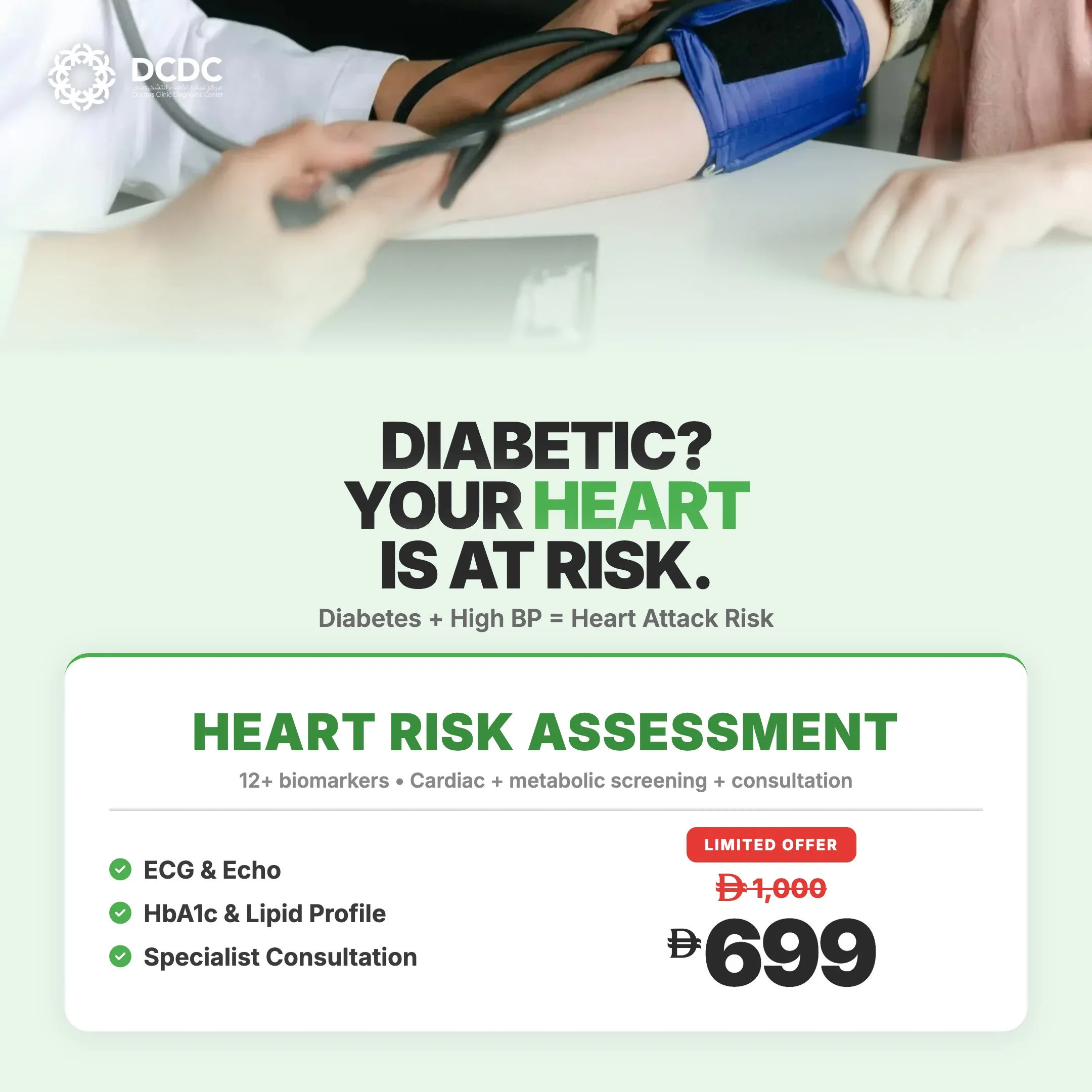
Ambulatory blood pressure monitoring (ABPM) is a test that measures your blood pressure automatically, at set intervals, over a full 24 hours while you go about your normal day and sleep at night. Instead of a single reading taken while you sit in a doctor's office, ABPM produces a detailed record of 50 to 100 or more readings. That record shows how your blood pressure behaves at work, during travel, when you are stressed, when you are relaxed, and while you are asleep.
The idea behind the test is simple: blood pressure is not a fixed number. It rises and falls throughout the day with activity, emotion, caffeine, posture, medication timing and sleep. A reading taken in a clinic captures one moment, and that moment can be misleading. ABPM captures the pattern, and the pattern is what predicts long-term cardiovascular risk most reliably. Major guidelines, including the 2023 European Society of Hypertension (ESH) guidelines and the 2017 ACC/AHA guideline, recognise ambulatory monitoring as a reference method for confirming a diagnosis of high blood pressure and for identifying hidden patterns that office readings miss.
The ABPM Device
An ABPM unit has two parts: a standard blood pressure cuff worn on the upper arm, and a small recorder, usually about the size of a deck of cards or a small phone, connected to the cuff by a thin tube. The recorder is carried on a belt, in a small pouch, or on a shoulder strap. Most devices weigh well under 300 grams. You wear it under or over your clothing, and nobody around you will notice it apart from a faint whirring sound when the cuff inflates.
How the Device Works
The recorder contains a small pump and a pressure sensor. At programmed intervals it inflates the cuff until blood flow in the brachial artery is briefly blocked, then slowly releases the pressure. As the cuff deflates, the sensor detects the pulsations of the artery wall (the oscillometric method) and calculates your systolic pressure (the top number), diastolic pressure (the bottom number) and pulse rate. Each reading is time-stamped and stored in the recorder's memory. When you return the device, the data is downloaded to software that produces averages, trends and charts for your doctor to interpret.
A standard ABPM is not painful. Each inflation lasts about 30 to 60 seconds and feels like a firm squeeze on the arm, similar to an office blood pressure check. Most people get used to it within the first few readings. If you would like to understand how normal values change with age before your test, see our guide to the blood pressure chart and normal ranges in Dubai.
Why Your Doctor May Order ABPM
ABPM is not a routine test for everyone. It is ordered when a single clinic reading is not enough to make a confident decision. Guidelines from the ESH, NICE (UK) and the US Preventive Services Task Force all recommend confirming a diagnosis of hypertension with out-of-office measurement, and ABPM is the most thorough way to do it. Common reasons for ordering the test include:
- Suspected white coat hypertension: Your blood pressure is high in the clinic (140/90 mmHg or above) but normal outside it. Anxiety in a medical setting can push readings up. ABPM shows your true everyday average and can prevent you from starting lifelong medication you may not need.
- Suspected masked hypertension: The opposite problem. Your clinic readings are normal, but your pressure is high during daily life, often because of work stress, smoking, caffeine, or physical exertion. Masked hypertension is easy to miss and carries a cardiovascular risk similar to sustained hypertension.
- Medication monitoring: If you are already on treatment, ABPM shows whether your tablets are controlling your pressure across the whole 24 hours, including early morning (when heart attacks and strokes are most common) and overnight.
- Nocturnal hypertension and abnormal dipping: Blood pressure normally falls by 10 to 20 percent during sleep. If it does not (non-dipping) or rises (reverse dipping), the risk of heart and kidney disease increases. Only ABPM can measure night-time pressure reliably. This pattern is common in people with sleep apnoea, diabetes and chronic kidney disease.
- Pregnancy-related blood pressure concerns: In pregnancy, ABPM can help distinguish true hypertensive disorders from white coat effects when clinic readings are borderline. Your obstetrician and cardiologist will decide whether it is appropriate in your case.
- Resistant hypertension or large variability: If readings are high despite several medications, or swing widely from visit to visit, ABPM helps separate true resistance from poor control caused by white coat effect or medication timing.
- Symptoms such as dizziness or fainting: Low blood pressure, particularly after meals or after standing, can be captured and matched to your symptoms diary.
If you have been told your blood pressure is borderline, or your readings at home and in the clinic do not match, ABPM is often the test that settles the question. You can read more about the condition itself in our article on high blood pressure screening and treatment in Dubai.
ABPM vs Other Blood Pressure Tests
Several tests measure blood pressure or related heart function, and they are often confused. The table below compares ABPM with the most common alternatives. Note that a Holter monitor is not a blood pressure test at all: it records heart rhythm. It is included because patients often hear the two described together as 24-hour monitors.
| Feature | ABPM | Office (Clinic) BP | Home BP Monitoring | Holter Monitor |
|---|---|---|---|---|
| What it measures | Blood pressure and pulse, automatically | Blood pressure at one moment | Blood pressure, measured by you | Heart rhythm (ECG), not blood pressure |
| Duration | 24 hours (day and night) | A few minutes | Usually 7 days, twice daily | 24 to 48 hours |
| Number of readings | 50 to 100+ | 1 to 3 | ~28 or more over a week | Continuous heartbeats |
| Night-time readings | Yes, while asleep | No | No (standard devices) | Heart rhythm only |
| Detects white coat effect | Yes | No | Yes | No |
| Detects masked hypertension | Yes | No | Yes | No |
| Shows dipping pattern | Yes | No | No | No |
| Needs a clinic visit | Fitting and return (or home service) | Yes | Initial training only | Fitting and return |
| Main purpose | Confirm diagnosis, assess 24-hour control | Screening and routine checks | Long-term self-monitoring | Detect arrhythmias |
In practice these tests complement each other. Office readings screen for a problem, home monitoring is excellent for long-term follow-up, and ABPM is the most complete assessment when a decision matters. If your doctor is also investigating palpitations or irregular heartbeats, a similar ambulatory approach is used with the Holter monitor test, and a resting ECG test is usually the first step in any cardiac work-up.
ABPM vs Home Blood Pressure Monitoring
Home blood pressure monitoring (HBPM) and ABPM both measure pressure outside the clinic, and both are better predictors of risk than office readings. HBPM is cheaper, easy to repeat, and ideal for ongoing follow-up once treatment is established. ABPM has two advantages: it records readings automatically (so there is no bias from how you take them) and it measures blood pressure during sleep and during real-life activity. Guidelines generally treat ABPM as the preferred method for establishing a diagnosis, and HBPM as a sensible choice for long-term monitoring and when ABPM is not available or not tolerated.
How to Prepare for Your ABPM Test
Preparation for ABPM is simple, but a few details make a real difference to the quality of the data. Think of it as a timeline: a few days before, the morning of the test, and the 24 hours of wearing the device.
Timeline: Before the Appointment
- One week before: Confirm with your doctor whether you should take your blood pressure medication as usual. In most cases the answer is yes, because the aim is to see how your pressure behaves in real life.
- 2 to 3 days before: Plan the monitoring day. Choose a normal day, ideally a working day with typical activity, not a day of unusual travel, intense exercise or a major event. If you work shifts, tell the clinic so the night-time schedule can be adjusted.
- The day before: Avoid unusually heavy caffeine or alcohol intake, and keep your usual sleep routine. Charge or confirm the device battery with the clinic if instructed.
What to Wear
Wear a loose-fitting, short or wide-sleeved top that you can easily slip off and on, because the cuff sits on the bare upper arm and the tube runs under your clothing to the recorder. Avoid tight sleeves that would roll up and squeeze the arm. A loose shirt or blouse with a button front is ideal. For sleeping, loose cotton nightwear works best. Dressing in layers is helpful in Dubai, where air conditioning can be strong indoors and temperatures high outdoors.
Medication Instructions
Continue all your regular medicines unless your doctor tells you otherwise. Do not stop or skip blood pressure tablets to see "what your pressure is without them" unless this is specifically part of your doctor's plan. Take them at your usual time and note the time in your diary. If the test is being used to judge whether treatment is working, taking medication as normal is essential. Bring a list of your current medicines to the appointment.
Activities to Avoid During the Test
- Swimming, showering and bathing: The device must not get wet. Take a wash or sponge bath instead.
- Strenuous exercise: Avoid the gym, running and heavy lifting. Normal walking and daily chores are fine.
- Unusual stimulants: Keep caffeine, energy drinks and smoking to your normal pattern, and avoid new habits.
- Driving long distances or stressful tasks that are not part of your routine: You can drive, but keep your arm relaxed when the cuff inflates and, where possible, pull over safely for a reading.
- Removing or adjusting the cuff: Leave it in place unless it becomes painful, numb, or you are told to remove it.
Keeping a Diary During the 24 Hours
You will usually be given a simple diary to complete. It is one of the most important parts of the test, because it lets your cardiologist match readings to what you were doing. Write down the following:
- Time you woke up and time you went to bed (the sleep period is used to calculate your night-time average).
- Times you took medication.
- Meals, caffeine and any alcohol.
- Periods of walking, stairs, stress, arguments, or anything unusual.
- Symptoms such as headache, dizziness, palpitations or chest tightness, with the time they started.
A reading that is high at 3 PM looks very different if the diary shows you were climbing stairs or in a stressful meeting. Without the diary, the same number can be misinterpreted.
What Happens During the 24-Hour Test
Here is a step-by-step walkthrough of a typical ABPM day, from fitting to return.
Step 1: Device Fitting (10 to 20 minutes)
A trained nurse or technician measures your upper arm to select the correct cuff size. Using the wrong size is one of the commonest causes of inaccurate readings, so this step matters. The cuff is placed on your non-dominant arm (the arm you write with less), so that you can use your dominant hand normally. The tube is routed under your clothing and connected to the recorder, which is placed in a belt pouch or on a shoulder strap. A test reading is taken in front of you to confirm that the device works and to show you what an inflation feels like. You will also be given the diary and instructions for the next 24 hours.
Step 2: Daytime Monitoring
During the day the device inflates automatically every 20 to 30 minutes. A short beep or whirr usually warns you just before it starts. Daytime readings are more frequent because blood pressure changes more rapidly while you are active.
What to Do During Each Inflation
- Stop what you are doing, if it is safe to do so.
- Keep your arm still, relaxed and at heart level, with the hand resting on your lap or a table.
- Do not talk, tense your muscles or clench your fist.
- Breathe normally until the cuff has fully deflated.
- If you are walking, stand still for the reading. If you are driving, keep your arm relaxed and continue to drive safely.
Movement during an inflation can produce an error message or an inaccurate reading. If the device fails to get a reading, it will usually try again within a couple of minutes, so a few failed readings are normal.
Step 3: Night-time Monitoring and Sleeping With the Device
At night the device automatically switches to one reading every 30 to 60 minutes, so that your sleep is disturbed as little as possible. Many devices are set to a longer interval overnight, based on the sleep times you reported at the fitting. Some people notice the first few night-time inflations, but most settle back to sleep quickly.
- Place the recorder under your pillow, beside you on the bed, or keep it in its pouch attached to a loose waistband.
- Make sure the tube is not twisted or pulled tight when you turn over.
- Sleep on your back or on the side opposite to the cuff arm, if comfortable.
- If the cuff wakes you, lie still until it deflates rather than moving your arm.
Night-time readings are among the most valuable parts of the test, because they cannot be obtained any other way in routine care. Try to sleep as normally as you can, and note in your diary if you slept poorly.
Step 4: Device Return the Next Day
After about 24 hours, you return to the clinic, or the home service technician collects the device. The cuff is removed, the data is downloaded, and the recording is checked for quality. Guidelines recommend at least 70 percent of programmed readings to be valid, with a minimum of 20 daytime and 7 night-time readings. If too many are missing, the test may need to be repeated. The report is then reviewed by your cardiologist.
Understanding Your ABPM Results
Your ABPM report shows individual readings, averages for the 24-hour, daytime and night-time periods, and a chart of how your pressure moved across the day. Your cardiologist interprets it in the context of your age, symptoms, medicines and other health conditions. The thresholds below are those used by the ESH, ESC and ACC/AHA guidelines to define normal and elevated ambulatory pressure.
| Period | Normal (mmHg) | Hypertension threshold (mmHg) |
|---|---|---|
| 24-hour average | Below 130/80 | 130/80 or higher |
| Daytime (awake) average | Below 135/85 | 135/85 or higher |
| Night-time (asleep) average | Below 120/70 | 120/70 or higher |
Note that ambulatory thresholds are lower than office thresholds. A clinic reading of 140/90 mmHg corresponds roughly to a 24-hour ABPM average of 130/80 mmHg. For a broader overview of how blood pressure categories change with age, see our blood pressure by age guide.
Dipping Patterns
In healthy people, blood pressure falls during sleep. The "dip" is calculated by comparing the daytime and night-time averages. Your cardiologist will describe one of the following patterns:
| Pattern | Night-time fall vs daytime | What it may mean |
|---|---|---|
| Normal dipper | 10 to 20 percent | Expected healthy pattern |
| Non-dipper | Less than 10 percent | Linked to sleep apnoea, diabetes, kidney disease, high salt intake and higher cardiovascular risk |
| Extreme dipper | More than 20 percent | May suggest over-treatment or autonomic problems; can reduce blood flow to organs at night |
| Reverse dipper (riser) | Night-time pressure higher than daytime | Associated with the highest cardiovascular risk; needs careful evaluation |
Common Diagnoses From ABPM
- Normotension: Clinic and ambulatory readings both normal. No treatment needed beyond lifestyle advice.
- Sustained hypertension: Both clinic and ambulatory readings high. Treatment is usually recommended.
- White coat hypertension: High clinic readings, normal ABPM. Usually monitored with lifestyle changes and periodic checks rather than immediate medication.
- Masked hypertension: Normal clinic readings, high ABPM. Treatment is usually considered, as the risk is real.
- Nocturnal hypertension: High night-time average, even when daytime values are acceptable. Medication timing and underlying causes are reviewed.
Never interpret a single high reading in isolation. Individual readings will often be high during activity or stress. What matters is the average and the overall pattern.
What to Expect at DCDC
Doctors Clinic Diagnostic Center (DCDC) in Dubai Healthcare City offers a complete patient journey for ambulatory blood pressure assessment, from the first consultation through to interpretation and treatment planning. Here is how it typically works.
The Patient Journey
- Step 1: Cardiology consultation. You meet our cardiologist, Dr. Shahoo Mazhari (MD, Cardiology), for a review of your history, current medicines and previous readings. A cardiology consultation is available from AED 250.
- Step 2: Test planning. Your cardiologist decides whether ABPM is the right test and confirms the monitoring plan, including whether to continue your medication.
- Step 3: Device fitting. The device can be fitted at the clinic, or you can choose our ABPM at home service, which brings the monitoring to your home or workplace for added convenience.
- Step 4: 24-hour monitoring. You go about your normal day and night, complete the diary and return the device the next day.
- Step 5: Results interpretation. The recording is analysed and reviewed by your cardiologist, who explains the averages, dipping pattern and what they mean for you.
- Step 6: Treatment plan. If needed, your doctor discusses hypertension management options, lifestyle measures and follow-up.
Same-day appointments are frequently available, so you often do not need to wait long to start. Because DCDC is a one-stop diagnostic center, your cardiologist can also arrange an ECG, echocardiogram, treadmill stress test, Holter monitoring and blood work in the same visit if your symptoms or results call for them. Patients who need a heart tracing at home may also be interested in ECG at home in Dubai.
Location, Hours and Practical Details
- Address: Building 64, Block A, Al Razi Medical Complex, Dubai Healthcare City (DHCC).
- Opening hours: Saturday to Thursday 8 AM to 10 PM, Friday 9 AM to 9 PM.
- Parking: Free parking is available.
- Insurance: 20+ insurance partners with direct billing. Coverage for ambulatory monitoring depends on your plan and referral, so please check with our team.
- Language: Multilingual staff are available to support you.
- Reputation: DCDC holds a 4.8/5 Google rating from over 1,000 reviews.
Tips for Accurate ABPM Results
Small habits make a big difference to data quality. These practical tips come from standard ABPM guidance and the most common causes of failed readings.
- Keep the arm still: Movement is the main reason for error messages. Pause and relax your arm for each inflation.
- Keep the cuff at heart level: If your arm hangs below your heart, readings may read slightly high, and above it, slightly low.
- Do not tighten or reposition the cuff: If it slips, readjust it gently so that the artery marker lines up on the inner arm, and tell the clinic.
- Behave normally: Do not change your routine because you are being monitored. The aim is real-life data.
- Do not take extra readings: Pressing the manual button too often adds stress and can distort the average. Use it only if you feel unwell.
- Fill in the diary immediately: Memory fades quickly. A short note at the time is more useful than a long note later.
- Report numbness or pain: If your hand tingles, goes numb, or the cuff causes pain, remove it and contact the clinic.
- Avoid saunas, hot baths and heavy meals before sleep: They can change pressure and sleep quality.
- Repeat when needed: If the test fails because of too few valid readings, it can be repeated. This is common and not a cause for worry.
After Your ABPM: Next Steps
Once your cardiologist has reviewed the report, one of several outcomes follows. The details depend on your results and your overall cardiovascular risk.
If Your Results Are Normal
You will be reassured, and regular checks continue as recommended. If you have risk factors such as family history, diabetes or being overweight, your doctor may suggest repeating home or ambulatory monitoring every one to two years.
If You Have White Coat Hypertension
Treatment is usually not started immediately. You will generally be advised to adopt lifestyle measures, monitor your pressure at home, and have periodic ABPM or home readings, because white coat hypertension can progress to sustained hypertension in some people.
If You Have Sustained or Masked Hypertension
The discussion will focus on lifestyle changes and, where indicated, medication. Lifestyle measures include reducing salt, increasing physical activity, losing excess weight, limiting alcohol, stopping smoking and improving sleep. Your doctor will choose medicines based on your age, kidney function and other conditions. Additional tests are often requested to look for organ effects or secondary causes: ECG, echocardiogram, blood tests for kidney function, cholesterol and glucose, and urine tests.
If Your Night-time Pressure Is High
Your cardiologist may adjust the timing of medication, review for sleep apnoea, kidney disease, or other causes, and arrange a follow-up ABPM to confirm improvement.
Follow-up
After treatment is started or changed, a repeat ABPM or a week of home monitoring after a few weeks to months shows whether the target has been reached. Most guidelines aim for an office pressure below 130/80 mmHg in adults, which translates into ambulatory targets lower than the thresholds above.
ABPM Normal Ranges at a Glance
This summary table collects the reference values for quick use. Always discuss your own numbers with your doctor, because targets vary with age, pregnancy, diabetes, kidney disease and other conditions.
| Measure | Normal / target | Abnormal |
|---|---|---|
| 24-hour average | Below 130/80 mmHg | 130/80 mmHg or higher |
| Daytime average | Below 135/85 mmHg | 135/85 mmHg or higher |
| Night-time average | Below 120/70 mmHg | 120/70 mmHg or higher |
| Night-time dip | 10 to 20 percent fall | Less than 10 percent (non-dipper), more than 20 percent (extreme), or rise (reverse) |
| Valid readings needed | 70 percent or more; at least 20 daytime and 7 night-time | Fewer: test may need repeating |
Book Your ABPM Assessment at DCDC
Start with a cardiology consultation from AED 250 with Dr. Shahoo Mazhari at DCDC, Dubai Healthcare City. Choose clinic fitting or our ABPM at home service. Same-day appointments are frequently available. Learn more about hypertension management, message us on WhatsApp, or call +971 54 219 5008.
Related Services at DCDC
Expert care and advanced diagnostics at Dubai Healthcare City
Frequently Asked Questions
Final Thoughts
ABPM is one of the most informative tests in modern blood pressure care. By replacing a single clinic number with a full 24-hour record, it can confirm or rule out hypertension, expose white coat and masked patterns, and show whether treatment is truly working, including during sleep. Preparation is straightforward: wear loose sleeves, continue your medicines, avoid water and strenuous activity, keep your arm still at each inflation and complete your diary.
If you have been told your blood pressure is high, borderline, or inconsistent, ABPM can give you a clear answer and a plan based on your real-life numbers. At DCDC in Dubai Healthcare City, you can start with a cardiology consultation from AED 250 with Dr. Shahoo Mazhari, choose clinic fitting or the ABPM at home service, and have your results explained in plain language. Our team is open Saturday to Thursday 8 AM to 10 PM and Friday 9 AM to 9 PM. Call +971 54 219 5008 or message us on WhatsApp at wa.me/971509703884 to arrange your assessment.
This article is for general information and does not replace personal medical advice. If you experience severe headache, chest pain, shortness of breath, confusion or weakness while wearing the device, remove it and seek urgent medical care.
Sources & References
This article references the following sources:
- 2023 ESH Guidelines for the Management of Arterial Hypertension (J Hypertens, PubMed)
- 2017 ACC/AHA Guideline for the Prevention, Detection, Evaluation, and Management of High Blood Pressure in Adults (PubMed)
- 2018 ESC/ESH Guidelines for the Management of Arterial Hypertension (Eur Heart J, PubMed)
- NICE Guideline NG136: Hypertension in Adults - Diagnosis and Management
This information is educational and does not replace individual medical advice. See our editorial policy for more information.

Written by
Dr. Shahoo Mazhari
Cardiologist
MD, Cardiology
Dr. Shahoo Mazhari is a Cardiologist at Doctors Clinic Diagnostic Center (DCDC) in Dubai Healthcare City.
Related Articles

Blood Pressure by Age Dubai: Normal Ranges (2026)
High Blood Pressure Dubai: Screening & Treatment (2026)

Holter Monitor Test Dubai: Cost & Guide (2026)
ECG Test Dubai: Cost, Types & Results (2026)
ECG at Home Dubai: Cost & What to Expect (2026)
More in Cardiology

Heart Tests Dubai: ECG, Echo & Stress Test Cost (2026)
Read More
Echo Test Cost Dubai: 2D Echo Price & What It Includes
Read More
Heart Checkup Dubai: Cardiac Packages From AED 249 (2026)
Read MoreHeart Screening Dubai: Checkup Packages & Prevention (2026)
Read MoreHolter Monitor Prep Dubai: What to Expect (2026)
Read More
When to See a Cardiologist Dubai (2026)
Read More© 2026 Doctors Clinic Diagnostic Center (DCDC), Dubai Healthcare City. Originally published at https://doctorsclinicdubai.ae/blog/abpm-24-hour-blood-pressure-monitoring-dubai. All rights reserved. Unauthorized reproduction is prohibited.