Key Takeaways
- Herniated discs typically affect adults aged 30-50 with sudden onset pain, while spinal stenosis develops gradually and mostly affects people over 50
- Herniated disc pain usually worsens with sitting, bending forward, or coughing; spinal stenosis pain typically eases with sitting or bending forward and worsens with walking or standing (neurogenic claudication)
- Both conditions can cause sciatica-like leg pain, numbness, tingling, and weakness, but the underlying mechanism differs — localized disc compression versus generalized canal narrowing
- MRI is the gold-standard imaging test to reliably distinguish spinal stenosis from a herniated disc and to guide the correct treatment path
- Most cases of both conditions improve with conservative treatment — physiotherapy, medication, and activity modification — within 6 to 12 weeks
- Surgery is reserved for progressive neurological deficits, cauda equina syndrome, or failure of a genuine trial of conservative treatment
- A spine consultation at DCDC starts from AED 299, with spine MRI from AED 900 and same-day results coordination available for urgent cases
Lower back pain that radiates into the leg is one of the most common reasons patients visit our spine care clinic in Dubai, and two conditions are behind the majority of these visits: spinal stenosis and a herniated disc. Both can cause similar leg pain, numbness, and weakness, which is why so many patients arrive uncertain which one they actually have. Yet the two conditions differ in cause, typical age of onset, symptom pattern, and — most importantly — the treatment approach that works best. Getting the diagnosis right the first time avoids months of the wrong exercises, the wrong medication, or unnecessary worry.
This guide breaks down exactly how spinal stenosis and a herniated disc differ, what each looks like on an MRI scan, how doctors tell them apart during a clinical examination, and what conservative and surgical treatment options look like for each. We also cover realistic recovery timelines and the cost of spine diagnosis and treatment in Dubai, so you know what to expect before you book an appointment.

Spinal Stenosis vs Herniated Disc: Understanding the Difference
At the simplest level, a herniated disc is a localized problem — the soft cushioning material inside one spinal disc pushes out through a weakened outer wall and presses on a nearby nerve. Spinal stenosis is a more generalized problem — the entire spinal canal or the small openings where nerves exit the spine (the neural foramina) gradually narrow, crowding the spinal cord or nerve roots along a wider stretch of the spine. Both can produce the same downstream result — pinched nerves that cause pain, numbness, tingling, or weakness — but they arise from different structural changes, tend to appear at different ages, and respond to somewhat different treatment strategies.
Confusing the two is understandable, since sciatica-type leg pain is a hallmark symptom of both. What separates them clinically is the pattern of what makes the pain better or worse, the age at which symptoms typically start, and — decisively — what shows up on spine MRI imaging. Understanding both conditions in detail helps you describe your symptoms more precisely to your doctor and makes sense of the treatment plan you are given.
What Is Spinal Stenosis?
Spinal stenosis is a narrowing of the spinal canal — the bony tunnel that houses the spinal cord and nerve roots — or of the neural foramina where individual nerve roots exit the spine. This narrowing is almost always a slow, degenerative process rather than a sudden event. As the spine ages, intervertebral discs lose height and bulge slightly, facet joints thicken with arthritis, the ligamentum flavum (a ligament that runs along the back of the spinal canal) thickens and stiffens, and bone spurs (osteophytes) form at the joint margins. Individually these changes are minor, but together they gradually encroach on the space available for the spinal cord and nerves.
Spinal stenosis most commonly affects the lumbar (lower back) spine and typically becomes symptomatic after age 50, though a smaller number of patients are born with a congenitally narrow canal that becomes symptomatic earlier. The hallmark symptom is neurogenic claudication — leg pain, heaviness, cramping, or numbness that worsens with walking or standing and eases when the patient sits down or leans forward (such as leaning on a shopping cart). This posture-dependent pattern occurs because bending forward slightly opens up the spinal canal, temporarily relieving pressure on the crowded nerves.
What Is a Herniated Disc?
Each spinal disc has a tough outer ring called the annulus fibrosus and a soft, gel-like core called the nucleus pulposus. A herniated disc — also called a slipped or ruptured disc — occurs when the outer ring weakens or tears and the inner gel pushes out, sometimes bulging against a nerve root and sometimes rupturing through the wall entirely (an extrusion). When that displaced material contacts a nerve root, it triggers inflammation and mechanical compression, producing sharp, often severe pain that radiates along the path of the affected nerve.
Herniated discs are most common in the lumbar spine (especially the L4-L5 and L5-S1 levels) and the cervical spine, and they typically affect adults between 30 and 50 years old — an age range where discs still contain enough water and pressure to herniate forcefully, unlike the drier, more brittle discs of older age. Onset is often sudden, frequently linked to a specific triggering event: lifting something heavy with poor form, a twisting movement, a fall, or even a strong sneeze. Classic symptoms include sharp, shooting leg pain (sciatica) that worsens with sitting, bending forward, coughing, or sneezing, and improves somewhat with lying down or standing.
Side-by-Side Comparison: Symptoms, Causes, and Risk Factors
The table below summarizes the key clinical differences that help distinguish the two conditions before imaging even takes place. None of these patterns is 100% diagnostic on its own, which is why a clinical exam combined with MRI remains the reliable way to confirm the diagnosis, but the pattern of symptoms gives an important early clue.
| Feature | Spinal Stenosis | Herniated Disc |
|---|---|---|
| Onset | Gradual, over months to years | Often sudden, may follow a specific injury or movement |
| Typical age | Usually over 50 | Usually 30-50 |
| Primary cause | Degenerative narrowing: bone spurs, thickened ligament, facet arthritis | Tear in the disc's outer wall allowing the inner core to bulge or rupture |
| Pain pattern | Aching, cramping, heaviness; often bilateral (both legs) | Sharp, shooting, burning; usually one-sided (one leg) |
| Worsened by | Walking, standing, extending the back | Sitting, bending forward, coughing, sneezing |
| Relieved by | Sitting down, leaning forward, bending at the waist | Lying down, sometimes standing or walking |
| Nerve symptoms | Numbness/weakness often affects both legs, worsens with activity | Numbness/weakness follows a single nerve root distribution |
| Common risk factors | Age, degenerative disc disease, facet arthritis, prior spine surgery | Heavy lifting, repetitive twisting, smoking, obesity, sedentary work with sudden strain |
| Typical MRI finding | Narrowed central canal or foramen, thickened ligamentum flavum, facet hypertrophy | Focal disc bulge, protrusion, or extrusion compressing a nerve root |
General patterns only — many patients present with an overlap of features, which is why clinical examination combined with MRI is used to confirm the diagnosis rather than symptoms alone.
How Each Condition Is Diagnosed
Diagnosis starts with a detailed history — when the pain began, what makes it better or worse, whether it radiates into the leg, and whether there is any numbness, weakness, or change in bladder or bowel control. This is followed by a focused physical examination. For a suspected herniated disc, the straight leg raise test (lifting the straightened leg while the patient lies flat) that reproduces leg pain at a low angle is a strong indicator of nerve root irritation from disc material. For suspected stenosis, doctors look for symptom relief with spinal flexion and worsening with extension, along with reduced walking tolerance that improves with rest and forward bending.
A neurological exam checks reflexes, muscle strength in specific muscle groups, and sensation along dermatomes (the skin areas each nerve root supplies), which helps localize exactly which nerve level is affected. For a broader picture of how doctors work through the range of possible causes of back and leg pain, our guide to back pain causes and treatment covers the wider diagnostic process, including red flags that prompt urgent imaging.
MRI Findings: What Your Spine Scan Shows
While history and physical examination point strongly toward one diagnosis or the other, MRI is what confirms it — and often reveals whether both conditions are present together. On MRI, spinal stenosis appears as a visibly narrowed central canal or neural foramen, often accompanied by a thickened, buckled ligamentum flavum, facet joint hypertrophy, and sometimes mild disc bulging that contributes to the crowding at multiple levels simultaneously. A herniated disc, in contrast, appears as a focal outpouching or rupture of disc material at a single level, often with a clear indentation on the adjacent nerve root or thecal sac, and sometimes with a fragment of disc material that has migrated away from the disc space entirely.
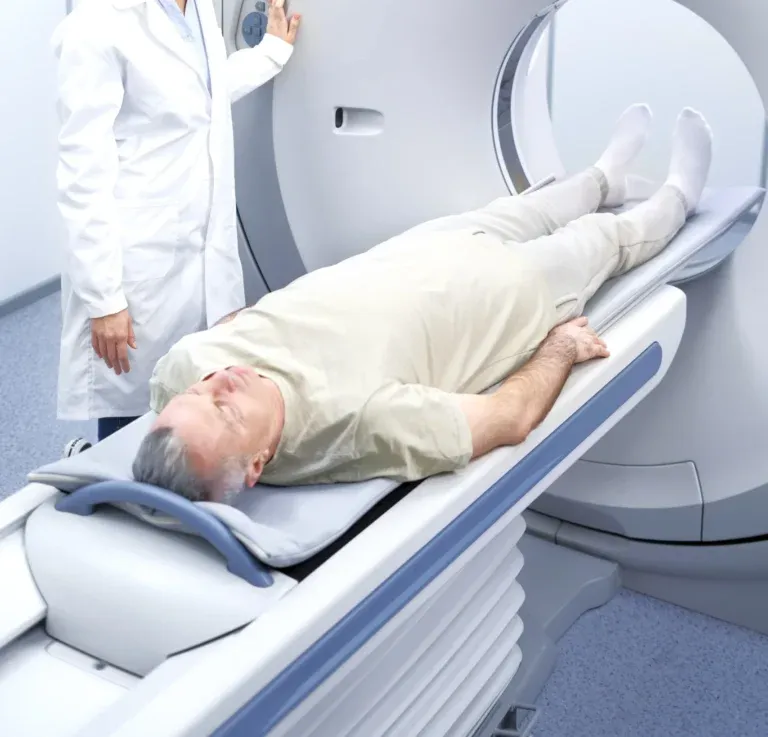
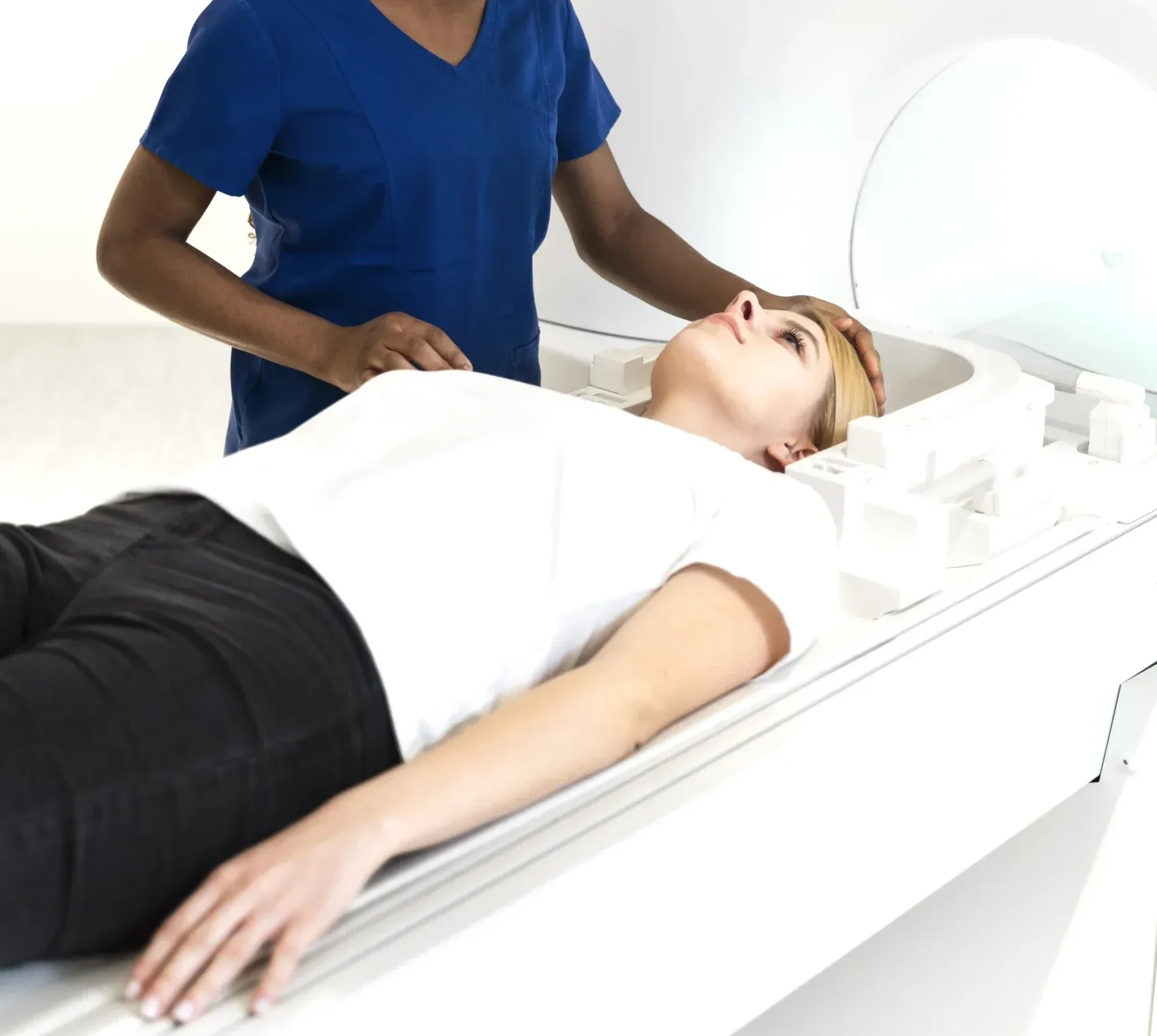
MRI quality and interpretation matter significantly here — subtle foraminal stenosis or a small disc protrusion can be easy to miss on lower-quality imaging or when read by a non-specialist. At DCDC, spine MRI is performed on a Siemens 1.5T wide-bore scanner with a 70cm opening (more comfortable for larger patients and those prone to claustrophobia) and every scan is interpreted by a subspecialty-trained radiologist rather than a general reader, which matters when the difference between findings changes the treatment recommendation.
Conservative Treatment Options for Both Conditions
The good news is that the majority of both spinal stenosis and herniated disc cases respond well to non-surgical treatment, at least initially. Conservative management typically includes:
- Physiotherapy: targeted exercises to strengthen core and back muscles, improve flexibility, and reduce nerve irritation — flexion-based exercises tend to help stenosis, while extension-based exercises (such as the McKenzie method) often help centralize herniated disc pain
- Anti-inflammatory medication: NSAIDs to reduce inflammation around the compressed nerve, sometimes combined with short-term muscle relaxants or neuropathic pain medication for nerve-related symptoms
- Activity modification: temporarily avoiding movements that provoke symptoms — prolonged standing and walking for stenosis, or bending and heavy lifting for a herniated disc
- Epidural steroid injections: image-guided injections that deliver anti-inflammatory medication directly around the affected nerve root, often used when oral medication and physiotherapy alone are not enough
- Weight management: reducing mechanical load on the spine, particularly relevant for stenosis where excess weight increases pressure on an already narrowed canal
- Bracing or supportive belts: used short-term during flare-ups to limit painful movement while the underlying inflammation settles
Not Sure Which Condition You Have?
A clinical exam combined with spine MRI at DCDC gives you a definitive answer. Book a spine consultation from AED 299.
When Surgery Becomes Necessary
Surgery is not the first-line treatment for either condition, but it becomes necessary when conservative treatment fails after a genuine trial (typically 6-12 weeks), or immediately when certain warning signs appear: progressive muscle weakness, loss of bladder or bowel control, saddle numbness (cauda equina syndrome), or pain so severe it cannot be managed with medication. These red-flag symptoms require urgent evaluation regardless of how long symptoms have been present.
For a herniated disc, the standard surgical procedure is a microdiscectomy — a minimally invasive procedure that removes only the portion of disc material pressing on the nerve, typically performed through a small incision with a short hospital stay. For spinal stenosis, the equivalent procedure is a laminectomy (sometimes called decompression surgery), which removes part of the bone and thickened ligament to create more space for the spinal cord and nerves. In cases where stenosis is accompanied by spinal instability, a spinal fusion may be added to the laminectomy. The choice of procedure, and whether surgery is recommended at all, depends heavily on the exact MRI findings, symptom severity, and how much the condition is affecting daily function.
Recovery Timelines: Stenosis vs Herniated Disc
Recovery expectations differ meaningfully between the two conditions, both with and without surgery. Herniated disc symptoms often improve faster with conservative care because the acute inflammation around the disc fragment tends to settle over weeks, and the body can partially reabsorb herniated disc material over time. Many patients see significant improvement within 6-12 weeks of consistent physiotherapy and activity modification. For a detailed week-by-week breakdown of what recovery looks like, see our herniated disc rehabilitation timeline.
Spinal stenosis, being a degenerative and structural narrowing rather than an inflamed disc fragment, does not resolve on its own in the same way — conservative treatment manages symptoms and improves function rather than reversing the underlying narrowing. Many patients live comfortably for years with a combination of physiotherapy, activity pacing, and occasional injections. When surgery is needed, recovery from a microdiscectomy for a herniated disc is typically faster (many patients return to light activity within 2-4 weeks and to full activity by 6-8 weeks) than recovery from a laminectomy for stenosis, which often takes 6-12 weeks or longer, particularly in older patients who may also be managing other health conditions.
Cost of Spine Diagnosis and Treatment in Dubai
Pricing for spine evaluation in Dubai varies by clinic, imaging technology, and whether treatment stays conservative or progresses to injections or surgery. The table below reflects typical costs for the diagnostic and early treatment stages, including DCDC's own pricing.
| Service | DCDC Price | Typical Dubai Market Range |
|---|---|---|
| Orthopedic/spine consultation | From AED 299 | AED 250 - 600 |
| Spine X-ray (per region) | From AED 250 | AED 200 - 450 |
| Spine MRI (single region) | From AED 900 | AED 900 - 2,500 |
| Physiotherapy session | From AED 250 | AED 200 - 450 |
| Epidural steroid injection | Quoted after consultation | AED 2,000 - 5,000 |
| Microdiscectomy / laminectomy | Quoted after consultation | AED 25,000 - 60,000+ |
Prices are indicative and depend on the specific spine level, insurance coverage, and clinical complexity. Confirm exact pricing at the time of consultation. See our full <a href="/blog/spine-mri-cost-dubai">spine MRI cost guide</a> for a detailed breakdown.
DCDC works with 20+ insurance providers through direct billing, which means eligible patients often pay only their co-payment or deductible rather than the full listed price. Our team can check your eligibility and estimated out-of-pocket cost before your appointment.
What to Expect at DCDC for Spine Evaluation
DCDC is located in Dubai Healthcare City, Building 64, with free on-site parking for patients. Your visit typically follows a clear sequence designed to get you an accurate diagnosis and a treatment plan on the same day whenever possible.
- Orthopedic consultation (20-30 minutes): Dr. Mersad Moosavi reviews your symptom history, pain pattern, and any prior imaging or treatment you have tried
- Neurological and musculoskeletal examination: reflex testing, muscle strength assessment, straight leg raise and extension testing, and sensory mapping to localize the affected nerve level
- On-site MRI coordination: if imaging is indicated, spine MRI is performed on our Siemens 1.5T wide-bore scanner (70cm opening) in the same facility, avoiding the delay and hassle of being referred elsewhere
- Results within 18-24 hours: reported by a subspecialty radiologist, with same-day turnaround available for urgent cases with concerning neurological signs
- Treatment plan development: your findings are explained in plain language, comparing what a stenosis pattern versus a herniation pattern would mean for your specific care path
- Physiotherapy referral if needed: our on-site rehabilitation team can begin a tailored exercise program immediately, so there is no gap between diagnosis and starting treatment
DCDC holds a 4.8/5 Google rating from over 1,000 reviews and a 98% patient satisfaction rate, and operates as a MOHAP-licensed facility. "According to Dr. Mersad Moosavi, orthopedic surgeon at DCDC with 14+ years of experience, many patients arrive confused about whether they have stenosis or a herniated disc — or both. A detailed clinical examination combined with MRI imaging is essential for accurate diagnosis, as treatment pathways differ significantly between the two conditions."
Can You Have Both Conditions at Once?
Yes, and it is more common than many patients expect, particularly in adults over 50. Degenerative disc disease and spinal stenosis often develop side by side as the spine ages — a disc can lose height and bulge (contributing to canal narrowing) at the same time that facet arthritis and ligament thickening are independently narrowing the canal, and that same aging disc can also develop a focal herniation on top of the existing degeneration. When both are present, symptoms can overlap in confusing ways — a patient might have stenosis-pattern leg pain with walking as well as sharp, sciatica-type pain from a coexisting disc herniation at a different level.
This overlap is exactly why imaging and clinical correlation matter so much: treating only the more obvious finding while missing a second contributing condition can leave a patient with persistent symptoms even after appropriate treatment for the first diagnosis. A full-length spine MRI review, read level by level, is the most reliable way to identify whether one or both conditions are contributing to a patient's symptoms.
Get an Accurate Spine Diagnosis at DCDC Dubai Healthcare City
At Doctors Clinic Diagnostic Center, spine consultations, MRI, and physiotherapy are all available on-site, so you get a clear diagnosis and treatment plan without being referred elsewhere. Consultations start from AED 299.
Related Services at DCDC
Expert care and advanced diagnostics at Dubai Healthcare City
Frequently Asked Questions
Final Thoughts
Spinal stenosis and a herniated disc can feel remarkably similar from the inside — both can send pain, numbness, or weakness down the leg — but they arise from different structural problems and are treated somewhat differently. Understanding the general pattern of your symptoms, whether walking or sitting worsens them, how sudden the onset was, and your age, gives useful early clues, but a definitive diagnosis always relies on a clinical examination paired with MRI imaging.
The encouraging reality is that most patients with either condition, and even those with both together, improve substantially with conservative treatment: physiotherapy, activity modification, and medication. Surgery remains an important option for the smaller group of patients with progressive neurological symptoms or pain that does not respond to a genuine trial of non-surgical care.
If you are experiencing back pain with leg symptoms and want a clear answer about what is causing it, Doctors Clinic Diagnostic Center in Dubai Healthcare City offers orthopedic consultation, on-site spine MRI, and physiotherapy under one roof, so your diagnosis and treatment plan can move forward without unnecessary delay.
Sources & References
This article was reviewed by our medical team and references the following sources:
- American Academy of Orthopaedic Surgeons - Lumbar Spinal Stenosis
- American Academy of Orthopaedic Surgeons - Herniated Disk
- North American Spine Society (NASS) - Patient Education
- Mayo Clinic - Spinal Stenosis: Symptoms and Causes
- Mayo Clinic - Herniated Disk: Symptoms and Causes
- Cleveland Clinic - Spinal Stenosis
- Cleveland Clinic - Herniated Disk
Medical content on this site is reviewed by DHA-licensed physicians. See our editorial policy for more information.

Written by
Dr. Mersad Moosavi
Orthopedic Surgeon
MD, Orthopedic Surgery
Dr. Mersad Moosavi is an Orthopedic Surgeon at Doctors Clinic Diagnostic Center (DCDC) in Dubai Healthcare City.
Related Articles
Herniated Disc Recovery: Week-by-Week Timeline (2026)
Back Pain Dubai: Causes & When You Need an MRI (2026)
Spine MRI Dubai: Cost, Uses & When You Need One (2026)

Sciatica Treatment Dubai: Physio vs Surgery (2026)
Lower Back Pain: Causes & Physio Exercises (2026)
More in Orthopedics

Sciatica Causes & Symptoms in Dubai (2026)
Read More
Gym Injuries Dubai: Prevention & Recovery (2026)
Read More
Chronic Pain Management Dubai: Guide (2026)
Read More
Achilles Tendonitis Treatment in Dubai (2026)
Read More
Wrist Pain Causes Dubai: When to Worry (2026)
Read MoreTrigger Finger Treatment Dubai: Guide (2026)
Read More© 2026 Doctors Clinic Diagnostic Center (DCDC), Dubai Healthcare City. Originally published at https://doctorsclinicdubai.ae/blog/spinal-stenosis-vs-herniated-disc-dubai. All rights reserved. Unauthorized reproduction is prohibited.