Key Takeaways
- Rotator cuff strains, lower back strain, and knee injuries are the three most common gym-related injuries seen in Dubai's orthopedic clinics
- Most gym injuries result from poor warm-up, incorrect form, and violating the 10% rule of progressive overload — not from resistance training itself being dangerous
- The updated POLICE protocol (Protect, Optimally Load, Ice, Compress, Elevate) is now preferred over plain RICE for most gym-related muscle and joint injuries
- Dubai's climate adds extra risk: dehydration, rapid indoor-to-outdoor AC temperature swings, and heat-related muscle stiffness all raise strain risk, especially in summer
- Same-day digital X-ray and Siemens 1.5T MRI at DCDC allow gym injuries to be accurately diagnosed and treatment started within hours instead of days
- PRP (Platelet-Rich Plasma) therapy is available at DCDC for tendon and ligament injuries — such as rotator cuff strains and tennis elbow — that do not fully resolve with physiotherapy alone
- Orthopedic consultation at DCDC starts from AED 250, with same-day imaging and on-site physiotherapy available under one roof in Dubai Healthcare City
Dubai's fitness culture is booming — from CrossFit boxes in Al Quoz to boutique weightlifting studios in JLT and 24-hour gyms across Downtown and Business Bay — and with more people training harder and more frequently, gym injuries have become one of the most common reasons patients visit an orthopedic clinic in the city. Whether it is a rotator cuff strain from overhead pressing, a tweaked lower back from deadlifting, or persistent knee pain after a heavy squat session, most gym injuries are both preventable and treatable when caught early. Our Sports Injury Treatment service at DCDC Dubai Healthcare City offers same-day orthopedic consultation with on-site imaging, so you can get an accurate diagnosis and start recovering without delay.
This guide covers the most common gym injuries seen in Dubai, evidence-based prevention strategies, how to tell the difference between normal muscle soreness and a real injury, when to see a doctor, and what recovery looks like for each injury type. It draws on current sports medicine guidelines and the clinical approach used by our orthopedic team at DCDC.

Why Gym Injuries Are So Common in Dubai
Dubai has one of the highest gym membership densities in the region, and the culture of high-intensity training — CrossFit, powerlifting, functional fitness, and boutique HIIT studios — has grown rapidly over the past decade. This surge in training volume, combined with a large expatriate population that often returns to intense exercise after periods of inactivity (long work travel, hot summer months indoors, or a change in routine), creates ideal conditions for overuse and acute gym injuries.
Research consistently shows that resistance training itself is a low-risk activity when performed correctly — injury rates per 1,000 training hours are lower than most team sports. The problem is rarely the exercise; it is almost always technique breakdown under fatigue, inadequate warm-up, or increasing weight and volume too quickly. Understanding how to prevent gym injuries starts with recognising these controllable risk factors rather than assuming injury is an inevitable part of training hard.
The 10 Most Common Gym Injuries Explained
At DCDC, our orthopedic team sees a recurring pattern of gym-related injuries across recreational lifters, CrossFit athletes, and casual gym-goers alike. The table below summarises the most frequent presentations, their typical cause, and which exercises are most often responsible.
| Injury | Affected Area | Common Cause | Typical Exercises |
|---|---|---|---|
| Rotator cuff strain / impingement | Shoulder | Overhead pressing with poor scapular control, sudden load increase | Overhead press, bench press, pull-ups |
| Lower back strain | Lumbar spine and paraspinal muscles | Rounded spine under load, lifting too heavy too soon | Deadlift, back squat, bent-over row |
| Patellofemoral pain / meniscus strain | Knee | Poor squat depth control, valgus collapse, rapid volume increase | Squat, lunges, leg press, box jumps |
| Lateral epicondylitis (tennis elbow) | Outer elbow | Repetitive gripping and wrist extension under load | Rows, pull-ups, kettlebell swings |
| Medial epicondylitis (golfer's elbow) | Inner elbow | Repetitive wrist flexion and forearm strain | Bicep curls, deadlift grip, pull-ups |
| Hamstring / quadriceps strain | Thigh muscles | Inadequate warm-up, explosive movement without preparation | Sprint intervals, box jumps, Romanian deadlift |
| Shin splints (medial tibial stress syndrome) | Lower leg | Sudden increase in running or jumping volume | Treadmill sprints, box jumps, rope skipping |
| Wrist sprain / tendinitis | Wrist | Poor wrist positioning under load, hyperextension | Push-ups, front squat, handstand work |
| Ankle sprain | Ankle ligaments | Landing mechanics failure, uneven surfaces | Box jumps, plyometrics, lateral agility drills |
| Delayed Onset Muscle Soreness (DOMS) | Any muscle group | Novel exercise or increased eccentric load — not a true injury | Any new or high-volume session |
The 10 most common gym injuries seen in Dubai orthopedic clinics, with typical causes and exercises
Shoulder Injuries: Gym Shoulder Injury Treatment Explained
The shoulder is the most mobile joint in the body, which also makes it the least inherently stable — a trade-off that becomes obvious under the repeated overhead loading common in gym training. Rotator cuff strains and shoulder impingement typically develop gradually, presenting as a dull ache during pressing movements that progresses to pain during daily activities like reaching overhead or sleeping on the affected side. Early gym shoulder injury treatment almost always starts conservatively: relative rest from aggravating movements, targeted rotator cuff strengthening, and scapular stability work, rather than complete cessation of all training.
If shoulder pain persists beyond two weeks, worsens at night, or is accompanied by weakness when lifting the arm, it warrants an orthopedic assessment rather than continued self-management. Our detailed guide on Shoulder Pain Causes Dubai: A Complete Guide explains the full range of shoulder conditions and red flags, while our Rotator Cuff Exercises: Physiotherapy Guide outlines the specific rehabilitation exercises used to restore strength and range of motion after a strain.
Lower Back Strain: Deadlift Back Injury Signs to Watch For
The lower back is one of the most frequently injured regions in strength training, particularly during deadlifts, squats, and bent-over rows. A lumbar strain typically results from lifting with a rounded or excessively arched spine under load, especially when fatigue causes technique to break down late in a set. Recognising early deadlift back injury signs — a pulling or tightening sensation during the lift, stiffness the following morning, or pain that worsens with forward bending — allows you to stop training that movement pattern before it becomes a more significant injury.
Sharp, shooting pain down one leg, numbness, tingling, or any loss of bladder or bowel control after a lifting injury are red-flag symptoms that require immediate medical attention, as they may indicate nerve involvement. For most lower back strains without these red flags, our guide on Lower Back Pain: Physiotherapy Exercises provides safe, evidence-based exercises to begin recovery once acute pain has settled.
Knee Injuries from Gym and Weight Training
Understanding the underlying workout knee pain causes is essential before returning to squats, lunges, or leg press training. The most common presentation is patellofemoral pain — a dull ache around or behind the kneecap that worsens with squatting, stairs, or prolonged sitting — usually caused by poor movement control, muscle imbalances around the hip and quadriceps, or a rapid increase in training volume. Meniscus strains and ligament sprains are less common but more serious, typically arising from a sudden twisting movement or a squat performed with excessive knee valgus (the knees caving inward).
Swelling, a locking or catching sensation, or instability (the knee giving way) after a gym session are signs that warrant orthopedic evaluation rather than continued training through the pain. Our comprehensive resource, Knee Pain Causes & When to Worry Dubai, breaks down the full spectrum of knee pain presentations and clear guidance on when imaging is needed.
Elbow, Wrist & Ankle Injuries in the Gym
Beyond the shoulder, back, and knee, several other joints are frequently affected by gym training, particularly in athletes doing high-volume pulling, gripping, or plyometric work.
- Tennis elbow (lateral epicondylitis): Pain on the outer elbow from repetitive gripping during rows, pull-ups, and kettlebell work; managed with load modification, eccentric strengthening, and occasionally bracing
- Golfer's elbow (medial epicondylitis): Pain on the inner elbow from repetitive wrist flexion during curls and deadlift grip work; treatment mirrors tennis elbow but targets the opposite muscle group
- Wrist sprains and tendinitis: Common in push-ups, front squats, and handstand training when the wrist is held in excessive extension; wrist wraps and technique correction usually resolve mild cases
- Ankle sprains: Occur most often during box jumps, plyometrics, and lateral agility drills when landing mechanics break down under fatigue; managed with the POLICE protocol and, for higher grades, structured physiotherapy
- Shin splints: Develop from a sudden increase in running, jumping, or rope-skipping volume on hard gym flooring; addressed through load reduction, footwear review, and gradual volume progression
How to Prevent Gym Injuries: Evidence-Based Strategies
Learning how to prevent gym injuries is far more effective — and far less costly — than treating them after the fact. The following strategies are supported by sports medicine research and form the foundation of injury prevention advice given by our orthopedic team at DCDC.
- Dynamic warm-up, not static stretching: Spend 8-10 minutes on movement-specific dynamic warm-ups (leg swings, band pull-aparts, bodyweight squats) before loading a movement pattern; static stretching before lifting can temporarily reduce strength output
- Progressive overload within the 10% rule: Increase training load or volume by no more than roughly 10% per week; sudden jumps in weight, sets, or session frequency are one of the strongest predictors of overuse injury
- Prioritise form over load: Video-record your lifts periodically or train with a qualified coach — technique breakdown under heavy or fatigued sets is the single most common mechanism of injury in strength training
- Build in rest days: Allow 48 hours between training sessions targeting the same muscle group, and schedule at least one full rest day per week to allow tissue repair and reduce cumulative fatigue
- Address mobility and stability gaps: Limited ankle, hip, or thoracic spine mobility often forces compensation elsewhere in the chain (commonly the lower back or knee) — targeted mobility work reduces this risk
- Stay hydrated and fuel adequately: Dehydration impairs neuromuscular control and increases cramping and strain risk, which is particularly relevant to training in Dubai's climate
CrossFit Injury Prevention Tips for High-Intensity Training
High-intensity functional training — CrossFit and similar formats popular across Dubai's boutique fitness studios — combines Olympic lifting, gymnastics movements, and metabolic conditioning under time pressure, which raises the stakes for technique breakdown. Effective CrossFit injury prevention tips focus on protecting form specifically when fatigue and the clock create pressure to move faster than technique allows.
- Scale weight or movement complexity (e.g. ring rows instead of pull-ups, box step-ups instead of box jumps) whenever fatigue starts to visibly affect your form
- Master the technical positions of Olympic lifts (snatch, clean and jerk) with a coach before adding significant load — these lifts carry a higher injury rate when self-taught
- Treat the warm-up and mobility portion of class as non-negotiable, not optional, particularly for overhead and hip-hinge movements
- Report any joint pain (as opposed to muscle fatigue) to your coach immediately rather than pushing through a workout for time
Dealing with a Gym Injury? Get an Expert Assessment
Same-day appointments at DCDC Dubai Healthcare City. Our sports injury team provides on-site digital X-ray and Siemens 1.5T MRI for accurate diagnosis within hours. Direct billing with Daman, AXA, Bupa, MetLife, Cigna, and 15+ other insurers. Orthopedic consultation from AED 250.
Dubai-Specific Risk Factors: Heat, Hydration & AC Temperature Swings
Training in Dubai carries a few climate-specific risk factors that are easy to overlook. Summer temperatures regularly exceed 40°C, and even with air conditioning, outdoor warm-ups, parking lot walks, and any transitional exposure to heat before an indoor session can leave muscles dehydrated and less pliable before training begins. Dehydration reduces blood volume and impairs neuromuscular coordination, both of which raise the risk of cramping and strain injuries — even inside a fully air-conditioned gym.
The reverse transition is equally relevant: moving from a hot, humid outdoor environment into a heavily air-conditioned gym causes a rapid drop in muscle temperature, which can leave tissue tighter and less prepared for explosive movement if the warm-up is rushed. Residents who split their training between outdoor running along the Kite Beach or Al Qudra tracks and indoor gym sessions should extend their indoor warm-up slightly to compensate for this temperature swing. Staying consistently hydrated throughout the day — not just during the workout itself — is one of the simplest and most effective injury prevention measures available to anyone training regularly in Dubai.
RICE Protocol vs POLICE: First Aid & When to See a Doctor for a Gym Injury
For decades, RICE (Rest, Ice, Compress, Elevate) was the standard first-aid advice for acute muscle and joint injuries. Sports medicine guidance has since evolved toward POLICE (Protect, Optimally Load, Ice, Compress, Elevate), which replaces prolonged rest with early, pain-guided movement — a change shown to speed recovery and reduce stiffness for most grade 1 and grade 2 soft tissue injuries. Ice for 15-20 minutes every 2-3 hours in the first 48-72 hours, gentle compression, and elevation above heart level remain appropriate for most acute gym injuries; the key difference is resuming light, pain-free movement as early as tolerated rather than complete immobilisation.
Knowing when to see a doctor for a gym injury versus managing it with self-care at home is an important skill for anyone who trains regularly. The following signs indicate that a clinical assessment is needed rather than continuing home management.
- Pain that does not meaningfully improve after 5-7 days of appropriate rest and load management
- Visible swelling, bruising, or deformity around a joint following the injury
- A popping or tearing sensation at the moment of injury, especially combined with immediate weakness
- Numbness, tingling, or shooting pain radiating away from the injury site
- Inability to bear weight, grip, or move the joint through a normal range of motion
- Pain that wakes you at night or is present at rest, not just during activity
- Any injury that recurs repeatedly in the same location despite rest and rehabilitation
Exercise Injury Recovery Timeline by Injury Type
Recovery speed depends heavily on which tissue is involved — muscle, tendon, ligament, or joint cartilage — and how promptly appropriate care begins. The table below gives a realistic exercise injury recovery timeline framework for the most common gym injuries when treatment starts early and rehabilitation is followed properly.
| Injury Type | Mild Case | Moderate Case | Severe Case | Return to Full Training |
|---|---|---|---|---|
| Muscle strain (hamstring, quad) | 3-7 days | 2-4 weeks | 6-12 weeks | Gradual, sport-specific loading |
| Rotator cuff strain | 1-2 weeks | 4-8 weeks | 3-6 months | Structured shoulder physiotherapy required |
| Lower back strain | 1-2 weeks | 3-6 weeks | 6-12 weeks | Core stability work before return to loaded lifts |
| Patellofemoral knee pain | 2-3 weeks | 4-8 weeks | 8-12+ weeks | Address movement mechanics before resuming squats |
| Tennis / golfer's elbow | 2-4 weeks | 6-10 weeks | 3-6 months | Eccentric strengthening protocol usually needed |
| Ankle sprain | 1-2 weeks | 3-6 weeks | 8-12 weeks | Balance and proprioception testing before return |
| DOMS (not a true injury) | 24-72 hours | N/A | N/A | Light activity is safe and can speed recovery |
Typical gym injury recovery timelines by severity and injury type — individual recovery varies
Exercise Modifications During Recovery
Complete rest from all exercise is rarely necessary — and is often counterproductive — for most gym injuries. Modifying training to avoid the injured tissue while maintaining overall fitness helps preserve strength, cardiovascular conditioning, and mental wellbeing during recovery.
- Shoulder injuries: Continue lower-body training (squats, leg press, deadlifts within a pain-free range) while avoiding overhead and pressing movements
- Lower back strain: Switch to machine-based, spine-neutral exercises and low-impact cardio (stationary bike, swimming) rather than loaded free-weight lifts
- Knee injuries: Upper body and core training can continue; consider swimming or upper-body ergometer work to maintain cardiovascular fitness
- Elbow injuries: Avoid gripping-intensive pulling movements; lower-body and machine-based pressing that does not load the forearm can usually continue
- Ankle sprains: Upper body and seated core work can continue almost immediately; lower body training resumes progressively as weight-bearing improves
PRP Therapy for Weightlifting Injury Recovery
Platelet-Rich Plasma (PRP) therapy is an option for gym injuries that involve tendon or ligament damage and are not fully resolving with physiotherapy alone. PRP concentrates growth factors from a patient's own blood and injects them directly into the injured tissue to stimulate the body's natural repair processes. It is particularly relevant for chronic tendon injuries such as tennis elbow, golfer's elbow, and rotator cuff tendinopathy — conditions that respond well to biological stimulation when conservative treatment alone has plateaued.
At DCDC, PRP therapy is performed under ultrasound guidance by our orthopedic specialists to ensure precise placement into the damaged tissue, typically as a course of 1-3 injections spaced roughly a week apart. Patients can usually continue their physiotherapy programme in parallel with treatment. Our detailed guide on Sports Injury Recovery Dubai: What to Expect covers the full range of regenerative treatments available for slow-healing gym and sports injuries.
Returning to the Gym Safely After an Injury
One of the most common causes of re-injury is returning to full training too early — before strength, range of motion, and confidence in the movement have genuinely been restored. A structured return-to-gym progression significantly reduces this risk compared to simply resuming a previous programme once pain has subsided.
- Confirm you have full, pain-free range of motion in the affected joint before reintroducing any loaded movement
- Restart with 40-50% of your pre-injury working weight and rebuild gradually over 2-4 weeks rather than jumping back to previous loads
- Reintroduce the specific movement pattern that caused the injury last, after building confidence with related but less demanding exercises
- Monitor for any return of symptoms within 24 hours of a session — soreness is expected, but sharp or localised pain is a signal to scale back
- Continue any prescribed physiotherapy exercises as maintenance work even after returning to full training, particularly for shoulder and knee injuries
What to Expect at DCDC: Your Gym Injury Patient Journey
DCDC is a one-stop diagnostic and treatment centre in Dubai Healthcare City, rated 4.8/5 on Google from over 1,000 verified patient reviews, with a 98% patient satisfaction rate and an average wait time of just 15 minutes. Here is what a visit for a gym injury typically looks like from arrival to treatment plan.
- Arrival and check-in: Free parking is available at Al Razi Medical Complex, Building 64. Reception verifies insurance details — direct billing is available for 20+ providers — and same-day walk-in assessment is accepted for acute injuries.
- Orthopedic consultation: Dr. Mersad Moosavi or a member of the orthopedic team conducts a structured clinical examination — assessing swelling, range of motion, strength, and specific ligament or tendon stress tests relevant to your injury.
- On-site imaging (if indicated): Digital X-ray for fracture assessment is available within the same building with results in minutes. Where soft tissue detail is needed, our Siemens 1.5T wide-bore MRI, with its 70 cm opening, provides detailed joint imaging of tendons, ligaments, cartilage, and bone marrow, often scheduled the same day.
- Diagnosis and treatment plan: The specialist reviews findings and provides a clear diagnosis with a personalised management plan — covering immediate care, activity modification, and a physiotherapy referral within the same building.
- On-site physiotherapy suite: If physiotherapy is indicated, you are referred directly to the DCDC physiotherapy team, eliminating the wait associated with external referrals; flexible session packages are available.
- PRP therapy option: For tendon or ligament injuries not fully responding to physiotherapy, PRP therapy can be discussed and scheduled with the orthopedic team.
- Follow-up scheduling: Progress reviews are booked to assess healing and adjust the plan, ensuring your return to the gym is guided rather than guessed.
According to Dr. Mersad Moosavi, who has treated thousands of gym-related injuries over his 14+ years of practice, "The majority of gym injuries I see could have been prevented with proper warm-up and progressive loading. When patients do get injured, early intervention — within the first 48-72 hours — dramatically improves outcomes and reduces recovery time."
Gym Injury Treatment Cost in Dubai (2026)
The total cost of treating a gym injury in Dubai depends on the severity of the injury, whether imaging is required, and whether physiotherapy or regenerative treatments such as PRP are needed. The table below provides a realistic cost framework for cash-pay patients at DCDC; patients with insurance coverage often have significantly reduced out-of-pocket costs through our direct billing arrangements.
| Service | Estimated Cost (Cash) | Insurance Coverage | Notes |
|---|---|---|---|
| Orthopedic Consultation | From AED 250 | Covered by most plans | Includes clinical examination and treatment plan |
| Digital X-ray | AED 150-300 | Covered by most plans | Results typically available same day |
| MRI (Siemens 1.5T, joint imaging) | From AED 900 | Covered for clinical indication | Same-day scan; no external referral needed |
| Ultrasound (soft tissue) | AED 300-600 | Covered by most plans | Useful for tendon and muscle assessment |
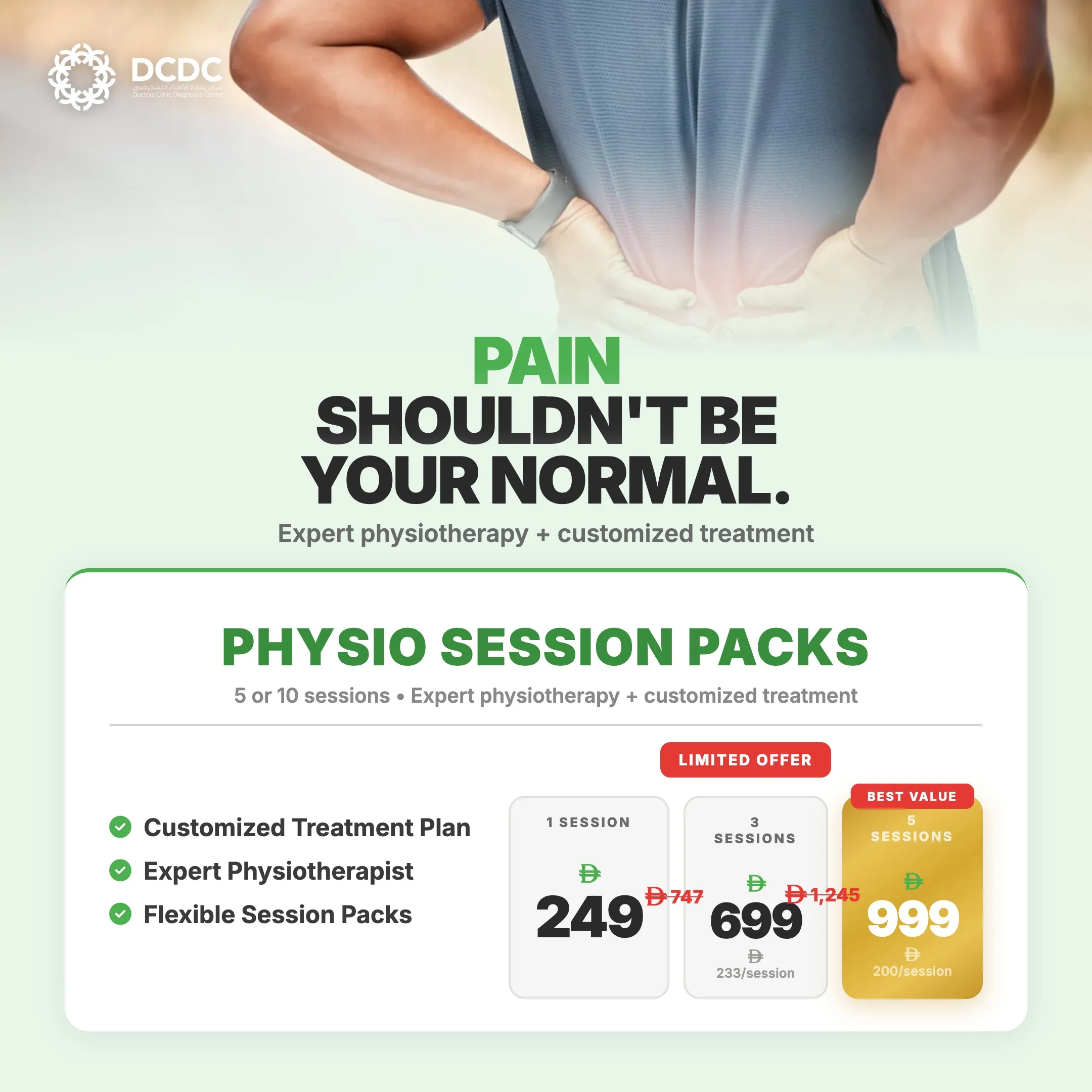
| Physiotherapy (per session) | AED 300-500 | Covered subject to plan limits | Flexible packages available at DCDC |
| PRP Therapy (per injection) | AED 1,500-3,000 | Variable; check with insurer | Typically 1-3 injections spaced 7 days apart |
Estimated gym injury treatment costs at DCDC Dubai (2026) — all prices are indicative; confirm with clinic at time of booking
DCDC is MOHAP-licensed and holds direct billing agreements with over 20 insurance providers, including Daman, AXA, Bupa, MetLife, and Cigna. Patients with comprehensive health insurance in the UAE typically find that consultation, imaging, and physiotherapy sessions for gym injuries are fully or substantially covered. We recommend calling ahead to confirm your specific coverage before your appointment.
Book Your Gym Injury Assessment at DCDC
Rated 4.8/5 from 1,000+ verified Google reviews. MOHAP-licensed. On-site Siemens 1.5T MRI, digital X-ray, and direct insurance billing under one roof in Dubai Healthcare City. Book a sports injury consultation from AED 250 — same-day appointments frequently available.
Related Services at DCDC
Expert care and advanced diagnostics at Dubai Healthcare City
Frequently Asked Questions
Train Hard, Recover Smart
Gym injuries are one of the most common and most preventable categories of musculoskeletal problems seen in Dubai's orthopedic clinics. The evidence is consistent: proper warm-up, technique-first training, progressive overload, and adequate rest between sessions prevent the vast majority of the shoulder, back, knee, elbow, and ankle injuries covered in this guide — far more reliably than any recovery treatment after the fact.
When an injury does happen, the difference between a quick recovery and a prolonged, recurring problem usually comes down to how early and how appropriately it is addressed. At DCDC Dubai Healthcare City, our orthopedic team's approach combines same-day diagnosis with on-site Siemens 1.5T MRI and digital X-ray, in-house physiotherapy, and access to PRP therapy when needed — giving you a complete treatment pathway under one roof, so you can get back to training in Dubai with confidence.
Sources & References
This article was reviewed by our medical team and references the following sources:
- Mayo Clinic — Sports Injuries: Symptoms & Causes
- Cleveland Clinic — Rotator Cuff Injury
- Cleveland Clinic — Delayed Onset Muscle Soreness (DOMS)
- American College of Sports Medicine (ACSM) — Progression Models in Resistance Training for Healthy Adults (Position Stand)
- British Journal of Sports Medicine — Warm-Up Strategies for Sport and Exercise: Mechanisms and Applications
- National Strength and Conditioning Association (NSCA) — Education & Injury Prevention Resources
Medical content on this site is reviewed by DHA-licensed physicians. See our editorial policy for more information.

Written by
Dr. Mersad Moosavi
Orthopedic Surgery
MD, Orthopedic Surgery
Dr. Mersad Moosavi is an Orthopedic Surgeon at Doctors Clinic Diagnostic Center (DCDC) in Dubai Healthcare City with over 14 years of experience.
Related Articles
Sports Injury Recovery Dubai: What to Expect
Knee Pain Causes & When to Worry Dubai
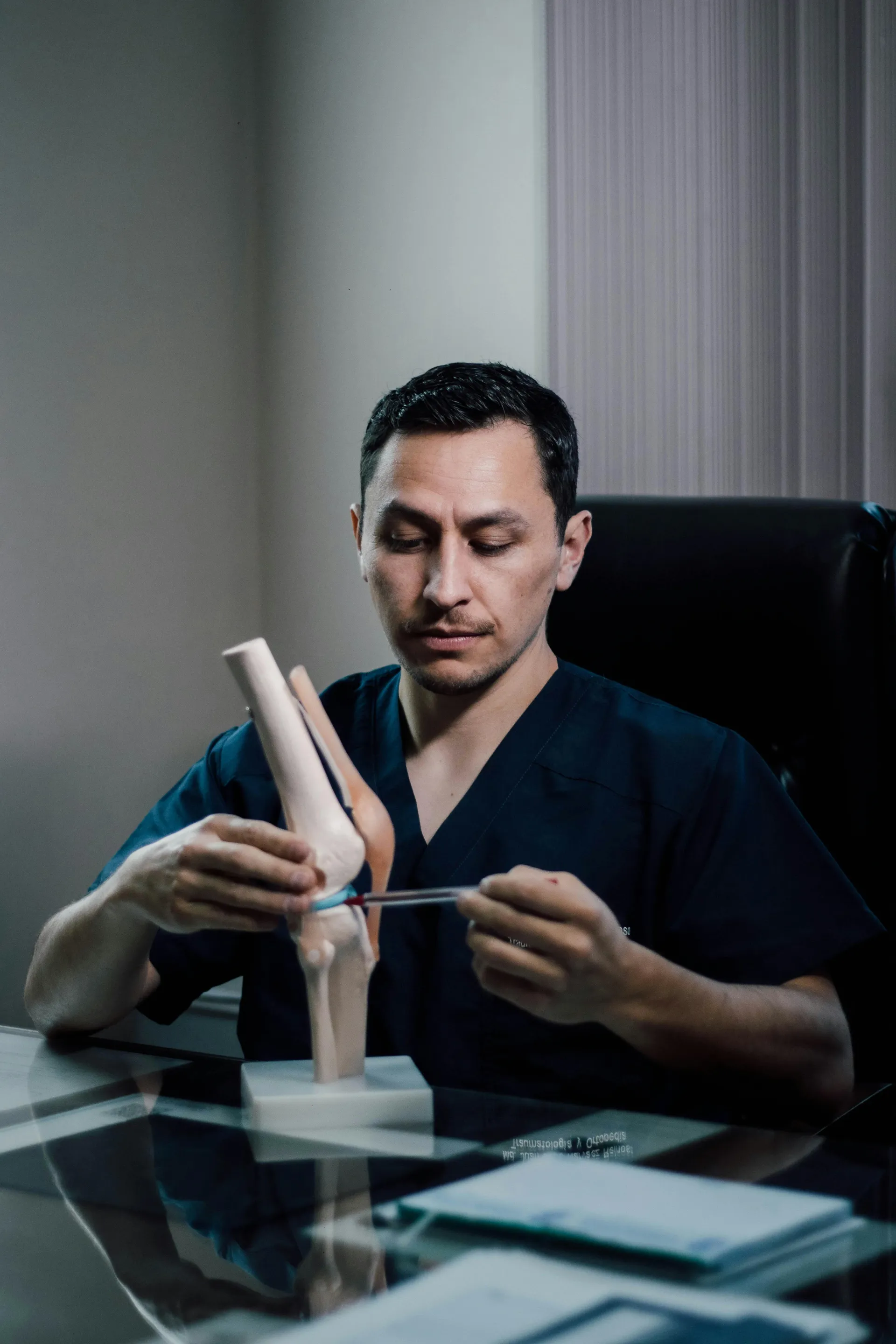
Shoulder Pain Causes Dubai: Guide
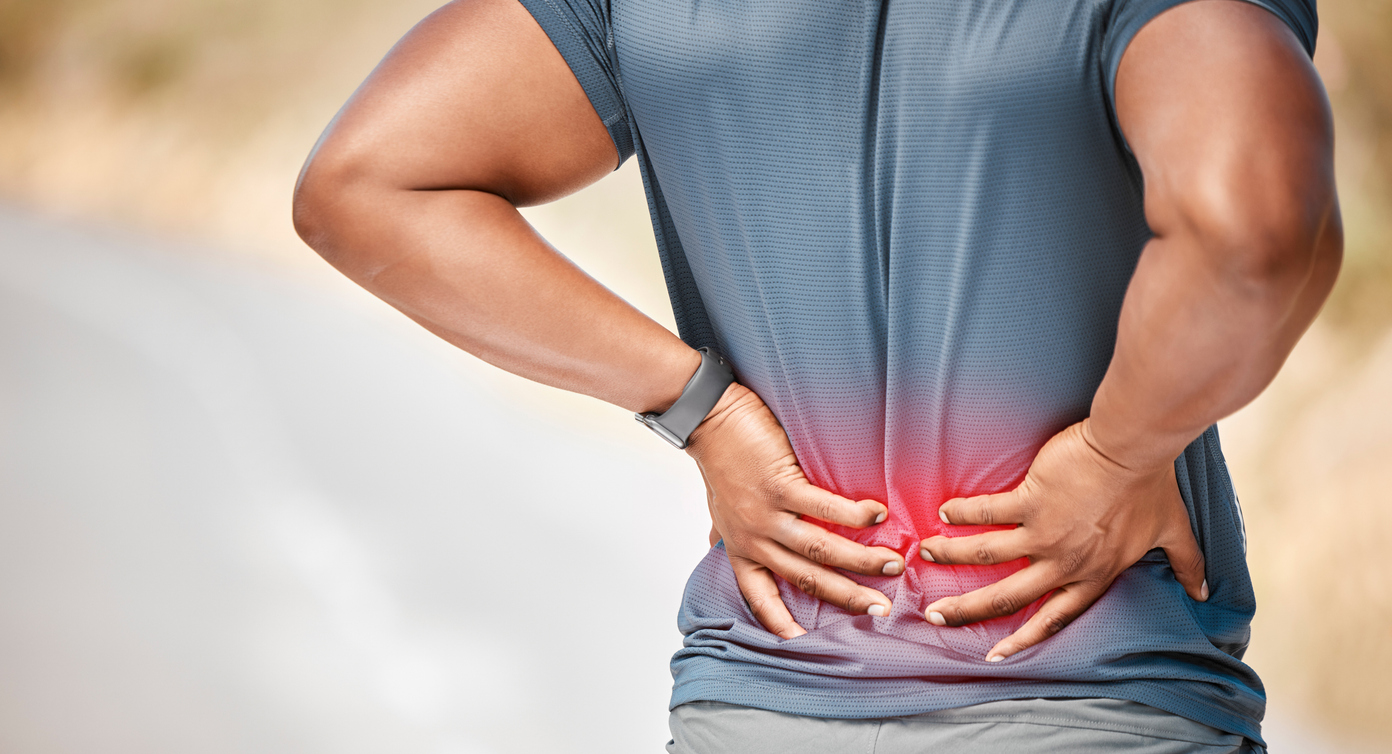
Lower Back Pain: Physio Exercises
More in Orthopedics

Sciatica Causes & Symptoms in Dubai (2026)
Read More
Chronic Pain Management Dubai: Guide (2026)
Read More
Achilles Tendonitis Treatment in Dubai (2026)
Read More
Spinal Stenosis vs Herniated Disc Dubai (2026)
Read MoreWrist Pain Causes Dubai: When to Worry (2026)
Read MoreTrigger Finger Treatment Dubai: Guide (2026)
Read More© 2026 Doctors Clinic Diagnostic Center (DCDC), Dubai Healthcare City. Originally published at https://doctorsclinicdubai.ae/blog/gym-injuries-prevention-recovery-dubai. All rights reserved. Unauthorized reproduction is prohibited.