Key Takeaways
- About 80% of people experience lower back pain at some point, and most episodes resolve within 6-12 weeks without surgery
- Gentle movement and targeted exercises are more effective than bed rest for most types of lower back pain
- Red flags like loss of bladder control, progressive weakness, or saddle numbness require immediate medical attention
- Core stabilization exercises (bird dogs, dead bugs, bridges) are the foundation of back pain rehabilitation
- If your pain radiates below the knee, involves numbness or tingling, or lasts beyond 6 weeks, see a physiotherapist or spine specialist
- Dubai lifestyle factors like prolonged sitting, AC exposure, and weekend warrior habits contribute significantly to back pain prevalence
Your lower back seized up again. Maybe it happened lifting groceries, getting out of bed, or sitting through another eight-hour workday in a Dubai office tower. You are wondering whether to push through it, rest, stretch, or call a doctor. This guide covers the real causes of lower back pain, which exercises actually help, and exactly when self-management is no longer enough. Our Physiotherapy service at DCDC offers same-day appointments in Dubai Healthcare City.
Lower back pain is the single leading cause of disability worldwide according to the WHO, and Dubai's desk-heavy, car-dependent lifestyle makes it even more prevalent here. The good news: most cases respond well to the right exercises and, when needed, professional physiotherapy.

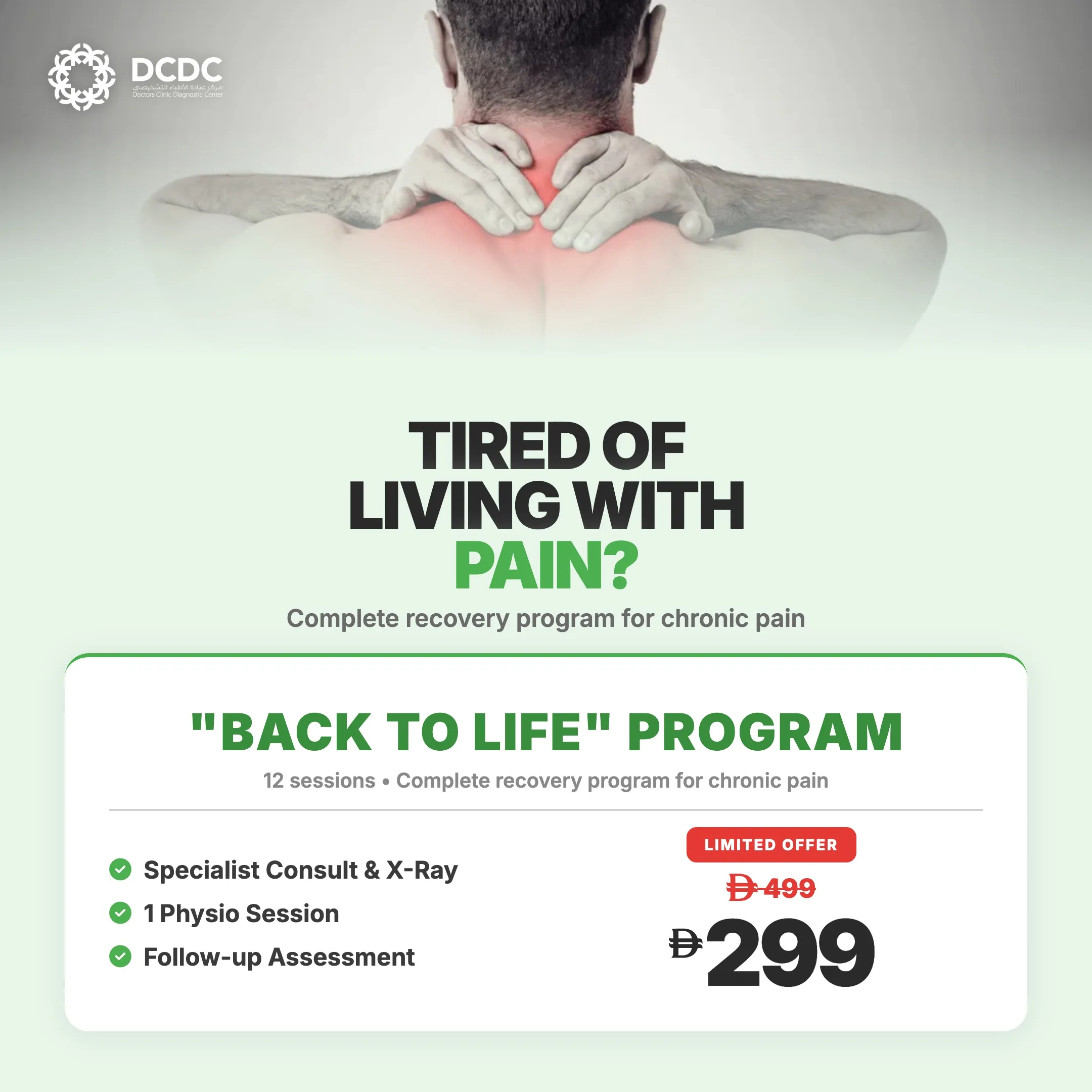
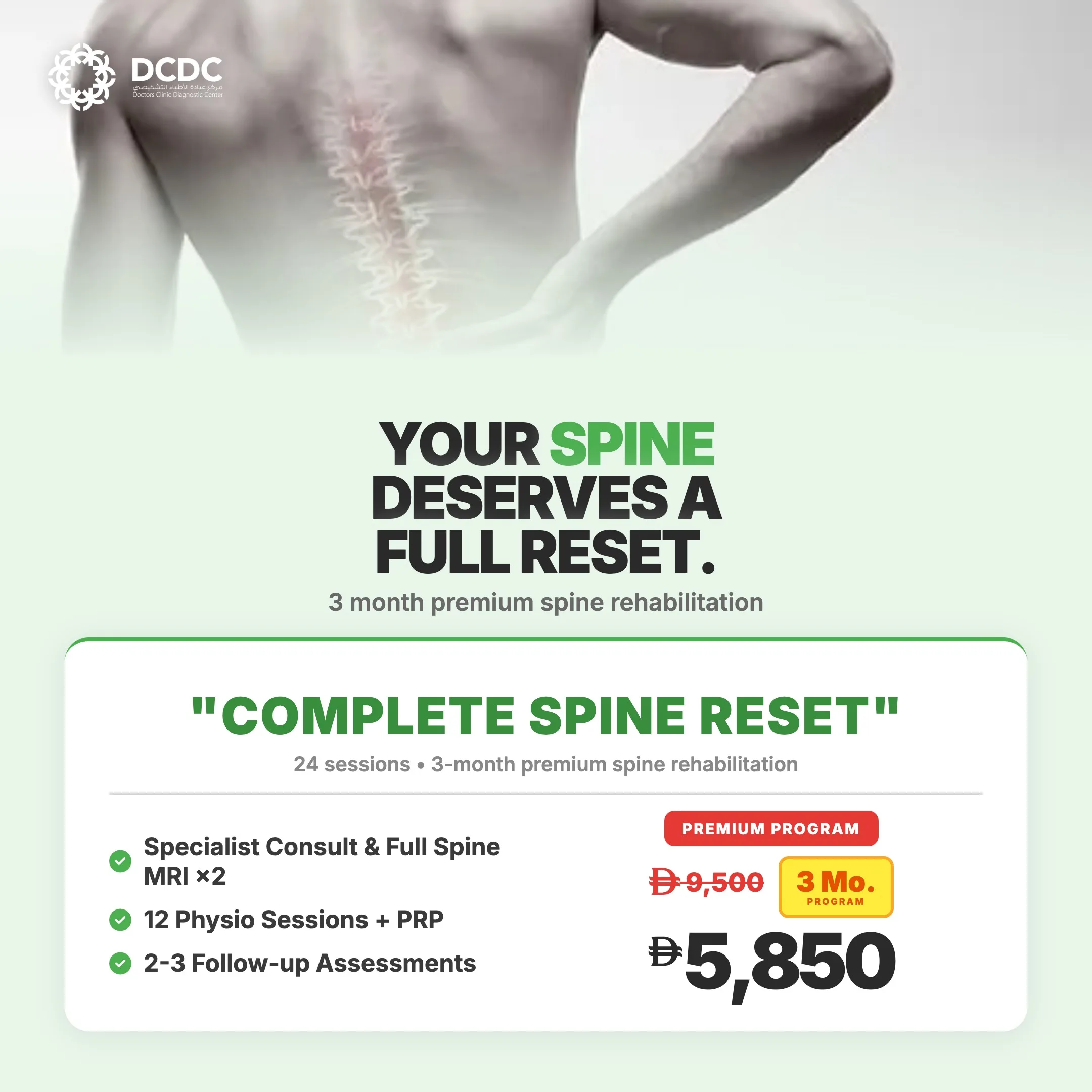
What Are the Most Common Causes of Lower Back Pain?
Lower back pain has dozens of potential causes, but roughly 90% of cases fall into a few categories. Mechanical causes like muscle strain, disc issues, and joint irritation account for the vast majority. Identifying the category matters because treatment differs significantly between them.
| Cause | Typical Severity | Usual Duration | Key Feature |
|---|---|---|---|
| Muscle/ligament strain | Mild to moderate | 2-4 weeks | Worsens with movement, improves with rest |
| Disc bulge or herniation | Moderate to severe | 6-12 weeks | May radiate to leg (sciatica) |
| Facet joint irritation | Mild to moderate | 2-6 weeks | Worsens with extension and rotation |
| Degenerative disc disease | Variable | Chronic/recurring | Stiffness after sitting, improves with walking |
| Sacroiliac joint dysfunction | Mild to moderate | 4-8 weeks | One-sided pain near belt line |
| Spinal stenosis | Moderate | Chronic | Leg pain with walking, eased by sitting |
Most lower back pain is mechanical in origin and responds to conservative treatment.
In Dubai specifically, prolonged sitting in air-conditioned offices, long car commutes on Sheikh Zayed Road, and sudden weekend exercise after sedentary weeks are the lifestyle triggers we see most often at our physiotherapy clinic.
What Are the Red Flag Symptoms of Lower Back Pain?
Most lower back pain is benign, but certain warning signs indicate a potentially serious condition that requires immediate medical evaluation. Do not wait to see if these symptoms improve on their own. Go to an emergency department or see your doctor the same day.
- Loss of bladder or bowel control: Suggests cauda equina syndrome, a surgical emergency
- Saddle numbness: Numbness in the groin, inner thighs, or buttocks
- Progressive leg weakness: Difficulty lifting your foot or walking on your heels/toes
- Fever combined with back pain: May indicate spinal infection
- Unexplained weight loss with worsening pain: Warrants investigation for serious pathology
- Pain after significant trauma: Fall from height, car accident, or direct blow
- Night pain that wakes you consistently: Especially if it does not improve with position changes
Which Home Exercises Help Lower Back Pain?
Evidence-based exercises for lower back pain focus on core stabilization, hip mobility, and gentle spinal movement. These exercises are safe for most people with non-specific lower back pain, but stop any exercise that significantly increases your symptoms. For related information, see our guide on Pregnancy Back Pain: Safe Physio Treatment.
Core Stabilization Exercises
- Bird dog: On all fours, extend opposite arm and leg. Hold 5 seconds. 3 sets of 10 reps per side. Builds spinal stability without spinal loading.
- Dead bug: Lie on back, arms up, knees bent 90 degrees. Lower opposite arm and leg toward floor. 3 sets of 8 reps per side. Trains deep core without stressing the back.
- Glute bridge: Lie on back, knees bent, feet flat. Lift hips until body is straight from knees to shoulders. Hold 3 seconds. 3 sets of 12 reps. Strengthens glutes and reduces load on the lumbar spine.
- Modified plank: On elbows and knees (or toes if able). Hold 20-30 seconds. 3 sets. Build up gradually to 60 seconds. Trains the entire core as a unit.
Flexibility and Mobility Exercises
- Cat-cow stretch: On all fours, alternate between arching and rounding the spine. 10-15 slow repetitions. Gently mobilizes the entire spine.
- Knee-to-chest stretch: Lie on back, pull one knee to chest. Hold 20-30 seconds each side. 2-3 reps. Stretches the lower back and hip.
- Child's pose: Kneel and sit back on heels, reaching arms forward. Hold 30-60 seconds. Gentle spinal flexion and relaxation.
- Hip flexor stretch: Half-kneeling lunge, push hips forward gently. Hold 30 seconds each side. 2-3 reps. Tight hip flexors are a major contributor to lower back pain in desk workers.
- Piriformis stretch: Lie on back, cross one ankle over opposite knee, pull toward chest. Hold 30 seconds each side. Relieves deep gluteal tightness that often mimics sciatica.
What to Avoid
- Sit-ups and crunches, which compress the spine and can worsen disc problems
- Toe touches from standing, which place high load on the lumbar spine in a vulnerable position
- Heavy deadlifts or squats during an acute episode
- Any exercise that causes sharp or radiating pain
When Should You See a Physiotherapist vs a Doctor?
Knowing who to see first can save you time and money. A physiotherapist is often the right first step for mechanical back pain, while a doctor or specialist is needed when there are signs of something more complex requiring investigation or medical intervention.
| See a Physiotherapist First | See a Doctor or Specialist First |
|---|---|
| Pain started after lifting, bending, or exercise | Pain after major trauma or accident |
| Dull, achy pain in the lower back | Shooting pain below the knee with numbness |
| Stiffness worse in the morning, improves with movement | Night pain that does not change with position |
| No numbness, tingling, or weakness | Any bladder or bowel changes |
| Pain lasting less than 6 weeks | Pain persisting beyond 6 weeks despite self-care |
| Previous episodes that resolved with exercise | First episode with red flag symptoms |
When in doubt, a physiotherapy assessment is a safe starting point. Your physiotherapist will refer you if imaging or medical evaluation is needed.
At DCDC, our physiotherapy team works alongside our spine specialists and on-site MRI imaging, so if your physiotherapist identifies something that needs further investigation, referral is immediate and seamless.
What Does a Typical Recovery Timeline Look Like?
Recovery from lower back pain varies based on the underlying cause and how quickly appropriate treatment begins. Here is what to expect for the most common scenarios when following a structured rehabilitation plan.
| Phase | Timeline | What to Expect |
|---|---|---|
| Acute phase | Days 1-7 | Pain at its worst. Focus on gentle movement, avoiding aggravating positions, and pain management. |
| Subacute phase | Weeks 2-4 | Pain starts decreasing. Begin structured exercises. Most daily activities become manageable. |
| Rehabilitation phase | Weeks 4-8 | Significant improvement. Progressive strengthening. Return to most normal activities. |
| Reconditioning phase | Weeks 8-12 | Focus on preventing recurrence. Sport-specific or work-specific exercises. Build endurance. |
| Maintenance | Ongoing | Regular exercise 3-4 times per week. Ergonomic habits. Annual physiotherapy checkup recommended. |
Muscle strains recover faster (2-4 weeks). Disc herniations may take 8-12 weeks. Chronic pain benefits from a longer rehabilitation approach.
How Does Physiotherapy Treat Lower Back Pain?
Professional physiotherapy goes far beyond the exercises you can do at home. A qualified physiotherapist uses a combination of manual therapy, targeted exercise prescription, and education to address both the symptoms and the root cause of your pain. You may also find our Office Back Pain Dubai: Prevention & Treatment helpful.
- Manual therapy: Hands-on techniques including joint mobilization, soft tissue release, and muscle energy techniques to restore normal movement
- Exercise prescription: A personalized program based on your specific diagnosis, not a generic sheet of stretches
- Dry needling: Targeted needling of trigger points to release deep muscle tension and improve blood flow
- Movement retraining: Correcting faulty movement patterns that perpetuate your pain
- Ergonomic advice: Practical modifications for your desk, car, and sleeping position
- Education: Understanding your condition reduces fear-avoidance behavior, which research shows is one of the strongest predictors of chronic pain development
Most patients with lower back pain need 6-10 physiotherapy sessions over 4-8 weeks, combined with daily home exercises. Research consistently shows that physiotherapy produces outcomes comparable to surgery for many spinal conditions, with significantly fewer risks.
Struggling with Lower Back Pain?
Book a physiotherapy assessment at Doctors Clinic Diagnostic Center in Dubai Healthcare City. Our physiotherapy team will diagnose the cause and create a tailored recovery plan. On-site MRI and spine specialist referral available if needed.
Related Services at DCDC
Expert care and advanced diagnostics at Dubai Healthcare City
Frequently Asked Questions
Taking the Right Step for Your Back
Lower back pain is extremely common, but it does not have to become a chronic problem. The combination of targeted exercises, understanding your triggers, and knowing when to seek professional help gives you the best chance of a full and lasting recovery.
If home exercises are not providing relief after 2-3 weeks, or if your symptoms include leg pain, numbness, or weakness, do not wait. A physiotherapy assessment at DCDC can identify the specific cause and fast-track your recovery with a treatment plan tailored to your body and your lifestyle.
Sources & References
This article was reviewed by our medical team and references the following sources:
- World Health Organization - Low Back Pain Fact Sheet
- The Lancet - Prevention and Treatment of Low Back Pain (2018)
- Dubai Health Authority - Musculoskeletal Health Guidelines
- NICE Guidelines - Low Back Pain and Sciatica in Over 16s (NG59)
- Journal of Orthopaedic & Sports Physical Therapy - Core Stability Exercise Principles
Medical content on this site is reviewed by DHA-licensed physicians. See our editorial policy for more information.

Written by
Dr. Hadi Komshi
Specialist Internal Medicine
MD, DHA-Licensed
Dr. Hadi Komshi is a DHA-licensed Internal Medicine Specialist at Doctors Clinic Diagnostic Center in Dubai Healthcare City, with extensive experience in managing acute and chronic medical conditions including musculoskeletal pain and rehabilitation.
Related Articles
Complete Guide to Physiotherapy in Dubai: Types, Costs & What to Expect
Herniated Disc Rehabilitation: Complete Recovery Timeline

Sciatica Treatment: Physiotherapy vs Surgery

Office Worker Back Pain Prevention: Exercises That Work
More in Physiotherapy
Emsella vs Kegels Dubai: Which Works Better? (2026)
Read MoreShin Splints Dubai: Treatment & Recovery (2026)
Read More
Golfer's Elbow vs Tennis Elbow Dubai (2026)
Read MorePhysiotherapy Dubai: Types, Cost & Guide (2026)
Read More
Vestibular Rehab Dubai: Treatment for Vertigo (2026)
Read MorePhysiotherapy Packages Dubai: Save 20%+ (2026)
Read More© 2026 Doctors Clinic Diagnostic Center (DCDC), Dubai Healthcare City. Originally published at https://doctorsclinicdubai.ae/blog/lower-back-pain-exercises-physiotherapy. All rights reserved. Unauthorized reproduction is prohibited.