Key Takeaways
- Most herniated discs (85-90%) heal with conservative treatment. The body naturally resorbs disc material over weeks to months.
- Recovery follows a predictable pattern: acute pain management (weeks 1-2), early mobility (weeks 3-4), progressive strengthening (months 2-3), and full reconditioning (months 4-6)
- MRI improvement lags behind symptom improvement. You will feel better before your MRI looks better, and many disc changes on MRI are painless.
- Returning to normal activities too quickly is the leading cause of setbacks. Follow phase-specific restrictions carefully.
- Centralization of pain (leg pain retreating toward the back) is one of the strongest signs that conservative treatment is working
- Exercises change at every phase. What helps at month 3 can harm at week 1.
Your MRI confirmed it: a herniated disc. Now you want to know exactly how long recovery will take and what you should be doing at each stage. This guide provides a detailed, week-by-week rehabilitation timeline based on current evidence and the protocols used at our physiotherapy clinic in Dubai Healthcare City. Our Physiotherapy service at DCDC offers same-day appointments in Dubai Healthcare City.
Disc herniation recovery is not random. It follows a biological healing process with distinct phases, each requiring specific exercises, precautions, and expectations. Understanding this timeline helps you stay on track, avoid setbacks, and recognize when things are progressing normally.

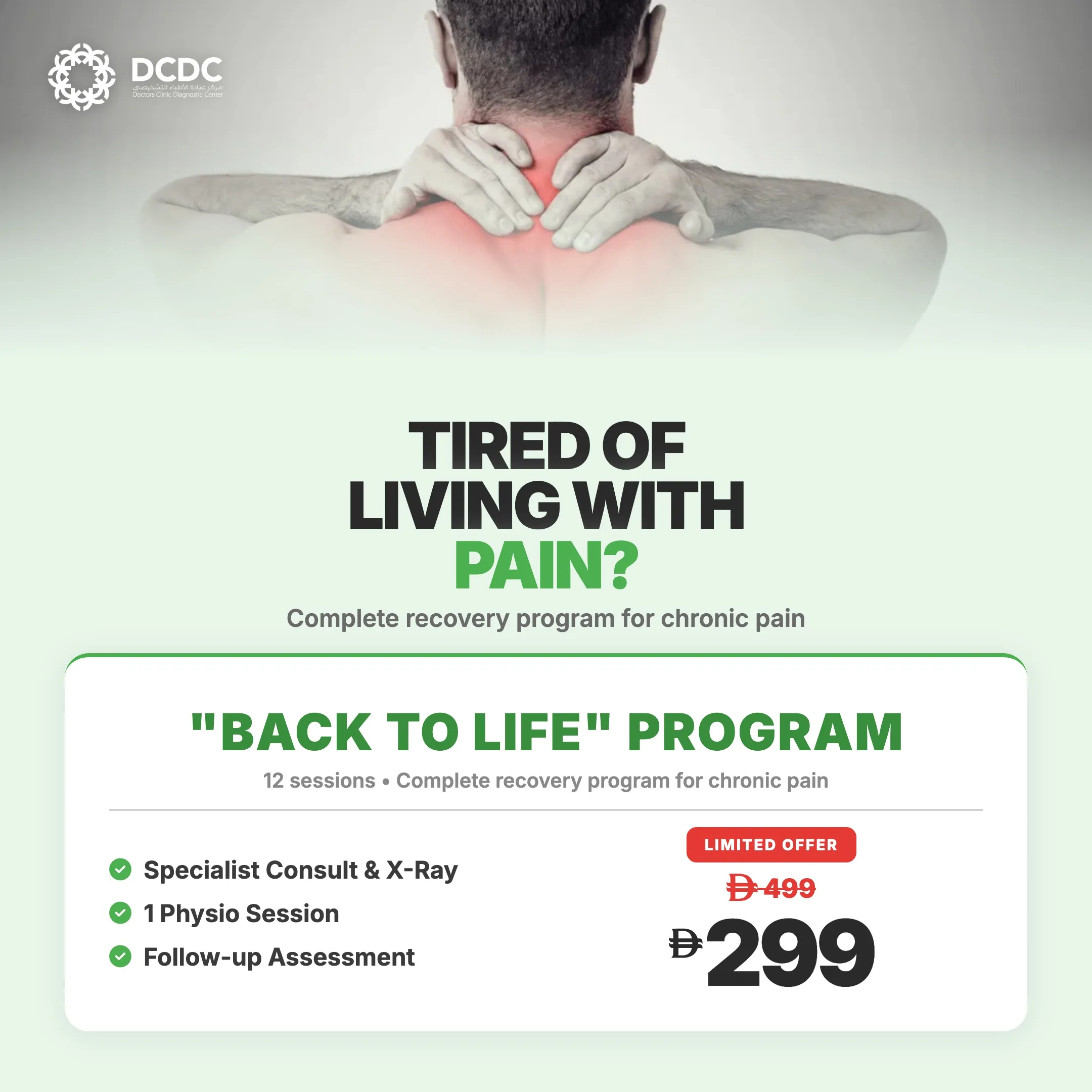
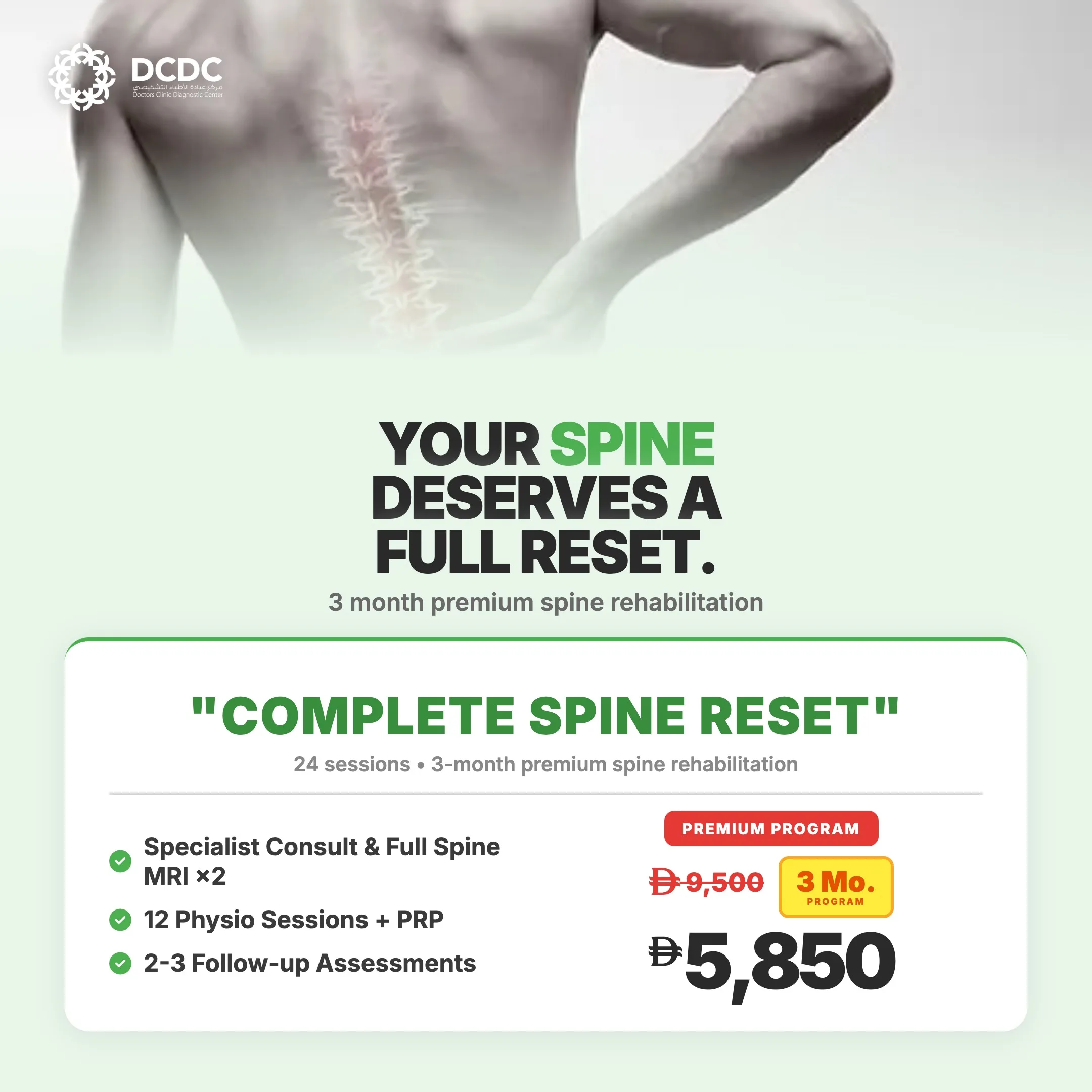
How Does a Herniated Disc Actually Heal?
A herniated disc heals through a process called resorption. The body's immune system identifies the extruded disc material as foreign and gradually breaks it down using macrophages and inflammatory enzymes. Research shows that larger herniations actually have higher resorption rates than smaller ones because they trigger a stronger immune response. Studies using serial MRI demonstrate that 60-80% of large herniations show significant reduction in size within 6-12 months.
This process happens regardless of treatment, but rehabilitation optimizes the environment for healing by maintaining spinal mobility, preventing deconditioning, and reducing the mechanical factors that perpetuate compression.
What Does the Full Recovery Timeline Look Like?
The following table outlines a typical recovery timeline for a lumbar disc herniation treated conservatively. Actual timelines vary depending on herniation size, location, nerve involvement, and individual factors like age and overall fitness.
| Phase | Timeline | Goals | Key Exercises | What to Avoid |
|---|---|---|---|---|
| Acute/Protection | Week 1-2 | Reduce pain and inflammation, protect the nerve | Gentle walking (10-15 min), prone lying, supported positions | Sitting >20 min, bending forward, lifting >2 kg, twisting |
| Early Mobility | Week 3-4 | Restore gentle spinal movement, begin neural mobilization | Prone press-ups, cat-cow, nerve glides, gentle walking (20-30 min) | Heavy lifting, deep squats, high-impact activities, prolonged sitting |
| Progressive Loading | Month 2 | Build core stability, increase activity tolerance | Bird dogs, dead bugs, bridges, swimming, stationary cycling | Running, jumping, heavy gym work, sit-ups/crunches |
| Functional Strengthening | Month 3 | Restore normal movement patterns, begin sport-specific work | Planks, squats (bodyweight), lunges, resistance training (light to moderate) | Heavy deadlifts, explosive movements, contact sports |
| Full Reconditioning | Month 4-6 | Return to full activity, prevent recurrence | Full exercise program, sport-specific drills, progressive loading | Only limited by pain. Gradual return to all activities. |
Timeline assumes conservative (non-surgical) management of a moderate lumbar disc herniation. Post-surgical rehabilitation follows a similar but modified trajectory.
What Should You Do in Weeks 1-2 (Acute Phase)?
The first two weeks are about pain control and nerve protection. This is when pain is typically at its worst and the disc is most vulnerable to further injury. The goal is not to fix the problem yet but to create the conditions for healing to begin. For related information, see our guide on Spine Surgery Rehab: What to Expect.
- Walk frequently in short bouts: 5-15 minutes, 3-4 times per day. Walking is one of the most beneficial activities for disc herniation because it promotes circulation without loading the disc.
- Find your comfortable position: Most disc patients feel best lying on their back with knees bent, or lying face down. Experiment to find what reduces your leg pain.
- Medication as prescribed: NSAIDs, muscle relaxants, and sometimes neuropathic pain agents. Follow your doctor's guidance.
- Avoid sitting for more than 15-20 minutes: Sitting increases intradiscal pressure by 40% compared to standing. If you must sit, use a lumbar roll and get up frequently.
- Do not force any movement that increases leg pain: Back pain is expected during this phase, but worsening leg pain or new numbness means you are aggravating the nerve.
What Changes in Weeks 3-4 (Early Mobility Phase)?
By week 3, acute inflammation is subsiding and you should notice your worst symptoms becoming less intense. This is when guided physiotherapy typically begins in earnest. At our physiotherapy clinic, this is when we start the McKenzie directional preference assessment and neural mobilization.
- Prone press-ups (McKenzie extension): Lie face down, push upper body up with arms while hips stay on the floor. Start with 5-10 reps, 4-5 times daily. Only continue if leg pain centralizes (moves toward back).
- Nerve glides: Gentle sciatic nerve flossing exercises to improve nerve mobility. Your physiotherapist will demonstrate the correct technique.
- Walking duration increases: Build up to 20-30 minutes of continuous walking. Pace is less important than consistency.
- Cat-cow stretches: On all fours, gently alternate between arching and rounding the spine. 10 repetitions, 2-3 times daily.
- Sitting tolerance improves: You can sit for 30-45 minutes at a time with proper support, but still take regular breaks.
How Does Month 2 (Progressive Loading) Differ?
Month 2 marks a shift from pain management to active rehabilitation. Most patients experience a significant reduction in leg pain by this point. The focus moves to building the core stability system that protects the spine long-term.
- Core exercises: Bird dogs, dead bugs, glute bridges, and modified planks. 3 sets of 10-12 reps, performed daily.
- Swimming or pool walking: The buoyancy reduces spinal load while allowing full-body movement. Avoid breaststroke, which hyperextends the lumbar spine.
- Stationary cycling: Good cardiovascular exercise with minimal spinal impact. Keep an upright posture.
- Light resistance training: Begin with machines and cables, avoiding free weights that challenge spinal stability.
- What to still avoid: Running, jumping, heavy deadlifts, and sit-ups or crunches, which compress the healing disc.
What Happens in Month 3 (Functional Strengthening)?
By month 3, most patients have minimal or no leg pain and are returning to many normal activities. The rehabilitation focus shifts to functional strengthening and preparing for a full return to work, sport, and daily life. You may also find our ACL Injury Recovery: Rehabilitation Guide helpful.
- Progress to bodyweight squats and lunges: Ensure proper form with a neutral spine.
- Begin light to moderate resistance training: Gradually reintroduce free weights with careful technique.
- Walking or elliptical trainer: Can increase to 45-60 minutes. Some patients can begin light jogging on a treadmill if pain-free.
- Work-specific tasks: Practice movements required for your job, whether that is sitting at a desk for extended periods or manual handling.
- Plank progression: Full planks, side planks, and plank variations for comprehensive core endurance.
What Does MRI Show During Recovery?
Patients often ask for a follow-up MRI scan to confirm healing. It is important to understand that MRI improvement lags behind clinical improvement by weeks to months. You will feel significantly better before your MRI shows structural changes.
| Timeframe | Typical MRI Findings | Clinical Correlation |
|---|---|---|
| 0-6 weeks | Herniation size unchanged or slightly larger from initial swelling | Pain often improving despite stable MRI appearance |
| 2-3 months | Early signs of resorption in some patients; reduced edema around nerve root | Most patients significantly improved symptomatically |
| 6 months | 60-80% of large herniations show measurable reduction | Most patients back to normal activity |
| 12 months | Many herniations fully or nearly fully resorbed | Residual disc changes may persist on MRI but are typically asymptomatic |
Based on serial MRI studies. Routine follow-up MRI is not recommended unless symptoms recur or worsen.
This is why repeat MRI is generally not recommended during recovery unless symptoms change. An MRI showing a persistent herniation at 3 months does not mean treatment has failed if your symptoms are improving.
What Are the Signs of a Setback?
Recovery is rarely perfectly linear. Minor fluctuations in pain are normal, especially after increased activity. However, certain patterns warrant re-evaluation by your physiotherapist or spine specialist.
- Return of radiating leg pain after a period of improvement: May indicate re-aggravation of the herniation. Scale back activity and contact your physiotherapist.
- New or worsening numbness or weakness: Suggests increased nerve compression. Needs prompt medical evaluation.
- Pain that no longer centralizes with extension exercises: May indicate a change in disc pathology.
- Pain consistently worsening over a 2-week period despite appropriate management: Warrants reassessment and possibly updated imaging.
Recovering from a Herniated Disc?
Get a structured rehabilitation plan at Doctors Clinic Diagnostic Center. Our physiotherapy team provides phase-specific treatment with on-site MRI and spine specialist collaboration for comprehensive care.
Related Services at DCDC
Expert care and advanced diagnostics at Dubai Healthcare City
Frequently Asked Questions
Staying on Track Through Recovery
Herniated disc rehabilitation is a process that unfolds over weeks and months, not days. The key to success is matching your activity to your recovery phase: not doing too little (which leads to deconditioning) and not doing too much (which risks setbacks). The timeline in this guide provides a framework, but your physiotherapist will adjust it based on your individual progress.
If you are in the early stages of a herniated disc diagnosis, take encouragement from the research: the vast majority heal without surgery. At DCDC, our physiotherapy and spine care teams work together to give you the best chance of a complete recovery, with on-site MRI and specialist consultation available whenever needed.
Sources & References
This article was reviewed by our medical team and references the following sources:
- Chiu CC et al. - The Probability of Spontaneous Regression of Lumbar Herniated Disc (Clinical Rehabilitation, 2015)
- Zhong M et al. - Incidence of Spontaneous Resorption of Lumbar Disc Herniation: A Meta-Analysis (Pain Physician, 2017)
- NICE Guidelines - Low Back Pain and Sciatica (NG59)
- American Academy of Orthopaedic Surgeons - Herniated Disc Clinical Guidelines
- Dubai Health Authority - Rehabilitation Standards
Medical content on this site is reviewed by DHA-licensed physicians. See our editorial policy for more information.

Written by
Dr. Hadi Komshi
Specialist Internal Medicine
MD, DHA-Licensed
Dr. Hadi Komshi is a DHA-licensed Internal Medicine Specialist at Doctors Clinic Diagnostic Center in Dubai Healthcare City, with extensive experience in managing acute and chronic medical conditions including musculoskeletal pain and rehabilitation.
Related Articles
Complete Guide to Physiotherapy in Dubai: Types, Costs & What to Expect

Sciatica Treatment: Physiotherapy vs Surgery
Lower Back Pain Exercises: A Physiotherapy Guide
Spine Surgery Rehabilitation: What to Expect
More in Physiotherapy
Emsella vs Kegels Dubai: Which Works Better? (2026)
Read MoreShin Splints Dubai: Treatment & Recovery (2026)
Read More
Golfer's Elbow vs Tennis Elbow Dubai (2026)
Read MorePhysiotherapy Dubai: Types, Cost & Guide (2026)
Read More
Vestibular Rehab Dubai: Treatment for Vertigo (2026)
Read MorePhysiotherapy Packages Dubai: Save 20%+ (2026)
Read More© 2026 Doctors Clinic Diagnostic Center (DCDC), Dubai Healthcare City. Originally published at https://doctorsclinicdubai.ae/blog/herniated-disc-rehabilitation-timeline. All rights reserved. Unauthorized reproduction is prohibited.