Key Takeaways
- Neurorehabilitation retrains the nervous system after stroke, brain injury or neurological disease, using the brain's ability to adapt (neuroplasticity)
- Recovery depends on frequent, challenging, task-specific practice, not on rest or occasional gentle exercise
- Start as early as it is medically safe; the first 2 to 3 months after stroke appear especially responsive, but improvement is still possible years later
- It differs from general physiotherapy: it targets the brain, spinal cord and nerves, and is consultant-led
- DCDC sessions run 45 to 60 minutes, from AED 250 to AED 499, with on-site brain MRI and CT and direct billing for 20+ insurers
- Conditions treated include stroke, TBI, Parkinson's, MS, vestibular disorders and peripheral neuropathy
More than 12 million people worldwide have a stroke each year, and many are left with weakness, balance problems or difficulty with daily tasks. The good news is that the brain can adapt, and structured rehabilitation is how that adaptation is guided. DCDC's consultant-led neurorehabilitation programme in Dubai Healthcare City helps patients recover function after stroke, brain injury and other neurological conditions.
This guide explains what neurorehabilitation is, who benefits, how it works, when to start, what happens at DCDC, how it differs from physiotherapy, realistic timelines and how to prepare for your first visit. It is educational and does not replace personal medical advice.
What Is Neurorehabilitation?
Neurorehabilitation is a structured, goal-directed programme that helps people recover movement, balance, coordination, speech-related motor control and everyday independence after damage to the brain, spinal cord or nerves. It is delivered by a team that is led by a doctor and built around physiotherapy, with occupational therapy, speech and swallowing therapy, neuropsychology and nursing added when needed. The aim is not simply to strengthen muscles. It is to retrain the nervous system so that the brain and body work together again, or work in a new way, to achieve the activities that matter to you.
The World Health Organization defines rehabilitation as a set of interventions designed to optimise functioning and reduce disability in people with health conditions, and it estimates that around one in three people worldwide could benefit from rehabilitation at some point in their lives. Neurological conditions are among the largest contributors to that need. In the UK, NHS and NICE guidance describes rehabilitation after stroke and brain injury as a core part of treatment rather than an optional extra, with assessment of each person's physical, cognitive, emotional and social needs.
This guide covers the science, the conditions that benefit, timing, what a programme looks like at DCDC, realistic recovery timelines and how to prepare. If you are looking for our service details and prices, see our neurorehabilitation service page.
The Brain Can Change: Neuroplasticity Explained
Neuroplasticity is the nervous system's ability to change its structure and connections in response to experience, learning and injury. After a stroke or brain injury, some brain cells are lost. But surrounding networks, and sometimes regions on the opposite side of the brain, can take over part of the lost function. Connections that are used repeatedly become stronger and faster; connections that are not used weaken. This is the biological basis of all rehabilitation.
Research on recovery after stroke describes two overlapping processes. Early spontaneous improvement, mostly in the first three to six months, reflects the settling of swelling, restoration of blood flow around the damaged area and other local changes. The second process, neuroplasticity, can continue for many months and even years, and it is the part that therapy can influence. Importantly, plasticity is use-dependent. It responds to practice that is frequent, challenging and meaningful, not to rest or to occasional gentle activity.
Plasticity can also work against you. If an arm is not used because it feels weak, the brain can learn to ignore it, a pattern clinicians call learned non-use. Good neurorehabilitation deliberately counters this by encouraging safe, repeated use of the affected limb.
Who Needs Neurorehabilitation?
Anyone with a lasting change in movement, balance, sensation, coordination or daily function caused by a neurological problem may benefit. At DCDC, the conditions we most often see are:
- Stroke recovery: weakness or paralysis on one side, balance problems, walking difficulty, reduced hand function.
- Traumatic brain injury (TBI): motor, balance, fatigue and coordination problems after head trauma, such as road traffic collisions or falls.
- Parkinson's disease: slowness, stiffness, tremor, shuffling gait and falls risk.
- Multiple sclerosis (MS): fatigue, weakness, spasticity, balance and walking difficulties.
- Vestibular disorders: dizziness, vertigo and unsteadiness caused by inner ear or balance-pathway problems.
- Peripheral neuropathy: numbness, pain, weakness and balance loss from nerve damage, for example in diabetes.
Other situations, such as spinal cord problems, Guillain-Barre syndrome recovery or prolonged weakness after critical illness, can also be assessed. If you are not sure whether your condition qualifies, a short assessment will tell you.
Stroke Recovery
Stroke is the leading reason people seek neurorehabilitation. The Global Burden of Disease study estimated more than 12 million new strokes worldwide in 2019, and stroke remains a leading cause of long-term disability. Survival has improved, which means more people are living with the consequences and need effective rehabilitation. For the medical side of stroke, including warning signs, emergency treatment and prevention, read our guide to stroke treatment in Dubai.
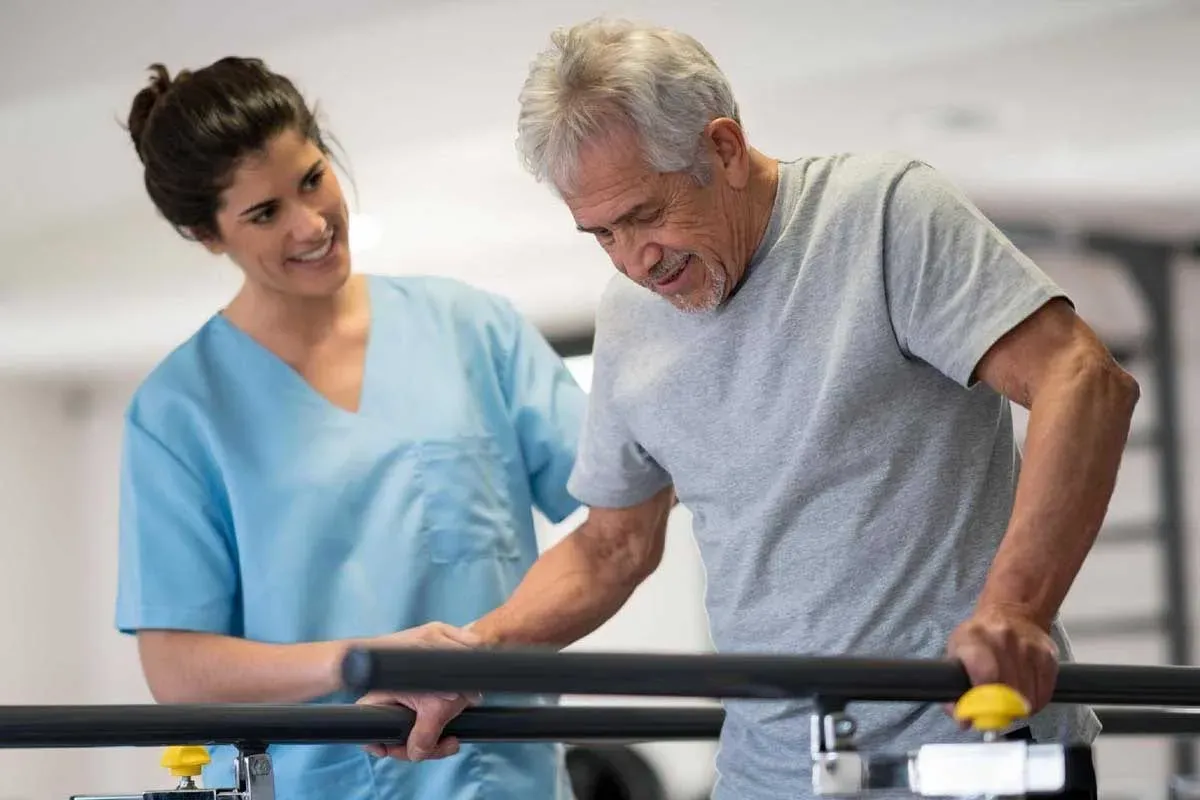
Rehabilitation after stroke typically targets walking, balance, arm and hand function, transfers (such as getting out of a chair), and fatigue management. Guidelines from the American Heart Association and American Stroke Association recommend that stroke survivors receive organised, coordinated rehabilitation, and that the intensity of task-specific practice be as high as the person can safely tolerate. Once you are home and medically stable, some people continue with sessions at their own residence, and we explain how that works in our guide to stroke rehabilitation at home in Dubai. Clinic-based neurorehabilitation suits people who benefit from specialised equipment, a supervised gym and on-site imaging.
Traumatic Brain Injury
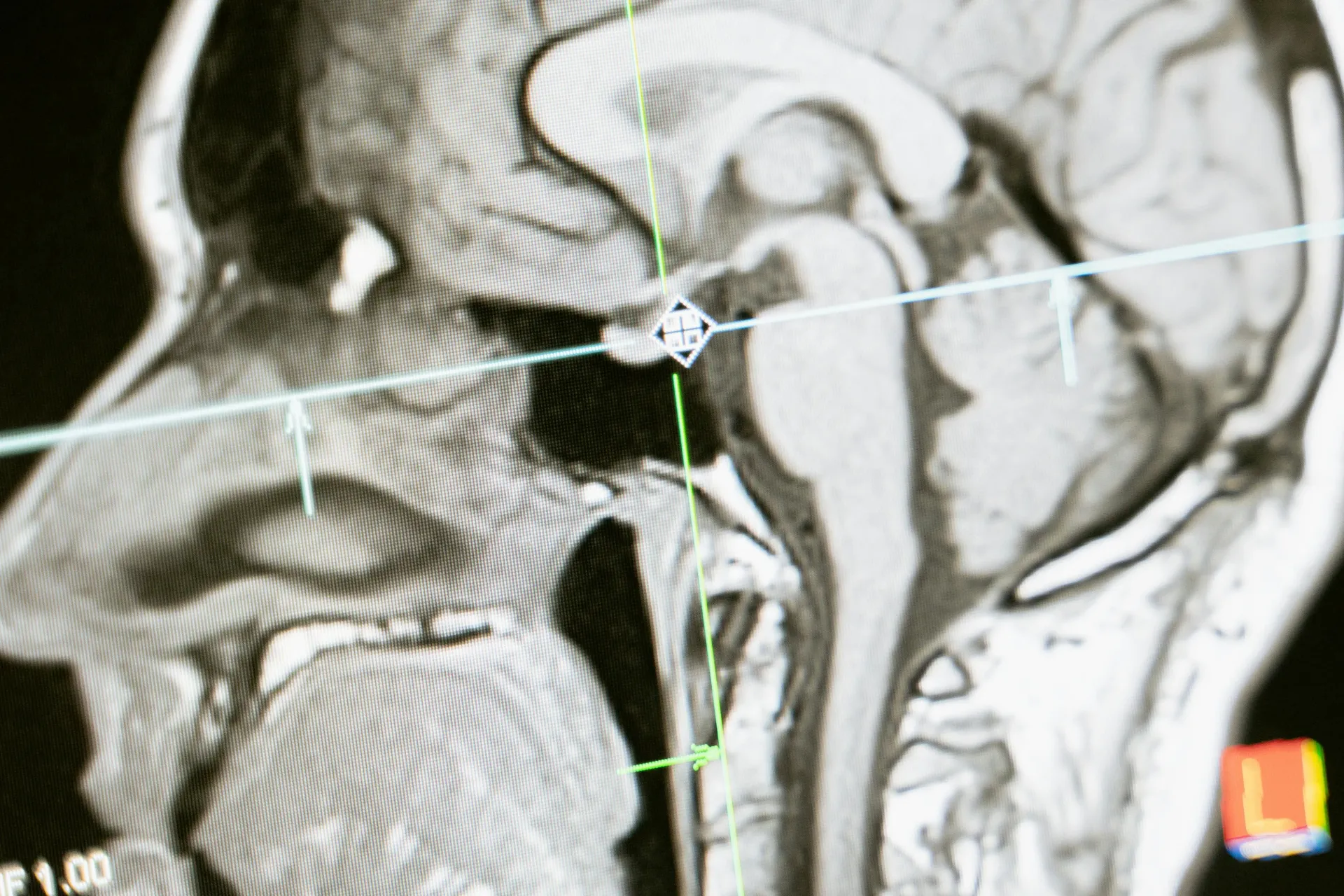
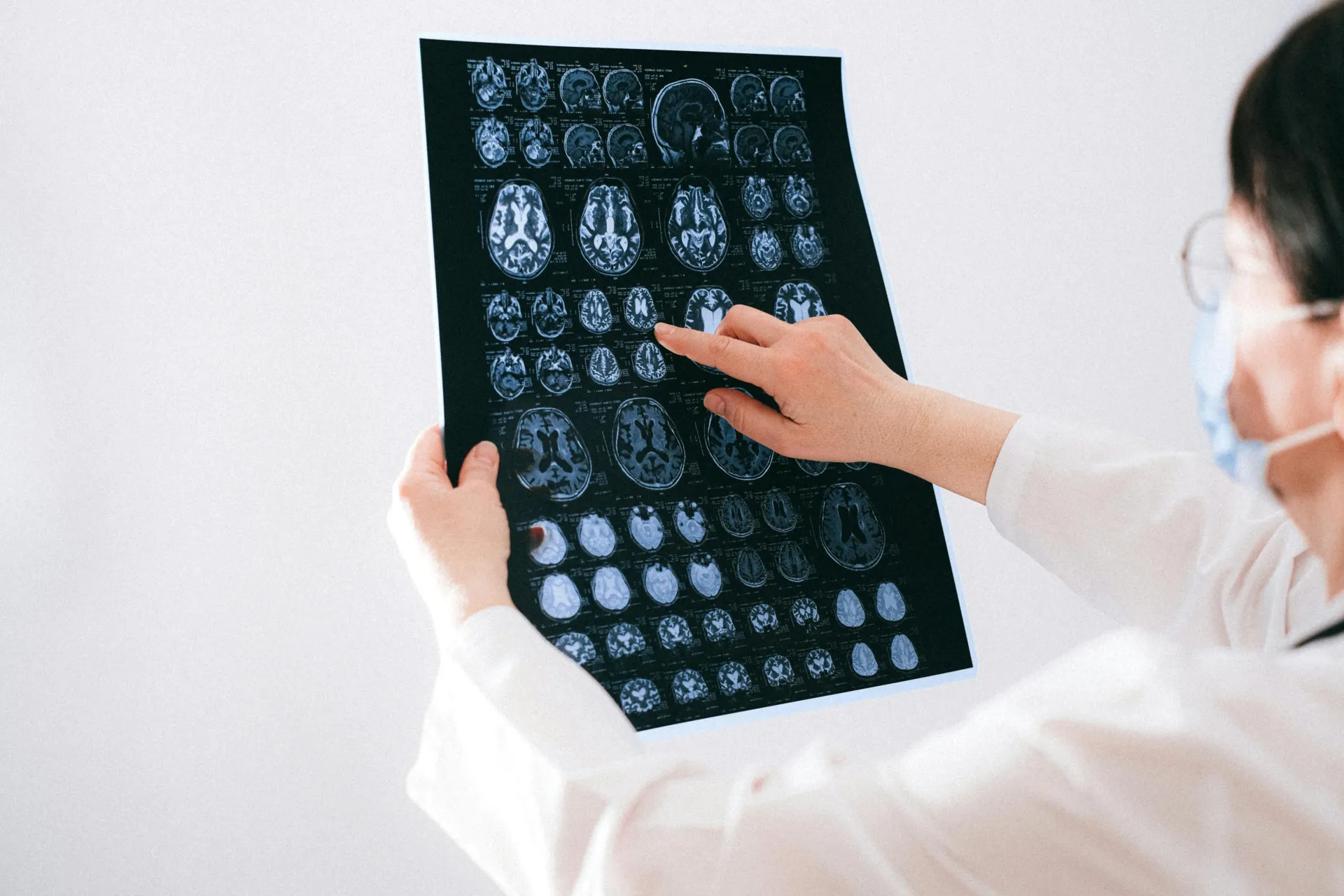
Brain injury can affect many systems at once: movement, balance, vision, thinking speed, mood, sleep and energy. Recovery tends to be fastest in the first months, but meaningful gains can continue for much longer. Physical rehabilitation focuses on balance, coordination, gait, strength and graded return to activity, while cognitive and emotional symptoms are addressed alongside. Imaging is often part of the picture. A brain MRI can show the pattern of injury and help guide expectations, and it can be repeated if symptoms change.
Parkinson's Disease
Parkinson's disease is treated primarily with medication, and sometimes surgery, but exercise-based rehabilitation has a well-established role. The NHS recommends that people with Parkinson's stay active, and physiotherapy can target the specific problems of the condition: small, slow movements, freezing of gait, poor posture and falls. Techniques include big-amplitude movement training, cueing strategies (using rhythm or visual targets to restart walking) and balance work. If you are still trying to understand the diagnosis, our comparison of essential tremor and Parkinson's disease explains how the two are told apart.
Multiple Sclerosis
MS is a condition in which the immune system damages the protective covering of nerves in the brain and spinal cord. Symptoms often come and go, and rehabilitation is adjusted to match: energy conservation and pacing when fatigue is high, strength and balance work when the person is stable, and careful management of spasticity. Exercise is safe and beneficial for most people with MS when graded appropriately, and heat sensitivity needs consideration. MRI plays a central role in diagnosing and monitoring MS, which we cover in MRI for multiple sclerosis.
Vestibular Disorders and Peripheral Neuropathy
Dizziness and vertigo that persist after an inner ear problem, head injury or neurological event respond well to vestibular rehabilitation, a specific exercise programme that helps the brain compensate for faulty balance signals. Read more in our guide to vestibular rehabilitation for vertigo in Dubai. In peripheral neuropathy, rehabilitation concentrates on balance retraining, strengthening, sensory re-education and safe footwear and walking strategies to reduce falls.
How Neurorehabilitation Works
Good neurorehabilitation is built on a small number of principles that are well supported by research. Understanding them helps you see why sessions look the way they do, and why homework between sessions is not optional.
Neuroplasticity and Motor Relearning
Motor relearning is the process of re-acquiring movements through practice, much as a child learns to walk or an athlete masters a new skill. Several features make practice effective at driving plastic change:
- Repetition: hundreds of purposeful repetitions are often needed to produce lasting change, far more than traditional therapy sessions once delivered.
- Challenge: tasks should be hard enough that you must concentrate, but achievable enough that you succeed most of the time.
- Meaningful goals: practising something you care about, such as lifting a cup or climbing a step at home, increases engagement and carry-over.
- Feedback: knowing how well you did, from the therapist, a mirror or a video, speeds learning.
- Sensory input: sensory re-education, using touch, position sense and vision, helps the brain interpret signals from a limb that feels numb or unfamiliar.
A therapist progresses these elements step by step. When the task becomes easy, it is made harder. When you are struggling or compensating with poor movement patterns, it is adjusted so that you retrain the quality of the movement and not only the outcome.
Task-Specific Repetitive Training
Task-specific training means practising the real activity rather than only isolated exercises. If the goal is to walk to the lift, you practise walking, turning and stepping over thresholds. If the goal is to dress independently, you practise sleeves, buttons and balance while standing. Systematic reviews of physical therapy after stroke have found that more therapy time devoted to task-specific, functional practice is associated with better outcomes, and that higher-intensity programmes tend to give larger improvements in walking and daily activities.
Repetition is not mindless. Each repetition should be varied slightly and performed with attention, so that the brain learns a flexible solution rather than a single rigid pattern. Supportive tools such as body-weight support, balance aids, mirror feedback and functional electrical stimulation may be used, but they supplement active effort. They do not replace it.
Because gains depend on total practice, a home programme matters. A typical plan combines supervised sessions in clinic with short daily practice, ideally with a family member who understands what to look for.
When to Start Neurorehabilitation
The short answer is as early as it is medically safe. In the first days after a stroke or brain injury, the hospital team will often begin gentle mobilisation: sitting up, standing and positioning. Formal, intensive outpatient neurorehabilitation usually begins once you are medically stable and discharged, often within the first weeks.
Timing matters because the brain appears to be especially responsive to training in the early months. A randomised trial in stroke patients found that extra task-specific motor therapy gave the greatest benefit when started in the subacute period, around two to three months after stroke, compared with starting later, which led researchers to urge more intensive rehabilitation in the first 60 to 90 days. Animal studies show a similar time-limited window of heightened plasticity, although the exact human window is still debated.
Equally important: it is not too late later. Evidence from patients with long-standing weakness shows that improvement can occur well beyond the commonly cited 3 to 6 month window, including after one year, when training is task-specific and sufficiently intensive. Older advice that recovery stops after six months is not supported by current research.
You should seek assessment promptly if:
- you have been discharged from hospital after a stroke, brain injury or neurological illness and have not been offered rehabilitation;
- your walking, balance or hand function has stopped improving and you are unsure what more can be done;
- you have a progressive condition such as Parkinson's disease or MS and notice new falls, stiffness or loss of independence;
- you are a caregiver who is struggling with transfers, safety or fatigue at home.
Always call emergency services immediately for sudden face drooping, arm weakness, speech difficulty, sudden severe headache or loss of vision. Rehabilitation is for after the emergency has been treated.
What to Expect at DCDC
DCDC's neurorehabilitation programme is consultant-led and based in Building 64, Block A, Al Razi Medical Complex, Dubai Healthcare City. Our approach is neuroplasticity-based, using motor relearning, task-specific training and sensory re-education. Here is how a typical patient journey runs.
- 1. Referral or self-referral: you can come with a referral from your neurologist, GP or hospital team, or contact us directly. Bring discharge summaries, medication lists and any previous scans.
- 2. Neurological assessment: a detailed review of your history, strength, tone, sensation, balance, coordination, walking and daily function, using standard outcome measures so progress can be tracked objectively.
- 3. Goal-directed plan: together we agree realistic, measurable goals, for example walking 100 metres without support within eight weeks, and a plan for how many sessions and which therapies will be needed.
- 4. Intensive training: sessions of 45 to 60 minutes of active, task-specific work. Programmes vary from several weeks to several months depending on the condition and goals.
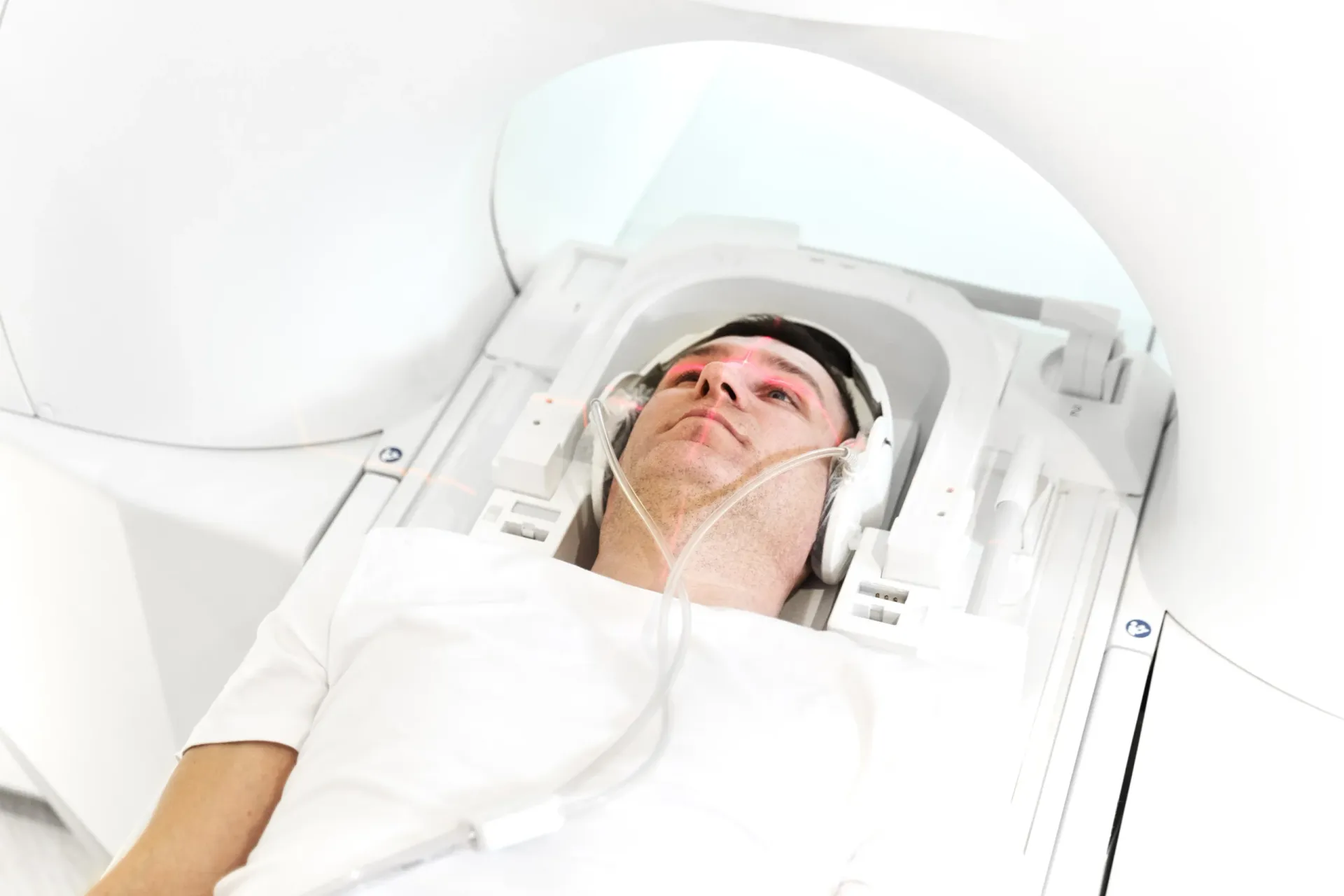
- 5. Monitoring with on-site imaging: when it is clinically appropriate, our on-site brain MRI (Siemens 1.5T wide-bore with a 70 cm opening, which can be more comfortable for larger patients or those who feel closed in) and CT help your doctors understand the injury and review progress without sending you to another site.
You can read about the scan itself on our brain MRI page.
Cost, Insurance and Practical Details
| Item | Details |
|---|---|
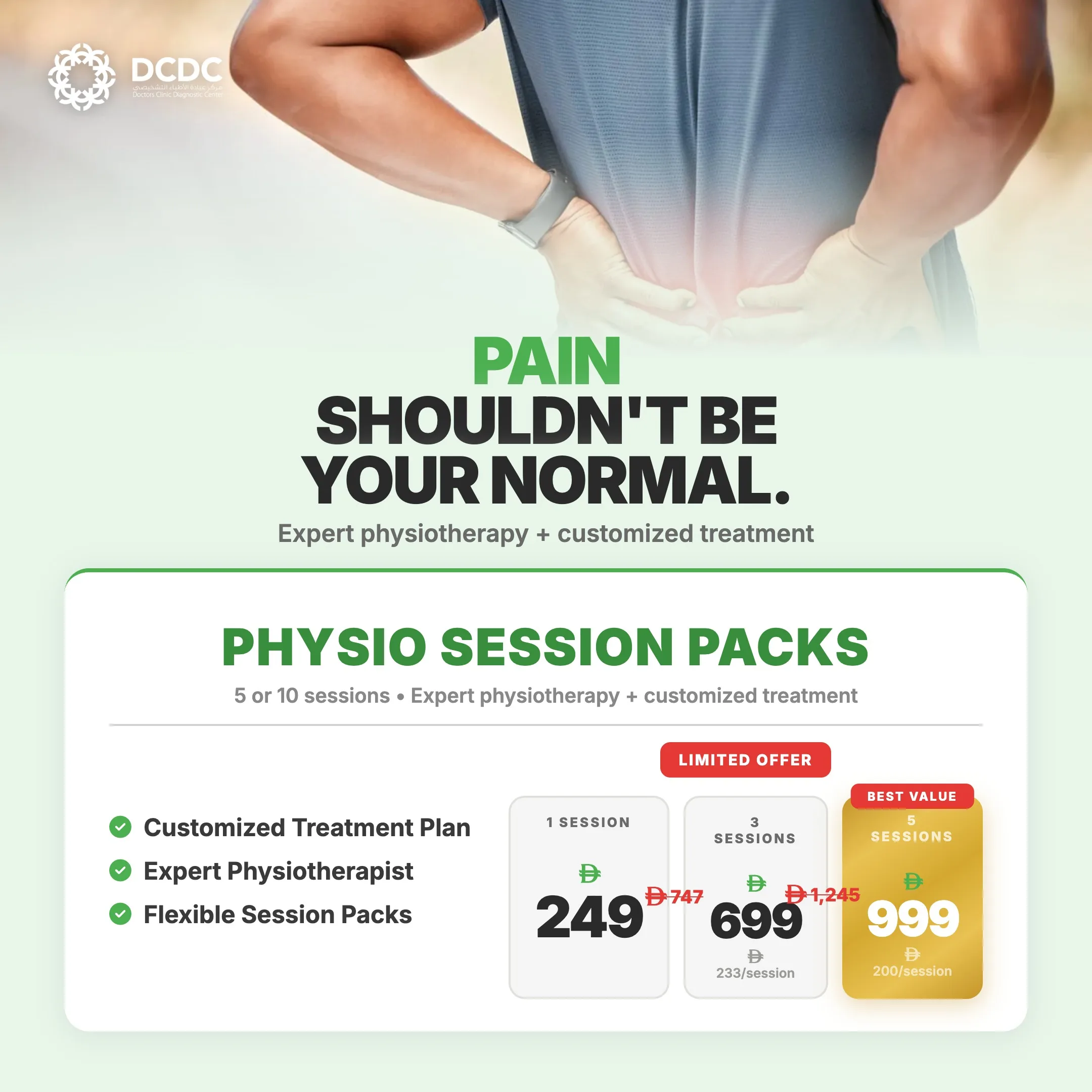
| Neurorehabilitation session | From AED 250 to AED 499 depending on the level of specialist input |
| Physiotherapy session | From AED 250 |
| Session length | 45 to 60 minutes |
| Programme length | Weeks to months, depending on the condition and your goals |
| Insurance | 20+ insurance partners with direct billing, including Daman, AXA, Bupa, Cigna and MetLife (coverage depends on your plan) |
| Opening hours | Saturday to Thursday 8 AM to 10 PM; Friday 9 AM to 9 PM |
| Parking | Free parking |
| Location | Building 64, Block A, Al Razi Medical Complex, Dubai Healthcare City |
DCDC neurorehabilitation practical details. Prices are starting figures; your final plan is confirmed after assessment.
Insurance policies differ in the number of sessions covered and in whether a referral or pre-approval is needed. Our team can check your policy before you start so there are no surprises.
Neurorehabilitation vs General Physiotherapy
Both involve movement and exercise, so they are easily confused. The difference lies in the target and the training principles. General physiotherapy mainly treats problems in muscles, joints and ligaments. Neurorehabilitation treats problems that start in the nervous system, and it requires specific expertise in how the brain relearns.
| Feature | Neurorehabilitation | General Physiotherapy |
|---|---|---|
| Main target | Brain, spinal cord and nerve function | Muscles, joints, tendons and ligaments |
| Typical conditions | Stroke, TBI, Parkinson's, MS, vestibular disorders, neuropathy | Sprains, back pain, post-surgery, sports injuries |
| Core principle | Neuroplasticity, motor relearning and task-specific repetition | Restoring tissue strength, flexibility and mobility |
| Assessment | Neurological: tone, coordination, sensation, balance, cognition | Musculoskeletal: range of motion, strength, pain |
| Team | Consultant-led, with multidisciplinary input | Physiotherapist-led |
| Duration | Often weeks to months, sometimes long-term for chronic conditions | Often days to weeks |
| Imaging role | Brain MRI or CT may guide planning and review | Joint or soft tissue imaging when needed |
Differences between neurorehabilitation and general physiotherapy.
The two can overlap. A person recovering from a stroke may also need standard physiotherapy for a painful shoulder, and a person with a knee injury does not need neurorehabilitation. If you are unsure, an initial assessment will direct you to the right programme. Our physiotherapy service is available for musculoskeletal problems.
Recovery Timeline: What to Expect
Everyone recovers differently. The size and location of the injury, your age, other health conditions, and how early and intensively you train all matter. The table below gives a general guide only. It is not a promise, and your therapist will set your own milestones.
| Condition | Typical Timeline | Key Milestones |
|---|---|---|
| Stroke | Fastest gains in the first 3 months; steady improvement for 6 to 12 months; some continue beyond 1 year | Sitting and standing balance, walking with or without aid, regaining arm and hand use, independence in dressing and bathing |
| Traumatic brain injury | Most recovery in the first 6 to 12 months; gradual gains may continue for years | Reduced dizziness and fatigue, safe walking, improved coordination, graded return to work or study |
| Parkinson's disease | Ongoing; the programme is usually 6 to 12 weeks, then maintenance exercise | Larger, faster movements, fewer freezing episodes, improved posture and balance, lower falls risk |
| Multiple sclerosis | Varies with relapses; blocks of 6 to 12 weeks, repeated as needed | Better fatigue control, steadier walking, managed spasticity, maintained independence |
| Vestibular disorders | Often 4 to 12 weeks of targeted exercises | Reduced vertigo, better gaze stability, confident walking in busy places |
| Peripheral neuropathy | 6 to 12 weeks of balance and strength work, then home programme | Improved balance, fewer trips, safer walking, better foot care habits |
General recovery timelines. Individual progress varies and depends on cause, severity, age and consistency of practice.
Progress is rarely a straight line. Many people notice rapid early gains, then a plateau, then another step forward once a new strategy or higher level of challenge is introduced. A plateau is not a signal to stop; it is a signal for the therapist to adjust the programme. Outcome measures such as walking speed, timed standing tests and balance scores help show gains that may feel too small to notice day to day.
Recovery also involves the mind. Low mood, anxiety and fatigue are common after neurological illness and affect rehabilitation. Tell your team if you are struggling; support is part of the programme.
How to Prepare for Your First Session
A little preparation helps the assessment be as useful as possible. Use this checklist:
- Bring your records: hospital discharge summary, previous MRI or CT reports and images, medication list and any recent blood tests.
- Wear comfortable clothing: loose, flexible clothes and supportive, closed shoes you normally walk in.
- Bring walking aids: sticks, frames, braces or splints you use, so we can check they fit.
- Note your symptoms: when they are worst, any falls, dizziness, pain or spasms, and how medication timing affects you.
- Write down your goals: think about the three activities you most want back, such as cooking, walking in the mall or returning to work.
- Bring a companion: a family member or caregiver can help you remember advice and learn how to support you safely.
- Eat and take your medication as usual: unless your doctor has told you otherwise, and plan to rest after the session, since fatigue is common.
- Check your insurance: have your card and Emirates ID ready, and tell us your insurer so we can verify coverage in advance.
Expect the first visit to focus on assessment and goal-setting, with some therapy depending on your energy. Do not be discouraged if tasks feel hard. That sense of effortful challenge is exactly what drives change.
Between sessions, practise what you are shown, keep your home free of trip hazards, sleep well and stay hydrated. If you have new sudden weakness, speech change, severe headache or chest pain, seek emergency care at once.
Book your neurorehabilitation assessment
Message DCDC on WhatsApp to arrange a neurological assessment in Dubai Healthcare City. Our consultant-led team will build a goal-directed plan around your recovery.
20+ insurance partners with direct billing. Free parking. Open Sat-Thu 8 AM-10 PM, Fri 9 AM-9 PM.
Related Services at DCDC
Expert care and advanced diagnostics at Dubai Healthcare City
Frequently Asked Questions
Final Thoughts
Neurorehabilitation works because the nervous system remains adaptable. The strongest results come from starting early where possible, practising real tasks with enough repetition and challenge, setting goals that matter to you, and staying consistent through the plateaus.
At DCDC, a consultant-led team in Dubai Healthcare City offers neurological assessment, goal-directed plans, intensive sessions and on-site MRI and CT to support decisions along the way. Sessions start from AED 250, with direct billing for most major insurers.
To book an assessment or ask a question, send us a WhatsApp message at +971 50 970 3884, or call +971 54 219 5008. We will explain the process and check your insurance. This guide is for general education and does not replace advice from your own doctor.
Sources & References
This article references the following sources:
- Winstein CJ, et al. Guidelines for Adult Stroke Rehabilitation and Recovery. Stroke. 2016
- Langhorne P, Coupar F, Pollock A. Motor recovery after stroke: a systematic review. Lancet Neurol. 2009
- Feigin VL, et al. Global, regional, and national burden of stroke and its risk factors 1990-2019 (GBD 2019). Lancet Neurol. 2021
- Veerbeek JM, et al. What is the evidence for physical therapy poststroke? A systematic review and meta-analysis. PLoS One. 2014
- Murphy TH, Corbett D. Plasticity during stroke recovery: from synapse to behaviour. Nat Rev Neurosci. 2009
- Dobkin BH. Rehabilitation after stroke. N Engl J Med. 2005
- Ballester BR, et al. A critical time window for recovery extends beyond one-year post-stroke. J Neurophysiol. 2019
- World Health Organization. Rehabilitation fact sheet
- NHS. Stroke: Recovery
- NHS. Parkinson's disease: Treatment
This information is educational and does not replace individual medical advice. See our editorial policy for more information.

Written by
Dr. Hadi Komshi
Sports Rehabilitation
DPT, Sports Rehabilitation
Dr. Hadi Komshi is a physiotherapist (DPT, Sports Rehabilitation) at Doctors Clinic Diagnostic Center (DCDC) in Dubai Healthcare City.
Related Articles
Stroke Treatment Dubai: Prevention & Care
Stroke Rehab at Home Dubai: Recovery Guide
Essential Tremor vs Parkinson's Dubai
MRI for Multiple Sclerosis: Diagnosis & Monitoring
Vestibular Rehab Dubai: Treatment for Vertigo
More in Physiotherapy
Home Physiotherapy Cost Dubai: Prices (2026)
Read MoreStroke Rehab at Home Dubai: Recovery Guide (2026)
Read MoreEmsella vs Kegels Dubai: Which Works Better? (2026)
Read MoreShin Splints Dubai: Treatment & Recovery (2026)
Read More
Golfer's Elbow vs Tennis Elbow Dubai (2026)
Read MorePhysiotherapy Dubai: Types, Cost & Guide (2026)
Read More© 2026 Doctors Clinic Diagnostic Center (DCDC), Dubai Healthcare City. Originally published at https://doctorsclinicdubai.ae/blog/neurorehabilitation-dubai-guide. All rights reserved. Unauthorized reproduction is prohibited.