Key Takeaways
- Stroke recovery happens in phases (acute, subacute, chronic), with the fastest gains usually in the first three months and further improvement possible for a year or longer
- Brain plasticity responds to intensive, repeated, task-specific practice, which is why consistent home exercises matter between therapy visits
- Home-based rehabilitation can match hospital-based outcomes for many patients with mild to moderate disability, and lets practice happen in your real environment
- DCDC uses an assessment-first approach: a home physiotherapy assessment (AED 199) sets goals and a plan before treatment sessions (AED 349 each) begin
- Home nursing is available at AED 99 per hour (minimum 3 hours, AED 297), or AED 199 for a nurse short visit
- Know the red flags: sudden new weakness, speech change, severe headache, a swollen calf or choking need urgent medical attention
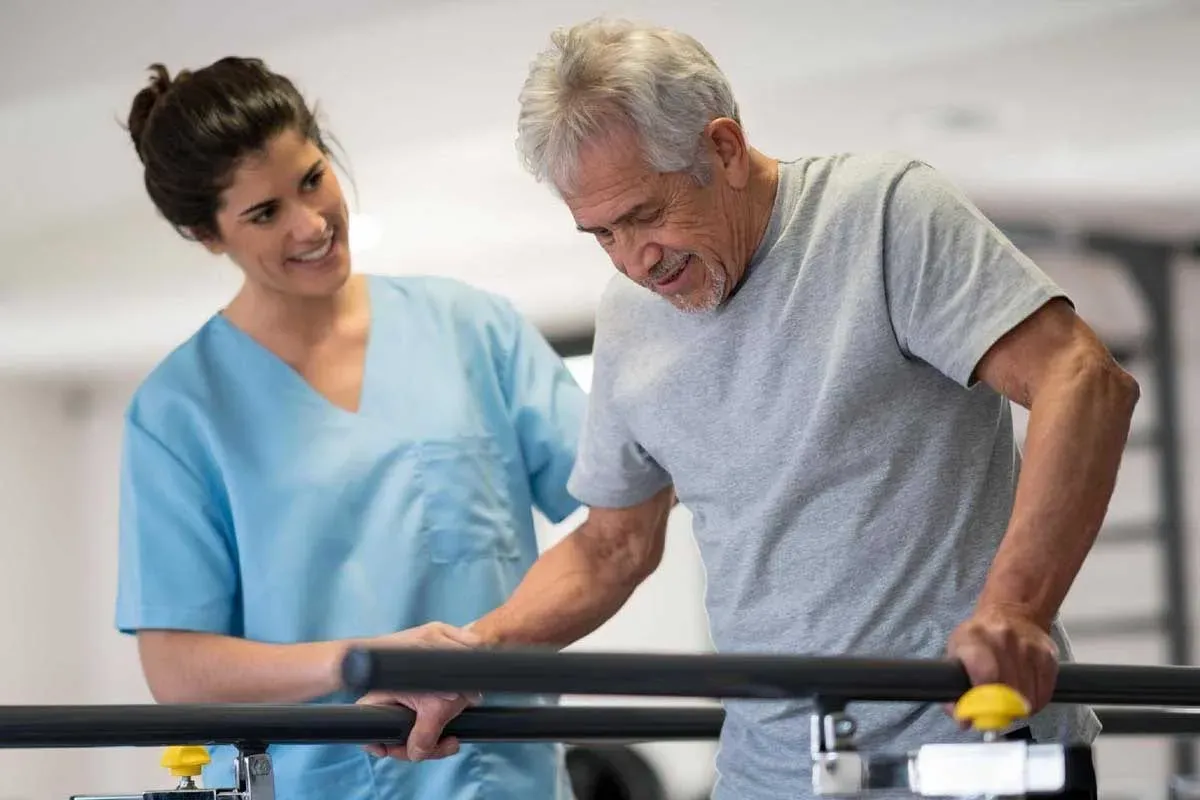
Stroke recovery at home is a realistic and often highly effective path for many survivors in Dubai. Worldwide, more than 12 million people have a first stroke every year, and most return home afterwards, where the real work of recovery happens. DCDC's home-based stroke rehabilitation service brings qualified physiotherapists to your door so therapy fits your daily life.
This guide explains how stroke recovery works, why home-based therapy can be effective, what a programme includes, a realistic recovery timeline, exercises, home preparation, what to expect from DCDC, and how caregivers can help. It is educational and does not replace advice from your own doctor or therapist.
Understanding Stroke Recovery
Recovery after stroke is not a single event. It unfolds in overlapping phases, driven by the brain's ability to reorganise itself. Knowing which phase you or your loved one is in helps set realistic expectations and shapes what the rehabilitation programme should focus on.
The Three Phases of Stroke Recovery
- Acute phase (first days to 1-2 weeks): Emergency treatment and stabilisation in hospital. The focus is on saving brain tissue, preventing complications such as pneumonia, blood clots and pressure sores, and starting gentle early mobilisation as soon as the medical team considers it safe.
- Subacute phase (about 1 week to 3 months): The period of fastest recovery. Intensive, task-specific therapy during this window tends to produce the largest gains. Most patients are discharged from hospital or an inpatient unit during this phase, which is when home-based therapy often begins.
- Chronic phase (beyond about 3-6 months): Improvement slows but does not stop. Many people continue to gain strength, function and confidence for a year or longer, particularly with ongoing structured practice. The goal shifts to maintaining gains, adapting to lasting changes and preventing a second stroke.
Research on motor recovery shows that the steepest improvement usually occurs in the first three months, with a long tail of smaller gains afterwards (see the systematic review by Langhorne and colleagues listed in our sources). This is why starting rehabilitation early matters, and why it should never be written off as "too late" in the chronic phase.
Brain Plasticity: Why Recovery Is Possible
Neuroplasticity is the brain's capacity to form new connections and reassign functions to undamaged areas. After a stroke, surviving neural networks near the damaged region, and sometimes on the opposite side of the brain, can take over lost functions. Plasticity is strongest early on, but it is use-dependent: it responds to repeated, meaningful, challenging practice. Movements that are rehearsed hundreds of times in a structured way are far more likely to "stick" than passive or occasional activity.
This principle underpins every effective stroke programme: intensity, repetition and task-specificity. Practising the actual activities you want to regain, such as standing up from a chair, reaching for a cup or walking to the bathroom, in the environment where you perform them, is exactly what a home-based approach is designed to deliver.
Stroke is also a major global health burden. The Global Burden of Disease study estimated more than 12 million new strokes worldwide in 2019, with over 100 million people living with the consequences. Most survivors live at home, so effective community-based rehabilitation matters. If you want to understand how DCDC supports this, our dedicated home-based stroke rehabilitation service page explains how it works.
Why Home-Based Rehabilitation Works
After discharge, many families assume that good rehabilitation can only happen in a hospital or clinic. Evidence suggests this is not always the case. For many stroke survivors, structured therapy delivered at home produces outcomes comparable to, and in some respects better than, conventional hospital-based care.
What the Evidence Shows
- Early supported discharge: Systematic reviews of programmes that discharge suitable stroke patients early and continue specialist rehabilitation at home report reduced long-term dependency and shorter hospital stays compared with standard care, particularly for patients with mild to moderate disability.
- Real-world practice: Skills learnt in a therapy gym do not always transfer to the home. Practising in your own kitchen, bathroom and bedroom means the therapist can address the exact obstacles you face daily: the step at the front door, the low sofa, the narrow bathroom.
- Family involvement: When relatives watch sessions, they learn safe handling, correct guidance and how to encourage practice between visits. This increases the total amount of practice, which is a key driver of recovery.
- Comfort and motivation: Familiar surroundings reduce fatigue and anxiety from travel. In Dubai, avoiding long journeys in summer heat and traffic is a practical advantage, especially for someone with limited mobility.
- Lower infection exposure: Staying at home reduces contact with hospital-acquired infections, which matters for older and medically complex patients.
Home rehabilitation is not a replacement for every kind of care. Patients who need intensive multi-disciplinary input, specialised equipment such as robotic or treadmill systems, or close medical monitoring may be better served in a clinic setting. A good programme recognises this and combines both when needed. DCDC's clinic-based neurorehabilitation programmes are available for those situations.
Components of a Home Stroke Rehabilitation Programme
A comprehensive programme addresses the full range of changes a stroke can cause: movement, daily activities, communication, swallowing, thinking and mood. Different therapists contribute, and the plan is tailored to each person's deficits and goals.
Physical Therapy
Physiotherapy is the backbone of most home programmes. It targets weakness, stiffness (spasticity), poor balance, abnormal movement patterns and reduced walking ability. Typical elements include strengthening, stretching, balance retraining, transfer practice (bed to chair, chair to standing), gait training and strategies to prevent shoulder pain and contractures. Learn more in our guide to when home physiotherapy makes sense.
Occupational Therapy
Occupational therapy focuses on regaining independence in everyday tasks: dressing, washing, eating, cooking and using the toilet. Therapists teach adapted techniques, recommend aids such as built-up cutlery or dressing aids, and retrain hand function and coordination. They also advise on home modifications.
Speech and Language Therapy
About a third of stroke survivors experience aphasia (difficulty speaking, understanding, reading or writing), and many have dysarthria (slurred speech) or swallowing problems (dysphagia). Speech and language therapy uses structured exercises, communication strategies and safe-swallowing advice. Swallowing difficulties need prompt professional assessment because of the risk of aspiration pneumonia.
Cognitive and Emotional Rehabilitation
Stroke can affect attention, memory, planning, spatial awareness and mood. Cognitive exercises, such as memory games, sequencing tasks, attention training and problem-solving activities, can be built into daily routines. Post-stroke depression and anxiety are common and treatable; they should be raised with the medical team rather than endured quietly.
Note: DCDC's home service centres on physiotherapy and nursing support. Where a patient needs occupational therapy, speech therapy or specialist neuropsychological input, the team will advise on appropriate referrals and coordinate with the treating doctor.
Stroke Recovery Timeline: What to Expect
Every stroke is different, and the timeline below is a general guide, not a promise. Age, stroke type and size, location in the brain, other health conditions, and how early and consistently rehabilitation begins all influence the pace. Treat these as typical patterns that your therapist will personalise.
| Time After Stroke | Typical Recovery Stage | Rehabilitation Focus |
|---|---|---|
| Weeks 1-2 | Medical stabilisation; early signs of returning movement may appear; fatigue is high | Safe positioning, early mobilisation, preventing complications, family education, discharge planning |
| Month 1 | Rapid improvement begins; many patients start sitting, standing and transferring with help | Transfers, sitting and standing balance, assisted walking, daily-activity practice, home safety set-up |
| Months 2-3 | Fastest gains in strength, balance and walking; hand function starts to refine | Intensive task-specific practice, gait training, arm and hand retraining, fall prevention |
| Months 3-6 | Gains continue at a slower pace; compensation strategies become important | Endurance, community mobility, fine motor skills, return to household roles, spasticity management |
| 6-12 months | Plateaus are common but further improvement is still possible | Maintaining gains, independence, fitness, activity and exercise routines, secondary prevention |
General stroke recovery timeline. Individual progress varies widely; your therapist will set personalised goals.
Some people recover almost fully; others live with lasting changes. Either way, the aim of rehabilitation is the same: to help you do as much as possible, as safely and independently as possible, for as long as possible.
Common Exercises in Home Stroke Rehab
The following are examples of the types of exercises used in post-stroke home programmes. They are descriptions, not a prescription. Never start an exercise programme after a stroke without guidance from a qualified therapist or your doctor, because the right exercises, intensity and supervision level depend on your specific deficits and medical condition.
Range-of-Motion Exercises
These keep joints flexible and prevent stiffness and contractures, especially in a weak arm or leg. Examples include supported shoulder elevation, elbow bending and straightening, wrist and finger opening, ankle pumps, and knee-to-chest movements while lying down. If the affected limb cannot move on its own, the therapist or caregiver moves it gently through its range (passive movement) and teaches safe technique so the shoulder is never pulled or strained.
Strengthening and Balance Exercises
- Sit-to-stand practice: Rising from a stable chair repeatedly builds leg strength and is directly linked to daily independence.
- Bridging: Lying on the back and lifting the hips strengthens the buttocks and trunk muscles needed for walking.
- Supported weight shifting: Standing at a counter and shifting weight side to side improves balance and confidence.
- Heel and toe raises: Holding a stable surface and rising on toes or heels strengthens the ankle muscles that prevent foot drop and tripping.
- Tandem and narrow stance: Progressing the base of support, always with a safe surface or a person nearby, challenges balance in a controlled way.
Gait Training
Walking practice begins with whatever level is safe: standing and stepping in place, then walking with a frame, quad stick or hand-held assistance, and progressing to longer distances, uneven surfaces and stairs. The therapist watches for patterns such as a dragging foot, a stiff knee or leaning to one side, and uses cues, orthoses or targeted strengthening to correct them. Practising inside the home, such as moving from bedroom to bathroom, makes progress immediately useful.
Fine Motor and Hand Function Exercises
- Picking up and releasing objects of different sizes, such as coins, pegs or small blocks
- Buttoning, zipping and tying practice
- Holding and drinking from a cup, using cutlery, turning pages
- Squeezing therapy putty or a soft ball, and finger-to-thumb opposition
- Writing and drawing exercises, progressing from large to small movements
Post-stroke home exercises work best when they are short, frequent and gradually progressed. Several brief sessions each day are usually more effective than one long session, especially given post-stroke fatigue. Your therapist will often leave a written or demonstrated programme so you can continue between visits.
Preparing Your Home for Stroke Recovery
A safe, accessible home reduces the risk of falls, which are common after stroke, and makes daily practice easier. Ask your therapist to review your home during the first visit, as they will spot hazards that families often miss.
Safety Modifications
- Clear pathways: Remove loose rugs, cables and clutter. Keep walkways wide enough for a walking aid or wheelchair.
- Bathroom safety: Install grab rails near the toilet and in the shower, use non-slip mats, and consider a shower chair and a raised toilet seat.
- Lighting: Bright, even lighting, including night lights between bedroom and bathroom, reduces nighttime falls.
- Bed and chair height: Firm seating with armrests and a bed at a height that allows feet to rest flat on the floor make transfers safer.
- Stairs and thresholds: Add secure handrails and mark step edges clearly. Consider relocating the bedroom to the ground floor in the early months if possible.
- Emergency access: Keep a phone within reach and emergency numbers visible. For high-risk patients, consider a personal alarm.
Helpful Equipment
- Walking aids (frame, quad stick or cane) as prescribed by the therapist
- Shower chair, raised toilet seat, and bedside commode if needed
- Adapted cutlery, non-slip placemats and dressing aids
- A firm armchair, and a pressure-relieving cushion or mattress for those with limited mobility
- Pill organiser and a daily schedule or checklist to help with memory
Many items can be purchased or rented in Dubai; your therapist can advise on what is genuinely necessary so you do not over-spend.
What to Expect from DCDC Home Stroke Rehabilitation
DCDC provides home-based physiotherapy for stroke recovery throughout Dubai, delivered by our team from Dubai Healthcare City. Our approach is assessment first: we do not start treatment until we understand your condition, your goals and your home environment.
Step 1: Home Physiotherapy Assessment (AED 199)
The process begins with a home physiotherapy assessment at AED 199. During this visit the physiotherapist reviews your medical history and discharge reports, examines strength, tone, sensation, balance, transfers and walking, checks your home for safety risks, and talks with you and your family about priorities. At the end of the assessment you receive a clear treatment plan with goals, recommended frequency and an expected timeline.
Step 2: Treatment Sessions (AED 349 per session)
Following the assessment, home physiotherapy treatment sessions are AED 349 per session. Each session is a one-to-one, hands-on treatment in your home, built around the plan agreed at assessment. Sessions typically include guided exercise, practice of real-life tasks, handling and positioning advice for caregivers, and a home exercise routine for you to continue between visits.
Step 3: Progress Review and Frequency
Frequency depends on your needs, your stage of recovery and your stamina. In the early subacute phase, patients commonly benefit from more frequent sessions; as function improves, visits can be spaced out and the home programme takes more of the load. Your therapist reviews progress regularly, adjusts goals and tells you honestly when a different level of care, such as a clinic-based programme, would help.
The Therapist's Approach
- Goal-led: Goals are set with you, for example "walk to the bathroom independently" or "cut my own food".
- Task-specific: Practice uses real activities in your real environment.
- Caregiver-inclusive: Family members are taught safe techniques and how to encourage, not over-assist.
- Progressive: Exercises are graded as you improve so that you are always challenged but safe.
- Coordinated: Where needed we liaise with your neurologist or treating doctor about medical concerns.
Nursing Support at Home
Some patients also need nursing care, such as medication support, wound or pressure-area care, or monitoring. Home nursing is available at AED 99 per hour with a minimum of 3 hours (AED 297), or a nurse short visit at AED 199.
| Home Service | Price | Notes |
|---|---|---|
| Home physiotherapy assessment | AED 199 | Initial evaluation and treatment plan |
| Home physiotherapy session | AED 349 per session | One-to-one treatment at your home |
| Home nursing (hourly) | AED 99 per hour | Minimum 3 hours (AED 297) |
| Nurse short visit | AED 199 | Brief nursing visit |
DCDC home visit prices. These are home-visit prices only; clinic-based rehabilitation is priced separately and confirmed by our team.
These figures apply to home visits. Clinic-based neurorehabilitation and specialist consultations are priced separately, and our team will confirm costs before you commit. DCDC works with 20+ insurance partners, and our staff handle pre-authorisation where applicable; coverage for home services varies by plan, so please check with us first.
Caregiver's Guide
Family members are often the most important members of the recovery team. They are also at risk of exhaustion. These practical tips can help.
- Encourage independence: Let the survivor do as much as they safely can, even if it is slower. Over-helping can hold back recovery.
- Learn safe handling: Ask the therapist to show you how to assist transfers and support the weak arm. Never pull on the affected arm or shoulder.
- Build a routine: Fixed times for exercises, meals, rest and medication reduce confusion and improve consistency.
- Communicate patiently: With aphasia, speak in short sentences, allow extra time, reduce background noise, and use gestures or pictures. Do not finish their sentences unless asked.
- Watch for mood changes: Frustration, tearfulness, withdrawal or loss of interest may signal depression. Tell the doctor.
- Support medication and prevention: Help with blood pressure, cholesterol, diabetes and anticoagulant medication. See our stroke prevention and care guide for more on preventing a second stroke.
- Protect your own health: Share duties with other relatives, take breaks, sleep, eat properly and accept help. Our elderly care at home guide has further ideas for sustainable care.
- Celebrate small wins: A first independent step, a word spoken clearly, or buttoning a shirt all matter and sustain motivation.
When to Return to the Clinic
Home rehabilitation should always sit within proper medical oversight. Some changes need immediate medical attention, not a scheduled therapy visit.
Call Emergency Services Immediately If
- Sudden face drooping, arm or leg weakness, or slurred speech appear or worsen (the FAST signs; see our stroke warning signs guide)
- Sudden severe headache, confusion, loss of vision, dizziness or loss of balance
- A seizure or sudden loss of consciousness
- Chest pain, severe shortness of breath or a very irregular heartbeat
- Choking, coughing with eating that leads to breathlessness, or fever with chest symptoms (possible aspiration pneumonia)
Seek Prompt Medical Review If
- A calf that is painful, swollen, warm or red (possible deep vein thrombosis)
- A fall, especially with a head strike or new pain
- New or rapidly increasing stiffness, pain or swelling in a limb or shoulder
- Pressure sores, skin breakdown or signs of infection
- Persistent low mood, thoughts of self-harm, or marked personality change
- Progress that has stalled or reversed over several weeks
- Blood pressure readings repeatedly outside the target set by your doctor
If clinic-based care is more appropriate, for example for specialist equipment or multi-disciplinary review, DCDC is at Building 64, Block A, Al Razi Medical Complex, Dubai Healthcare City. We are open Saturday to Thursday 8 AM to 10 PM and Friday 9 AM to 9 PM. After a stroke, recovery also relies on strong medical follow-up. For patients with heart rhythm or heart-related risk factors, our cardiac rehabilitation guide may also be relevant.
Talk to DCDC About Stroke Recovery at Home
Message us on WhatsApp to ask about a home physiotherapy assessment (AED 199) and how a personalised plan could support your recovery.
20+ insurance partners. Pre-authorisation handled by our clinic staff.
Related Services at DCDC
Expert care and advanced diagnostics at Dubai Healthcare City
Frequently Asked Questions
Final Thoughts
Stroke recovery is a marathon, not a sprint, but the brain's capacity to adapt means progress is possible at every stage. The most important ingredients are early, consistent, goal-focused practice, a safe home, an informed and supported family, and honest medical oversight.
At DCDC, we begin with a home physiotherapy assessment (AED 199) to understand your needs, then deliver one-to-one treatment sessions (AED 349 each) built around your goals. We also help you decide when clinic-based neurorehabilitation or other specialist input would help.
To book an assessment or ask a question, send us a WhatsApp message at +971 50 970 3884, or call +971 54 219 5008. We will explain the process, check insurance and arrange a convenient time for your home visit.
Sources & References
This article references the following sources:
- Langhorne P, Coupar F, Pollock A. Motor recovery after stroke: a systematic review. Lancet Neurol. 2009
- Winstein CJ, et al. Guidelines for Adult Stroke Rehabilitation and Recovery. Stroke. 2016
- Feigin VL, et al. Global, regional, and national burden of stroke and its risk factors 1990-2019 (GBD 2019). Lancet Neurol. 2021
- Veerbeek JM, et al. What is the evidence for physical therapy poststroke? A systematic review and meta-analysis. PLoS One. 2014
- Murphy TH, Corbett D. Plasticity during stroke recovery: from synapse to behaviour. Nat Rev Neurosci. 2009
- Dobkin BH. Rehabilitation after stroke. N Engl J Med. 2005
This information is educational and does not replace individual medical advice. See our editorial policy for more information.

Written by
Arshya Abraham
Physiotherapy
BPT, CSTMT
Arshya Abraham is a Physiotherapist at Doctors Clinic Diagnostic Center (DCDC) in Dubai Healthcare City.
Related Articles
Stroke Treatment Dubai: Prevention & Care
Stroke Warning Signs Dubai: FAST Guide
Home Physiotherapy Dubai: When It Makes Sense

Elderly Care at Home Dubai: Full Guide

Cardiac Rehabilitation Dubai: Recovery
More in Physiotherapy
Emsella vs Kegels Dubai: Which Works Better? (2026)
Read MoreShin Splints Dubai: Treatment & Recovery (2026)
Read More
Golfer's Elbow vs Tennis Elbow Dubai (2026)
Read MorePhysiotherapy Dubai: Types, Cost & Guide (2026)
Read More
Vestibular Rehab Dubai: Treatment for Vertigo (2026)
Read MorePhysiotherapy Packages Dubai: Save 20%+ (2026)
Read More© 2026 Doctors Clinic Diagnostic Center (DCDC), Dubai Healthcare City. Originally published at https://doctorsclinicdubai.ae/blog/stroke-rehabilitation-at-home-dubai. All rights reserved. Unauthorized reproduction is prohibited.