Key Takeaways
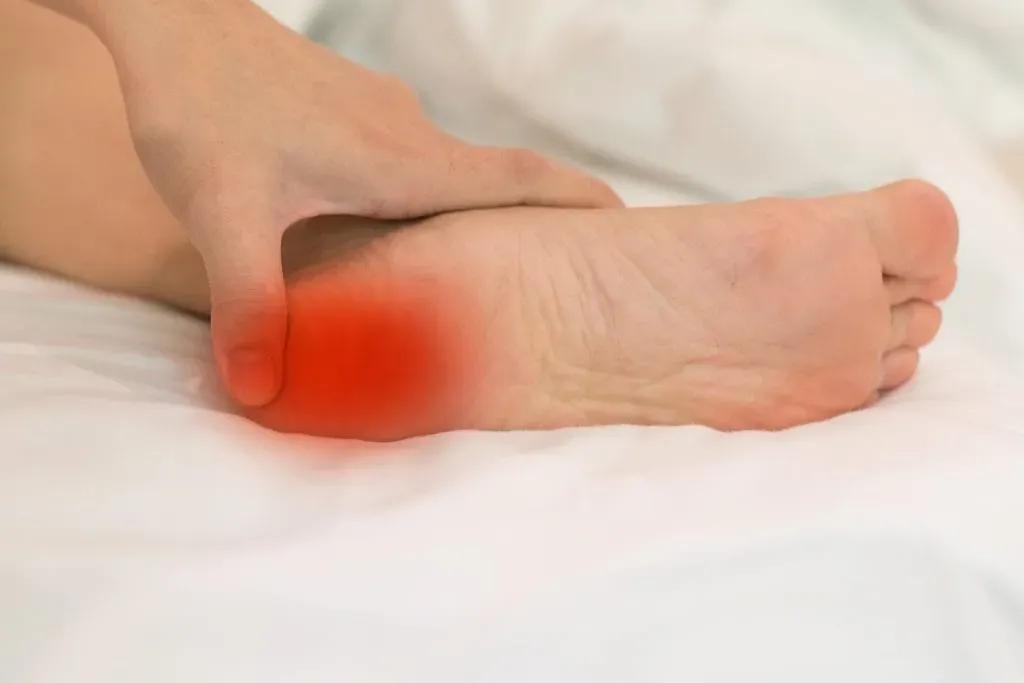
- Achilles tendonitis is inflammation or degeneration of the tendon connecting the calf muscles to the heel bone, occurring either mid-portion (2-6cm above the heel) or at the insertion point on the heel itself
- Dubai's climate, hard outdoor running surfaces, and the rapid rise of padel, tennis, and weekend sport participation are major contributors to overuse-related Achilles injuries among residents
- Eccentric calf strengthening exercises (the Alfredson protocol) have the strongest evidence base for treatment, with studies showing 60-90% improvement over 12 weeks
- Ultrasound and Siemens 1.5T MRI are the key imaging tools used to confirm diagnosis, differentiate insertional from mid-portion tendonitis, and rule out partial tears — both available same-day at DCDC
- PRP therapy and extracorporeal shockwave therapy (ESWT) are available at DCDC for patients whose symptoms persist despite structured physiotherapy
- Surgery is rarely required — fewer than 10% of patients need it, reserved for those who fail 6 months of consistent conservative management
- Orthopedic consultation at DCDC starts from AED 250, with direct billing to 20+ insurance providers including Daman, AXA, and Bupa, plus same-day on-site imaging results within 18-24 hours
That nagging ache at the back of your heel after a morning run along Kite Beach, or the stiffness that hits the moment you step out of bed following a weekend padel session — these are the classic early warning signs of Achilles tendonitis, one of the most common overuse injuries seen in Dubai's orthopedic and sports medicine clinics. Left untreated, what starts as mild discomfort can progress into chronic tendinopathy that sidelines you from running, gym training, or court sports for months. Our Joint Pain Management service at DCDC Dubai Healthcare City provides same-day clinical assessment with on-site ultrasound and MRI, so you get an accurate diagnosis and a personalised treatment plan without being shuffled between multiple facilities across Dubai.
This guide covers everything active residents of Dubai need to know about Achilles tendonitis: the anatomy and types of the condition, why it is so common among people training in Dubai's climate and lifestyle, how it is diagnosed, and the full spectrum of treatment options — from simple eccentric exercises to PRP and shockwave therapy. The information reflects current clinical evidence and the conservative-first approach used by our orthopedic team at DCDC.


What Is Achilles Tendonitis? Anatomy and Types Explained
The Achilles tendon is the largest and strongest tendon in the human body, connecting the two calf muscles — the gastrocnemius and soleus — to the calcaneus (heel bone). It transmits enormous forces during walking, running, and jumping, absorbing loads that can reach several times body weight during sprinting or landing from a jump. This constant mechanical demand, combined with a naturally limited blood supply in the mid-portion of the tendon, makes it particularly vulnerable to overuse injury.
"Achilles tendonitis" is the commonly used term, but clinically the condition is more accurately described as tendinopathy in most chronic cases — meaning the tendon has undergone degenerative changes (collagen disorganisation, microtears, and abnormal blood vessel ingrowth) rather than simple inflammation. True inflammatory tendonitis is more typical in the acute, early stage, while longer-standing pain usually reflects tendinosis or tendinopathy. For simplicity, this guide uses "Achilles tendonitis" to refer to the full spectrum of the condition, as is common in everyday clinical practice.
There are two distinct types, and distinguishing between them matters for treatment planning. Mid-portion Achilles tendonitis affects the tendon 2-6cm above its attachment to the heel bone — this is the most common presentation, particularly in runners. Insertional Achilles tendonitis affects the point where the tendon attaches directly to the heel bone, and is often associated with a bony spur (Haglund's deformity) and inflammation of the adjacent bursa. Insertional cases tend to respond differently to loading exercises and generally take somewhat longer to resolve.
What Causes Achilles Tendonitis? Common Triggers
Achilles tendonitis is fundamentally an overuse injury — it develops when the cumulative load placed on the tendon exceeds its capacity to repair and adapt. Rarely is there a single dramatic moment of injury; instead, symptoms build gradually over days or weeks as micro-damage accumulates faster than the tendon can heal.
- Sudden increase in training volume or intensity: Ramping up running distance, frequency, or speed too quickly is the single most common trigger, particularly the classic "more than 10% per week" rule being ignored
- Tight or weak calf muscles: Reduced ankle dorsiflexion range and poor calf strength increase strain transmitted through the tendon with every step
- Improper or worn-out footwear: Shoes lacking adequate heel support or worn beyond their lifespan change the biomechanics of the foot strike and increase tendon loading
- Biomechanical abnormalities: Overpronation, high arches, or leg length discrepancies alter the angle and force through which the tendon is loaded
- Training surface changes: Sudden switches between hard pavement, treadmill, and sand or grass alter impact forces the tendon must absorb
- Age-related tendon changes: Tendon elasticity and blood supply naturally decline with age, making tendinopathy more common in the 30-50 age group despite still being active and fit
Why Achilles Tendonitis Is So Common Among Active Residents in Dubai
Several features of life and sport in Dubai make Achilles tendonitis particularly prevalent among our patients. Dubai's climate compresses outdoor exercise into narrow windows — early mornings or late evenings — which pushes many runners and cyclists to train at a faster pace or higher intensity than they would with more flexible timing, increasing cumulative tendon load. The intense heat for much of the year also drives many residents indoors to treadmills and hard gym flooring, which carries different impact characteristics than outdoor terrain and can catch under-conditioned tendons off guard.
Dubai has also seen an explosive rise in padel and tennis participation over the past few years, with new courts opening across the city. These sports involve rapid stop-start movements, lateral cuts, and repeated calf loading that place significant stress on the Achilles tendon — especially in players who only train on weekends after five days at a desk. This "weekend warrior" pattern, where the tendon goes from near-total rest to high-intensity loading with no gradual buildup, is one of the most common causes of Achilles tendonitis we see at our clinic. The same applies to residents training for the Dubai Marathon or Standard Chartered Dubai Marathon each winter, who sometimes increase their weekly mileage too aggressively in the months beforehand. For a broader look at how training errors cause overuse injuries in Dubai's active community, see our guide on Shin Splints Treatment & Recovery Dubai, which covers many of the same underlying training principles.
Symptoms of Achilles Tendonitis: What to Watch For
Achilles tendonitis symptoms typically develop gradually and are often dismissed initially as ordinary post-exercise soreness. Recognising the pattern early allows treatment to begin before the condition becomes chronic and harder to resolve.
- Pain and stiffness along the tendon or at the heel: Typically located 2-6cm above the heel (mid-portion) or directly at the heel bone attachment (insertional)
- Morning stiffness: Pain and stiffness that is often worst with the first steps out of bed, easing somewhat once the tendon warms up
- Pain that eases then returns: Discomfort that fades during the warm-up phase of exercise but returns, sometimes worse, afterward or the following day
- Swelling or thickening: Visible or palpable swelling along the tendon, which may become permanently thickened in chronic cases
- Crepitus: A creaking, crackling, or grating sensation felt or heard when moving the ankle, particularly in more advanced tendinopathy
- Pain on calf raise or push-off: Difficulty or pain when rising onto the toes, pushing off during walking, or climbing stairs
When to See an Orthopedic Specialist: Red Flags
Most cases of Achilles tendonitis are not medical emergencies, but certain signs warrant prompt evaluation because they may indicate a partial or complete tendon rupture — a more serious injury requiring urgent orthopedic assessment and, in many cases, different management altogether.
- A sudden "pop" or snapping sensation at the back of the ankle, often described as feeling like being kicked or hit
- Inability to walk normally or push off on the affected leg immediately after the injury
- Severe swelling and bruising appearing rapidly at the back of the ankle
- A palpable gap or dent felt in the tendon a few centimetres above the heel
- Persistent pain that does not improve after 2 weeks of rest, activity modification, and basic home care
- Pain severe enough to interfere with normal daily walking, not just sport or exercise
A complete Achilles tendon rupture is a distinctly different injury from tendonitis and is often confused with a severe ankle sprain at first presentation. If you experience a sudden pop with immediate loss of push-off strength, it is important to be assessed urgently rather than assuming it is a routine sprain — our guide on Ankle Sprain Dubai: Treatment & Recovery explains how the two conditions are differentiated clinically.
How Achilles Tendonitis Is Diagnosed at DCDC
Diagnosis begins with a detailed clinical history and physical examination. Your orthopedic specialist will palpate the tendon to localise tenderness and thickening, assess ankle range of motion, evaluate calf strength, and perform the Thompson (calf squeeze) test to rule out a complete rupture. This clinical assessment alone is often sufficient to confirm a diagnosis of Achilles tendonitis, but imaging plays an important role in confirming severity, differentiating insertional from mid-portion disease, and ruling out partial tears that would change the treatment approach.
Ultrasound is typically the first-line imaging choice for Achilles tendon problems because it is quick, does not involve radiation, and allows dynamic assessment — the specialist can move your ankle in real time while viewing the tendon structure. Ultrasound clearly shows tendon thickening, areas of degeneration, and neovascularisation (abnormal new blood vessel growth associated with chronic tendinopathy). When the diagnosis is unclear, when there is suspicion of a partial tear, or when surgery is being considered, MRI provides more detailed soft-tissue contrast and a complete picture of the tendon, surrounding bursa, and adjacent bone. At DCDC, our Siemens 1.5T wide-bore MRI delivers high-resolution imaging with results available within 18-24 hours, and our on-site ultrasound can often be performed during the same visit as your consultation. For patients who want to understand more about how ankle and heel imaging works in Dubai, our guide Ankle MRI Dubai: What It Shows & Cost explains the process and what the scan reveals in more detail.
Conservative Treatment for Achilles Tendonitis
The overwhelming majority of Achilles tendonitis cases — well over 90% — respond successfully to conservative, non-surgical treatment. The foundation of modern management has shifted away from simple rest toward controlled, progressive loading of the tendon, which stimulates collagen remodelling and restores tendon capacity far more effectively than immobilisation alone.
- Activity modification: Reducing (not necessarily stopping) high-impact loading while maintaining fitness through low-impact cross-training such as swimming or cycling
- Eccentric strengthening exercises: The Alfredson protocol — slow, controlled heel-drop exercises performed twice daily over 12 weeks — has the strongest evidence base for chronic mid-portion Achilles tendinopathy, with published studies showing the majority of patients return to full activity
- Structured physiotherapy: Progressive loading programmes tailored to insertional versus mid-portion tendonitis, combined with manual therapy and biomechanical correction
- Heel lifts and orthotics: Temporary heel raises can reduce tendon strain during the acute phase, particularly useful for insertional tendonitis where dorsiflexion aggravates symptoms
- Footwear review: Assessment of running shoes and daily footwear to ensure adequate heel support and appropriate cushioning
- Short-term NSAIDs: Anti-inflammatory medication can help manage pain in the acute phase but should not be relied upon long-term or used as a substitute for structured loading exercises
Dr. Mersad Moosavi, our orthopedic specialist with over 14 years of experience, takes a conservative-first approach with every Achilles tendonitis patient. In his words: "Achilles tendonitis responds best to patience and consistency, not rest. Patients often want to stop exercising entirely, but a well-designed eccentric loading programme, progressed gradually under supervision, resolves the vast majority of cases without ever needing an injection or surgery. My role is to build the right diagnosis and the right loading plan from day one, so recovery happens on the fastest realistic timeline." For patients dealing with related heel or sole pain alongside tendon symptoms, our guide on Plantar Fasciitis: Physiotherapy Treatment Guide covers a condition that frequently overlaps with Achilles tendonitis in active patients.
Advanced Treatment Options: PRP and Shockwave Therapy
When symptoms persist despite 3-6 months of consistent, well-supervised eccentric loading and physiotherapy, advanced regenerative and mechanical treatments become reasonable next steps before considering surgery. These are available on-site at DCDC and are typically combined with, rather than replacing, an ongoing loading programme.
Platelet-Rich Plasma (PRP) therapy concentrates growth factors from your own blood and injects them into the affected area of the tendon under ultrasound guidance, aiming to stimulate the tendon's natural repair processes. Evidence for PRP in Achilles tendinopathy is mixed — a landmark randomised controlled trial found no significant benefit of PRP over saline injection when eccentric exercise was already being performed by both groups, while more recent studies combining PRP with structured loading programmes have reported improved outcomes in patients with chronic, treatment-resistant tendinopathy. At DCDC, PRP is offered as an adjunct for patients who have not responded adequately to physiotherapy alone, discussed on a case-by-case basis. For more on how PRP is used across orthopedic conditions in Dubai, see our guide PRP Injection for Joints Dubai.
Extracorporeal shockwave therapy (ESWT) delivers focused acoustic energy pulses to the affected tendon, promoting local blood flow and stimulating tissue healing. Clinical trials comparing ESWT to eccentric loading and to a wait-and-see approach have found shockwave therapy to be an effective option, particularly for insertional Achilles tendonitis where eccentric exercises alone are sometimes less effective. A typical course involves several sessions spaced one to two weeks apart, performed without anaesthesia in an outpatient setting.
Persistent Heel or Tendon Pain? Get an Accurate Diagnosis
Our orthopedic team at DCDC Dubai Healthcare City provides same-day clinical assessment with on-site ultrasound and Siemens 1.5T MRI. Direct billing with Daman, AXA, Bupa, MetLife, Cigna, and 15+ other insurers. Orthopedic consultation from AED 250.
When Is Surgery Needed for Achilles Tendonitis?
Surgery is genuinely a last resort for Achilles tendonitis, needed in fewer than 10% of cases — reserved for patients with significant, structural tendon degeneration who have completed at least 6 months of consistent conservative treatment, including a properly supervised eccentric loading programme, without adequate improvement. Surgical options depend on the type and extent of disease: debridement removes degenerated tendon tissue and stimulates a healing response; insertional cases with a significant bone spur (Haglund's deformity) may require removal of the bony prominence alongside tendon repair; and in more extensive cases, a tendon transfer may be used to reinforce the repaired area. Recovery from Achilles surgery is considerably longer than conservative treatment, typically involving a period of protected weight-bearing followed by months of structured rehabilitation before full return to sport. Our orthopedic team will only recommend surgery once every reasonable non-surgical option has been exhausted, and will discuss realistic expected outcomes and recovery timelines in detail before proceeding.
Achilles Tendonitis Treatment Cost in Dubai (2026)
The overall cost of treating Achilles tendonitis in Dubai depends on the severity of your condition and which combination of diagnostic and treatment services you require. The table below outlines indicative cash-pay pricing at DCDC; patients with comprehensive health insurance frequently have most or all of these costs covered through our direct billing arrangements.
| Service | Estimated Cost (Cash) | Insurance Coverage | Notes |
|---|---|---|---|
| Orthopedic Consultation | From AED 250 | Covered by most plans | Includes clinical examination, Thompson test, and initial treatment plan |
| Ultrasound (Achilles tendon) | AED 300-600 | Covered by most plans | Same-day dynamic assessment, often performed during the consultation visit |
| MRI (Siemens 1.5T) | AED 900-1,500 | Covered for clinical indication | Same-day scan; results within 18-24 hours |
| Physiotherapy (per session) | AED 300-500 | Covered subject to plan limits | Eccentric loading and rehabilitation programme; session packs available |
| PRP Therapy (Achilles tendon) | AED 1,500-3,000 per injection | Variable; check with insurer | Performed under ultrasound guidance; typically 1-3 sessions |
| Shockwave Therapy (ESWT, per session) | AED 400-800 | Variable; check with insurer | Typically 3-6 sessions spaced 1-2 weeks apart |
Estimated Achilles tendonitis treatment costs at DCDC Dubai (2026) — all prices are indicative; confirm with the clinic at time of booking
DCDC is MOHAP-licensed and maintains direct billing agreements with more than 20 insurance providers across the UAE, including Daman, AXA, Bupa, MetLife, and Cigna. We recommend contacting our team in advance with your insurance details so your coverage for consultation, imaging, and physiotherapy can be confirmed before your appointment.
What to Expect at DCDC: Your Achilles Tendonitis Patient Journey
DCDC is a one-stop diagnostic and orthopedic care centre in Dubai Healthcare City, rated 4.8/5 on Google from over 1,000 verified patient reviews with a 98% patient satisfaction rate and an average wait time of just 15 minutes. Here is what a typical visit for heel or Achilles tendon pain looks like, from arrival to your treatment plan:
- Arrival and check-in: Free parking is available at Al Razi Medical Complex, Building 64, Block A, Dubai Healthcare City. Reception verifies your insurance for direct billing with 20+ providers, and same-day appointments are frequently available.
- Orthopedic consultation: Dr. Mersad Moosavi or a member of the orthopedic team takes a detailed history of your symptoms, training pattern, and footwear, then performs a hands-on examination — palpation, range of motion, calf strength, and the Thompson test to rule out rupture.
- On-site imaging: Ultrasound can typically be performed during the same visit for immediate soft-tissue assessment. If MRI is indicated, our Siemens 1.5T wide-bore scanner is often available same-day, with results ready within 18-24 hours.
- Diagnosis and grading: Your specialist confirms whether the condition is mid-portion or insertional tendonitis, assesses severity, and identifies any associated findings such as partial tearing or a bone spur.
- Personalised treatment plan: A management plan is created based on your diagnosis, activity goals, and imaging findings — typically starting with activity modification and a structured eccentric loading programme.
- Physiotherapy referral: If physiotherapy is recommended, you are referred directly to the DCDC physiotherapy team on-site, avoiding the delays of an external referral. Session packs help make a full rehabilitation course more affordable.
- Follow-up care: Progress is reviewed at set intervals to track improvement. If recovery stalls despite consistent rehabilitation, PRP therapy, shockwave therapy, or further imaging may be discussed at this stage.
DCDC is open Saturday to Thursday from 8AM to 10PM and Friday from 9AM to 9PM, making appointments accessible before or after work for Dubai's working population.
Recovery Timeline: Returning to Sport and Activity
Recovery from Achilles tendonitis is typically slower than many patients expect, largely because tendon tissue heals and remodels far more gradually than muscle. Consistency with the loading programme matters more than intensity — most published protocols run a minimum of 12 weeks, and full symptom resolution can take several months, particularly for chronic or insertional cases.
| Timeframe | Typical Milestones |
|---|---|
| Week 1-2 | Pain and irritability settle with activity modification; begin gentle isometric loading and gradual introduction of eccentric exercises |
| Week 3-6 | Progressive eccentric strengthening programme underway; walking and daily activity largely pain-free; low-impact cross-training continues |
| Week 6-12 | Strength and load tolerance building steadily; gradual reintroduction of light jogging or sport-specific drills if symptoms allow |
| 3-6 months | Most patients with mid-portion tendonitis achieve full or near-full return to running and sport; insertional cases may take somewhat longer |
| 6+ months | Reserved for chronic or treatment-resistant cases; PRP, shockwave therapy, or surgical assessment considered if progress has plateaued |
General Achilles tendonitis recovery timeline — individual progress varies with severity, adherence to rehabilitation, and age
Returning to full training too early, before the tendon has adapted to the loads of running or court sport, is one of the most common causes of relapse. Our physiotherapy team uses graded functional testing to confirm readiness before clearing patients for a full return to sport. If you are managing a broader return-to-play plan after any lower-limb injury, our Sports Physiotherapy Dubai Guide covers the general principles that apply across most tendon and joint injuries.
Preventing Achilles Tendonitis in Dubai's Climate
Because Achilles tendonitis is fundamentally a load-management problem, prevention centres on training smart rather than training less. The following strategies are particularly relevant for people balancing sport with Dubai's climate and lifestyle.
- Progress training gradually: Increase running distance, speed, or padel/tennis frequency by no more than roughly 10% per week to give the tendon time to adapt
- Maintain calf flexibility and strength: Regular calf stretching and ongoing eccentric strengthening, even when symptom-free, keeps the tendon resilient to sudden load increases
- Warm up properly: A structured warm-up with dynamic stretching and gradual pace build-up reduces the risk of overloading a cold tendon, especially important before intense weekend sport sessions
- Replace worn footwear: Running shoes generally need replacing every 500-800 kilometres; worn cushioning changes impact forces through the tendon
- Use indoor cross-training during peak heat: Swimming, indoor cycling, and air-conditioned gym sessions allow you to maintain cardiovascular fitness without the added tendon strain of running on hot pavement during Dubai's warmest months
- Avoid the weekend warrior pattern: Spreading activity more evenly across the week, rather than concentrating all sport into weekend padel or football sessions, reduces the sudden spikes in tendon load that trigger symptoms
If you are recovering from any lower-limb sports injury and want a broader picture of rehabilitation and prevention strategies used across Dubai's active community, our guide on Sports Injury Recovery Dubai: PRP & Rehab is a useful companion resource.
Book Your Achilles Tendon Assessment at DCDC
Rated 4.8/5 from 1,000+ verified Google reviews. MOHAP-licensed. On-site ultrasound, Siemens 1.5T MRI, in-house physiotherapy, and PRP therapy under one roof in Dubai Healthcare City. Book an orthopedic consultation from AED 250 — same-day appointments frequently available.
Related Services at DCDC
Expert care and advanced diagnostics at Dubai Healthcare City
Frequently Asked Questions
Getting Back to Movement Without Chronic Tendon Pain
Achilles tendonitis is one of the most common — and most commonly mismanaged — sports injuries seen among active residents of Dubai. The temptation to either push through the pain or rest completely both tend to prolong recovery. The evidence consistently points to a middle path: accurate diagnosis, progressive loading, and patience with a rehabilitation timeline measured in months rather than days.
At DCDC Dubai Healthcare City, our orthopedic team's conservative-first philosophy means the vast majority of patients recover full function without ever needing surgery. Same-day diagnosis with on-site ultrasound and Siemens 1.5T MRI, combined with in-house physiotherapy and access to PRP or shockwave therapy when required, means your entire treatment pathway — from your first heel twinge to your return to running or padel — happens under one roof.
Sources & References
This article was reviewed by our medical team and references the following sources:
- PubMed — Heavy-Load Eccentric Calf Muscle Training for the Treatment of Chronic Achilles Tendinosis (Alfredson et al., 1998)
- PubMed — Platelet-Rich Plasma Injection for Chronic Achilles Tendinopathy: A Randomized Controlled Trial (de Vos et al., JAMA 2010)
- PubMed — Eccentric Loading, Shock-Wave Treatment, or a Wait-and-See Policy for Tendinopathy of the Main Body of Tendo Achillis (Rompe et al., 2007)
- PMC — Biomedical Risk Factors of Achilles Tendinopathy in Physically Active People: A Systematic Review
- PubMed — Nonoperative Treatment of Insertional Achilles Tendinopathy: A Systematic Review (2021)
- PubMed — Comparative Short-Term Effectiveness of Non-Surgical Treatments for Insertional Achilles Tendinopathy: A Systematic Review and Network Meta-Analysis (2023)
- Journal of Orthopaedic & Sports Physical Therapy — Achilles Pain, Stiffness, and Muscle Power Deficits: Midportion Achilles Tendinopathy Clinical Practice Guideline Revision (2024)
Medical content on this site is reviewed by DHA-licensed physicians. See our editorial policy for more information.
Written by
Dr. Mersad Moosavi
Orthopedic Surgery
MD, Orthopedic Surgery
Dr. Mersad Moosavi is an Orthopedic Surgeon at Doctors Clinic Diagnostic Center (DCDC) in Dubai Healthcare City, with 14+ years of experience and 20+ international publications. Trained at Tehran University of Medical Sciences, he takes a conservative treatment approach before recommending surgery, specialising in tendon injuries, joint pain, and musculoskeletal conditions.
Related Articles
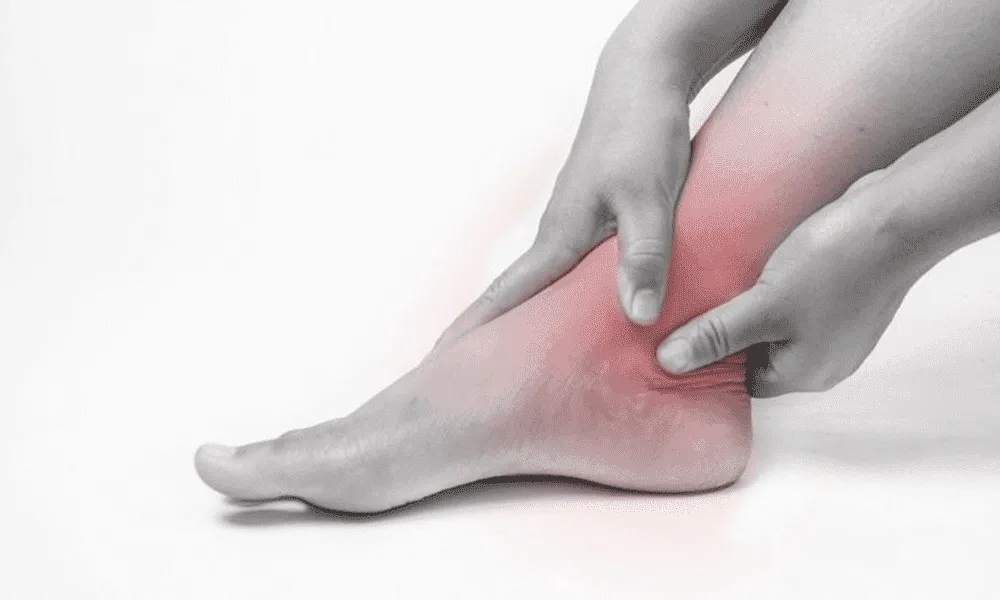
Ankle Sprain Dubai: Treatment & Recovery

Plantar Fasciitis: Physiotherapy Treatment Guide
PRP Injection for Joints Dubai
Sports Injury Recovery Dubai
Runner's Knee Treatment: Physio Guide
More in Orthopedics

Sciatica Causes & Symptoms in Dubai (2026)
Read More
Gym Injuries Dubai: Prevention & Recovery (2026)
Read More
Chronic Pain Management Dubai: Guide (2026)
Read More
Spinal Stenosis vs Herniated Disc Dubai (2026)
Read More
Wrist Pain Causes Dubai: When to Worry (2026)
Read MoreTrigger Finger Treatment Dubai: Guide (2026)
Read More© 2026 Doctors Clinic Diagnostic Center (DCDC), Dubai Healthcare City. Originally published at https://doctorsclinicdubai.ae/blog/achilles-tendonitis-treatment-dubai. All rights reserved. Unauthorized reproduction is prohibited.