Key Takeaways
- An echocardiogram (echo) is a non-invasive ultrasound of the heart that shows real-time images of heart structure, valve function, blood flow, and pumping efficiency — it is the most commonly ordered cardiac imaging test worldwide
- Echo test cost in Dubai: standard TTE costs AED 500-1,200, stress echo costs AED 800-1,500, and TEE costs AED 2,500-4,000 — most insurance plans cover echo with a referral
- Four types of echo are available: TTE (standard, non-invasive), TEE (through esophagus, high-resolution), stress echo (during exercise), and 3D echo (detailed valve assessment) — each serves a different clinical purpose
- At DCDC, Dr. Shahoo Mazhari personally performs and interprets echocardiograms, ensuring the cardiologist who reads your results is the same doctor who scanned you — this eliminates delays and improves diagnostic accuracy
- The test takes 20-40 minutes, requires no fasting or special preparation, involves no radiation, and produces immediate results that your cardiologist can discuss with you the same day
- Normal echo values: ejection fraction 55-70%, left atrial diameter <40mm, LV wall thickness <11mm, no valve regurgitation or stenosis — your cardiologist compares your measurements to these reference ranges
An echocardiogram — commonly called an "echo" — is an ultrasound scan of the heart. It uses high-frequency sound waves to create detailed, real-time images of your heart's chambers, valves, walls, and blood vessels, allowing cardiologists to assess how well your heart is pumping, whether your valves are functioning correctly, and if there are any structural abnormalities. At DCDC Healthcare City, Dr. Shahoo Mazhari, Consultant Cardiologist, personally performs and interprets echocardiograms — meaning the doctor who scans your heart is the same specialist who reads the results and discusses them with you.
What Does an Echocardiogram Show?
An echocardiogram provides a comprehensive assessment of heart structure and function. Unlike an ECG — which records electrical activity — an echo provides actual images and measurements of the heart in motion. Key parameters assessed include:
- Ejection fraction (EF): The percentage of blood pumped out of the left ventricle with each heartbeat. Normal EF is 55-70%. Reduced EF indicates heart failure or weakened heart muscle (cardiomyopathy)
- Valve function: Assessment of all four heart valves (mitral, aortic, tricuspid, pulmonary) for stenosis (narrowing) or regurgitation (leaking). Echo can grade valve disease severity from mild to severe
- Chamber size: Measurement of all four heart chambers. Enlarged chambers may indicate heart failure, valve disease, or chronic hypertension
- Wall motion: Assessment of heart wall movement during contraction. Abnormal wall motion in specific segments can indicate previous heart attack or current ischaemia
- Pericardial effusion: Detection of fluid accumulation around the heart (pericardial effusion), which may result from infection, inflammation, cancer, or heart failure
- Congenital defects: Identification of structural abnormalities such as atrial septal defect (ASD), ventricular septal defect (VSD), or patent foramen ovale (PFO)
- Blood clots: Detection of thrombus (blood clots) within the heart chambers, particularly important in patients with atrial fibrillation or dilated cardiomyopathy
- Pulmonary pressure: Estimation of pulmonary artery pressure, used to screen for pulmonary hypertension
Types of Echocardiogram: Complete Comparison
There are four types of echocardiogram, each designed for specific clinical scenarios. Understanding the differences helps you know what to expect and why your cardiologist has recommended a particular type:
| Feature | TTE (Standard) | TEE (Transesophageal) | Stress Echo | 3D Echo |
|---|---|---|---|---|
| Full name | Transthoracic Echocardiogram | Transesophageal Echocardiogram | Stress Echocardiogram | Three-Dimensional Echocardiogram |
| How it works | Ultrasound probe placed on chest wall | Small probe passed through mouth into esophagus | Echo images taken at rest and immediately after treadmill exercise | TTE with special probe that captures 3D volumetric images |
| Invasiveness | Non-invasive — probe on skin only | Semi-invasive — requires throat numbing spray and mild sedation | Non-invasive but requires physical exercise | Non-invasive — same as TTE |
| Duration | 20-40 minutes | 30-60 minutes (including sedation) | 45-60 minutes (including exercise) | 30-45 minutes |
| Preparation | None | Fast 4-6 hours before; arrange driver home | Exercise clothing; may stop beta-blockers 48h before | None |
| Best for | General cardiac assessment — first-line test for most patients | Valve assessment before surgery, blood clot search, endocarditis, unclear TTE views | Detecting coronary artery disease, exercise-induced wall motion abnormalities | Complex valve disease assessment, surgical planning, congenital defects |
| Cost in Dubai (AED) | 500 - 1,200 | 2,500 - 4,000 | 800 - 1,500 | 1,000 - 2,000 |
| Sedation required? | No | Yes — mild conscious sedation | No | No |
| Results timeline | Immediate | Same day (after sedation wears off) | Same day | Immediate |
| Available at DCDC? | Yes — performed by Dr. Shahoo | Referral to hospital setting | Yes — performed by Dr. Shahoo | Yes — available with advanced probe |
Comparison of all four echocardiogram types available in Dubai. TTE is the standard first-line test for most patients.
Transthoracic Echocardiogram (TTE)
The transthoracic echocardiogram (TTE) is the standard, most commonly performed type. The ultrasound probe (transducer) is placed on the chest wall, and images are obtained through the rib spaces. TTE is completely non-invasive, painless, radiation-free, and takes 20-40 minutes. This is the echo test most patients will have when their cardiologist orders an echocardiogram.
Transoesophageal Echocardiogram (TEE / TOE)
A transoesophageal echocardiogram (TEE) involves passing a small ultrasound probe through the mouth into the oesophagus (food pipe), which sits directly behind the heart. Because the oesophagus is closer to the heart than the chest wall, TEE provides higher-resolution images — particularly of the mitral valve, left atrial appendage (where clots form in atrial fibrillation), and aortic valve. TEE is typically used when TTE images are unclear, when looking for blood clots before cardioversion, when assessing valve disease before surgery, or when evaluating infective endocarditis.
Stress Echocardiogram
A stress echocardiogram combines echo imaging with a cardiac stress test. Echo images are taken at rest and immediately after exercise (or pharmacological stress with dobutamine for patients who cannot exercise). Comparing rest and stress images reveals areas of the heart that do not receive adequate blood supply during exertion — a sign of coronary artery disease. Stress echo is more accurate than a standard exercise ECG for detecting coronary artery disease, with sensitivity of approximately 80-85%.
3D Echocardiogram
A 3D echocardiogram uses a specialised ultrasound probe that captures volumetric (three-dimensional) images of the heart. This provides more accurate measurements of chamber volumes and ejection fraction compared to standard 2D echo. 3D echo is particularly valuable for assessing complex valve disease (especially mitral valve prolapse), planning valve repair surgery, and evaluating congenital heart defects. The procedure is identical to TTE from the patient's perspective.
Echocardiogram Cost in Dubai (2026)
| Echo Type | Typical Dubai Range (AED) | What Is Included | At DCDC |
|---|---|---|---|
| Standard TTE | 500 - 1,200 | Complete 2D echo with Doppler, M-mode, and colour flow imaging. Full report with measurements | Performed and interpreted by Dr. Shahoo Mazhari — immediate results |
| Stress Echo | 800 - 1,500 | Resting echo + treadmill exercise + post-exercise echo. Cardiologist supervision throughout | Combined with treadmill stress test, same-day results |
| 3D Echo | 1,000 - 2,000 | Standard TTE plus 3D volumetric imaging for accurate chamber and valve assessment | Available with advanced probe technology |
| TEE (Transesophageal) | 2,500 - 4,000 | Semi-invasive echo with sedation, high-resolution valve and clot imaging | Performed under sedation in hospital setting (referral) |
| Echo + ECG Package | 700 - 1,500 | Combined echocardiogram and 12-lead ECG with cardiologist interpretation of both | Available as one-visit cardiac assessment at DCDC |
| Full Cardiac Package | 1,500 - 3,000 | Echo + ECG + stress test + consultation — comprehensive cardiac workup | Complete cardiac evaluation in one visit with Dr. Shahoo |
Echocardiogram cost comparison in Dubai (2026). DCDC offers cardiologist-performed echo with immediate results.
Insurance coverage: Most Dubai health insurance plans cover echocardiograms when requested by a cardiologist or referred by a GP with clinical indication. DCDC offers direct billing with most major insurance providers including Daman, AXA, Bupa, and Cigna. Self-pay patients receive transparent pricing with no hidden fees. At DCDC Dubai Healthcare City, our echocardiogram service provides same-day appointments with results discussed immediately by Dr. Shahoo Mazhari.
What Does an Echocardiogram Measure? Normal Ranges
Understanding your echo report requires knowing what normal values look like. Your cardiologist compares your measurements against established reference ranges. Here are the key parameters and their normal values:
| Parameter | What It Measures | Normal Range | Abnormal Indicates |
|---|---|---|---|
| Ejection Fraction (EF) | Percentage of blood pumped out per beat | 55-70% | 40-54%: mildly reduced. 30-39%: moderately reduced. <30%: severely reduced heart function |
| Left Ventricular Internal Diameter (diastole) | Size of the main pumping chamber when relaxed | 39-53mm (men), 35-51mm (women) | Enlarged: dilated cardiomyopathy, chronic valve disease, volume overload |
| Interventricular Septum Thickness | Thickness of the wall between the ventricles | 6-11mm | >11mm: left ventricular hypertrophy (often from hypertension or hypertrophic cardiomyopathy) |
| Left Atrial Diameter | Size of the left upper chamber | 30-40mm | >40mm: left atrial enlargement, associated with atrial fibrillation, mitral valve disease |
| Aortic Root Diameter | Size of the aorta at the base | 20-37mm | >37mm: aortic dilation. >45mm: may require surgical intervention. Marfan syndrome screen |
| Right Ventricular Systolic Pressure (RVSP) | Estimated pressure in the pulmonary artery | <35 mmHg | >35 mmHg: suggests pulmonary hypertension. >55 mmHg: severe |
| E/A Ratio (Mitral Inflow) | Diastolic function assessment | 1.0-2.0 (age-dependent) | <1.0: impaired relaxation (grade I diastolic dysfunction). >2.0: restrictive pattern |
| TAPSE | Right ventricular function | >17mm | <17mm: right ventricular dysfunction |
Normal echocardiogram reference ranges. Values vary slightly by age, body size, and gender. Your cardiologist interprets results in context.
According to Dr. Shahoo Mazhari, "An echocardiogram report is far more than numbers on a page. I assess each parameter in the context of the patient's symptoms, age, blood pressure history, and prior cardiac events. A technically normal ejection fraction of 55% in a patient with exertional breathlessness still warrants investigation — diastolic dysfunction, subtle valve disease, and pulmonary hypertension can all produce symptoms with a preserved EF. That is why cardiologist-performed echo is so important: I see the whole clinical picture while I am scanning, not just the measurements after."
When Do You Need an Echocardiogram?
Your cardiologist or GP may recommend an echocardiogram if you have any of the following:
- Heart murmur: An abnormal heart sound detected with a stethoscope — echo determines whether the murmur is innocent (harmless) or caused by valve disease
- Shortness of breath: Unexplained breathlessness at rest or during exertion may indicate heart failure, valve disease, or pulmonary hypertension
- Chest pain: After an ECG, echo helps assess whether chest pain is related to heart wall motion abnormalities or structural problems
- Heart failure monitoring: Patients with known heart failure require regular echo tests to monitor ejection fraction and guide medication adjustments
- After a heart attack: Echo assesses the extent of heart muscle damage and identifies complications such as wall motion abnormalities or blood clot formation
- Atrial fibrillation: Echo evaluates heart chamber size and checks for blood clots before cardioversion or ablation procedures
- Hypertension assessment: Long-standing high blood pressure can cause the heart to thicken (left ventricular hypertrophy) — echo detects this before symptoms develop
- Pre-operative cardiac evaluation: Patients undergoing major non-cardiac surgery may need an echo to assess cardiac risk
- Family history of heart disease: Screening echo may be recommended for patients with a family history of cardiomyopathy or sudden cardiac death
- Valve replacement monitoring: Patients with prosthetic heart valves need annual echo to assess valve function and detect complications
Echocardiogram vs ECG: What Is the Difference?
These two tests are frequently confused because both involve the heart, but they measure completely different things. An ECG records electrical activity, while an echo provides structural images. Understanding the difference helps you know which test you actually need:
| Factor | ECG (Electrocardiogram) | Echocardiogram (Echo) |
|---|---|---|
| What it measures | Electrical impulses of the heart | Physical structure, movement, and blood flow |
| Technology | Electrode stickers on skin | Ultrasound probe on chest (uses sound waves) |
| Duration | 5 minutes | 20-40 minutes |
| What it detects | Arrhythmias, heart attack (current/old), conduction blocks, LVH voltage criteria, QT prolongation | Valve disease (stenosis/regurgitation), ejection fraction, chamber sizes, wall motion, pericardial effusion, clots, congenital defects |
| What it cannot detect | Valve problems, pumping strength, structural defects, fluid around heart | Arrhythmias (rhythm disorders), coronary artery blockages, electrical conduction problems |
| Preparation | None | None (TTE). Fast 4-6h for TEE |
| Cost in Dubai (AED) | 100-300 | 500-1,200 (TTE), 800-1,500 (stress echo) |
| Walk-in available? | Yes | By appointment (cardiologist must perform) |
| How often needed | As needed; annually for high-risk patients | As clinically indicated; annually for heart failure and valve disease patients |
ECG and echocardiogram are complementary — they answer different questions. Many patients need both.
In practice, most cardiac evaluations include both tests. The ECG takes 5 minutes and checks the electrical system, while the echo takes 20-40 minutes and checks the mechanical system. Together, they provide a comprehensive baseline assessment. For a detailed comparison, read our ECG vs echo difference guide.
What to Expect During an Echocardiogram
Before the Test
- No fasting required for a standard TTE
- Wear comfortable, loose-fitting clothing — you will need to undress from the waist up and wear a hospital gown
- Continue taking all regular medications unless your cardiologist advises otherwise
- Bring a list of your current medications and any previous cardiac test results
During the Test
- You lie on your left side on an examination bed
- ECG electrodes are placed on your chest to synchronise the echo images with your heart rhythm
- A water-based gel is applied to the chest to improve ultrasound transmission
- The cardiologist moves the ultrasound probe across different positions on your chest to obtain views of all heart structures
- You may be asked to breathe in, breathe out, or hold your breath briefly to improve image quality
- The procedure is painless — you may feel mild pressure from the probe but no discomfort
- The entire test takes approximately 20-40 minutes
After the Test
There is no recovery period after a standard TTE. You can return to normal activities immediately — driving, working, exercising, eating, and drinking are all fine. The gel applied during the scan wipes off easily with a tissue.
At DCDC, because Dr. Shahoo performs the echo himself, results are available immediately and discussed during your consultation — there is no waiting for a separate report. He will explain what each measurement means, whether any findings require attention, and what the next steps are (if any). If additional testing is needed, it can typically be arranged on the same day. Book your echocardiogram at DCDC online or walk in during clinic hours — no referral is required for self-pay patients.
For TEE (transesophageal echo), recovery takes longer — you will need to remain at the clinic until the sedation wears off (approximately 30-60 minutes), and you should not drive for the remainder of the day. Arrange for someone to take you home. Your throat may feel mildly sore for a few hours after the procedure, which is normal.
Why Choose DCDC for Your Echocardiogram?
The quality of an echocardiogram depends heavily on who performs and interprets it. At many clinics, echos are performed by sonographers and later reviewed by a cardiologist who was not present during the scan. At DCDC, Dr. Shahoo Mazhari's hands-on approach offers distinct advantages:
- Cardiologist-performed: Dr. Shahoo personally operates the ultrasound probe, ensuring optimal image acquisition and the ability to focus on clinically suspicious areas in real time
- Immediate interpretation: No waiting days for a report — Dr. Shahoo discusses findings with you immediately after the scan
- Clinical context: Because the same cardiologist who knows your symptoms is performing the echo, findings are interpreted in the context of your full clinical picture
- Integrated care: If the echo reveals findings requiring further testing (stress test, Holter monitor, CT angiogram), Dr. Shahoo can arrange these at DCDC without external referrals
- MOHAP-licensed facility: DCDC holds a 4.8/5 Google rating from over 1,000 verified patient reviews, with direct billing for 20+ insurance providers
- Persian and English: Dr. Shahoo speaks fluent Persian, English, and Kurdish, ensuring clear communication of results regardless of language preference
Book Your Echocardiogram at DCDC
Dr. Shahoo Mazhari personally performs and interprets echocardiograms at DCDC Dubai Healthcare City. Same-day results, cardiologist-performed scans. Book your echo test.
Most insurance plans accepted with direct billing. Call +971 54 219 5008 or WhatsApp.
How to Prepare for Different Echo Types
Preparation requirements vary depending on which type of echocardiogram you are having. Most echo tests require no preparation at all, but knowing what to expect for each type helps you arrive ready:
| Echo Type | Fasting Required? | Medication Changes? | What to Bring | Special Instructions |
|---|---|---|---|---|
| Standard TTE | No | Take all medications as normal | List of current medications, previous cardiac reports | Wear loose top for easy chest access. No body lotion on chest |
| Stress Echo | Light meal 2 hours before | May stop beta-blockers 48h before (ask cardiologist) | Exercise clothes, trainers | Avoid caffeine 12 hours before. Bring inhaler if asthmatic |
| TEE | Fast 4-6 hours | Take morning medications with small sip of water only | Arrange someone to drive you home (sedation used) | Remove dentures before procedure. No driving for 12 hours after sedation |
| 3D Echo | No | Take all medications as normal | Same as standard TTE | Same as standard TTE — procedure is identical from patient perspective |
Preparation guide for each echocardiogram type. When in doubt, call DCDC before your appointment to confirm.
Echo vs ECG vs Stress Test: Which Heart Test Do You Need?
| Test | What It Shows | Duration | Cost (AED) | When Used |
|---|---|---|---|---|
| ECG (Electrocardiogram) | Heart's electrical rhythm | 5-10 minutes | 100-300 | Screening, arrhythmia detection, chest pain evaluation, pre-surgery clearance |
| Echocardiogram (Echo) | Heart structure, valves, pumping function | 20-40 minutes | 500-1,200 | Heart failure, valve disease, murmur, structural assessment, hypertension monitoring |
| Cardiac Stress Test | Heart response to exercise (ECG only) | 30-45 minutes | 800-1,500 | Coronary artery disease screening, exercise tolerance assessment |
| Stress Echo | Structure + exercise response combined | 45-60 minutes | 800-1,500 | Coronary artery disease with structural assessment — more accurate than ECG-only stress test |
| Holter Monitor | Continuous ECG recording (24-72 hours) | 24-72 hours (worn) | 500-1,500 | Intermittent arrhythmias, palpitations, AFib detection, symptom-rhythm correlation |
| CT Calcium Score | Coronary artery calcification | 10 minutes | 800-1,500 | Asymptomatic coronary artery disease risk assessment — predicts future heart attack risk |
Comparison of common cardiac diagnostic tests. Your cardiologist will recommend the appropriate test(s) based on your symptoms.
These tests are complementary, not interchangeable. Your cardiologist may order one or several depending on your symptoms and clinical situation. An ECG is often the first test, with an echo ordered when structural or functional assessment is needed. For coronary artery disease assessment, a calcium score test or stress test may be added.
Complete Cardiac Assessment in One Visit
At DCDC, ECG, echocardiogram, stress test, and cardiology consultation can all be completed in a single visit with Dr. Shahoo Mazhari. No need for multiple appointments or external referrals. Book your cardiac evaluation.
Same-day results for all cardiac tests
Related Services at DCDC
Expert care and advanced diagnostics at Dubai Healthcare City
Frequently Asked Questions
Your Heart Deserves Expert Imaging
An echocardiogram is one of the most valuable diagnostic tools in cardiology — it provides a real-time window into your heart's structure and function without any radiation or invasive procedures. Whether you are being evaluated for a heart murmur, monitoring heart failure, or assessing the impact of hypertension on your heart, an echo provides answers that guide treatment.
Understanding the different types of echo (TTE, TEE, stress echo, 3D echo), knowing what normal values look like, and choosing a facility where the cardiologist personally performs and interprets the scan all make a meaningful difference in the accuracy and value of your results.
At DCDC Healthcare City, the cardiologist-performed approach means you benefit from Dr. Shahoo Mazhari's expertise from the moment the ultrasound probe touches your chest to the moment he explains your results. This direct, uninterrupted chain of care — scanning, interpreting, and treating — is the standard of cardiology practice that every patient deserves. For a broader understanding of heart diagnostics, explore our guides on ECG testing, cardiac stress tests, and heart health prevention.
Sources & References
This article was reviewed by our medical team and references the following sources:
- American Society of Echocardiography (ASE) — Guidelines for Performing a Comprehensive Transthoracic Echocardiographic Examination 2024
- European Society of Cardiology (ESC) — Recommendations for Cardiac Chamber Quantification by Echocardiography 2023
- Mitchell C et al. Guidelines for Performing a Comprehensive Transthoracic Echocardiographic Examination in Adults. J Am Soc Echocardiogr. 2019
- British Society of Echocardiography (BSE) — Minimum Dataset for Standard Transthoracic Echocardiogram 2024
- Mayo Clinic — Echocardiogram: Why It Is Done and What to Expect
- Cleveland Clinic — Echocardiogram: Types, Results, and Normal Ranges
- NHS — Echocardiogram Patient Information
Medical content on this site is reviewed by DHA-licensed physicians. See our editorial policy for more information.
Written by
Dr. Shahoo Mazhari
Specialist Cardiologist
MD, Consultant Cardiologist
Dr. Shahoo Mazhari is a DHA-licensed Consultant Cardiologist at DCDC Dubai Healthcare City. He personally performs and interprets echocardiograms, stress tests, and ECGs, providing comprehensive cardiac care in Persian, English, and Kurdish.
Related Articles

ECG Test Dubai: Cost, Types & Results Guide
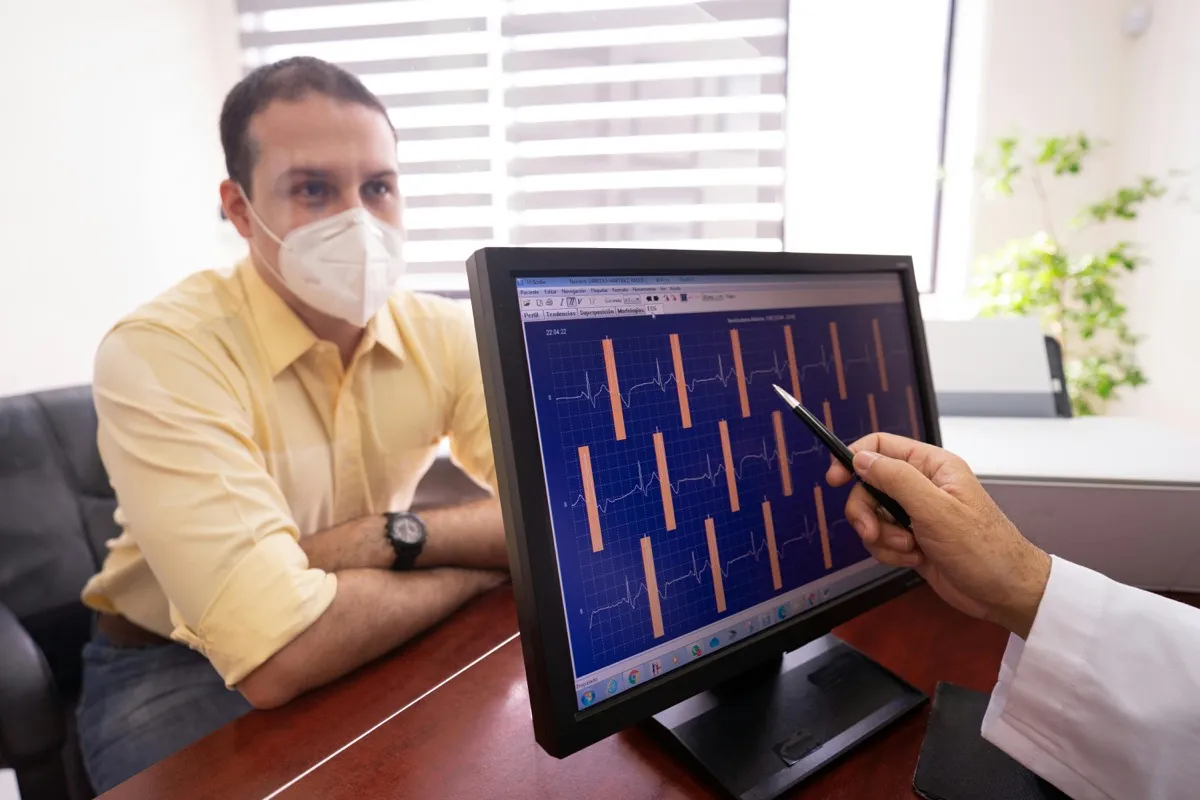
ECG vs Echo: Understanding the Difference
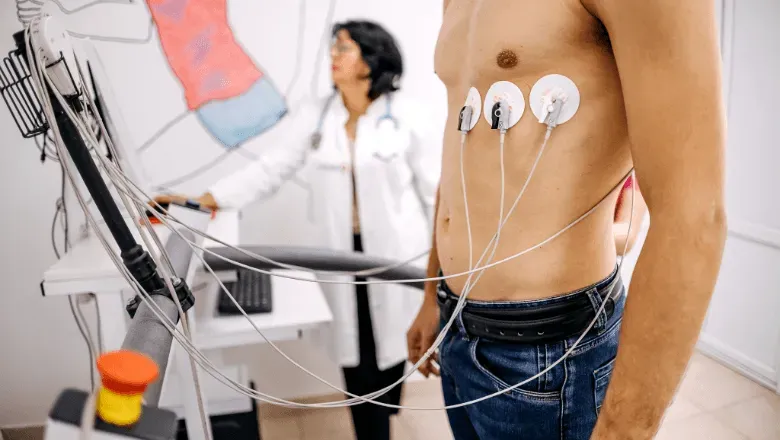
Cardiac Stress Test in Dubai: Complete Guide
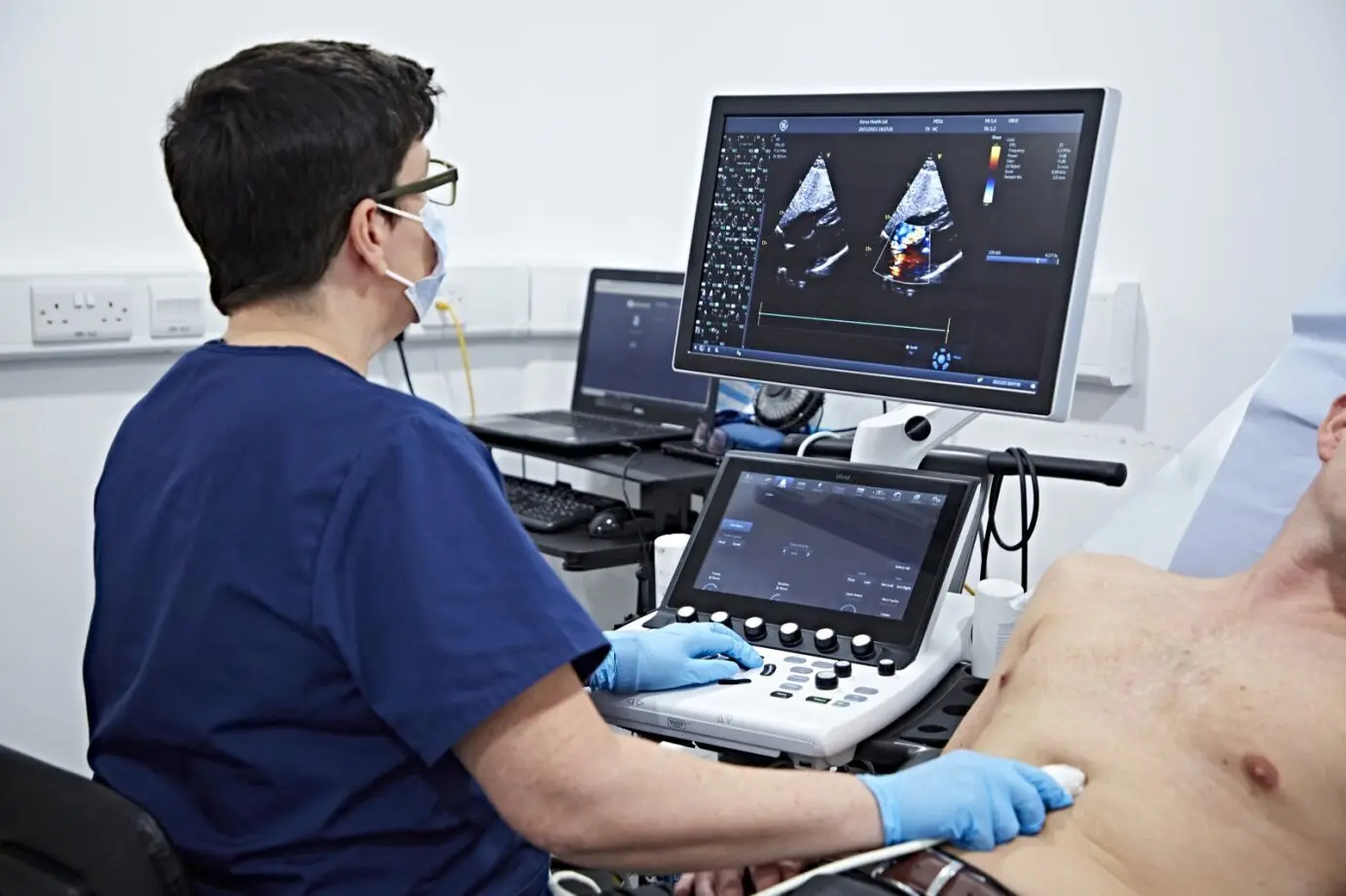
Echo Test Cost in Dubai: Detailed Pricing
Heart Disease Symptoms You Should Not Ignore
More in Cardiology
Holter Monitor Prep Dubai: What to Expect (2026)
Read More
When to See a Cardiologist Dubai (2026)
Read MoreEcho Test Preparation Dubai: What to Expect (2026)
Read MoreHeart Attack vs Panic Attack Dubai: Signs (2026)
Read MoreHeart Failure Warning Signs Dubai (2026)
Read MoreStress Test Cost Dubai: AED 800–5,000 (2026)
Read More© 2026 Doctors Clinic Diagnostic Center (DCDC), Dubai Healthcare City. Originally published at https://doctorsclinicdubai.ae/blog/echocardiogram-cost-dubai. All rights reserved. Unauthorized reproduction is prohibited.