Key Takeaways
- Wear a loose, two-piece outfit on the day of your Holter test — a button-down or zip-up top makes electrode placement and daily dressing far easier than a pullover or dress.
- Avoid applying lotion, oil, or talcum powder to your chest before the appointment. Oily or moisturised skin prevents the electrode adhesive from sticking, which can cause signal loss or a repeat recording.
- You cannot shower, bathe, or swim while wearing a standard Holter monitor. Plan to shower thoroughly the morning of your appointment, since the device must stay completely dry for the full 24-48 hour period.
- Keep a written symptom diary noting the exact time of any palpitations, dizziness, chest discomfort, or breathlessness. This diary is what allows your cardiologist to match your symptoms to the exact heartbeat recorded on the monitor.
- Continue your normal daily activities — work, light exercise, walking, climbing stairs — unless your doctor tells you otherwise. The whole point of the test is to capture your heart's rhythm during ordinary life, not while resting in a clinic.
- At DCDC, electrode placement and device fitting take about 15-20 minutes, and results are typically ready within 2-3 working days after you return the device, with your cardiologist explaining the findings in a follow-up consultation.
- Preparation mistakes — a poorly stuck electrode, a missed diary entry, an accidental shower — are the most common reasons a Holter recording needs to be repeated, so a few minutes of preparation genuinely improves your diagnostic accuracy.
If your cardiologist has scheduled you for a Holter monitoring service, a little preparation goes a long way toward getting a clean, accurate recording on the first attempt. Unlike a standard 10-second ECG, a Holter monitor records every single heartbeat for 24 to 48 hours while you go about your normal daily routine — which means what you wear, how you prepare your skin, and how carefully you log your symptoms all directly affect the quality of your results. This guide walks you through exactly what to do before, during, and after your Holter monitor test in Dubai, including what to expect on the day at DCDC in Dubai Healthcare City.
Below you will find a practical, checklist-style guide covering skin and clothing preparation, what happens when the electrodes are placed, how to live comfortably with the device for a full day or two, how to keep an accurate symptom diary, and what happens after you return the monitor. We also cover typical costs, insurance coverage, and answers to the most common questions patients ask before this test. Reviewed by Dr. Shahoo Mazhari, Cardiologist at DCDC Dubai Healthcare City.
What Is a Holter Monitor Test?
A Holter monitor is a small, portable electrocardiogram (ECG) device that continuously records your heart's electrical activity for 24 to 48 hours, and sometimes up to 72 hours, while you carry on with your normal daily activities. It is connected to your chest through 5 to 7 adhesive electrode patches, each linked by a thin wire to a compact recorder that is usually clipped to your belt or worn on a strap around your neck or shoulder. Unlike a standard resting ECG, which captures roughly 10 seconds of heart activity in a clinic, a Holter monitor captures well over 100,000 heartbeats across a complete day-night cycle — including sleep, meals, work, exercise, and moments of stress.
Because the device travels with you, preparation matters more than it does for most other tests. There is no fasting requirement and no sedation involved, but the way you dress, the condition of your skin, and how diligently you record your symptoms during the recording period directly determine how useful the final report will be to your cardiologist. If you are still deciding between this test and a standard ECG, our comparison guide on Holter monitor vs ECG explains when each is appropriate.
Why Your Doctor Ordered a Holter Monitor Test
Cardiologists order Holter monitoring when symptoms are intermittent — meaning they come and go unpredictably, so a brief in-clinic ECG is unlikely to catch them in the act. Common reasons your doctor may have recommended this test include:
- Unexplained palpitations: A sensation of your heart racing, fluttering, or skipping beats that has not shown up on a resting ECG.
- Dizziness, light-headedness, or fainting (syncope): These can be caused by a heart rhythm that is briefly too slow or too fast.
- Suspected atrial fibrillation: Especially if episodes are brief or occur mainly at night, when they are unlikely to be caught during a clinic visit.
- Follow-up after a heart attack or heart surgery: To check for dangerous rhythm disturbances during recovery.
- Monitoring a new heart medication: To confirm an antiarrhythmic drug is working as intended and not causing new rhythm problems.
- Checking a pacemaker or implanted device: To verify it is pacing and sensing correctly throughout a full day of normal activity.
- Unexplained fatigue or breathlessness: When these symptoms cannot otherwise be explained and a rhythm cause is suspected.
Whatever the reason, the goal is the same: to capture your heart's electrical activity during a genuine episode of symptoms, so your cardiologist can see exactly what your heart was doing at that moment. For a broader look at how this test compares with cost and process to other ECG options, see our complete Holter monitor test guide.
Before the Test: How to Prepare (Checklist)
Most Holter monitor preparation is straightforward and does not require fasting, stopping medication, or any special medical intervention. Work through this checklist in the day or two before your appointment:
- Shower or bathe before your appointment, not after. Since you cannot get the device wet once it is fitted, wash and dry your hair and body thoroughly beforehand.
- Avoid lotions, oils, and powders on your chest and torso for at least 24 hours. Any residue on the skin weakens the electrode adhesive and can cause the recording to drop out.
- Men with significant chest hair may need small areas shaved. The technician will do this on-site if needed — dense hair prevents electrodes from making good skin contact.
- Continue taking your regular medications as prescribed unless your cardiologist has specifically told you to stop or adjust a dose. Bring a list of your current medications to the appointment.
- Eat normally before your appointment. There is no fasting requirement for a Holter monitor test.
- Plan your outfit for the next 24-48 hours in advance. Loose-fitting, two-piece clothing that opens at the front is far easier to manage with electrodes and wires underneath.
- Print or download a symptom diary if your clinic provides one in advance, or simply have a notebook and pen (or your phone's notes app) ready to log the time of any symptoms.
- Arrange your schedule so you can keep the device on for the full monitoring period — typically 24 or 48 hours — without a shower, swim, or contact sport during that window.
Day-of Preparation: What to Wear and What to Avoid
What to Wear
- A button-down shirt or a zip-up top rather than a pullover, so you can dress and undress without disturbing the electrodes or the recorder unit.
- Loose, breathable fabric such as cotton — tight clothing can rub against the electrodes and pull them loose over hours of wear.
- A belt, or clothing with a pocket, to help secure the small recorder unit comfortably against your body.
- For women, a soft, front-fastening bra is generally more comfortable than an underwire style, which can press directly on an electrode.
- Flat, comfortable shoes if you plan to continue your usual walking or errands during the monitoring period.
What to Avoid
- Do not apply moisturiser, body oil, sunscreen, perfume, or talcum powder to your chest on the day of the appointment.
- Do not wear necklaces, chest jewellery, or metal-embellished clothing that could interfere with electrode placement.
- Avoid tight compression garments, sports bras, and shapewear that press directly over the electrode sites.
- Do not plan a swim, bath, sauna, or steam room visit during the monitoring window — the device and electrodes must stay completely dry.
- Avoid vigorous contact sports or activities that could dislodge an electrode or damage the recorder, unless your cardiologist has specifically asked you to exercise as part of the test.
During the Test: Electrode Placement and Device Fitting
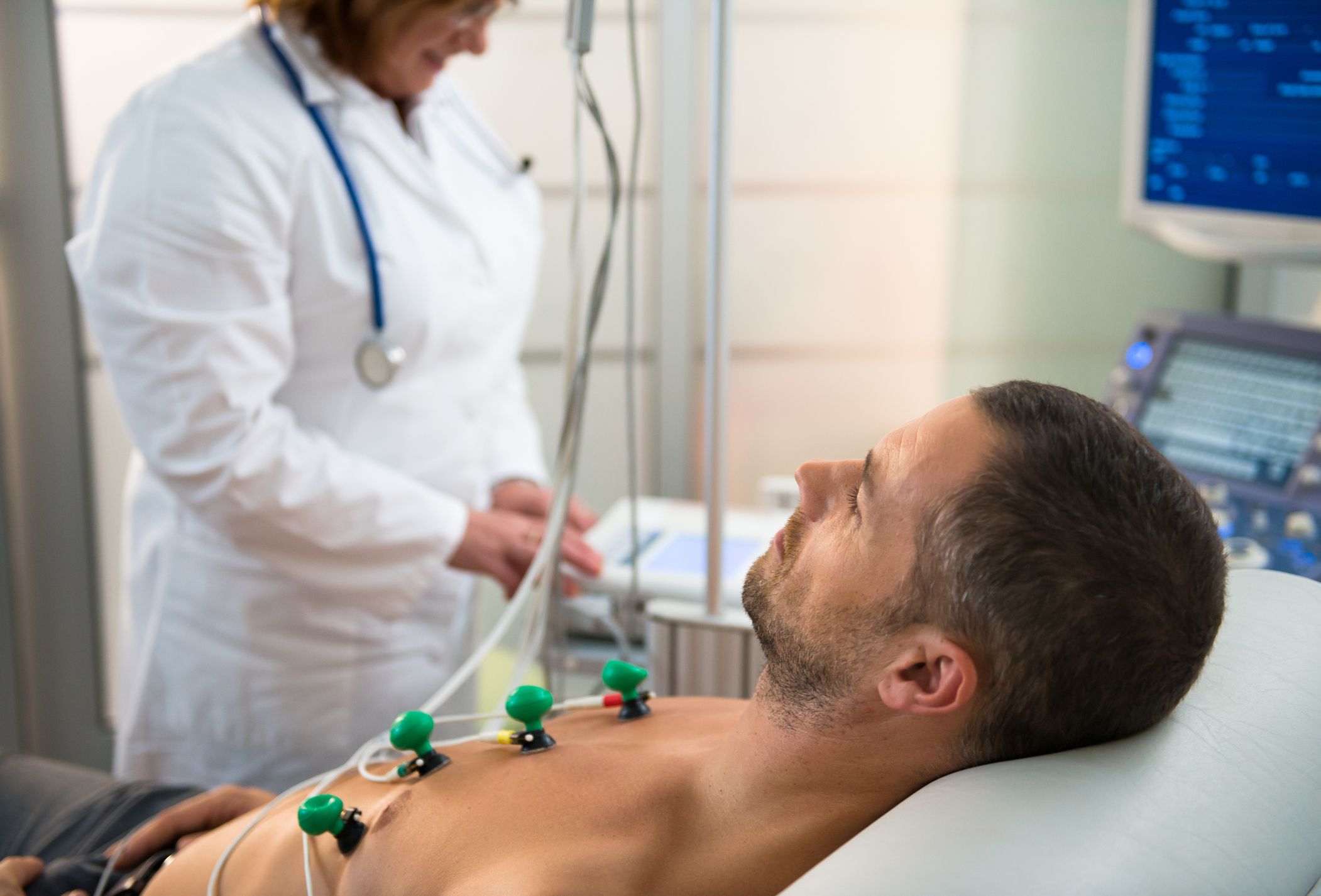
Once you arrive for your appointment, a trained technician will clean small areas of your chest with an alcohol swab to remove any oil, then attach 5 to 7 adhesive electrode patches at specific positions across your chest. Each electrode is connected by a lightweight wire to the small recording unit, which is typically worn clipped to a belt, tucked into a pocket, or slung across the body on a strap. The whole fitting process is painless and generally takes 15 to 20 minutes.
Before you leave, the technician will show you how the device sits, confirm it is recording correctly, and walk you through how to use the symptom diary or event marker button (if your device has one). You will also be given clear written instructions covering showering restrictions, what to do if an electrode comes loose, and an emergency contact number in case you experience severe symptoms during the recording period.
Living With the Holter Monitor for 24-48 Hours
The entire value of a Holter recording comes from capturing your heart's rhythm during your ordinary daily life — so unless your cardiologist has told you otherwise, you should continue your usual routine as closely as possible.
- Work and daily activities: Go to work, run errands, and carry out normal household tasks as you usually would. Suppressing your normal activity level defeats the purpose of the test.
- Light to moderate exercise: Walking, light stretching, and your usual level of activity are fine. Check with your cardiologist before doing any strenuous exercise or contact sport.
- Sleep: Sleep in your normal position. If the recorder or wires feel uncomfortable against a particular side, most patients find it more comfortable to sleep with the unit tucked beside them rather than underneath their body.
- Showering and bathing: Not permitted with a standard Holter monitor. Wait until the device is removed before showering, and use a washcloth for a light sponge bath if needed in the meantime.
- Electronics and appliances: Most household electronics, computers, and mobile phones do not interfere with a Holter monitor. Strong magnetic fields such as MRI machines and certain industrial equipment should be avoided — tell any other healthcare provider you are wearing the device.
- Loose electrodes: If a patch starts to peel, press it back down firmly. If it will not stay attached, contact the clinic for guidance rather than trying to re-glue it yourself.
Keeping an Accurate Symptom Diary
The symptom diary is arguably the single most important piece of Holter monitor preparation — and the part most patients underestimate. Every time you notice palpitations, chest discomfort, dizziness, shortness of breath, or any unusual sensation, write down the exact time and a brief description of what you were doing and how you felt.
- Note the precise time (hour and minute) of each symptom, not just "morning" or "afternoon".
- Describe the sensation briefly: racing heart, skipped beat, fluttering, chest tightness, dizziness, or breathlessness.
- Record what you were doing at the time — resting, walking, climbing stairs, eating, or under stress — since triggers matter for diagnosis.
- If your device has an event marker button, press it the moment you feel a symptom, then still log the time in your written diary as a backup.
- Note sleep and wake times, and roughly when you exercised, so your cardiologist can correlate rhythm changes with your daily pattern.
- Keep the diary with you at all times during the monitoring period — a phone notes app works just as well as a paper log.
According to Dr. Shahoo Mazhari, "A Holter monitor captures every heartbeat over 24-48 hours, revealing intermittent arrhythmias that a standard 12-lead ECG might miss. Proper preparation — especially keeping an accurate symptom diary — significantly improves our ability to correlate your symptoms with any rhythm abnormalities."
Ready to Schedule Your Holter Monitor Test?
DCDC Dubai Healthcare City offers same-day Holter monitor fitting with cardiologist interpretation. On-site ECG, echocardiogram, treadmill stress testing, and 24-hour Holter monitoring are all available in a single visit.
Direct billing is available with 20+ insurance providers.
After the Test: Returning the Device and Results Timeline
Once your monitoring period ends — typically 24 or 48 hours after fitting — you will return to the clinic to have the electrodes and recorder removed. This takes only a few minutes. The technician will gently peel off the adhesive patches (a mild skin redness at the electrode sites is normal and fades within a day or two) and download the recorded data from the device.
The stored recording is then processed through specialised analysis software that scans every recorded heartbeat for abnormalities, before your cardiologist manually reviews the flagged events alongside your symptom diary. This is why the diary matters: it lets your cardiologist match a specific rhythm event on the tracing to exactly what you were feeling and doing at that moment. If you would like a general refresher on how standard ECG results are read for comparison, see our ECG test guide.
What to Expect at DCDC: Your Patient Journey
DCDC is located in Building 64, Dubai Healthcare City, with free on-site parking for patients. Here is what a typical Holter monitoring visit looks like from start to finish:
- Arrival and check-in: Arrive at Building 64, DHCC, and check in at reception — the average wait time is around 15 minutes.
- Electrode placement: A trained technician cleans the skin and attaches 5-7 electrodes to your chest in specific positions.
- Device fitting and explanation: The Holter recorder is fitted, tested, and explained, including care instructions and how to use the diary or event marker.
- Symptom diary provided: You are given a paper or digital diary to record the time and nature of any symptoms.
- Wear the device for 24-48 hours: You go home and continue your normal routine while the monitor records continuously.
- Return to the clinic: You come back at the scheduled time to have the device and electrodes removed.
- Cardiologist review: Dr. Shahoo Mazhari or another DCDC cardiologist reviews the full recording alongside your symptom diary.
- Results discussed: Your results are typically ready within 2-3 working days, discussed with you in a follow-up consultation.
DCDC is MOHAP-licensed and holds a 4.8/5 Google rating with a 98% patient satisfaction score. Because DCDC offers on-site ECG, echocardiogram, treadmill stress testing, and 24-hour Holter monitoring under one roof, many patients complete their entire cardiac workup in a single visit rather than being referred between multiple facilities.
Holter Monitor Cost in Dubai and Insurance Coverage
At DCDC, a cardiology consultation starts from AED 250, with Holter monitoring available as part of a comprehensive cardiac workup. Exact pricing depends on the monitoring duration (24 vs 48 hours) and whether it is bundled with a consultation. DCDC provides direct billing with 20+ insurance providers, so many patients only pay a co-payment or nothing out of pocket, depending on their policy.
| Cardiac Test | DCDC Price Range | Description |
|---|---|---|
| Cardiology Consultation | From AED 250 | Initial heart assessment with a cardiologist |
| Holter Monitor (24hr) | AED 1,000 | 24-hour ambulatory ECG recording |
| Holter Monitor (48hr) | Quote on request | Extended 48-hour monitoring for intermittent symptoms |
| Standard ECG | From AED 200 | 12-lead resting ECG |
| Echocardiogram | From AED 500 | Heart ultrasound to assess structure and function |
Indicative pricing at DCDC Dubai Healthcare City. Confirm exact pricing and insurance coverage when booking.
If you are unsure whether your insurance policy covers Holter monitoring, contact the DCDC reception team before your appointment with your insurance card details — staff can confirm eligibility and any applicable co-payment in advance.
When to Call Your Doctor During Monitoring
Wearing a Holter monitor is generally very safe and does not restrict daily life in any medically significant way. However, contact your clinic promptly if any of the following occur during your monitoring period:
- The device screen shows an error message or stops recording (if your model has a visible display).
- An electrode comes completely off and will not restick, even after pressing it firmly.
- You experience severe chest pain, fainting, or significant shortness of breath — in this case, seek emergency medical care immediately rather than simply calling the clinic.
- The device accidentally gets wet or is dropped and appears damaged.
- You develop a skin reaction, rash, or significant irritation at an electrode site.
- You are unsure how to use the symptom diary or event marker correctly.
How Your Cardiologist Reads the Results
When you return for your results, your cardiologist reviews a detailed report covering your average, minimum, and maximum heart rate over the recording period, the total number of any irregular beats detected, the timing and duration of any arrhythmia episodes, and how these correlate with the symptoms you logged in your diary. If the recording captured a clear episode matching a symptom you noted — for example, a racing heart rhythm at the exact time you wrote down feeling palpitations — this gives a definitive diagnosis. If no significant abnormality is found but your symptoms persist, your cardiologist may recommend a longer recording period, an event monitor worn for several weeks, or additional testing such as an echocardiogram or stress test.
Book Your Holter Monitor Test at DCDC
Same-day appointments are available at DCDC Dubai Healthcare City, Building 64. Our cardiology team will guide you through preparation, fitting, and results, with direct billing available for 20+ insurance providers.
Free on-site parking. MOHAP-licensed facility with a 4.8/5 Google rating.
Related Services at DCDC
Expert care and advanced diagnostics at Dubai Healthcare City
Frequently Asked Questions
Final Thoughts on Holter Monitor Preparation
Preparing for a Holter monitor test is largely a matter of common sense: keep your skin clean and lotion-free, dress in loose two-piece clothing, shower beforehand since you cannot shower during monitoring, and continue your normal daily routine so the recording reflects real life.
The single highest-value step you can take is keeping a careful, time-stamped symptom diary — it is what turns a raw 24-48 hour recording into an actionable diagnosis by linking your symptoms directly to what your heart was doing at that moment.
If you experience severe chest pain, fainting, or significant shortness of breath at any point during monitoring, treat it as a medical emergency and seek immediate care rather than waiting for your scheduled follow-up.
At DCDC Dubai Healthcare City, the entire process — from electrode placement to cardiologist-reviewed results — is designed to be completed in two straightforward visits, with on-site ECG, echocardiogram, and stress testing available if further evaluation is needed.
If your symptoms are frequent enough to happen in a clinic visit, ask your cardiologist whether a standard ECG could be tried first; our guide on Holter monitor vs ECG explains how the two tests differ.
Sources & References
This article was reviewed by our medical team and references the following sources:
- American Heart Association — Holter Monitor
- Mayo Clinic — Holter Monitor: Overview, Procedure, and Results
- Cleveland Clinic — Holter Monitor
- NHS — Ambulatory ECG (Holter Monitor)
- Heart Rhythm Society — Understanding Ambulatory Monitoring
Medical content on this site is reviewed by DHA-licensed physicians. See our editorial policy for more information.

Written by
Dr. Shahoo Mazhari
Cardiologist
MD, Cardiology
Dr. Shahoo Mazhari is a Cardiologist at Doctors Clinic Diagnostic Center (DCDC) in Dubai Healthcare City.
Related Cardiology Articles

Holter Monitor Test Dubai: Cost & Guide (2026)
Holter Monitor vs ECG Dubai: Which Test?
ECG Test Dubai: Cost, Types & Results (2026)
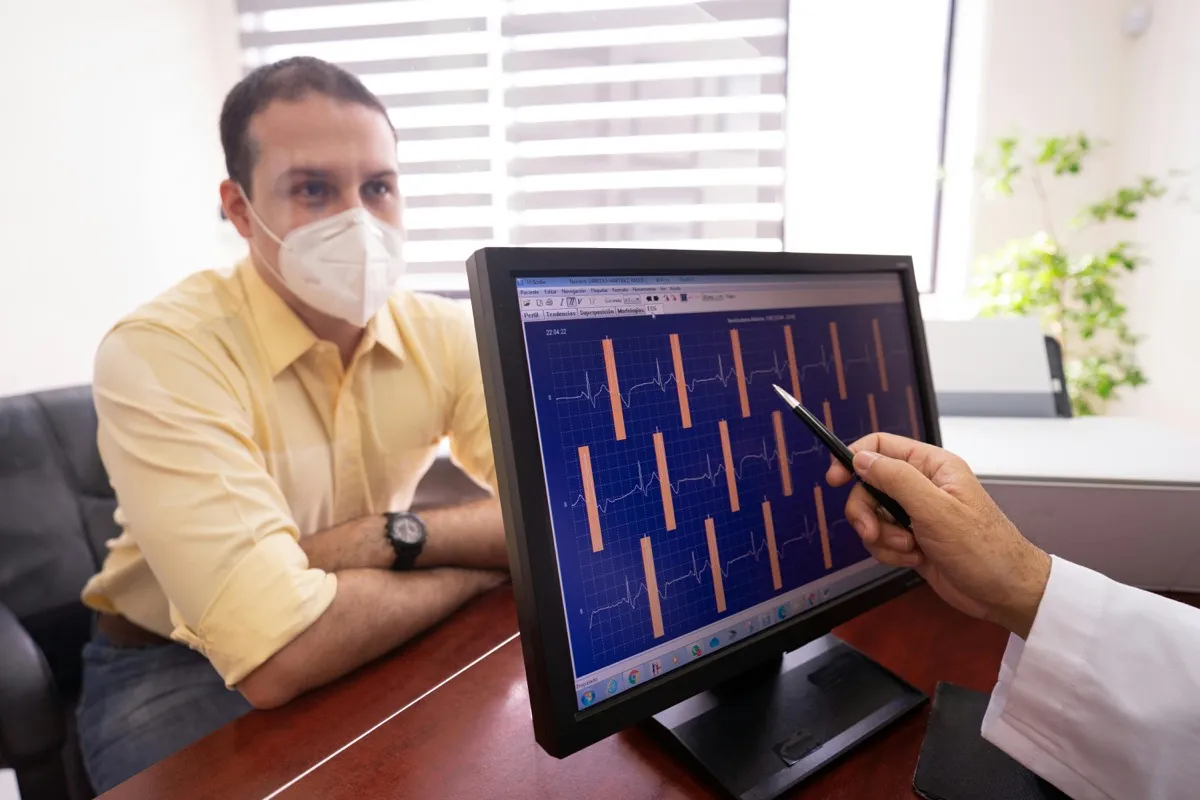
Echocardiogram in Dubai: Complete Guide
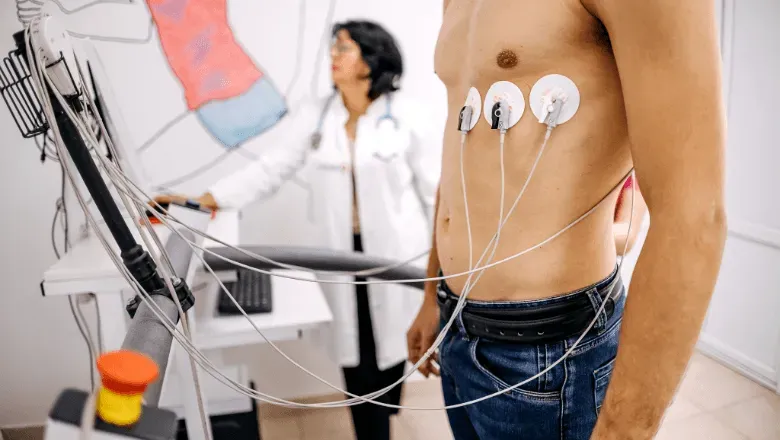
Cardiac Stress Test in Dubai: Cost, Procedure & What to Expect
More in Cardiology
When to See a Cardiologist Dubai (2026)
Read More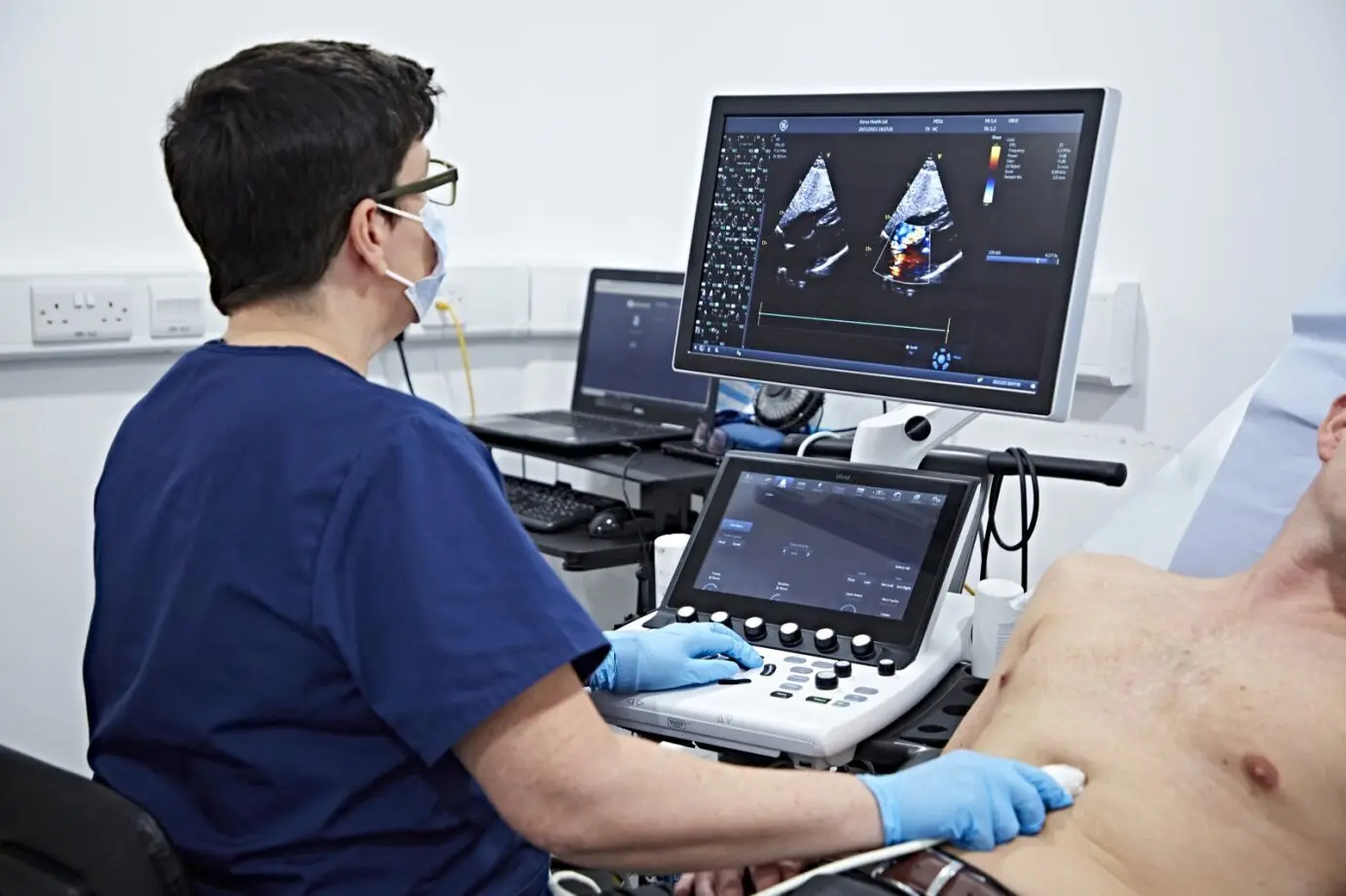
Echo Test Preparation Dubai: What to Expect (2026)
Read MoreHeart Attack vs Panic Attack Dubai: Signs (2026)
Read MoreHeart Failure Warning Signs Dubai (2026)
Read MoreStress Test Cost Dubai: AED 800–5,000 (2026)
Read MoreStress Test vs Echo Dubai: Which Heart Test? (2026)
Read More© 2026 Doctors Clinic Diagnostic Center (DCDC), Dubai Healthcare City. Originally published at https://doctorsclinicdubai.ae/blog/holter-monitor-preparation-dubai. All rights reserved. Unauthorized reproduction is prohibited.