Key Takeaways
- An echocardiogram is a painless, radiation-free ultrasound of the heart that takes 20-40 minutes. It uses sound waves to create real-time images of your heart's chambers, valves, and blood flow
- For a standard transthoracic echocardiogram (TTE), no fasting is required. Eat and drink normally, take your usual medications, and wear a two-piece outfit for easy access to the chest area
- Echocardiogram in Dubai typically costs AED 800-2,000 at most facilities. DCDC offers echo from AED 350 with board-certified cardiologist interpretation and results within 18-24 hours
- An echo can detect valve disease, heart failure, cardiomyopathy, pericardial effusion, congenital defects, and blood clots — making it one of the most versatile cardiac diagnostic tools available
- Stress echocardiograms require 4-6 hours of fasting and avoiding caffeine. Transesophageal echocardiograms (TEE) require 6-8 hours of fasting because sedation is used
- At DCDC Dubai Healthcare City, you can combine your echo with an ECG, stress test, or Holter monitor in a single visit — all performed on-site by board-certified cardiologists
An echocardiogram is the most commonly ordered cardiac imaging test worldwide, yet many patients feel anxious because they do not know what to expect. The good news: a standard echocardiogram at DCDC Dubai is completely painless, requires no fasting, uses no radiation, and takes only 20-40 minutes from start to finish. According to the American Heart Association, echocardiography is the first-line imaging tool for evaluating heart structure and function, ordered for more than 30 million patients annually in the United States alone. This guide walks you through exactly how to prepare, what happens during the test, and how to understand your results.
Whether your doctor has recommended an echo to investigate chest pain, shortness of breath, a heart murmur, or as part of a routine cardiac check-up, knowing the preparation steps removes uncertainty and helps you arrive relaxed. Below, we cover every type of echocardiogram, the specific preparation for each, a step-by-step description of the procedure, what conditions the test can detect, pricing in Dubai, and answers to the most common patient questions.

What Is an Echocardiogram?
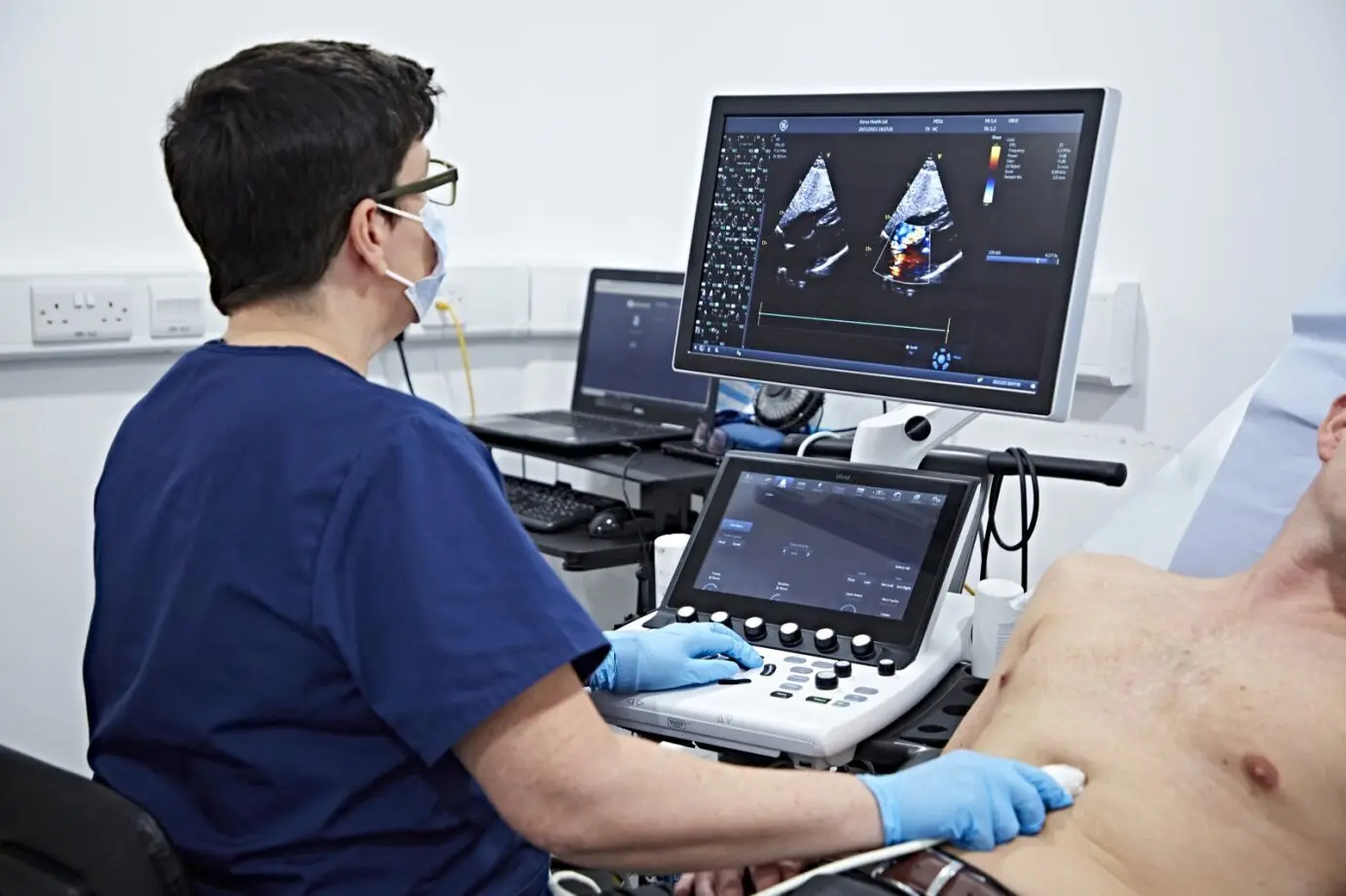
An echocardiogram — commonly called an echo test — is an ultrasound examination of the heart. A technician (cardiac sonographer) places a handheld probe called a transducer on your chest, and the probe emits high-frequency sound waves that bounce off your heart structures. A computer processes these echoes into real-time, moving images displayed on a monitor beside you.
Unlike an X-ray, CT scan, or nuclear imaging, an echocardiogram uses no ionizing radiation. It is safe to repeat as often as needed, safe during pregnancy, and safe for children. The test provides detailed information about your heart's size, the thickness and movement of the heart walls, how well the heart pumps (ejection fraction), the condition and function of all four heart valves, the pressure in your pulmonary arteries, and whether fluid has collected around the heart (pericardial effusion).
Your cardiologist uses this information to diagnose heart conditions, monitor existing diseases, evaluate the effectiveness of treatments, and determine whether further testing — such as a cardiac stress test or cardiac catheterization — is needed.
Types of Echocardiogram
Not all echo tests are the same. The type your doctor orders depends on the clinical question. Each type has slightly different preparation requirements, which we cover in the next section.
Transthoracic Echocardiogram (TTE)
This is the standard, most common echocardiogram. The transducer is placed on the outside of your chest wall. It is non-invasive, painless, and requires no fasting. A TTE takes approximately 20-40 minutes and provides excellent images of heart structure and function for most patients. This is the type performed in the vast majority of outpatient cardiology settings.
Stress Echocardiogram
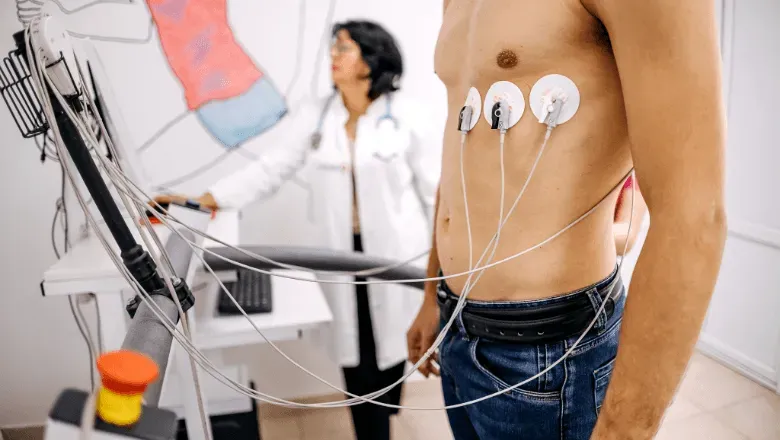
A stress echo combines a standard TTE with exercise (treadmill or stationary bike) or a pharmacological stress agent (dobutamine) for patients who cannot exercise. Echo images are taken at rest and immediately after peak exertion. By comparing the two sets of images, your cardiologist can detect areas of the heart that do not receive adequate blood flow during stress — a hallmark of coronary artery disease. Stress echo requires 4-6 hours of fasting and caffeine avoidance.
Transesophageal Echocardiogram (TEE)
In a TEE, a specialized ultrasound probe is passed through your mouth into your esophagus (food pipe), which sits directly behind the heart. Because there are no ribs or lungs between the probe and the heart, TEE provides exceptionally clear images, especially of the heart valves, left atrial appendage (a common site for blood clots), and the aorta. TEE is typically performed under conscious sedation and requires 6-8 hours of fasting. It is ordered when TTE images are insufficient, before certain heart surgeries, or to evaluate suspected endocarditis or blood clots.
Doppler Echocardiography
Doppler is a technique used during most standard echocardiograms rather than a separate test. It measures the speed and direction of blood flow through the heart chambers and across the valves. Color Doppler adds a visual overlay showing blood flow direction (typically red for flow toward the transducer and blue for flow away). Doppler is essential for detecting valve leaks (regurgitation), valve narrowing (stenosis), and abnormal pressures within the heart.
How to Prepare for an Echo Test
Preparation depends on the type of echocardiogram you are having. The table below summarizes the key differences. For a deeper understanding of how echo compares to other cardiac tests, see our guide on ECG vs Echocardiogram differences.
| Preparation Step | Standard TTE | Stress Echo | TEE |
|---|---|---|---|
| Fasting | Not required | 4-6 hours before | 6-8 hours before |
| Caffeine | Allowed | Avoid 24 hours before | Allowed |
| Medications | Take as normal | Ask your doctor (beta-blockers may be paused) | Take as normal with a sip of water |
| Clothing | Two-piece outfit | Athletic wear + comfortable shoes | Comfortable loose clothing |
| Sedation | None | None | Conscious sedation (bring a driver) |
| Duration | 20-40 minutes | 45-60 minutes | 30-60 minutes |
Preparation requirements vary by echo type. Confirm instructions with your cardiologist before your appointment.
Clothing and Accessories
For a standard TTE, wear a two-piece outfit so you can easily remove your top. You will be given a hospital gown that opens in the front. Remove necklaces, chest jewelry, and any adhesive patches from the chest area before the test. There is no need to remove lower-body clothing, shoes, or watches.
Eating and Drinking
For a standard transthoracic echo, you can eat, drink, and take your medications normally. There are no dietary restrictions. For a stress echocardiogram, avoid eating for 4-6 hours before your appointment and skip caffeine (coffee, tea, energy drinks, chocolate) for 24 hours, as caffeine can affect heart rate response during exercise. For a TEE, fast for 6-8 hours because the sedation used carries a risk of aspiration if your stomach is not empty.
Medications
For a standard TTE, continue all medications as prescribed. For a stress echo, your cardiologist may ask you to temporarily stop certain heart rate-lowering medications (beta-blockers such as bisoprolol, metoprolol, or atenolol) 24-48 hours before the test, because these medications can prevent your heart rate from reaching the target level during exercise. Never stop a medication without your doctor's instruction. For a TEE, take your regular medications with a small sip of water on the morning of the test.
What to Expect Before Your Echo Test
Knowing what happens from the moment you arrive helps reduce any pre-test anxiety. Here is the typical check-in process for an echocardiogram appointment.
- Arrival and registration: Arrive 15 minutes before your scheduled time. Bring your Emirates ID or passport, your insurance card, and the referral letter from your doctor if applicable. The reception team will verify your details and confirm insurance coverage
- Medical history review: A nurse or cardiac technician will ask about your current symptoms, cardiac history, medications, allergies, and any previous heart tests. This information helps the sonographer focus on the most clinically relevant areas during the scan
- Changing: You will be directed to a changing area and given a gown that opens in the front. You only need to remove clothing above the waist
- ECG leads (if applicable): In some clinics, small adhesive electrode patches are placed on your chest to simultaneously record your heart rhythm during the echo. This is painless and takes about two minutes
- Insurance verification: At DCDC, the front desk handles insurance pre-authorization before your appointment begins, so you know your coverage and any out-of-pocket costs upfront. DCDC offers direct billing with over 20 insurers including Daman, AXA, Bupa, Cigna, and MetLife
What Happens During an Echocardiogram
Understanding the step-by-step procedure helps you feel prepared and relaxed. Here is exactly what happens during a standard transthoracic echocardiogram.
- Step 1 — Positioning: You lie on an examination table on your left side. Lying on the left side brings the heart closer to the chest wall, producing clearer images. A small pillow may be placed behind your back for comfort. The room lights are dimmed so the sonographer can see the monitor clearly
- Step 2 — Gel application: A warm, water-based gel is applied to the left side of your chest. The gel helps the ultrasound waves travel between the transducer and your skin without air gaps. It is colorless, odorless, and washes off easily
- Step 3 — Imaging begins: The sonographer places the transducer probe firmly against your chest and moves it to several positions to capture different views of the heart. Standard positions include between the ribs on the left side (parasternal views), at the bottom of the sternum (subcostal view), at the apex of the heart, and at the base of the neck (suprasternal view)
- Step 4 — Breathing instructions: At certain points, the sonographer may ask you to breathe in deeply, breathe out, or hold your breath briefly. These instructions help move the lungs out of the way for clearer heart images
- Step 5 — Doppler measurements: The sonographer activates Doppler mode to measure blood flow velocities across each heart valve. You may hear a whooshing or pulsating sound from the machine's speakers — this is the sound of blood flow through your heart converted to audio
- Step 6 — Image review: The sonographer captures still images and video clips throughout the exam. After completing all views, they may review the images to ensure nothing was missed. The entire imaging process takes 20-40 minutes
- Step 7 — Clean-up: The gel is wiped off your chest with a towel. You can dress immediately and resume all normal activities, including driving, eating, and exercise
Does an Echo Test Hurt?
A standard transthoracic echocardiogram is completely painless. You may feel mild pressure when the sonographer presses the transducer firmly against your chest — this is sometimes necessary to obtain clear images through the rib spaces. Some patients describe a slight coolness from the gel, but it is quickly warmed by body heat. There are no needles, no injections, and no contrast dye for a standard TTE. For patients looking for more details on cardiac testing, see our guide on cardiac stress test in Dubai.
A stress echocardiogram involves exercise or a medication that temporarily increases your heart rate, which can cause brief sensations of breathlessness, a pounding heart, or mild chest discomfort — all of which resolve within minutes after stopping. A TEE involves mild throat discomfort from the probe insertion, which is managed with local anesthetic spray and conscious sedation.
There is no claustrophobia concern with echocardiography. Unlike an MRI or CT scan, you are lying on an open examination table in a regular room, not inside a tunnel or enclosed machine.
Book Your Echocardiogram at DCDC
Painless echo from AED 350 with board-certified cardiologist interpretation. Results within 18-24 hours, same-day for urgent cases.
MOHAP licensed in Dubai Healthcare City. Direct billing with 20+ insurers.
What to Expect After Your Echo Test
One of the great advantages of a standard echocardiogram is that there is essentially no recovery period. You can immediately return to your normal activities — work, driving, exercise, eating — without any restrictions.
Results Timeline
After the sonographer completes the imaging, the recorded clips and measurements are reviewed and interpreted by a board-certified cardiologist. At DCDC, results are typically available within 18-24 hours. For urgent clinical situations — such as suspected heart failure, severe valve disease, or pre-operative assessments — same-day results can be arranged.
Your results report will include numerical measurements (chamber sizes, wall thickness, ejection fraction, valve gradients) along with the cardiologist's written interpretation. If abnormalities are detected, your cardiologist will discuss the findings with you and recommend a management plan, which may include medication adjustments, lifestyle changes, additional testing, or referral to a cardiac surgeon.
Follow-Up
For patients with chronic conditions such as heart failure, valve disease, or cardiomyopathy, serial echocardiograms are performed at regular intervals (typically every 6-12 months) to monitor disease progression and treatment response. Because echo uses no radiation, there are no safety concerns with repeated studies.
What Can an Echocardiogram Detect?
An echocardiogram is one of the most versatile diagnostic tools in cardiology. The following table summarizes the major conditions it can identify.
| Condition | What the Echo Shows | Clinical Significance |
|---|---|---|
| Heart valve disease | Valve thickening, calcification, regurgitation (leaking), stenosis (narrowing) | Determines severity and need for surgical repair or replacement |
| Heart failure | Reduced ejection fraction, enlarged chambers, wall motion abnormalities | Guides medication selection and device therapy decisions |
| Cardiomyopathy | Thickened walls (hypertrophic), dilated chambers (dilated), or stiff walls (restrictive) | Classifies type and severity for targeted treatment |
| Pericardial effusion | Fluid collection around the heart | Detects cardiac tamponade requiring emergency drainage |
| Congenital heart defects | Holes in heart walls (ASD, VSD), abnormal valve anatomy, structural anomalies | Identifies defects requiring monitoring or surgical correction |
| Blood clots (thrombus) | Masses within heart chambers, especially the left atrium or ventricle | Critical for stroke prevention and anticoagulation decisions |
| Pulmonary hypertension | Elevated right-sided pressures, tricuspid regurgitation velocity | Screens for a condition that can lead to right heart failure |
| Aortic disease | Aortic root dilation, ascending aortic aneurysm | Monitors for dissection risk in at-risk patients |
| Endocarditis | Vegetations (infected masses) on heart valves | Confirms diagnosis and guides antibiotic or surgical treatment |
An echocardiogram can detect these conditions non-invasively. Your cardiologist interprets the findings in context with your symptoms and medical history.
According to Dr. Shahoo Mazhari, Cardiologist at DCDC, "The echocardiogram is the single most valuable tool I use in daily clinical practice. It gives me a real-time window into the heart's function within minutes. For patients presenting with unexplained shortness of breath, a new heart murmur, or chest pain with normal coronary arteries, an echo often provides the diagnosis without needing more invasive testing. I particularly recommend combining it with an ECG at the same visit to get both structural and electrical information about the heart."
Echo Test vs Other Heart Tests
Patients often wonder how an echocardiogram compares to other cardiac tests they may have heard about. The following comparison helps clarify when each test is most appropriate. For more details on recognizing when you need cardiac evaluation, see our guide on heart disease symptoms.
| Factor | Echocardiogram | ECG (Electrocardiogram) | Stress Test | CT Angiogram |
|---|---|---|---|---|
| What it measures | Heart structure, function, and blood flow | Heart's electrical activity and rhythm | Heart response to exercise or pharmacological stress | Coronary artery anatomy and blockages |
| Radiation | None (ultrasound) | None (electrical signals) | None (echo-based) or minimal (nuclear) | Yes (low-dose ionizing radiation) |
| Duration | 20-40 minutes | 5-10 minutes | 45-60 minutes | 10-20 minutes |
| Fasting required | No (standard TTE) | No | Yes (4-6 hours) | Yes (4-6 hours) |
| Pain level | Painless | Painless | Mild exertion discomfort | Painless (IV contrast) |
| Best for | Valve disease, heart failure, cardiomyopathy | Arrhythmias, heart attack detection | Coronary artery disease screening | Coronary artery blockages, calcium scoring |
| Approximate cost (Dubai) | AED 800-2,000 | AED 200-500 | AED 1,500-3,000 | AED 1,500-3,500 |
These tests are complementary. Your cardiologist may order one or more depending on your symptoms and clinical question.
At DCDC Dubai Healthcare City, ECG, echocardiogram, stress testing, and Holter monitoring are all available on-site. This allows your cardiologist to order and complete multiple tests during a single visit, saving you time and providing a comprehensive cardiac evaluation in one appointment.
What to Expect at DCDC Dubai Healthcare City
Your echocardiogram experience at DCDC is designed to be efficient, comfortable, and transparent from booking to results.
- Easy booking: Schedule online, by phone, or via WhatsApp. The team confirms your insurance coverage before your visit so there are no billing surprises
- Convenient location: DCDC is located in Building 64, Block A, Al Razi Medical Complex, Dubai Healthcare City, with free parking available for patients
- Minimal wait times: With an average wait time of 15 minutes and a 98% patient satisfaction rate, your appointment runs on schedule. The clinic is open Saturday through Thursday 8 AM to 10 PM and Friday 9 AM to 9 PM
- Board-certified interpretation: Every echocardiogram is interpreted by a board-certified cardiologist, not a technician or general practitioner. Dr. Shahoo Mazhari and the cardiology team at DCDC perform comprehensive cardiovascular risk assessments and on-site cardiac diagnostics
- Rapid results: Standard results are delivered within 18-24 hours. Same-day results are available for urgent cases
- Comprehensive cardiac suite: If your cardiologist recommends additional tests based on your echo results — such as an ECG, stress test, or Holter monitor — these can be performed the same day without scheduling a separate appointment
- Insurance and self-pay: DCDC offers direct billing with over 20 insurance providers and competitive self-pay rates starting from AED 350 for echo. The clinic maintains a 4.8/5 Google rating from over 1,000 reviews
Echo Test Cost in Dubai
The cost of an echocardiogram in Dubai varies significantly depending on the facility, the type of echo, and whether insurance is used. The following table provides a pricing overview.
| Echo Type | DCDC Price | Dubai Market Range |
|---|---|---|
| Standard TTE (transthoracic echo) | From AED 350 | AED 800-2,000 |
| Stress echocardiogram | Contact for pricing | AED 1,500-3,000 |
| Doppler echocardiogram | Included in standard echo | AED 800-2,000 |
| Transesophageal echo (TEE) | Hospital-based procedure | AED 3,000-6,000 |
Prices are approximate. DCDC prices reflect self-pay rates. Insurance coverage may reduce your out-of-pocket cost significantly.
Several factors affect the cost of an echo test in Dubai: the type of facility (hospital vs outpatient clinic), whether a cardiologist or a general physician interprets the results, the type of echo ordered, and whether additional tests are performed simultaneously. At DCDC, the echo fee includes the sonography, Doppler assessment, cardiologist interpretation, and a written report — there are no hidden charges for separate components.
When Your Doctor May Recommend an Echo
Your doctor may order an echocardiogram if you are experiencing any of the following symptoms or if certain clinical findings are present.
- Shortness of breath: Unexplained breathlessness during exertion or at rest, especially if progressive — echo evaluates heart pump function and valve disease as potential causes
- Chest pain: Particularly when coronary artery disease has been ruled out and the cardiologist suspects a structural cause such as pericarditis, valve disease, or hypertrophic cardiomyopathy
- Heart murmur: A sound heard through the stethoscope that may indicate a leaking or narrowed valve — echo confirms the diagnosis and grades the severity
- Swollen legs or ankles: Lower extremity edema can be a sign of heart failure. Echo measures the ejection fraction and identifies whether the heart is pumping effectively
- Palpitations or arrhythmia: While an ECG or Holter monitor detects the rhythm disturbance, echo checks for any structural heart disease underlying the arrhythmia
- After a heart attack: Echo assesses the extent of heart muscle damage, identifies wall motion abnormalities, and measures overall heart function to guide treatment
- Family history of heart disease: First-degree relatives of patients with hypertrophic cardiomyopathy, dilated cardiomyopathy, or congenital heart disease should undergo echo screening
- Pre-operative assessment: Before major surgery, an echo may be ordered to ensure the heart can safely tolerate anesthesia and the physiological stress of the procedure
- Monitoring known conditions: Patients with existing valve disease, heart failure, or cardiomyopathy require serial echocardiograms every 6-12 months to track progression
- Stroke or TIA evaluation: Echo (especially TEE) looks for cardiac sources of embolism such as blood clots, patent foramen ovale (PFO), or valve vegetations
Insurance Coverage for Echo Tests in Dubai
Echocardiography is covered by virtually all health insurance plans in Dubai when ordered by a physician with a clinical indication. Under the Dubai Health Insurance Law, basic plans are required to cover essential diagnostic services, and echocardiogram falls within this scope.
- Insured patients: Most plans cover the full cost of echo with only a co-pay (typically AED 0-100 per visit). Pre-authorization requirements vary by insurer — DCDC's team handles this process for you
- Self-pay patients: DCDC offers competitive self-pay rates from AED 350 for a standard echocardiogram with cardiologist interpretation — significantly below the Dubai market average of AED 800-2,000
- Accepted insurers at DCDC: Daman, AXA, Bupa Global, Cigna, MetLife, and over 15 additional providers. Contact the clinic to verify your specific plan
- International patients: DCDC welcomes international patients and can provide itemized invoices for reimbursement from overseas insurance providers
Schedule Your Echo at DCDC
Echo from AED 350 with board-certified cardiologist interpretation. Book online, call, or WhatsApp — insurance verified before your visit.
Building 64, Block A, Al Razi Medical Complex, Dubai Healthcare City. Free parking.
Related Services at DCDC
Expert care and advanced diagnostics at Dubai Healthcare City
Frequently Asked Questions
Arrive Prepared, Leave Informed
An echocardiogram is one of the safest, most informative, and most widely performed cardiac tests available. For a standard TTE, the preparation is minimal: no fasting, no medication changes, no needles. Wear a two-piece outfit, arrive 15 minutes early, and the test itself takes 20-40 minutes of lying comfortably on your left side while the sonographer captures images of your heart.
If your doctor has recommended an echo to investigate symptoms such as shortness of breath, chest pain, a heart murmur, or palpitations, scheduling the test promptly is important. Early detection of conditions like valve disease, heart failure, and cardiomyopathy allows treatment to begin when it is most effective — before irreversible damage occurs.
At DCDC Dubai Healthcare City, echocardiograms start from AED 350 with board-certified cardiologist interpretation, results within 18-24 hours, and a full on-site cardiac suite for any additional tests your cardiologist recommends. The MOHAP-licensed clinic in Al Razi Medical Complex offers direct billing with over 20 insurers, free parking, and extended hours Saturday through Friday. Book your echo online, by phone, or via WhatsApp to take the first step toward understanding your heart health.
Sources & References
This article was reviewed by our medical team and references the following sources:
- American Heart Association — Echocardiography
- Mayo Clinic — Echocardiogram: Overview and What to Expect
- Cleveland Clinic — Echocardiogram: Types, Procedure & Results
- NHS — Echocardiogram
- World Health Organization — Cardiovascular Diseases Fact Sheet
- American Society of Echocardiography — Patient Information
Medical content on this site is reviewed by DHA-licensed physicians. See our editorial policy for more information.
Written by
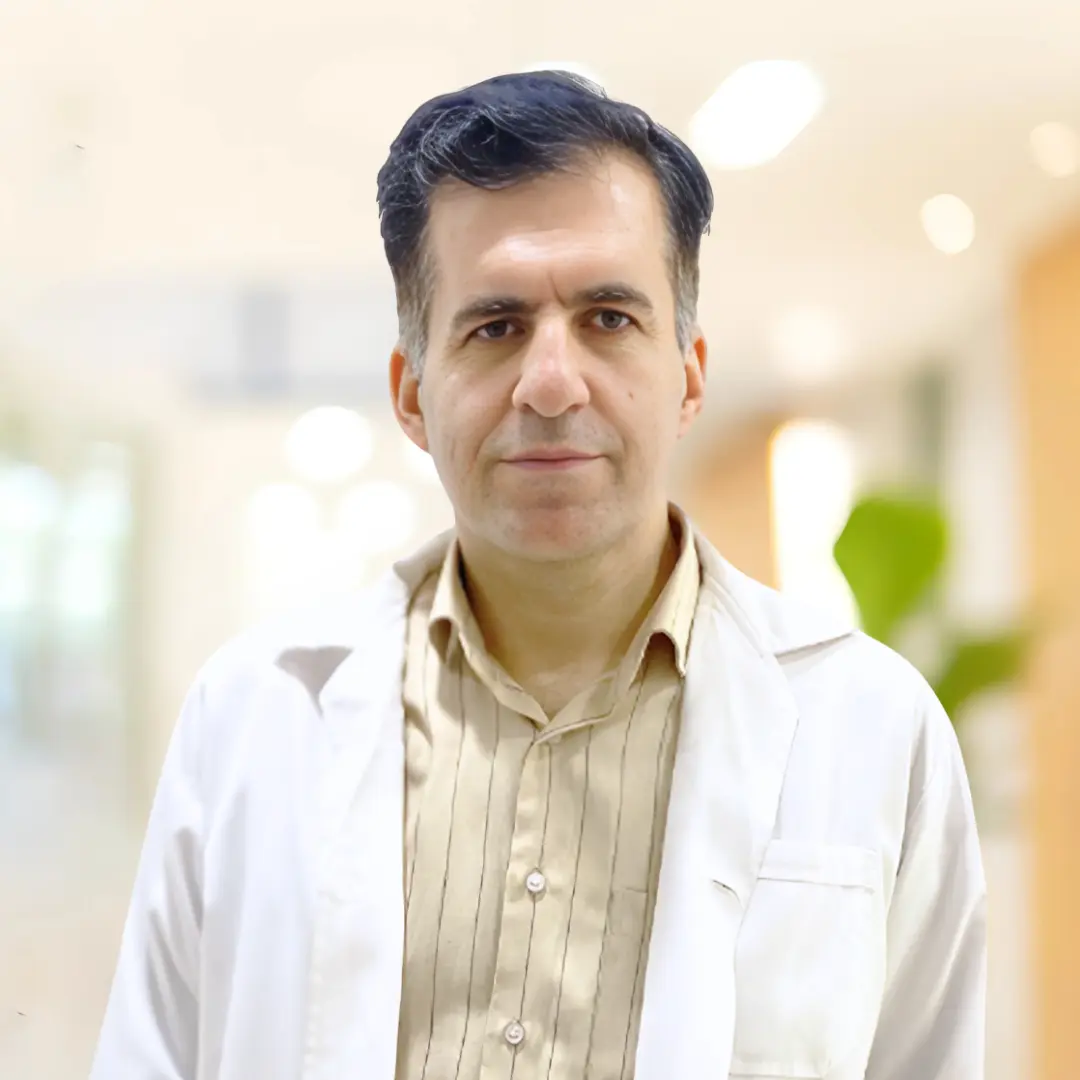
Dr. Shahoo Mazhari
Cardiologist
MD, Cardiology
Dr. Shahoo Mazhari is a Cardiologist at Doctors Clinic Diagnostic Center (DCDC) in Dubai Healthcare City.
Related Articles
ECG vs Echocardiogram: Differences Explained
Echo Test Cost Dubai: AED 800–2,000
Cardiac Stress Test Dubai: Cost & What to Expect
Heart Disease Symptoms Dubai: 8 Signs to Watch

Holter Monitor Test Dubai: Cost & Guide
More in Cardiology
Holter Monitor Prep Dubai: What to Expect (2026)
Read More
When to See a Cardiologist Dubai (2026)
Read MoreHeart Attack vs Panic Attack Dubai: Signs (2026)
Read MoreHeart Failure Warning Signs Dubai (2026)
Read MoreStress Test Cost Dubai: AED 800–5,000 (2026)
Read MoreStress Test vs Echo Dubai: Which Heart Test? (2026)
Read More© 2026 Doctors Clinic Diagnostic Center (DCDC), Dubai Healthcare City. Originally published at https://doctorsclinicdubai.ae/blog/echo-test-preparation-dubai. All rights reserved. Unauthorized reproduction is prohibited.